 AI
AIPattern-based identification
Black-and-yellow birds
Shoulder, belly, face, or rump: the exact placement of yellow separates birds that a color search gathers under one phrase.
Reviewed:Turn two colors into an observation sequence.
“Black-and-yellow bird” describes an impression, not a species. Before comparing names, locate the yellow: is it a small shoulder patch, does it continue onto the belly, frame the face, or appear beside orange and white? Then estimate size, bill shape, and tail length.
This guide brings together six documented Puerto Rico residents. Four are endemic under the taxonomy adopted by this atlas; two also occur on other islands. Males, females, and young birds do not always share the same pattern, so one dark photograph is not enough for a decision.
Pattern-based identification
The palette, organized
6residents comparedEach possibility opens a profile with names, photographs, voice, habitat, and sources.
4endemic speciesYellow-shouldered Blackbird, Puerto Rican Oriole, Puerto Rican Euphonia, and Puerto Rican Spindalis.
3decisive questionsWhere the yellow sits, what shape the bill has, and which setting the bird occupied.
01
Yellow on the shoulder: blackbird or oriole
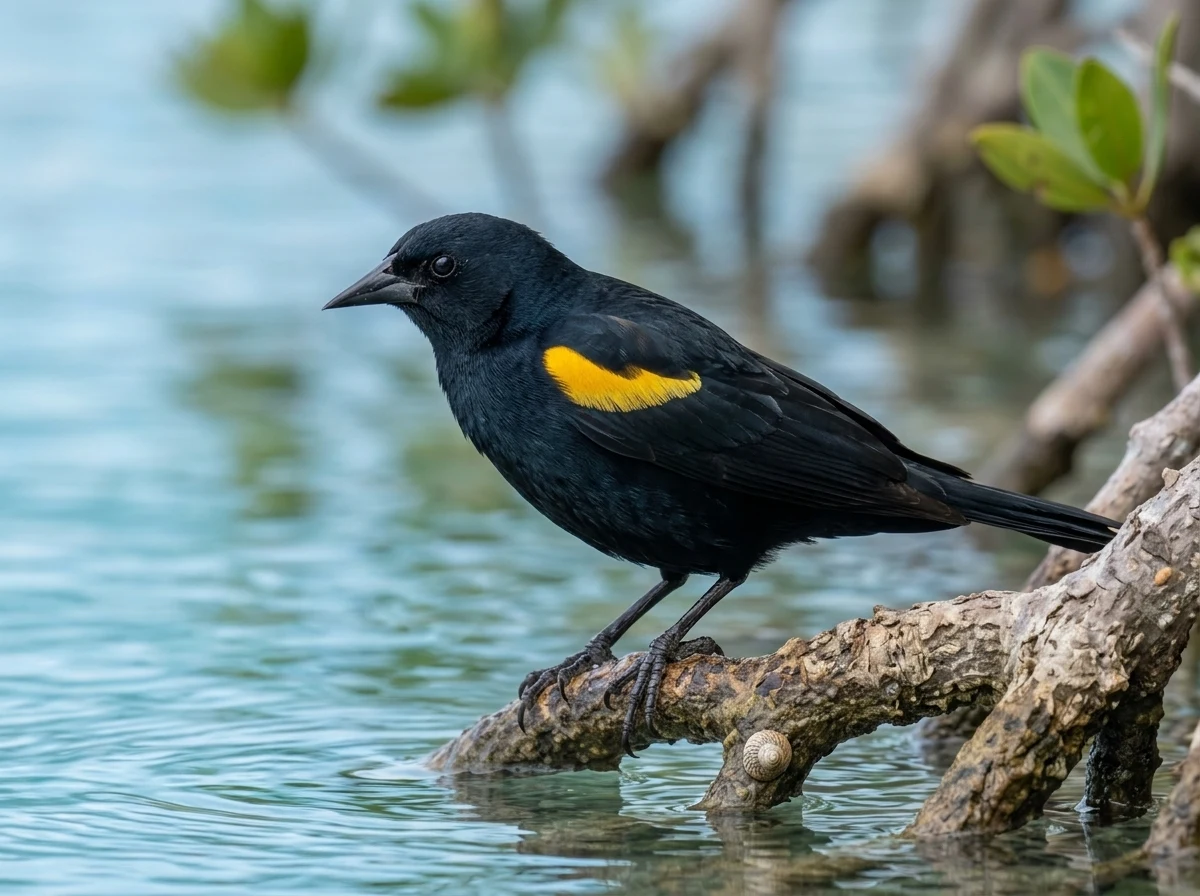
Yellow-shouldered Blackbird is predominantly black with a yellow patch concentrated on each shoulder. Its current distribution is localized, so a sighting in the southwest, south, east, Mona, or Monito should be checked against both place and pattern in the federal account; seeing yellow never justifies sharing sensitive nests or colonies.
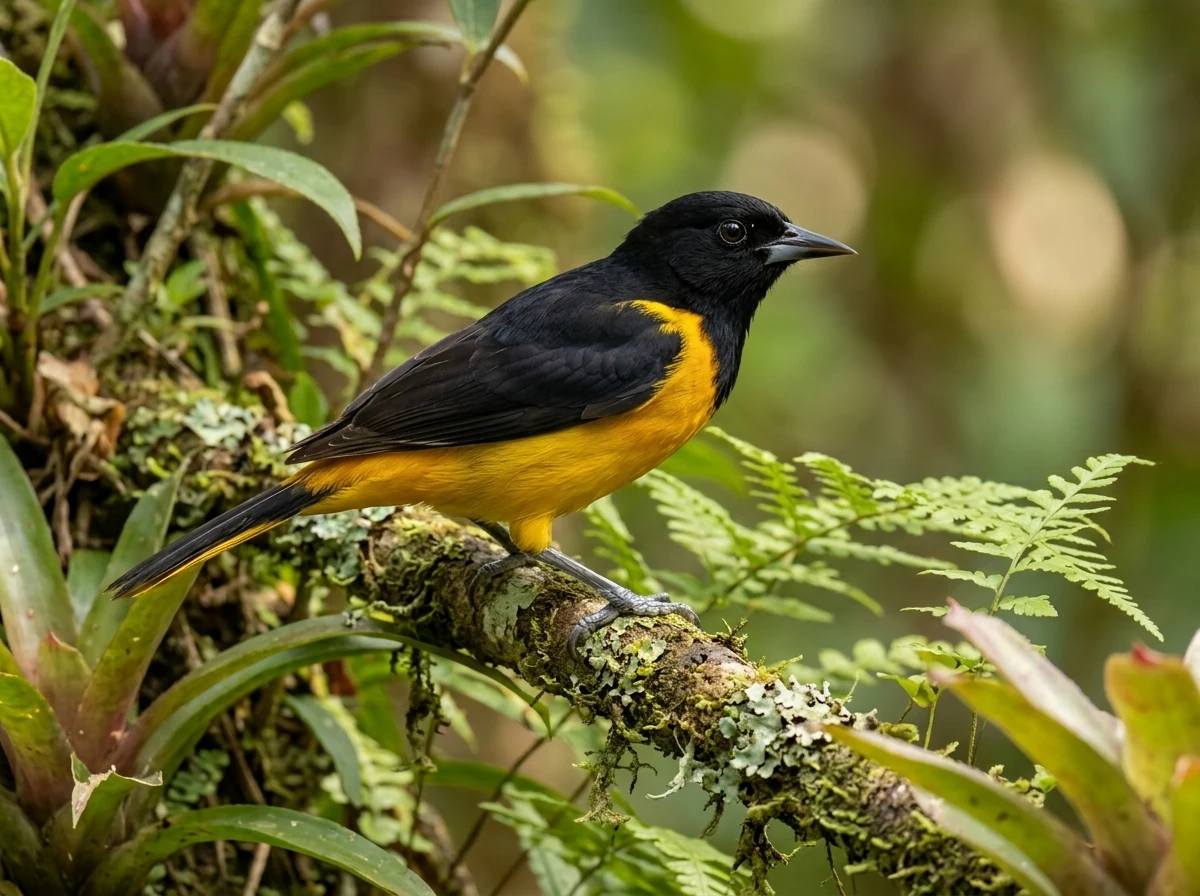
Puerto Rican Oriole is also black and yellow, but yellow is not confined to the shoulder: it reaches the rump and underparts. Its silhouette and bill look more elongated. If you saw only one wing, seek another view before choosing between these two endemics.
02
Small bird with a yellow belly: begin with bill and face
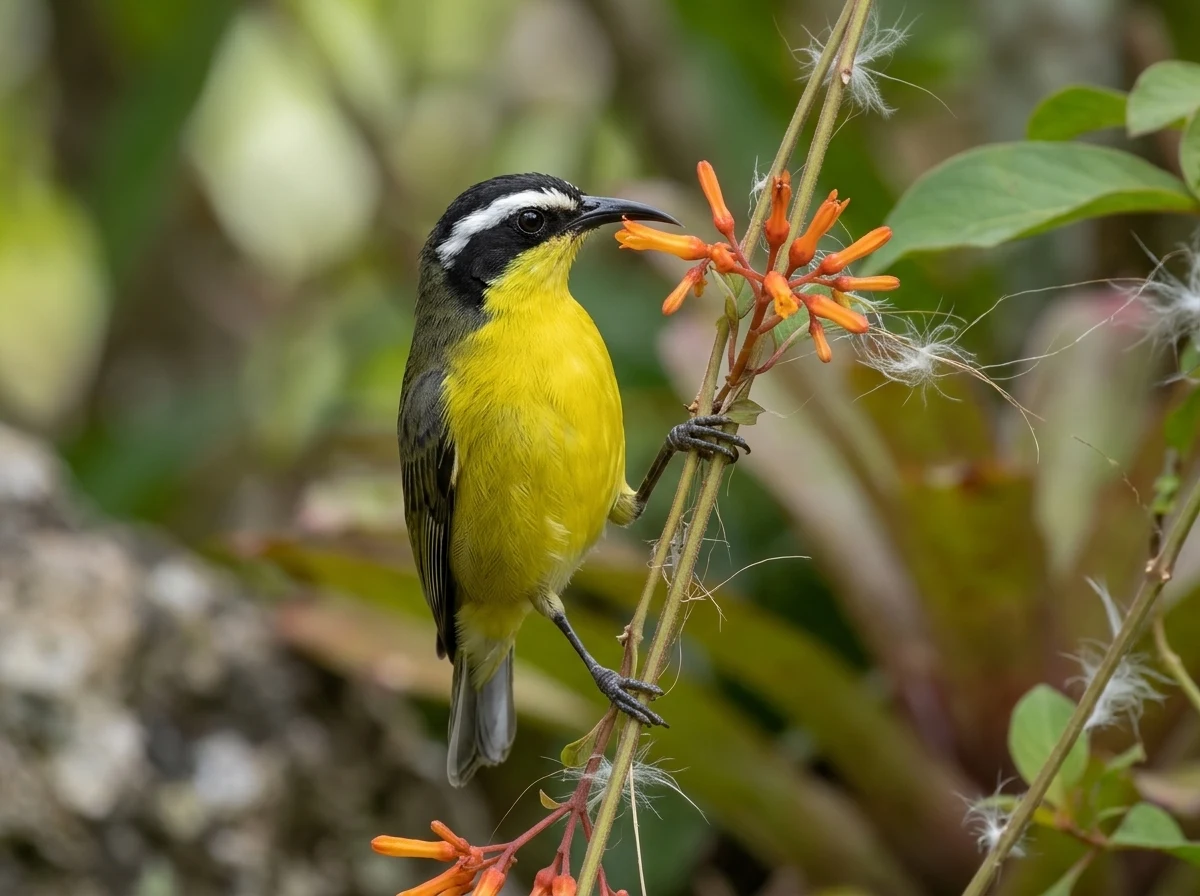
Bananaquit is often the first comparison near gardens and flowers: it is small, with yellow underparts, a dark crown and back, a bold white eyebrow, and a slender curved bill. The combination of white eyebrow and arched bill matters more than calling a back black when it was seen against the light.
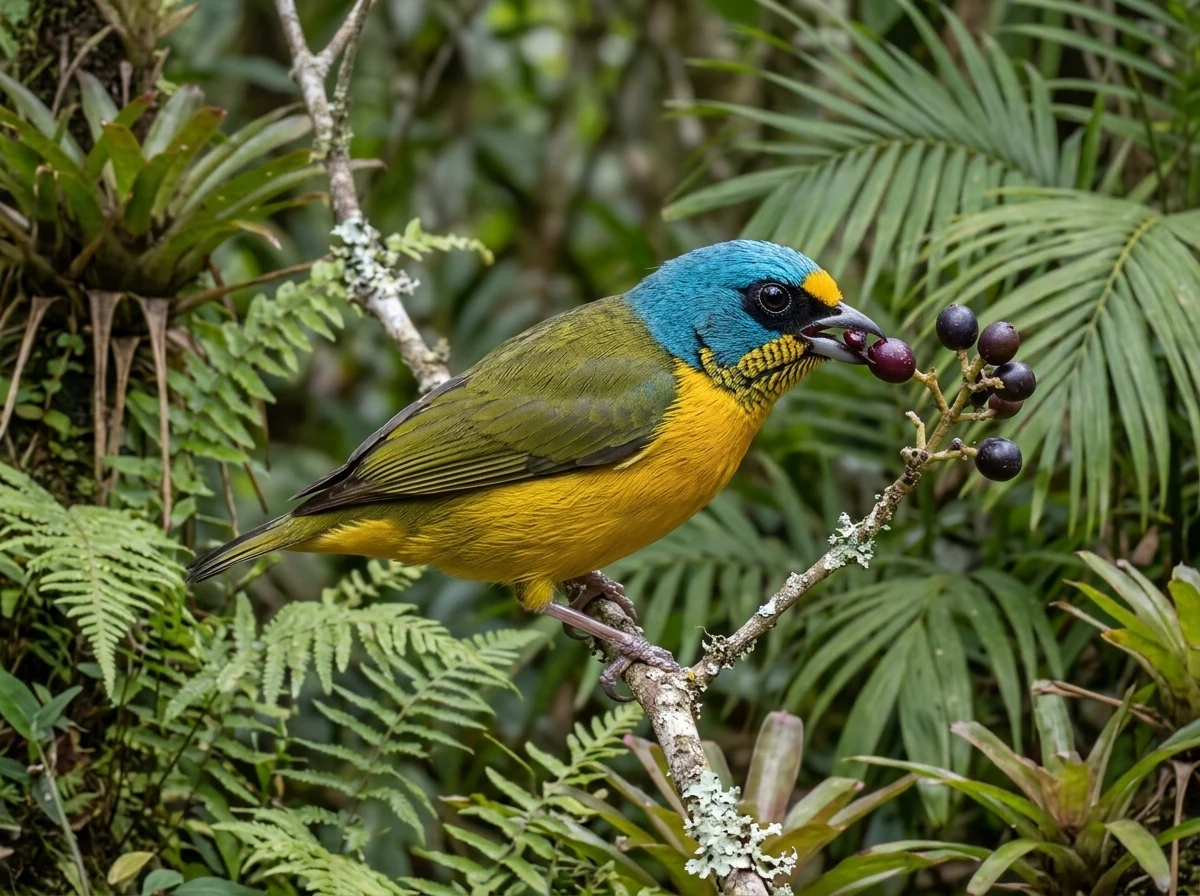
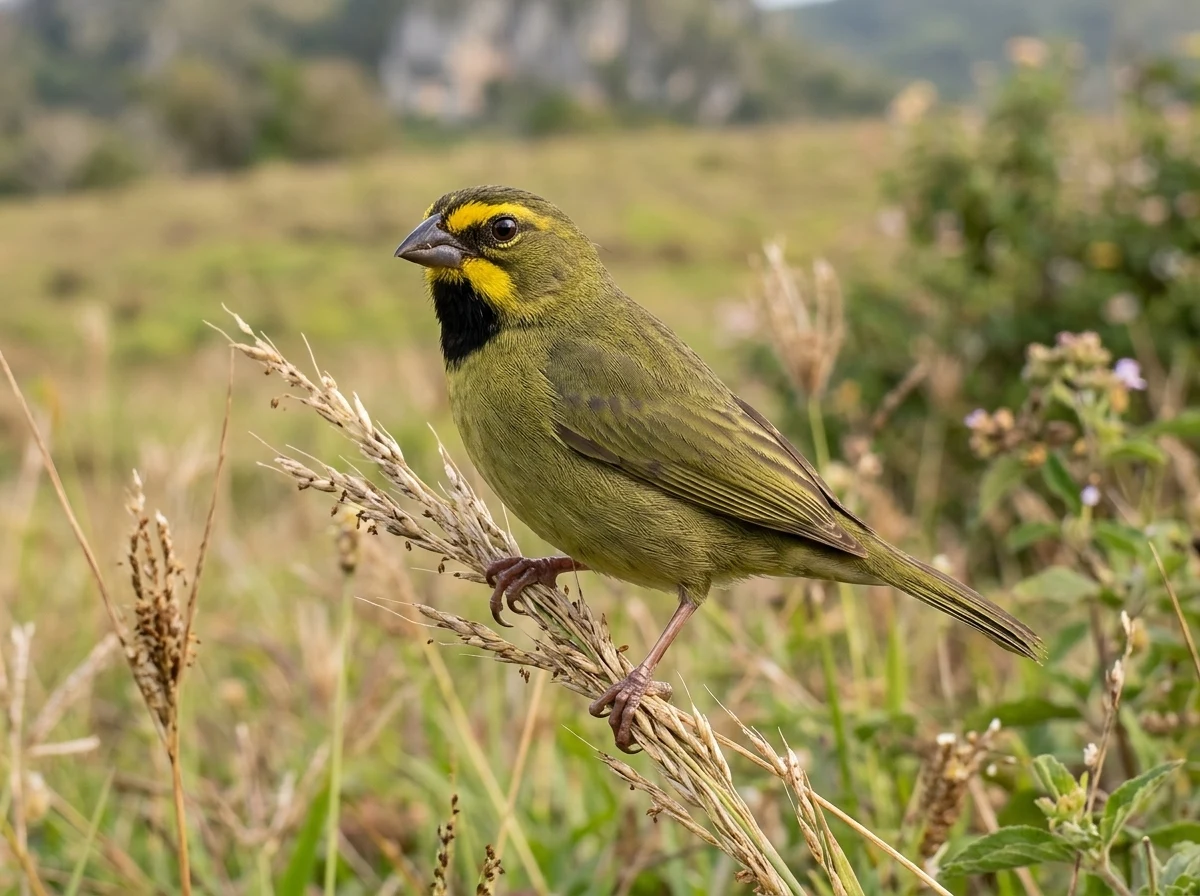
Male Puerto Rican Euphonia combines yellow with a dark blue head and back; the female is much greener. Male Yellow-faced Grassquit concentrates yellow and black on the face and throat over an olive body and has a short seed-eater bill. Similar size does not mean the same shape, food, or facial pattern.
03
Black, yellow, orange, and white: do not crop away the spindalis
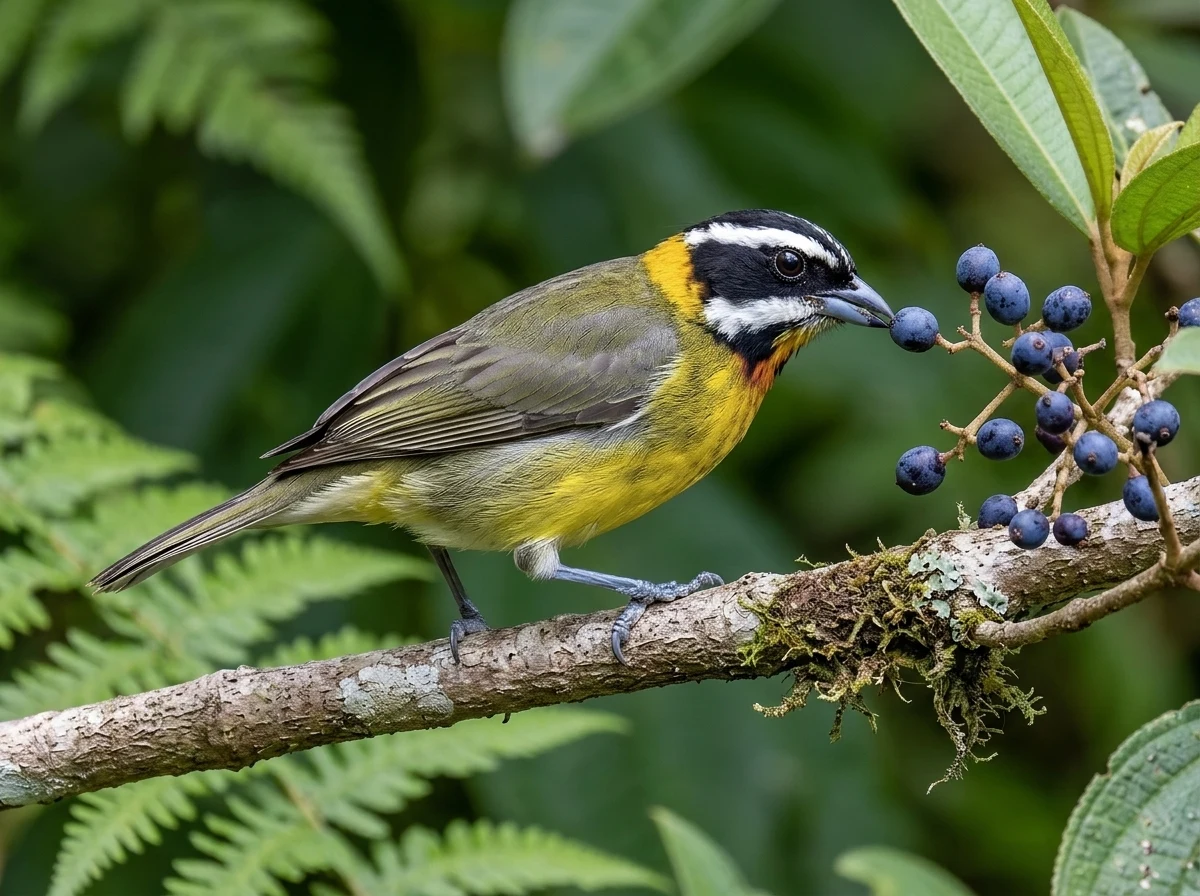
A male Puerto Rican Spindalis can enter a “black and yellow” search because contrast dominates a quick view, but the complete bird also reveals orange, white, and a strong facial design. The female is mainly greenish and calls for a different identification path.
Observe the complete bird and keep the original file. A crop of the belly can hide the face; a crop of the head can lose rump, wings, and tail. The linked profiles let you compare several signals without reducing identification to a color swatch.
04
A five-step field key
First locate the yellow; second estimate whether the bird is tiny or medium-sized; third decide whether the bill is curved, short and deep, or long and pointed. Fourth note whether it visited flowers, ate seeds, sought fruit, or moved like an icterid. Fifth confirm place, habitat, sex, or age in the profile.
If no option fits, do not force the list. Preserve date, general location, comparative size, behavior, audio, and unedited photographs. Puerto Rico also receives visitors, but a rarity requires positive evidence, not merely failure to match a short guide.
Linked profiles
Compare the six possibilities
Open each profile to review the complete pattern, local names, licensed images, habitat, voice, and data provenance.
Sound archive
Hear its voice
Explore real songs and calls. The spectrogram turns each sound into a visual trace of time and frequency.
XC793991Recording 1 of 3call

Play: call by Barry Edmonston
Choose another recording
Sound recorded by Barry Edmonston · XC793991 · CC BY-NC-SA 4.0. Visualization by Stichting Xeno-canto voor Natuurgeluiden.
Every recording retains the creator, catalogue number, and license published by Xeno-canto. Metadata via GBIF ↗
01
What is the black bird with yellow shoulders in Puerto Rico?
The first comparison is Yellow-shouldered Blackbird, an endemic species, but confirm that yellow is confined to the shoulder and check place, bill, and silhouette. Puerto Rican Oriole carries yellow onto additional parts of the body.
02
Which small black-and-yellow bird appears in gardens?
It is often a Bananaquit: look for a white eyebrow, yellow belly, and slender curved bill. Euphonia and Yellow-faced Grassquit require comparison of face, bill, sex, food, and habitat.
03
Are Yellow-shouldered Blackbird and Puerto Rican Oriole the same species?
No. They are two different endemic species. Yellow-shouldered Blackbird concentrates yellow on the shoulder; Puerto Rican Oriole extends it across shoulder, rump, and underparts.
04
Are all six birds in this guide endemic?
No. Yellow-shouldered Blackbird, Puerto Rican Oriole, Puerto Rican Euphonia, and Puerto Rican Spindalis are endemic under the atlas taxonomy. Bananaquit and Yellow-faced Grassquit also occur outside Puerto Rico.
Keep exploring
Connected routes
Sources and review
The evidence is one link away.
These sources support the editorial scope of this guide. Bird profiles also retain their own taxonomy, occurrence, and conservation references.
Reviewed:
01↗02↗03↗04↗05↗
U.S. Fish and Wildlife Service
Yellow-shouldered Blackbird: bird of the month
Visual comparison, current distribution, and threats affecting the endemic Yellow-shouldered Blackbird.U.S. Forest Service Research and Development
Puerto Rico Breeding Bird Atlas
Distribution and breeding timing for 130 species breeding in Puerto Rico and its satellite islands.American Ornithological Society
64th supplement to the AOS Check-list
Explains the 2023 Caribbean splits, including Puerto Rican Euphonia.Cornell Lab of Ornithology
Puerto Rico urban birds guide
Local names, behavior, and actions for living with urban birds.Sociedad Ornitológica Puertorriqueña
Official bird list
Local names, occurrence categories, and the public summary of 17 endemics.The atlas continues