 AI
AIWhite egrets
Great Egret vs. Snowy Egret vs. Cattle Egret in Puerto Rico
Three common white egrets, one blue heron that starts out white, and a couple of rarities: the right order for checking bill, legs, size, and setting.
Reviewed:The short answer
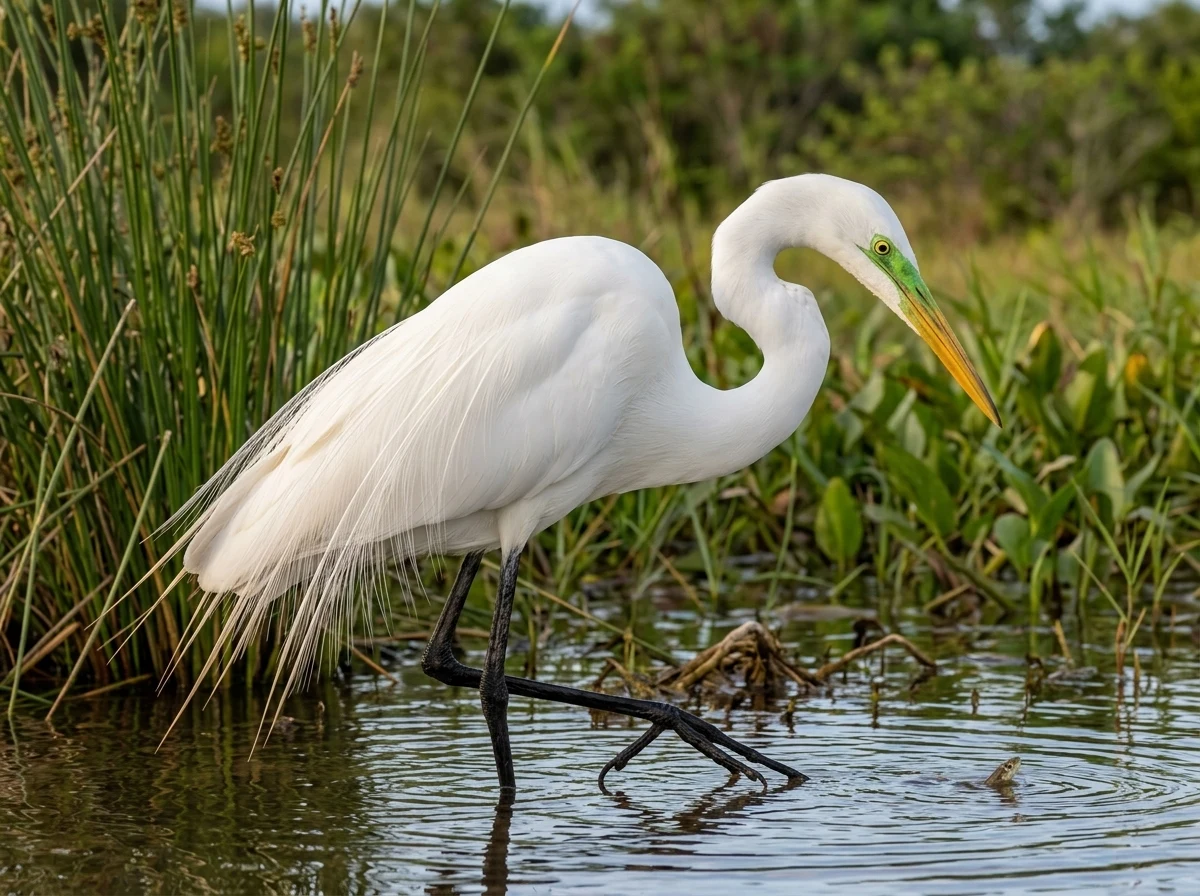
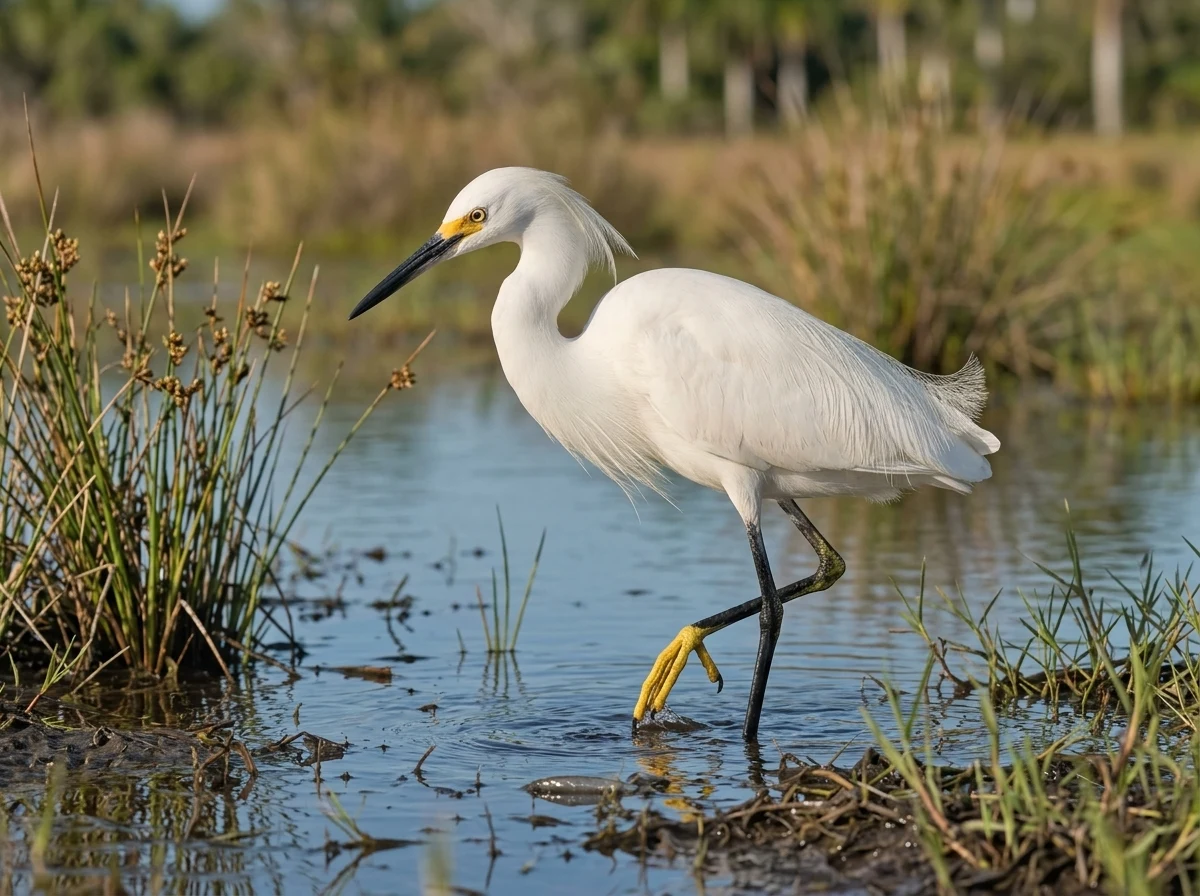
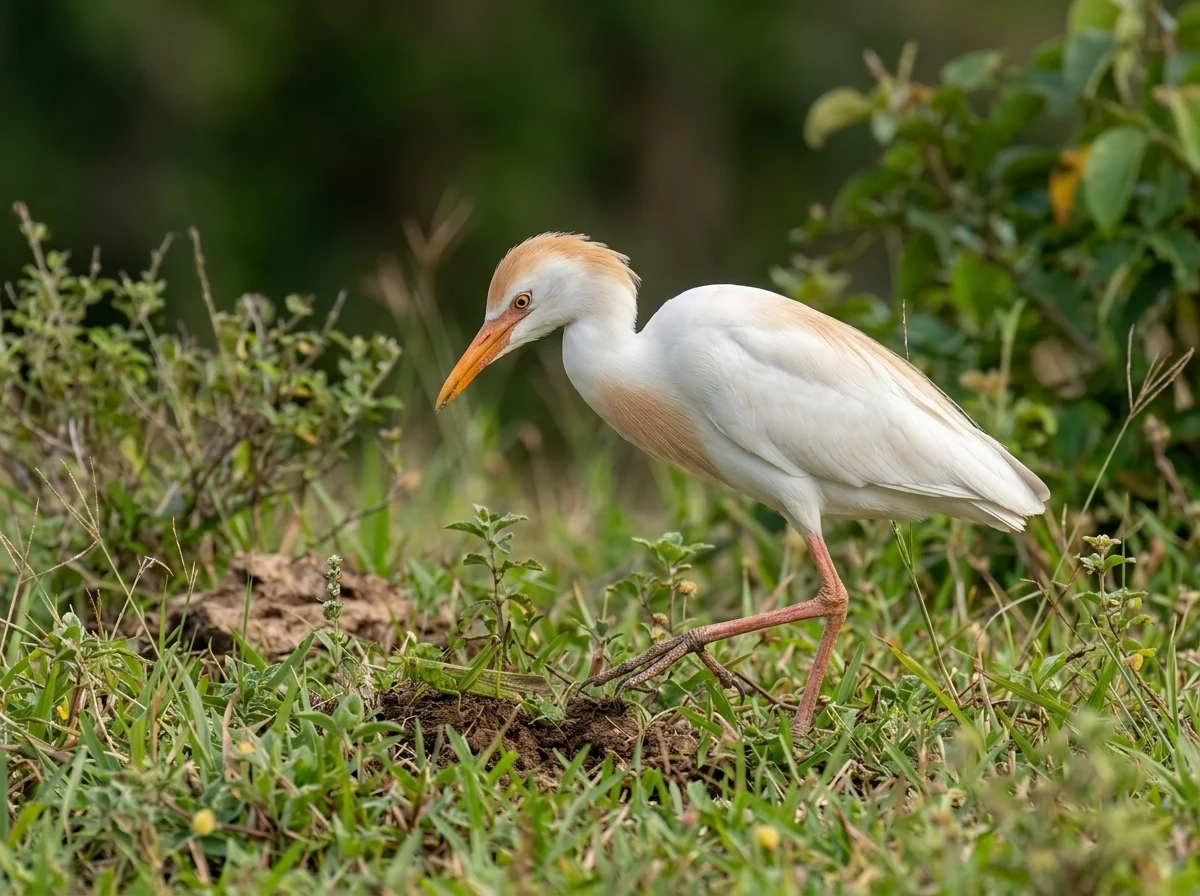
In Puerto Rico, the Great Egret (Ardea alba, Garza Real) is the large white heron with a yellow bill and black legs; the Snowy Egret (Egretta thula, Garza Blanca) is medium-sized with a black bill and black legs ending in yellow feet; and the Western Cattle-Egret (Ardea ibis, Garza Ganadera) is the shortest and stockiest, with a short yellow bill, and is usually in pastures or beside livestock.
The names are a trap. On the island, Garza Blanca is the official name for Snowy Egret, yet across much of the Spanish-speaking world garza blanca means Ardea alba, and in Spain garza real is a different, gray species. This guide always pairs the local name with the scientific and English names.
All three are native, resident, and not threatened. The Puerto Rico Breeding Bird Atlas (2004–2009) found Cattle Egret in 305 of 479 survey hexagons, Great Egret in 253, and Snowy Egret in 158, so almost any pond, pasture, or mangrove edge lets you practice the comparison.
White egrets
The three white egrets by the numbers
89–104 cmGreat EgretThe tallest; yellow bill, black legs.
56–66 cmSnowy EgretBlack bill, yellow feet.
46–56 cmCattle EgretCompact, about crow-sized.
305/479Atlas hexagons with Cattle EgretThe most widespread heron in the 2004–2009 atlas.
01
Start with bill and legs
If you only have a few seconds, look at the bill, then the legs. Long yellow bill and fully black legs: Great Egret. Thin black bill, a yellow patch between bill and eye (the lores), and black legs ending in bright yellow feet: Snowy Egret. Short, thick yellow bill, short neck, and legs that shift from yellowish or pink in breeding season to dusky the rest of the year: Cattle Egret.
Snowy Egret's feet are striking enough to earn the nickname golden slippers, but they disappear when the bird stands in water. Then the black bill against the yellow face remains the safest mark. Watch immature Snowy Egrets: their legs are duller and greenish, and they can look like another species if you judge by legs alone.
02
Size, neck, and silhouette
Great Egret measures 89 to 104 cm with a 1.4 m wingspan; beside the other two it looks like a different kind of bird, with a long S-curved neck and a slow, upright stance. Snowy Egret measures 56 to 66 cm and looks slimmer and busier. Cattle Egret, at 46 to 56 cm, is about crow-sized, more compact and chunkier than the other white herons.
In flight all three fold the neck into an S, as every heron does. That separates them from ibises, which fly with the neck stretched out. A white bird flying with its neck outstretched and a curved bill is not a heron at all; it is probably a White Ibis.
03
Where it is and what it does: the fastest clue
Cattle Egret is the only one of the three that lives away from water. Look for it in pastures with cows or horses, grassy roadsides, landfills, and places where tractors or mowers are working, because it catches the insects those animals and machines flush. If you see a small white heron walking in a park, next to a cow, or behind a highway mower, it is almost always a Cattle Egret.
Great Egret prefers ponds, lagoons, mangroves, canals, and urban streams, and usually fishes by standing still or walking slowly before striking. Snowy Egret is more active: it walks fast, runs in the shallows, and stirs the bottom with its feet to flush fish and crustaceans. The atlas lists the Cabo Rojo salt flats and the Boquerón reserve as regular places to see it.
04
The trap: juvenile Little Blue Heron and rarities
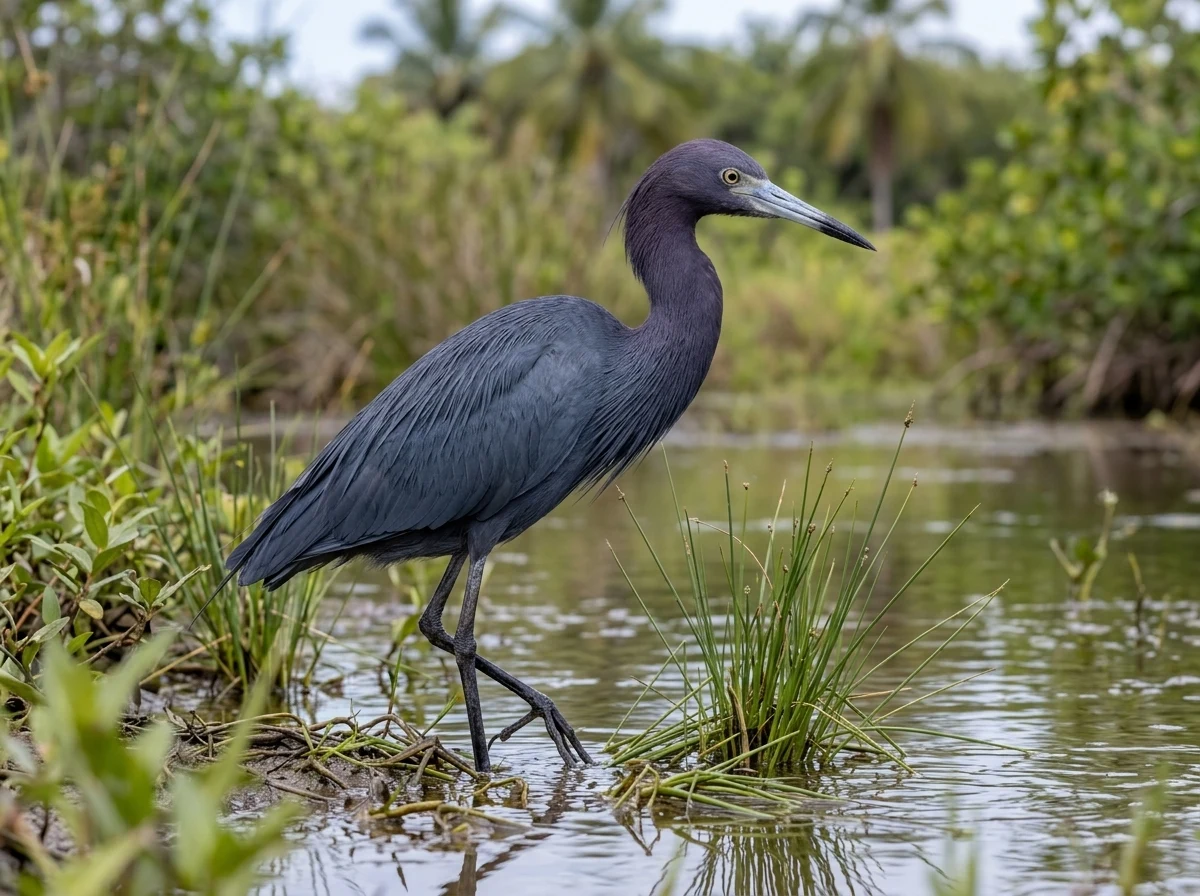
Little Blue Heron (Egretta caerulea, Garza Azul) starts out white. Juveniles look a lot like Snowy Egret, but they have a grayish-blue bill with a black tip, gray (not yellow) skin in front of the eye, and dull greenish legs without yellow feet. As they molt into blue adult plumage they pass through a patchy white-and-blue stage birders call calico. Little Blue Heron also fishes slowly and methodically, while Snowy Egret runs.
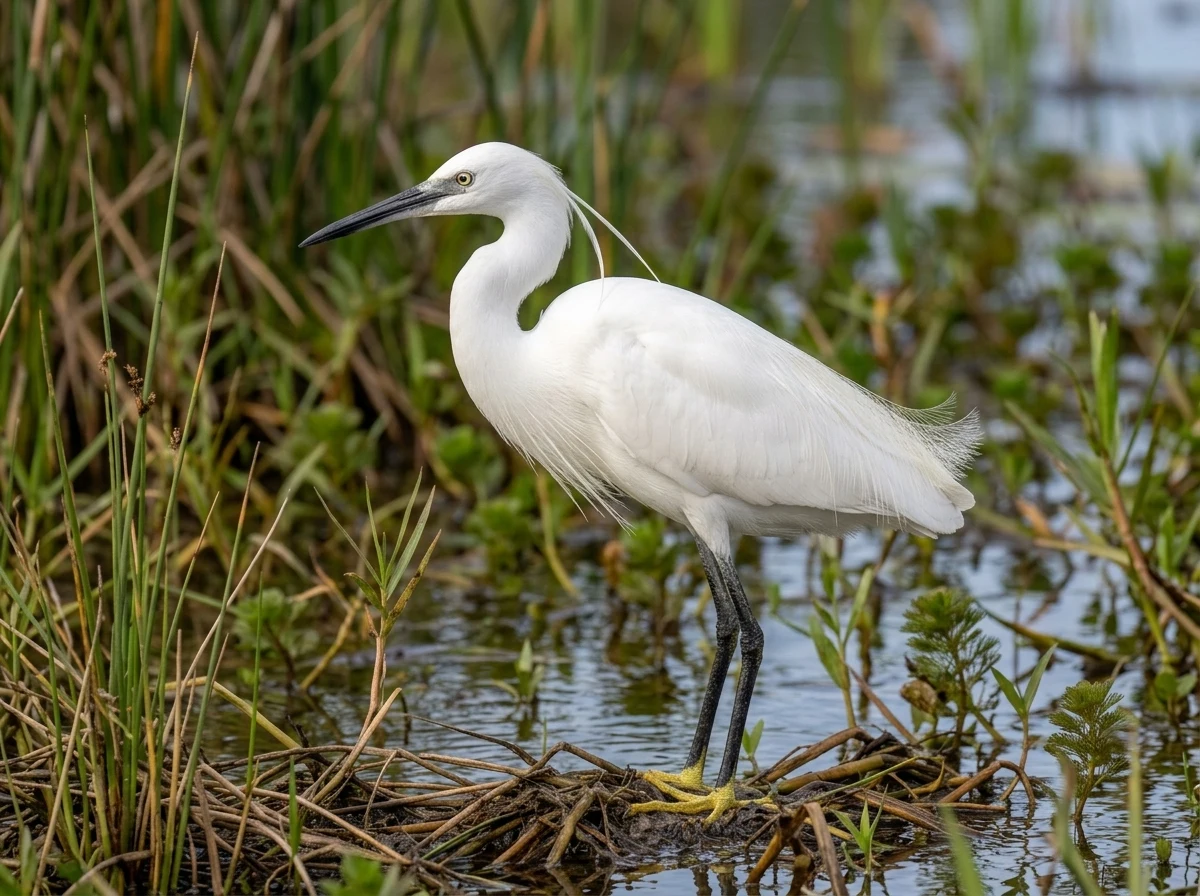
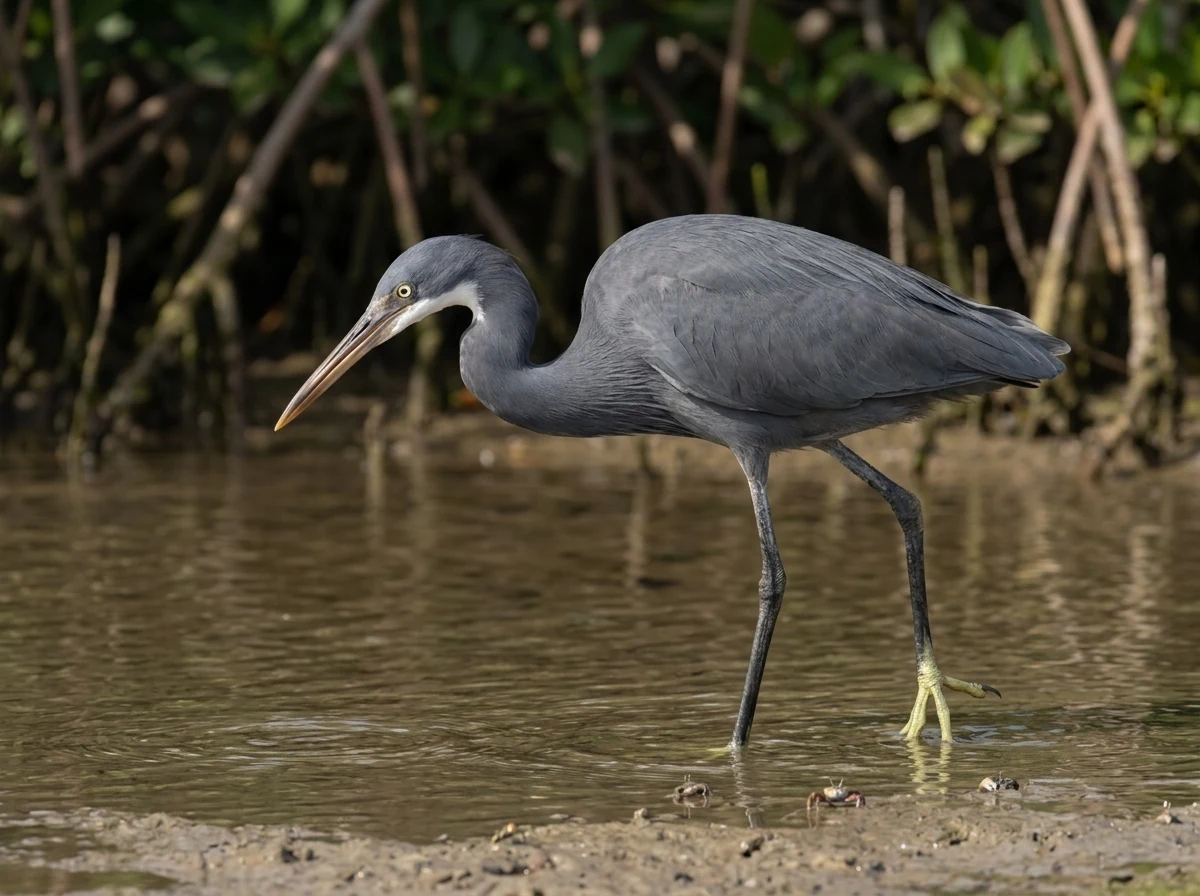
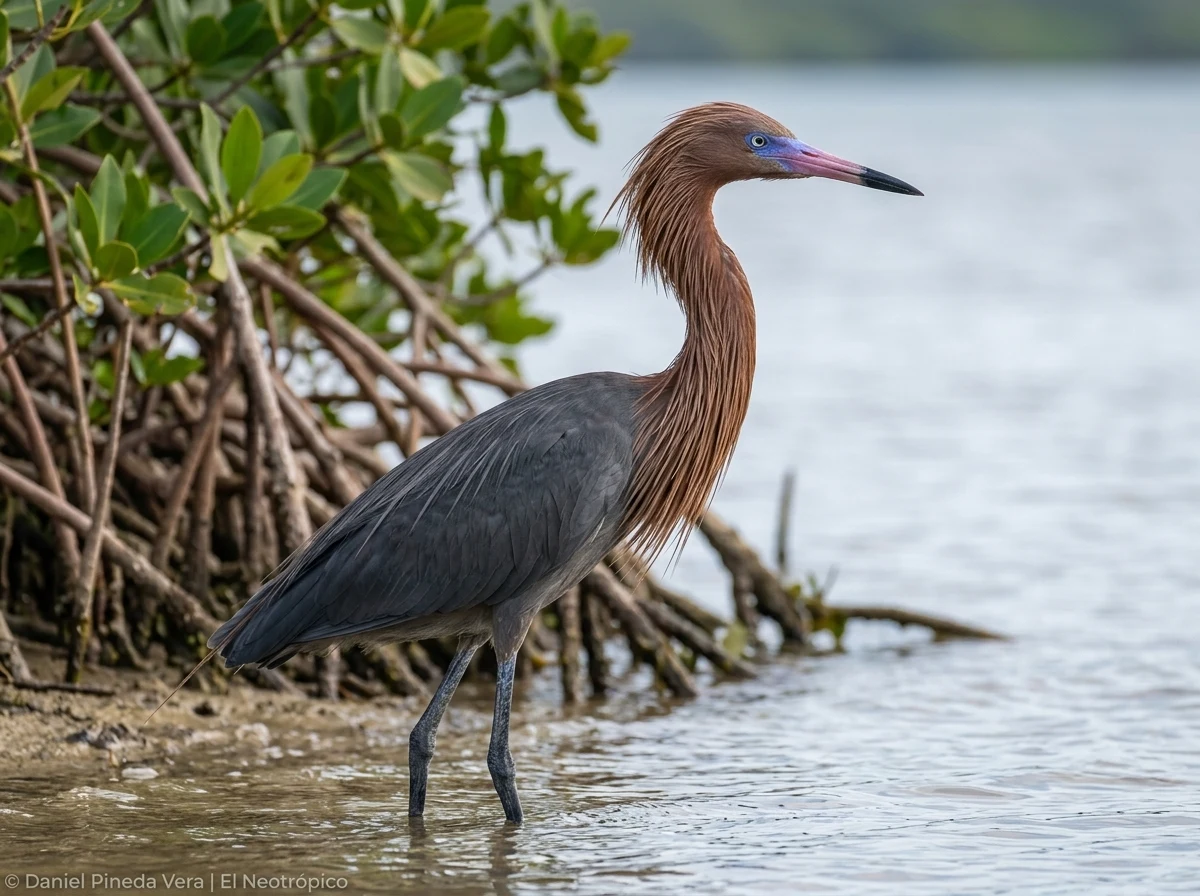
Other white herons are possible but rare. Little Egret (Egretta garzetta) and Western Reef-Heron (Egretta gularis) are treated as accidental in Puerto Rico and resemble Snowy Egret; Reddish Egret has a scarce white morph with a pink, black-tipped bill and no yellow feet. If a Snowy Egret looks odd, photograph the head, bill, legs, and feet before you report it.
05
Cattle Egret: a recent arrival
Cattle Egret is native to the Old World and reached the Americas on its own, without human help. According to Arendt (1988), it appeared in the Caribbean in 1933, stayed rare until 1944, and within about four years was being reported in Puerto Rico and Jamaica. The atlas summarizes that it settled on the island in the late 1940s and early 1950s, and today it is a common permanent resident, also present on Vieques, Mona, and Desecheo.
Its scientific name changed too. In 2024 the American Ornithological Society folded the old genus Bubulcus into Ardea and split two species: Western Cattle-Egret (Ardea ibis), the one in the Americas and Puerto Rico, and Eastern Cattle-Egret of Asia and Oceania. A search for Bubulcus ibis finds the same bird under its former name.
06
If you are drawing a white egret
Many people look up how to draw or color a white egret. To make the drawing look like a real species, choose which one first. For a Great Egret: long body, very long S-shaped neck, a straight dagger-like yellow bill, and long black legs. For a Snowy Egret: smaller, black bill with a yellow face, and above all yellow feet. For a Cattle Egret: short body, short neck, short yellow bill, and in breeding season patches of buff feathers.
One detail that makes a drawing look right: the joint that seems like a knee bending backward is actually the bird's ankle. If you draw it flying, fold the neck into an S and stretch the legs out behind. For coloring with children, these three egrets make a good observation exercise: the same color, but different bills, legs, and proportions.
Linked profiles
White herons of Puerto Rico
Three common species, one blue heron that starts white, and three rarities worth photographing.
Sound archive
Hear its voice
Explore real songs and calls. The spectrogram turns each sound into a visual trace of time and frequency.
XC1091707Recording 1 of 3flight call

Play: flight call by Francesco Sottile
Choose another recording
Sound recorded by Francesco Sottile · XC1091707 · CC BY-NC-SA 4.0. Visualization by Stichting Xeno-canto voor Natuurgeluiden.
Every recording retains the creator, catalogue number, and license published by Xeno-canto. Metadata via GBIF ↗
01
What is the difference between a Snowy Egret and a Cattle Egret?
Snowy Egret (Egretta thula) has a thin black bill, yellow face, and black legs with yellow feet, and it fishes in shallow water. Cattle Egret (Ardea ibis) is shorter and stockier, with a short yellow bill and short neck, and it feeds on insects in pastures, beside livestock, or behind mowers.
02
Which white heron has a yellow bill and black legs?
The Great Egret (Ardea alba), Puerto Rico's largest white heron at 89 to 104 cm long. Cattle Egret also has a yellow bill, but it is far smaller with a short bill, and its legs are not black in breeding season.
03
Why are there white egrets in pastures with cows?
They are Cattle Egrets. They walk beside livestock, horses, and even tractors or mowers because they catch the insects those flush. It is Puerto Rico's most widespread heron: the atlas found it in 305 of 479 hexagons.
04
Can a small white heron be a Little Blue Heron?
Yes. Juvenile Little Blue Herons are white through their first year. They differ from Snowy Egret by a grayish-blue bill with a black tip, gray skin in front of the eye, and greenish legs without yellow feet.
05
Is the Cattle Egret native to Puerto Rico?
It arrived on its own, not through human introduction. It spread from the Old World through South America and the Caribbean and settled in Puerto Rico in the late 1940s and early 1950s. Because it colonized naturally it is treated as native, and today it is a common resident.
06
What is the white heron called in Puerto Rico?
It depends on the species. The official local name Garza Blanca belongs to Egretta thula (Snowy Egret); the large yellow-billed one is Garza Real (Ardea alba, Great Egret), and the pasture bird is Garza Ganadera (Ardea ibis, Cattle Egret).
Keep exploring
Connected routes
Sources and review
The evidence is one link away.
These sources support the editorial scope of this guide. Bird profiles also retain their own taxonomy, occurrence, and conservation references.
Reviewed:
01↗02↗03↗04↗05↗06↗07↗08↗09↗10↗11↗
U.S. Forest Service Research and Development
Puerto Rico Breeding Bird Atlas
Distribution and breeding timing for 130 species breeding in Puerto Rico and its satellite islands.National Audubon Society
Field guide: Great Egret
Measurements (89–104 cm, 1.4 m wingspan), yellow bill and black legs, diet, nesting, and its role as the Audubon symbol after the plume trade.National Audubon Society
Field guide: Snowy Egret
Measurements, black bill, yellow lores, black legs with yellow feet, and active foraging that stirs the bottom with the feet.National Audubon Society
Field guide: Western Cattle-Egret
Measurements (46–56 cm), compact shape, short yellow bill, buff breeding plumes, and foraging beside livestock and mowers.Colonial Waterbirds 11:252–262 (Arendt, 1988), U.S. Forest Service
Range expansion of the Cattle Egret in the Caribbean Basin
Arrival in the Caribbean in 1933, rarity until 1944, and records in Puerto Rico and Jamaica about four years after the Aruba sighting.Sociedad Ornitológica Puertorriqueña
Official bird list
Local names, occurrence categories, and the public summary of 17 endemics.Birds of Puerto Rico (resumen del Atlas de Aves Reproductoras)
Cattle Egret in Puerto Rico
Common permanent resident, arrival in the late 1940s and early 1950s, and 560 records in 305 atlas hexagons.U.S. Fish and Wildlife Service
Cabo Rojo National Wildlife Refuge
Habitats, focal birds, conservation, trails, and official refuge notices.National Audubon Society
Field guide: Little Blue Heron
Slate-blue adult plumage, blue bill with a black tip, white juveniles, the calico phase, and slow foraging.National Audubon Society
Field guide: Reddish Egret
Dark and white morphs, shaggy neck, pink bill base in breeding, and foraging by running and shading water with the wings.American Birding Association
Checklist Redux 2024 (AOS changes)
Merger of Bubulcus into Ardea and the split into Western Cattle-Egret (Ardea ibis) and Eastern Cattle-Egret.The atlas continues