 AI
AIIdentification
Brown Pelican vs American White Pelican
A practical guide to separating two pelicans that share a silhouette but differ in size, plumage, flight, and feeding style.
Reviewed:Prepared with AI assistance and linked sources. Illustrations are not field photographs.
Two pelicans, two strategies
The Brown Pelican (Pelecanus occidentalis) and the American White Pelican (Pelecanus erythrorhynchos) are the two pelican species in the Puerto Rico bird catalog, but they do not share the same status or behavior. The Brown Pelican is a native, resident, breeding species in the archipelago, associated with marine coasts, bays, mangroves, and cays. The American White Pelican is listed as native, accidental or vagrant, non-resident, and non-breeding in Puerto Rico.
The most useful field difference is not only color. The American White Pelican is much larger, often flies in flocks that soar in circles, and catches fish by swimming at the surface without plunge-diving. The Brown Pelican plunge-dives from the air. This combination of size, color, and feeding method resolves most observations.
Identification
Quick keys
Blanco con negroAdult plumageThe American White Pelican is almost entirely white, with black flight feathers most visible in flight.
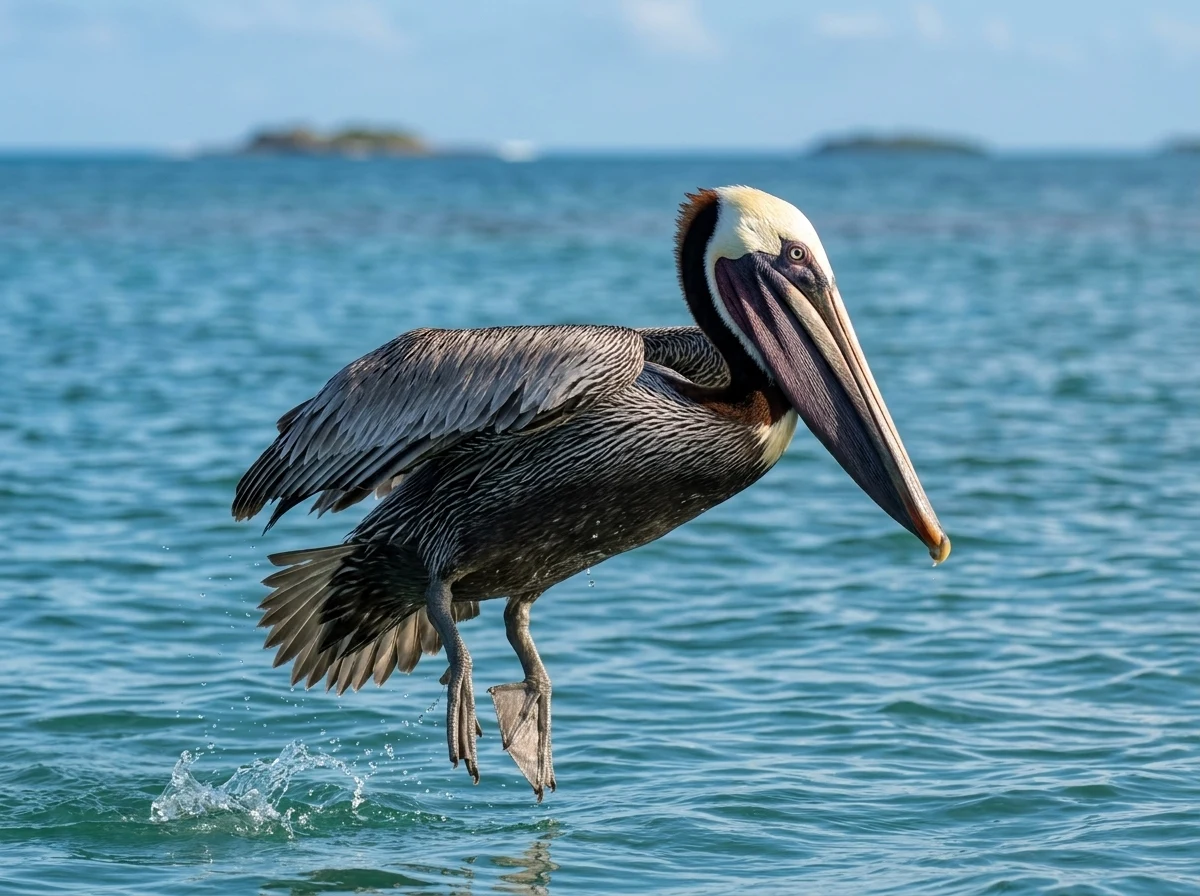
Pardo grisáceoAdult plumageThe Brown Pelican has a grayish-brown body and a neck with dark brown or white tones depending on the season.
Se zambulleFeedingThe Brown Pelican catches fish by diving into the water from the air; the white pelican does not.
01
Size and silhouette: the first clue
The American White Pelican is one of the largest birds in North America. The consulted sources give a length of about 1.4 to 1.8 meters and a wingspan of 2.5 to 2.9 meters. The Brown Pelican is clearly smaller, with an average body mass of about 3 kilograms according to the catalog. In a mixed flock or a distant photo, that difference in size and wing proportion is usually the first thing that stands out.
Silhouette also helps. The American White Pelican has a very long, flat bill with a large gular pouch, and in flight it shows broad, fingered wings that allow it to soar. The Brown Pelican, although it also has a large bill and pouch, is more compact and its flight is more flapping and direct over the water. If the bird is perched, compare its size with nearby birds: the white pelican often stands out as an enormous figure even among herons.
02
Color and plumage: white and black versus grayish brown
The adult American White Pelican is almost unmistakable: plumage almost entirely white, with black primary and secondary flight feathers that are barely visible when perched but contrast strongly in flight. During the breeding season, the bill, the bare skin around the eye, and the feet become bright orange, and both sexes grow a vertical horn on the bill that is shed after egg-laying. Outside breeding, the bare parts become duller and the bill may look pinkish-orange.
The adult Brown Pelican is not white. Its body is grayish brown and the neck can be dark brown or white depending on season and age. In breeding plumage, the head is white with a yellowish wash on the crown and the neck is dark brown; in non-breeding plumage, the head and neck are white and the skin around the eye becomes dull gray. The Brown Pelican's gular pouch is olivaceous ochre-tinged, and the legs range from olivaceous gray to blackish-gray. None of these descriptions should be confused with the almost pure white of the American White Pelican.
03
Flight and feeding: plunge-diving versus cooperative fishing
The behavioral difference is perhaps the most definitive. The American White Pelican obtains food by dipping its bill into the water and scooping up fish with the pouch; it does not plunge-dive from the air like the Brown Pelican. It is also known for cooperative foraging: coordinated flocks swim in circles or drive fish into shallows, where they catch them with synchronized bill movements. In flight, the white pelican is a spectacular soarer and often forms flocks that rise in thermals.
The Brown Pelican, by contrast, dives into the water from the air to catch fish, and it occasionally eats amphibians, crustaceans, and the eggs or nestlings of other birds. This difference can be observed at a distance: if the bird plunges down, it is a Brown Pelican; if it swims in a group and dips its bill without diving, it is a white pelican. In Puerto Rico, the Brown Pelican is the one regularly seen along coasts and bays; the white pelican is a rarity and should be documented carefully.
04
Status in Puerto Rico: resident versus vagrant
The Puerto Rico bird catalog classifies the Brown Pelican as a native, resident, and breeding species, present along marine coasts, bays, mangroves, and cays. Its internal review has high confidence and a caveat: although the species is listed at the Commonwealth level as endangered, federal Endangered Species Act status should not be inferred from old sources. For identification, the important point is that the Brown Pelican is the expected pelican in Puerto Rican coastal waters.
The American White Pelican appears in the catalog as native, accidental or vagrant, non-resident, and non-breeding in Puerto Rico. This means it should not be presented as a common or resident species. Any observation of an American White Pelican in the archipelago is a rare event that deserves documentation: photos, date, location, and, if possible, notes on behavior. The eBird page for Puerto Rico could not be read in the retrieved source, so it is not used here to claim abundance or frequency.
Linked profiles
The two species in the catalog
The Brown Pelican is resident and breeding; the American White Pelican is accidental or vagrant and non-breeding in Puerto Rico.
AI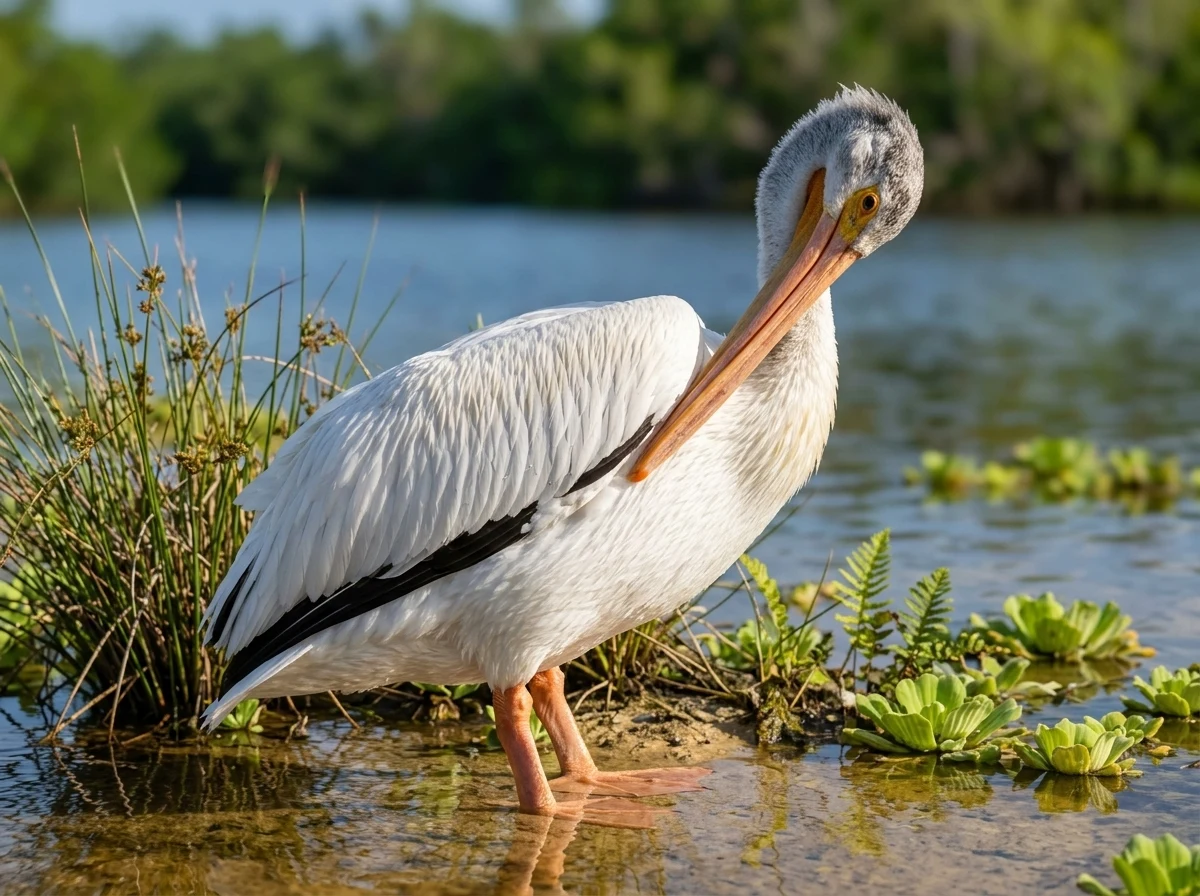 AI
AI01
What is the easiest difference to see between them?
Overall color and size. The adult American White Pelican is almost entirely white, with black in the wings visible in flight, and is much larger. The adult Brown Pelican is grayish brown, with a dark brown or white neck depending on the season, and is clearly smaller.
02
Does the American White Pelican plunge-dive like the Brown Pelican?
No. The American White Pelican catches fish by swimming at the surface and dipping its bill into the water; it does not dive from the air. The Brown Pelican does plunge-dive from the air to catch fish.
03
Which of the two is common in Puerto Rico?
The Brown Pelican is the native, resident, and breeding species in Puerto Rico. The American White Pelican is listed as accidental or vagrant, non-resident, and non-breeding, so it should not be expected as part of the usual avifauna.
04
What should I do if I think I see an American White Pelican in Puerto Rico?
Document the observation with clear photos, date, time, and location, and note the behavior: whether it swam in a group, dipped its bill, or soared in circles. Because it is an accidental or vagrant species, careful documentation is valuable. Do not claim it is common or that it breeds on the island.
05
Does the American White Pelican have a horn on its bill?
Yes, during the breeding season both sexes grow a vertical keratinous horn on the upper bill, which is shed after egg-laying. It is the only one of the eight pelican species with that horn. The Brown Pelican does not have it.
Keep exploring
Connected routes
Sources and review
The evidence is one link away.
These sources support the editorial scope of this guide. Bird profiles also retain their own taxonomy, occurrence, and conservation references.
Reviewed:
The atlas continues