 AI
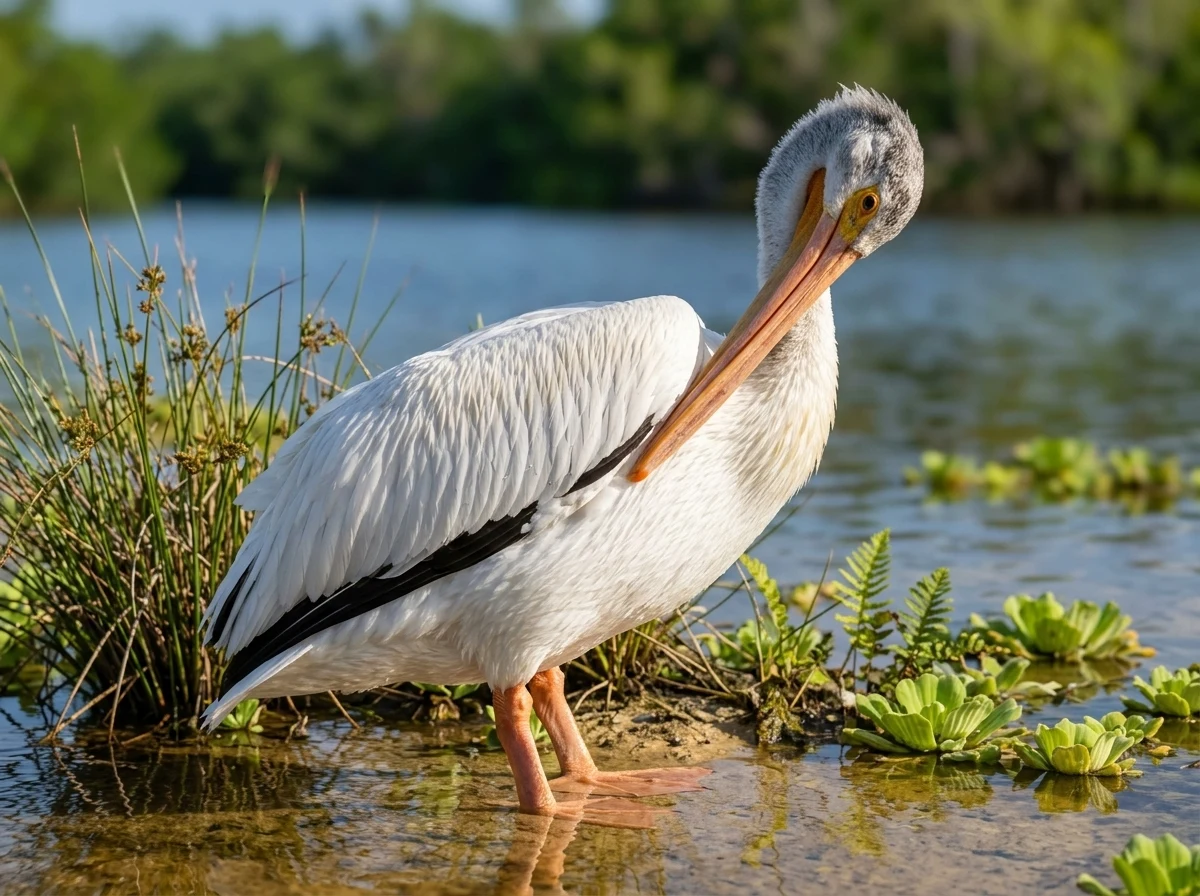
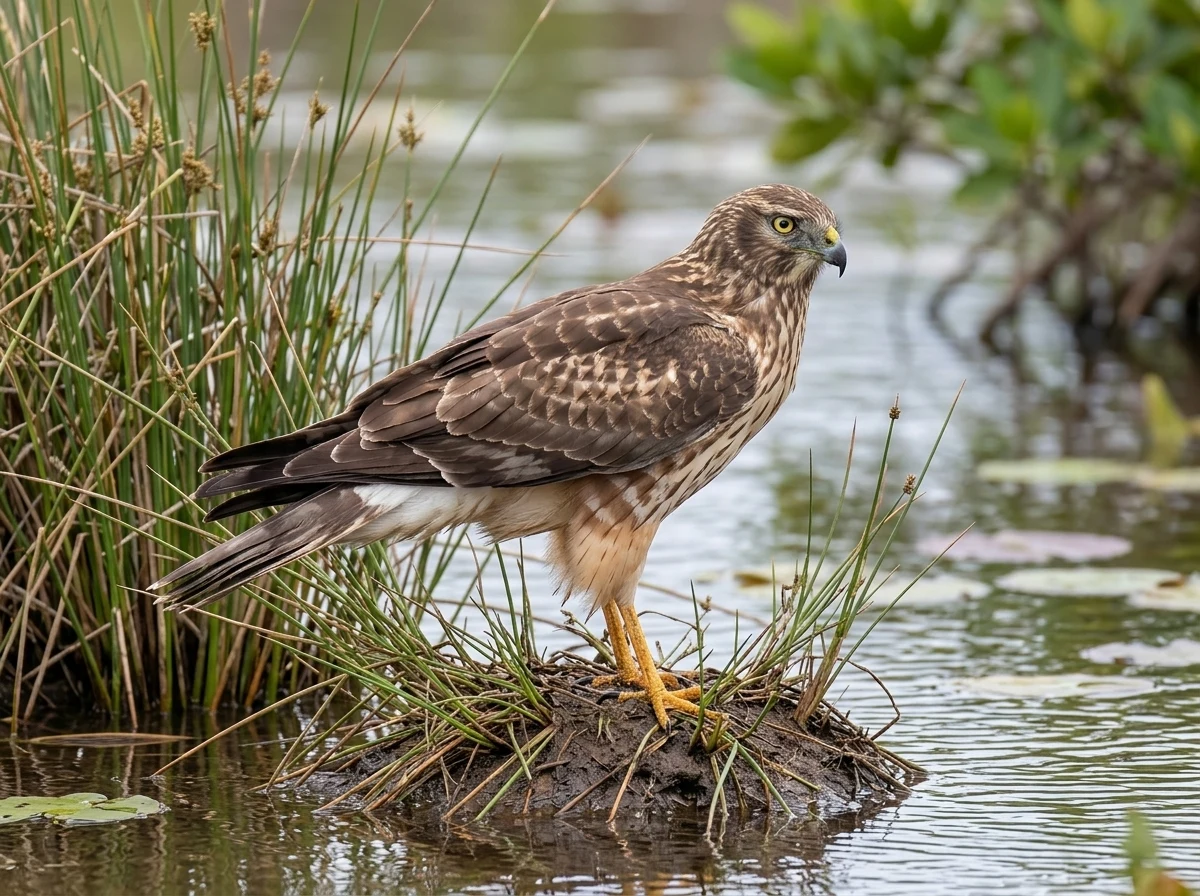
AIAI reconstruction created with Nano Banana 2 · 1K, grounded in the profile’s documented taxonomy, habitat, natural-history sources, and an open-license visual reference when available. It is an interpretive image, not documentary evidence. Image policy →
.jpg)
American White Pelican
Pelícano Blanco
Pelecanus erythrorhynchos
The American white pelican (Pelecanus erythrorhynchos) is a large aquatic soaring bird from the order Pelecaniformes. It breeds in interior North America, moving south and to the coasts, as far as Costa Rica, in winter. == Taxonomy == The American white pelican was formally described in 1789 by the German naturalist Johann Friedrich Gmelin in his revised and expanded edition of Carl Linnaeus's Systema Naturae. He placed it with the other pelicans in the genus Pelecanus. He coined the binomial name Pelecanus erythrorhynchos. Gmelin based his description on the "rough-billed pelican" that had been described in 1785 by the English ornithologist John Latham. Latham had access to three specimens that had been brought to London from New York and the Hudson Bay area of North America. The scientific name means "red-billed pelican", from the Latin term for a pelican, Pelecanus, and erythrorhynchos, derived from the Ancient Greek words erythros (ἐρυθρός) 'red' + rhynchos (ῥύγχος) 'bill'. The species is monotypic: no subspecies are recognised. == Description == The American white pelican rivals the trumpeter swan, with a similar overall length, as one of the longest birds native to North America. Both very large and plump, it has an overall length of about 50–70 in (130–180 cm), courtesy of the huge beak which measures 11.3–15.2 in (290–390 mm) in males and 10.3–14.2 in (260–360 mm) in females. It has a wingspan of about 95–120 in (240–300 cm). The species also has the second-largest average wingspan of any North American bird, after the California condor. This large wingspan allows the bird to use soaring flight for migration easily. Body weight can range between 7.7 and 30 lb (3.5 and 13.6 kg), although typically these birds average between 11 and 20 lb (5.0 and 9.1 kg). One mean body mass of 15.4 lb (7.0 kg) was reported. Another study found mean weights to be somewhat lower than expected, with eleven males averaging 13.97 lb (6.34 kg) and six females averaging 10.95 lb (4.97 kg). Among standard measurements, the wing chord measures 20–26.7 in (51–68 cm) and the tarsus measures 3.9–5.4 in (9.9–13.7 cm) long. The plumage is almost entirely bright white, except for the black primary and secondary remiges, which are hardly visible except in flight. From early spring until after breeding has finished in mid-late summer, the breast feathers have a yellowish hue. After molting into the eclipse plumage, the upper head often has a grey hue, as blackish feathers grow between the small wispy white crest. The bill is huge and flat on the top, with a large throat sac below, and, in the breeding season, is vivid orange in color, as is the bare skin around the eye and the feet. Iris coloration depends upon age and season, ranging from bright white to hazel to blue-gray. In the breeding season, both sexes grow a laterally flattened keratinous "horn" on the upper bill, located about one-third the bill's length behind the tip. This is the only one of the eight species of pelican to have a bill "horn". The horn is shed after the birds mate and lay their eggs. Outside the breeding season, the bare parts become duller in color, with the naked facial skin yellow and the bill, pouch, and feet a dull pink-orange. Apart from the difference in size, males and females look exactly alike. Immature birds have light grey plumage with a darker brownish nape and remiges. Their bare parts are dull grey. Chicks are naked at first, then grow white down feathers all over, before molting to the immature plumage.
Sound archive
Hear its voice
Explore real songs and calls. The spectrogram turns each sound into a visual trace of time and frequency.

Play: call, wing noise by Jonathon Jongsma
Choose another recording
Sound recorded by Jonathon Jongsma · XC175257 · CC BY-SA 4.0. Visualization by Stichting Xeno-canto voor Natuurgeluiden.
Every recording retains the creator, catalogue number, and license published by Xeno-canto. Metadata via GBIF ↗
Island profile
About the American White Pelican
This atlas includes American White Pelican (Pelecanus erythrorhynchos) with atlas status “Accidental / vagrant” within scope “Avibase inferred core 380.” Global trait data associate it primarily with wetland; consult the linked records to resolve its Puerto Rico habitat use.
Conservation
Least Concern
IUCN LC
- Global IUCN
- LC
- Puerto Rico DNER
- No current listing in source crosswalk
- Federal ESA
- No current listing in source crosswalk
- Critical habitat
- Not identified in source crosswalk
Natural history
How it lives
- Habitat
- wetlands
- Elevation
- 0–1300 m
- Nest
- Mound · Ground
- Clutch
- 1–6 eggs
- Social behavior
- Colonial
Keep exploring
This bird belongs to 6 paths through the atlas.
Guides featuring this bird
Follow this record beyond the profile.
Identification, sound, place, and explanatory guides connecting this species to larger questions.
See all related guides (2)
Related in the atlas
Where to fly next
Connected by taxonomy, habitat, occurrence, and conservation.
 AI
AI AI
AI AI
AI AI
AI AI
AI AI
AI
Evidence trail