 AI
AIIdentification in flight
Magnificent Frigatebird vs Brown Pelican in Flight
Two large seabirds, two ways of flying. Learn to separate them by silhouette before you see color.
Reviewed:Prepared with AI assistance and linked sources. Illustrations are not field photographs.
Why silhouette solves the question
The Magnificent Frigatebird (Fregata magnificens) and the Brown Pelican (Pelecanus occidentalis) are large seabirds that overlap over Puerto Rico's coasts, bays and open waters. At a distance, color often disappears against the sky or sea, but the overall shape of the body, tail and wings remains visible. That is why identification starts with silhouette.
This guide does not repeat the full species profiles. It focuses on one concrete question: what does each bird look like in flight? First it describes the features that separate the frigatebird from the pelican, then it proposes an observation routine, and it ends with frequently asked questions. For general context on each bird, it links to the seabird and pelican guides.
Identification in flight
Three keys to tell them apart
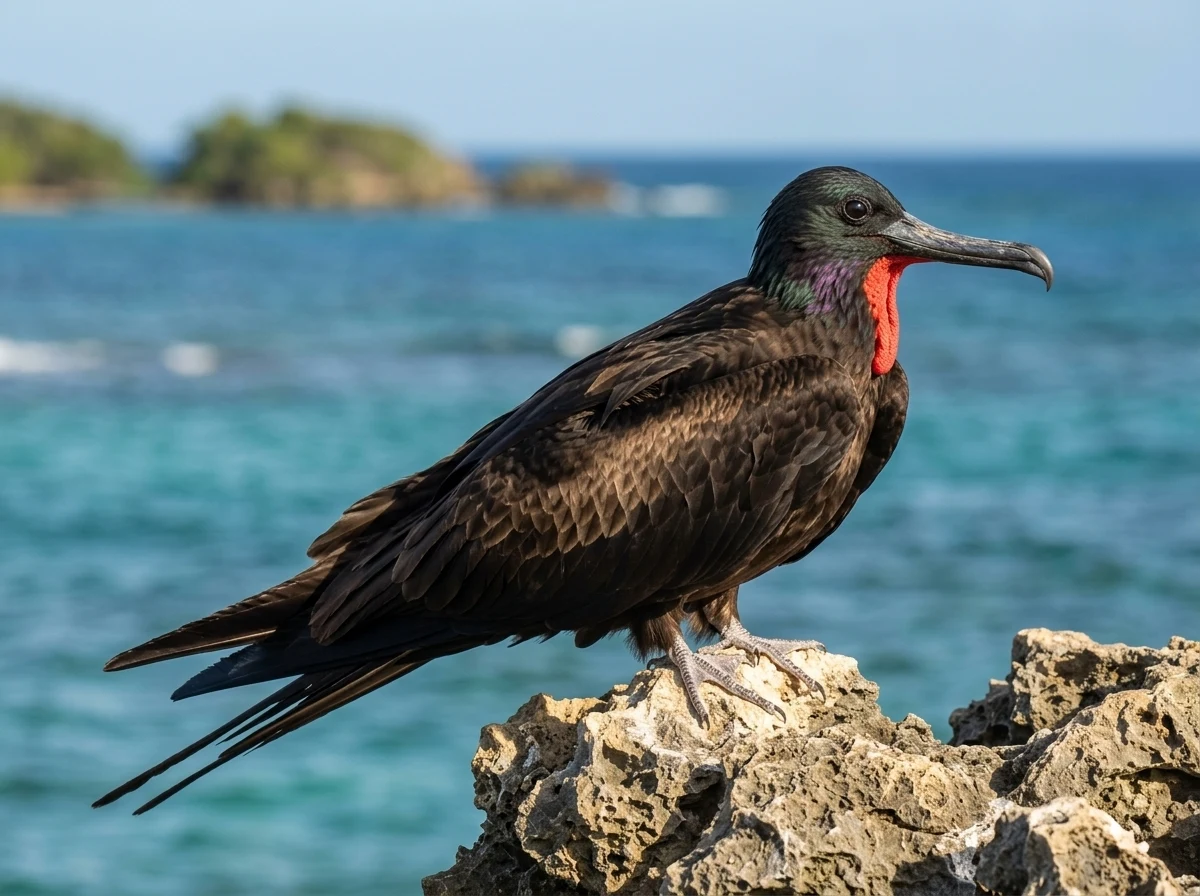
Cola ahorquilladaFrigatebird: forked tailThe deeply forked tail is the frigatebird's most distinctive flight feature.
Cuello recogidoPelican: neck and billThe pelican flies with its neck drawn back and a long, thick bill projecting forward.
Planeo vs. aleteoFlight rhythmThe frigatebird glides and turns often; the pelican alternates flaps and short glides.
01
The frigatebird: long wings and a forked tail
The frigatebird is a large, lightly built seabird with brownish-black plumage, long narrow wings and a deeply forked tail. That scissor-like tail is the fastest giveaway in flight, even against the light. The wings look long and angular, and the body seems small compared with the wingspan.
In flight, the frigatebird often glides and turns, using air currents over the coast. It does not dive to fish: according to BirdsCaribbean, it feeds by skimming food off the water's surface or stealing it from other birds, and it cannot dive. That limitation explains why you will not see it plunge like a pelican. Its flight is more about gliding and pursuit than diving.
02
The Brown Pelican: heavy body and long bill
The Brown Pelican is a member of the pelican family, Pelecanidae, one of three species found in the Americas and one of two that feed by diving into water. In flight, its body looks heavier and more compact than the frigatebird's. The neck is drawn back against the shoulders and the long, thick bill projects forward, with the gular pouch visible underneath.
The pelican's wings are broad and its wingbeat is slower. It alternates several flaps with short glides, often low over the water. When it feeds, it plunges from the air, a behavior the frigatebird does not perform. That difference in hunting method is a behavioral clue as useful as shape.
03
Side-by-side comparison
If you see both birds in the same field of view, start with the tail. The frigatebird's is forked and long; the pelican's is short and square. Then look at the neck: the frigatebird holds it extended and the pelican draws it back. Next, check the bill: the pelican's is long, thick and pouched; the frigatebird's is shorter and hooked.
Flight rhythm also helps. The frigatebird glides more and flaps less often; the pelican beats its wings more continuously and heavily. If the bird plunges into the water, it is a pelican. If it chases another bird to steal food, it is a frigatebird. These differences hold up at a distance and in difficult light.
04
Observation routine on the coast
Choose a fixed point with a wide view of the sea or a bay, preferably with the sun at your back. First watch the most distant birds and mentally note the overall shape. Then follow each bird for several seconds to see whether it glides, flaps or dives. Do not rely on color alone: against the light, both can look dark.
A useful routine is: 1) locate the bird; 2) check the tail; 3) check the neck and bill; 4) watch the flight rhythm; 5) note whether it dives or chases another bird. If you can, repeat the observation on different days and at different times. With practice, the silhouette is recognized before the color. For more context on seabirds, see the Puerto Rico seabird guide.
Linked profiles
The two species in this comparison
General profiles for context; this guide focuses on flight silhouette.
AI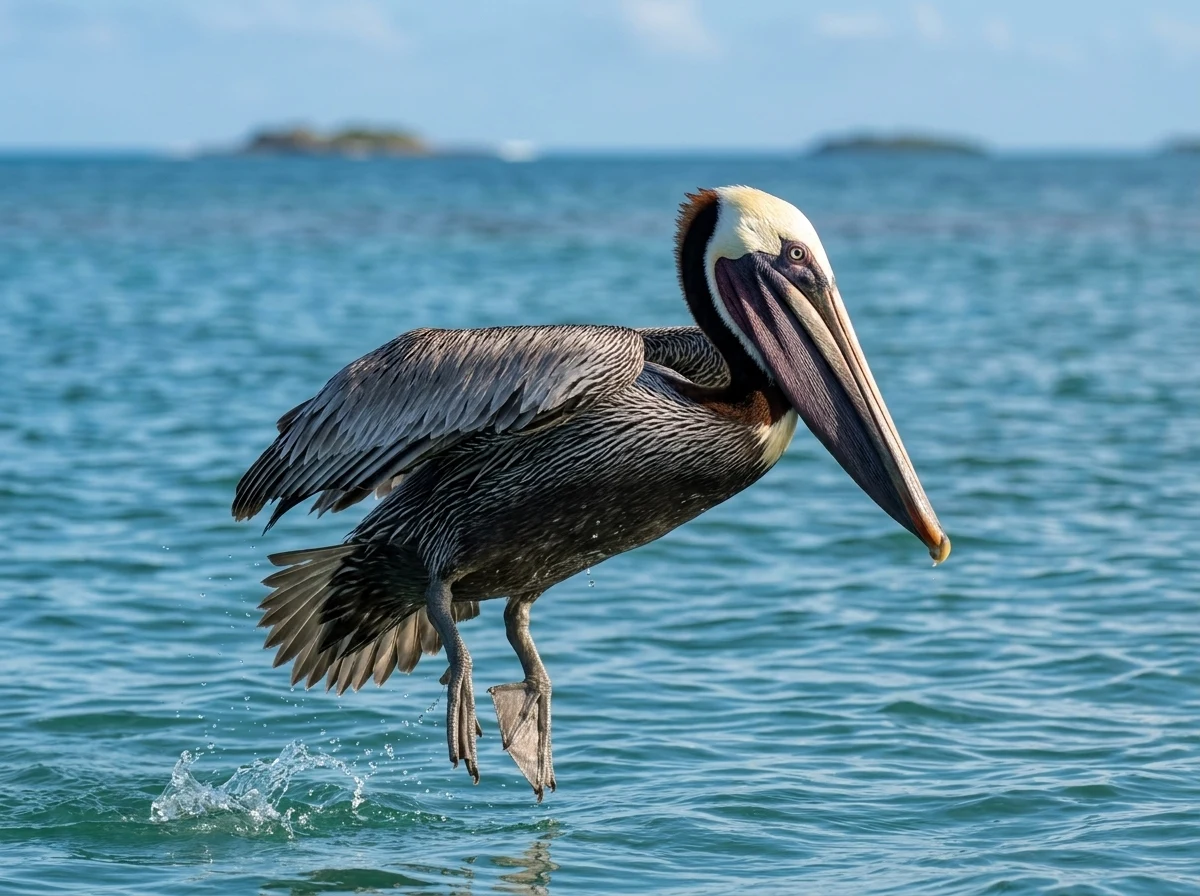 AI
AI01
What is the fastest difference between a frigatebird and a pelican in flight?
The tail. The frigatebird's is deeply forked and long; the pelican's is short and square. If the tail is not clear, look at the neck: the pelican holds it drawn back and the frigatebird extended.
02
Does the frigatebird dive to fish?
No. According to BirdsCaribbean, the frigatebird feeds by skimming food off the water's surface or stealing it from other birds; it cannot dive. The Brown Pelican does plunge from the air to catch fish.
03
Can they be confused at a distance?
Yes, if you only see a dark silhouette against the sky. In that case, wait for the bird to turn or come closer. The forked tail and the drawn-back neck are the features that resolve the doubt when color does not help.
04
Are both species found in Puerto Rico?
Yes. The Puerto Rico bird catalog records the Magnificent Frigatebird (Fregata magnificens) and the Brown Pelican (Pelecanus occidentalis) as native species of natural occurrence. This guide does not infer abundance; it only confirms their documented presence.
05
What should I note to document my observation?
Note the date, time, location, approximate distance, tail shape, neck posture, flight rhythm and whether the bird dived or chased another. Those details help separate the two species even without a photo.
Keep exploring
Connected routes
Sources and review
The evidence is one link away.
These sources support the editorial scope of this guide. Bird profiles also retain their own taxonomy, occurrence, and conservation references.
Reviewed:
The atlas continues