 AI
AIIdentification
Sanderling vs Ruddy Turnstone
Two common shorebirds of coasts and beaches, with different feeding strategies. Learn to separate them using visible characters and behavior.
Reviewed: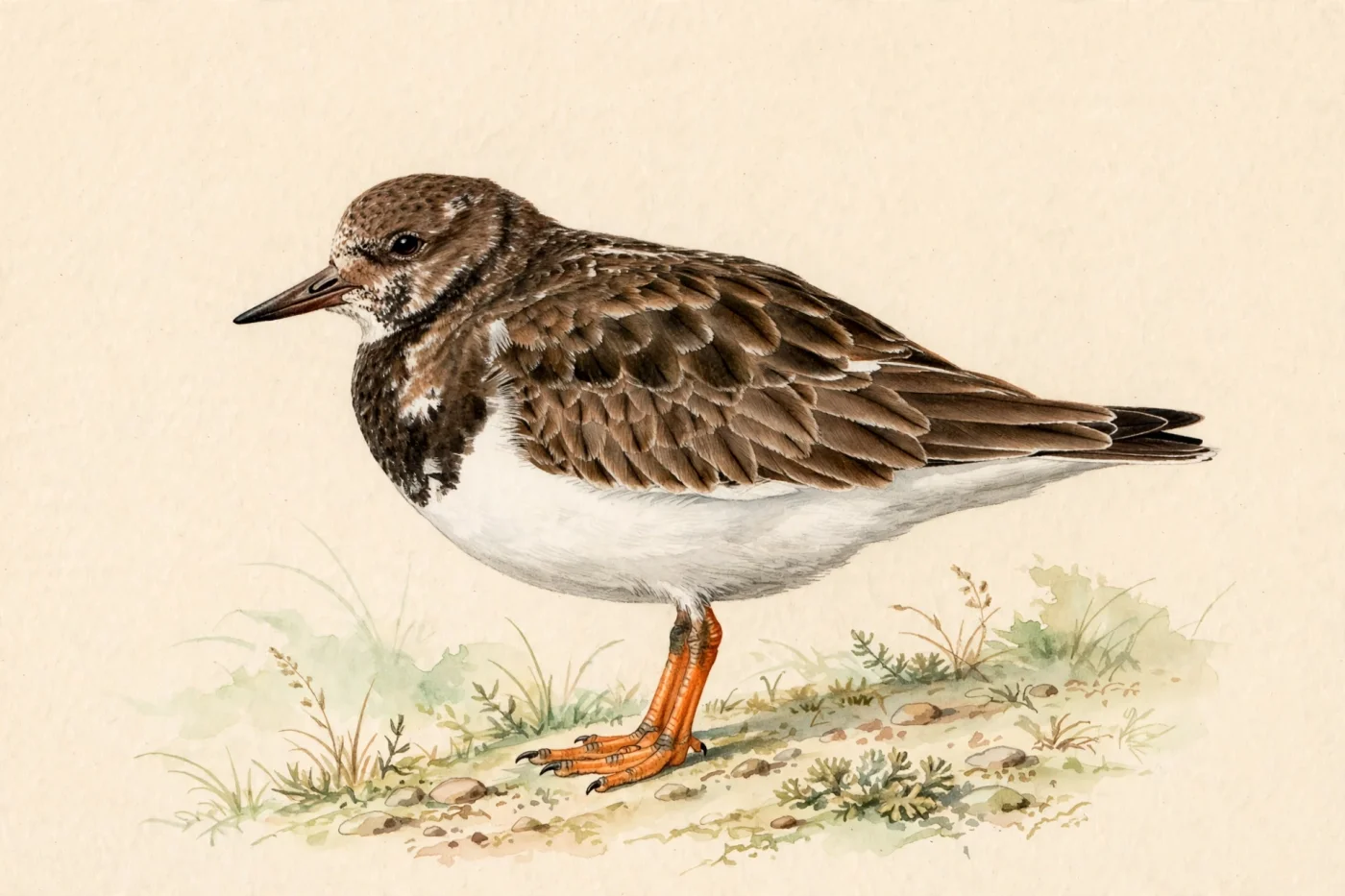
Prepared with AI assistance and linked sources. Illustrations are not field photographs.
Two shorebirds, two strategies
The Sanderling (Calidris alba) and the Ruddy Turnstone (Arenaria interpres) share beaches, coasts, and shorelines, but they do not behave the same way. The Sanderling is small, pale, and active, running after receding waves. The Ruddy Turnstone is stockier, with orange legs and a short bill, and uses its bill to flip stones, shells, and debris.
This guide answers the specific question of how to tell them apart in the field. It uses visible characters, habitat, and behavior supported by Audubon, BirdsCaribbean, and the Puerto Rico bird catalog. It does not replace a general guide: it links to shorebird and beach bird guides for context.
Identification
Quick keys
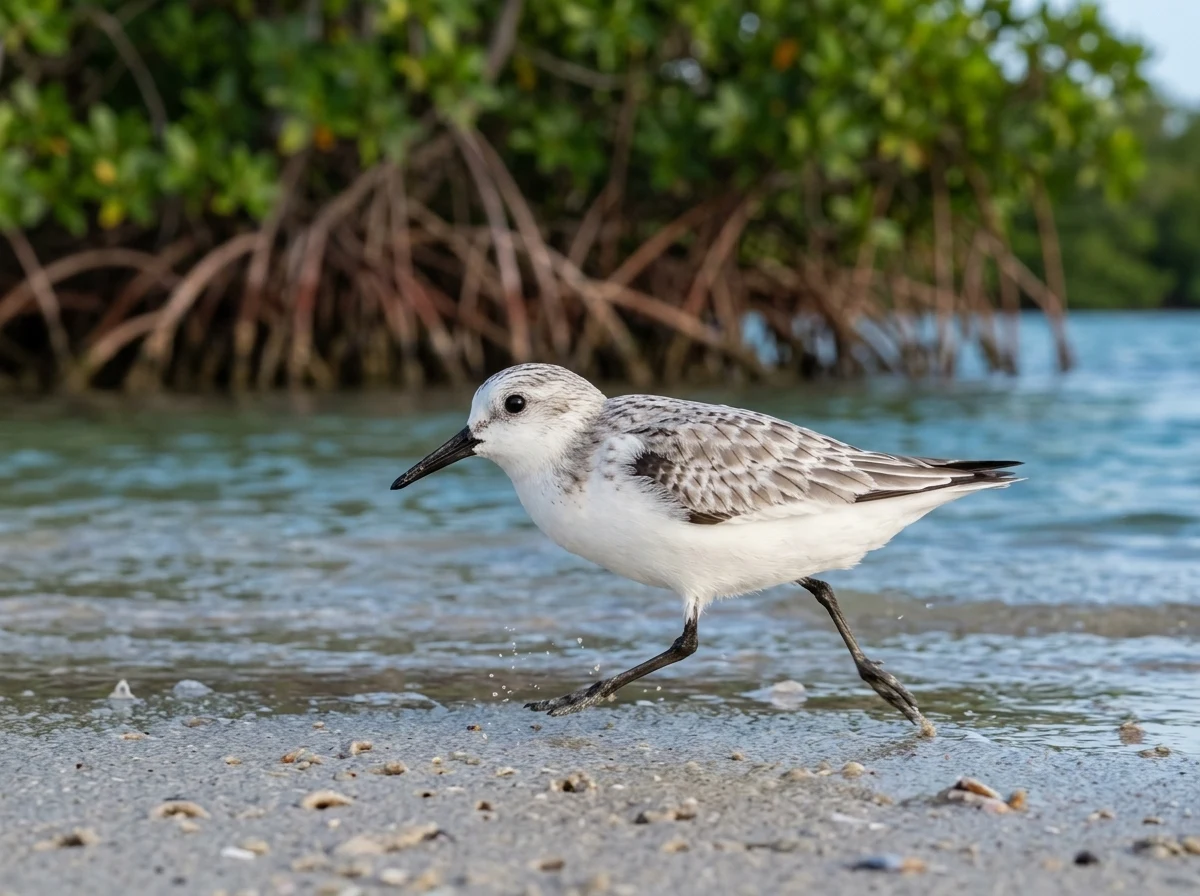
Pequeño y pálidoSanderlingSmall, pale bird with black legs and straight black bill; runs after waves.
Robusto y anaranjadoRuddy TurnstoneChunky bird, orange legs, short bill; flips objects on the shore.
ComportamientoQuick separationSanderling chases the wash zone; turnstone searches under stones and seaweed.
01
Size, legs, and bill
The Sanderling measures about 18 to 20 cm in length, with a wingspan of 35 to 41 cm and a weight of 40 to 90 g. It is very pale and plain in nonbreeding plumage, which it wears most of the year. It has a straight, stout black bill, blackish legs, and a black shoulder smudge that may be bold or hidden. In flight it shows a bold white wing stripe. In breeding plumage, worn briefly, it shows rich reddish brown on the head and foreparts.
The Ruddy Turnstone is larger and chunkier: 22 to 25 cm long, with a wingspan of 48 to 52 cm and a weight of 85 to 190 g. It has orange legs and a short bill. In breeding plumage it is unmistakable: bright reddish back, black chest patches, and black-and-white face. In fall and winter it is dull dark brown above, with a dark chest pattern. The size difference and leg color are usually enough to separate them at a reasonable distance.
02
Behavior: running versus flipping
The Sanderling is known for running up and down the beach, chasing receding waves. This behavior allows it to catch sand crabs and other invertebrates buried in the intertidal zone, which are easiest to spot just after a wave retreats. It also probes in sand and mud, and moves rapidly while picking items from the surface.
The Ruddy Turnstone is named for its feeding method: it inserts its bill under stones, shells, and debris, and flips them over to find invertebrates underneath. Several birds may work together to overturn a larger object. It also probes under seaweed or debris. In the breeding season it eats mostly insects, spiders, seeds, berries, and moss; at other seasons it eats crustaceans, mollusks, worms, sea urchins, and small fish. This behavioral difference is the fastest way to separate them when plumage is not conclusive.
03
Habitat and occurrence in Puerto Rico
The Sanderling is found on outer beaches, tideflats, and lake shores; at most seasons it appears on sandy beaches washed by waves. It sometimes uses rocky shorelines and, less often, mudflats. It is typically coastal, though a few stop over on inland lakes. The Ruddy Turnstone uses beaches, mudflats, jetties, and rocky shores; in migration and winter it favors rocky shorelines, rock jetties, or beaches covered with seaweed or debris. It may also feed on mudflats or on plowed fields near the coast.
In the Puerto Rico bird catalog, both species are listed as native or natural occurrence, non-resident and non-breeding in the archipelago. Abundance is not inferred from these records. BirdsCaribbean notes that the Ruddy Turnstone is observed in the Caribbean mainly from August to May on beaches and lagoons, and that yearlings stay on the islands in June and July because they breed only in their second year. For the Sanderling, the Audubon source describes its global coastal presence, but Puerto Rico occurrence must come from the local catalog, not from abundance inference.
04
Field exercise: separate the two species
When you observe a group of shorebirds on the shore, follow this procedure. First, without approaching, scan the group and note relative size: are there small, pale birds alongside stockier, darker birds? Second, look at the legs: black in the Sanderling, orange in the Ruddy Turnstone. Third, observe behavior for at least one minute: does the bird run after waves or flip stones and seaweed? Fourth, check the bill: straight and black in the Sanderling, short and thicker in the Ruddy Turnstone. Fifth, if the bird flies, look for the Sanderling's bold white wing stripe.
You can turn this into a five-point checklist: size, leg color, behavior, bill shape, and flight pattern. Record each point as yes, no, or uncertain. If three or more points match, the identification is reasonably secure. If in doubt, document with photos or video and consult the general shorebird and beach bird guides. Do not use playback to attract shorebirds on the shore; the exercise is based on passive observation.
Linked profiles
The two species
Catalog profiles for the Sanderling and Ruddy Turnstone.
AI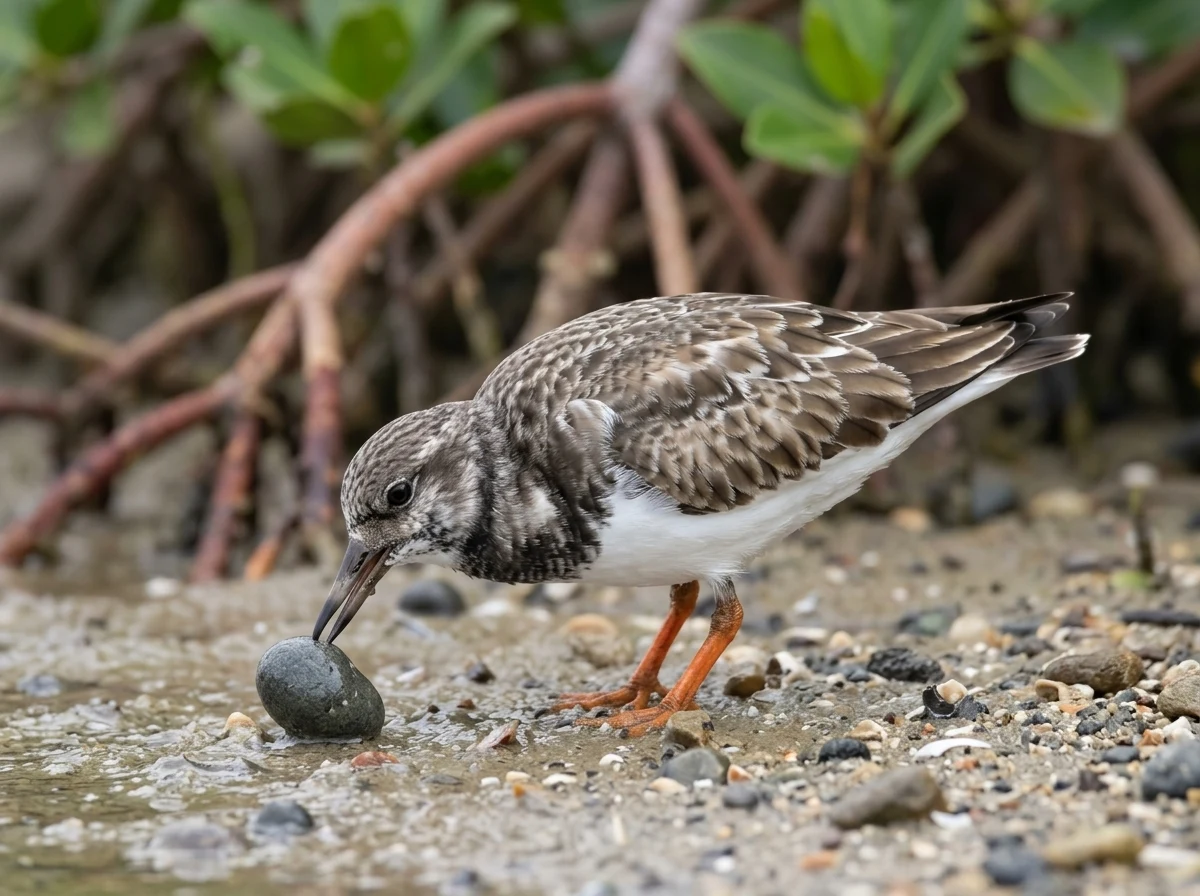 AI
AI01
What is the fastest difference between the Sanderling and the Ruddy Turnstone?
Leg color: black in the Sanderling and orange in the Ruddy Turnstone. If you cannot see the legs, behavior helps: the Sanderling runs after waves and the Ruddy Turnstone flips stones and seaweed.
02
Do the Sanderling and Ruddy Turnstone breed in Puerto Rico?
No. In the Puerto Rico bird catalog, both species are listed as non-resident and non-breeding in the archipelago. They are migratory birds observed on coasts and beaches.
03
What does the Ruddy Turnstone eat?
In the breeding season it eats mostly insects, spiders, seeds, berries, and moss. At other seasons it eats crustaceans, mollusks, worms, sea urchins, and small fish.
04
How can I practice identification without disturbing the birds?
Observe from a distance that does not cause the birds to move away or fly. Use binoculars, record the five checklist points, and avoid playback. If you need to document, take photos or video without approaching.
05
Where can I see these birds in Puerto Rico?
Both species use beaches, rocky shores, tideflats, and shorelines. For the Ruddy Turnstone, BirdsCaribbean notes that it is observed in the Caribbean mainly from August to May on beaches and lagoons. Consult the beach bird and shorebird guides for specific locations.
Keep exploring
Connected routes
Sources and review
The evidence is one link away.
These sources support the editorial scope of this guide. Bird profiles also retain their own taxonomy, occurrence, and conservation references.
Reviewed:
01↗02↗03↗
National Audubon Society
Sanderling | Audubon Field Guide
Evidence for cited sections; consult the original document.National Audubon Society
Ruddy Turnstone | Audubon Field Guide
Evidence for cited sections; consult the original document.BirdsCaribbean
Featured Bird: Ruddy Turnstone
Evidence for cited sections; consult the original document.The atlas continues