 AI
AISounds
Identifying birds by their alarm calls
Alarm calls are not background noise: they are clues about predators, risk, and nearby species. Learn to listen with context.
Reviewed: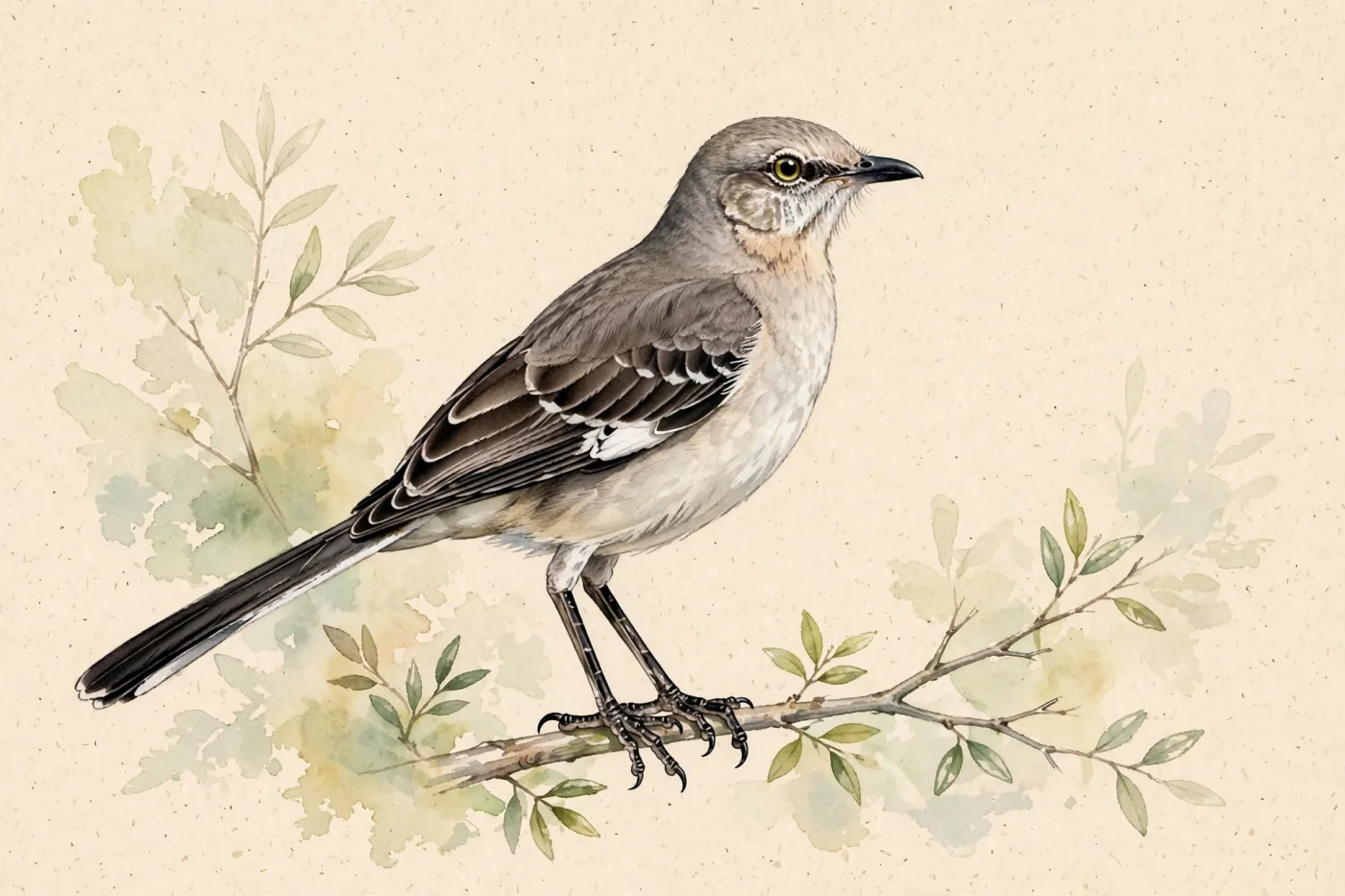
Prepared with AI assistance and linked sources. Illustrations are not field photographs.
Why listen for alarms
An alarm call is a sound one or more birds make in response to possible danger. It is not the same as a territorial song or a relaxed contact note: it is usually short, repetitive, and urgent. In the field, that urgency tells you something is happening and often helps you locate the predator or the flock that detected it.
This guide is not a song catalog but a field tool. It offers a listening procedure, a checklist, and comparison exercises so you can use alarm calls as clues to identity and behavior. The Puerto Rico species mentioned serve as examples of documented contexts, not as fixed rules for the whole island.
Sounds
Three key ideas
ContextoAlarm depends on contextThe same species can sound different toward a perched or attacking predator.
MobbingMobbing is collectiveSeveral birds approach and harass a predator, sometimes of multiple species.
CategoríaSome calls encode predator categoryIn experimental studies, some birds use different calls for hawks and owls.
01
What alarm calls do
Alarm calls serve several functions at once. They warn other birds, coordinate a response, and in some cases communicate information about the type of danger. In an experimental study with Siberian jays (Perisoreus infaustus), birds uttered up to 14 call types when facing mounts of hawks and owls; five of those types were specific to predator category, and birds gave more calls toward more dangerous predators and in the presence of kin. That does not mean every Puerto Rico bird works the same way, but it shows an alarm can carry more information than a simple 'danger'.
Mobbing is an intense form of collective alarm. It is defined as an intense collective behavior in which birds of one or more species scold or even physically attack a predator. Common targets include hawks, owls, and snakes. In Puerto Rico, four incidents of mobbing directed at Puerto Rican boas (Epicrates inornatus) were documented in the Luquillo Experimental Forest, with several species taking part.
02
How to tell an alarm from other sounds
In practice, an alarm often sounds repetitive, harsh, or sharp, and repeats while the danger remains. A territorial song tends to be more structured and predictable; a contact note is shorter and calmer. The difference is not only in the sound shape but in what happens around it: if other birds approach, stare at a fixed point, or move in a specific direction, you are probably hearing an alarm.
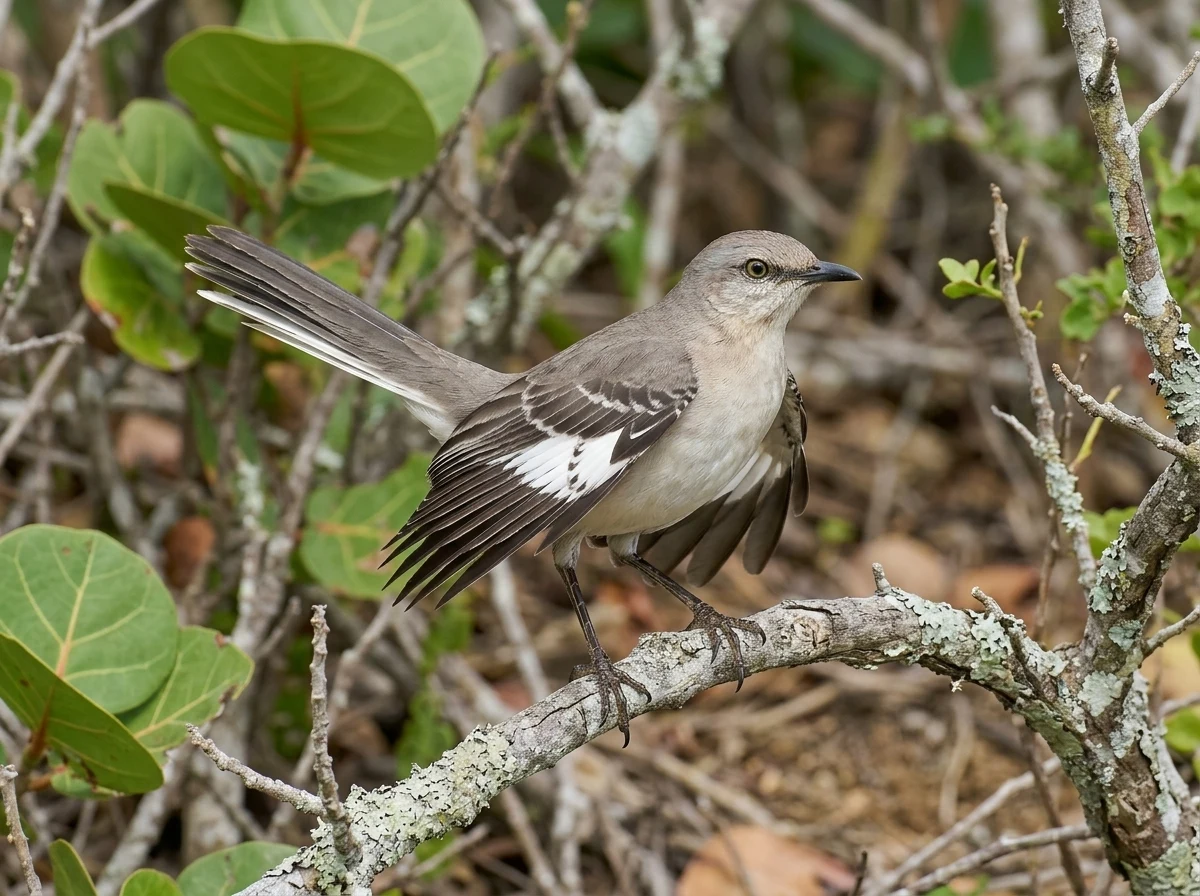
Context also changes intensity. In the Siberian jay study, birds increased calling rate toward more dangerous predators and used calls specific to hawks or owls. In birds such as the Northern Mockingbird (Mimus polyglottos), nest defense can include distinctive calls that gather neighbors to attack an intruder together. That combination of sound and behavior is what makes an alarm a useful clue.
03
Mobbing in Puerto Rico: documented examples
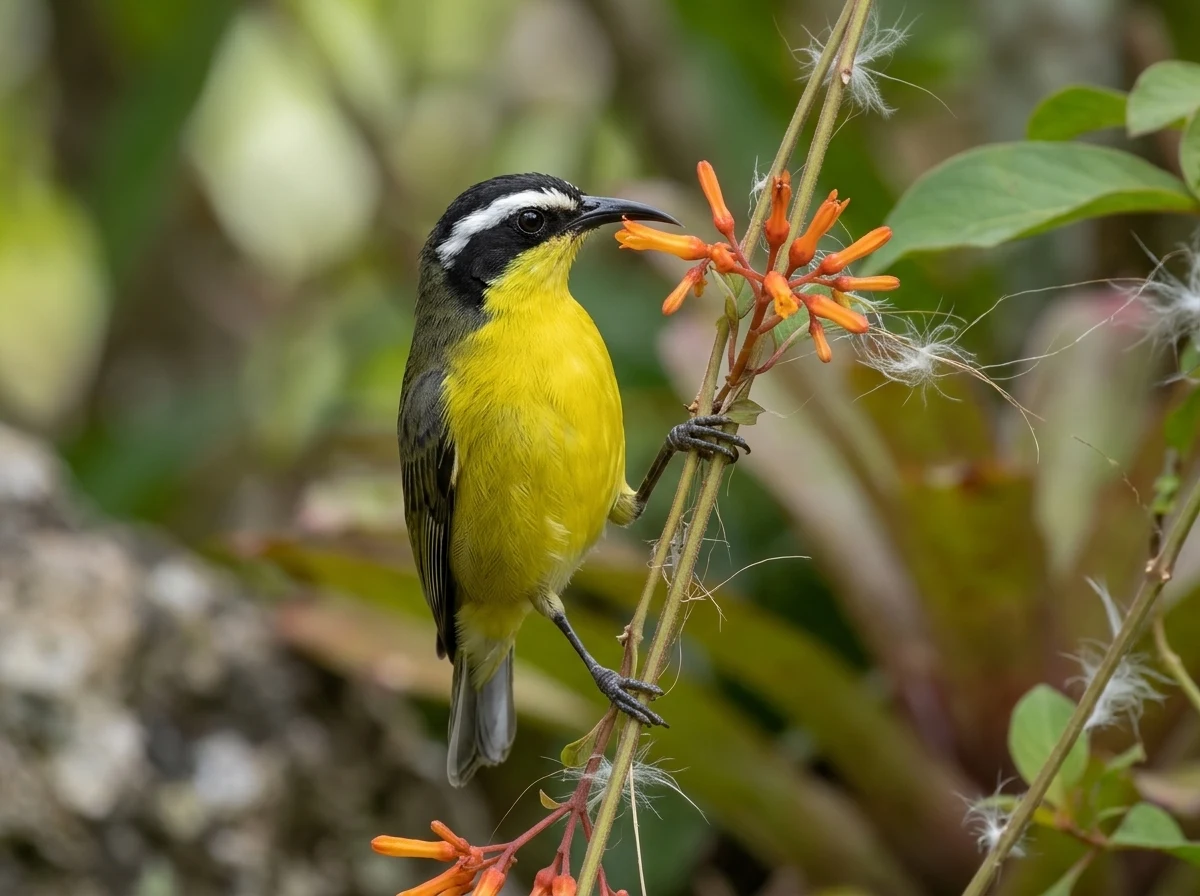
Mobbing is not exclusive to mainland birds. In the Luquillo Experimental Forest, seven bird species were observed mobbing Puerto Rican boas: two winter residents and five permanent residents. Among the participating species were the Bananaquit (Coereba flaveola), the Puerto Rican Tanager (Nesospingus speculiferus), the Puerto Rican Woodpecker (Melanerpes portoricensis), the Puerto Rican Bullfinch (Loxigilla portoricensis), the Puerto Rican Spindalis (Spindalis portoricensis), the Northern Parula (Parula americana), and the Black-throated Blue Warbler (Dendroica caerulescens). Birds approached the predator in multiple passes: Puerto Rican Tanagers flew to within 30 cm of the snake (and in one incident to within 25 cm), while the other species approached only to within 50 cm.
Mobbing can be costly, but it also has possible advantages: driving the predator away and helping inexperienced birds learn to recognize danger. In the case of large boas, mobbing was relatively ineffective at driving them away, but it may have helped young birds associate the vocalizations with a threat. That is a hypothesis from the authors, not a universal conclusion.
04
Field procedure and checklist
When you hear an alarm, stop and follow this procedure: 1) locate the sound direction without moving abruptly; 2) count how many birds are involved and whether they are one or several species; 3) watch where they look or move; 4) search for the possible predator (hawk, owl, snake, cat) with binoculars; 5) note the time, habitat, and whether the sound repeats or changes. If you can, record a few seconds with your phone for later comparison.
Quick checklist: is the sound repetitive and harsh? Is more than one bird involved? Are they approaching a fixed point? Does the behavior change when you approach? Can you see the predator? Does the alarm continue after the predator leaves? These questions help you separate an alarm from a song or a simple contact note.
05
Comparison exercise: alarm vs. song
Choose two common species in your area, such as the Northern Mockingbird (Mimus polyglottos) and the Gray Kingbird (Tyrannus dominicensis). Listen to their sounds in a recording or in the field and note three differences: duration, repetition, and context. Then, when you hear a sound live, ask whether it fits the alarm pattern or the song pattern. This exercise trains your ear to recognize urgency without relying only on memory.
Another useful comparison is between an individual alarm and collective mobbing. In mobbing, several birds join in and the sound becomes denser and more continuous. If you see them approaching a point and returning again and again, you are probably witnessing mobbing, not a simple passing alarm.
Linked profiles
Birds mentioned in this guide
Puerto Rico species that serve as examples of alarm and mobbing contexts.

01
Do all birds have alarm calls?
Many birds make some type of vocalization when in danger, but not all have been studied in the same detail. In Puerto Rico, mobbing was documented in seven species toward boas, and in other regions specific calls for predator categories have been described. The presence and form of the alarm varies by species and context.
02
Can I identify a species only by its alarm call?
Sometimes yes, but it is risky. The same species can vary its alarm depending on the predator and urgency. The safest approach is to combine the sound with behavior, habitat, and visual observation. Alarms are clues, not definitive identifications on their own.
03
What is mobbing and why does it happen?
Mobbing is a collective behavior in which birds of one or more species approach and harass a predator. It can serve to drive the predator away and to help inexperienced birds learn to recognize danger. In Puerto Rico it has been documented toward boas, with several species taking part.
04
Do alarms change depending on the type of predator?
In some species yes. In an experimental study with Siberian jays, birds used calls specific to hawks and owls, and increased calling rate toward more dangerous predators. The same has not been confirmed for all Puerto Rico birds, but it is a useful principle for listening closely.
05
Should I use playback to provoke alarms?
It is not recommended. Provoking alarms with playback can stress birds and alter their natural behavior. It is better to observe and record passively. If you use recordings, do so only for comparison at home, not to attract birds in the field.
Keep exploring
Connected routes
Sources and review
The evidence is one link away.
These sources support the editorial scope of this guide. Bird profiles also retain their own taxonomy, occurrence, and conservation references.
Reviewed:
01↗02↗03↗04↗05↗
USDA Forest Service (USFS)
Avian Mobbing of the Puerto Rican Boa (Epicrates inornatus)
Evidence for cited sections; consult the original document.National Audubon Society
Mobbing: When Smaller Birds Join Forces to Fend Off Larger Birds
Evidence for cited sections; consult the original document.National Audubon Society
A Wave of Bird Alarm Calls Can Travel at 100 Miles Per Hour
Evidence for cited sections; consult the original document.BirdNote
Small Birds Mob Big Ones
Evidence for cited sections; consult the original document.PMC / Proceedings of the Royal Society B
Mobbing calls signal predator category in a kin group-living bird species
Evidence for cited sections; consult the original document.The atlas continues