 AI
AILearn by listening
Sound Matching: Coquí vs. Night Birds
A practical guide to separate the coquí's call from the nighttime voices of four Puerto Rico birds, with simplified spectrograms and a listening exercise.
Reviewed:Prepared with AI assistance and linked sources. Illustrations are not field photographs.
Why we confuse the coquí with a bird
At night in Puerto Rico, the most familiar sound is the coquí: a small amphibian that produces a two-note call, 'Co-Quí'. The first note, 'Co', is the one that answers other males; the second, 'Quí', attracts females. That two-note pattern, repeated regularly, is the most useful clue to avoid confusing it with a bird.
Puerto Rico's night birds do not sing the same way. The Puerto Rican Owl gives a short, deep trill; the Puerto Rican Nightjar, a repetitive whistle; the Antillean Nighthawk, a nasal note in flight; and the Short-eared Owl, a harsh bark. None of these birds produces the coquí's 'Co-Quí'. This guide teaches you to listen for those differences calmly, without needing to see the animal.
Learn by listening
Three keys to remember
Dos notasThe coquí says 'Co-Quí'It is an amphibian, not a bird; its call has two notes with different functions.
Trino cortoThe múcaro gives a 3–5 second trillIt is deep and continuous, not a repeated note like the coquí's.
Ritmo y tonoListen to the pattern, not just the volumeFrequency and repetition separate the coquí from night birds.
01
The coquí: two notes that are not a bird song
The coquí (Eleutherodactylus coqui) is an abundant amphibian in Puerto Rico, from sea level to over 1000 m elevation. Males produce a two-note call: 'Co' and 'Quí'. The 'Co' note is used by males to answer other males; the 'Quí' note attracts females. This division of functions is well documented and is why the sound is heard as a pair of notes rather than a single voice.
The frequency of the 'Co' note changes with altitude: higher up, the pitch drops and the repetition rate decreases. This happens because body size varies with altitude and the coquí's ear is tuned to the frequency of its own call. For the observer, the practical consequence is that the coquí does not sound the same on the coast as in the mountains, but it always keeps the two-note pattern.
02
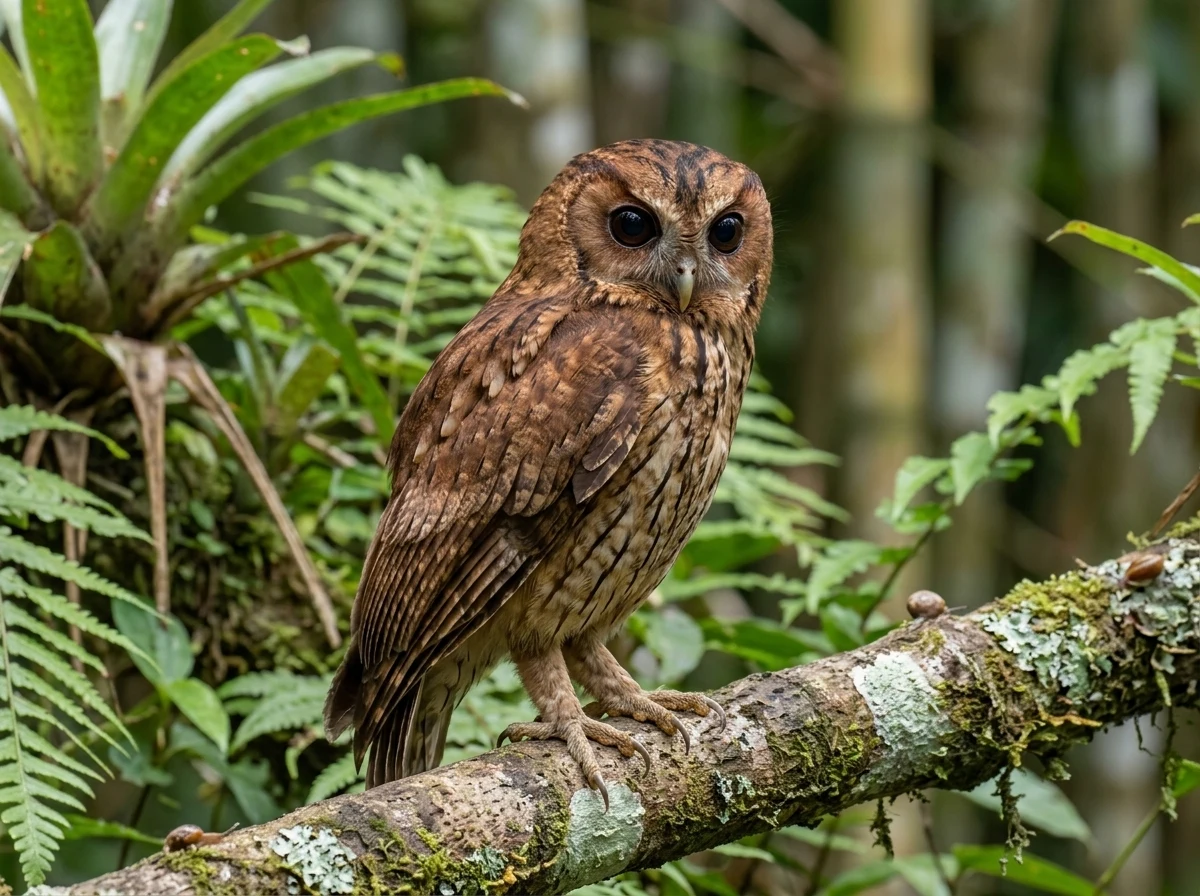
The Puerto Rican Owl: a short, deep trill
The Puerto Rican Owl (Gymnasio nudipes) is a Puerto Rican endemic. It is most easily located by its voice: a short, deep trill lasting 3–5 seconds. The female gives a higher-pitched trill. This sound does not have the coquí's two-note pattern; it is a single continuous emission that rises and falls in intensity.
The owl inhabits forests and woodlands of all types, including urban areas, from lowlands up to about 900 m. Its trill can be confused with an insect or a frog, but the 3–5 second duration and deep tone are good clues. If you hear a long trill rather than a repeated 'Co-Quí', it is probably an owl.
03
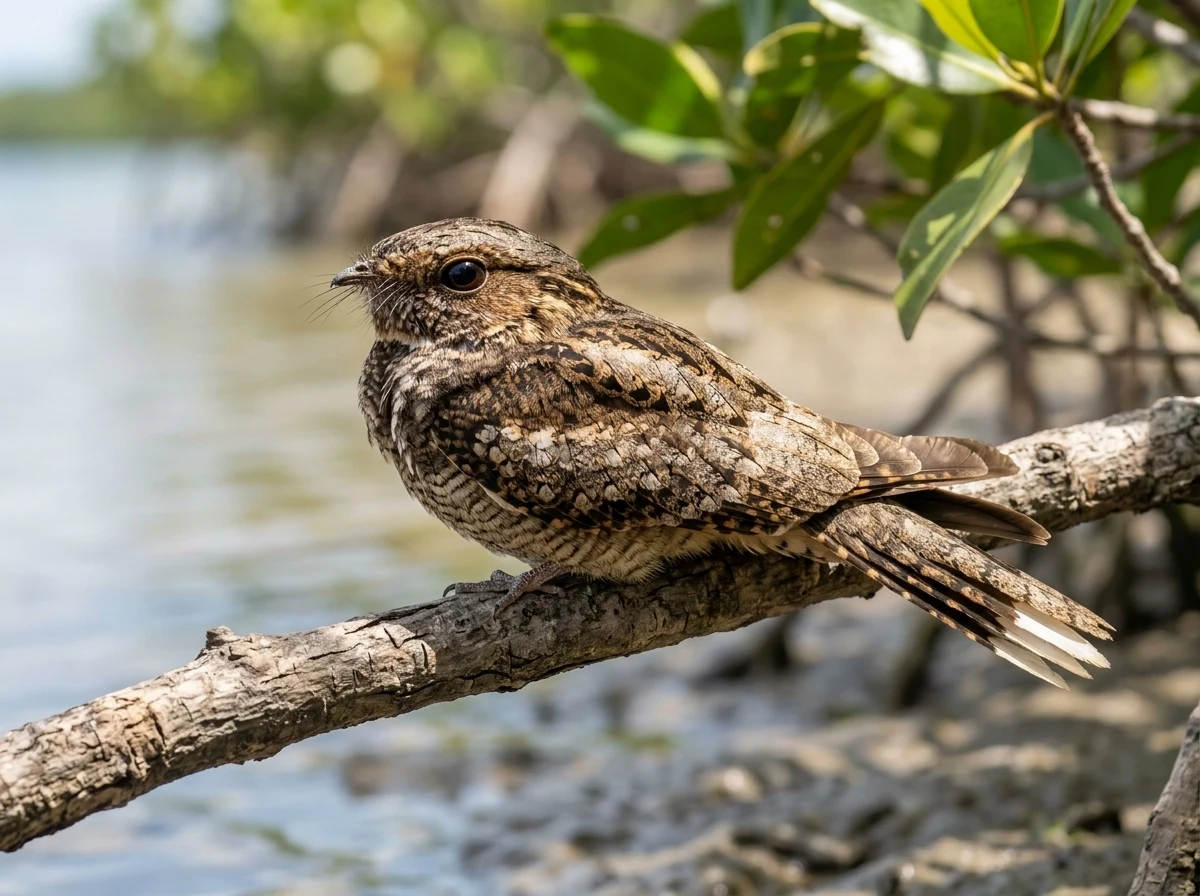
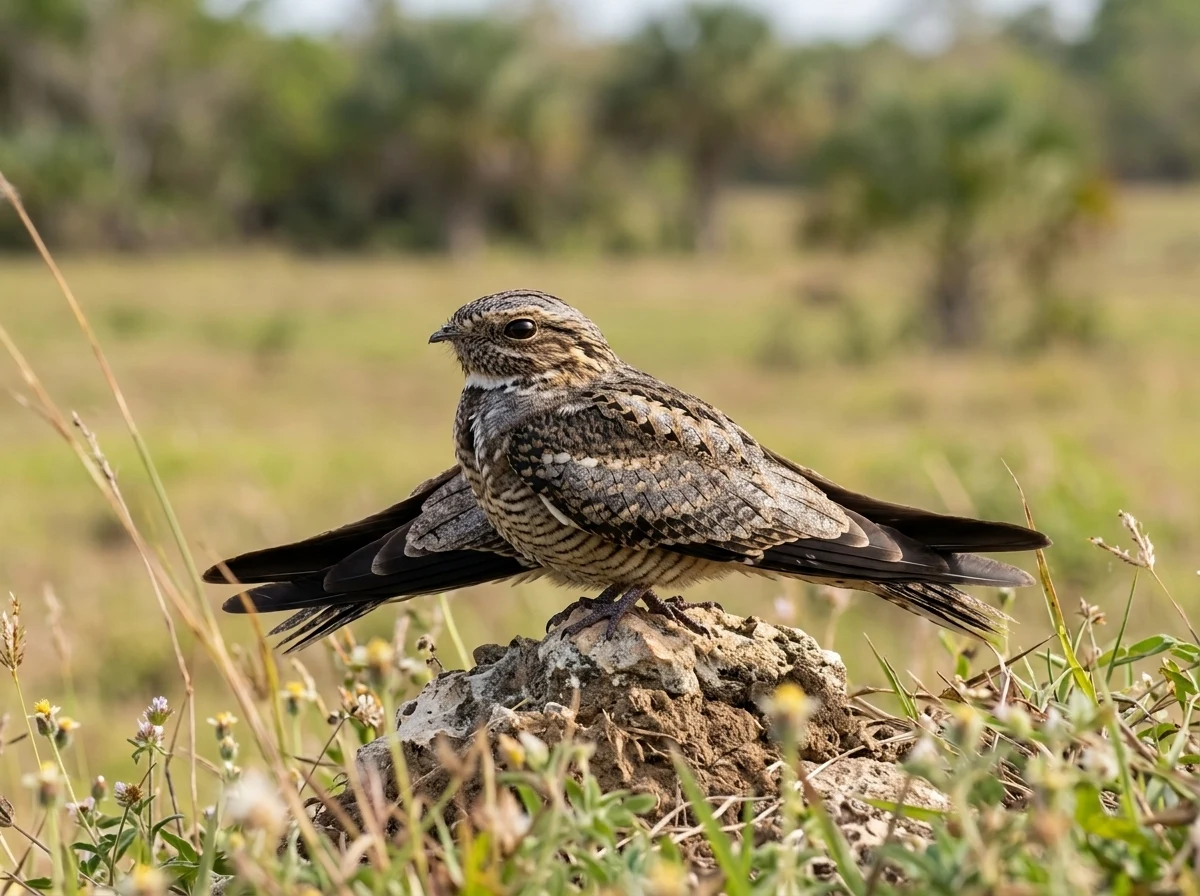
Nightjar and nighthawk: whistles and nasal notes
The Puerto Rican Nightjar (Antrostomus noctitherus) is an endemic nightjar of the coastal and lower montane forests of southern and southwestern Puerto Rico. It ranges from Cabo Rojo to Guayama and prefers semi-deciduous and evergreen forest. Males sing throughout the year, with a peak in April and May. Its song is a repetitive whistle, not a continuous trill or a 'Co-Quí'. The species has been reclassified from Critically Endangered to Endangered.
The Antillean Nighthawk (Chordeiles gundlachii) is a migratory nightjar seen in Puerto Rico. It gives a nasal note in flight, often during aerial displays. It is not a repeated song from a perch like the nightjar's. Its presence on the island is documented, but it is not a year-round resident. To distinguish it from the coquí, listen for a single or repeated nasal note in flight, not a pair of notes from the ground.
04
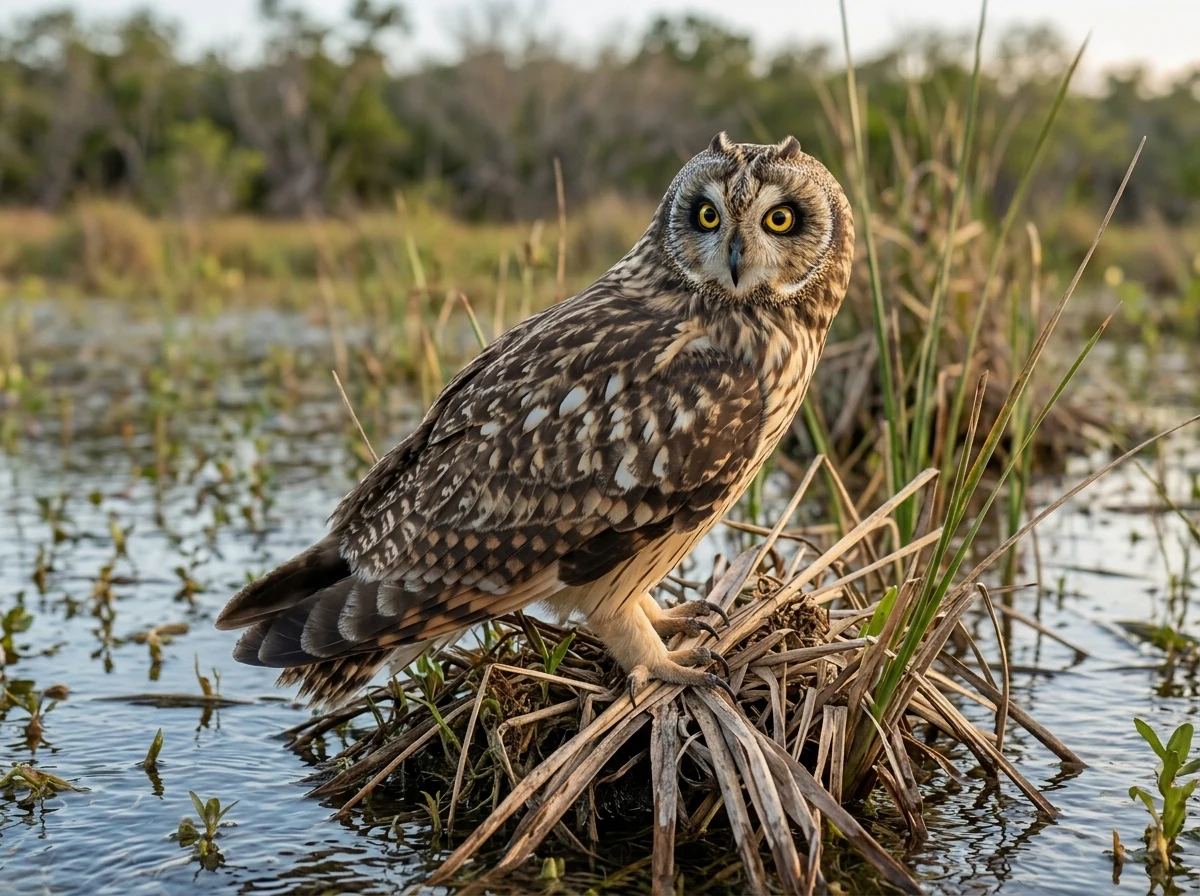
Short-eared Owl: a harsh, nasal bark
The Short-eared Owl (Asio flammeus) is a nocturnal raptor that can also be seen by day. It inhabits open areas, grasslands, marshes and fields. Its voice is described as a harsh, nasal bark, like a whip crack, and it can also produce a rapid buzzing whistle. In wintering areas it often remains silent.
This owl does not give a 'Co-Quí' or a continuous trill. Its bark is short and explosive, with a nasal quality that separates it from the Puerto Rican Owl and the nightjar. If you hear a series of harsh barks in a grassland or wetland, consider the Short-eared Owl; if you hear two clear, repeated notes, think first of the coquí.
05
Listening exercise: match the sound to the species
Before heading out, prepare a notebook or a phone note with four columns: coquí, Puerto Rican Owl, Puerto Rican Nightjar and Short-eared Owl. Write down what you hear using three criteria: number of notes (one, two or many), duration (short, medium or long) and quality (whistle, trill, bark or nasal). You do not need to record; just describe the pattern.
When you hear a nighttime sound, ask yourself: does it have two clear, repeated notes? If yes, it is a coquí. Is it a continuous trill of 3–5 seconds? Puerto Rican Owl. Is it a repetitive whistle without a trill? Puerto Rican Nightjar. Is it a harsh, nasal bark? Short-eared Owl. If the sound is a nasal note in flight, consider the Antillean Nighthawk. Repeat the exercise in different places and compare your notes; with practice, the pattern becomes automatic.
Linked profiles
The birds in this comparison
Four nocturnal or crepuscular species whose voices are worth separating from the coquí.
01
Is the coquí a bird?
No. The coquí is an amphibian, Eleutherodactylus coqui. Its two-note call, 'Co-Quí', is produced by males and should not be confused with a bird song.
02
What does the Puerto Rican Owl sound like?
It gives a short, deep trill lasting 3–5 seconds. The female has a higher-pitched trill. It is not a repeated 'Co-Quí'.
03
Does the Puerto Rican Nightjar sing all year?
Males sing throughout the year, although the number of songs fluctuates seasonally and usually peaks between April and May.
04
What is the difference between the Antillean Nighthawk and the Puerto Rican Nightjar?
The Antillean Nighthawk is migratory and gives a nasal note in flight; the Puerto Rican Nightjar is endemic, resident and sings a repetitive whistle from perches or the ground.
05
Does the Short-eared Owl live in Puerto Rico?
The Short-eared Owl is recorded as native in Puerto Rico, but not as a resident breeder; it is associated with open areas and may be migratory or nomadic.
Keep exploring
Connected routes
Sources and review
The evidence is one link away.
These sources support the editorial scope of this guide. Bird profiles also retain their own taxonomy, occurrence, and conservation references.
Reviewed:
01↗02↗03↗
Cornell Lab of Ornithology, Birds of the World
Sounds and Vocal Behavior - Puerto Rican Owl (Gymnasio nudipes)
Evidence for cited sections; consult the original document.Cornell Lab of Ornithology, Birds of the World
Sounds and Vocal Behavior - Puerto Rican Nightjar (Antrostomus noctitherus)
Evidence for cited sections; consult the original document.Proceedings of the Royal Society B / PMC (NIH)
Frequency matching of vocalizations to inner-ear sensitivity along an altitudinal gradient in the coqui frog
Evidence for cited sections; consult the original document.The atlas continues