 AI
AINight sounds
Coquí or Bird? What You Are Hearing at Night in Puerto Rico
Puerto Rico's night is a frog chorus with feathered soloists. These five clues tell you which is which without seeing the animal.
Reviewed:Most of what you hear at night is not a bird.
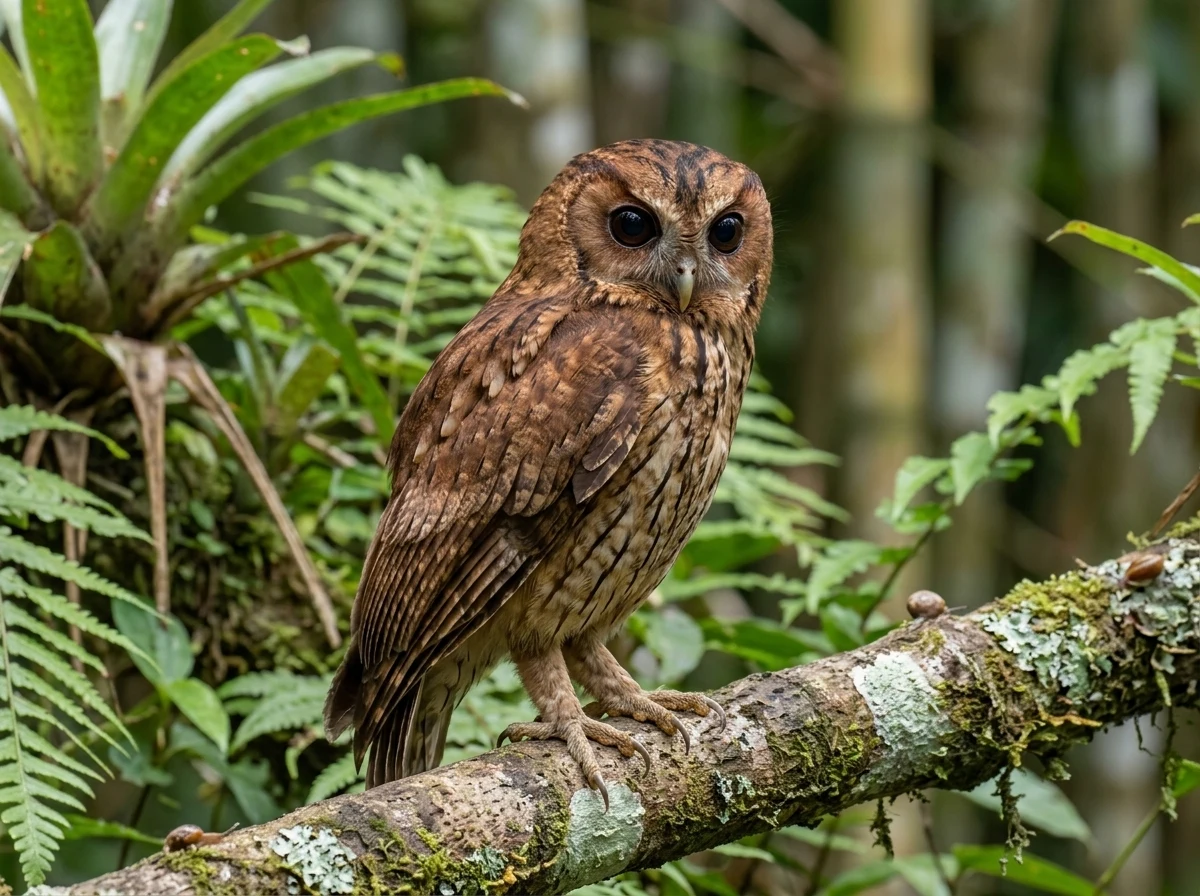
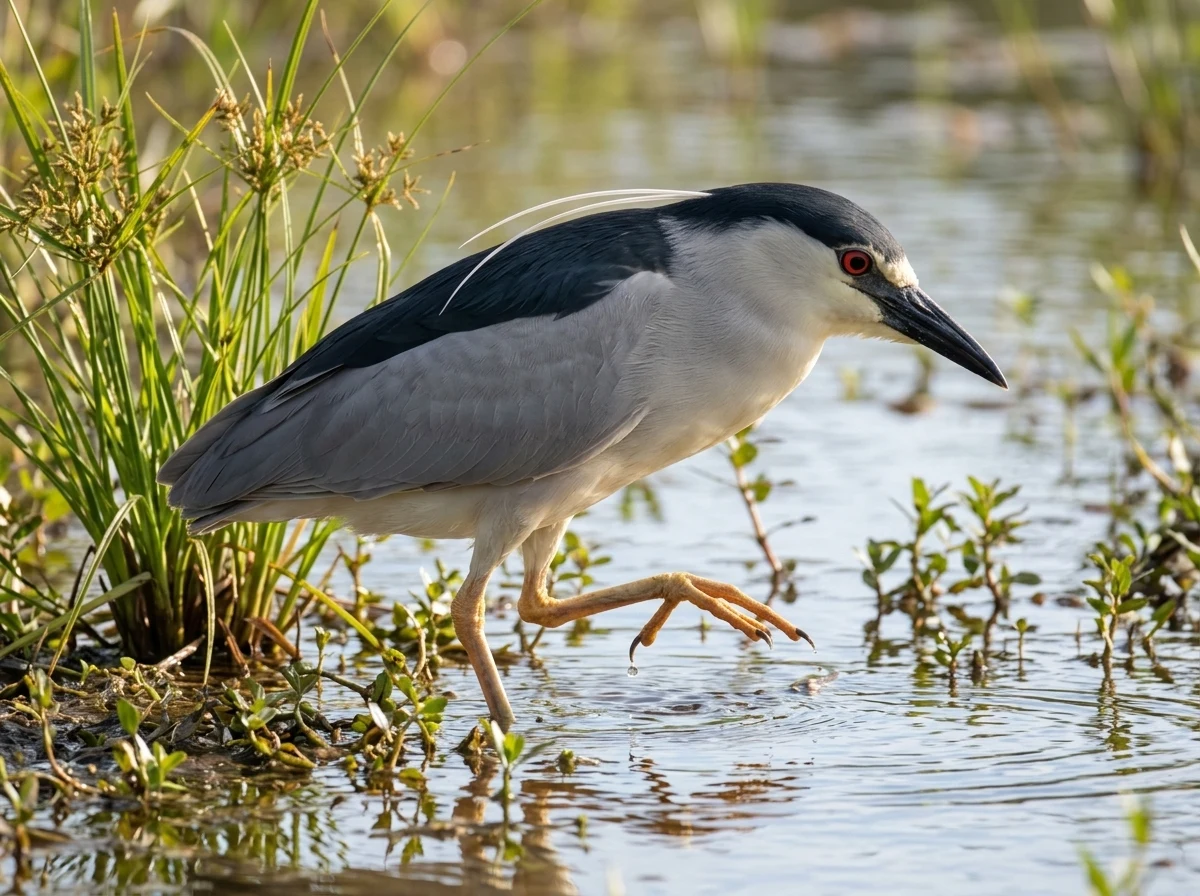
If the sound is a two-note ko-KEE, repeated nonstop from trees, shrubs, or low plants, and dozens of identical voices surround it, it is a coquí, a frog, not a bird. Puerto Rico's night birds sound different: the Puerto Rican Owl gives calls and trills from forest, the Puerto Rican Nightjar repeats phrases in the southwestern dry forest, the Antillean Nighthawk calls while flying, and night-herons give a short squawk.
The confusion is understandable because all these voices overlap at dusk. This guide does not repeat the detailed identification of each night bird, which lives in our nocturnal birds guide; it focuses on the earlier question: is it a frog, an insect, or a bird? With rhythm, number of notes, pitch, time, and place you can almost always answer it.
Night sounds
Night clues
2notes in a common coquí callKo-KEE, rapid and loud, given by males.
73 dBcoquís measured in HawaiiLevel of calling males on Hawaii Island, where it is invasive.
7.38–8.28 kHzcoquí llaneroThe highest-pitched call among Puerto Rico's coquís.
20timed Puerto Rican Owl recordingsFrom 7:00 p.m. to 6:35 a.m., in the island's public collection.
01
The rhythm test: coquís do not improvise
The common coquí (Eleutherodactylus coqui) is nocturnal, and its call is a rapid, loud ko-KEE that gives it its name. Males give it to attract mates and during aggressive encounters with other males. The key to separating it from a bird is regularity: the same phrase, with the same length, repeated over and over, almost always with other coquís answering nearby.
Night birds rarely sound like a line of identical voices in every shrub. A Puerto Rican Owl or Nightjar is usually one voice, or two answering each other, coming from a fixed point and pausing for stretches. If the sound seems to come from everywhere at once and never stops, think frogs or insects first.
02
Not every coquí says 'coquí'
Puerto Rico has several coquí species with different calls, and some do not sound like their name. The endangered coquí llanero, known from a single freshwater wetland in Toa Baja, gives series of short, very high notes between 7.38 and 8.28 kHz, the highest frequency among the island's coquís. That makes it hard to detect by ear.
That species also breaks the idea that frogs call only late at night: its activity starts around 4:30 p.m. and drops sharply before midnight. An automated-recorder study in Puerto Rico (Ospina and colleagues, 2013) found that frog calling activity responds to daily rain and temperature; a humid night after a downpour can sound very different from a dry one.
03
The birds that do call at night
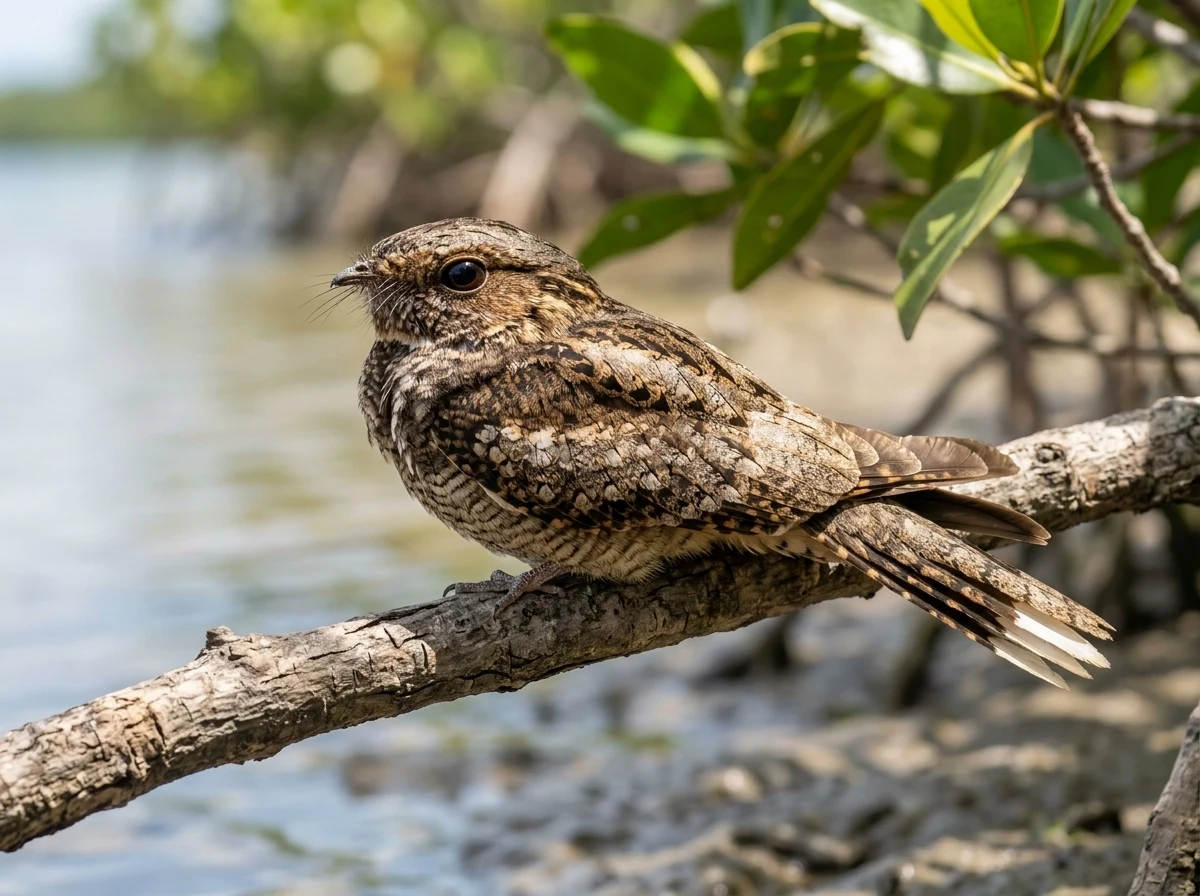
In the public collection of Puerto Rico recordings, the Puerto Rican Owl has 20 timed recordings, from 7:00 p.m. to 6:35 a.m., at places as different as El Yunque, Guánica, Maricao, Ceiba, and Arecibo. The Puerto Rican Nightjar appears mostly between 6:30 and 8:30 p.m. at Guánica, Yauco, Lajas, and Susúa, which is where it lives: dry forest and scrub in the south and southwest.
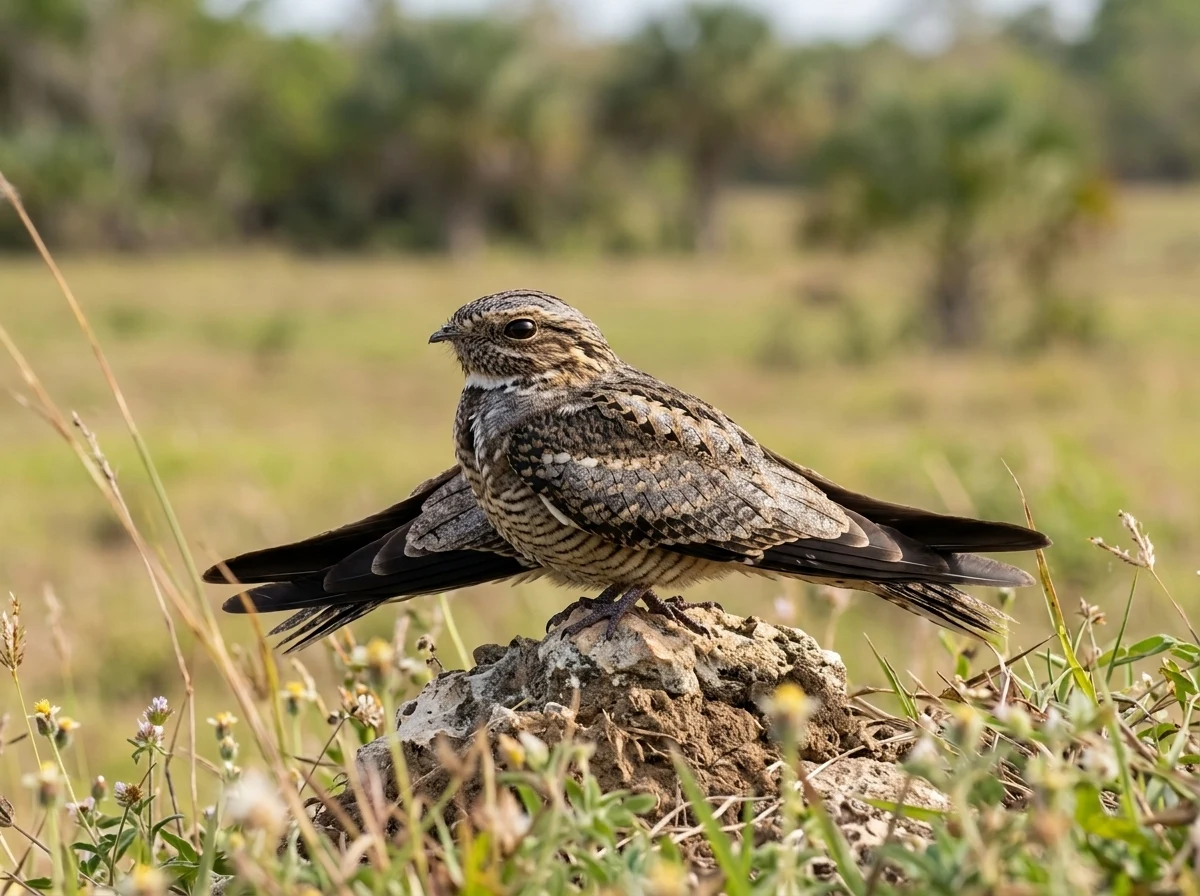
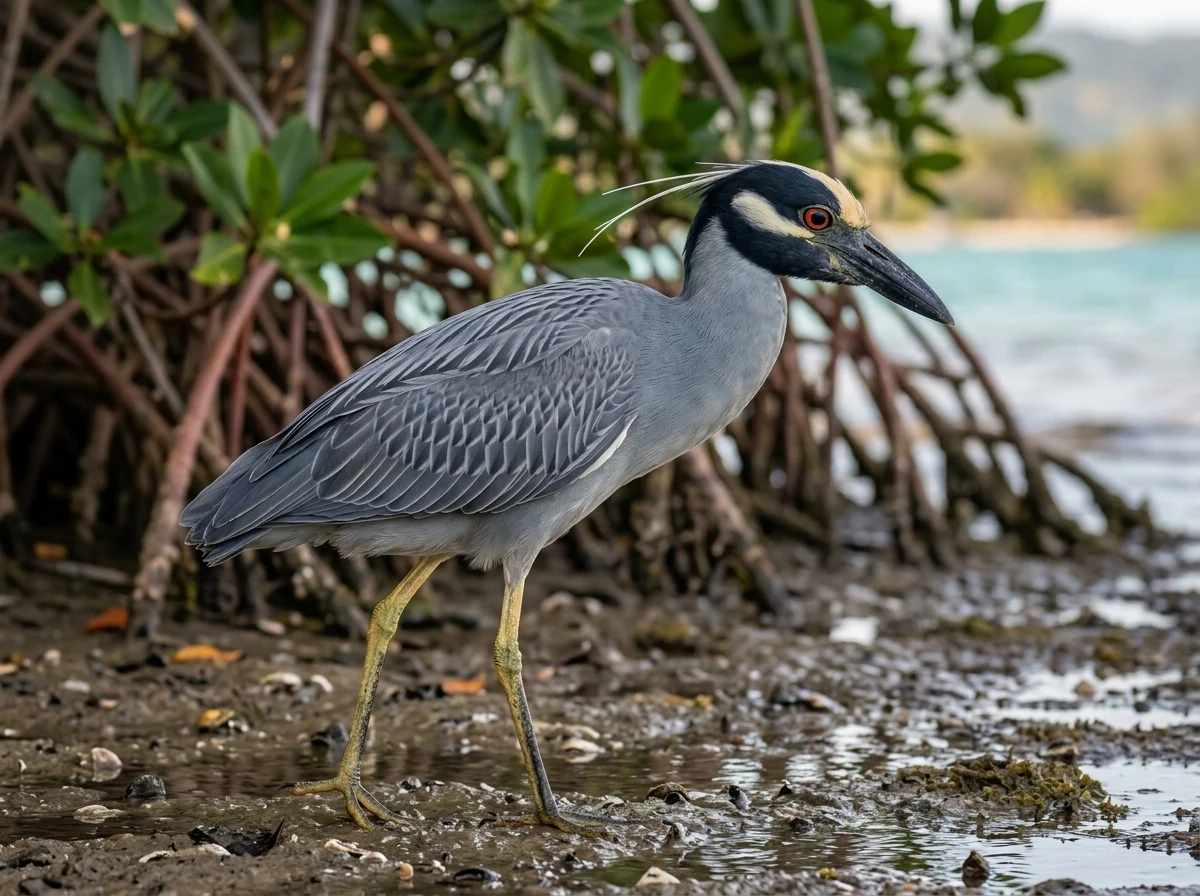
The Antillean Nighthawk calls in flight over open ground with a dry, repeated killy-ka-dick; on the island it has been recorded at dusk and at night in Carolina, Guánica, Lajas, and Río Grande. The Yellow-crowned Night Heron gives a loud quawk, higher than a Black-crowned Night Heron's, and feeds at dusk and at night, though also by day. None of them repeats a ko-KEE.
04
The confusing case: a mockingbird at midnight
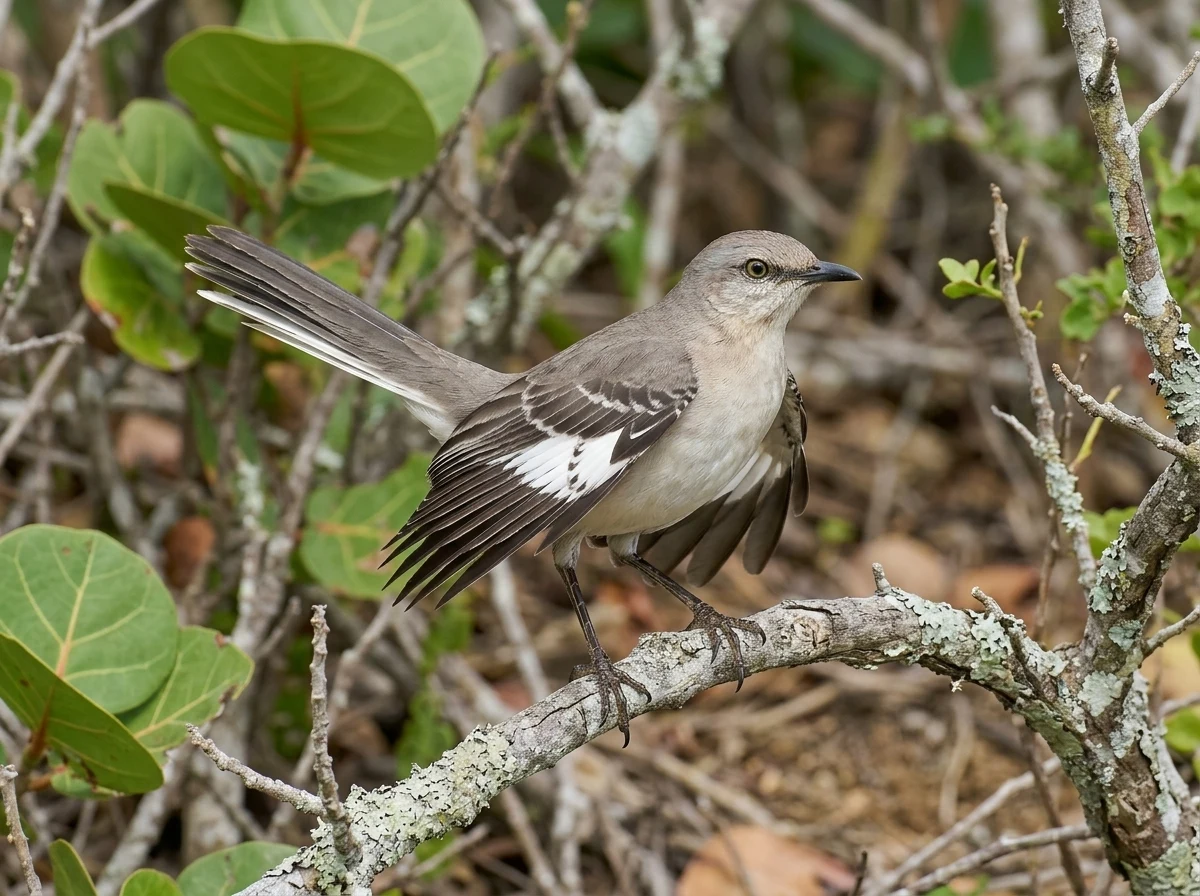
If you hear a bird singing varied phrases at 1:00 a.m. under a streetlight, it is most likely a Northern Mockingbird (Ruiseñor). Audubon notes that it regularly sings at night, and unmated males do so especially at full moon or near lights. It also imitates other sounds, including insects and frogs.
The clue for separating it from a real coquí is variety: a mockingbird repeats a phrase several times and then switches to a completely different one. A coquí never changes repertoire. If the voice jumps from whistles to clicks to something like a car alarm, it is a bird.
05
Five questions to decide in the dark
One: how many identical voices are there? Many suggests frogs or insects; one or two, a possible bird. Two: where is it coming from? Low plants near the ground point to a coquí; a moving voice overhead, to a nighthawk; a fixed tree in forest, to the owl. Three: does the phrase change? If it changes a lot, think mockingbird.
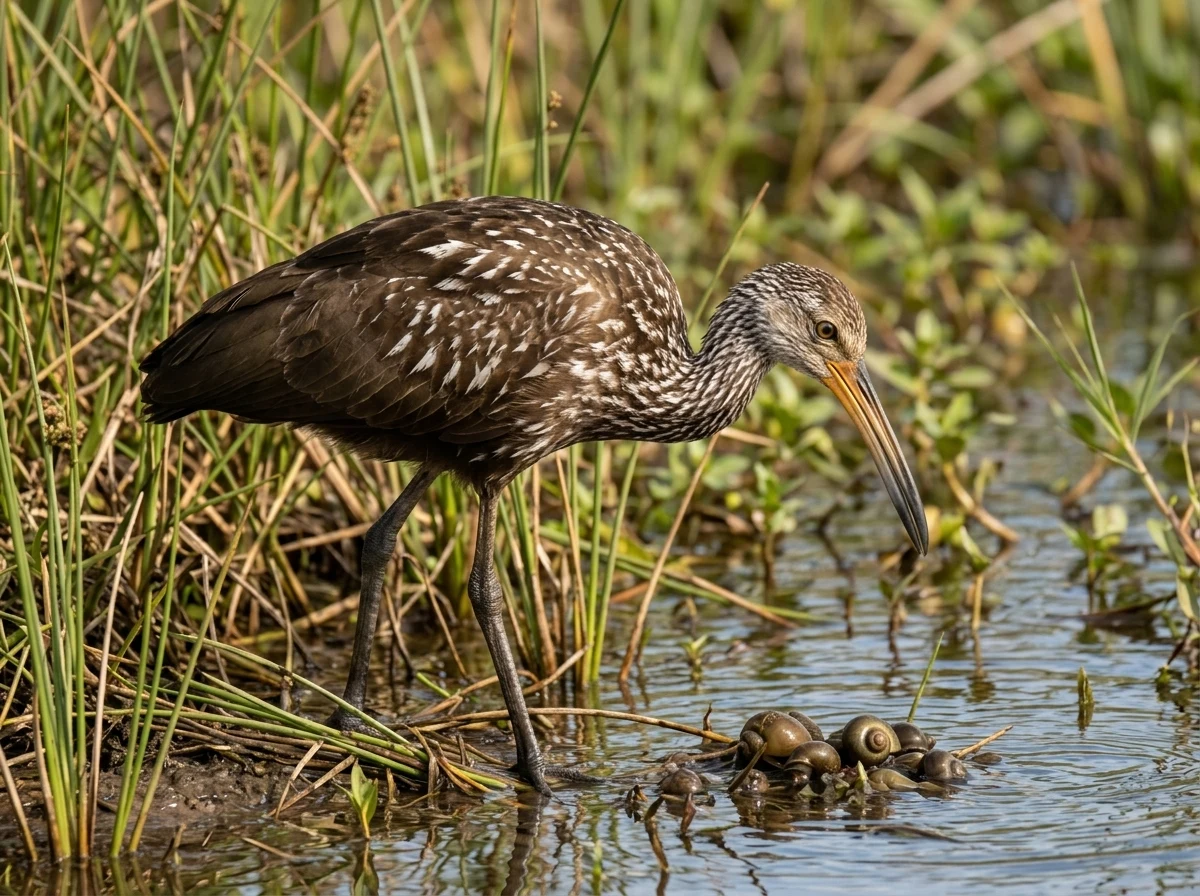
Four: what time is it? Dusk and the first hour of night are the nightjar's peak in its dry forest; the pre-dawn hours, the owl's. Five: where are you? A wetland adds night-herons, gallinules, and the Limpkin, which wails at dawn or at night. Write down these answers and record 30 seconds; with that, almost any experienced listener can confirm it.
06
Which app is for what
Bird platforms such as eBird and the Macaulay Library take bird recordings tied to a species checklist; they are not the place for a coquí recording. iNaturalist, by contrast, accepts verifiable observations with photos or sounds across many groups of organisms, frogs included.
If you recorded a coquí chorus with a Puerto Rican Owl in the background, upload it to eBird for the bird only, without stripping the frogs from the audio: Macaulay Library guidance says not to remove other species' sounds or apply noise reduction. The coquí noise is part of the recording's real context.
Linked profiles
The birds behind the night sounds
Play their recordings and compare them with a coquí chorus: rhythm and variety will tell you the difference.
Sound archive
Hear its voice
Explore real songs and calls. The spectrogram turns each sound into a visual trace of time and frequency.
XC793992Recording 1 of 3call

Play: call by Barry Edmonston
Choose another recording
Sound recorded by Barry Edmonston · XC793992 · CC BY-NC-SA 4.0. Visualization by Stichting Xeno-canto voor Natuurgeluiden.
Every recording retains the creator, catalogue number, and license published by Xeno-canto. Metadata via GBIF ↗
01
Is the coquí a bird?
No. The coquí is a frog in the genus Eleutherodactylus. Its ko-KEE call, given by males at night, is Puerto Rico's best-known night sound, but no bird makes it.
02
What bird sings at night in Puerto Rico?
The most common are the Puerto Rican Owl in forest and wooded areas, the Puerto Rican Nightjar in the southwestern dry forest, the Antillean Nighthawk flying over open areas, and the Northern Mockingbird under city lights. At wetlands, night-herons and the Limpkin call too.
03
How can I tell if it is a coquí or a bird?
A coquí repeats the same short phrase without variation, from low vegetation, in a chorus with many others. A night bird is usually a single voice from a fixed point that pauses, or, in a mockingbird's case, one that changes phrases often.
04
How loud is the coquí?
In Hawaii, where the coquí is invasive, calling males were measured at up to 73 decibels, enough to cause complaints about lost sleep. In Puerto Rico it is native and part of the natural soundscape.
05
What does the Puerto Rico barn owl sound like?
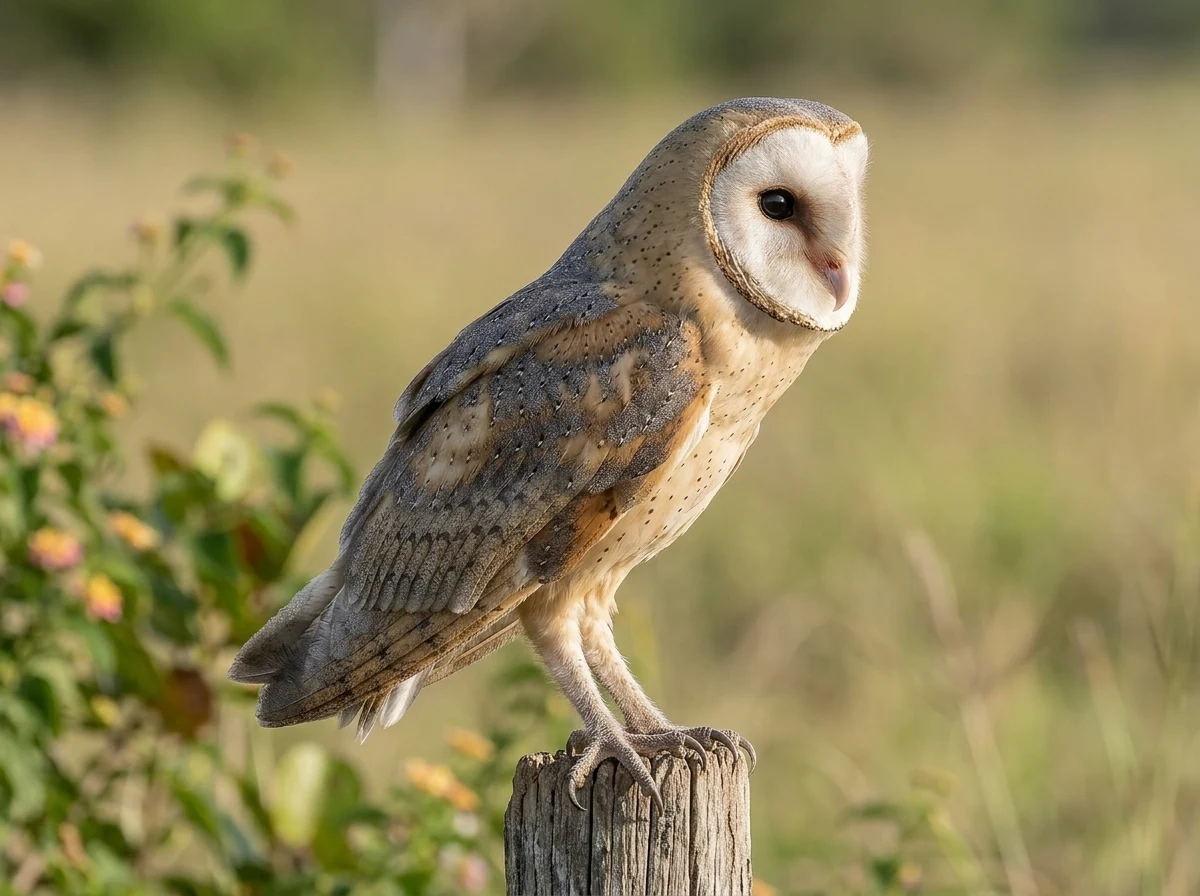
The Puerto Rican Barn Owl is extinct and known only from cave remains, so there are no recordings. The American Barn Owl is listed as accidental on the island; the night bird almost everyone hears is the endemic Puerto Rican Owl.
06
What does the Puerto Rican nightjar sound like?
The Puerto Rican Nightjar sings in the dry forest and scrub of the south and southwest; its timed recordings cluster at dusk and in the first hour of night. Listen to the recordings on its profile, made at Guánica, before you go, and do not use playback: it is an endangered species.
Keep exploring
Connected routes
Sources and review
The evidence is one link away.
These sources support the editorial scope of this guide. Bird profiles also retain their own taxonomy, occurrence, and conservation references.
Reviewed:
01↗02↗03↗04↗05↗06↗07↗08↗09↗10↗11↗12↗13↗
U.S. Geological Survey, Nonindigenous Aquatic Species
Common coquí species profile (Eleutherodactylus coqui)
Male ko-KEE call, nocturnal habits, size, and sound levels measured in Hawaii.U.S. Fish and Wildlife Service
Coquí llanero species biological report
Coquí llanero call frequency (7.38–8.28 kHz) and timing, plus automated-recorder findings on rain and temperature.Global Biodiversity Information Facility / Xeno-canto
Xeno-canto recordings from Puerto Rico (GBIF)
Time, date, place, equipment, and vocalization type for the 554 Puerto Rico recordings shared with GBIF (queried September 2026).National Audubon Society
Northern Mockingbird field guide
Phrases repeated three or more times, mimicry, and regular night singing.U.S. Fish and Wildlife Service
Puerto Rican Nightjar
Federal identity and status reference for the endemic nightjar.National Audubon Society
Difference between bird songs and calls
Summarizes how function helps separate territorial or reproductive songs from contact, alarm, and other calls.National Audubon Society
Antillean Nighthawk field guide
Voice description (a dry, repeated killy-ka-dick).National Audubon Society
Yellow-crowned Night Heron field guide
Quawk call and feeding at dusk, at night, and by day.Northern Woodlands
The Northern Mockingbird: master of mimicry
Imitation of birds, insects, frogs, and human sounds; repertoire and repetition per Donald Kroodsma.National Audubon Society
Limpkin field guide
Wailing krrr-eeeow, often heard at dawn or at night.eBird / Cornell Lab of Ornithology
Smartphone recording tips
WAV format, 48 kHz, automatic gain control and noise reduction off, 30 seconds or longer.eBird / Macaulay Library, Cornell Lab of Ornithology
Audio preparation and upload guidelines
Trimming, normalizing to -3 dB, allowed filters, and what not to edit.eBird / Cornell Lab of Ornithology
Upload sound recordings directly in eBird Mobile
Feature launched September 1, 2026; steps from Merlin; best 1–2 recordings per species.The atlas continues