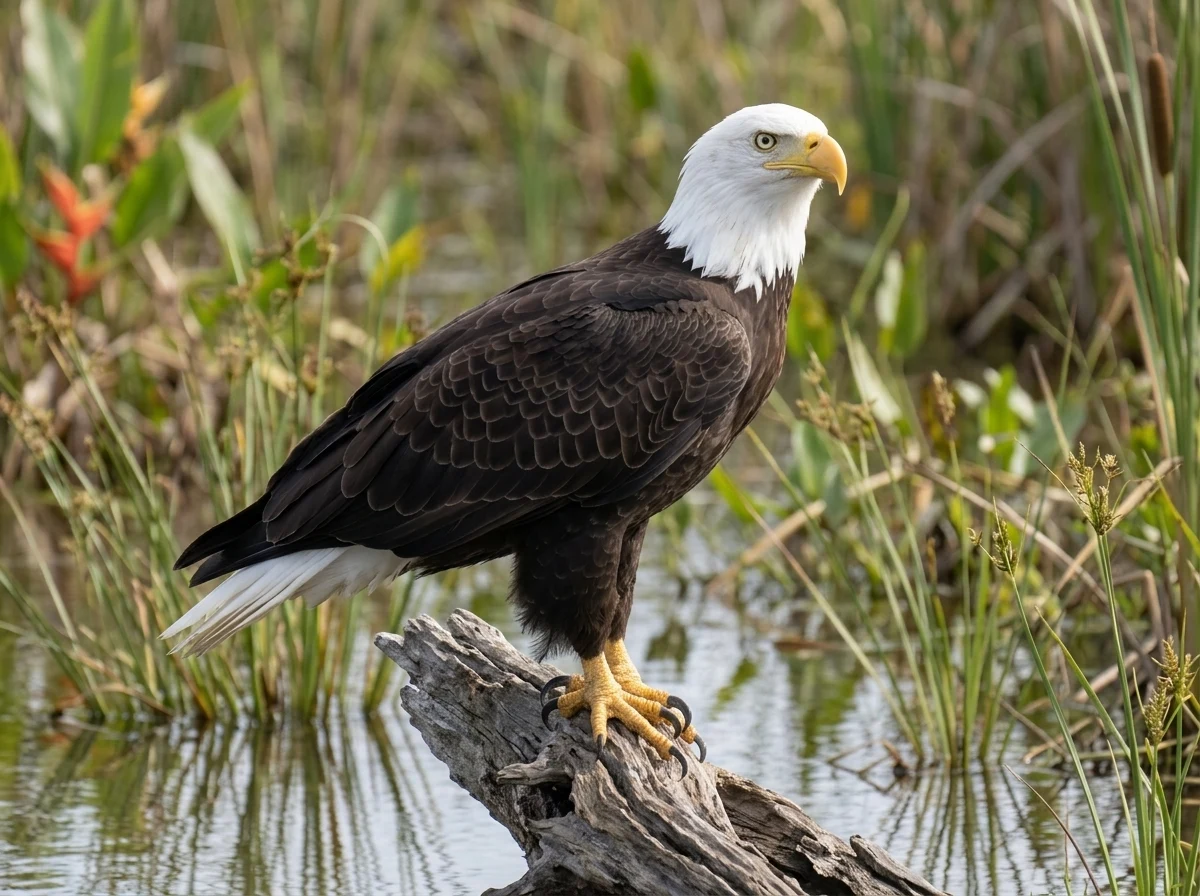
 AI
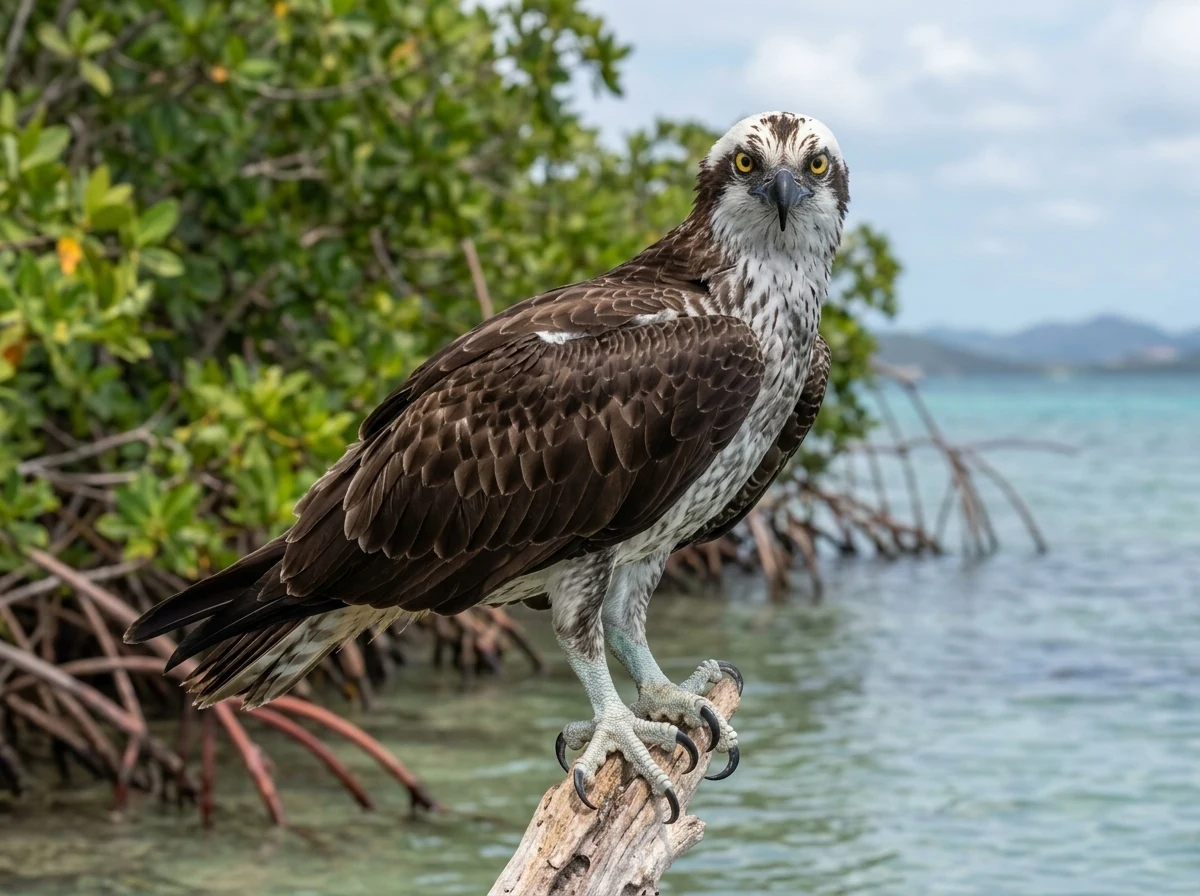
AIAI reconstruction created with Nano Banana 2 · 1K, grounded in the profile’s documented taxonomy, habitat, natural-history sources, and an open-license visual reference when available. It is an interpretive image, not documentary evidence. Image policy →
Bald Eagle
Águila Calva
Haliaeetus leucocephalus
The bald eagle (Haliaeetus leucocephalus) is a bird of prey found in North America. A sea eagle, it has two known subspecies and forms a species pair with the white-tailed eagle (Haliaeetus albicilla), which occupies the same niche as the bald eagle in the Palearctic. Its range includes most of Canada and Alaska, all of the contiguous United States, and northern Mexico. It is found near large bodies of open water with an abundant food supply and old-growth trees for nesting. The bald eagle is an opportunistic feeder that subsists mainly on fish, upon which it swoops down and snatches from the water with its talons. It builds the largest nest of any North American bird and the largest tree nests ever recorded for any animal species, up to 4 m (13 ft) deep, 2.5 m (8.2 ft) wide, and 1 metric ton (1.1 short tons) in weight. Sexual maturity is attained at the age of four to five years. Bald eagles are not bald in the literal sense; the name derives from an older meaning of the word, "white-headed". The adult is mainly brown with a white head and tail. The sexes are identical in plumage, but females are about 25% larger than males. The yellow beak is large and hooked. The plumage of the immature is brown. The bald eagle is the national bird and national symbol of the United States and appears on its seal. In the late 20th century it was on the brink of extirpation in the contiguous United States, but measures such as banning the practice of hunting bald eagles and banning the use of the harmful pesticide DDT slowed the decline of their population. Populations have since recovered, and the species' status was downgraded from "endangered" to "threatened" in 1995 and removed from the list altogether in 2007.
Sound archive
Hear its voice
Explore real songs and calls. The spectrogram turns each sound into a visual trace of time and frequency.

Play: call by Greg Irving
Choose another recording
Sound recorded by Greg Irving · XC1085311 · CC BY-NC-SA 4.0. Visualization by Stichting Xeno-canto voor Natuurgeluiden.
Every recording retains the creator, catalogue number, and license published by Xeno-canto. Metadata via GBIF ↗
Island profile
About the Bald Eagle
This atlas includes Bald Eagle (Haliaeetus leucocephalus) with atlas status “Accidental / vagrant” within scope “Avibase inferred core 380.” Global trait data associate it primarily with wetland; consult the linked records to resolve its Puerto Rico habitat use.
Conservation
Least Concern
IUCN LC
- Global IUCN
- LC
- Puerto Rico DNER
- No current listing in source crosswalk
- Federal ESA
- No current listing in source crosswalk
- Critical habitat
- Not identified in source crosswalk
Natural history
How it lives
- Habitat
- wetlands
- Elevation
- 0–2500 m
- Nest
- Half cup / shallow · Building; Ground; Rock; Tree
- Clutch
- 1–4 eggs
- Social behavior
- Solitary
Keep exploring
This bird belongs to 6 paths through the atlas.
Guides featuring this bird
Follow this record beyond the profile.
Identification, sound, place, and explanatory guides connecting this species to larger questions.
Related in the atlas
Where to fly next
Connected by taxonomy, habitat, occurrence, and conservation.
 AI
AI AI
AI AI
AI AI
AI AI
AI AI
AI
Evidence trail