 AI
AISeasonal fisher
Osprey in Puerto Rico
The “eagle” most often seen in Puerto Rico is not a true eagle but a fish specialist in its own family that arrives from the north.
Reviewed:A fish hunter from the north.
The Osprey (Pandion haliaetus) is a large raptor that visits Puerto Rico from North America and eats almost only fish, which it catches by plunging feet-first. Look for it over bays, coastal lagoons, estuaries, and reservoirs; there is no confirmed nesting on the island.
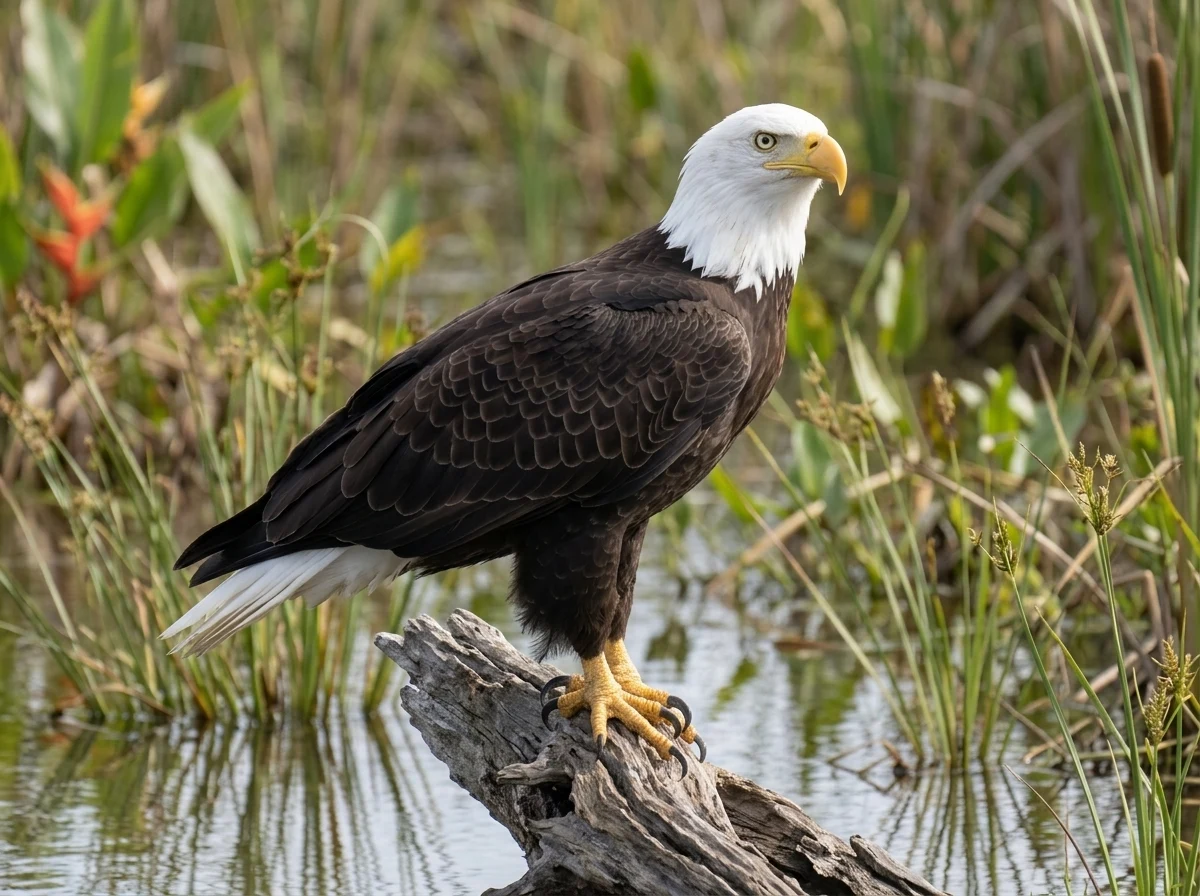
It is not a true eagle: it belongs to its own family, Pandionidae. Its official name on the Puerto Rican Ornithological Society list is Águila Pescadora, and it is the large water raptor you are most likely to see. The Bald Eagle, by contrast, is listed as accidental. This guide explains how to recognize an Osprey, where Puerto Rico's birds come from, and what is known about nesting attempts in the Caribbean.
Seasonal fisher
The Osprey in numbers
1.5–1.8 mwingspanBody 53 to 58 cm (21–23 in); reference average mass about 1.5 kg.
10–30 cmfish it catchesPrey of 4 to 12 inches, per Audubon.
80–90 %migrate through CubaOf Ospreys breeding east of the Mississippi, per satellite tracking.
0nests with eggs in PRRudimentary nests have been seen, with no evidence of eggs or chicks.
01
How to recognize an Osprey
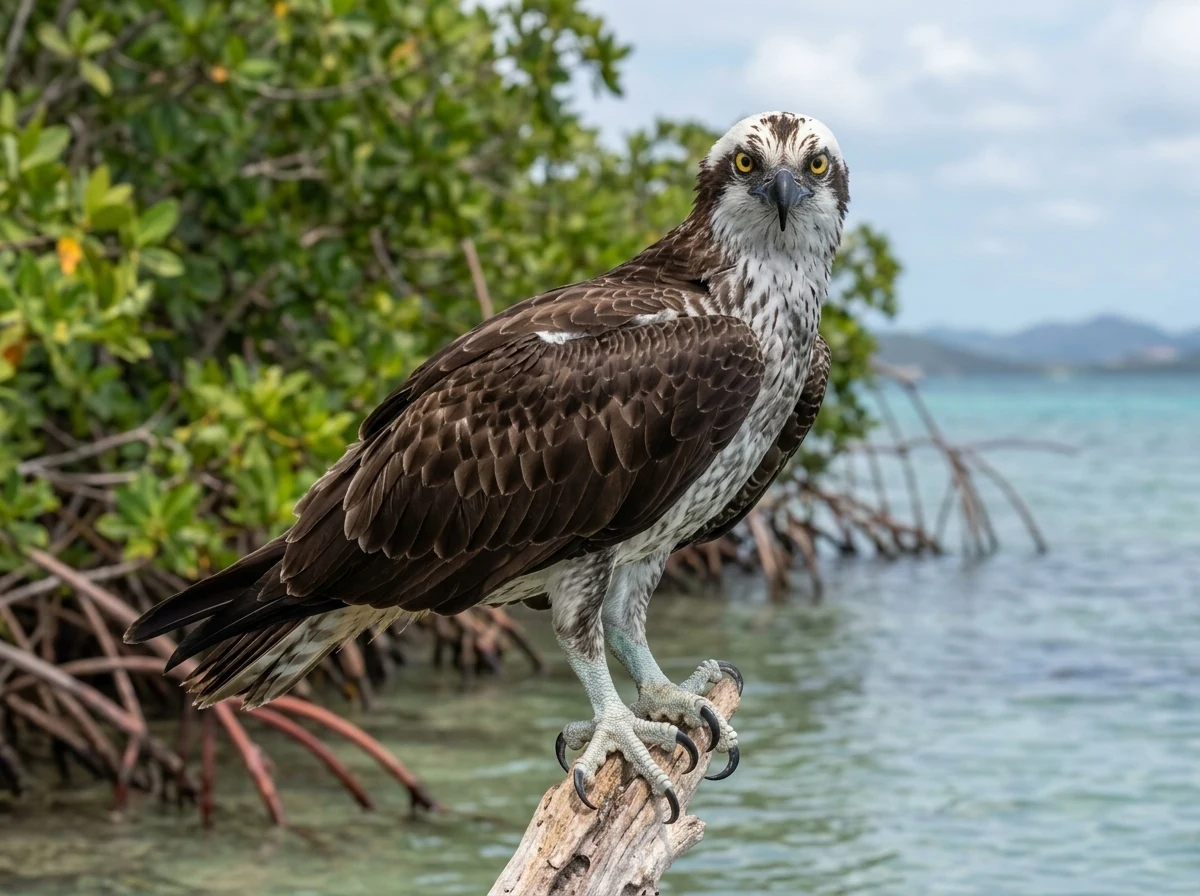
It is 53 to 58 centimeters long with a wingspan of 1.5 to 1.8 meters. It is white below with black patches at the wrist of the wing, dark above, and has a black stripe through the eye across a white face. The wings are long and narrow, bent at the wrist in flight, giving an angular silhouette that is easy to learn.
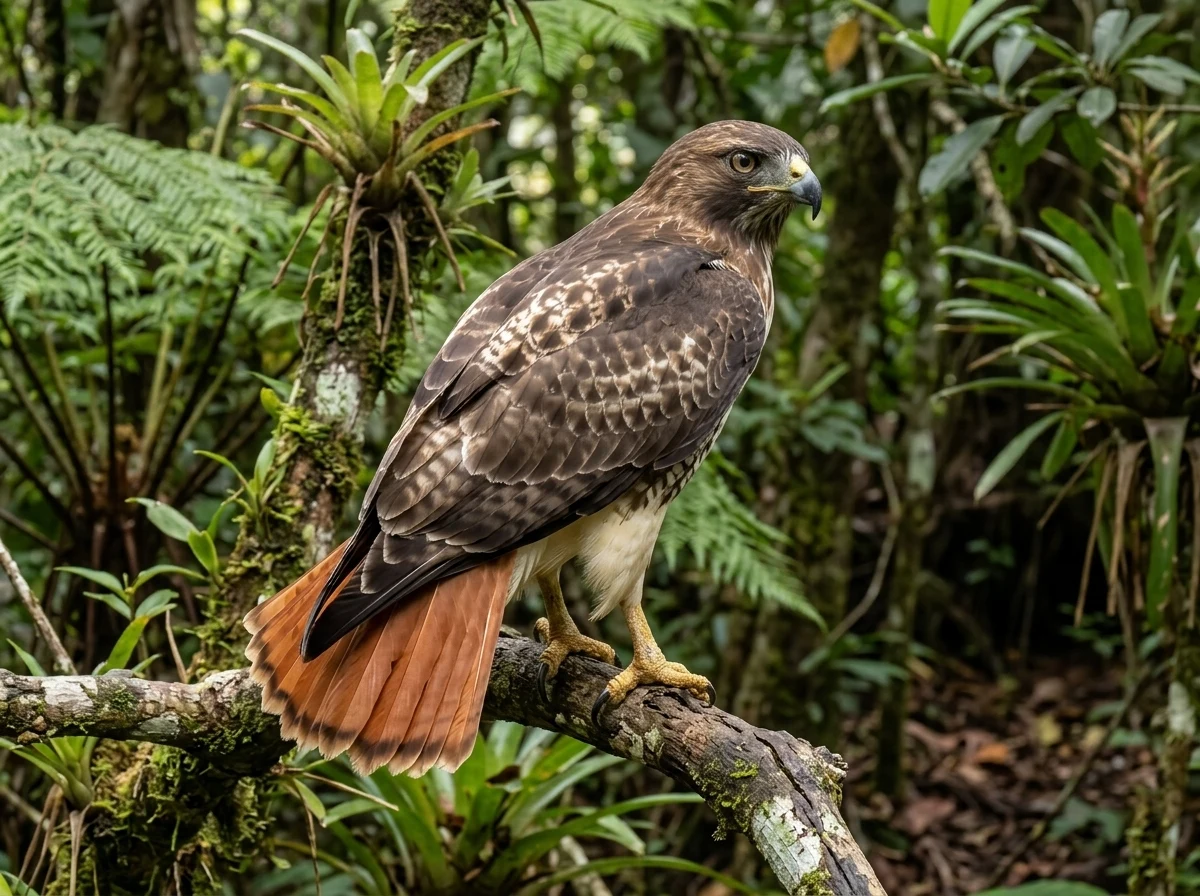
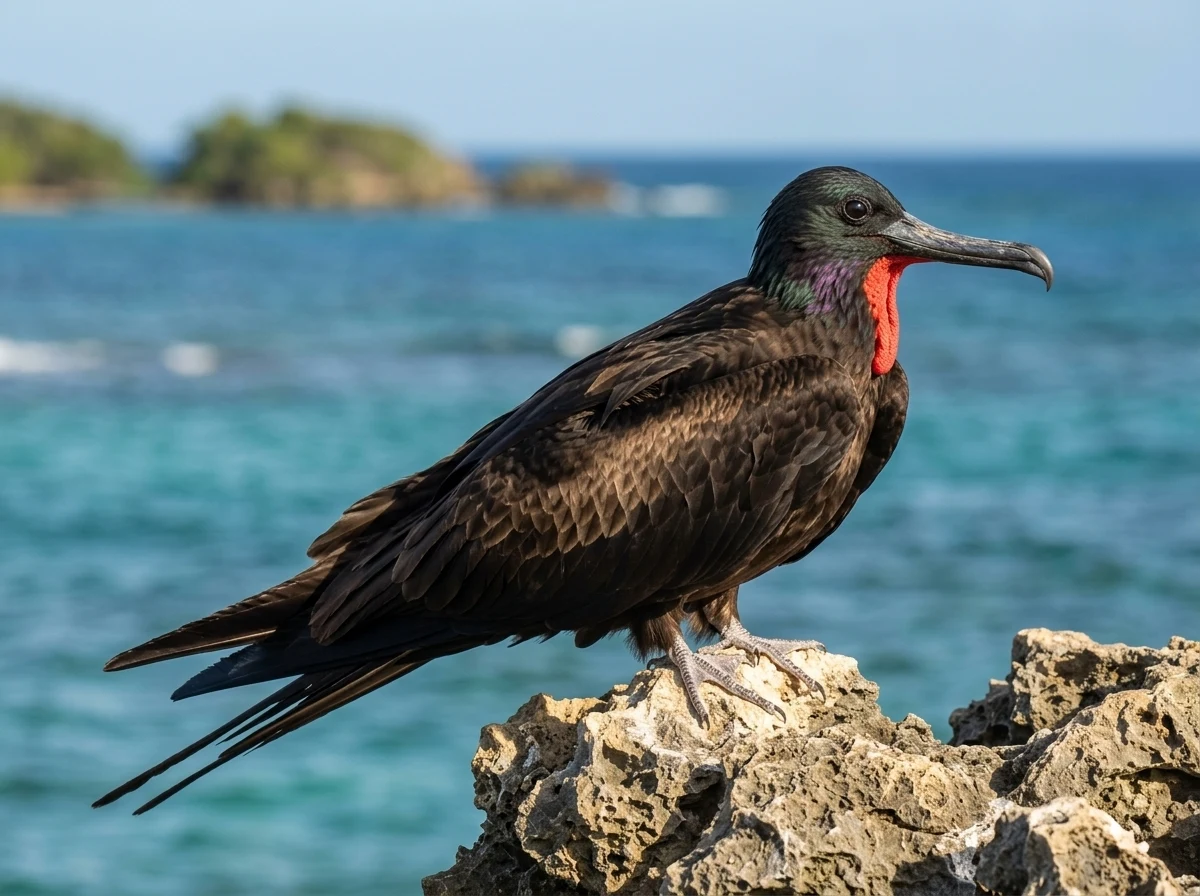
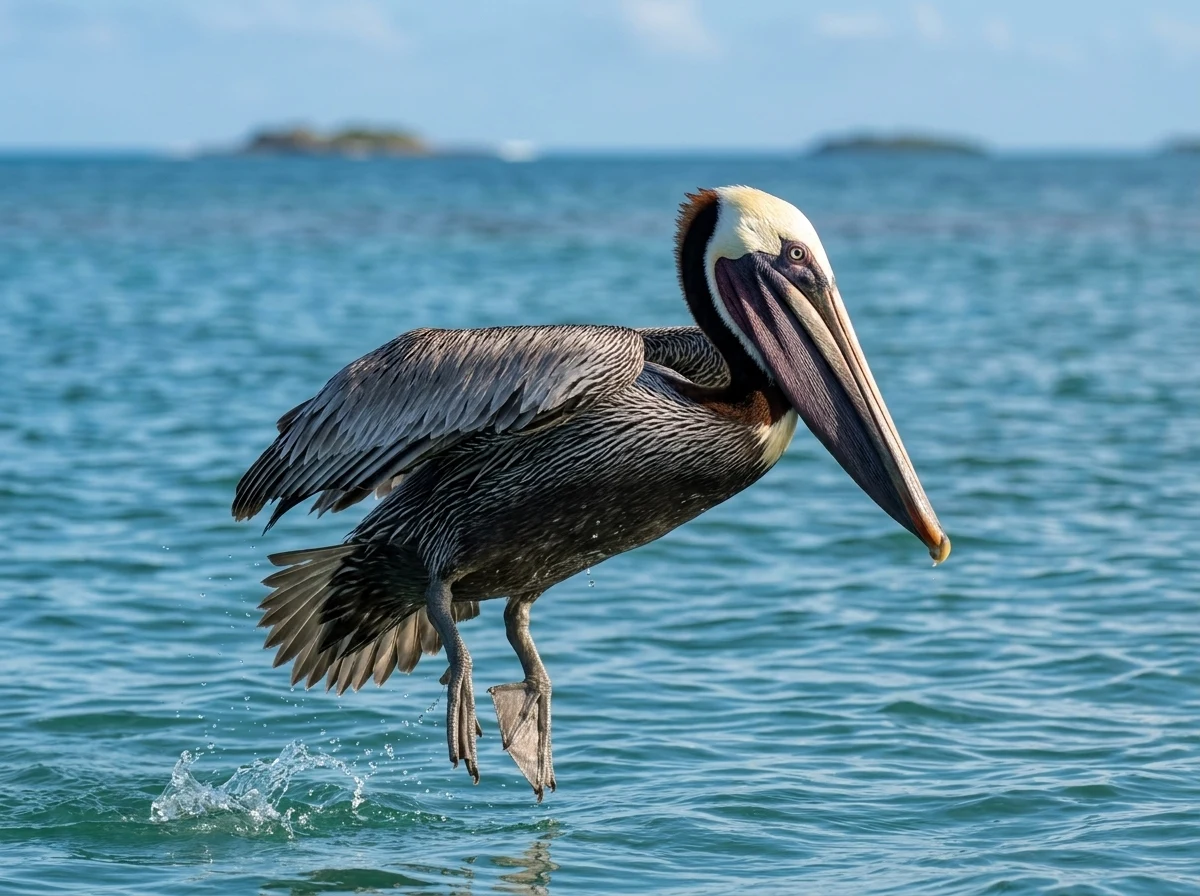
Compared with the Red-tailed Hawk, it looks whiter below, with longer, narrower wings, and it is always tied to water. Compared with the Magnificent Frigatebird, which also soars over the coast, it lacks the long forked tail and dark, angular frigatebird silhouette. And unlike the Brown Pelican, the Osprey plunges feet-first and leaves the water with the fish gripped in its talons.
02
How it fishes
It flies slowly over water, pauses to hover when it spots a fish, and plunges feet-first to grab it with its talons. Prey usually measures 10 to 30 centimeters (4 to 12 inches). It then carries the fish head-forward.
So the classic scene is an Osprey cruising over a lagoon, reservoir, or bay shore, hanging in the air and then hitting the water with a heavy splash. If you find one perched on a post, dead tree, or structure by the water eating a fish, you have a good chance to photograph the face and chest pattern.
03
Where Puerto Rico's Ospreys come from
Ospreys from eastern North America (subspecies carolinensis) migrate to Central and South America. A satellite-tracking study published in 2001 showed eastern birds heading down Florida, crossing to Cuba, traversing Hispaniola, and flying about 600 kilometers over the Caribbean to landfall between Santa Marta, Colombia, and Lake Maracaibo, Venezuela.
Notably, those tracked birds did not island-hop through Puerto Rico or the islands farther southeast. According to a 2014 review, 80 to 90% of Ospreys breeding east of the Mississippi pass through Cuba. The Ospreys seen in Puerto Rico are therefore a fraction of that movement: birds wintering or stopping here, including young birds that may linger.
04
Does the Osprey nest in Puerto Rico?
There is no confirmed nesting. The 2014 review of the Caribbean Osprey reports Ospreys building rudimentary nests, and old nest structures, in Puerto Rico and St. Croix, but no evidence of eggs or nestlings. Several of the birds building nests in Puerto Rico and the Virgin Islands were likely juveniles of the migratory carolinensis subspecies.
The resident Caribbean subspecies, ridgwayi, is not Puerto Rico's bird: it nests in scattered numbers from the Bahamas and Cuba to the Yucatán Peninsula and Belize. On its breeding grounds the Osprey builds a bulky stick nest on dead trees or poles near water. If you find an active nest on the island, document it with photos from a distance and report it without publishing the exact location.
05
Where and when to look
The catalog profile summarizes its habitat as coastal, but the Osprey uses any open water with fish: bays, coastal lagoons, estuaries, mangroves with wide channels, and freshwater reservoirs. Places with good views over water, such as the southwest lagoons, Humacao Natural Reserve, or Jobos Bay, are logical places to search.
Because Puerto Rico's Ospreys come from the north, the logical season is those populations' non-breeding period, roughly autumn through spring; juveniles may linger outside that window. Note date, place, and apparent age, and check recent eBird reports before heading out.
06
From threatened to recovered
In the mid-20th century, the effects of pesticides such as DDT seriously endangered the Osprey in North America. After DDT was banned in 1972, its populations recovered remarkably, and the IUCN now lists it as Least Concern.
That northern recovery is why Ospreys keep arriving in the Caribbean. Even so, each bird is protected by migratory bird laws: do not chase one with boats or drones while it fishes, and if you find one injured or tangled in fishing line, contact DRNA rather than handling it.
Linked profiles
The Osprey and its lookalikes
Compare the Osprey with other large water and coastal birds, and with the kingfisher, which shares part of its Spanish name but not its family.
Sound archive
Hear its voice
Explore real songs and calls. The spectrogram turns each sound into a visual trace of time and frequency.
XC1133704Recording 1 of 3call, begging call

Play: call, begging call by Rory Nefdt
Choose another recording
Sound recorded by Rory Nefdt · XC1133704 · CC BY-NC-SA 4.0. Visualization by Stichting Xeno-canto voor Natuurgeluiden.
Every recording retains the creator, catalogue number, and license published by Xeno-canto. Metadata via GBIF ↗
01
Are there eagles in Puerto Rico?
There are no resident true eagles. The raptor usually called an “eagle” is the Osprey, a northern visitor in its own family; the Bald Eagle appears on the local list only as accidental.
02
Is the Osprey an eagle?
Not strictly. The Osprey (Pandion haliaetus) is in its own family, Pandionidae, separate from the eagles and hawks of family Accipitridae. The Spanish name “águila” is traditional.
03
What does the Osprey eat?
It eats almost exclusively fish, usually 10 to 30 centimeters long. It catches them by plunging feet-first after hovering over the water, then carries them head-forward.
04
Does the Osprey nest in Puerto Rico?
No nesting is confirmed. Ospreys have been seen building rudimentary nests in Puerto Rico, probably North American juveniles, but without evidence of eggs or nestlings.
05
Is the Osprey the same as the kingfisher (martín pescador)?
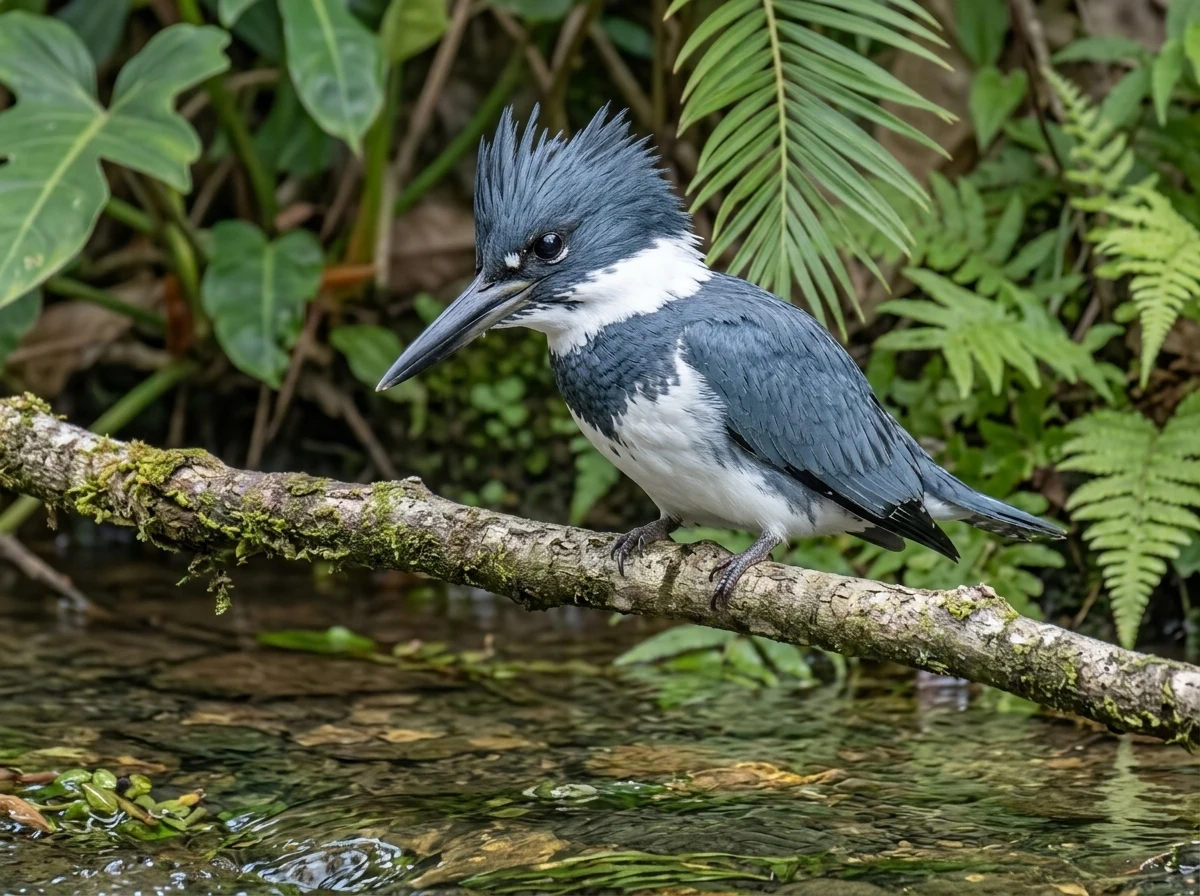
No. The Belted Kingfisher (martín pescador) is a much smaller, blue-gray, crested bird with a long bill that dives headfirst. The Osprey is a large raptor that fishes with its talons.
06
When can you see Ospreys in Puerto Rico?
Mainly during the northern populations' non-breeding season, roughly autumn through spring. Some juveniles may stay longer, so a summer record is not impossible, but it should be documented.
Keep exploring
Connected routes
Sources and review
The evidence is one link away.
These sources support the editorial scope of this guide. Bird profiles also retain their own taxonomy, occurrence, and conservation references.
Reviewed:
01↗02↗03↗04↗05↗06↗07↗08↗09↗
National Audubon Society
Osprey field guide
Size, white pattern with black wrist patches, feet-first fishing, prey size, nest, and recovery after DDT.Journal of Raptor Research 48(4) (Wiley et al., 2014)
Distribution and natural history of the Caribbean Osprey
Range of the resident ridgwayi subspecies, rudimentary nests without eggs or nestlings in Puerto Rico, and carolinensis migration through Cuba.The Condor 103(4) (Martell et al., 2001)
Fall migration routes, timing, and wintering sites of North American Ospreys by satellite telemetry
Florida–Cuba–Hispaniola–South America route and the finding that tracked birds did not island-hop through Puerto Rico.Sociedad Ornitológica Puertorriqueña
Catalog of the Birds of Puerto Rico
Official Spanish names (Halcón Peregrino, Falcón Común, Falcón Migratorio, Águila Pescadora, Gavilán de Sierra, Guaraguao de Bosque, Guaraguao Colirrojo) and occurrence codes such as “Accidental.”U.S. Fish and Wildlife Service
Cabo Rojo National Wildlife Refuge
Habitats, focal birds, conservation, trails, and official refuge notices.National Audubon Society
Red-tailed Hawk field guide
Female and male measurements, adult rufous tail, belly band, hunting technique, nest, and incubation.Departamento de Recursos Naturales y Ambientales
Humacao reserve designation document
Historical bird inventory and ecological description of lagoons, channels, and Pterocarpus forest.NOAA Office for Coastal Management
Jobos Bay Estuarine Research Reserve
Habitats, extent, and monitoring of the reserve.U.S. Fish and Wildlife Service / Federal Register 64 FR 46542
Final rule removing the American Peregrine Falcon from the federal list (1999)
North American subspecies, Arctic Peregrine migration to South America, diet of birds and bats, and the 1994 and 1999 delisting dates.The atlas continues