 AI
AIFieldcraft guide
How to record video to document bird behavior
A practical guide to framing, duration, audio, and metadata so your behavior videos serve as scientific evidence, with examples from the Puerto Rican Woodpecker and the Puerto Rican Tody.
Reviewed:Prepared with AI assistance and linked sources. Illustrations are not field photographs.
Video as data, not just a memory
A video of a bird feeding, singing, or building a nest can be much more than a nice memory: it can become a scientific record. The Macaulay Library, from the Cornell Lab of Ornithology, describes every uploaded video as a scientific record and asks that the date, time, and location be accurate (c300-fieldcraft-video-behavior-s1). The difference between a useful clip and one that adds nothing is usually preparation, not luck.
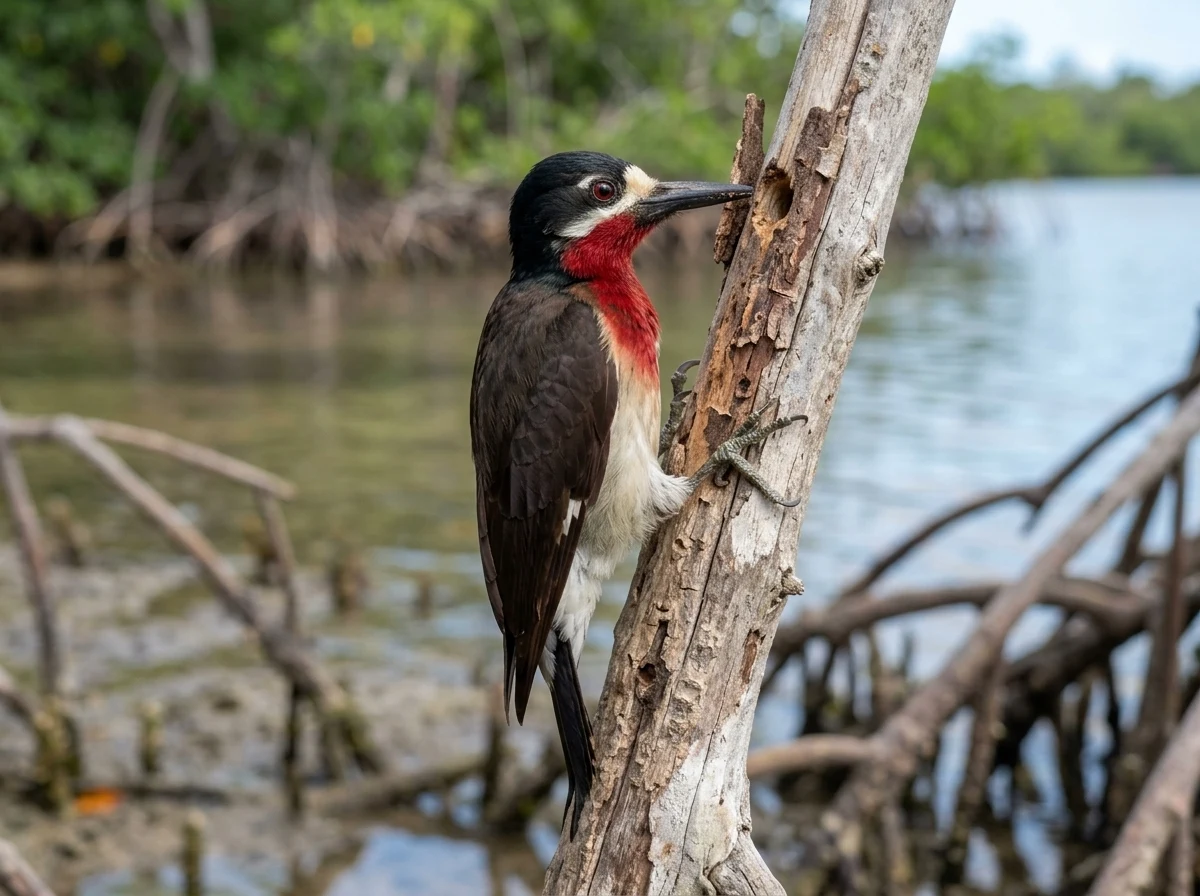
This guide explains what to record, how to frame, how long to keep rolling, and what metadata to add. We use examples from Puerto Rico: the Puerto Rican Woodpecker (Melanerpes portoricensis), which is sociable and shares parenting duties (c300-fieldcraft-video-behavior-s6), and the Puerto Rican Tody (Todus mexicanus), which plucks insects and spiders from the undersides of leaves and excavates its nest burrow in dirt banks (c300-fieldcraft-video-behavior-s7). These are concrete, observable behaviors that are valuable to science.
Fieldcraft guide
Three keys to a useful video
30 sTarget clip lengthThe Macaulay Library recommends aiming for at least 30 seconds per clip, longer when possible; to capture interactions, movements, or vocalizations, it suggests 20–30 seconds or more (c300-fieldcraft-video-behavior-s1).
1080pMinimum upload resolutionAt least 720p is accepted, but 1080p or 4K is preferred; formats are MP4, MOV, or M4V and the maximum is 1 GB per file (c300-fieldcraft-video-behavior-s1).
10Videos per species per checklistYou can upload up to 10 files per species per eBird checklist; if you have several of the same individual, upload only those showing different zooms, angles, or behaviors (c300-fieldcraft-video-behavior-s1).
01
Stabilize, frame, and choose the moment
Stability comes first. The Macaulay Library recommends a tripod to avoid shake and suggests turning off image stabilization if the tripod is on solid ground, because it can introduce unwanted motion (c300-fieldcraft-video-behavior-s1). If you don't have a tripod, rest the camera or phone on a rock, tree trunk, or other stable object (c300-fieldcraft-video-behavior-s1). Audubon agrees: for video, a tripod or ground pod is first and most important for following a subject (c300-fieldcraft-video-behavior-s5).
Before recording, decide whether you will follow the bird with a pan or hold the camera still and let the bird leave the frame; deciding ahead of time avoids jerky, indecisive movements (c300-fieldcraft-video-behavior-s1). Try to keep the entire bird in frame when possible and leave looking space in the direction it faces or moves (c300-fieldcraft-video-behavior-s1). As our own practical suggestion, for the Puerto Rican Tody, which often perches on low branches and sallies to leaves (c300-fieldcraft-video-behavior-s7), a slightly wider framing that includes the branch and nearby foliage may capture foraging behavior better than an extreme close-up.
02
Record longer than feels necessary
Behavior is video's great strength. The Macaulay Library advises staying with the bird longer than feels necessary and aiming for 20–30 seconds or more per clip to capture potential interactions, movements, or vocalizations; a longer video can always be trimmed, but a too-short one cannot be saved (c300-fieldcraft-video-behavior-s1). Audubon suggests documenting a behavior or series of behaviors and ending by allowing the subject to naturally leave the frame (c300-fieldcraft-video-behavior-s5).
Think about which specific behaviors you want to document. The Puerto Rican Woodpecker is sociable: although territorial during the breeding season, pairs often join with other individuals to form larger groups during the nonbreeding season and may join in bouts of calling (c300-fieldcraft-video-behavior-s6). As our own recommendation, a clip showing two or more woodpeckers calling or moving together may be more valuable than a static portrait. For the Puerto Rican Tody, a clip showing the moment it captures an insect or spider from the underside of a leaf, or captures a small Anolis lizard, documents a specific foraging behavior (c300-fieldcraft-video-behavior-s7).
03
Audio is data too
The Macaulay Library describes good audio as crucial to understanding behavior and recommends considering an external microphone, avoiding talking or moving while filming, and being conscious of autofocus or stabilization noise (c300-fieldcraft-video-behavior-s1). Audio is valuable data and should not be replaced with music or unnatural sound (c300-fieldcraft-video-behavior-s1).
For Puerto Rico's birds, audio can be as important as the image. The Puerto Rican Woodpecker joins in bouts of group calling (c300-fieldcraft-video-behavior-s6). If you record a woodpecker drumming, the drumming sound is a mechanical sound that can be tagged as such in the Macaulay Library (c300-fieldcraft-video-behavior-s2). Do not replace field audio with music: that removes scientific information.
04
Metadata: what turns a clip into evidence
Every Macaulay Library video is a scientific record. Make sure your camera clock is correct (date and time) and create an eBird checklist as soon as you begin birding, to log the precise date and location tied to your uploads (c300-fieldcraft-video-behavior-s1). At upload, add any other species that appear, relevant sound types, whether playback was used, age and sex of the target species if known, relevant behaviors and tags, equipment used, and additional notes about the context of the video (c300-fieldcraft-video-behavior-s1).
Behavior tags apply only to the focal species and only to behaviors occurring during that specific piece of media, not to behaviors the bird exhibited outside the clip (c300-fieldcraft-video-behavior-s2). Defined tags include: foraging or eating; vocalizing (photos and videos only, for a bird visibly calling or singing); carrying food (often an indication of breeding); courtship, display, or copulation; flying; feeding young; nest building; and preening, scratching, or bathing (c300-fieldcraft-video-behavior-s2). You can also tag sound types, such as song, call, mechanical sound, or duet (c300-fieldcraft-video-behavior-s2). If you used playback before or during recording, tag "Used"; if not, "Not Used." Playback includes vocal imitations. If you used pishing or other non-conspecific stimuli, tag "Not Used" but note it in comments (c300-fieldcraft-video-behavior-s2).
05
Ethics: the bird comes first
Audubon puts it clearly: respect for birds and their environment must come first, and in any conflict of interest the well-being of birds and their habitats comes before the videographer's ambitions (c300-fieldcraft-video-behavior-s4). Use a telephoto lens and maintain enough distance to allow the bird to behave naturally; if your approach causes a bird to flush or change its behavior, you are too close (c300-fieldcraft-video-behavior-s4). Never advance on birds with the intention of making them fly (c300-fieldcraft-video-behavior-s4).
For the Puerto Rican Woodpecker and the Puerto Rican Tody, this means observing from a distance that does not interrupt foraging or activities at the nest. The Puerto Rican Tody excavates its nest burrow in dirt banks and typically breeds from February to July (c300-fieldcraft-video-behavior-s7); approaching an active bank too closely can cause stress. Audubon says not to use drones to record birds, especially at nests (c300-fieldcraft-video-behavior-s4). If a bird freezes or hunches into a protective stance, back away (c300-fieldcraft-video-behavior-s4).
Linked profiles
Example birds to practice with
Two Puerto Rico birds with different behaviors you can document on video.
AI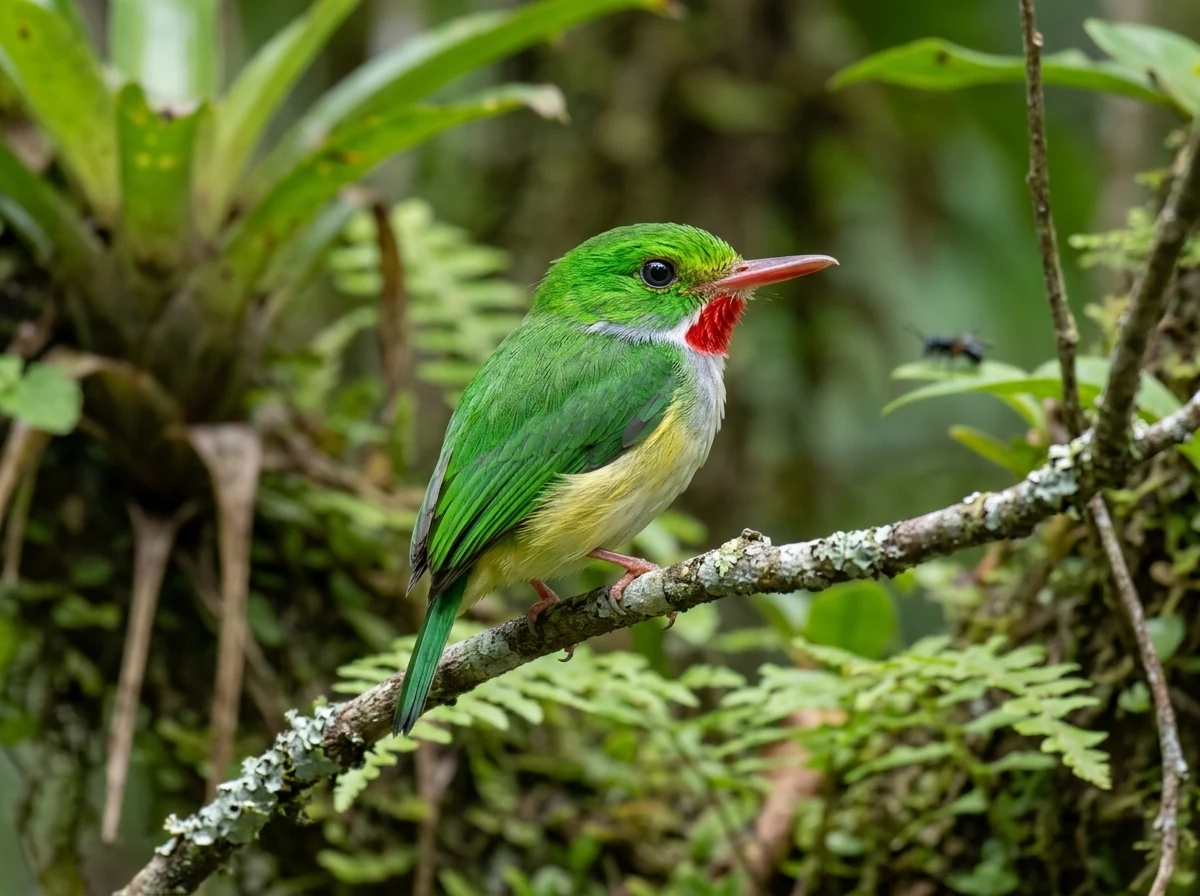 AI
AI01
How long should a behavior video be?
The Macaulay Library recommends aiming for at least 30 seconds per clip, longer when possible; to capture interactions, movements, or vocalizations, it suggests 20–30 seconds or more. A longer video can be trimmed later, but a too-short one cannot be saved (c300-fieldcraft-video-behavior-s1).
02
Can I upload video recorded with my phone?
Yes, you can upload video directly from your phone via the web browser, but consider trimming it first. The Macaulay Library discourages most phone video unless it is exceptionally close or well-shot digiscoping (c300-fieldcraft-video-behavior-s1).
03
What metadata should I add when uploading a video?
Whenever possible: any other species that appear, relevant sound types, whether playback was used, age and sex of the target species if known, relevant behaviors and tags, equipment used, and additional notes about the context of the video (c300-fieldcraft-video-behavior-s1).
04
How do I tag a video of a woodpecker drumming?
Drumming is a mechanical sound, meaning an audible non-vocal sound. You can tag it as "Mechanical sound" in the Macaulay Library. If the bird is also actively foraging, you can add the "Foraging or eating" tag (c300-fieldcraft-video-behavior-s2).
05
Can I use playback to attract the bird and record it?
Audubon recommends not using playback of bird calls (c300-fieldcraft-video-behavior-s4). If you used it before or during recording, you must tag it as "Used" in the Macaulay Library metadata (c300-fieldcraft-video-behavior-s2). Keep in mind that, according to Audubon, when a bird leaves the nest to respond to a perceived challenger or predator, eggs or chicks are left open to predation and weather conditions (c300-fieldcraft-video-behavior-s4).
Keep exploring
Connected routes
Sources and review
The evidence is one link away.
These sources support the editorial scope of this guide. Bird profiles also retain their own taxonomy, occurrence, and conservation references.
Reviewed:
01↗02↗03↗04↗05↗06↗
Cornell Lab of Ornithology (eBird / Macaulay Library Help Center)
Macaulay Library/eBird video recording and uploading guide
Evidence for cited sections; consult the original document.Cornell Lab of Ornithology (eBird / Macaulay Library Help Center)
Tagging media (Adding data tags to media in the Macaulay Library)
Evidence for cited sections; consult the original document.National Audubon Society
Audubon's Guide to Ethical Bird Photography and Videography
Evidence for cited sections; consult the original document.Audubon Magazine (author: Benjamin Clock)
How to Shoot (Good) Bird Videos with Your Camera
Evidence for cited sections; consult the original document.Birds of the World, Cornell Lab of Ornithology (author: Judith D. Toms)
Puerto Rican Woodpecker (Melanerpes portoricensis) — Behavior account
Evidence for cited sections; consult the original document.Birds of the World, Cornell Lab of Ornithology (authors: Wendler, González Díaz, Collazo Torres, Rummel; content partner BirdsCaribbean)
Puerto Rican Tody (Todus mexicanus) — Introduction account
Evidence for cited sections; consult the original document.The atlas continues