 AI
AIIbises and spoonbills (Threskiornithidae)
Ibises in Puerto Rico: Scarlet, White, Glossy, and Spoonbill
From rarities to nesters: how Glossy and White Ibis settled on the north coast, what is known about the Scarlet Ibises seen on the island, and how to separate them from herons and flamingos.
Reviewed:Which ibises occur in Puerto Rico
Four species in the family Threskiornithidae (ibises and spoonbills) have been recorded in Puerto Rico: Glossy Ibis (Plegadis falcinellus, Ibis Lustroso), White Ibis (Eudocimus albus, Ibis Blanco), Scarlet Ibis (Eudocimus ruber, Ibis Escarlata), and Roseate Spoonbill (Platalea ajaja, Espátula Rosada). Glossy Ibis is now the easiest to find; Scarlet Ibis remains a rarity.
Avibase-based checklists treat all four as accidental visitors, but the picture changed in recent decades. According to the Puerto Rico Breeding Bird Atlas, Glossy and White Ibis were rare visitors before the early 2000s; nesting was then confirmed in Arecibo and both spread along coastal wetlands.
This guide explains how to recognize each species, how many records exist, and what care to take with a red or pink ibis, because in the field it gets confused with flamingos, spoonbills, and even hybrids.
Ibises and spoonbills (Threskiornithidae)
Ibises in Puerto Rico's records
4Species recordedThree ibises and one spoonbill.
11,330Glossy Ibis recordsIn GBIF (eBird and iNaturalist), September 2026.
268Scarlet Ibis recordsAll since 2018, at a handful of sites.
11Roseate Spoonbill recordsBetween 1998 and 2010.
01
Ibis or heron: the neck test
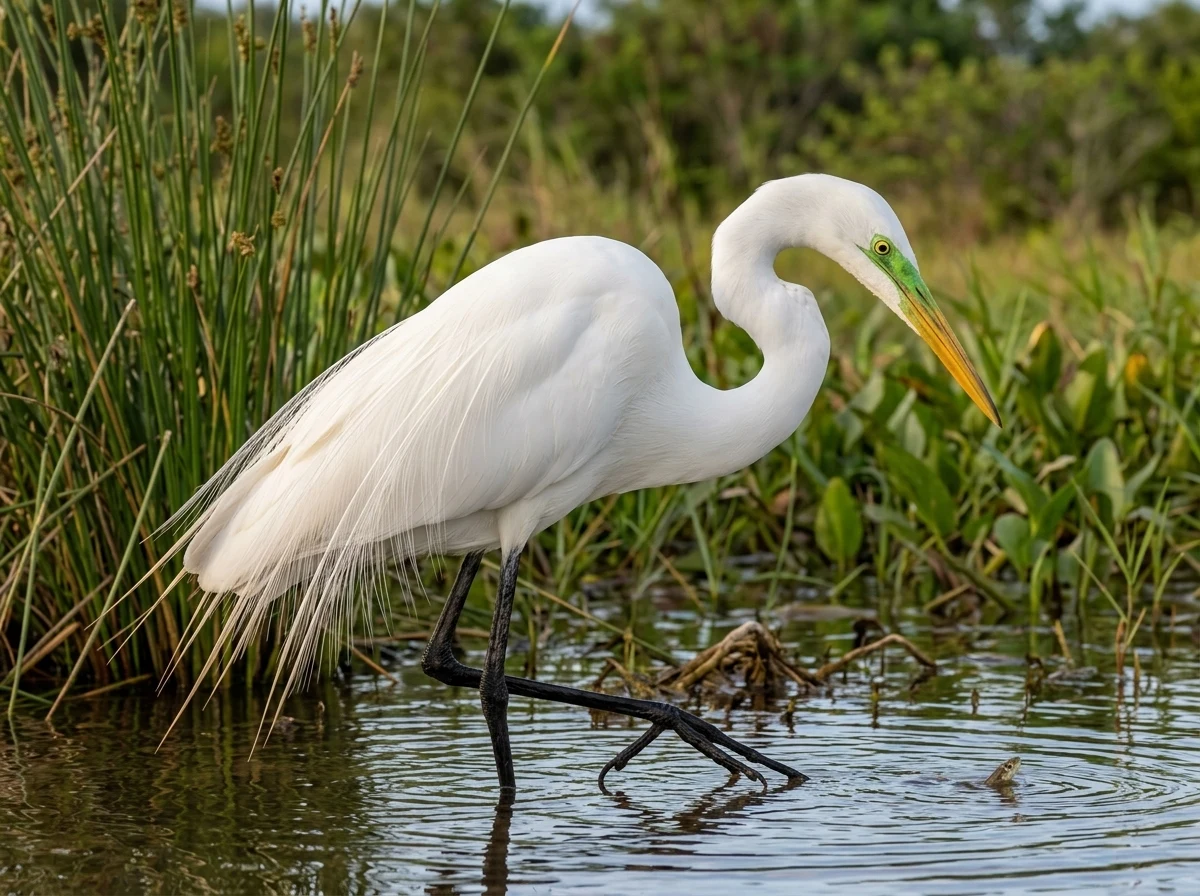
Ibises resemble herons because they are also long-legged wading birds, but their long bill curves down like a sickle. Glossy Ibis's scientific name, Plegadis falcinellus, comes from Greek and Latin words meaning sickle. Herons, by contrast, have straight, pointed bills.
In flight the difference is even clearer: ibises fly with the neck stretched forward, often in lines or V formations, with quick wingbeats and short glides. Herons fold the neck into an S. Ibises also do not hunt by stalking: they walk through shallow water and mud, probing with the bill to find prey by touch.
02
Glossy Ibis: the dark ibis that stayed
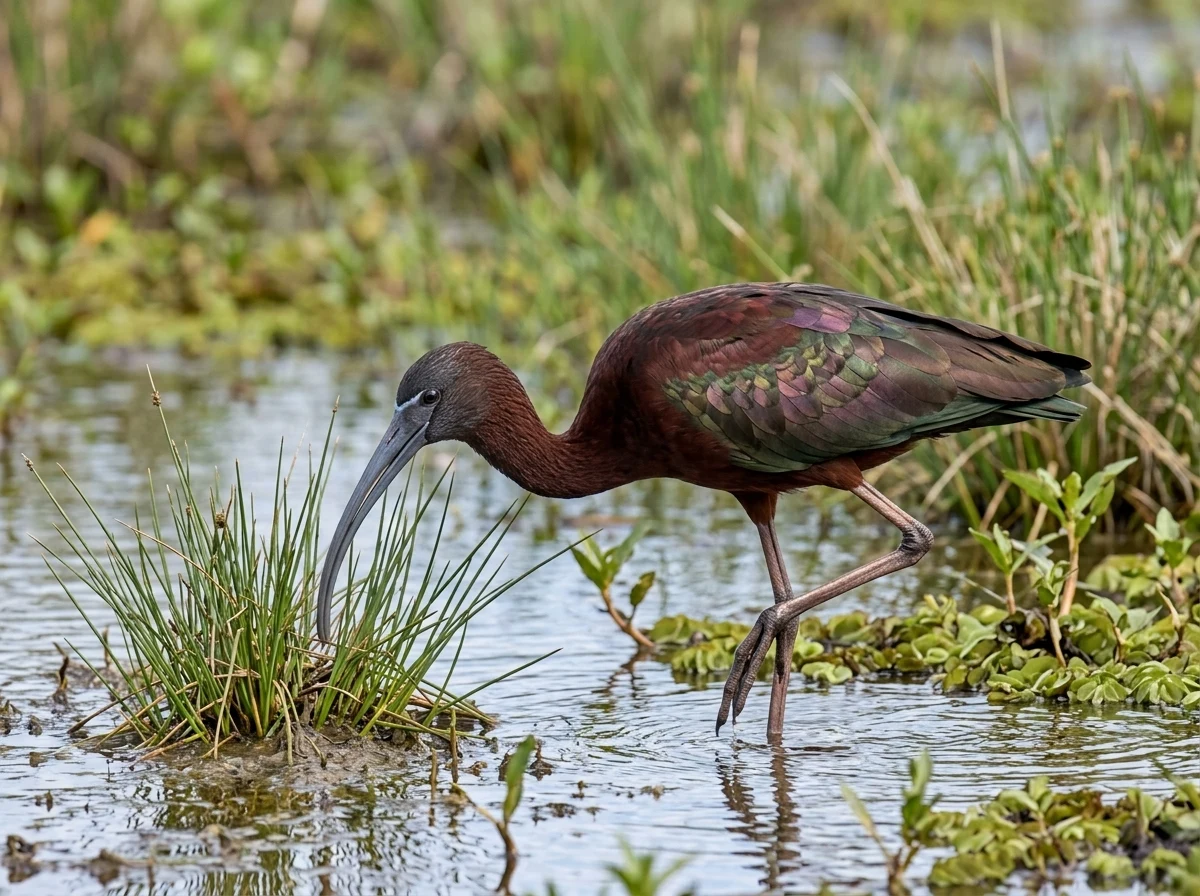
Glossy Ibis measures 48 to 66 cm. At a distance it looks black, but in good light it shows a chestnut body and wings glossed green, purple, and pink. In breeding season its grayish facial skin has a narrow pale-blue border. Juveniles and nonbreeding adults are duller.
Before the early 2000s it was a rare visitor. Nesting was then confirmed in the municipality of Arecibo (the atlas cites a 2009 observation), and it has since spread through coastal wetlands, where flocks of hundreds are seen. It uses lowland mudflats and flooded savannas. GBIF already holds more than 11,000 records from the island, mostly from Lajas (Laguna Cartagena), Camuy, Arecibo, and Cabo Rojo.
03
White Ibis: red bill and black wingtips
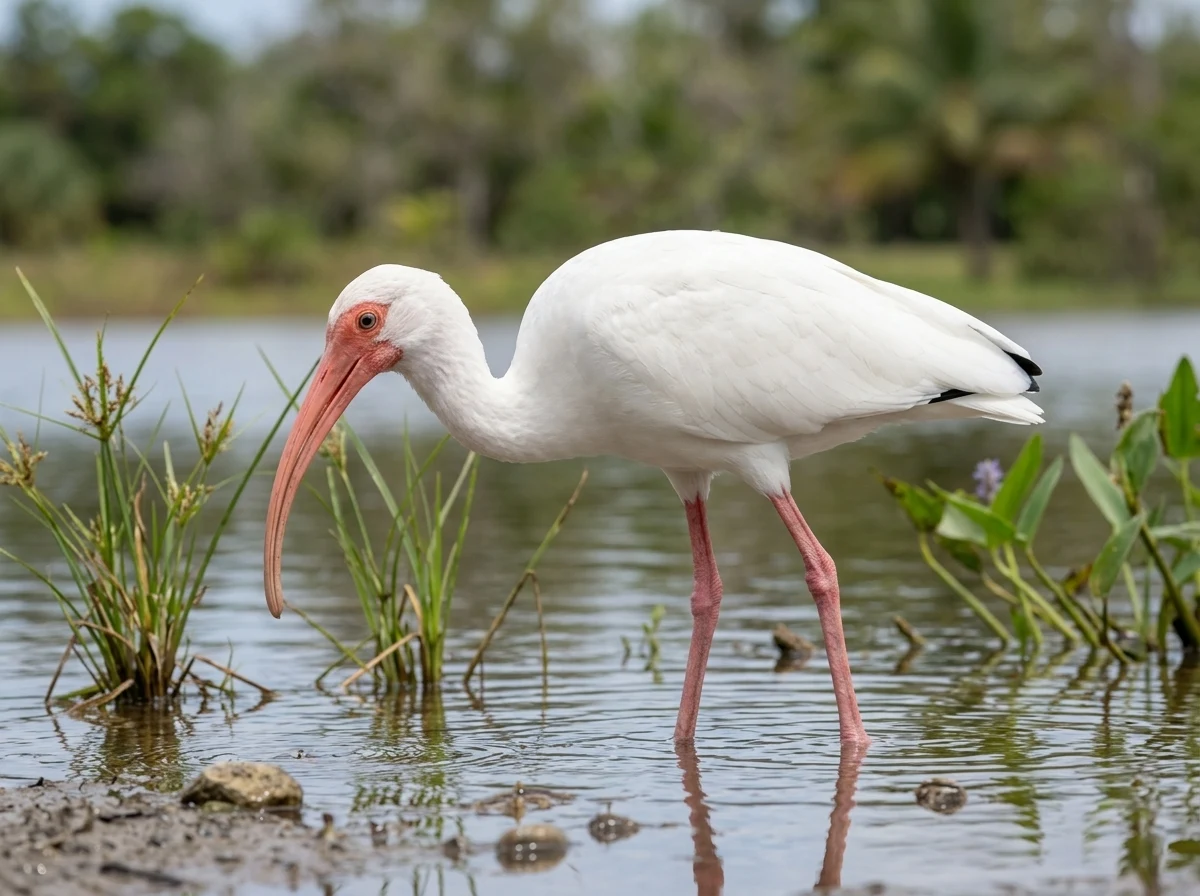
White Ibis measures 58 to 69 cm and is unmistakable as an adult: white with a red curved bill, red face and legs, and black wingtips that show mostly in flight. Juveniles are brown above with a white belly and a pink curved bill, turning patchy white as they mature. It is highly social, feeding, roosting, and nesting in groups.
The atlas describes it as a rare visitor that, since the early 2000s, has settled locally on the north coast near Arecibo and spread east and west along coastal wetlands. During atlas fieldwork it was found in six hexagons, with nesting confirmed in one, in June. GBIF holds about 2,500 island records, far fewer than for Glossy Ibis.
04
Are there Scarlet Ibises in Puerto Rico?
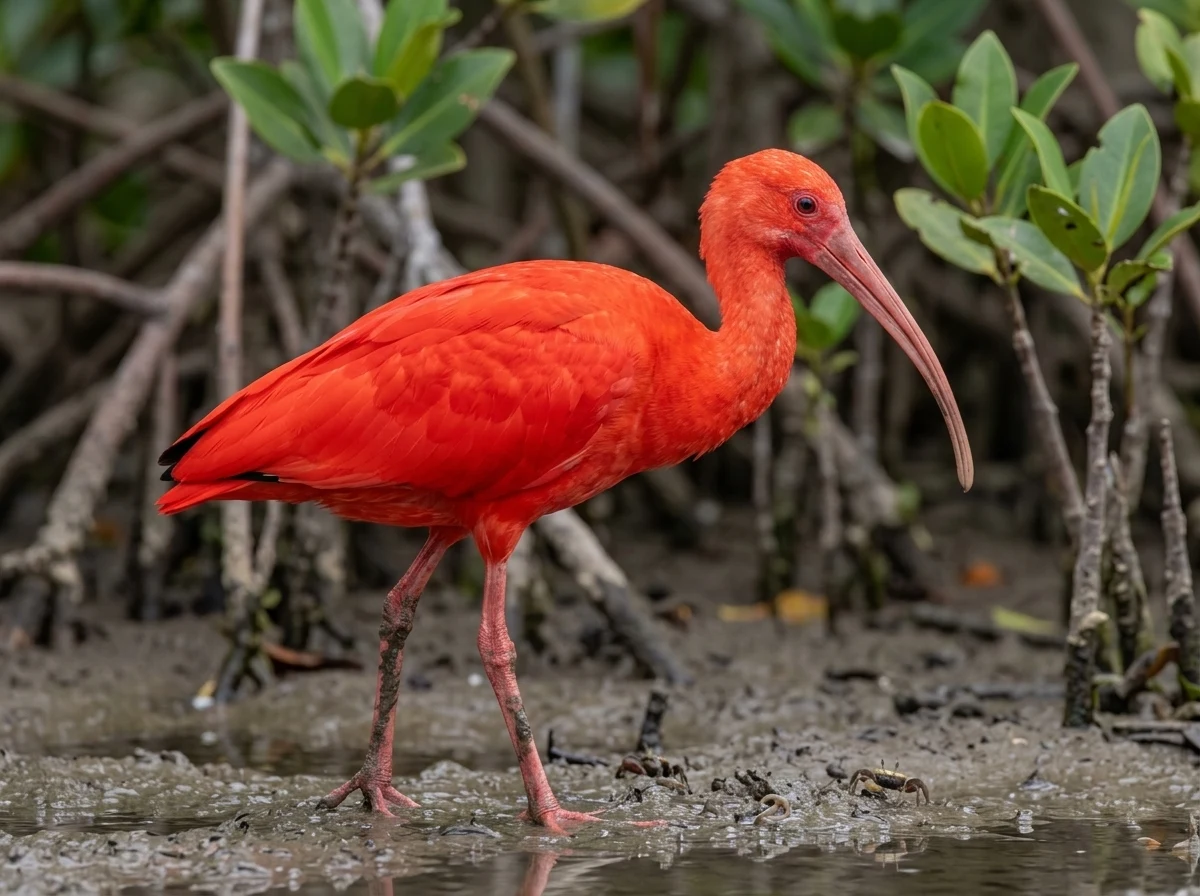
Yes, but as a rarity. Scarlet Ibis is native to northern South America, from Colombia to northeastern Brazil, Trinidad, and the llanos of Venezuela and Colombia. Adults are an intense scarlet red with only the wingtips black. Puerto Rico's published records in GBIF, drawn from eBird and iNaturalist, begin in July 2018 on Culebra, near Laguna del Flamenco.
From December 2019, Scarlet Ibises were reported at the west end of Caño Tiburones Nature Reserve and Central Cambalache in Arecibo, with checklists of up to six birds. From 2021 to 2024 a single bird was reported repeatedly in Ceiba, at the Medio Mundo y Daguao Nature Reserve and the former Roosevelt Roads base lands. Those data alone cannot tell whether the birds arrived on their own or escaped from captivity, so accidental status remains the careful label.
05
Red ibis, flamingo, spoonbill, or hybrid
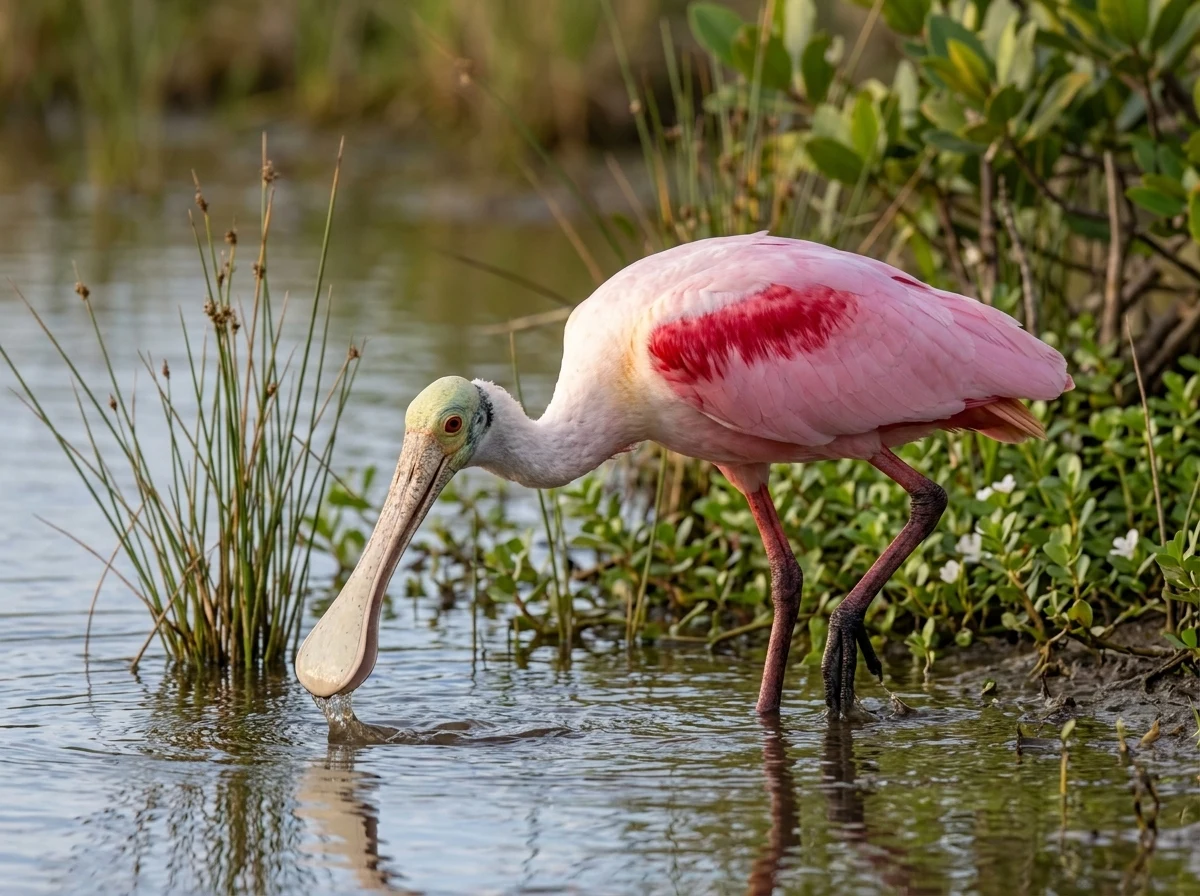
A pink or red bird in a wetland is not always a Scarlet Ibis. Roseate Spoonbill has a long, flattened, spoon-shaped bill, a bare greenish-gray head, and a pink body with red shoulders; it feeds by sweeping the bill side to side. It is very rare in Puerto Rico: GBIF holds just 11 records, from 1998 to 2010. A flamingo is far taller, with extremely long neck and legs and a thick, bent bill.
Scarlet and White Ibis are so closely related that some authorities have treated them as one species, and they hybridize frequently where they meet. A pale pink or blotchy ibis may be a hybrid or a molting juvenile. If you see one, photograph the bill, face, legs, and spread wings, note place and time, and submit it to eBird with those photos.
06
Where and when to look for ibises
Ibises look for shallow water over soft mud: marshes, flooded savannas, rice fields, seasonal ponds, and lagoon edges. Glossy Ibis is reported most at Laguna Cartagena (Lajas), Camuy, Arecibo, and Cabo Rojo; White Ibis on the north coast between Arecibo, Barceloneta, and Manatí. Scarlet Ibis records come from Arecibo, Ceiba, and Culebra.
Water levels change month to month, so a wetland full of ibises can be empty weeks later. Check recent eBird checklists before you go, arrive early, and watch from shorelines or public roads. Nesting colonies are few and sensitive: if you see ibises carrying sticks or repeatedly entering the same mangrove, keep your distance.
Linked profiles
Ibises and spoonbill of Puerto Rico
The four Threskiornithidae recorded on the island, plus the heron they are most often compared with.
Sound archive
Hear its voice
Explore real songs and calls. The spectrogram turns each sound into a visual trace of time and frequency.
XC1092345Recording 1 of 3call

Play: call by Michael John O Mahony
Choose another recording
Sound recorded by Michael John O Mahony · XC1092345 · CC BY-NC-SA 4.0. Visualization by Stichting Xeno-canto voor Natuurgeluiden.
Every recording retains the creator, catalogue number, and license published by Xeno-canto. Metadata via GBIF ↗
01
Are there scarlet ibis in Puerto Rico?
There are records, but it is a rarity. Since 2018 Scarlet Ibises have been reported on Culebra, at Caño Tiburones in Arecibo with checklists of up to six birds, and a single bird in Ceiba from 2021 to 2024. Whether they are wild or escaped is unclear.
02
What is Threskiornithidae?
It is the ibis and spoonbill family: wading birds with long bills, either curved or spoon-shaped, that fly with the neck outstretched. Four have been recorded in Puerto Rico: Glossy Ibis, White Ibis, Scarlet Ibis, and Roseate Spoonbill.
03
What is a glossy ibis?
It is a medium-sized ibis (48 to 66 cm) that looks black at a distance and in good light shows a chestnut body and glossy green and purple wings. In Puerto Rico it went from rare visitor to nester: breeding was confirmed in Arecibo in 2009, and it now forms flocks of hundreds in coastal wetlands.
04
How do I tell an ibis from a heron?
Check the bill and the flight. An ibis has a long down-curved bill and flies with its neck outstretched; a heron has a straight bill and flies with its neck folded into an S. Ibises also probe mud by touch, while herons stalk.
05
Does the white ibis nest in Puerto Rico?
Yes, locally. The Breeding Bird Atlas confirmed June nesting on the north coast, where it has been established near Arecibo since the early 2000s. It remains uncommon and far less numerous than Glossy Ibis.
06
Did I see a flamingo or a red ibis?
A Scarlet Ibis is the size of a medium heron, with a thin curved bill and black wingtips. A flamingo is much taller, with very long neck and legs and a thick bent bill. A Roseate Spoonbill has a spoon-shaped bill.
Keep exploring
Connected routes
Sources and review
The evidence is one link away.
These sources support the editorial scope of this guide. Bird profiles also retain their own taxonomy, occurrence, and conservation references.
Reviewed:
01↗02↗03↗04↗05↗06↗07↗08↗09↗
U.S. Forest Service Research and Development
Puerto Rico Breeding Bird Atlas
Distribution and breeding timing for 130 species breeding in Puerto Rico and its satellite islands.Birds of Puerto Rico (resumen del Atlas de Aves Reproductoras)
Glossy Ibis in Puerto Rico
From rare visitor to confirmed nester in Arecibo, flocks of hundreds, and species measurements.Birds of Puerto Rico (resumen del Atlas de Aves Reproductoras)
White Ibis in Puerto Rico
Local establishment on the north coast near Arecibo since the early 2000s, coastal expansion, and confirmed June nesting.Global Biodiversity Information Facility (GBIF), datos de eBird e iNaturalist
Scarlet Ibis records in Puerto Rico
Published records from 2018 to 2026: Culebra (2018), Caño Tiburones in Arecibo (from December 2019), and Ceiba (2021–2024).Birds of the World / Cornell Lab of Ornithology
Scarlet Ibis: introduction
South American range, scarlet plumage with black wingtips, and frequent hybridization with White Ibis.National Audubon Society
Field guide: White Ibis
Measurements, red curved bill, red face and legs, black wingtips, brown juveniles, and flocking behavior.National Audubon Society
Field guide: Glossy Ibis
Measurements, chestnut body with green and purple gloss, pale-blue facial border in breeding, and flock flight.National Audubon Society
Field guide: Roseate Spoonbill
Spatulate bill, pink plumage, bare head, and foraging by sweeping the bill side to side.U.S. Fish and Wildlife Service
Laguna Cartagena National Wildlife Refuge
Importance of the freshwater wetland for resident and migratory waterbirds.The atlas continues