 AI
AIIdentification by silhouette
Long-tailed birds
Straight, graduated, forked, or reduced to two streamers: tail shape matters more than simply saying “long.”
Reviewed:Describe the tail before searching for a name.
Compare the tail with the bird's body, not with a branch or the whole image. Note whether it ends rounded, square, graduated, V-shaped, scissored, or in two central streamers; then record size, bill, posture, and flight style.
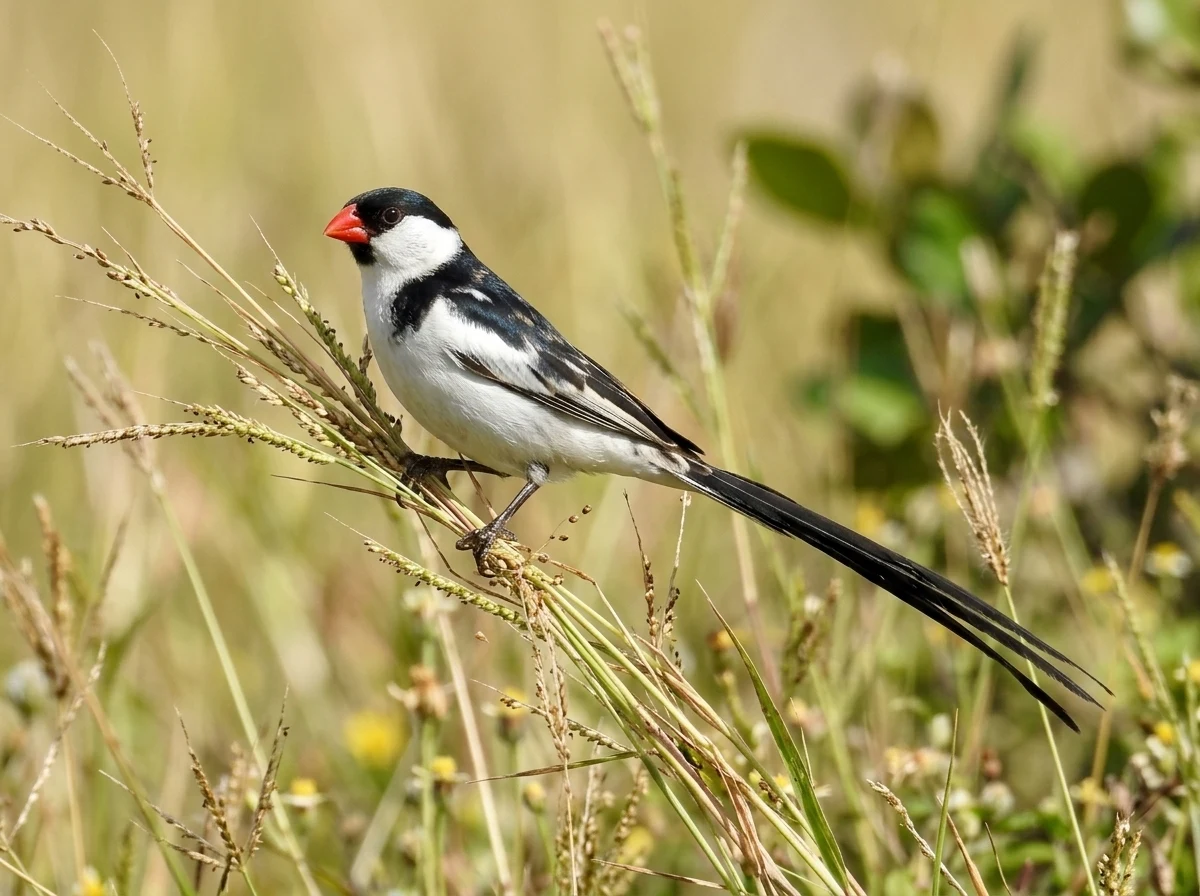
Angle, molt, sex, age, and broken feathers change the silhouette. A closed tail can hide a fork, while the male Pin-tailed Whydah carries its long ornamental feathers only in breeding plumage. Habitat and frequency must agree with shape.
Identification by silhouette
The guide at a glance
16linked profilesA focused selection connects the guide with verifiable species.
5reading lensesContext, identification, and practical decisions organized by topic.
5primary sourcesAgencies, research, and ornithological organizations support the content.
01
In yards and forest: three likely candidates
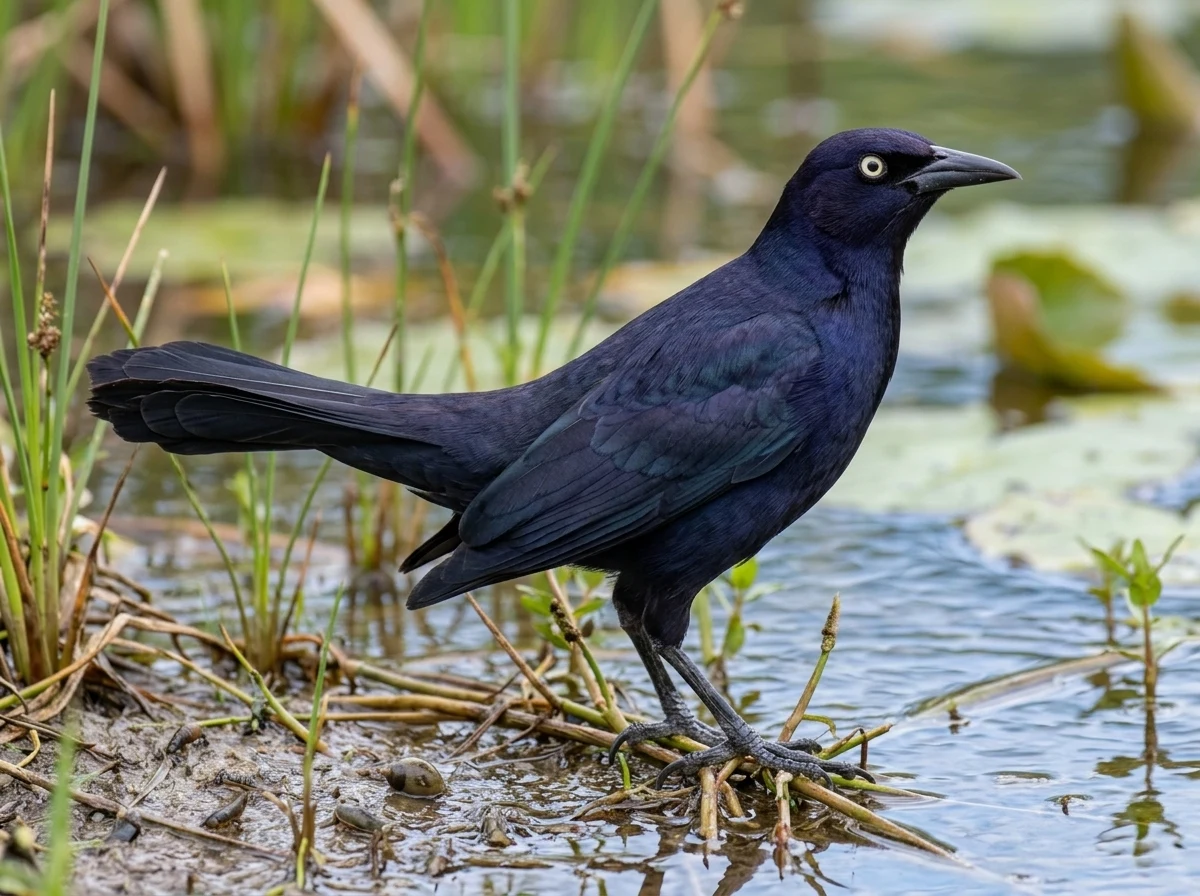
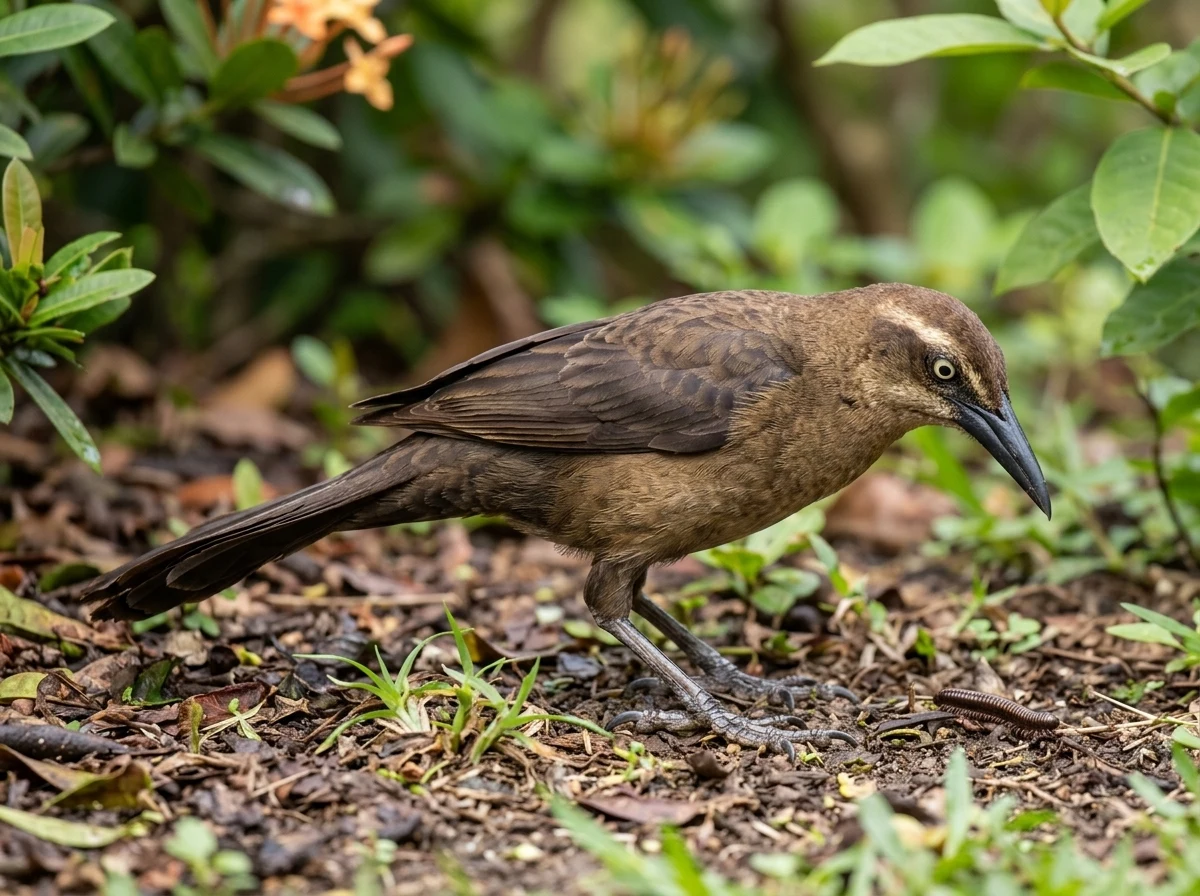
Pin-tailed Whydah is introduced: the breeding male combines a small body, black-and-white pattern, and four very long tail feathers; females, young birds, and nonbreeding males do not share that silhouette. Greater Antillean Grackle is larger and black with a pale eye and a V-shaped or keeled tail, but no thin streamers.
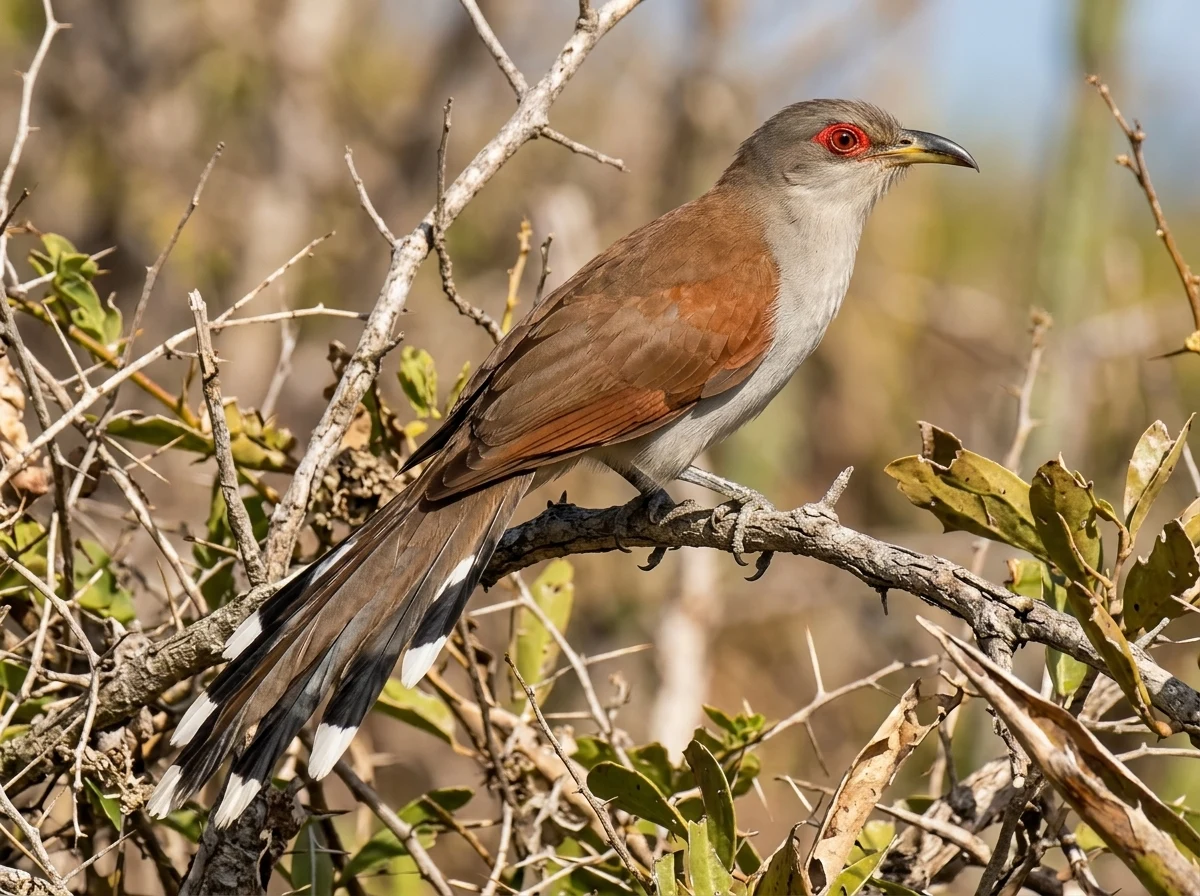
In dense vegetation, Puerto Rican Lizard-Cuckoo is the endemic reference: an elongated body, curved bill, rufous breast, and broad graduated tail that can occupy much of the silhouette. It walks and hops through branches rather than behaving like an aerial scissortail.
02
Long tails that are not streamers
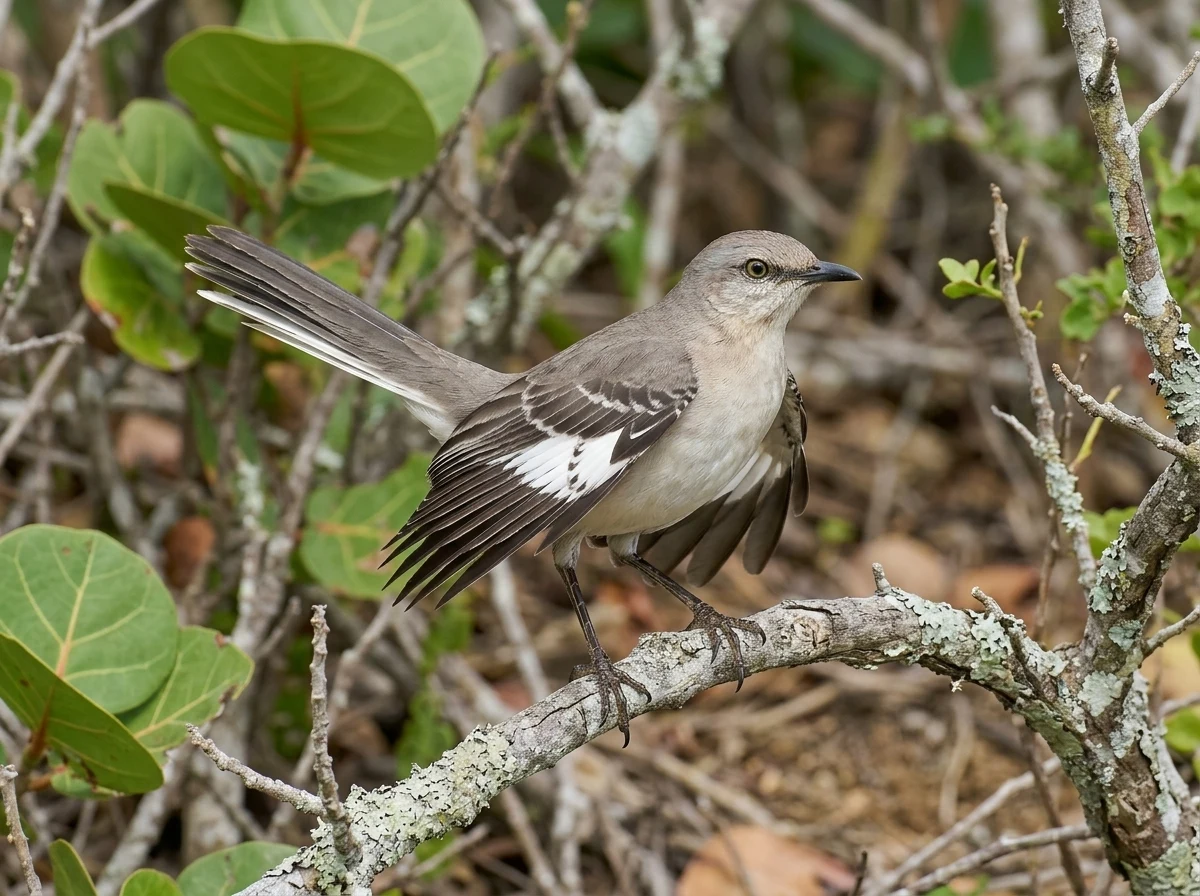
Northern Mockingbird, Gray Kingbird, Loggerhead Kingbird, Smooth-billed Ani, and the other cuckoos can look long-tailed in certain postures. Separate them by proportion and behavior: mockingbirds lift and spread the tail; flycatchers leave a perch and return; anis have a tall compressed bill; cuckoos hold a horizontal body and curved bill.
Do not use color alone. Backlighting turns gray or brown birds black, and a head-on photo foreshortens the tail. Seek a side view, the junction between tail and body, the outer feather edge, and several seconds of movement before choosing a profile.
03
Over the sea: fork versus central streamers
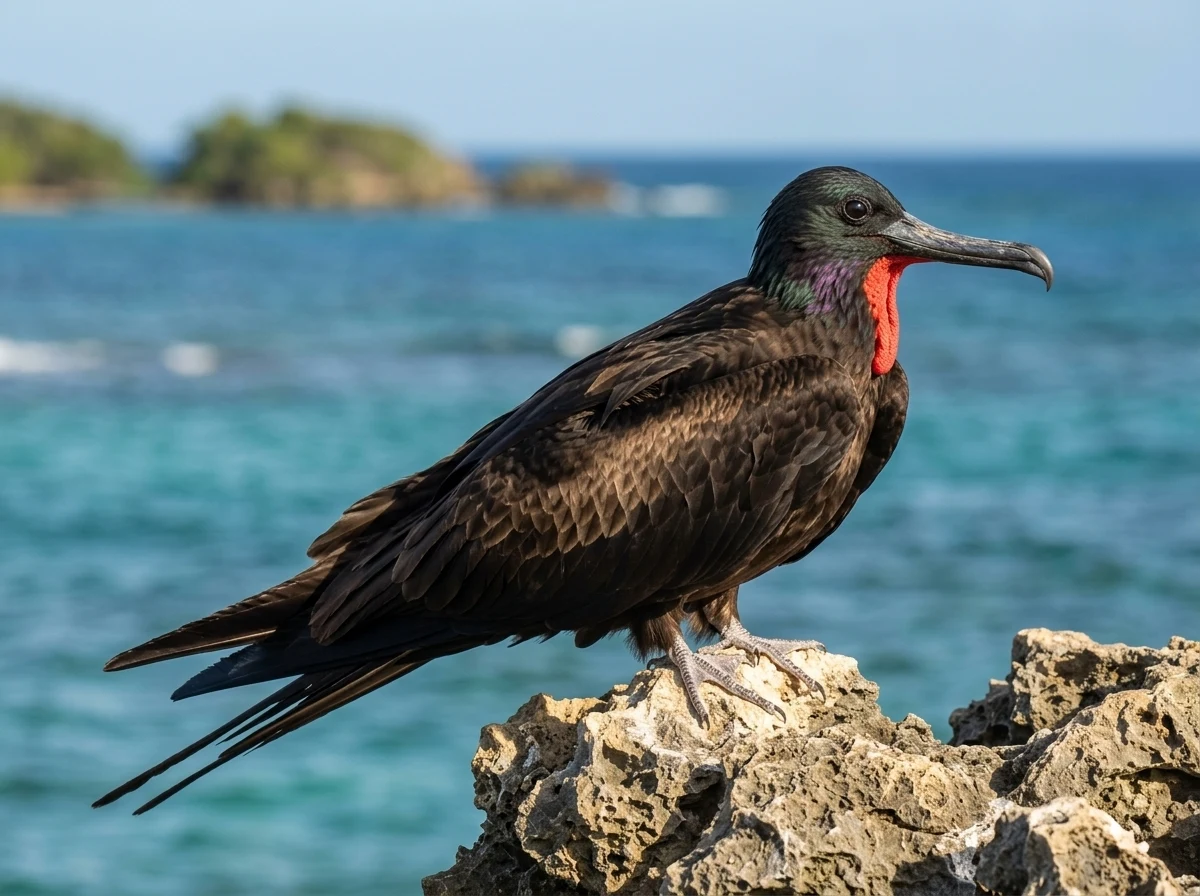
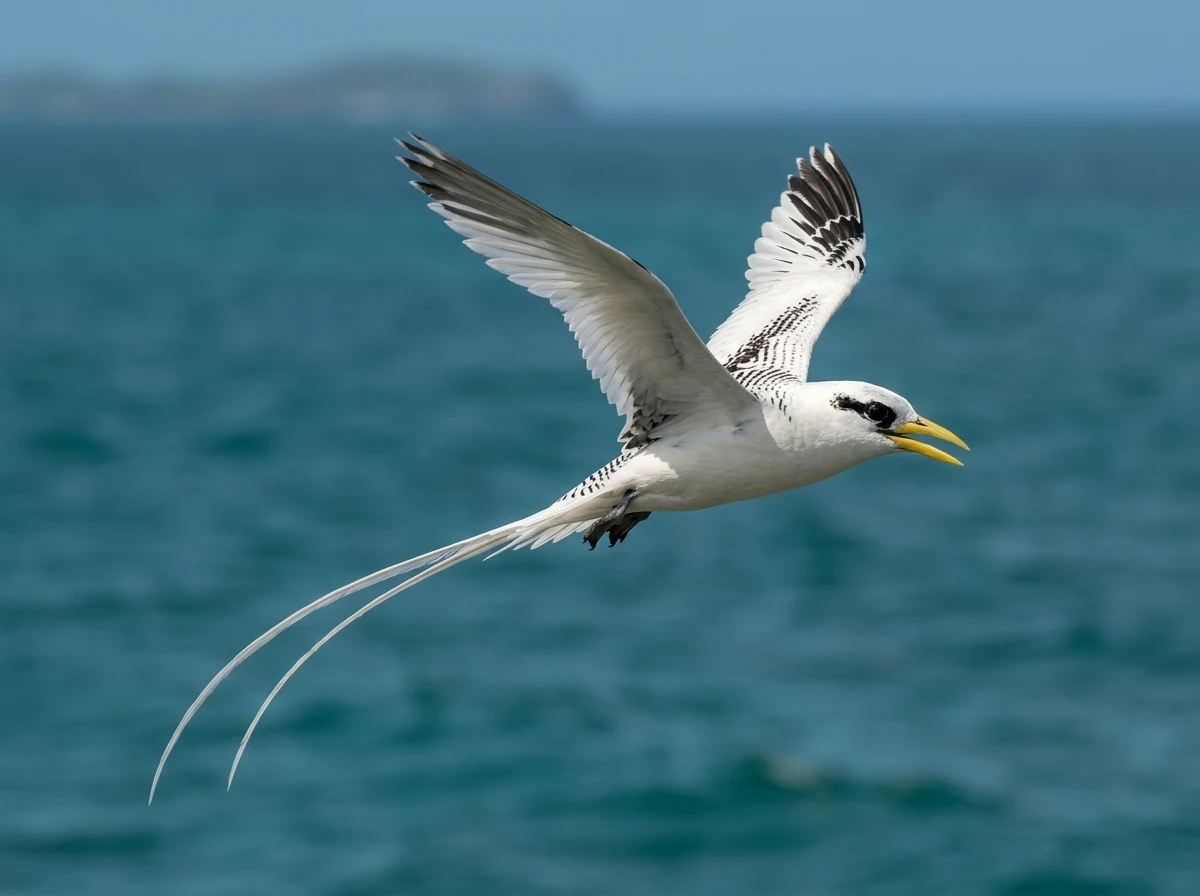
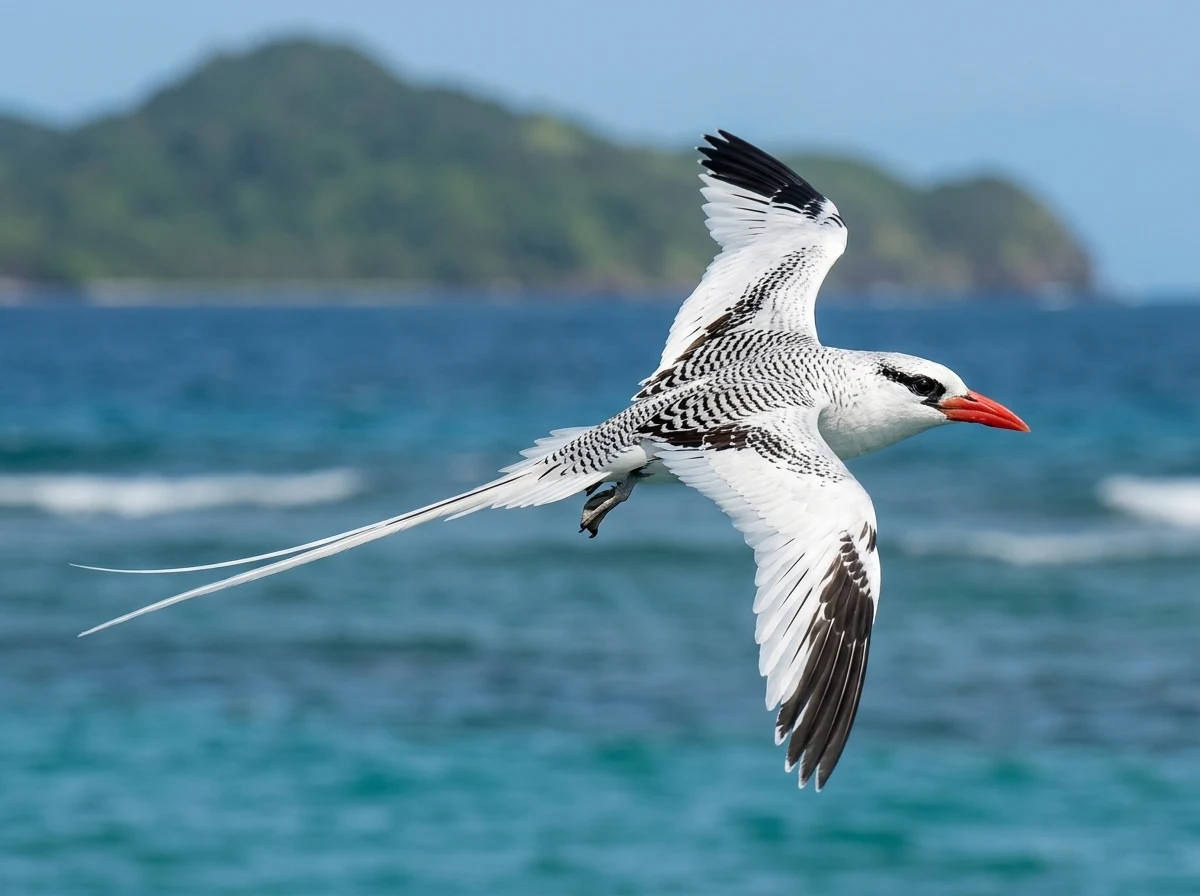
Magnificent Frigatebird has long angular wings and a deeply forked tail that can open, close, or twist in flight. Tropicbirds are white with narrower wings and extend two central tail feathers like needles; they do not form the frigatebird's dark V.
Distance and wind change what is visible. Record flight direction, height above water, wing pattern, bill color, and whether the complete tail was seen open. For seabirds near colonies or cliffs, watch from a distance and avoid approaching nests.
04
A spectacular tail may signal a rarity
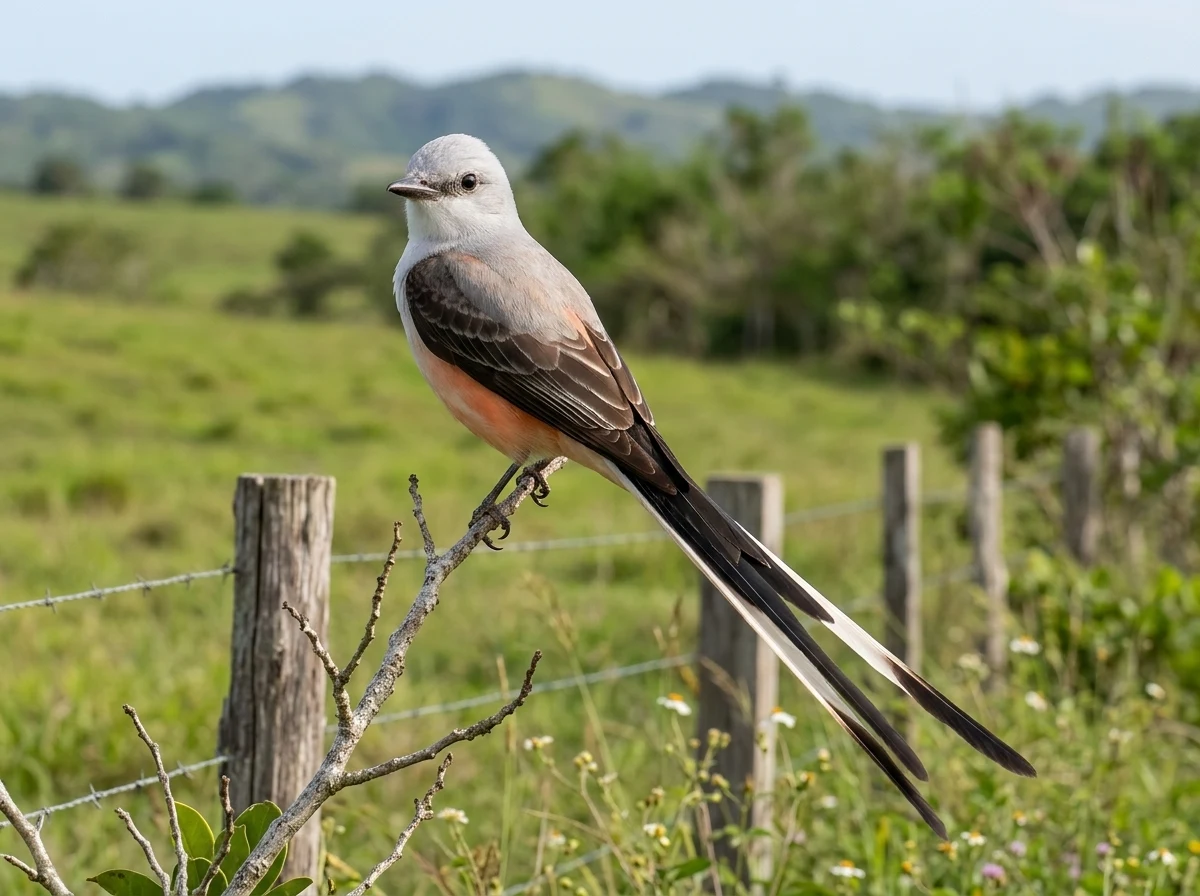
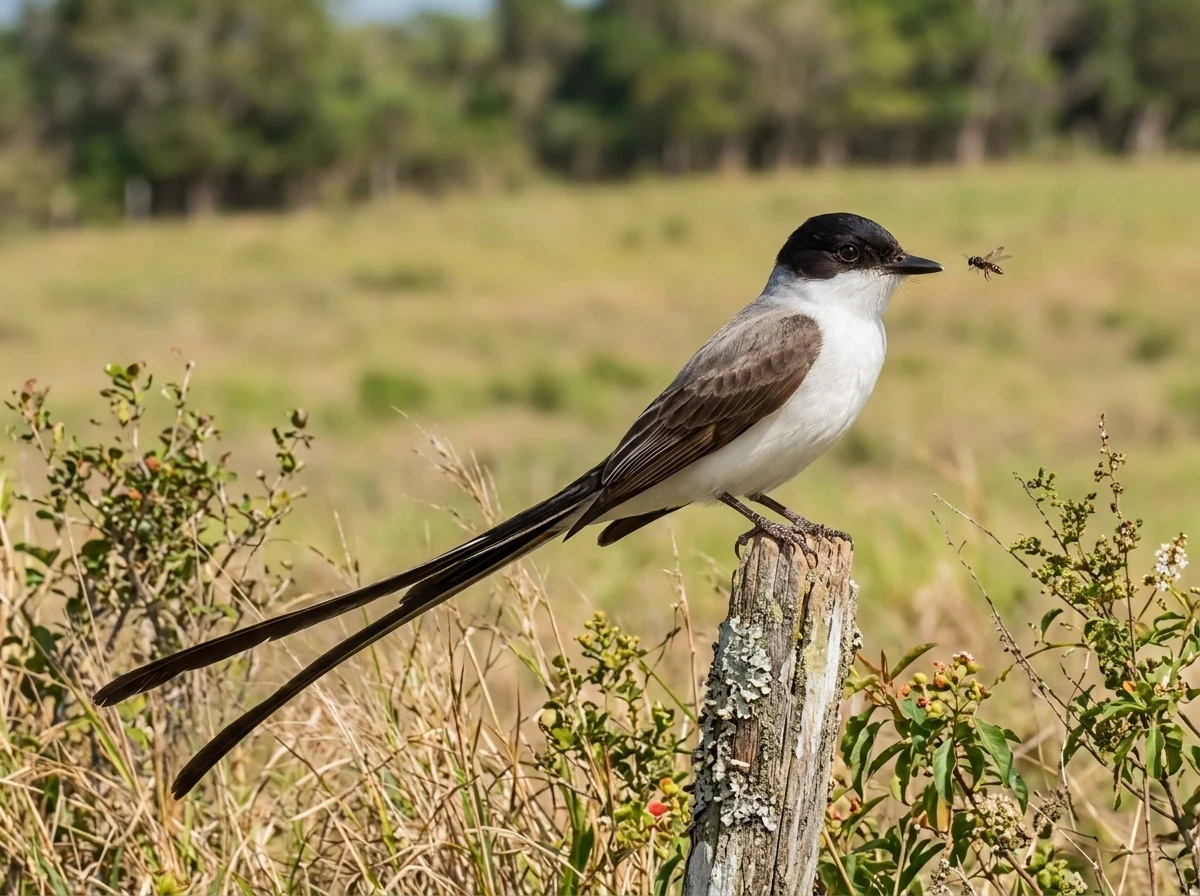
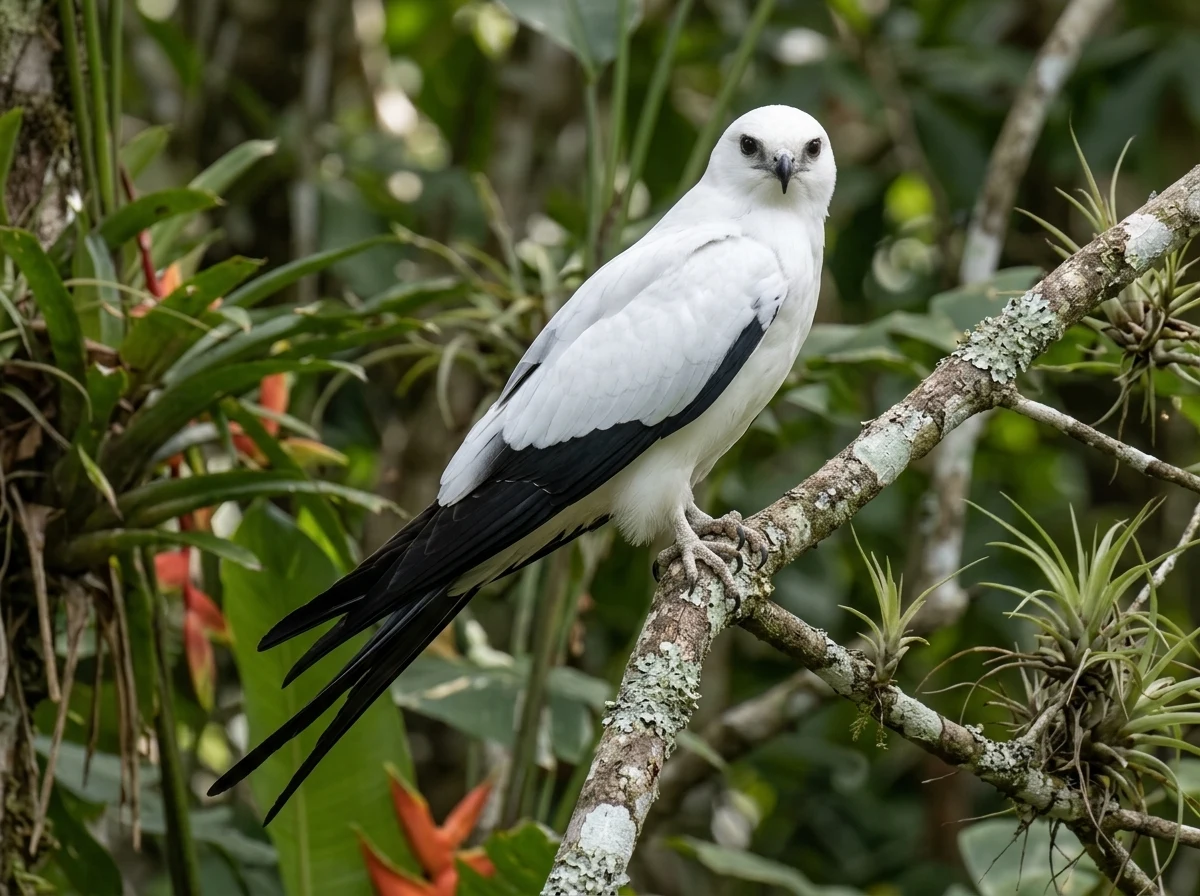
Scissor-tailed Flycatcher, Fork-tailed Flycatcher, Swallow-tailed Kite, and Great-tailed Grackle appear in the atlas through accidental or vagrant records, not as routine options. An extreme fork should first be compared with expected species and with overlapping, missing, or photographically distorted feathers.
If rarity remains plausible, keep original files and record date, municipality, habitat, relative size, behavior, and duration. Photograph head, wings, and tail from several angles, do not chase the bird, and avoid broadcasting a sensitive location before independent review.
Linked profiles
Birds to compare
Open each profile to review names, marks, audio, habitat, status, and sources.

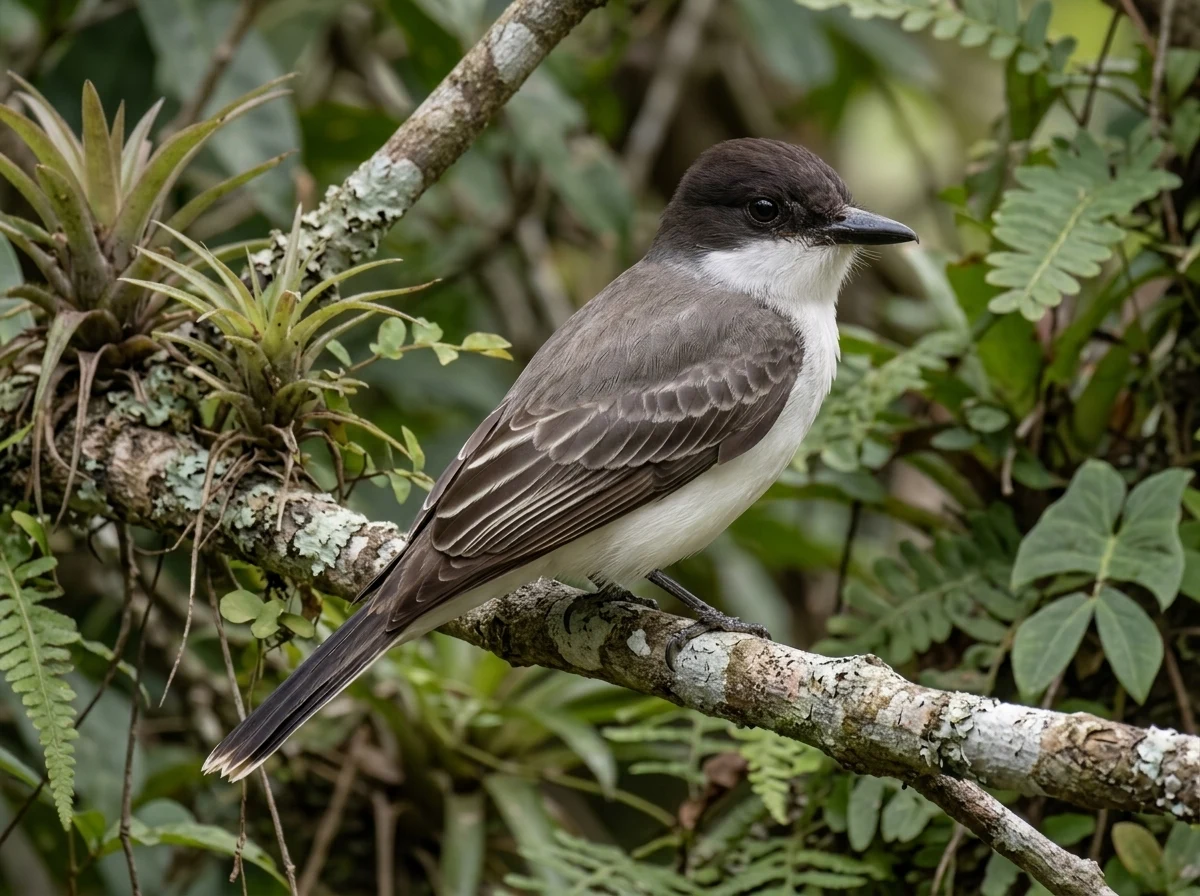
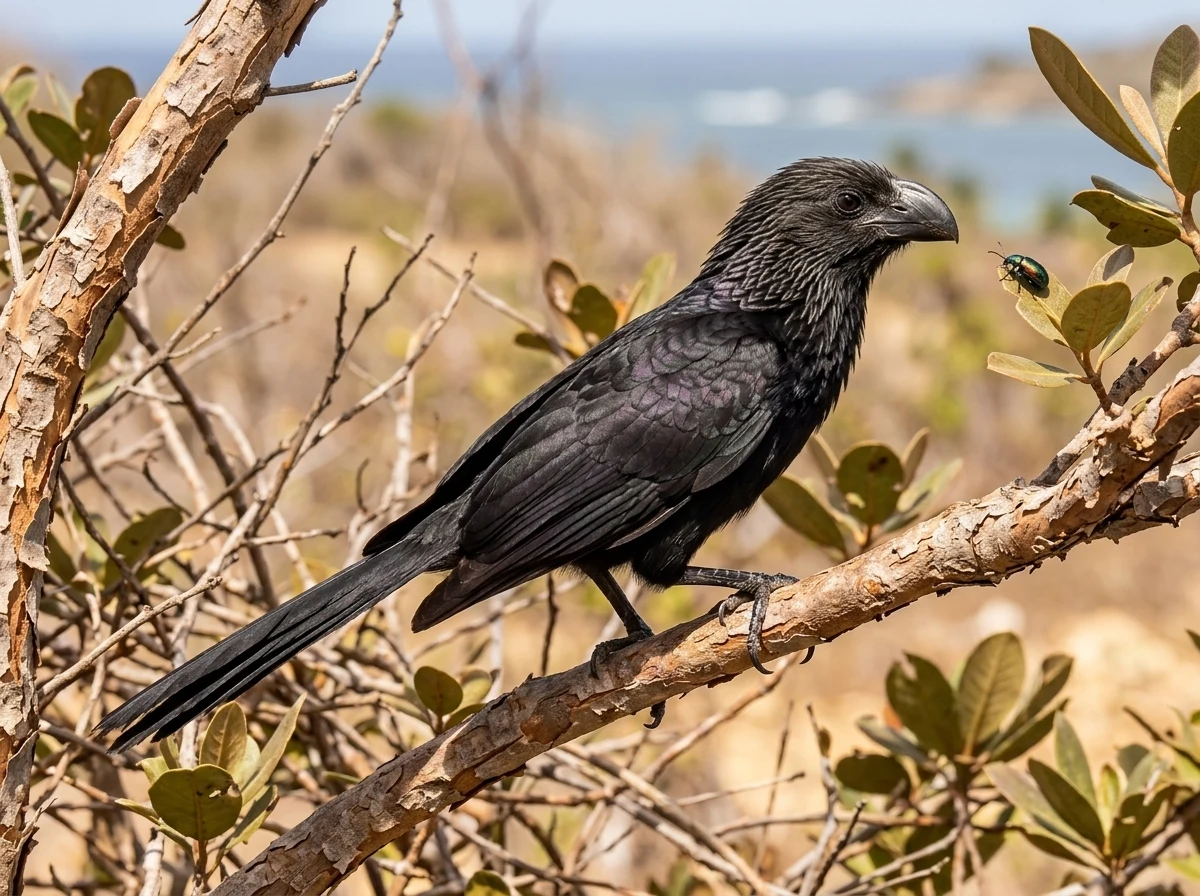
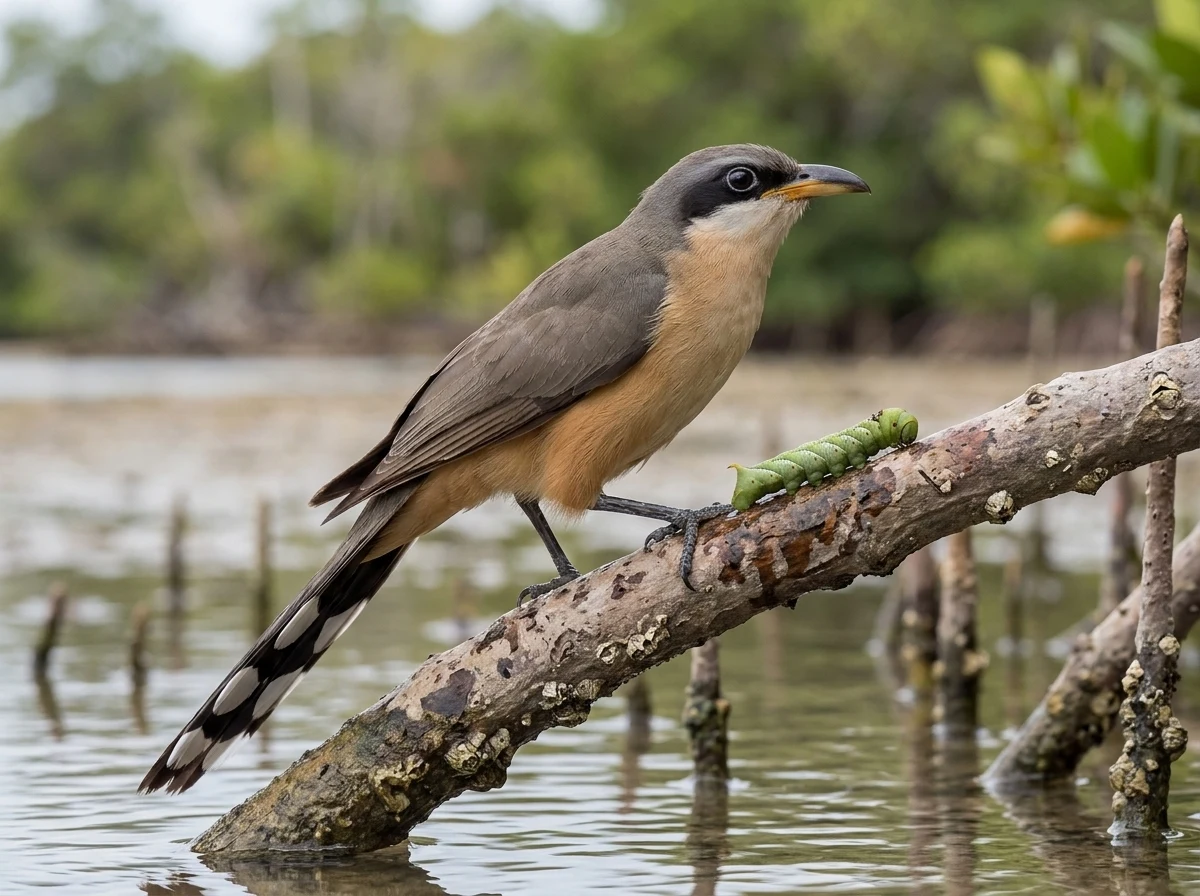
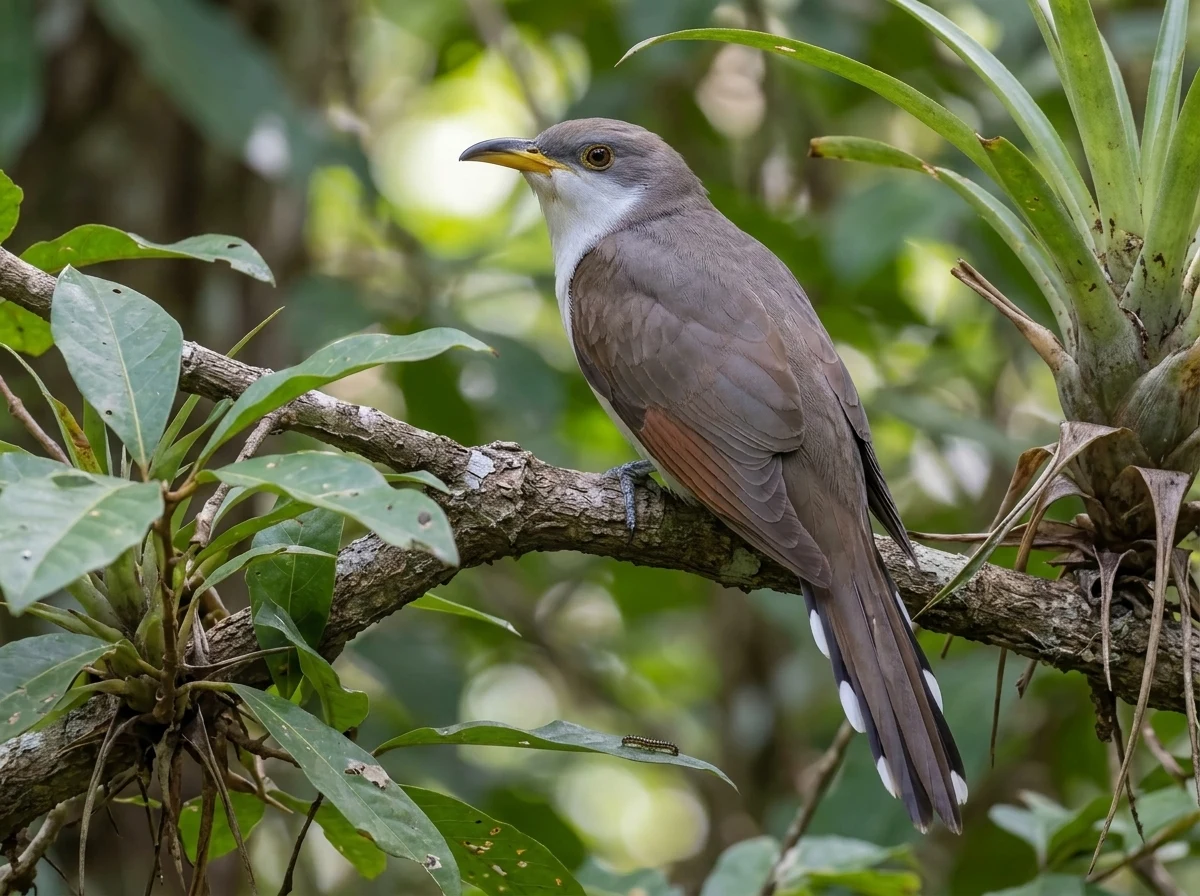
Sound archive
Hear its voice
Explore real songs and calls. The spectrogram turns each sound into a visual trace of time and frequency.
XC173290Recording 1 of 3call

Play: call by Eric DeFonso
Choose another recording
Sound recorded by Eric DeFonso · XC173290 · CC BY-NC-SA 4.0. Visualization by Stichting Xeno-canto voor Natuurgeluiden.
Every recording retains the creator, catalogue number, and license published by Xeno-canto. Metadata via GBIF ↗
01
What small bird has an extremely long tail?
A breeding male Pin-tailed Whydah is the most direct option in open and urban areas: look for four thin feathers, a black-and-white pattern, and a small body. Confirm sex and plumage because other ages lack that tail.
02
Are Magnificent Frigatebird and Pin-tailed Whydah the same bird?
No. In Puerto Rico, Tijereta usually refers to Magnificent Frigatebird, a large seabird with a forked tail. Pin-tailed Whydah is a small introduced songbird whose breeding male carries ribbonlike tail feathers.
03
How do I verify an identification or claim?
Compare more than one mark, check date and place, open the linked profile, and consult the sources published at the end of the guide.
Keep exploring
Connected routes
Sources and review
The evidence is one link away.
These sources support the editorial scope of this guide. Bird profiles also retain their own taxonomy, occurrence, and conservation references.
Reviewed:
01↗02↗03↗04↗05↗
Sociedad Ornitológica Puertorriqueña
Official bird list
Local names, occurrence categories, and the public summary of 17 endemics.U.S. Forest Service Research and Development
Puerto Rico Breeding Bird Atlas
Distribution and breeding timing for 130 species breeding in Puerto Rico and its satellite islands.Macaulay Library / Cornell Lab of Ornithology
Puerto Rico sound archive
Complementary audio collection for comparing songs, calls, locations, and dates.Xeno-canto Foundation / GBIF
Xeno-canto recordings published through GBIF
Metadata, authorship, licenses, and catalogue records for field recordings used by the atlas.Cornell Lab of Ornithology
Puerto Rico urban birds guide
Local names, behavior, and actions for living with urban birds.The atlas continues