 AI
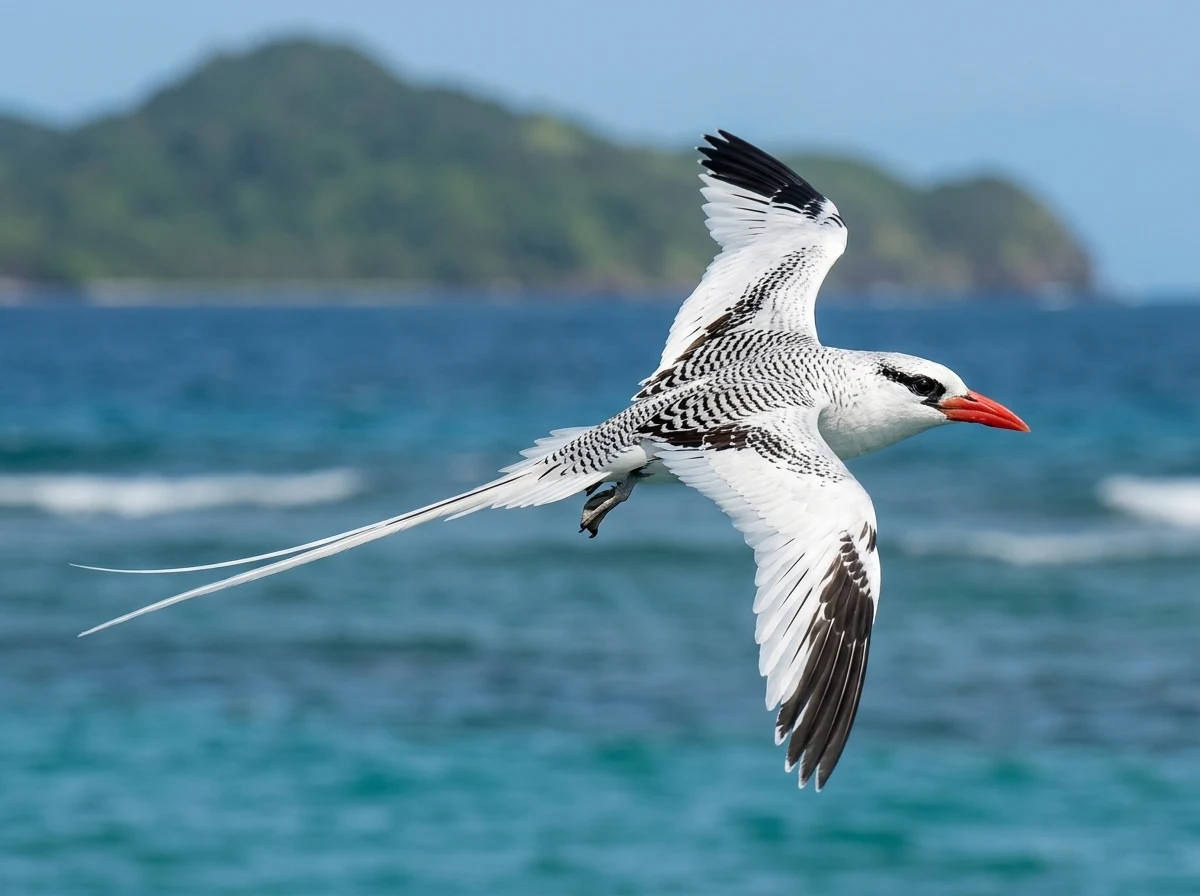
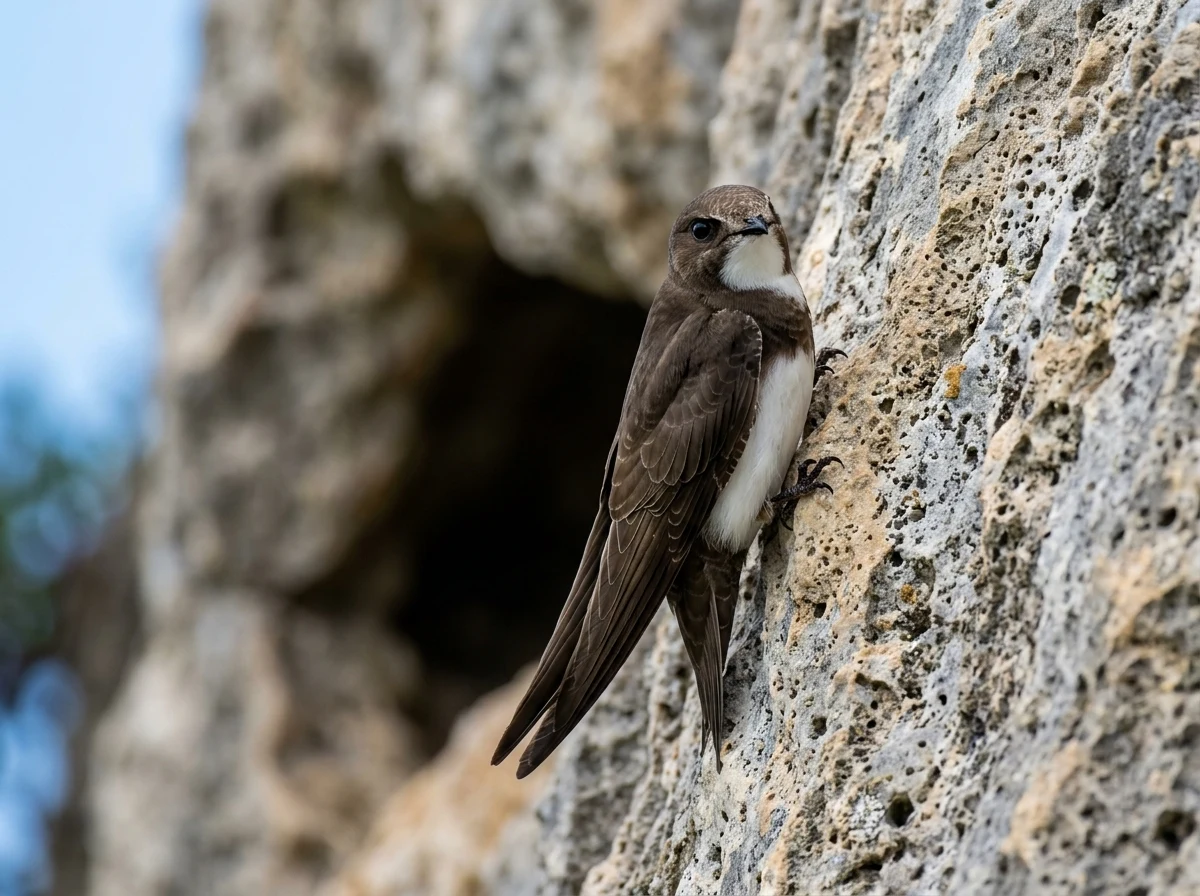
AIAI reconstruction created with Nano Banana 2 · 1K, grounded in the profile’s documented taxonomy, habitat, natural-history sources, and an open-license visual reference when available. It is an interpretive image, not documentary evidence. Image policy →
Red-billed Tropicbird
Rabijunco Piquirrojo
Phaethon aethereus
The red-billed tropicbird (Phaethon aethereus) is a tropicbird, one of three closely related species of seabird of tropical oceans. Superficially resembling a tern in appearance, it has mostly white plumage with some black markings on the wings and back, a black mask and, as its common name suggests, a red bill. Most adults have tail streamers that are about two times their body length, with those in males being generally longer than those in females. The red-billed tropicbird itself has three subspecies recognized, including the nominate. The subspecies mesonauta is distinguished from the nominate by the rosy tinge of its fresh plumage, and the subspecies indicus can be differentiated by its smaller size, more restricted mask, and more orange bill. This species ranges across the tropical Atlantic, eastern Pacific, and Indian Oceans. The nominate is found in the southern Atlantic Ocean, the subspecies indicus in the waters off of the Middle East and in the Indian Ocean, and the subspecies mesonauta in the eastern portions of both the Atlantic and the Pacific Oceans and in the Caribbean. It was one of the many species described by Carl Linnaeus in his 1758 10th edition of Systema Naturae. Nesting takes place in loose colonies, as they nest a scrape found on a cliff face that is easy to take off from. A single egg is laid and is incubated by both sexes for about six weeks. Whether the egg hatches or not can be influenced by pollution and weather, although the latter has a minimal effect on whether a chick fledges or not. After a chick fledges, the parents will usually stop visiting the nest and the chick will leave. Birds of all ages feed on fish and squid, catching them by diving from the air into the water. However, the red-billed tropicbird sometimes follows surface-feeding predators. The predators will drive the prey to the surface, which are then seized by the tropicbird. In some areas, introduced black and brown rats raid nests for eggs and young. Cats also threaten the red-billed tropicbird. This bird is considered to be a least-concern species according to the International Union for Conservation of Nature (IUCN), though populations are thought to be declining. In some places, such as Brazil and Mexico, this bird is considered to be threatened.
Sound archive
Hear its voice
Explore real songs and calls. The spectrogram turns each sound into a visual trace of time and frequency.

Play: flight call by GOUMAND
Choose another recording
Sound recorded by GOUMAND · XC876607 · CC BY-NC-SA 4.0. Visualization by Stichting Xeno-canto voor Natuurgeluiden.
Every recording retains the creator, catalogue number, and license published by Xeno-canto. Metadata via GBIF ↗
Island profile
About the Red-billed Tropicbird
This atlas includes Red-billed Tropicbird (Phaethon aethereus) with atlas status “Native / natural occurrence” within scope “Avibase inferred core 380.” Puerto Rico context sources associate it with Sea cliffs; offshore cays; pelagic waters.
Conservation
Least Concern
IUCN LC; DNER VU
- Global IUCN
- LC
- Puerto Rico DNER
- VU
- Federal ESA
- No current listing in source crosswalk
- Critical habitat
- Not identified in source crosswalk
Natural history
How it lives
- Habitat
- Sea cliffs; offshore cays; pelagic waters
- Elevation
- 0–0 m
- Nest
- Crevice; Scrape · Ground
- Clutch
- 1–1 eggs
- Social behavior
- Colonial
Keep exploring
This bird belongs to 9 paths through the atlas.
Guides featuring this bird
Follow this record beyond the profile.
Identification, sound, place, and explanatory guides connecting this species to larger questions.
Related in the atlas
Where to fly next
Connected by taxonomy, habitat, occurrence, and conservation.
 AI
AI AI
AI AI
AI AI
AI AI
AI AI
AI
Evidence trail
Sources, media & further reading
Research note: Commonwealth VU in cited 2026 compilation