 AI
AIIdentification · Endemic species
What is a comeñame? Puerto Rico's endemic bullfinch
A black, thick-billed bird with orange-rufous accents, heard more often than seen, found across almost all of the island except the far east.
Reviewed:The comeñame in brief
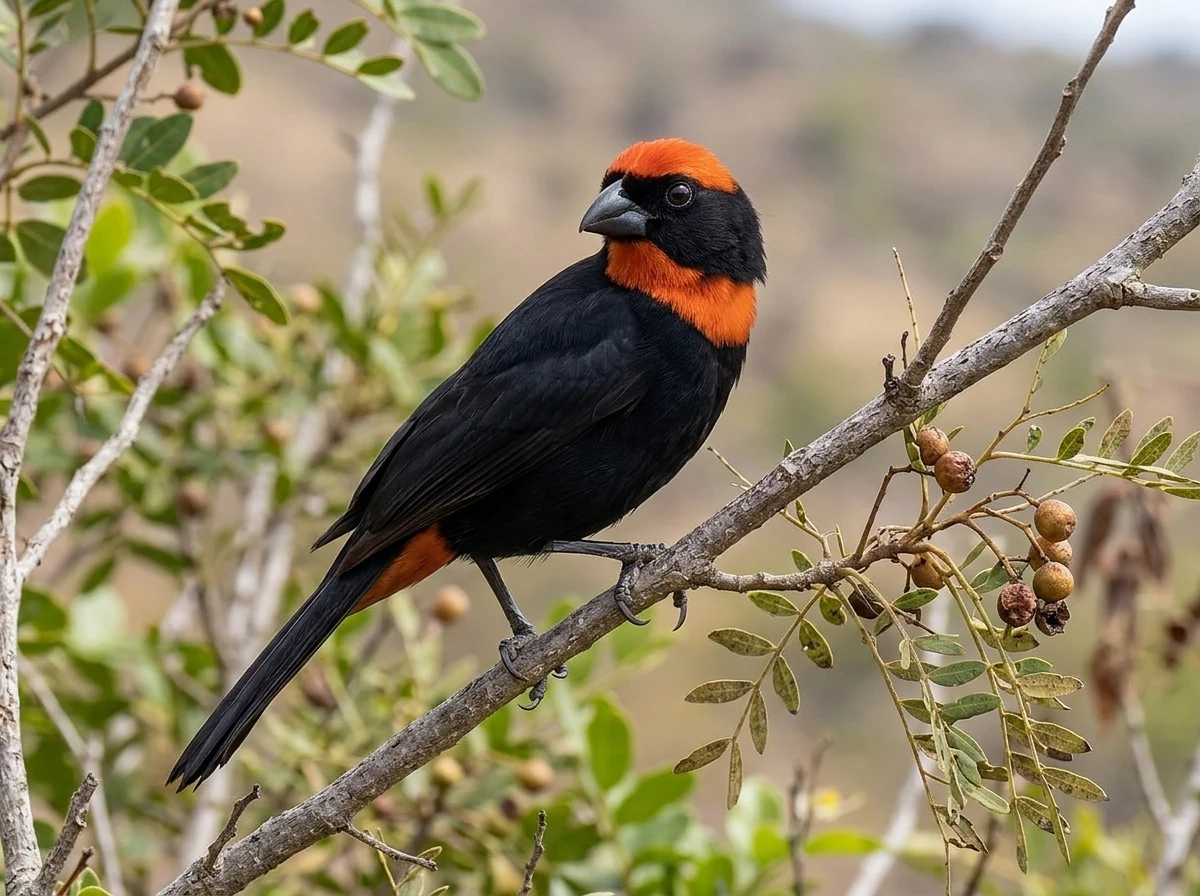
The comeñame (Melopyrrha portoricensis, Puerto Rican Bullfinch) is a bird endemic to Puerto Rico: a thick-billed black bird with rufous-orange patches over the eye, on the throat, and under the tail. It lives in forests at all elevations, shade coffee, and dry coastal thickets across almost the whole island, but it is absent from the far east, Vieques, and Culebra.
It is also called comeñame puertorriqueño, capacho, or carpacho. It used to be placed in the genus Loxigilla, so many older guides call it Loxigilla portoricensis. It eats mostly fruit, plus seeds, insects, and spiders. The IUCN lists it as Vulnerable; in Puerto Rico it is not on the DNER or federal threatened-species lists. The official catalog spells it 'comeñame' as one word, although many people search for 'come ñame'.
Identification · Endemic species
The comeñame by the numbers
56 %of atlas hexagons269 of 479, from 548 records during the breeding bird atlas.
30,000–37,000estimated pairsFigure used by BirdLife in the 2022 Red List assessment.
VUVulnerable on the IUCN listCriterion B1ab, driven by its restricted range.
01
How to identify a comeñame
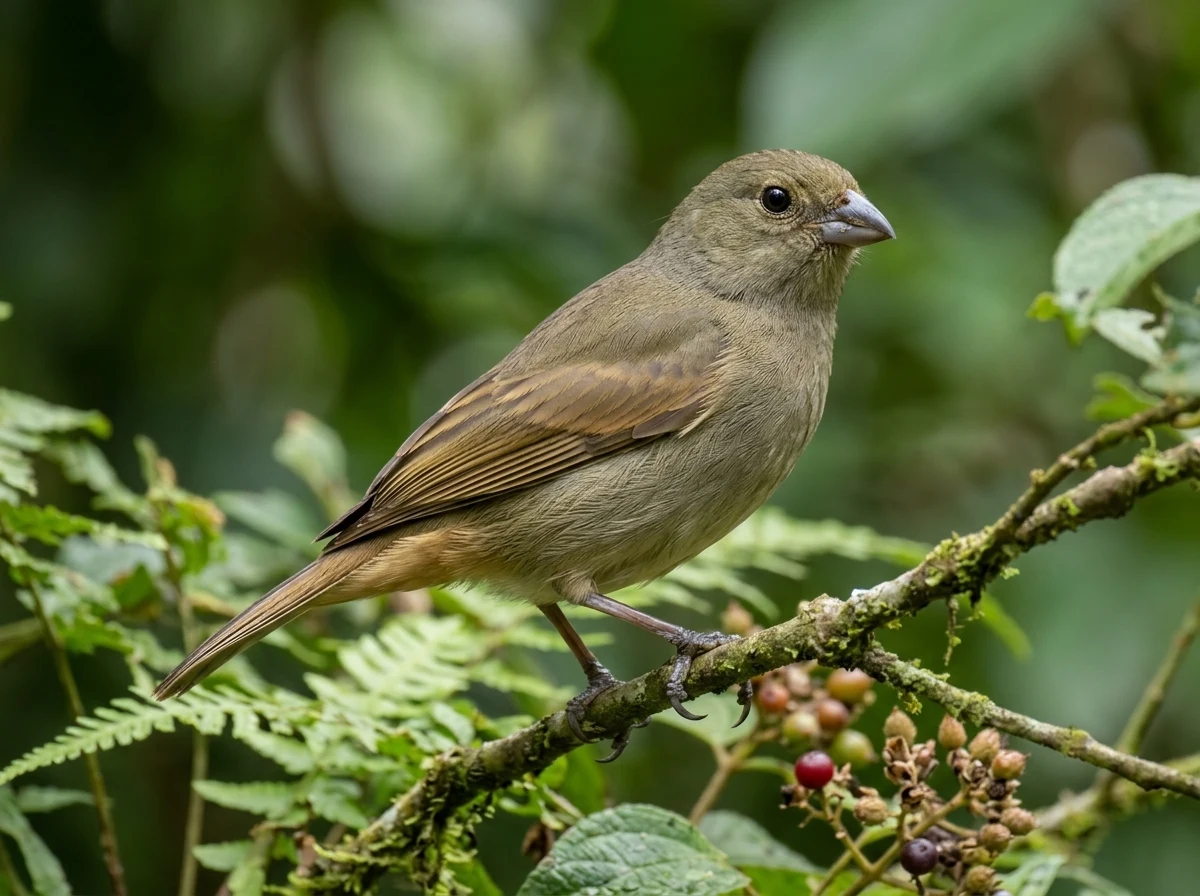
The male is black with rufous-orange patches over the eye, on the throat, and on the feathers under the base of the tail. The female is similar but a duller black. Juveniles look very different: olive-brown to olive-green, with reddish-brown undertail coverts, which sometimes makes people think they are a separate species.
The bill is short, thick, and conical, the bill of a fruit and seed eater. That combination of black body, heavy bill, and rufous accents separates it from the island's other black birds. If the view is brief, wait for the bird to turn: the throat and undertail patches are the deciding mark.
02
The song: a cardinal-like 'whip-whip-whip'
The comeñame is often detected first by voice. Its song is a strongly whistled 'whip-whip-whip' followed by a buzz, with a tone reminiscent of a cardinal. It sings from dense vegetation, so it can sound very close without showing itself.
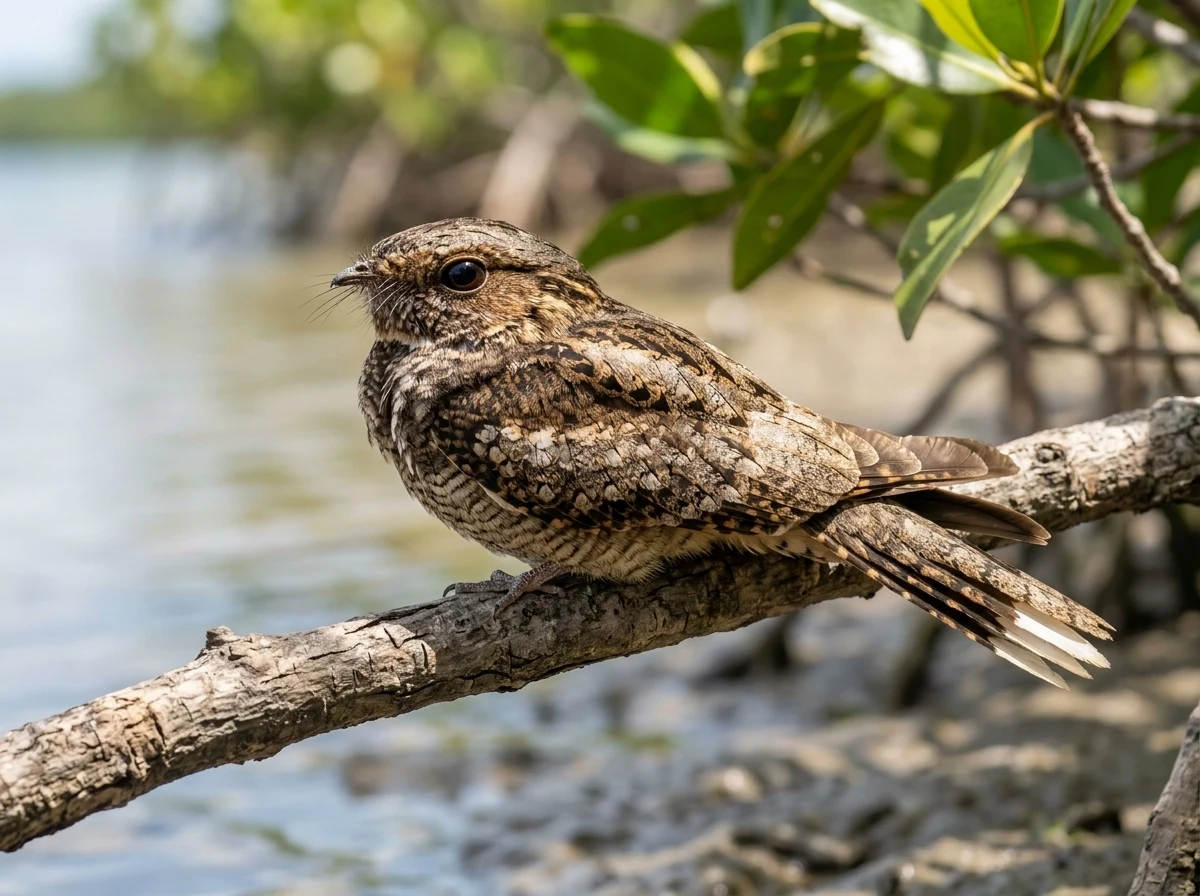
That repeated 'whip' causes confusion with the Puerto Rican Nightjar, which also sings a series of 'whip' notes. The difference is time and place: the bullfinch sings by day in forests, coffee farms, and wooded gardens; the nightjar sings in the dark of southern dry forest. The bullfinch page has a recording from Maricao with its spectrogram.
03
Where the comeñame lives
The comeñame is common in forests at all elevations and in coffee plantations, and also uses dry thickets near the coast, but it is rare in mangroves. The breeding bird atlas found it in 269 of 479 hexagons, mostly in the moist forest (54% of breeding hexagons) and wet forest (31%) life zones.
The most striking feature of its map is a gap: the atlas confirmed it is absent from at least the eastern lowlands of Puerto Rico and from Vieques and Culebra. If you live in Fajardo or on the island municipalities and see a black bird with red, rule out other species before reporting it. Maricao, Río Abajo, Guánica, and the shade coffee farms of the central mountains are good places to look for it.
04
What it eats and how it nests
The comeñame feeds mainly on fruit but also takes seeds, insects, and spiders. That diet explains why it is seen in fruiting trees in forests, coffee farms, and wooded yards in the mountains.
Published reports say it nests mainly from March to June, although the atlas found breeding evidence outside that period. It places the nest in trees or shrubs, close to the ground: a spherical structure with a side entrance, where it typically lays three light-green eggs. As with any nest, watch from a distance and do not disturb the surrounding vegetation.
05
Is it threatened? Vulnerable to the IUCN, not under local law
The IUCN Red List classifies the Puerto Rican Bullfinch as Vulnerable under criterion B1ab, which applies to species with a small range plus signs of decline or habitat deterioration. In the 2022 assessment, BirdLife cited an estimate of 30,000 to 37,000 pairs and kept the category. Earlier editions treated it as Least Concern, which is how the atlas lists it.
In Puerto Rico, the DNER classified it as Data Deficient in 2005 and as Low Risk in later assessments; it is not federally listed. The atlas also estimates that only 15% of the area with breeding evidence is protected. Its St. Kitts relative (Melopyrrha grandis), once treated as a subspecies, is probably extinct, a reminder of how fragile island birds can be.
06
Black birds it gets confused with
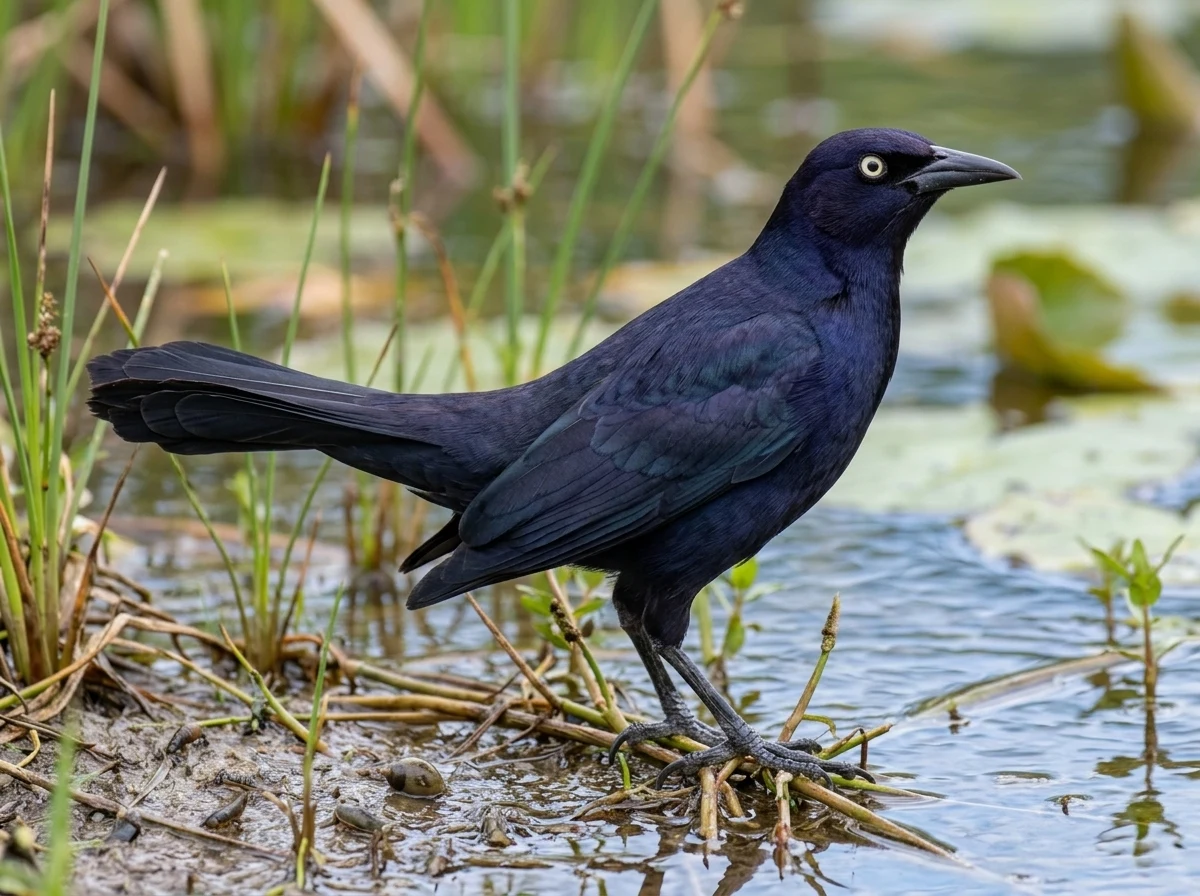
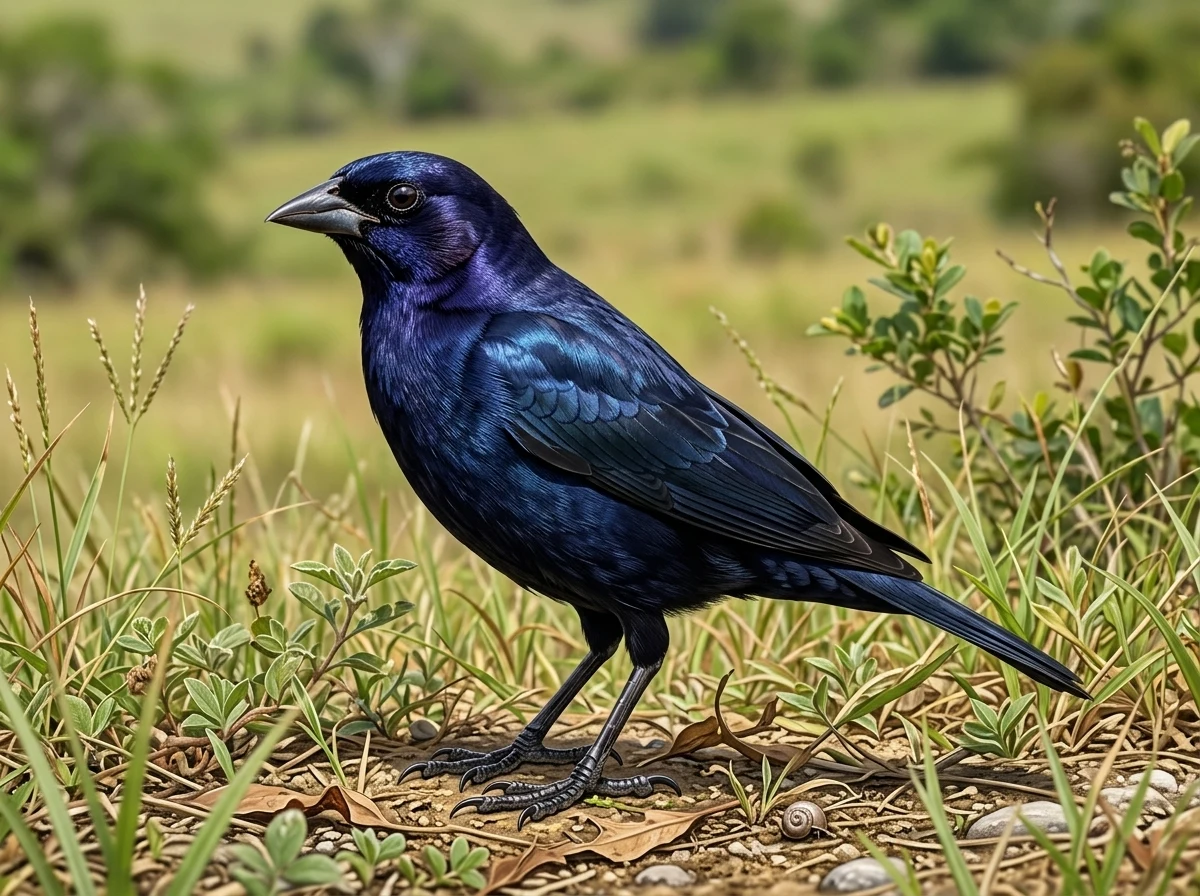
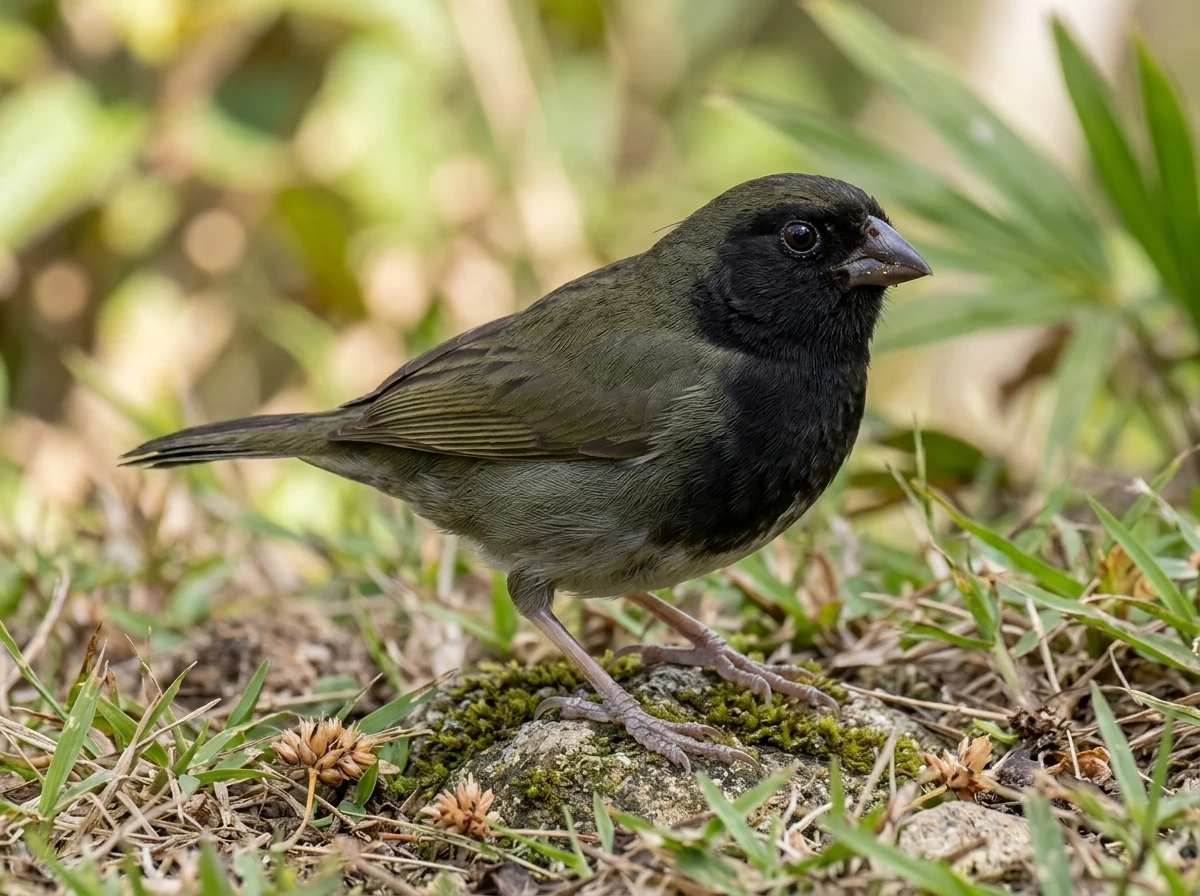
The Greater Antillean Grackle (Mozambique) is much larger, with a yellow eye, a long keel-shaped tail, and a bluish sheen; it walks on the ground in parks and parking lots. The Shiny Cowbird (Tordo Lustroso) is black with a purple gloss and a slimmer bill. The Black-faced Grassquit (Gorrión Negro) is small, olive with a black face, and moves through grass and edges.
None has the comeñame's rufous throat and undertail. Puerto Rico also has accidental records of its relative, the Lesser Antillean Bullfinch (Comeñame Antillano), from the Lesser Antilles; a bird like that needs clear photos. For more comparisons, see the guide to Puerto Rico's black birds.
Linked profiles
The comeñame and its look-alikes
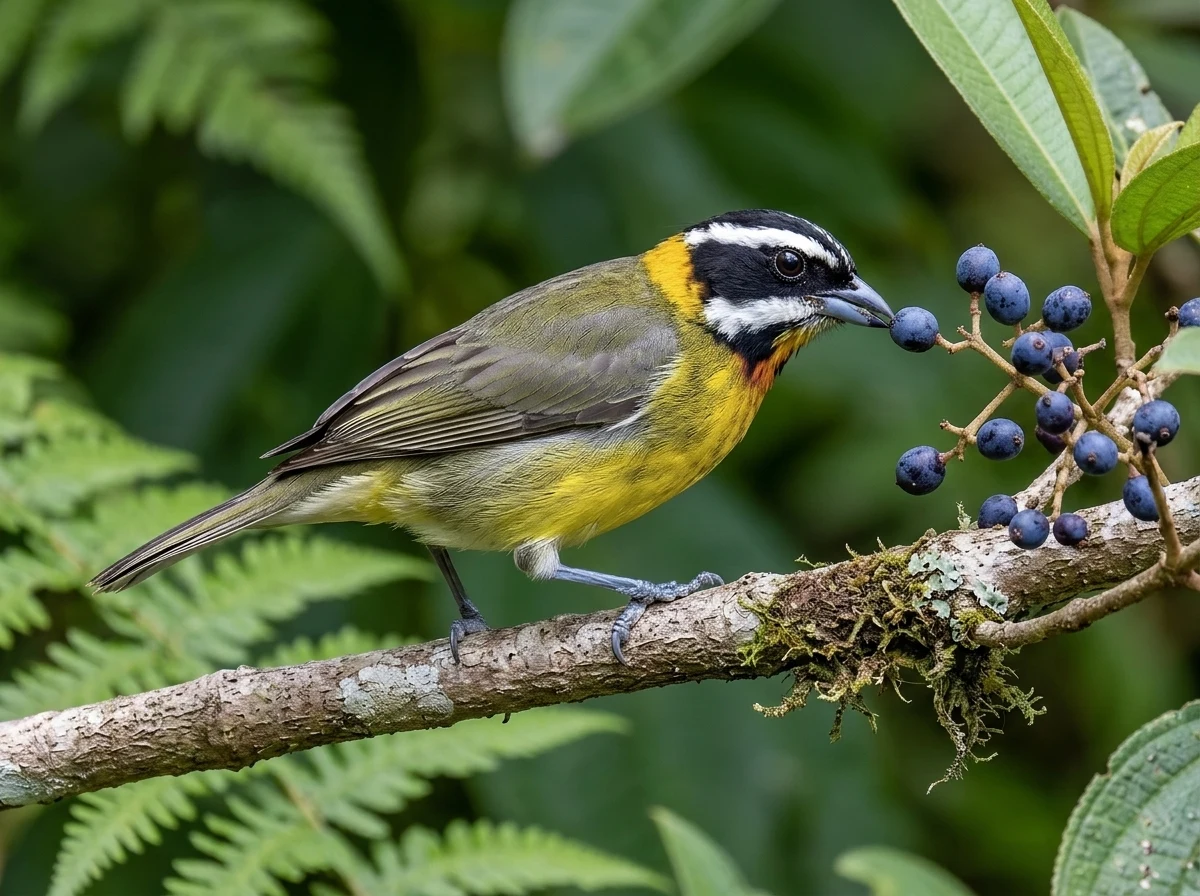
Compare the bullfinch with the island's other black birds and with the nightjar, which shares a repeated 'whip' song.
Sound archive
Hear its voice
Explore real songs and calls. The spectrogram turns each sound into a visual trace of time and frequency.
XC682522Recording 1 of 3song

Play: song by Rainforest Connection
Choose another recording
Sound recorded by Rainforest Connection · XC682522 · CC BY-NC-SA 4.0. Visualization by Stichting Xeno-canto voor Natuurgeluiden.
Every recording retains the creator, catalogue number, and license published by Xeno-canto. Metadata via GBIF ↗
01
What is a comeñame bird?
The comeñame is the Puerto Rican Bullfinch (Melopyrrha portoricensis), a bird endemic to Puerto Rico. It is black and thick-billed, with rufous-orange patches over the eye, on the throat, and under the tail, and it lives in forests and coffee farms across most of the island.
02
Is it spelled comeñame or come ñame?
The Puerto Rico Ornithological Society's official catalog spells it 'Comeñame', as one word. 'Come ñame' is a common way people search for it online, and it refers to the same endemic bird.
03
Is the Puerto Rican Bullfinch endemic?
Yes. The Puerto Rican Bullfinch lives only in Puerto Rico, though not across the whole archipelago: it is absent from the far east of the main island, Vieques, and Culebra. Its St. Kitts relative, once treated as a subspecies, is probably extinct.
04
What does the Puerto Rican Bullfinch eat?
It eats mainly fruit, plus seeds, insects, and spiders. That is why it is often seen in fruiting trees in forests, coffee farms, and wooded yards.
05
Is the Puerto Rican Bullfinch endangered?
It is not endangered, but the IUCN classifies it as Vulnerable because of its small range. In Puerto Rico it is not on the DNER or federal threatened-species lists, and BirdLife estimates 30,000 to 37,000 pairs.
06
What does the comeñame sound like?
Its song is a strongly whistled 'whip-whip-whip' that ends in a buzz, similar to a cardinal. It sings by day from dense vegetation, unlike the Puerto Rican Nightjar, which gives a series of 'whip' notes at night.
Keep exploring
Connected routes
Sources and review
The evidence is one link away.
These sources support the editorial scope of this guide. Bird profiles also retain their own taxonomy, occurrence, and conservation references.
Reviewed:
01↗02↗03↗04↗05↗
Cornell Lab of Ornithology
Puerto Rican Bullfinch in Birds of the World
Male, female, and juvenile plumage, the whistled 'whip-whip-whip' song ending in a buzz, local names, and the St. Kitts relative.BirdLife International
2022 Red List: Puerto Rican Bullfinch
Vulnerable category (criterion B1ab) and an estimate of 30,000 to 37,000 pairs.USDA Forest Service, International Institute of Tropical Forestry
The Puerto Rico Breeding Bird Atlas (PDF)
Species accounts: distribution, habitat, record and hexagon counts, nesting months, nests, Pin-tailed Whydah parasitism of Orange-cheeked Waxbill, and share of protected habitat.Sociedad Ornitológica Puertorriqueña
Catalog of the Birds of Puerto Rico
Official local names: Guabairo (de Puerto Rico), Yaboa Común, Yaboa Real, Yaboa Americana, Garza Real, Martinete, Comeñame, Zorzal Pardo/Chucho, Zorzal Patirrojo, Viuda, Viuda Colicinta, and Veterano.Xeno-canto Foundation / GBIF
Xeno-canto recordings published through GBIF
Metadata, authorship, licenses, and catalogue records for field recordings used by the atlas.The atlas continues