 AI
AIEndemic species · Night birds
Puerto Rican Nightjar (Guabairo): the endemic nightjar of the dry forest
A bird heard far more often than seen: presumed extinct for half a century, it now depends on southern dry forests, most of them outside protected areas.
Reviewed:What is the guabairo?
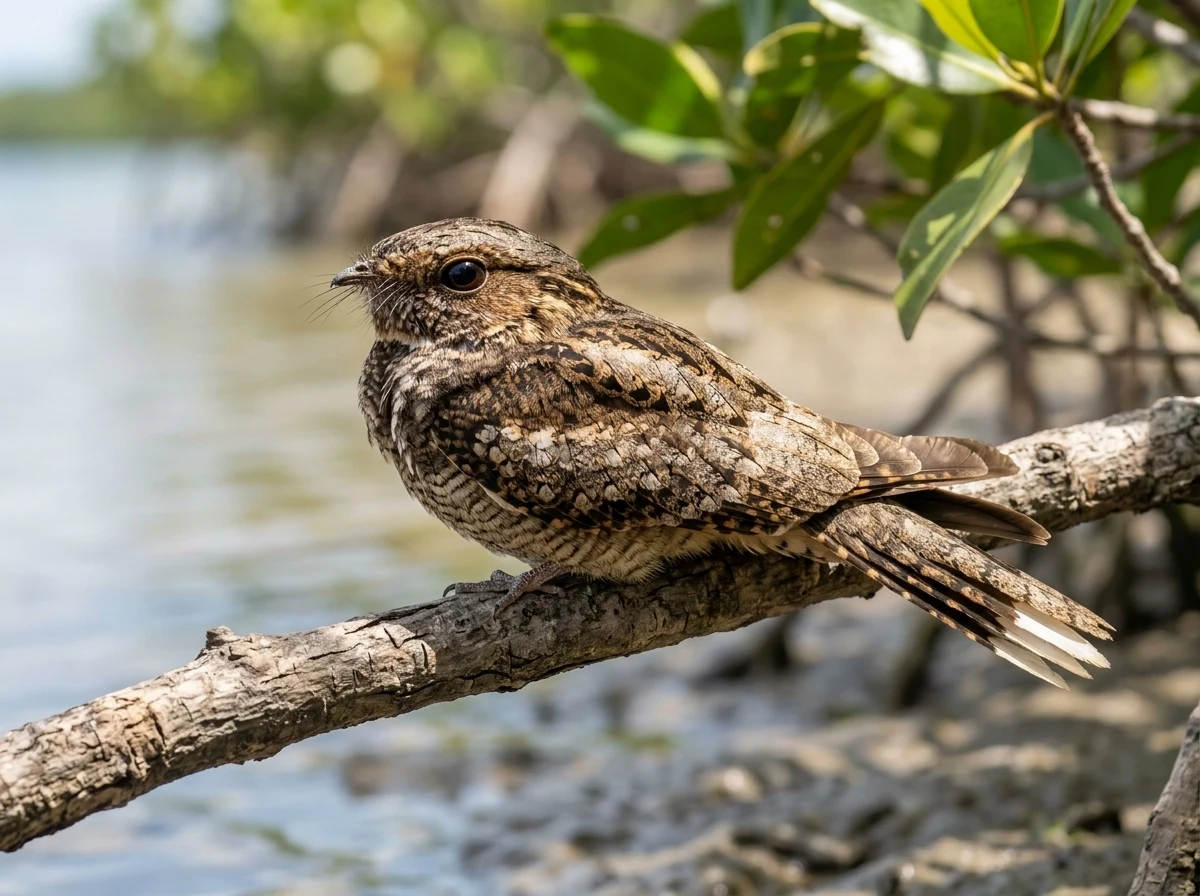
The guabairo (Puerto Rican Nightjar, Antrostomus noctitherus) is a nocturnal nightjar found only in Puerto Rico. It lives in the dry and lower montane forests of the south and southwest, from Cabo Rojo to Guayama, and is recognized by an emphatic, repeated 'whip, whip, whip' song given at dusk and before dawn.
It is not an owl and not a nighthawk. It is a caprimulgid about 22–23 cm (9 in) long and roughly 40 g, with gray, brown, and black mottling that vanishes against leaf litter. By day it rests on the ground or lengthwise along a branch; at night it catches moths and other insects in flight. It has been listed as endangered under the U.S. Endangered Species Act since June 4, 1973, is treated as endangered under Puerto Rico regulations, and has been Vulnerable on the IUCN Red List since the 2023 update.
Endemic species · Night birds
The guabairo by the numbers
1961year of rediscoveryAt Guánica Forest, 50 years after the last record at Río Piedras (1911).
14 %of breeding area protected155 km² of the 1,079 km² with breeding evidence, per the breeding bird atlas.
1–2eggs laid on leaf litterNo nest is built; incubation lasts 18 to 20 days.
1973federally endangeredListed June 4, 1973; the 5-year review recommended no change.
01
How to recognize the guabairo by its song
The most reliable way to detect a guabairo is by ear. The male gives a rapid series of emphatic, high-pitched whistles, 'whip, whip, whip, whip', usually shortly after dusk and again before first light. Males hold territories and sing year-round, but singing increases in the second half of December, when territorial encounters become more frequent, and peaks in April and May.
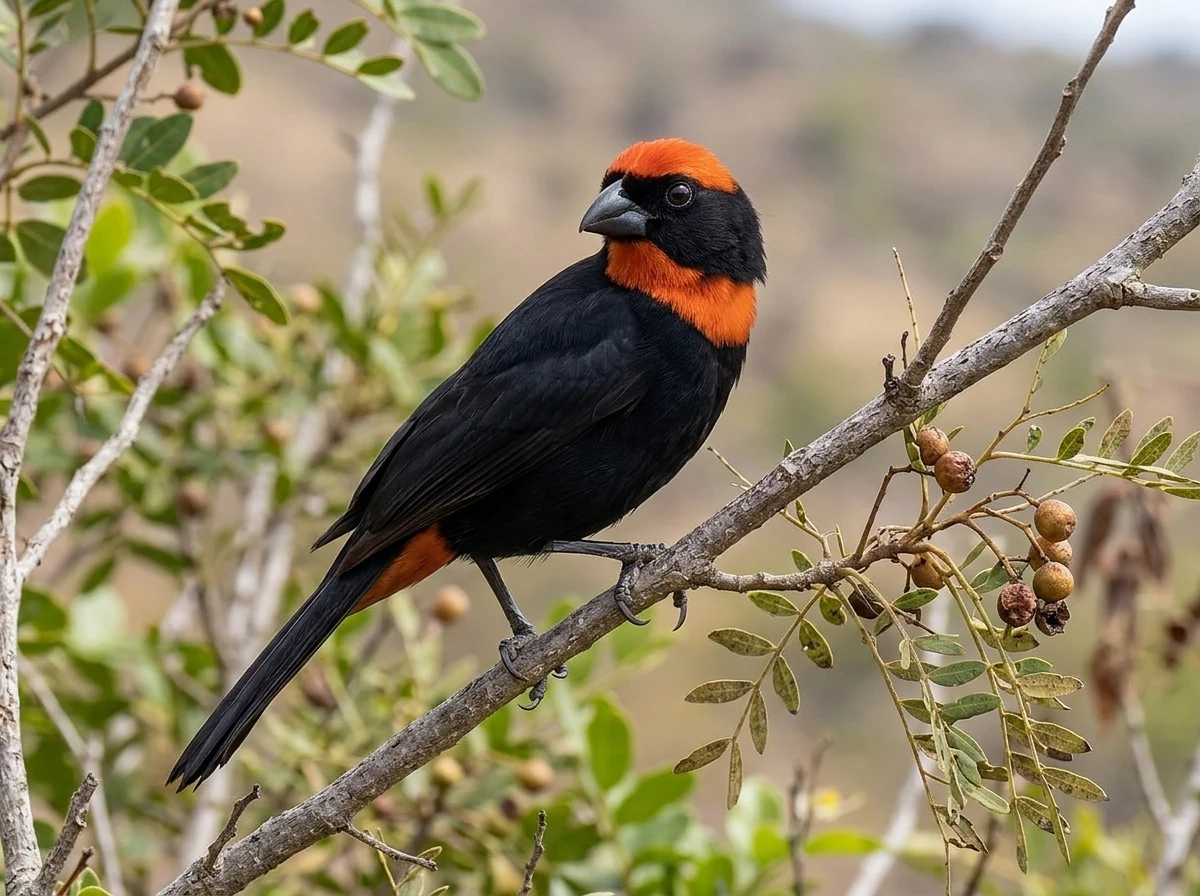
Watch for one common mix-up: the Puerto Rican Bullfinch (Comeñame) also gives a whistled 'whip-whip-whip', but it sings by day from trees and shrubs and often ends with a buzz. If you hear the series in full darkness inside southern dry forest, the nightjar is the main candidate. The species page has a recording from Yauco with its spectrogram so you can compare the rhythm.
02
Where it lives: from Guánica Forest to Cabo Rojo and Guayama
The core population is in and around Guánica State Forest, where the guabairo is rare to locally common. It also lives in the limestone hills of Guayanilla and Peñuelas, in Susúa and Maricao state forests, at La Parguera and Sierra Bermeja (Lajas), and at Guaniquilla, El Combate, and Peñones de Melones (Cabo Rojo). In November and December 2021, at least two birds were documented singing on the Cabo Rojo National Wildlife Refuge, where the species had not been reported before, and since 2017 there have been new records in Ponce and Guayama.
Typical habitat is semideciduous dry forest with deep leaf litter and an open understory, plus evergreen forest and sometimes riparian strips and plantations. The breeding bird atlas found it in 46 of the archipelago's 479 hexagons (10%), with 60% of breeding hexagons in the subtropical dry forest life zone and the rest in moist and wet forest at higher elevations.
03
From 'extinct' bird to rediscovered species
The earliest guabairo records come from the moist northern karst: a specimen collected at Bayamón in 1888, subfossil bones from caves in Morovis, and a bird seen at Río Piedras in 1911. Then half a century passed with no records, and it was presumed extinct, partly because of the mongoose introduced around 1877.
In 1961 it was rediscovered in Guánica Forest, 62 km (39 mi) southwest of the last sighting. Surveys from 1985 to 1992 found no relict populations in the northern karst but confirmed three southwestern strongholds: Guánica-Ensenada, Susúa-Maricao, and Guayanilla-Peñuelas. That history is why the guabairo appears both among the living endemics and on lists of species we nearly lost.
04
Nesting on the ground: why it is so vulnerable
The guabairo builds no nest. The female lays one or two spotted buff-brown eggs directly on leaf litter, often at the base of a small tree or under a low shrub. Both parents incubate for 18 to 20 days and use distraction displays toward predators. The literature places nesting from late February to early July; the atlas found activity from December to August, with most records from February to May and a peak in May.
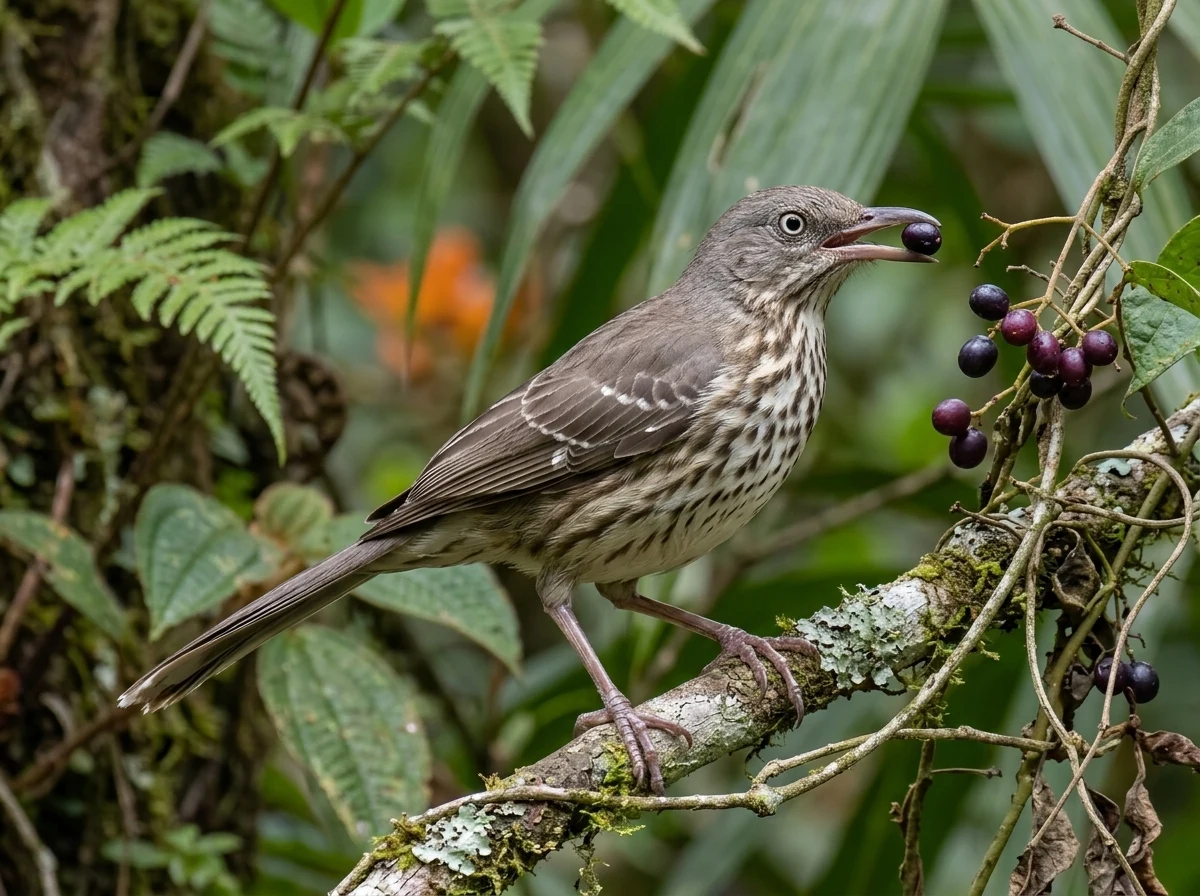
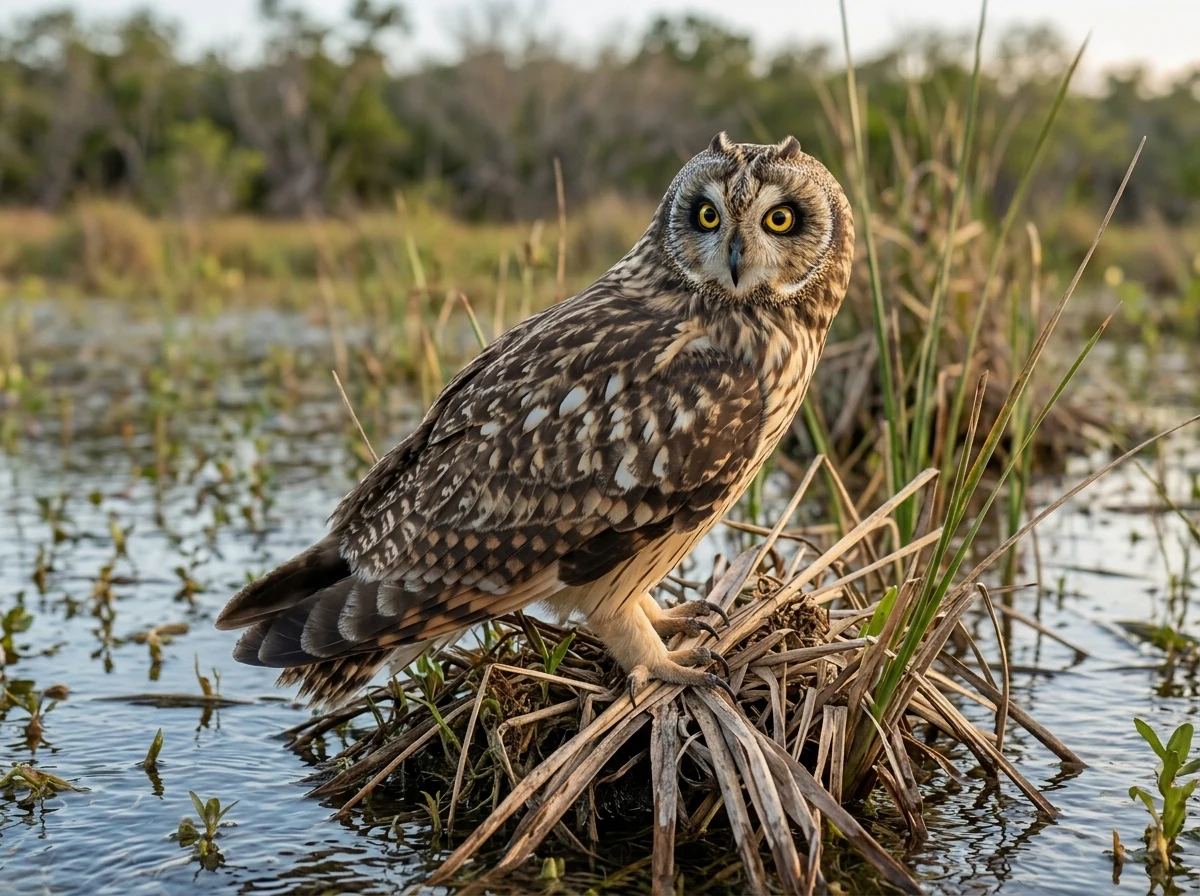
Laying on the ground exposes eggs and chicks to mongooses, feral cats and dogs, and fire ants, which can kill chicks. The Pearly-eyed Thrasher (Zorzal Pardo) also takes eggs and young, and Short-eared Owls have been seen hunting young nightjars. Even so, the federal agency and researchers identify habitat loss and degradation, especially on private land, as the main threat.
05
How many guabairos there are and what 'Vulnerable' means
There is no recent island-wide count. In 1969–1971, 450–500 pairs were estimated, mostly at Guánica. Between 1985 and 1992, surveys counted about 1,400–2,000 singing males across roughly 10,000 hectares; because not every singing male is paired, that figure can overstate pairs. 2010 models suggested more habitat and more birds than previously thought, and the IUCN moved it from Endangered to Vulnerable in 2023 because of that wider distribution, not because recovery was confirmed.
Federally it remains endangered: the 1984 recovery plan calls for 600 pairs in Guánica, 400 in Guayanilla-Tallaboa, and 200 in Susúa before delisting can be considered, and those targets have not been documented. Between 47% and 81.4% of its habitat is privately owned, and only 14% of the area where breeding is likely or confirmed is formally protected.
06
Other nightjars and nighthawks: what not to confuse it with
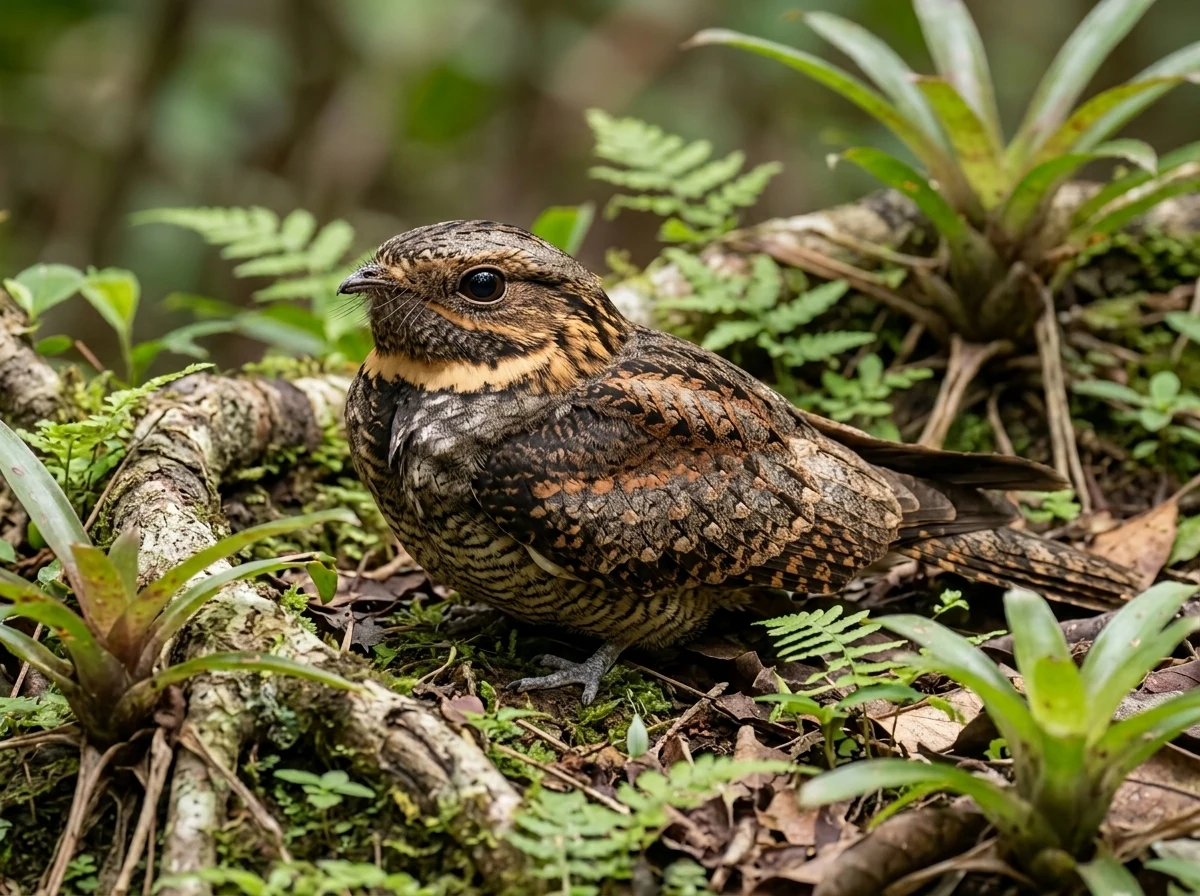
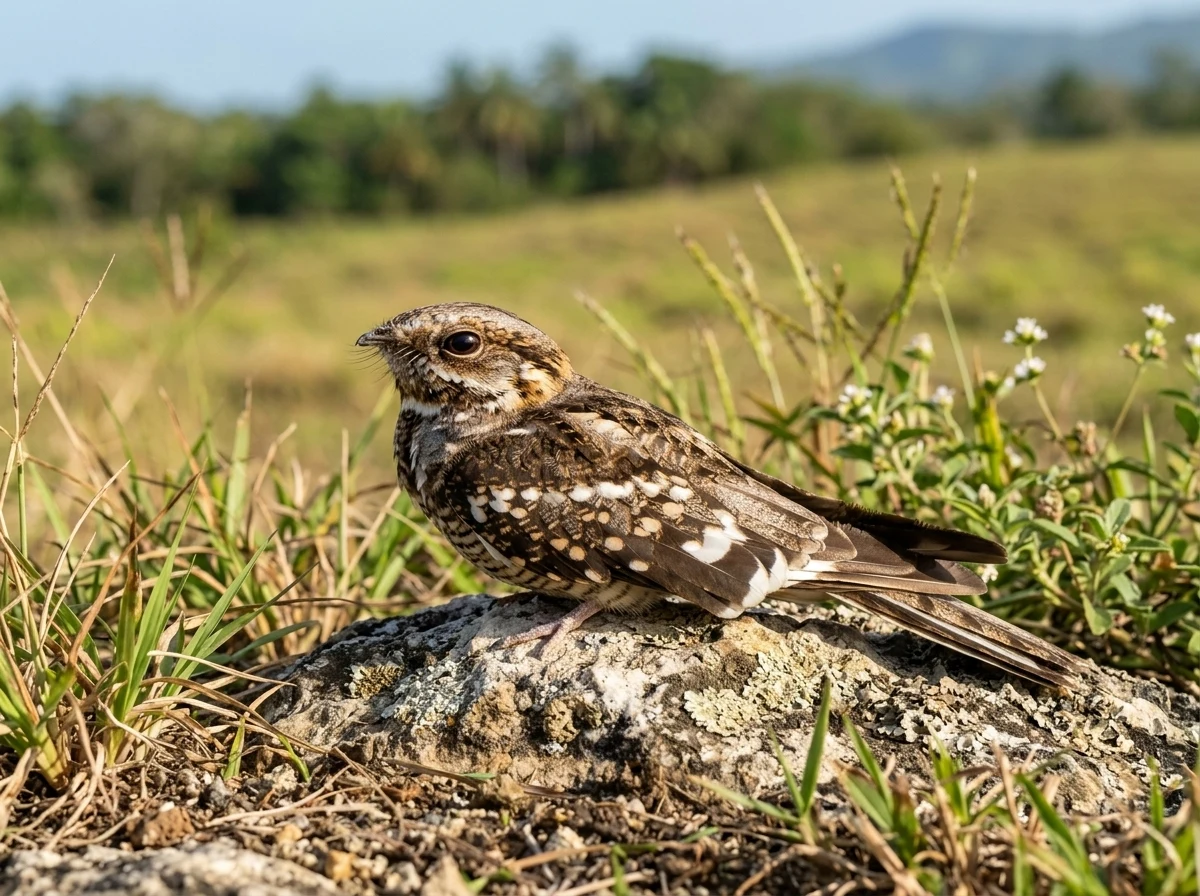
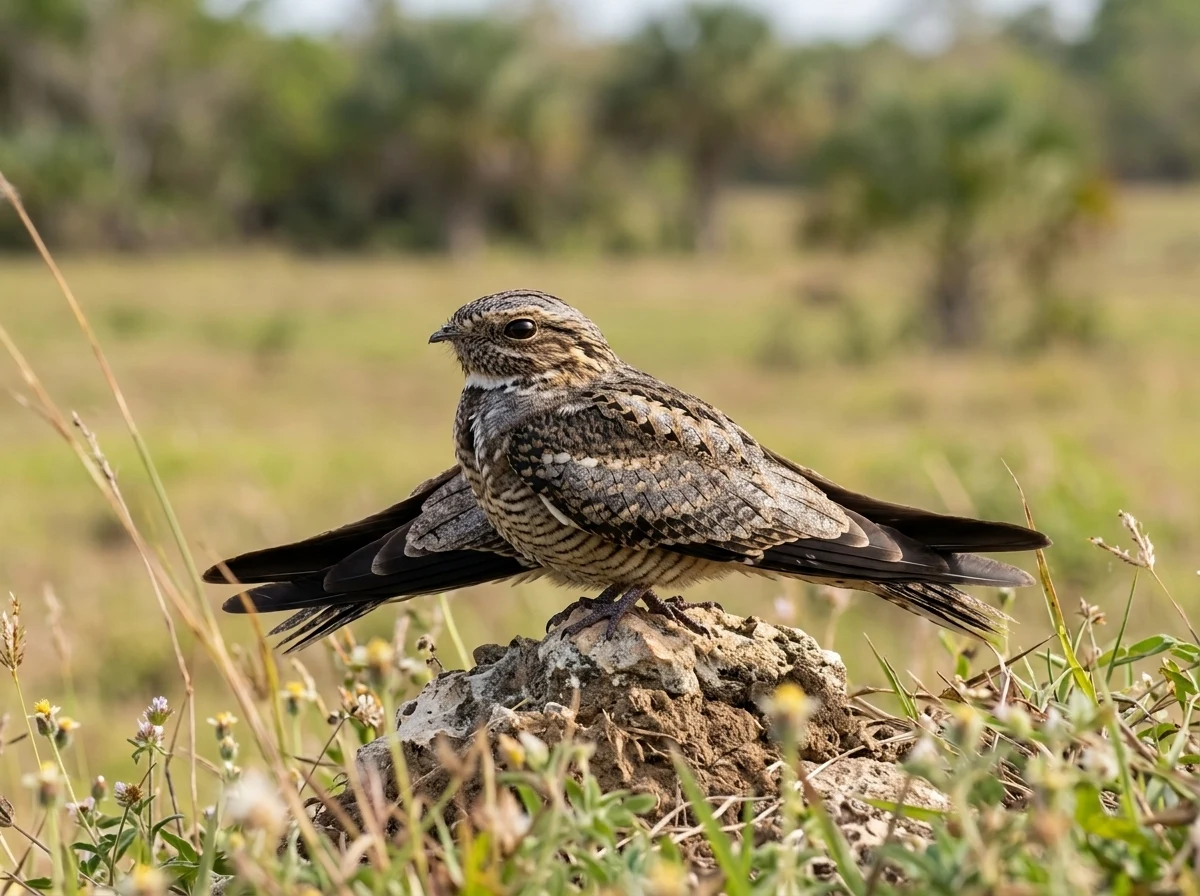
The Puerto Rico Ornithological Society catalog lists two other 'guabairos': the Guabairo de la Carolina (Chuck-will's-widow), a larger North American migrant, and the Guabairo Coliblanco (White-tailed Nightjar). Both are accidental in Puerto Rico, so a record needs solid documentation. The Antillean Nighthawk (Querequequé), by contrast, is common in season and is seen flying high over clearings, pastures, and towns at dusk with an insistent call.
The practical rule: a repeated song from inside southern dry forest in full darkness points to the guabairo; a long, pointed-winged bird hunting in open sky points to the nighthawk. To listen responsibly, stay on trails and roads, avoid shining lights on the bird, and do not use repeated playback to lure it.
Linked profiles
The guabairo and its look-alikes
Compare the endemic nightjar with the other nightjars recorded in Puerto Rico and with birds that interact with it in the dry forest.
Sound archive
Hear its voice
Explore real songs and calls. The spectrogram turns each sound into a visual trace of time and frequency.
XC308516Recording 1 of 3song

Play: song by Ross Gallardy
Choose another recording
Sound recorded by Ross Gallardy · XC308516 · CC BY-NC-SA 4.0. Visualization by Stichting Xeno-canto voor Natuurgeluiden.
Every recording retains the creator, catalogue number, and license published by Xeno-canto. Metadata via GBIF ↗
01
What is a guabairo?
A guabairo is the Puerto Rican Nightjar (Antrostomus noctitherus), a nocturnal nightjar endemic to the island. It lives in dry and lower montane forests of the south, from Cabo Rojo to Guayama, and is mostly detected by its 'whip, whip, whip' song at dusk.
02
What does the Puerto Rican Nightjar sound like?
The Puerto Rican Nightjar gives a rapid series of emphatic, high-pitched whistles, 'whip, whip, whip', shortly after dusk and before dawn. Males sing year-round, with more activity from late December into spring and a peak in April and May.
03
Is the Puerto Rican Nightjar endangered?
Yes. It has been federally listed as endangered since 1973 and is also endangered under Puerto Rico regulations. The IUCN reclassified it as Vulnerable in 2023 because its range proved wider, but only 14% of its breeding area is protected.
04
Where can you hear the Puerto Rican Nightjar?
The best-known place is Guánica State Forest and its surroundings. It also lives in Guayanilla-Peñuelas, Susúa, Maricao, La Parguera, Sierra Bermeja, and several parts of Cabo Rojo. Listen from permitted roads and trails without spotlighting the bird or luring it with playback.
05
Is the guabairo an owl?
No. The guabairo is a nightjar (family Caprimulgidae): it has a very wide gape and cryptic plumage, and it catches insects in flight. Puerto Rico's owls, such as the Puerto Rican Owl (Múcaro), belong to a different order of birds.
06
How many Puerto Rican Nightjars are left?
There is no recent island-wide estimate. Surveys from 1985 to 1992 counted about 1,400–2,000 singing males across roughly 10,000 hectares in the southwest, and 2010 models suggest there may be more birds and habitat than previously thought.
Keep exploring
Connected routes
Sources and review
The evidence is one link away.
These sources support the editorial scope of this guide. Bird profiles also retain their own taxonomy, occurrence, and conservation references.
Reviewed:
01↗02↗03↗04↗05↗06↗07↗08↗09↗10↗
U.S. Fish and Wildlife Service
Puerto Rican Nightjar or guabairo: 5-Year Review
Federal listing date (June 4, 1973), record history (Bayamón 1888, Río Piedras 1911, 1961 rediscovery at Guánica), recovery-plan targets, and published population estimates.Journal of Caribbean Ornithology (BirdsCaribbean)
Puerto Rican Nightjars on the Cabo Rojo National Wildlife Refuge
2021 records at Cabo Rojo, range from Cabo Rojo to Guayama, year-round singing, nesting season, predators, and the 14% of breeding habitat that is protected.USDA Forest Service, International Institute of Tropical Forestry
The Puerto Rico Breeding Bird Atlas (PDF)
Species accounts: distribution, habitat, record and hexagon counts, nesting months, nests, Pin-tailed Whydah parasitism of Orange-cheeked Waxbill, and share of protected habitat.BirdsCaribbean
From the Nest: Puerto Rican Nightjar
Description of the 'whip, whip, whip' song, size and weight, eggs laid on leaf litter, and daytime behavior.Cornell Lab of Ornithology
Puerto Rican Nightjar in Birds of the World
Incubation of 18 to 20 days, one or two eggs, song peak in April and May, and nesting preference for forest with deep leaf litter.BirdLife International
2023 Red List update: Puerto Rican Nightjar
Reclassification to Vulnerable on the IUCN Red List and mention of the introduced boa constrictor as a threat.Sociedad Ornitológica Puertorriqueña
Catalog of the Birds of Puerto Rico
Official local names: Guabairo (de Puerto Rico), Yaboa Común, Yaboa Real, Yaboa Americana, Garza Real, Martinete, Comeñame, Zorzal Pardo/Chucho, Zorzal Patirrojo, Viuda, Viuda Colicinta, and Veterano.U.S. Fish and Wildlife Service
Puerto Rican Nightjar
Federal identity and status reference for the endemic nightjar.Cornell Lab of Ornithology
Puerto Rican Bullfinch in Birds of the World
Male, female, and juvenile plumage, the whistled 'whip-whip-whip' song ending in a buzz, local names, and the St. Kitts relative.Xeno-canto Foundation / GBIF
Xeno-canto recordings published through GBIF
Metadata, authorship, licenses, and catalogue records for field recordings used by the atlas.The atlas continues