 AI
AIFreshwater lagoon guide
Birds of Laguna Tortuguero
A rare lagoon for Puerto Rico: more fresh than salty, ringed by silica sands, marshes, and limestone hills, and a few minutes off PR-22.
Reviewed:Fresh water on the north coast.
Laguna Tortuguero Natural Reserve, between Vega Baja and Manatí, protects a fresh to slightly saline coastal lagoon of about 220 hectares, a habitat that is uncommon in Puerto Rico. It is a good place to learn freshwater birds such as grebes, gallinules, and herons without leaving the north coast.
The Puerto Rico Planning Board designated it a natural reserve in 1979, and it covers about 2.43 km². The lagoon has a mean depth of 1.2 m, according to the U.S. Geological Survey, and is fed by underground aquifers and river discharge that mix with seawater through an outlet channel dredged in 1940. This guide explains its habitats, which birds to expect, and how to visit safely.
Freshwater lagoon guide
The lagoon in numbers
~220 haof open waterPer the USGS water-quality reconnaissance.
1.2 mmean depthShallow water, fresh to slightly saline.
1979designatedNatural reserve by the Planning Board.
01
Access and activities
The reserve is on the north coast between Vega Baja and Manatí, a few minutes from PR-22 and PR-2. Published sources give different local roads for the entrance, so use the reserve's official location in your map app and confirm hours with DNER, which manages it.
The Municipality of Manatí lists hiking, trail walks, canoe trips, birdwatching, and scientific study as activities compatible with protection. A short walk along the trails and viewpoints over the water is enough for a first list; if you paddle a kayak or canoe, stay away from shoreline vegetation where birds rest and nest.
02
Habitats: lagoon, marsh, sand, and limestone hill
According to the Municipality of Manatí, the reserve includes wetlands, marshes, exotic and endemic flora, endangered species, silica sands, and limestone hills, and its flora has been identified as the fourth most important on the island. That mix is unusual: within a few hundred meters you go from open water to marsh vegetation, to scrub on white sand, to forest on the hills.
USGS describes it as a slightly saline to freshwater lagoon with a mean depth of 1.2 m and an artificial outlet channel dredged in 1940 that connects it to the Atlantic. Shallow water and shoreline vegetation favor birds that dive or walk among aquatic plants; forest edges add land birds to the list.
03
Waterbirds to learn here
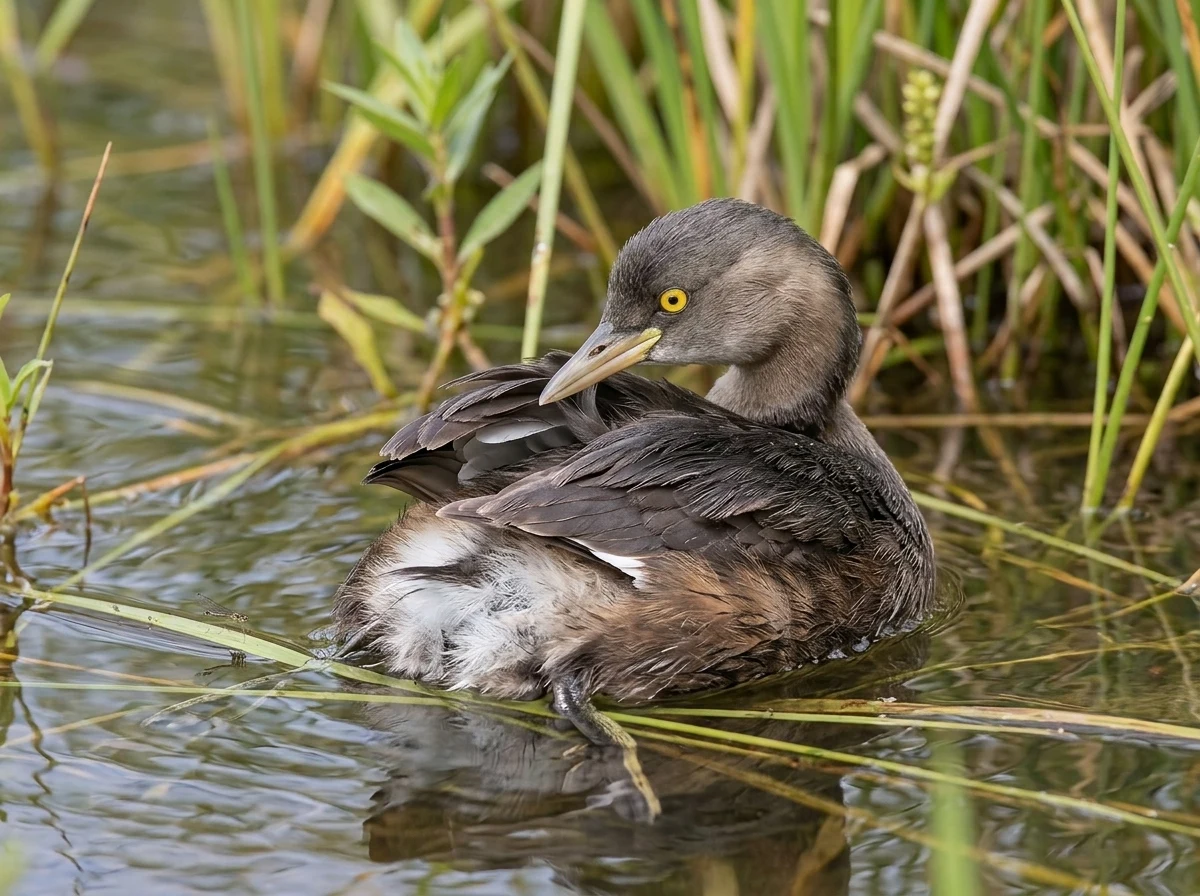
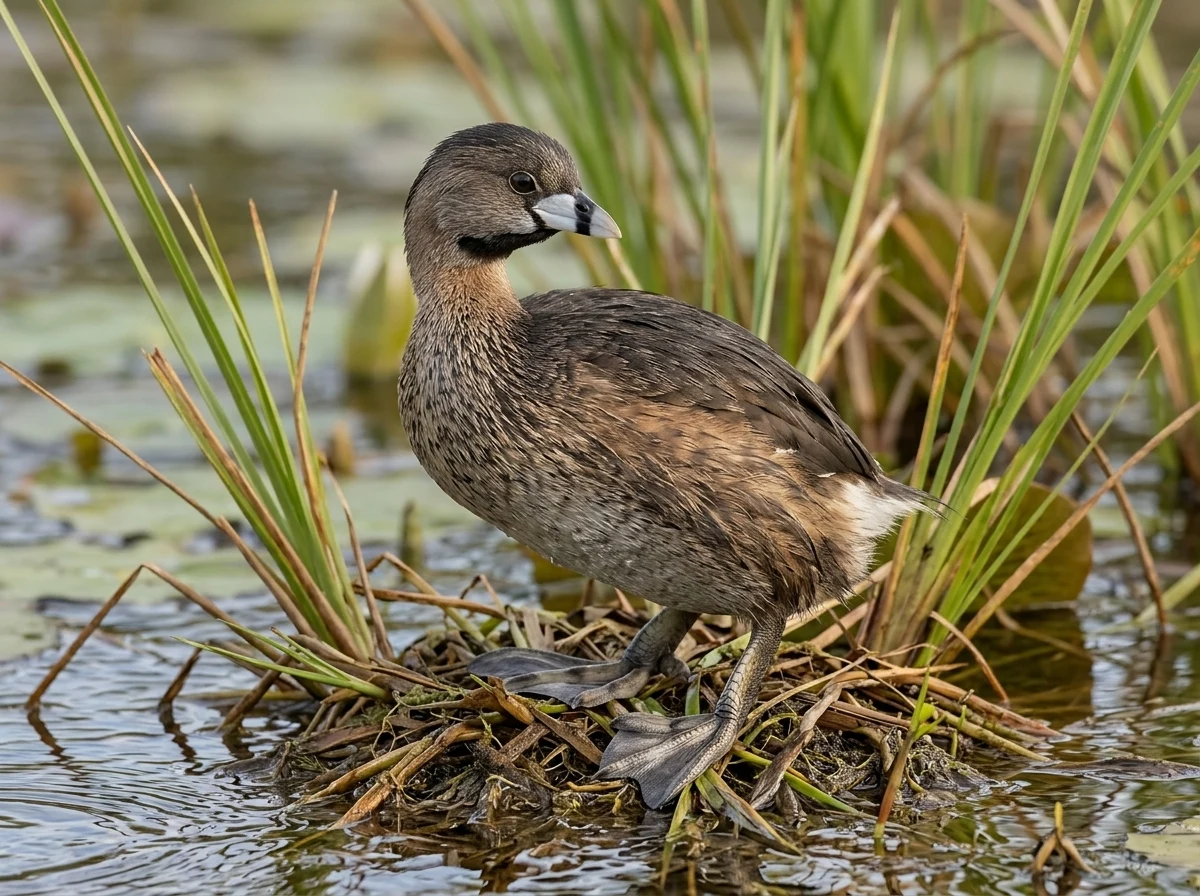
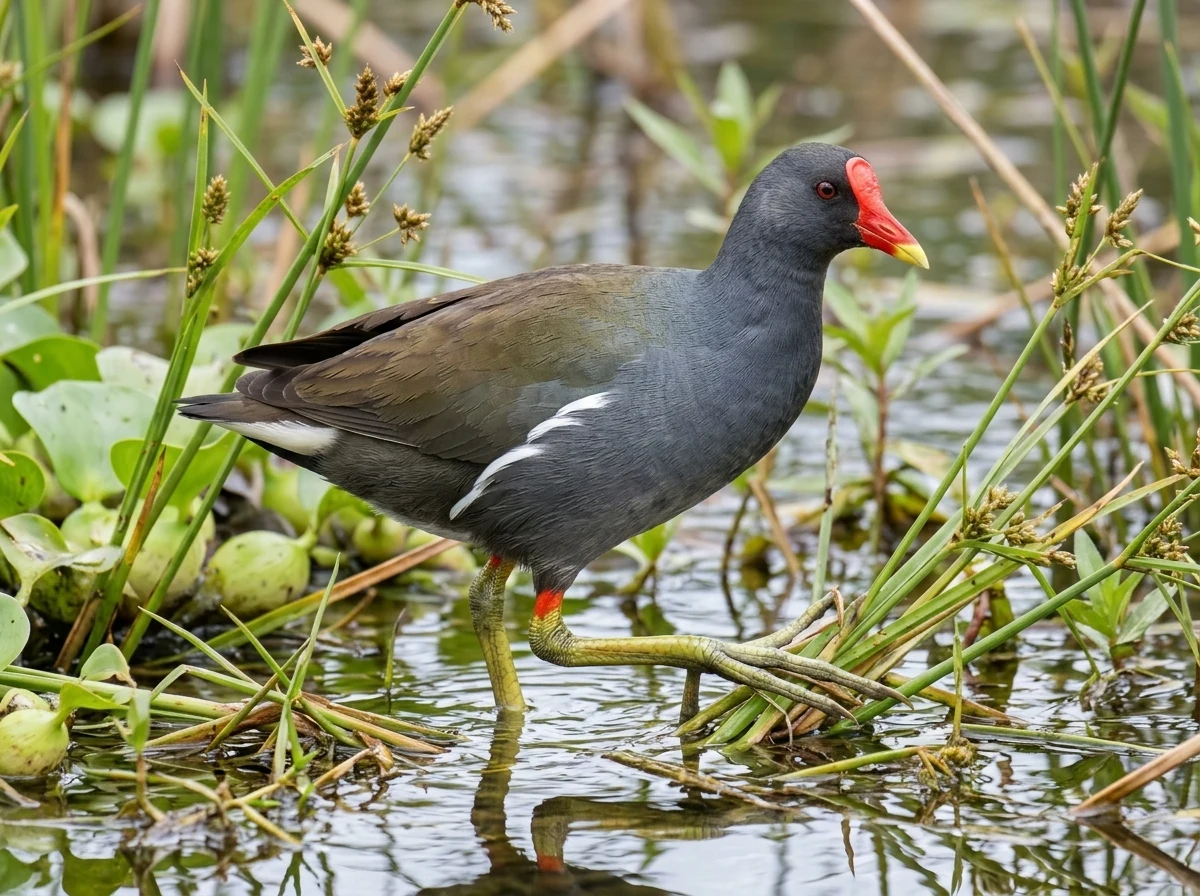
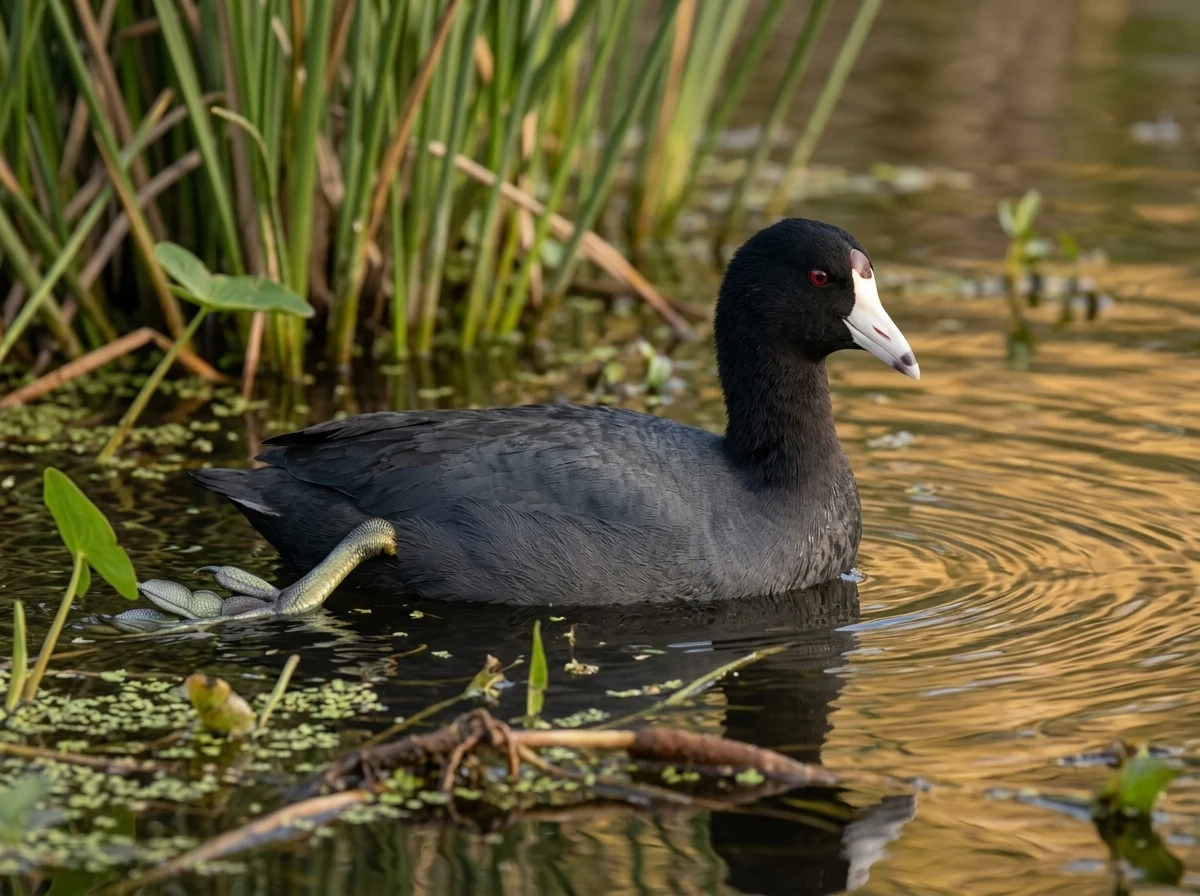
Given its habitat, the lagoon is a good place to practice freshwater birds that appear in our profiles: Least Grebe (Zaramago Menor), small, dark, and yellow-eyed; Pied-billed Grebe (Zaramago), larger and thick-billed; Common Gallinule (Gallareta Común), with a red frontal shield; and American Coot (Gallinazo Caribeño), with a white shield and listed as vulnerable by DNER.
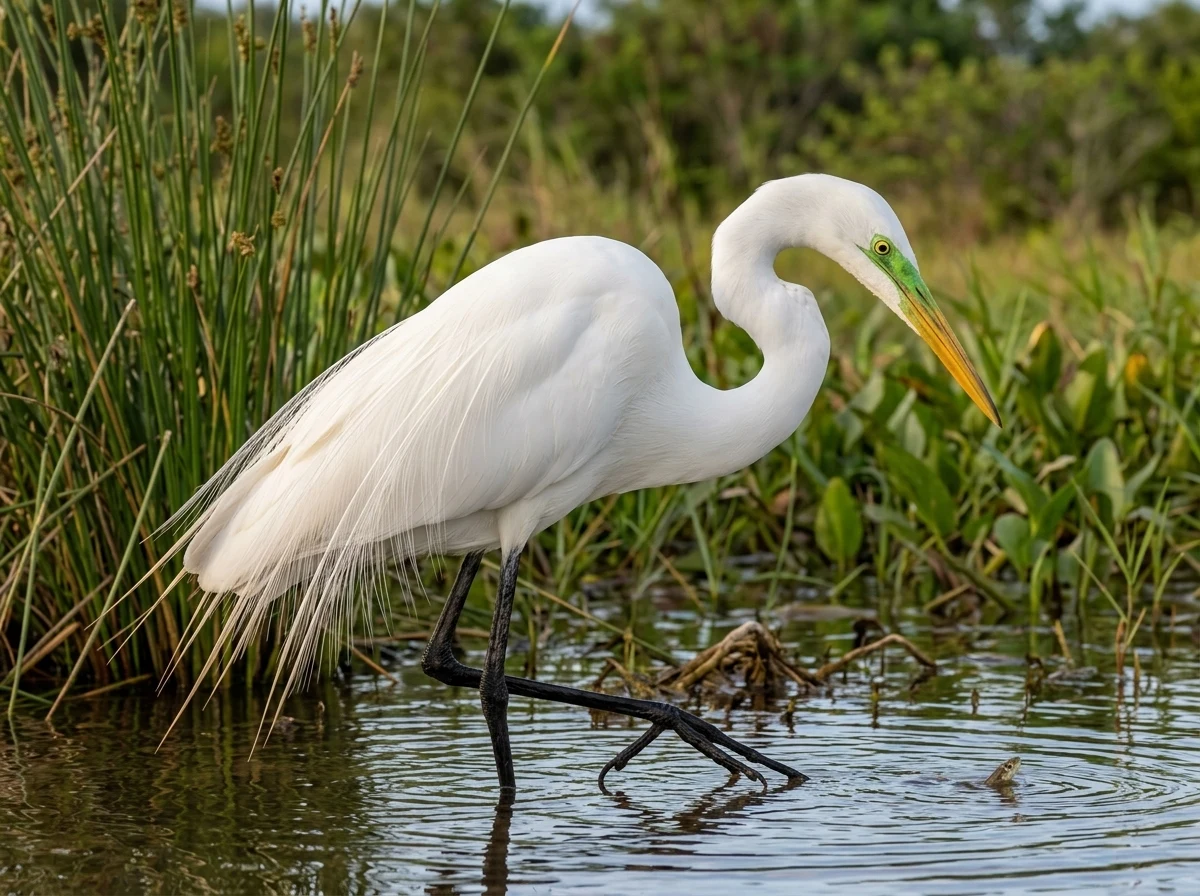
Among herons, the Great Egret (Garza Real) is large and white with a yellow bill and easy to see along the shore. These species are habitat-based expectations, not an official reserve list; check recent eBird records before going and log counts and dates carefully, because waterbird numbers change with water levels.
04
Migration season
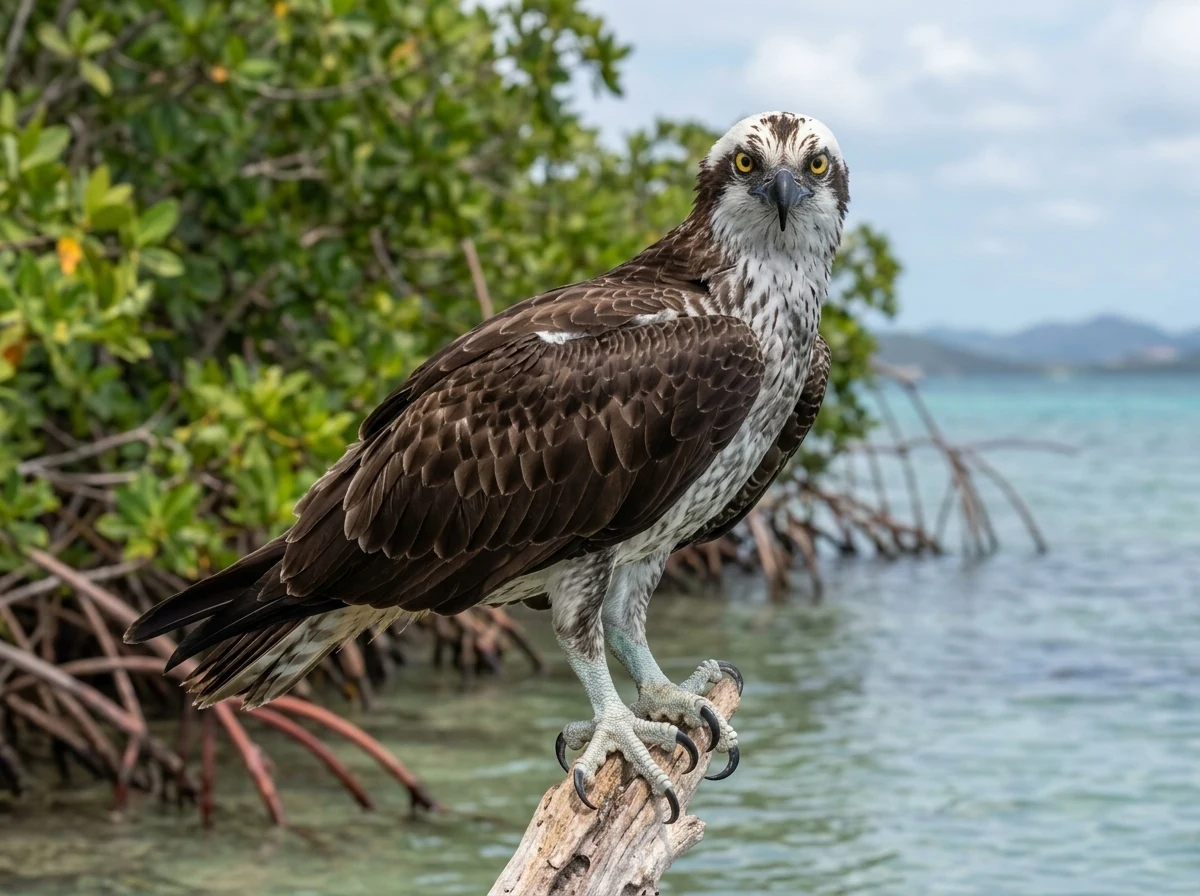
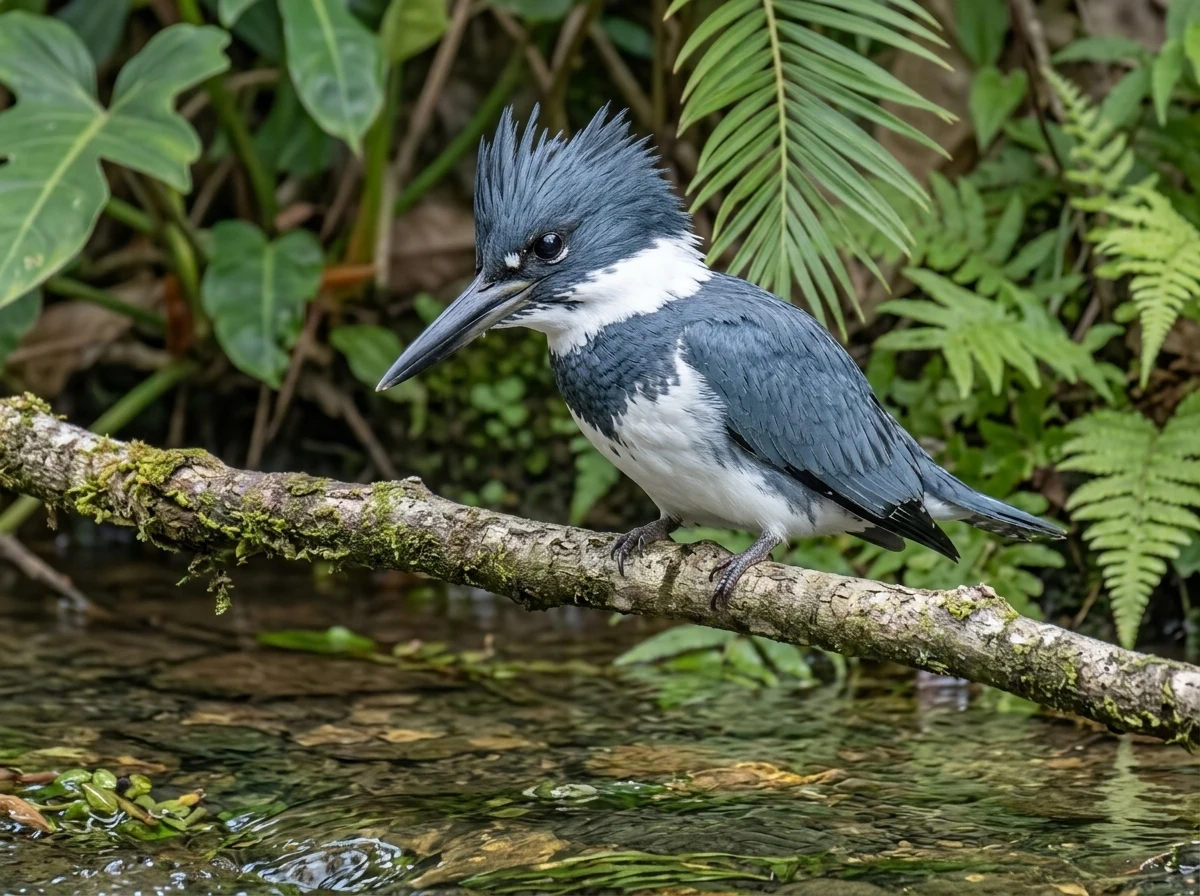
Freshwater lagoons are scarce on the north coast, which is why they draw visitors during migration. In fall and winter, scan the sky and shoreline trees for Osprey (Águila Pescadora), a migratory raptor that fishes open water, and check posts and low branches for Belted Kingfisher (Martín Pescador).
The best time is early morning, when the water is calm and the heat has not built. A scope or high-power binoculars helps, because many waterbirds stay far from shore. If you see a duck or a species you do not recognize, photograph it and compare it with our guides; rare species turn up from time to time on Puerto Rico's freshwater wetlands.
05
Caimans: a reality at the lagoon
The spectacled caiman is an exotic species established in the area. In 2021, after a sighting near the lagoon, DNER said that seeing caimans in the area is 'quite common' because of its proximity to the lagoon. That does not rule out birding, but it changes how you move.
Keep your distance from the shore, do not enter the water, do not feed animals, and watch children and dogs. If you see a caiman, observe it from afar and report it to DNER. For birding, platforms and raised trails are better vantage points than the shoreline itself.
06
Respectful birding in a fragile reserve
The reserve protects rare flora on silica sands and endangered species, according to the Municipality of Manatí. Stay on marked trails to avoid trampling plants, do not collect, and do not use playback to draw in marsh birds, which respond strongly and may leave cover.
If you paddle, avoid approaching groups of resting birds or floating vegetation, and do not chase birds that move away. Pack out your trash: plastic in shallow water ends up entangling birds. Your checklists with counts, date, and time help document how one of the island's few freshwater lagoons is changing.
Linked profiles
Freshwater birds for Laguna Tortuguero
Species chosen by habitat to practice at the lagoon; check recent records before you go.
Sound archive
Hear its voice
Explore real songs and calls. The spectrogram turns each sound into a visual trace of time and frequency.
XC797578Recording 1 of 3call

Play: call by JAYRSON ARAUJO DE OLIVEIRA
Choose another recording
Sound recorded by JAYRSON ARAUJO DE OLIVEIRA · XC797578 · CC BY-NC-SA 4.0. Visualization by Stichting Xeno-canto voor Natuurgeluiden.
Every recording retains the creator, catalogue number, and license published by Xeno-canto. Metadata via GBIF ↗
01
Where is Laguna Tortuguero?
On Puerto Rico's north coast, between the municipalities of Vega Baja and Manatí, near PR-22 and PR-2. The natural reserve covers about 2.43 km² and is managed by DNER.
02
Is Laguna Tortuguero a freshwater lagoon?
Mostly, yes. USGS describes it as a slightly saline to freshwater lagoon fed by aquifers and rivers, with an outlet channel to the Atlantic dredged in 1940 that allows some mixing with seawater.
03
What birds can you see at Laguna Tortuguero?
Given its habitat, it is a good place for freshwater birds such as Least Grebe, Pied-billed Grebe, Common Gallinule, American Coot, and herons like the Great Egret. In fall and winter, look for Osprey and Belted Kingfisher; check recent eBird records before going.
04
Are there caimans in Laguna Tortuguero?
Yes. DNER has said that seeing caimans in the area is 'quite common' because of its proximity to the lagoon. Keep away from the shore, do not enter the water, watch children and dogs, and report sightings to DNER.
05
Can you kayak at Laguna Tortuguero?
The Municipality of Manatí lists canoe trips among the activities compatible with the reserve. Confirm conditions with DNER, keep away from shoreline vegetation where birds rest, and keep caimans in mind.
06
When was Laguna Tortuguero Natural Reserve designated?
The Puerto Rico Planning Board designated it a natural reserve in 1979. It protects the lagoon, wetlands, marshes, silica sands, and limestone hills with flora considered among the most important on the island.
Keep exploring
Connected routes
Sources and review
The evidence is one link away.
These sources support the editorial scope of this guide. Bird profiles also retain their own taxonomy, occurrence, and conservation references.
Reviewed:
01↗02↗03↗04↗05↗
U.S. Geological Survey
Water-quality reconnaissance of Laguna Tortuguero, 1999-2000
Surface of about 220 hectares, 1.2 m mean depth, fresh to slightly saline water, and an outlet channel dredged in 1940.Municipio de Manatí
Laguna Tortuguero Natural Reserve
1979 designation by the Planning Board, 2.43 km², water sources, habitats, and permitted activities.Metro Puerto Rico
Caiman sighted near Laguna Tortuguero in Vega Baja
DNER statement that seeing caimans in the area is 'quite common' because of its proximity to the lagoon.Corriente Verde
Migratory birds of the archipelago
Local introduction to the origins, routes, and seasons of migratory visitors.Xeno-canto Foundation / GBIF
Xeno-canto recordings published through GBIF
Metadata, authorship, licenses, and catalogue records for field recordings used by the atlas.The atlas continues