 AI
AISounds
Identifying birds by chip notes
During migration, many warblers do not sing: they give brief chips that may be your only clue. Learn to listen with a method.
Reviewed: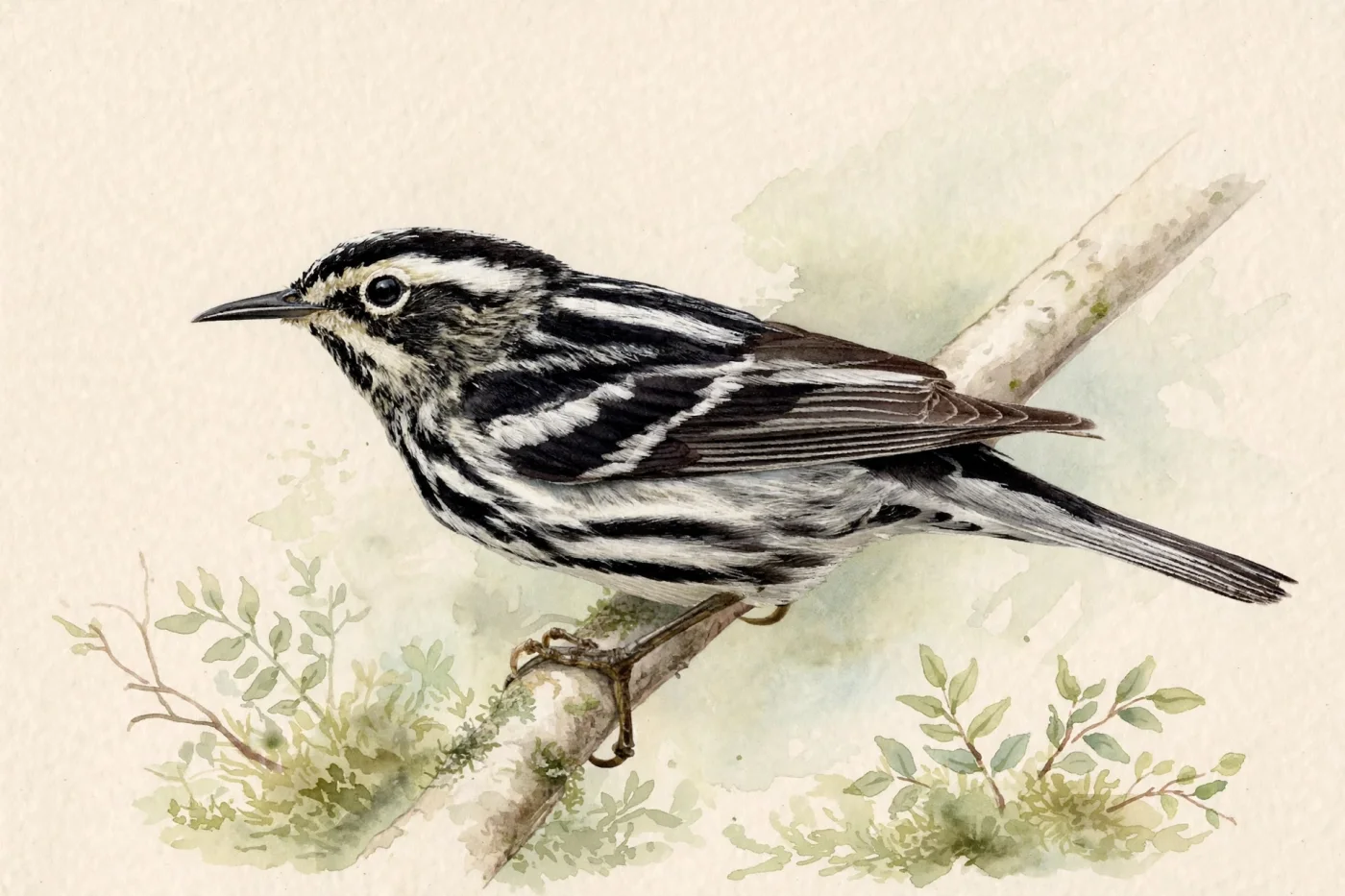
Prepared with AI assistance and linked sources. Illustrations are not field photographs.
Why chips matter
In the Caribbean, migration brings birds that pass through or stay without singing. BirdsCaribbean notes that as the breeding season approaches, typically only males of resident species are heard singing, while migrants utter a confusing array of chip notes. That observation is Caribbean-wide and applies to Puerto Rico as part of the Caribbean. For the observer, it means training the ear on more than song.
This guide does not promise to identify every chip to species. It proposes a method: listen for pitch, sharpness, and duration; use habitat and behavior as filters; and confirm with reference recordings. The available sources describe chips qualitatively, not with exact measurements, so honesty is part of the method.
Sounds
Three key takeaways
ChipThe most frequent clueIn migration, many warblers give chips instead of song.
Tono, nitidez, duraciónThree listening axesUse them to describe each chip before searching for the species.
Hábitat + comportamientoFilters that narrow optionsWhere and how the bird moves shortens the candidate list.
01
What a chip note is and why it is used in migration
A chip note is a brief vocalization, often a single element, that birds use to stay in contact, alert, or express stress. It is not the full territorial song. During migration, when the goal is not to defend a breeding territory, many species do not sing and rely on these chips. BirdsCaribbean describes this as a confusing array of chip notes in migrants, while resident males may still sing.
For the observer in Puerto Rico, this changes the strategy. Instead of waiting for a full song, you listen for fragments. The good news is that chips are repeatable and often given frequently while a bird forages. The bad news is that they are short and can be confused between species. So treat them as clues, not automatic identifications.
02
Three axes to describe a chip: pitch, sharpness, and duration
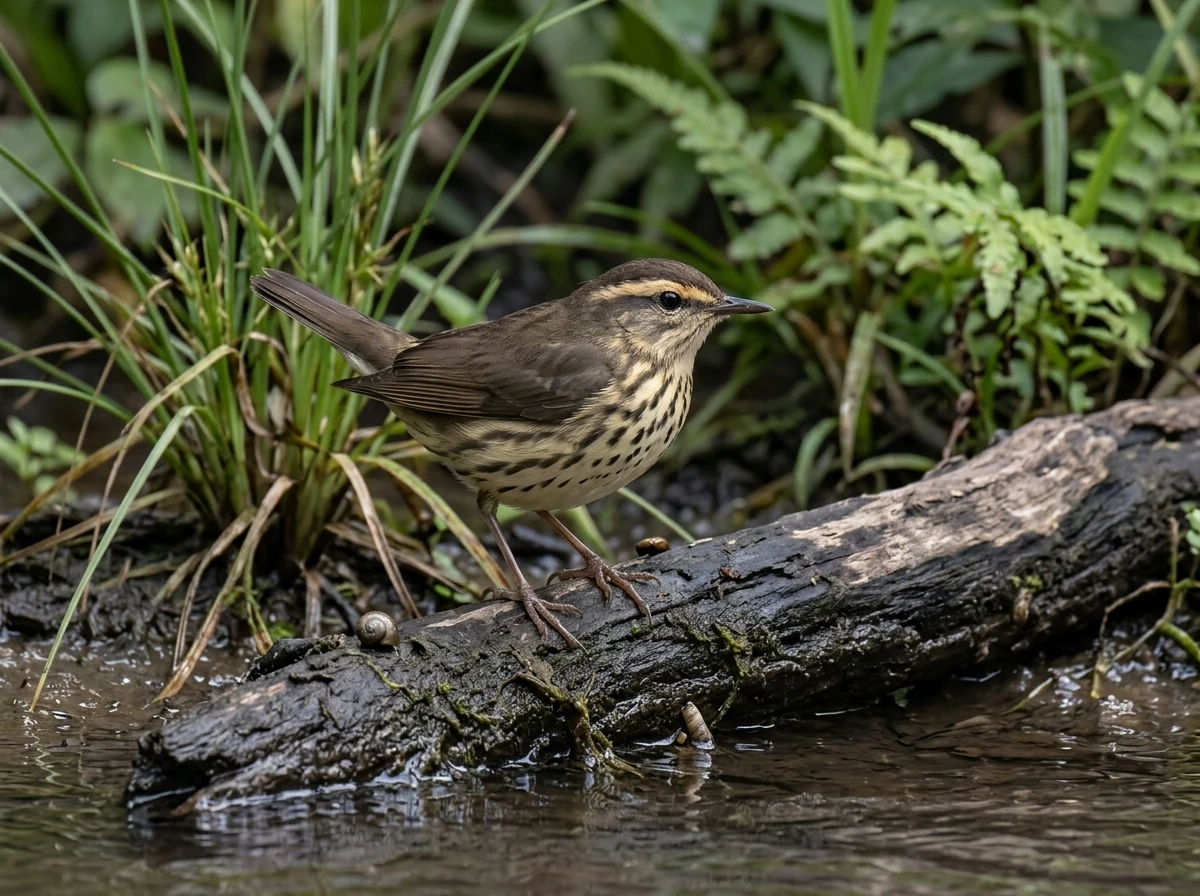
The first axis is pitch: does the chip sound high or lower? Audubon describes the Northern Waterthrush call as 'a sharp chink' and categorizes its call type as 'Chirp/Chip, High, Whistle.' That combination of sharpness and height is a clue. You do not need to measure hertz; just compare with other chips you hear in the same session.
The second axis is sharpness: is it a metallic, dry chip, or softer and rounder? The third axis is duration: is it a single short hit or a chip that stretches or repeats? The available sources describe these traits qualitatively, not with exact milliseconds. Even so, noting 'high and metallic, very short' or 'lower and softer, slightly longer' is useful for comparison and for later searching in recordings.
03
Comparing species: Ovenbird, Northern Waterthrush, and others
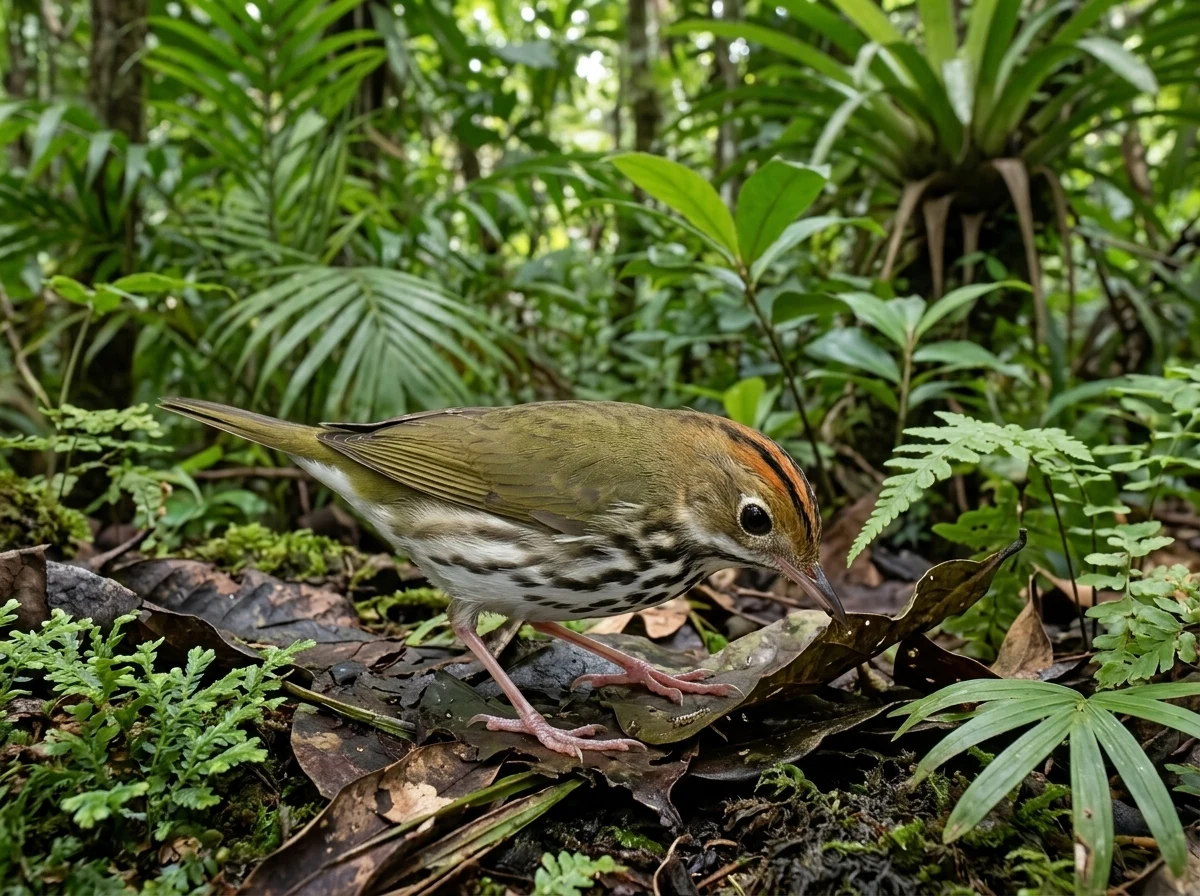
Ovenbird and Northern Waterthrush share the forest floor, but BirdsCaribbean clarifies that waterthrushes are nearly always seen foraging right along a muddy creek bank or pond edge, while Ovenbird tends to forage among woodland leaf litter. That microhabitat difference is a powerful filter before deciding whether a sharp, metallic chip comes from a waterthrush or another species.
Audubon describes the Northern Waterthrush call as 'a sharp chink' and adds that the bird is often detected first by its metallic call note, because it is shy and hard to approach. For Ovenbird, the available sources do not offer a quantitative chip description, so comparison must rely on habitat, behavior, and confirmation with recordings. Do not invent a rule that 'Ovenbird always sounds like this' if it is not supported.
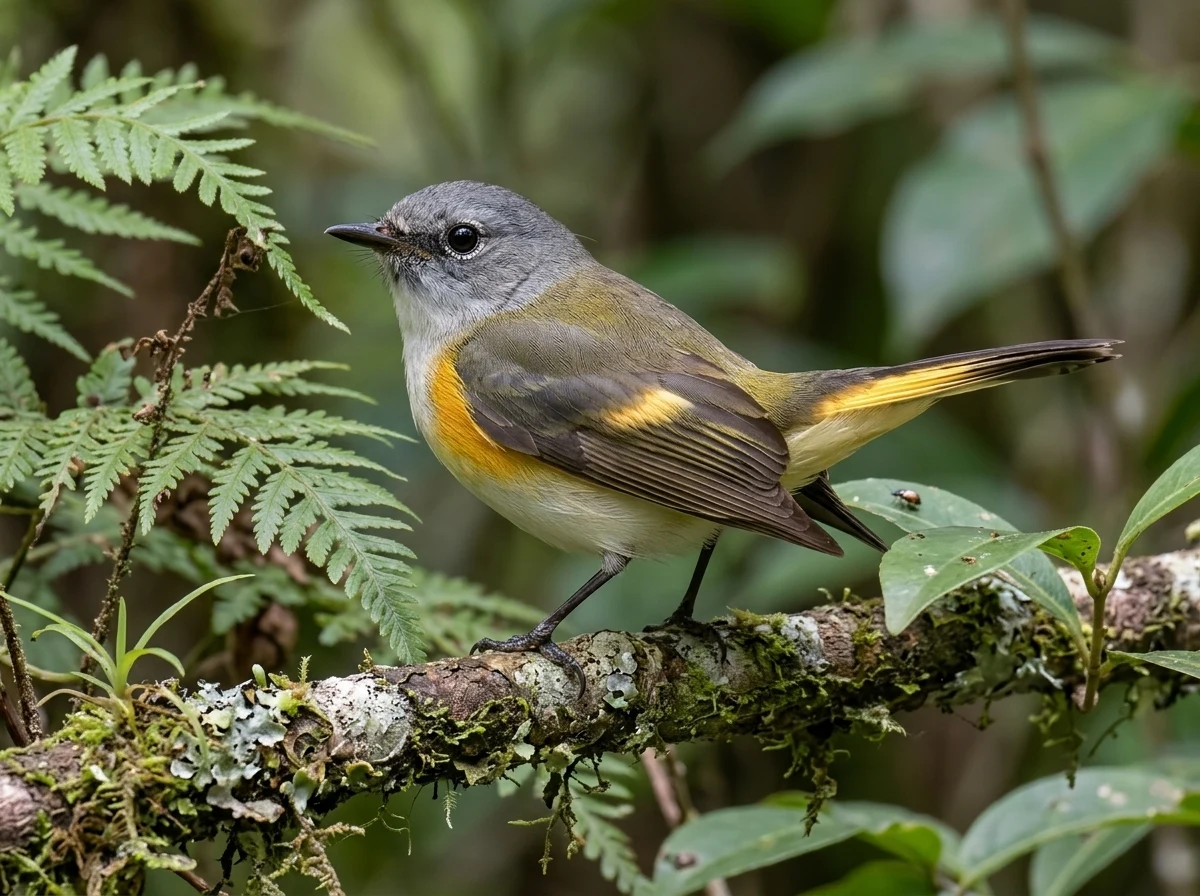
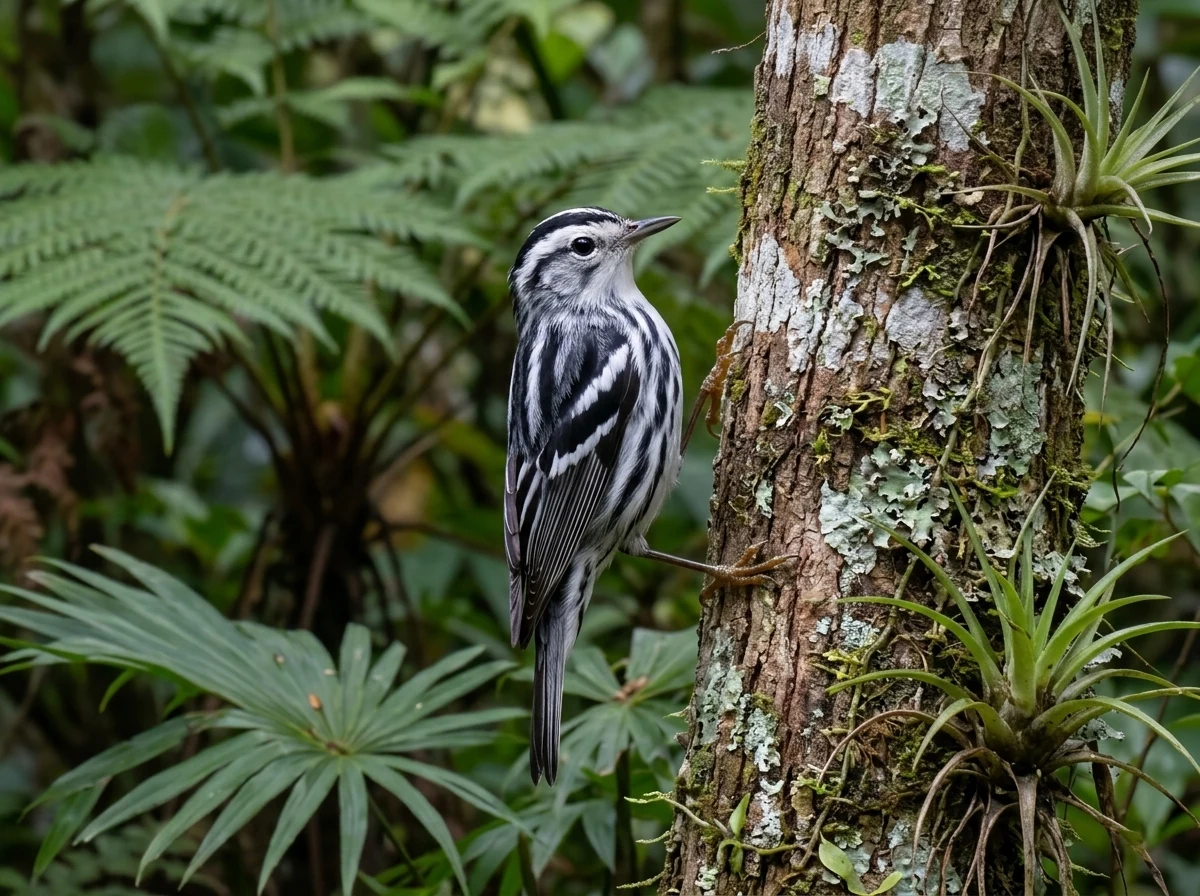
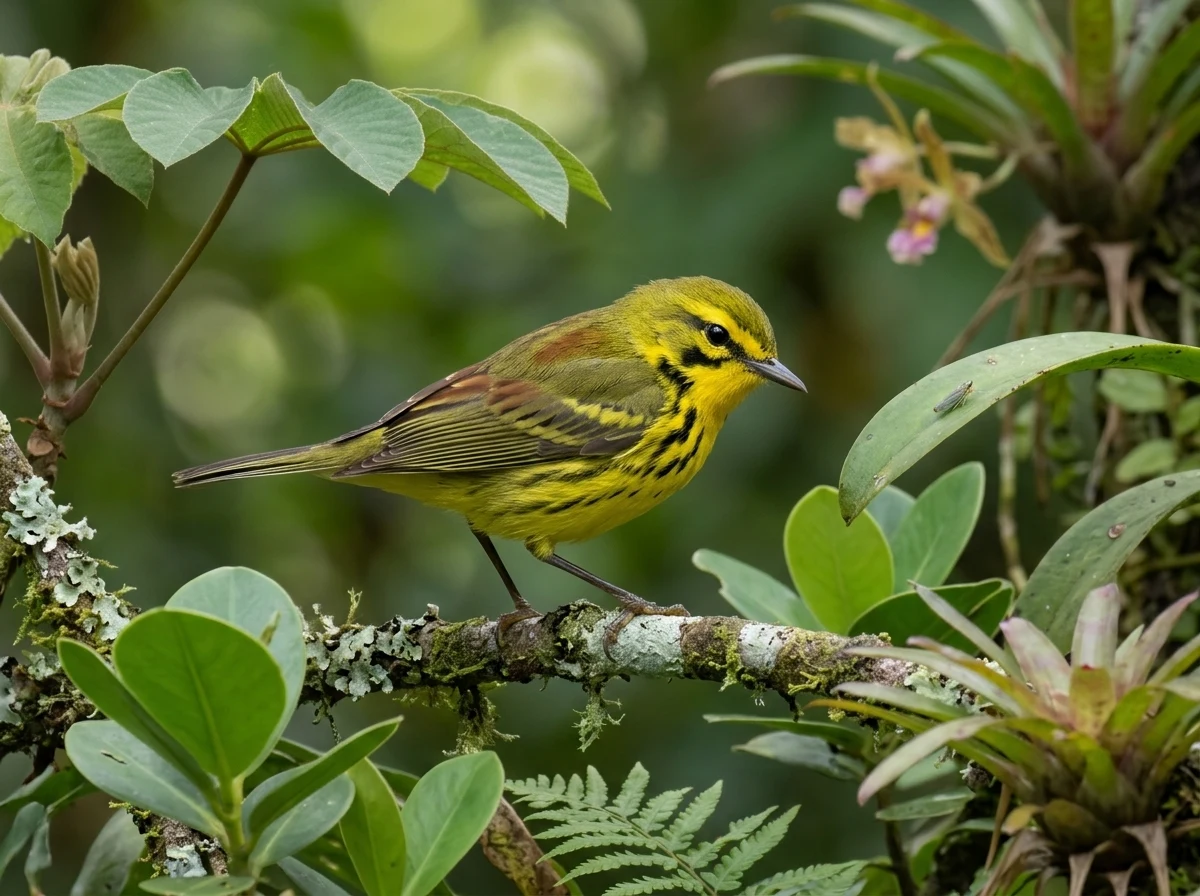
Other species in this topic, such as American Redstart, Black-and-white Warbler, and Prairie Warbler, have distinctive behaviors that help: BirdsCaribbean notes that Black-and-white Warbler acts like a nuthatch, Prairie Warbler bobs its tail while foraging, and the male American Redstart fans its black and orange tail when foraging. These behaviors are not chips, but they shorten the candidate list when you hear a chip and then see the bird.
04
Field procedure and checklist
When you hear a chip, do not try to identify it immediately. First locate the sound and observe the habitat: coastal mangrove, dry scrub, pine forest, cloud forest? BirdsCaribbean notes that each of those environments has its own assemblage of species. Then look for behavior: does it climb trunks, pump its tail, forage on the ground near water? Then describe the chip quietly or in a note: pitch, sharpness, duration, and repetition pattern.
Checklist for a chip session: 1) note the time and habitat; 2) describe each chip with three words (e.g., 'high, metallic, short'); 3) record the bird's behavior if you see it; 4) compare with reference recordings afterward; 5) if you cannot confirm, leave it as 'unidentified chip' and note the doubt. This discipline prevents inventing certainty.
To practice, choose a place with several chips at once and record with your phone if you can. Then listen to the recording and try to separate the chips by pitch and sharpness. You do not need professional equipment; the exercise of describing before naming is what trains the ear.
05
Resources for comparing chips
The Macaulay Library at the Cornell Lab of Ornithology maintains the Cornell Guide to Bird Sounds, a compilation of recordings hand-selected by experts, often including songs, calls, flight calls, and mechanical sounds. The guide is a compilation focused on the United States and Canada (including Hawaii), though its recordings come from many countries and are also incorporated into eBird species pages and other Cornell Lab tools; it is not a Puerto Rico-specific guide. It was updated in February 2026 following v2025 Clements Taxonomy, with 4,959 files. It is useful for hearing regional and individual variation, though it does not offer a side-by-side comparison of Ovenbird and Northern Waterthrush chips.
For Puerto Rico, combine that guide with eBird and Xeno-canto recordings, and with behavior observation. BirdsCaribbean recommends using a good field guide to narrow possibilities by status, range, and habitat. The source does not confirm current per-species status for the five birds in this topic, so any claim of local abundance should be treated as unverified.
Linked profiles
Birds mentioned in this guide
Five migratory species whose chip and behavior are worth studying.
01
Can I identify every chip to species?
Not always. The sources describe chips qualitatively and do not provide exact measurements for the five species in this guide. Use the chip as a clue, along with habitat and behavior, and confirm with recordings when possible.
02
What does the Northern Waterthrush chip sound like?
Audubon describes it as 'a sharp chink' and categorizes its call as 'Chirp/Chip, High, Whistle.' It is high and metallic, and is often the first sign of the bird because it is shy and hard to approach.
03
Where can I find recordings to compare chips?
The Cornell Guide to Bird Sounds includes selected recordings of songs and calls, updated in February 2026 with 4,959 files. It is a compilation focused on the United States and Canada (including Hawaii), though its recordings come from many countries and are also incorporated into eBird and other Cornell Lab tools; it is not a Puerto Rico-specific guide. You can also use eBird and Xeno-canto to hear variation. There is no side-by-side comparison of Ovenbird and Northern Waterthrush chips in the available sources.
04
What behavior helps separate species when I hear a chip?
BirdsCaribbean notes that Black-and-white Warbler climbs trunks like a nuthatch, Prairie Warbler bobs its tail while foraging, and the male American Redstart fans its black and orange tail. Northern Waterthrush forages along water edges and Ovenbird among leaf litter. Watching first shortens the candidate list.
05
Do chips replace song in identification?
No. BirdsCaribbean notes that during migration, migrants utter chips instead of song, but that does not mean the chip alone is sufficient. Song remains useful when available, and the chip should be combined with habitat, behavior, and reference recordings.
Keep exploring
Connected routes
Sources and review
The evidence is one link away.
These sources support the editorial scope of this guide. Bird profiles also retain their own taxonomy, occurrence, and conservation references.
Reviewed:
01↗02↗03↗
National Audubon Society
Northern Waterthrush | Audubon Field Guide
Evidence for cited sections; consult the original document.BirdsCaribbean
Identifying Warblers in the Caribbean
Evidence for cited sections; consult the original document.Cornell Lab of Ornithology (Macaulay Library)
About the Cornell Guide to Bird Sounds
Evidence for cited sections; consult the original document.The atlas continues