 AI
AILearn · Sounds
Sound Mapping: Layers of the Morning Chorus
A practical guide for students and educators who want to turn the morning chorus into a visual map of layers, using local bird recordings and basic soundscape ecology methods.
Reviewed: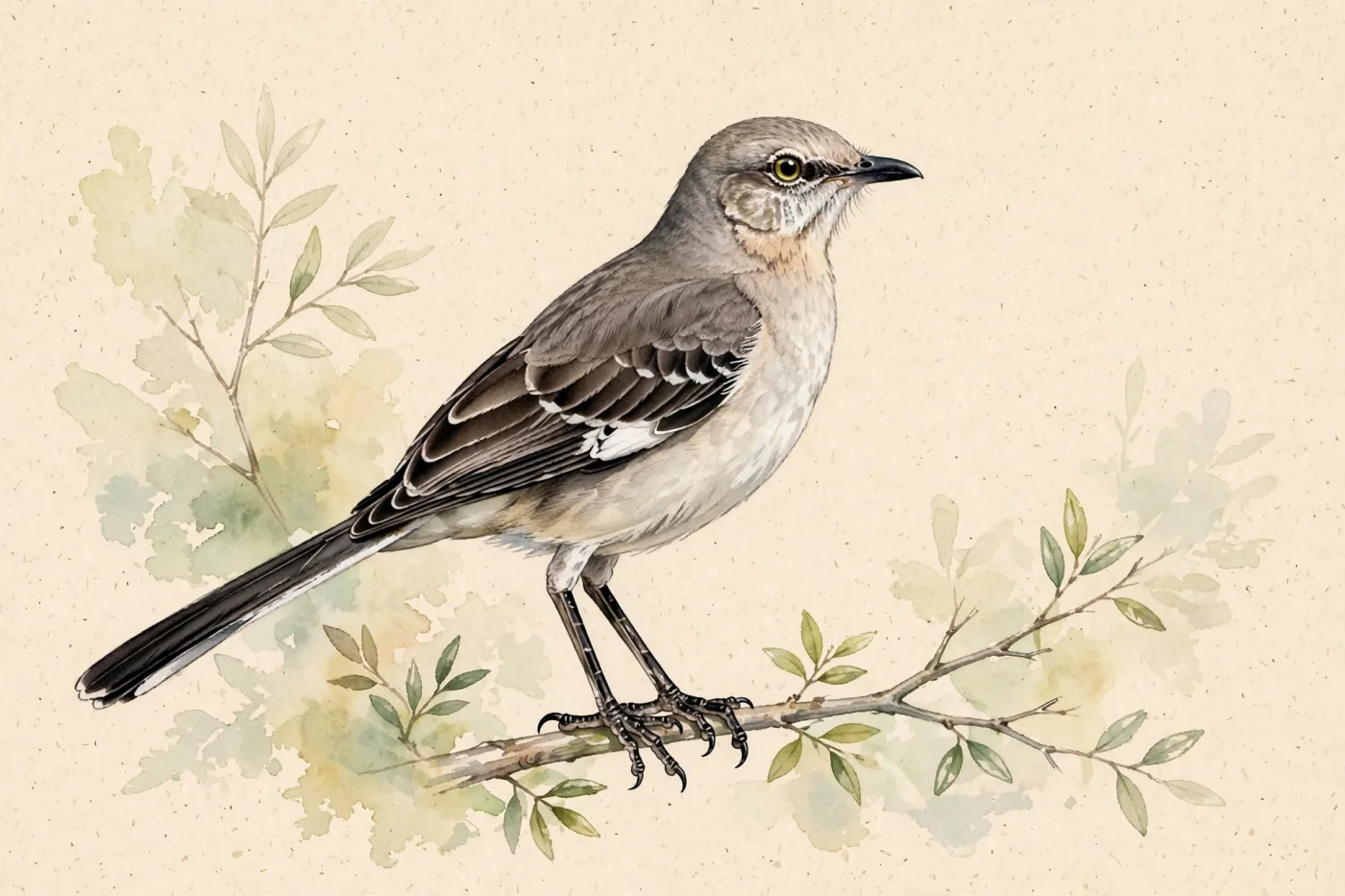
Prepared with AI assistance and linked sources. Illustrations are not field photographs.
Listening to the Forest as a Map
The morning chorus in Puerto Rico is not a single song but many layers that overlap in time and frequency. A sound map is a visual representation of those layers: each species or group of sounds occupies a different band, and by drawing them we can see patterns that the ear only senses. This activity is designed for students, educators, and anyone curious who wants to move from listening to representing.
The proposal is simple: use recordings of local birds such as the Northern Mockingbird, Bananaquit, Puerto Rican Tody, Gray Kingbird, and Eastern Red-legged Thrush, and draw a soundscape with frequency and time layers. No professional equipment is needed; a phone, graph paper, and colored pencils are enough. The goal is not to identify every sound with certainty, but to practice careful observation and learn to communicate what is heard through a visual language.
Learn · Sounds
Three Key Ideas
CapasThe chorus has layersEach species tends to occupy a frequency band and a moment of dawn.
Tiempo y frecuenciaTwo axes for drawingThe horizontal axis represents time; the vertical, frequency or pitch.
GrabacionesWorking materialLocal bird recordings allow you to repeat and compare what you hear.
01
What Is a Sound Map and Why Draw It?
A sound map is a graphic representation of the sounds of a place. In soundscape ecology, researchers often visualize recordings with spectrograms, where the horizontal axis is time and the vertical axis is frequency. Colors or intensity indicate sound energy. For educational purposes, you do not need an exact spectrogram: you can draw bands, dots, wavy lines, or colored blocks that represent what you hear. The important thing is that the drawing forces you to pay attention to two questions: when does it sound? and how high or low is it?
Drawing the morning chorus has clear advantages. First, it turns an ephemeral auditory experience into something you can review and compare. Second, it helps distinguish layers that otherwise blend together: a high, fast sound can go unnoticed if you only listen once. Third, it is an inclusive tool: it does not require identifying the species by name, but describing the sound with your own words and symbols. This makes it useful in classrooms, community workshops, and school projects.
02
The Voices of the Chorus: Five Birds to Listen For
The Northern Mockingbird is known for mimicking sounds of other birds and the environment. Its repertoire can be extensive and variable, so on a sound map its phrases may appear in several frequency bands and repeat with changes. The Bananaquit is a small, active bird common in gardens and wooded areas; its song tends to be high and fast, placing it in the upper part of the map. The Puerto Rican Tody is endemic to Puerto Rico and typically emits dry, repeated calls; its voice tends to be lower with regular pauses.
The Gray Kingbird is a noisy, territorial tyrant flycatcher; its calls are loud and often delivered in bursts. The Eastern Red-legged Thrush is a forest bird with more melodic and unhurried vocalizations that may occupy a middle band. These descriptions are general and do not replace a recording; use them as a starting point to listen and compare. The key is to notice whether the sound is high or low, fast or slow, repeated or variable, and whether it appears alone or accompanied.
03
How to Build Your Sound Map Step by Step
Gather simple materials: graph paper or a sheet with axes drawn, colored pencils, and a device to play recordings. If you will record in the field, use a phone with a recording app; if you use existing recordings, make sure they are of local birds and from reliable sources. Before drawing, listen to the recording once without taking notes. Then listen again and pause at each sound that catches your attention. Ask yourself: is it high or low? Is it long or short? Does it repeat? Does it appear alone or with others?
Draw the axes: horizontal for time (for example, 0 to 30 seconds) and vertical for frequency (low at the bottom, high at the top). Assign a color to each type of sound or species you can distinguish. Do not worry about scientific precision; focus on the relationship between sounds. If two sounds overlap, draw the bands on top of each other. If a sound repeats, draw several marks along the time axis. At the end, compare your map with a classmate's and discuss the differences: did you hear the same things? Which layers were easiest to represent?
04
Checklist for a Sound Mapping Session
Before starting: choose a quiet, safe place, preferably at dawn. Bring graph paper, colored pencils, a charged phone, and headphones if needed. If you will record, test the app and volume. If you use recordings, select 20- to 30-second clips of each species or the full chorus. During the activity: listen without drawing the first time. Then draw the axes and assign colors. Note the time and general conditions (for example, whether it is cloudy or sunny). Do not try to identify every species; describe the sounds in your own words.
After the activity: review your map and write a brief note about what you learned. Which layer was hardest to represent? Which sound surprised you? If you work in a group, share the maps and look for common patterns. If you want to go deeper, repeat the activity at another time of day or in another place and compare the maps. Remember that the goal is to practice observation and representation, not to obtain a perfect recording.
Linked profiles
Birds of the Morning Chorus
Five local species whose voices may appear on your sound map.




01
Do I need professional equipment to make a sound map?
No. A phone with a recorder, graph paper, and colored pencils are enough. The important thing is to listen carefully and represent what you hear.
02
Can I use recordings from the internet?
Yes, as long as they are from reliable sources and of local birds. Cite the source when you share your map.
03
What axes should I use on the map?
Horizontal for time and vertical for frequency or pitch. You can use seconds and a simple scale from low to high.
04
Is it useful for school projects?
Yes. It is an inclusive activity that combines observation, art, and citizen science. It can be adapted to different ages and settings.
05
What if I don't recognize any bird?
You don't need to recognize them. Describe the sounds in your own words: high, low, fast, slow, repeated. The map is an observation tool, not a test.
Keep exploring
Connected routes
Sources and review
The evidence is one link away.
These sources support the editorial scope of this guide. Bird profiles also retain their own taxonomy, occurrence, and conservation references.
Reviewed:
01↗02↗
Cornell Lab of Ornithology / BirdsCaribbean
Puerto Rican Tody (Todus mexicanus) — Birds of the World species account
Evidence for cited sections; consult the original document.Cornell Lab of Ornithology
Sounds and Vocal Behavior — Eastern Red-legged Thrush (Turdus ardosiaceus)
Evidence for cited sections; consult the original document.The atlas continues