 AI
AIBird guides · Habitats
How Urban Noise Affects Bird Communication
Traffic noise does more than drown out sound: it can change what birds sing, at what frequency and with how much variety. Here we explain the mechanism and how to listen for it.
Reviewed: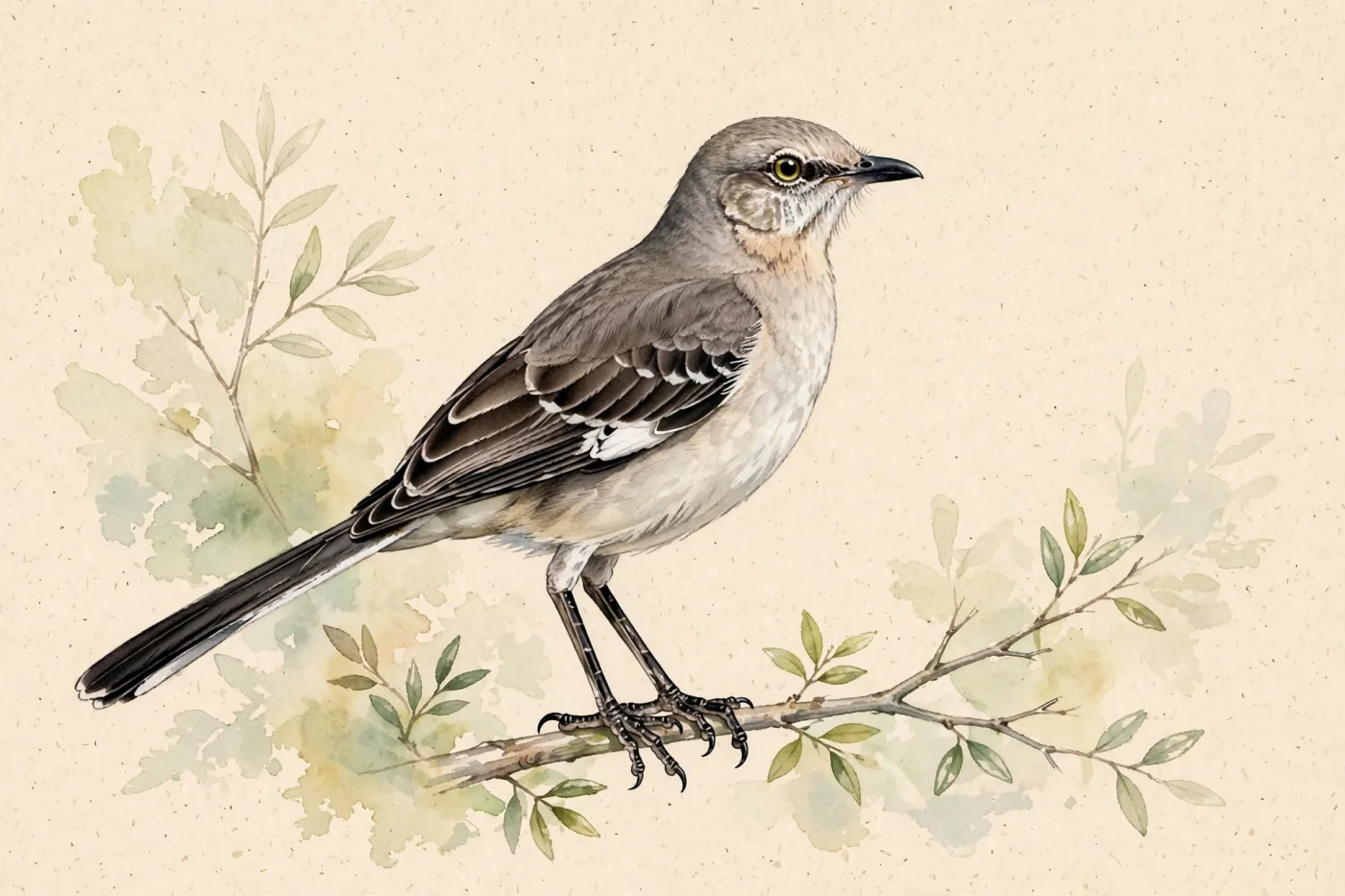
Prepared with AI assistance and linked sources. Illustrations are not field photographs.
The direct answer
Urban noise affects bird communication mainly through acoustic masking: when noise occupies the same frequencies as a bird's signal, the signal becomes harder to detect and recognize. Because anthropogenic noise is concentrated at low frequencies, the problem is greatest for the low-pitched parts of a song.
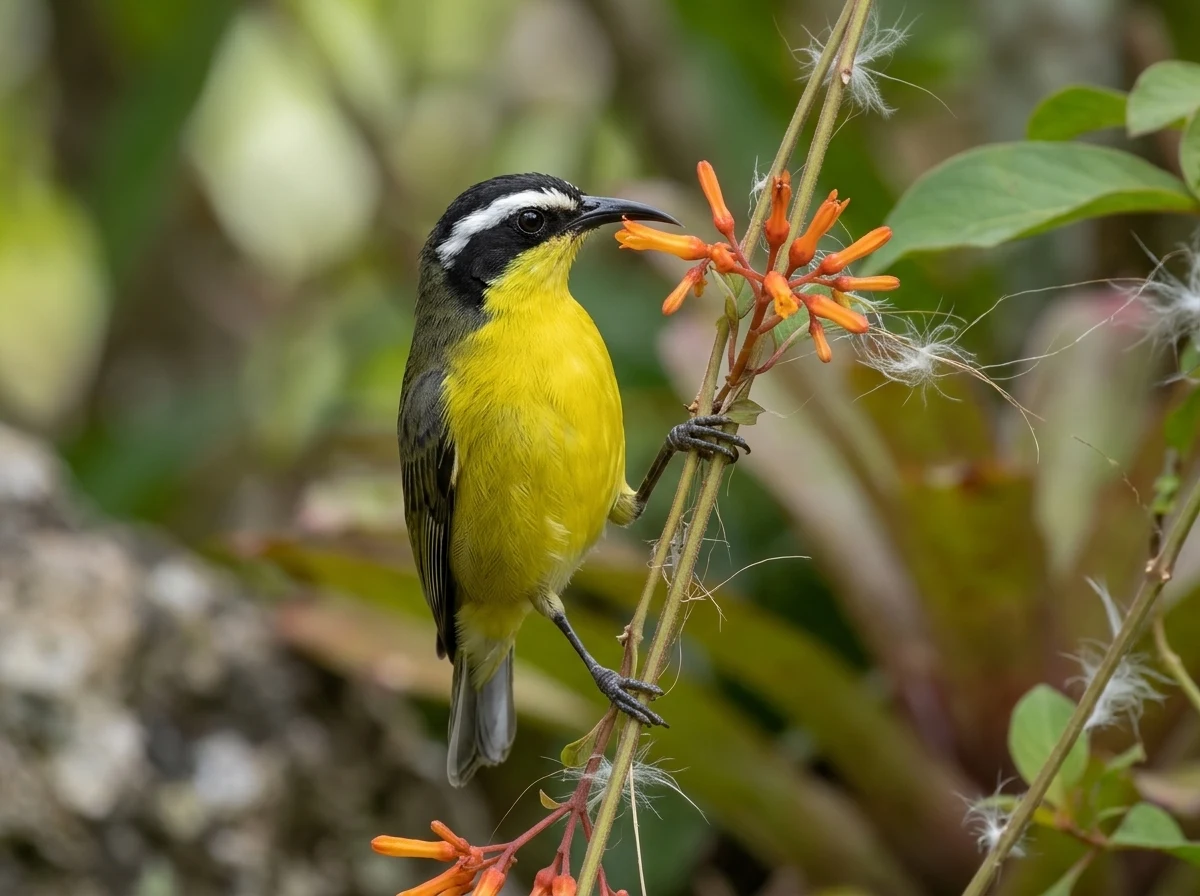
Birds can respond in several ways: sing louder, shift frequency, change duration or change when they sing. But those adjustments have a cost. Evidence from the Bananaquit (Coereba flaveola) shows that in noisier territories it sings higher and with a narrower bandwidth. In a separate analysis, those spectral features were associated with fewer syllable types. In other words, the bird may gain audibility, but the song becomes less elaborate.
Bird guides · Habitats
Three key takeaways
EnmascaramientoThe core mechanismLow-frequency noise masks low song frequencies and reduces detection.
Audibilidad vs. calidadThe trade-offSinging higher may help be heard, but is associated with less elaborate songs.
Densidad no explica todoA factor to rule outIn the Bananaquit study, territory density did not explain the spectral changes.
01
What acoustic masking is
Masking occurs when one sound interferes with the ability to detect or recognize another. With urban noise, the problem is not only volume: it is overlap in frequency and time. Traffic, engines and construction noise carry a lot of energy at low frequencies, exactly where many birds place part of their song. So even if a bird sings loudly, its message may arrive distorted or not at all.
The practical consequence is that noise can affect essential functions: territory defense, mate attraction and coordination with neighbors. Experimental evidence cited in the reviewed literature includes cases where females of other species respond less to low-frequency songs under elevated noise, and cases where noise interferes with alarm calls and with feeding behavior of nestlings. Noise does not have to be deafening: it only has to cover the useful frequencies of the signal.
02
How birds adjust their song
Birds have several documented strategies. One is the Lombard effect: increasing vocalization amplitude when background noise rises. Another is shifting frequency, usually upward, to move away from the noisy band. They can also change duration, syllable rate or the time of day they sing. Urban birds have been reported to sing higher or more intensely than individuals of the same species in quieter areas.
The Bananaquit study in Salvador, Brazil, found a clear pattern: in noisier territories, songs had higher minimum and maximum frequencies and a narrower bandwidth. Peak frequency and song duration did not change significantly. The authors also assessed territory density as a possible confounding factor and found no relationship between that density and the spectral or temporal variables that were related to noise.
03
The cost: audibility versus signal quality
Raising frequency can make a song easier to hear over low noise, but it is not free. In the Bananaquit, the number of syllable types was not significantly related to noise level. However, in a separate analysis of song elaboration, songs with higher minimum frequencies, narrower bandwidths and shorter durations tended to have fewer syllable types and higher syllable rates. The authors interpret this as a possible acoustic restriction: the bird may gain audibility, but the song becomes less elaborate, and that can weaken the message about sender quality.
This matters because song elaboration can carry relevant information in sexual selection and territory defense. If noise pushes birds toward simpler songs, it does not just change the soundscape: it can change the conditions for communication and, over time, the acoustic diversity of urban communities. It is an example of an environmental factor altering behavior without the bird consciously deciding to do so.
04
Two birds to listen for in Puerto Rico
The Bananaquit (Coereba flaveola) is resident and breeding in Puerto Rico, and it inhabits nearly all wooded and human-modified habitats, including gardens. It is a persistent singer, with songs of high-pitched syllables and large repertoires. That combination makes it a good subject for noticing changes in frequency and variety in noisy environments, although the experimental data cited come from populations in Brazil, not from the island.
The Northern Mockingbird (Mimus polyglottos) appears in the Puerto Rico bird catalog, and it is associated with open areas, forest edges and urbanized zones. It is known for mimicking other birds' songs and artificial sounds, which makes it an interesting case: if urban noise changes what it mimics or how it presents it, it could be a local indicator of vocal plasticity. However, we have no local studies quantifying that effect, so any observation should be presented as a personal observation, not as a scientific result.
05
A comparative listening exercise
You can explore the effect of noise without special equipment. Choose two nearby spots: one with traffic or constant noise and one quieter, such as an interior courtyard or a park. Visit each spot at the same time of day, preferably early, and stay silent for five minutes. Note which species sing, whether the song sounds high or low, whether it is repetitive or varied, and whether background noise covers any part of the song. You do not need to identify every syllable: comparing the general impression is enough.
Repeat the exercise over several days and at different times. The goal is not to prove a hypothesis, but to train your ear to notice how the environment changes what you perceive. If you record with a phone, keep the same volume and roughly the same distance so the comparison is fair. Remember that you are listening to a moment, not measuring a population: differences you notice may be due to noise, species, season or chance.
Linked profiles
Birds in this guide
Two species present in Puerto Rico that help illustrate the effect of urban noise on communication.
AI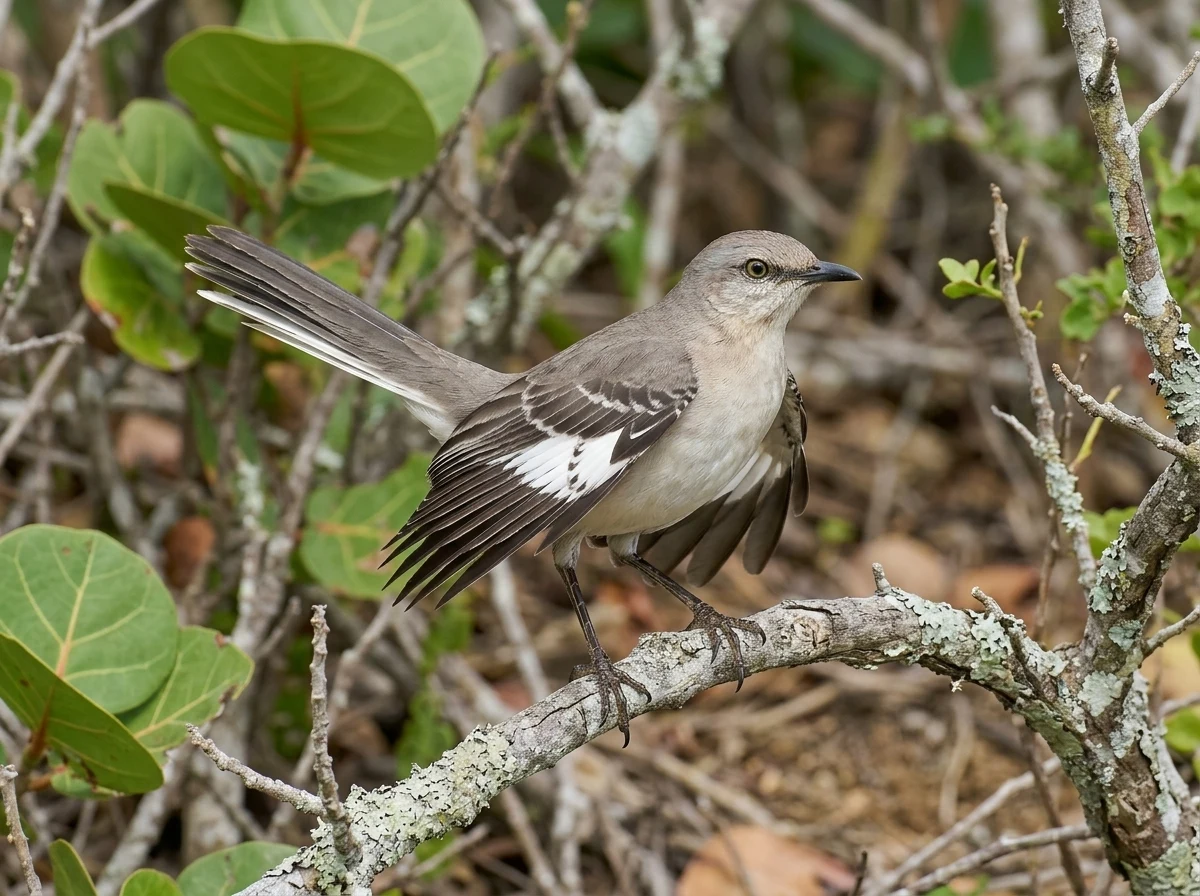 AI
AI01
Does urban noise make birds sing higher?
Several urban species have been reported to shift toward higher frequencies, and in the Bananaquit, songs in noisy territories had higher minimum and maximum frequencies. However, not all species respond the same way, and the change can depend on species, population and type of noise.
02
Does singing higher always help?
Not necessarily. Raising frequency can reduce masking by low noise, but it can also narrow bandwidth. In the Bananaquit, songs with higher minimum frequencies and narrower bandwidths tended to have fewer syllable types in an analysis of song elaboration, suggesting a possible trade-off between audibility and signal quality.
03
Does bird density explain song changes?
In the Bananaquit study, territory density was not related to the spectral or temporal variables that did change with noise. That does not mean density never matters, but in that case it was not the factor explaining the observed changes.
04
Can I notice this effect in my yard?
You can try the comparative listening exercise: two spots, same time, five minutes, same recording distance. It is not a controlled experiment, but it helps train your ear. Any difference you notice is a personal observation, not proof that noise caused the change.
Keep exploring
Connected routes
Sources and review
The evidence is one link away.
These sources support the editorial scope of this guide. Bird profiles also retain their own taxonomy, occurrence, and conservation references.
Reviewed:
01↗02↗03↗
Frontiers in Ecology and Evolution
Urban Noise Restricts Song Frequency Bandwidth and Syllable Diversity in Bananaquits: Increasing Audibility at the Expense of Signal Quality
Evidence for cited sections; consult the original document.Proceedings of the Royal Society B (PMC)
Bird song and anthropogenic noise: vocal constraints and the Lombard effect
Evidence for cited sections; consult the original document.Cornell Lab of Ornithology, Birds of the World
Bananaquit (Coereba flaveola) — Birds of the World
Evidence for cited sections; consult the original document.The atlas continues