 AI
AIEndangered raptors
Puerto Rico's endangered forest hawks
Two subspecies found only in Puerto Rico, endangered since 1994, hit hard by Hurricane María and pressured by Philornis flies and Red-tailed Hawks.
Reviewed:Two mature-forest raptors, with very low numbers.
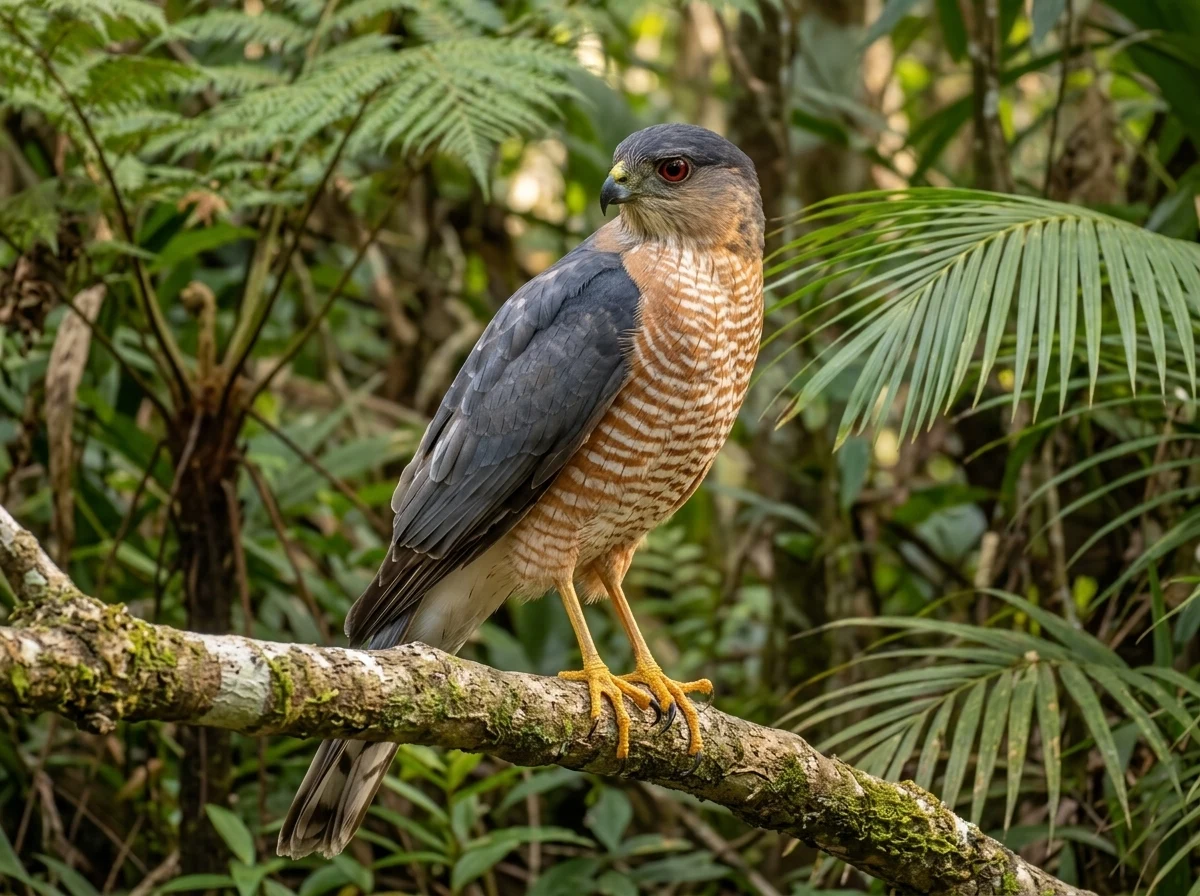
The Puerto Rican Broad-winged Hawk (Buteo platypterus brunnescens, guaraguao de bosque) and the Puerto Rican Sharp-shinned Hawk (Accipiter striatus venator, falcón de sierra) are subspecies found only in Puerto Rico, federally endangered since 1994 and critically endangered under DRNA regulation. The latest counts are around 40 birds of each: 43 Broad-winged Hawks in 2022 and 41 Sharp-shinned Hawks in 2023.
Both depend on closed-canopy montane or karst forest, and both were hit by Hurricane María in 2017. This guide summarizes where they live, how their numbers have changed according to the 2023 and 2024 federal reviews, what threatens them, and how to separate them from the Red-tailed Hawk, the common raptor they share the forest with.
Endangered raptors
Two populations in numbers
43Broad-winged Hawks (2022)Detected across 137 survey points; about a third of the 123 in 2016–2017.
19Sharp-shinned Hawks after MaríaThe post-hurricane low; about 150 were estimated in 1992.
41Sharp-shinned Hawks (2023)Season still under way in June 2023, per the federal review.
1994federally listedBoth subspecies listed as endangered on October 11, 1994.
01
Two subspecies found only here
The Puerto Rico Breeding Bird Atlas describes the Broad-winged Hawk as a rare, endemic, non-migratory subspecies, and the Sharp-shinned Hawk as an endangered breeding resident subspecies tied to montane forest and shade coffee. Both were added to the federal endangered list on October 11, 1994, and DRNA Regulation 6766 lists them as critically endangered.
They share a 1997 recovery plan, amended in 2019. To be delisted, each must occupy at least 75% of its suitable habitat, have three stable or growing populations in protected areas, and have corridors between them; according to the latest reviews, no criterion has been fully met. Genetic evidence proposes raising the Sharp-shinned Hawk to a full species, Accipiter venator, though the federal Service has not yet adopted it.
02
Sharp-shinned Hawk: from a low of 19 to about 40 birds
In 1992 about 150 Sharp-shinned Hawks were estimated on the island. After Hurricane María the population fell to a low of 19 individuals. The Peregrine Fund has run annual surveys since 2015: from 2018 to 2022 they documented 22 to 37 adults a year, with 8 to 11 territorial pairs, and by June 2023, with the season still under way, they had recorded 41 individuals.
Today the strongholds are Toro Negro, Guilarte together with Casa Pueblo's Bosque La Olimpia, and Maricao. Carite had no detections from 2018 to 2022, and El Yunque only one in 2022. The subspecies lives in mature, dense-canopied montane forest, and most post-María locations were above 650 meters elevation. A fledgling can travel up to 28 kilometers from its nest, so populations may be less isolated than once thought.
03
Broad-winged Hawk: the northern karst as refuge
The Broad-winged Hawk population was estimated at 124 birds in 1997 and in 2010, and at 123 in 2016–2017. After María, a rapid survey of Río Abajo and its surroundings counted 19 to 34, plus 13 seen on other visits. In 2022, The Peregrine Fund covered 137 survey points and detected 43 birds in total, about a third of the pre-hurricane figure.
When listed, it was known from Río Abajo, Carite, and El Yunque. Today its core is the northern karst: in 2022, surveyors counted 20 birds in the Arecibo sector, 8 in Utuado, and 9 in Río Abajo State Forest, plus 4 in El Yunque and 1 in Guilarte; Carite, Maricao, and Toro Negro had no detections. Most suitable habitat lies on private land around Río Abajo, which makes conservation on private property essential.
04
What threatens them
Loss and fragmentation of mature forest, from agriculture, roads, power lines, and development, is the underlying threat. Hurricanes make it worse: María caused vegetation losses of 31% to 51% in its impact zone and hit the karst and Cordillera Central hard. Climate projections point to more intense hurricanes and less rain in the central mountains.
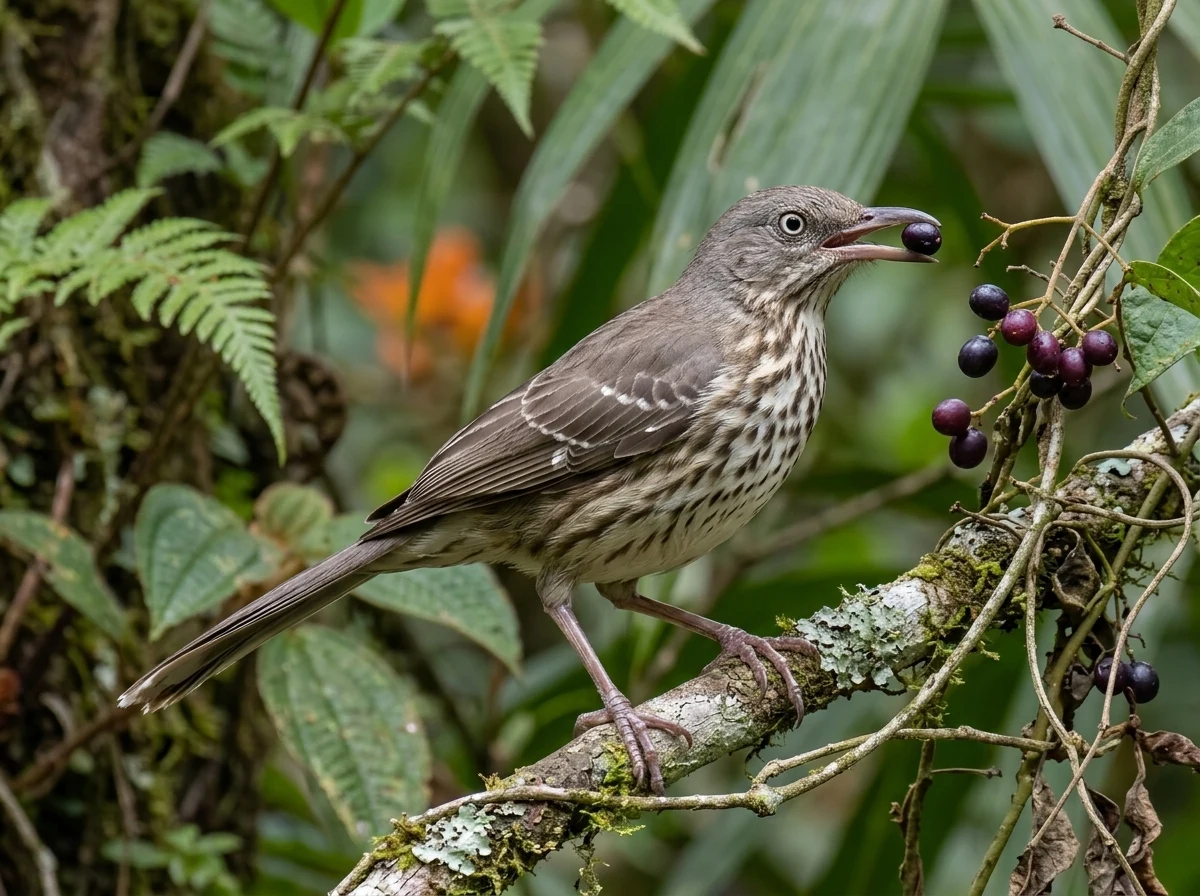
At the nest, Philornis fly larvae once caused up to 69% of Sharp-shinned Hawk nest failures at the fledgling stage in Maricao; Pearly-eyed Thrashers take eggs and rats take nestlings. Red-tailed Hawks prey on Sharp-shinned fledglings and nesting females and compete with Broad-winged Hawks: in a 2021 pilot study at Río Abajo, Red-tailed Hawks rose 82% while Broad-winged Hawks fell 82%.
05
How to recognize them
The Sharp-shinned Hawk is small, 25 to 36 centimeters long, with a small head, short rounded wings, and a long square-tipped tail. It flies with quick flaps and glides and slips between trees chasing small birds. Adults are blue-gray above and reddish below; females are noticeably larger than males.
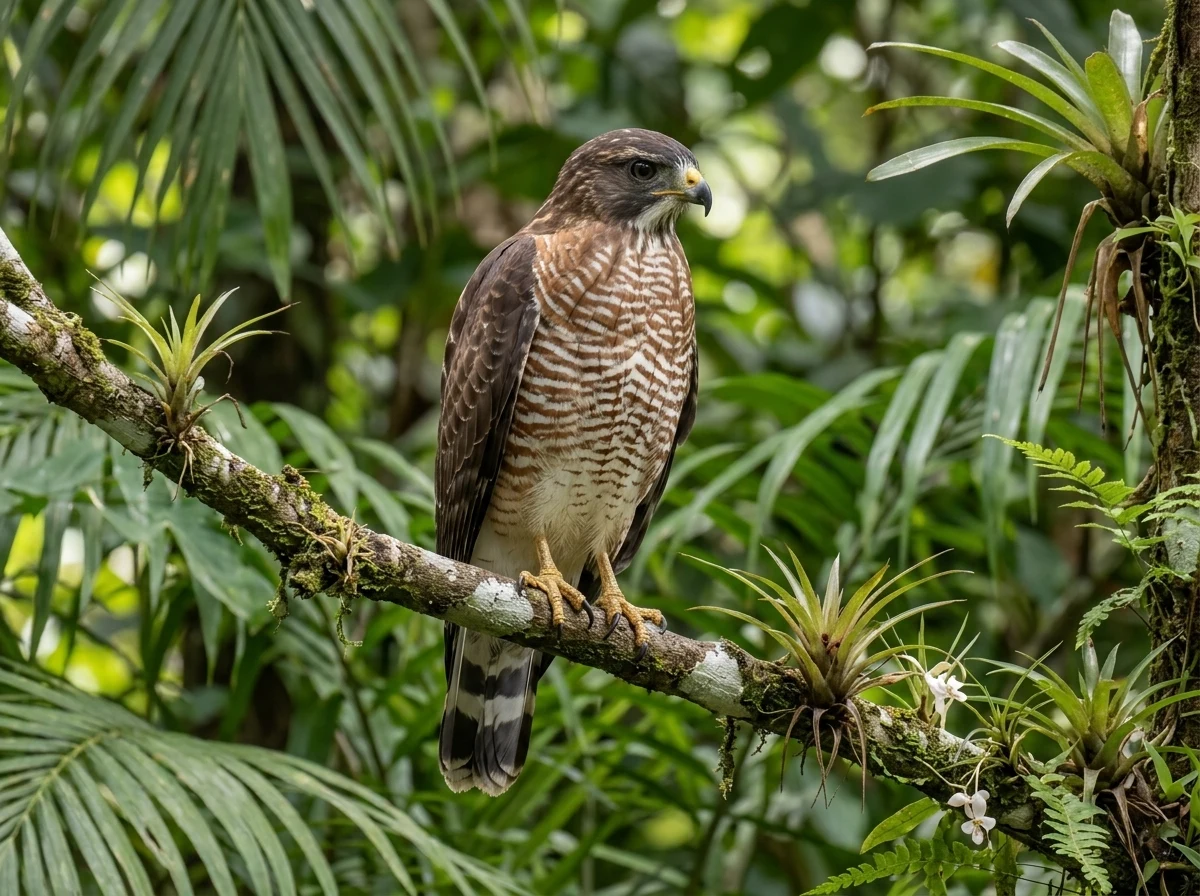
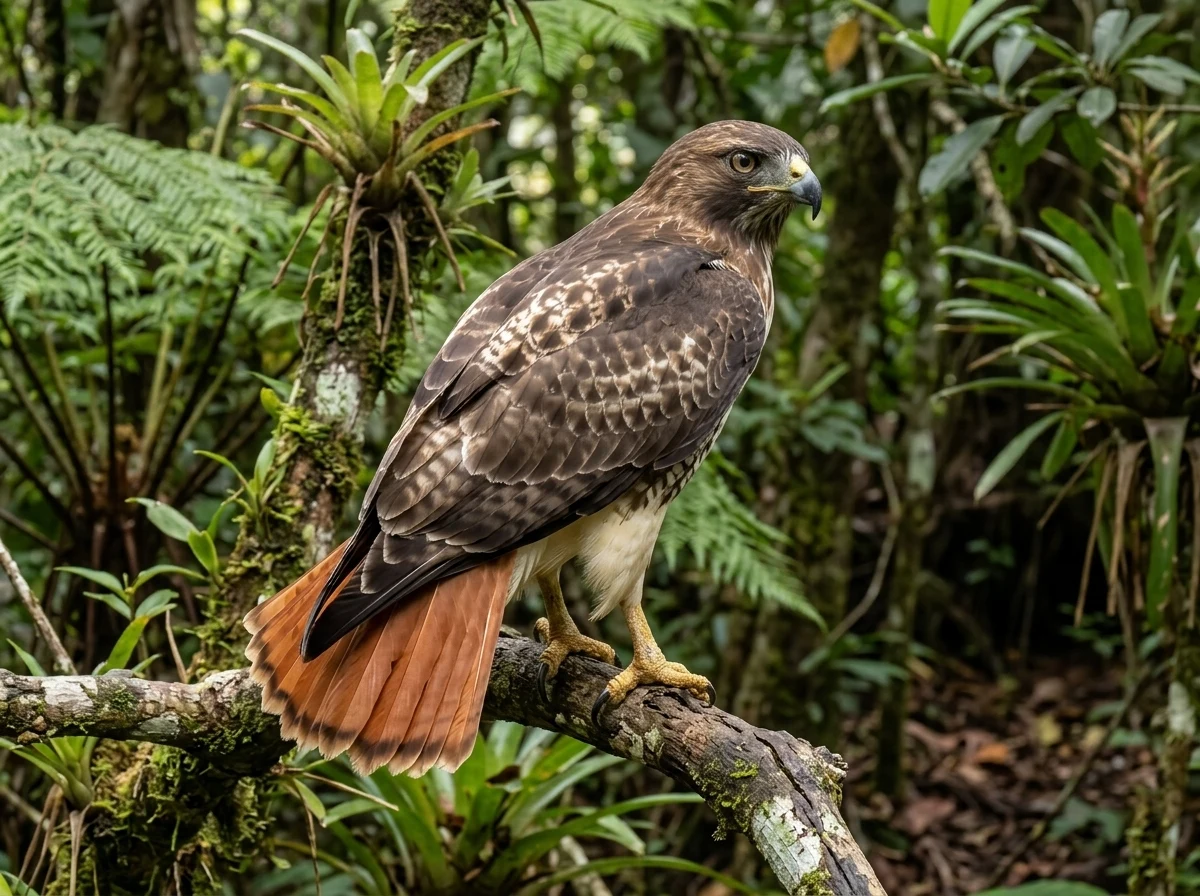
The Broad-winged Hawk is about crow-sized, with a dark back, reddish chest, and broad tail bands; from below the wing looks pale with dark tips, and its voice is a thin whistle. The Red-tailed Hawk is much larger, with a rufous tail in adults, and is the one you see along highways and open country. The sound archive includes a Broad-winged Hawk recording made at Tanamá, Arecibo, in January 2023.
06
Nesting, management, and responsible birding
The Sharp-shinned Hawk builds a twig platform high in a tree or palm; the atlas found activity from November to June and in August, peaking in March. The Broad-winged Hawk builds a large stick nest; the literature gives January to July, and the atlas recorded a peak in April. Since 2018, The Peregrine Fund has removed clutches to hatch and release, prompting pairs to lay a second clutch, and treats nests against Philornis before hatching.
For birders: do not look for nests, do not play recordings to attract them, and do not publish territory coordinates. If you see one of these raptors, report it on eBird or to DRNA with a photo and a description of tail, wings, and behavior. Protecting mature forest, public and private, is the measure that helps both most.
Linked profiles
The two endangered hawks and their pressures
The Broad-winged and Sharp-shinned Hawks, alongside the Red-tailed Hawk and Pearly-eyed Thrasher, two species that affect their breeding success.
Sound archive
Hear its voice
Explore real songs and calls. The spectrogram turns each sound into a visual trace of time and frequency.
XC782169Recording 1 of 3field recording

Play: field recording by ABirder
Choose another recording
Sound recorded by ABirder · XC782169 · CC BY-NC-SA 4.0. Visualization by Stichting Xeno-canto voor Natuurgeluiden.
Every recording retains the creator, catalogue number, and license published by Xeno-canto. Metadata via GBIF ↗
01
Is the Puerto Rican Sharp-shinned Hawk endangered?
Yes. The Puerto Rican Sharp-shinned Hawk has been federally endangered since 1994 and is critically endangered under DRNA Regulation 6766. It fell to 19 individuals after Hurricane María, and 41 were counted in 2023.
02
How many Puerto Rican Broad-winged Hawks are left?
The most recent survey cited by the U.S. Fish and Wildlife Service detected 43 Broad-winged Hawks in 2022, about a third of the 123 estimated in 2016–2017. Most live in the northern karst around Río Abajo, Arecibo, and Utuado.
03
Where does the Puerto Rican Broad-winged Hawk live?
In closed-canopy forest, mainly in the northern karst: Río Abajo State Forest and nearby private lands in Arecibo and Utuado. In 2022 there were also detections in El Yunque and one in Guilarte.
04
How is the Broad-winged Hawk different from the Red-tailed Hawk?
The Broad-winged Hawk is much smaller, about crow-sized, with broad dark and pale tail bands, and tied to mature forest. The Red-tailed Hawk is larger, has a rufous tail as an adult, and is common along highways, towns, and open country.
05
What is the Philornis fly and why does it affect these hawks?
It is a fly whose larvae parasitize nestlings. At Maricao it once caused up to 69% of Sharp-shinned Hawk nest failures at the fledgling stage, and it has also been documented on a Broad-winged Hawk fledgling.
06
Why did Hurricane María hit these hawks so hard?
Because they depend on mature closed-canopy forest, and María caused vegetation losses of 31% to 51% in its impact zone, especially in the karst and Cordillera Central. The more generalist Red-tailed Hawk also appears to have benefited from the opened forest.
Keep exploring
Connected routes
Sources and review
The evidence is one link away.
These sources support the editorial scope of this guide. Bird profiles also retain their own taxonomy, occurrence, and conservation references.
Reviewed:
01↗02↗03↗04↗05↗06↗07↗08↗09↗10↗11↗
U.S. Fish and Wildlife Service
Puerto Rican Sharp-shinned Hawk 5-year status review (2023)
Counts from 1992 to 2023, occupied forests, Hurricane María effects, Philornis flies, predators, and nest management.U.S. Fish and Wildlife Service
Puerto Rican Broad-winged Hawk 5-year status review (2024)
Estimates from 1997 to 2022, the northern karst and Río Abajo core, the Red-tailed Hawk increase, and recovery criteria.U.S. Fish and Wildlife Service
Puerto Rican Broad-winged Hawk and Sharp-shinned Hawk Recovery Plan
The 1997 federal plan guiding recovery of both subspecies.U.S. Forest Service Research and Development
Puerto Rico Breeding Bird Atlas
Distribution and breeding timing for 130 species breeding in Puerto Rico and its satellite islands.National Audubon Society
Sharp-shinned Hawk field guide
Size, square-tipped tail, small head, flap-and-glide flight, small-bird diet, and size difference between sexes.National Audubon Society
Broad-winged Hawk field guide
Crow size, reddish chest, broad tail bands, pale underwing with dark tips, and a thin whistle.Departamento de Recursos Naturales y Ambientales
Maricao State Forest
Geology, climate, and endemic birds of the western mountain forest.Departamento de Recursos Naturales y Ambientales
Río Abajo State Forest management plan
Official basis for the limestone forest, its resources, management zones, and conservation.U.S. Forest Service Research and Development
Effects of Irma and Maria on birds
Counts before and after the hurricanes in the northeast.National Audubon Society
Red-tailed Hawk field guide
Female and male measurements, adult rufous tail, belly band, hunting technique, nest, and incubation.Xeno-canto Foundation / GBIF
Xeno-canto recordings published through GBIF
Metadata, authorship, licenses, and catalogue records for field recordings used by the atlas.The atlas continues