 AI
AIIdentify by color
Blue birds
Vivid blue is uncommon in Puerto Rico. It is usually a winter migrant, a wetland heron, or an accent on a green bird.
Reviewed:A blue bird in Puerto Rico usually comes from far away or lives by water.
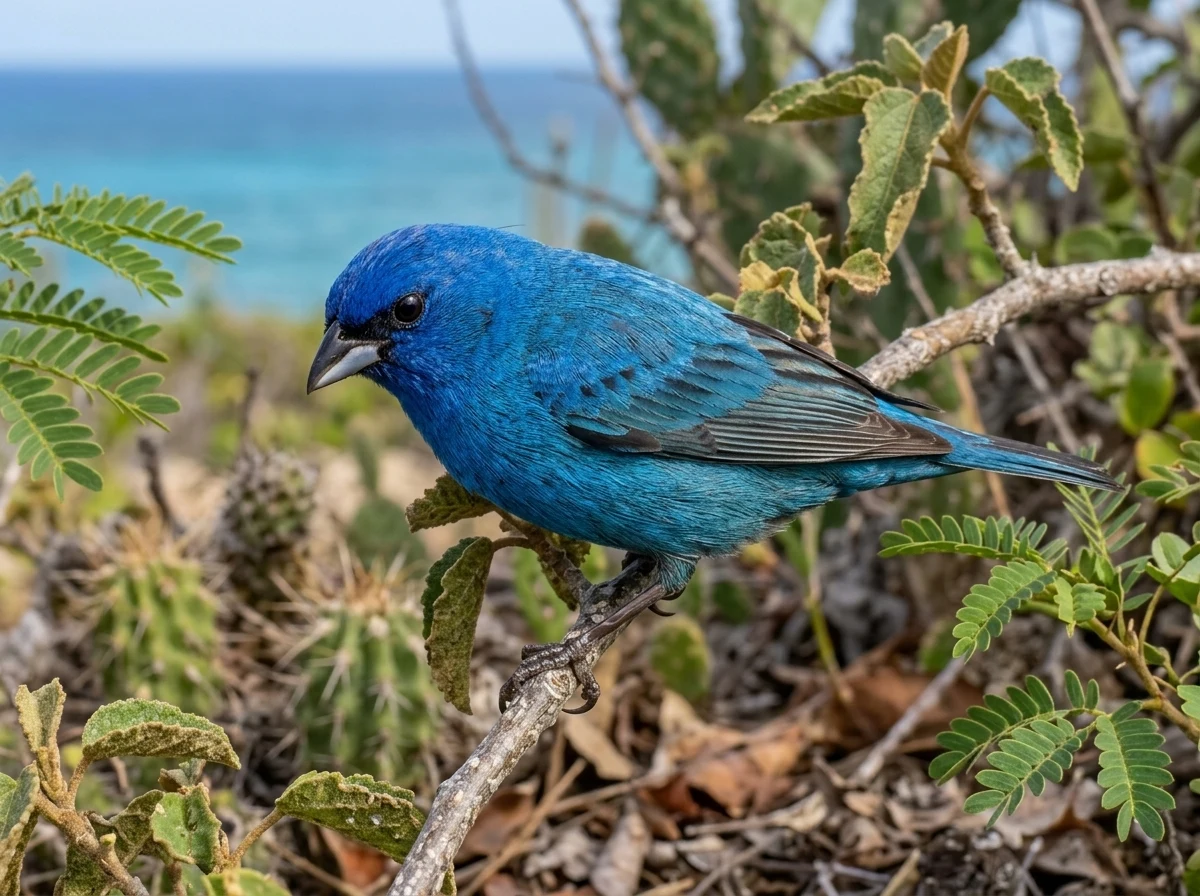
Puerto Rico's “gorrión azul” is the Indigo Bunting (Passerina cyanea), a small North American migrant that arrives in winter and that this atlas lists as accidental. Breeding males are deep blue, but in winter many males and all females look brown. The blue bird seen most often year-round is a different one: the Little Blue Heron of wetlands and coasts.
This guide sorts blue birds into three groups: seed-eaters and migrant warblers, resident waterbirds, and green birds with blue accents. In each case, bill, wing bars, habitat, and date solve more than the exact shade, which shifts with light and camera settings.
Identify by color
Numbers that help
11.5–13 cmIndigo BuntingA small seed-eater, smaller than Blue Grosbeak.
2blue heronsLittle Blue Heron (about 350 g) and Great Blue Heron (about 2.5 kg).
4key cluesBill, wing bars, habitat, and season.
01
Indigo Bunting: blue in spring, brown in winter
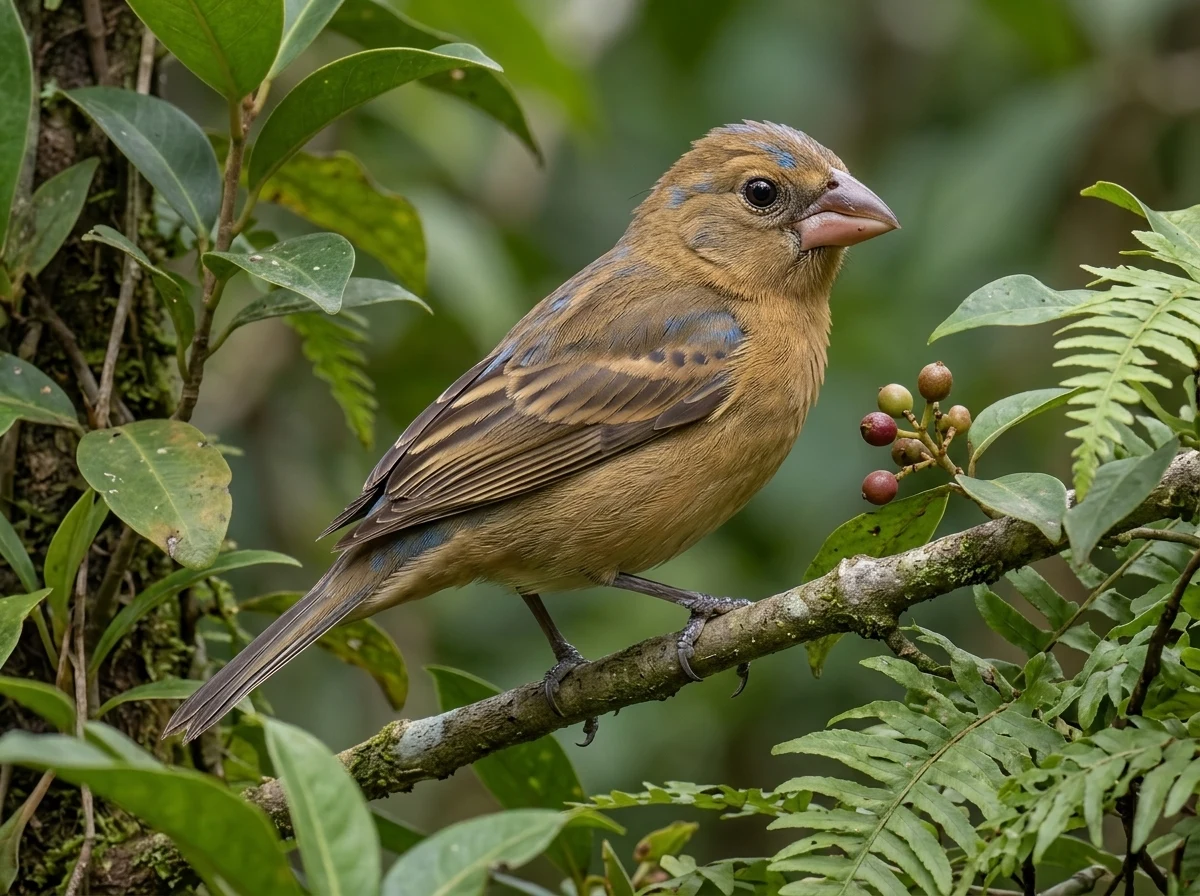
Indigo Bunting measures 11.5 to 13 centimeters and has the conical bill of a seed-eater. Older males are bright blue with a slightly more purplish head; females are brown, often with a touch of blue on the shoulders, rump, and tail. Outside the breeding season males turn brown too, so a January bird may not look blue at all.
It breeds in North America, often migrates at night, and winters mainly in Mexico, Central America, and the Caribbean. On its wintering grounds it favors shrubby areas, farm edges, and weedy fields. It does not breed in Puerto Rico, and the catalog lists it as accidental, so every dated, photographed record helps clarify its real status.
02
Indigo Bunting or Blue Grosbeak
Blue Grosbeak is the main lookalike. Its male is also dark blue but has a much thicker bill and two wide buff or cinnamon wing bars. Indigo Bunting is slimmer, with a smaller bill and no obvious wing bars. Blue Grosbeak measures 15 to 19 centimeters, so it looks clearly bigger beside other small birds.
Females differ too: female Indigo Buntings show fine streaks or mottling on the chest that female Blue Grosbeaks lack. Both species are listed as accidental in Puerto Rico, so a photo should show the bill and wing. If the bill was thin and pointed, rule both out and think warbler instead.
03
Black-throated Blue Warbler: the forest's most reliable migrant blue
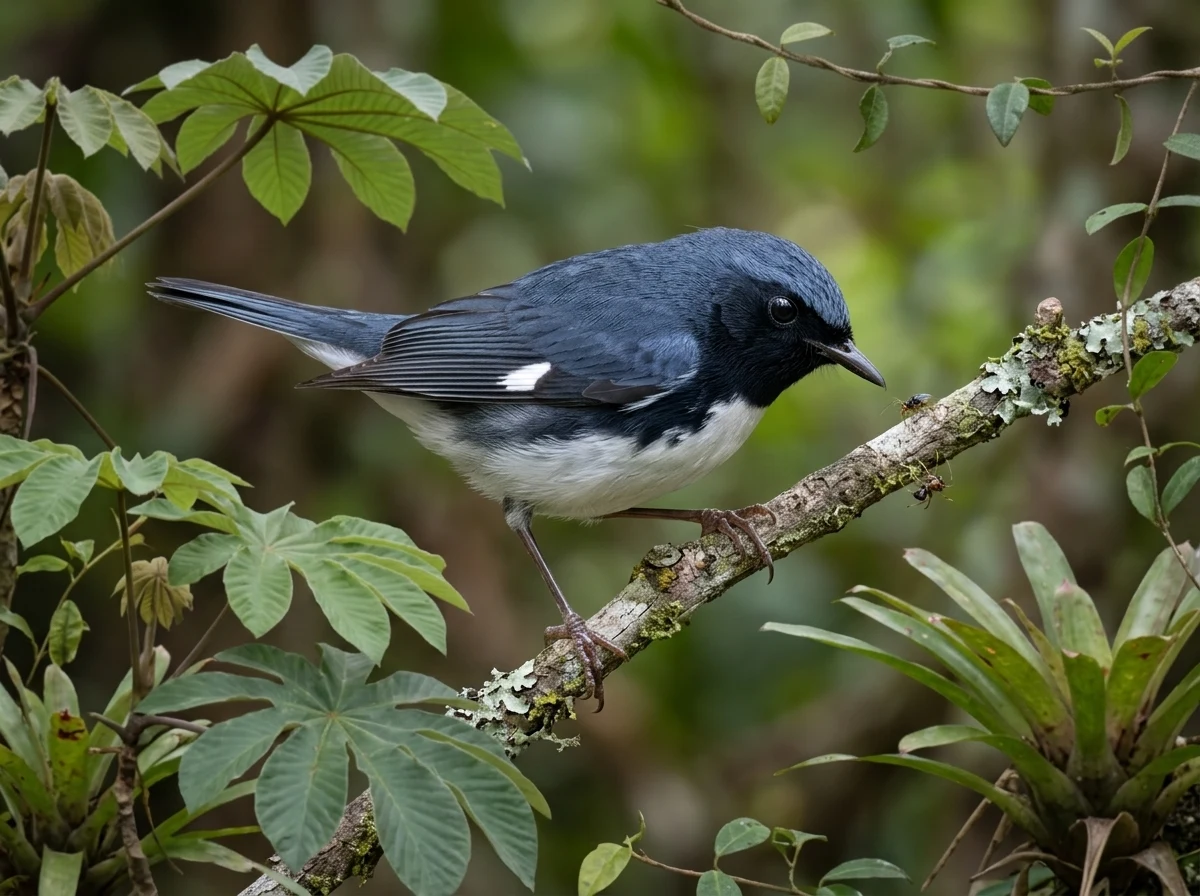
Black-throated Blue Warbler, the Reinita Azul, is a thin-billed warbler. The male is dark blue above with a black face and throat, a white belly, and a white wing spot. The female is plain and dark above, buff below, and keeps that same white wing spot, the most useful field mark for both sexes.
It winters in the Caribbean, traveling mostly via Florida. Unlike Indigo Bunting, the catalog treats it as a regular migrant rather than an accidental. Look for it in forest and wooded areas between fall and spring, moving through mid-level foliage with other warblers.
04
Little Blue Heron, Great Blue Heron, and Purple Gallinule
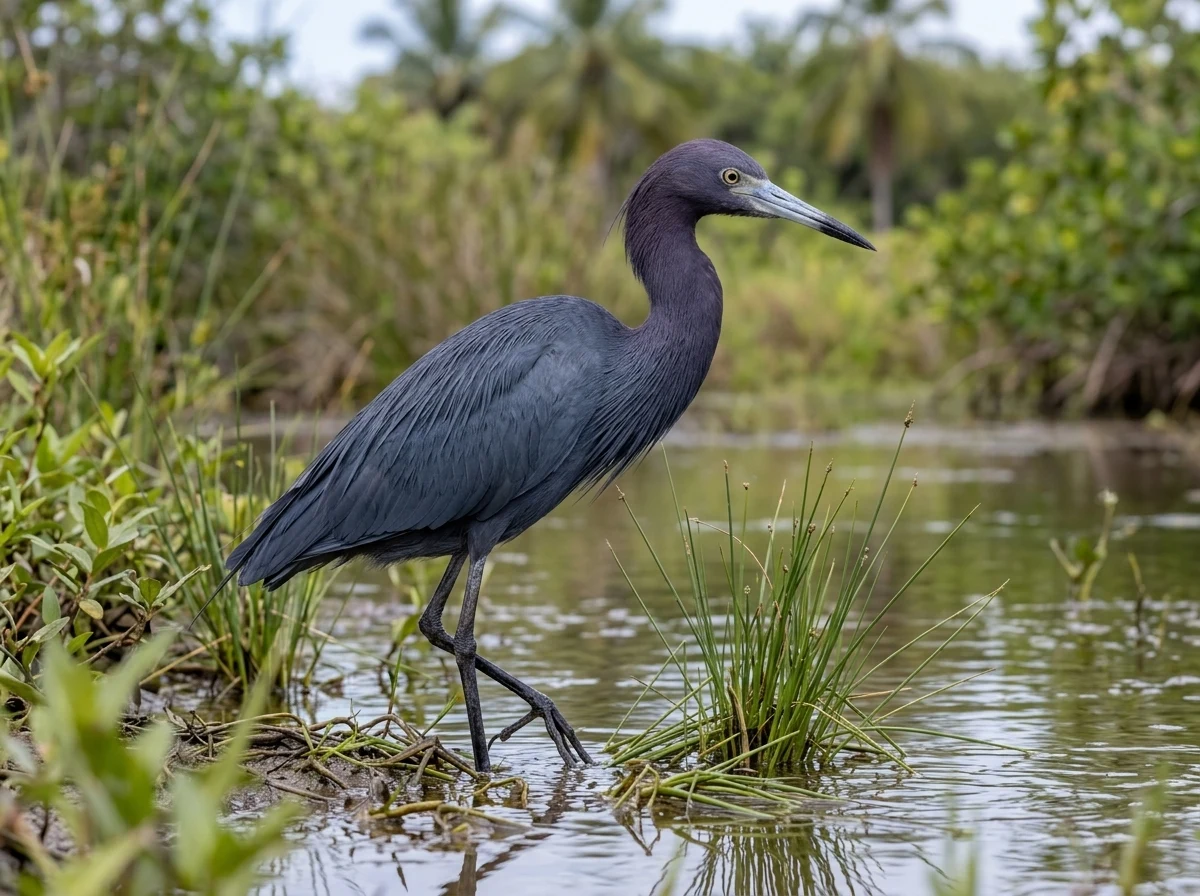
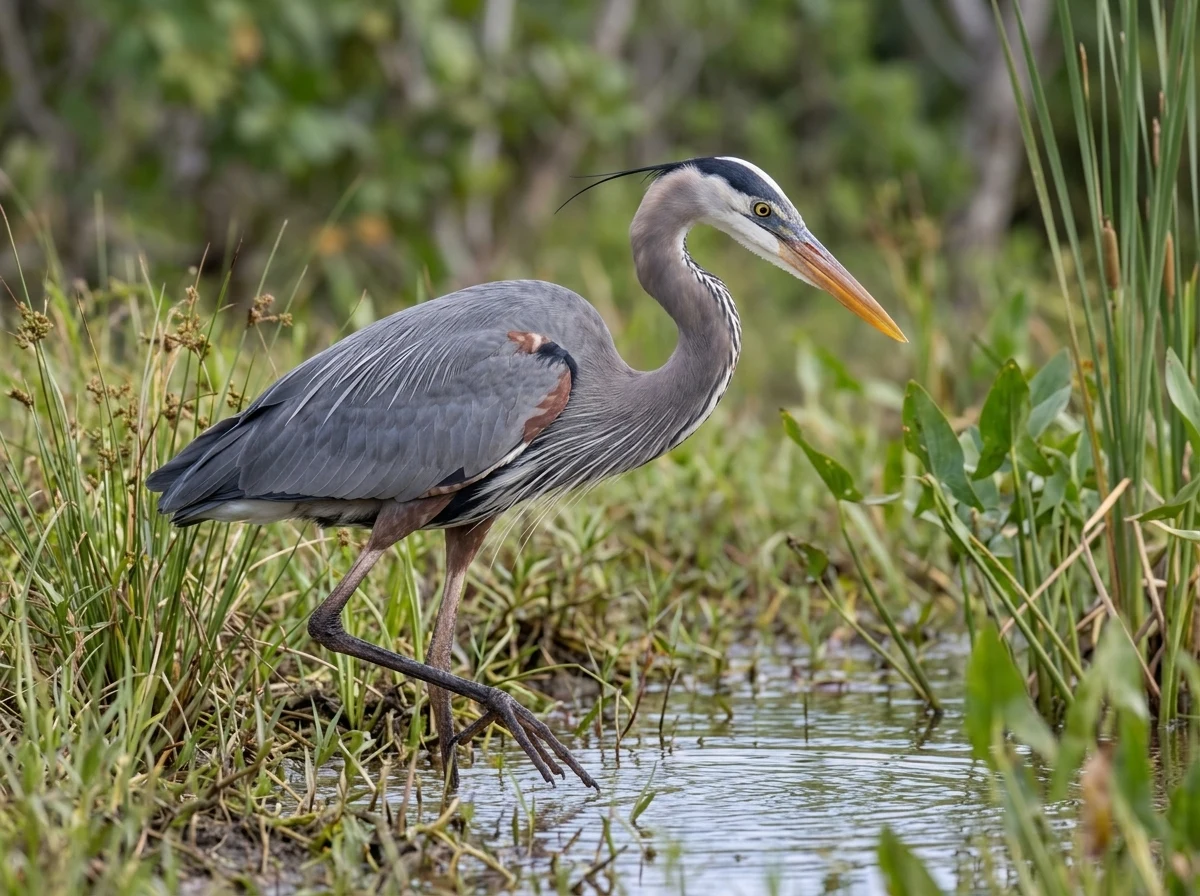
Adult Little Blue Heron is solid dark blue-gray with violet tones on the head and neck and a blue bill with a black tip. Juveniles are entirely white and pass through a patchy blue-and-white calico phase. Great Blue Heron also looks blue-gray, but it weighs about 2.5 kilograms versus roughly 350 grams for Little Blue—an obvious difference in the field.
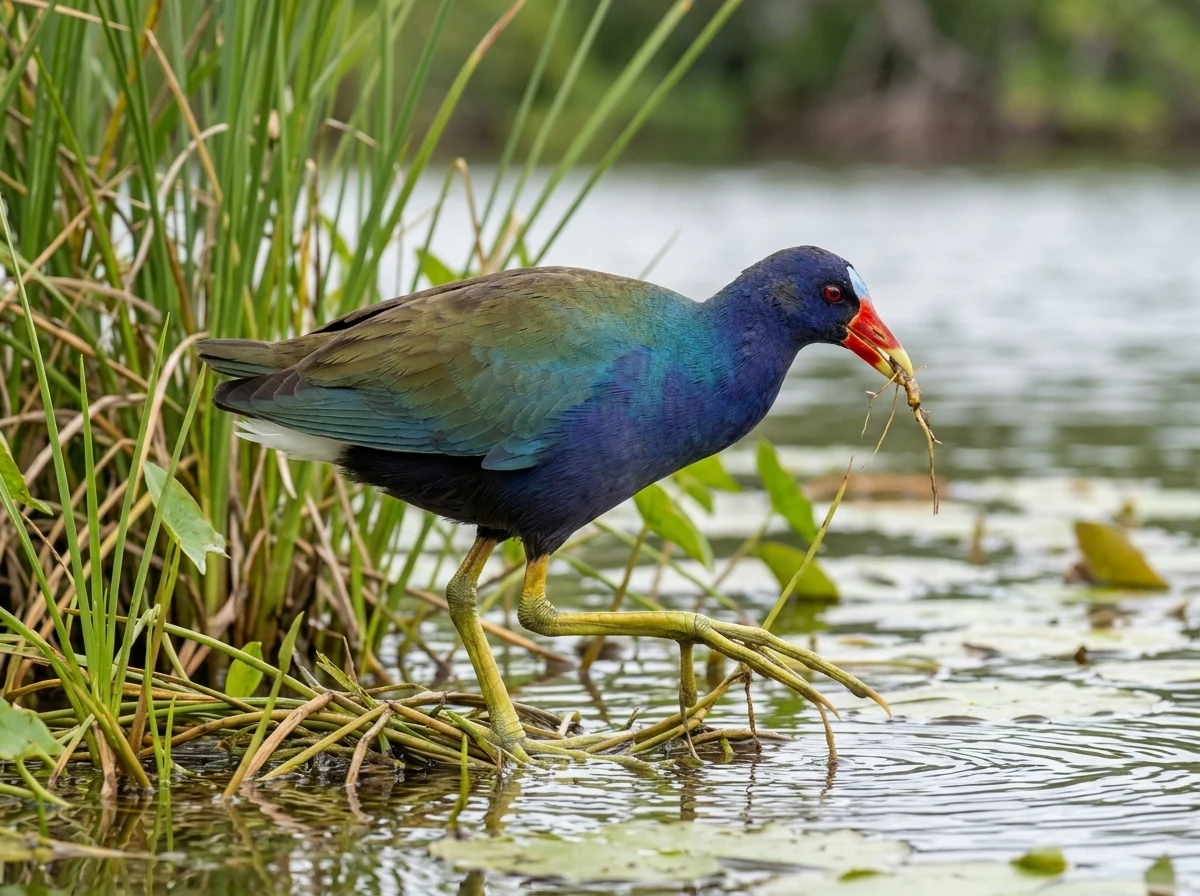
In lagoons with floating vegetation, a purple-and-green bird walking across lily pads is a Purple Gallinule. It has a pale blue frontal shield, a red-and-yellow bill, yellow legs, and white undertail coverts. Juveniles are buff-brown and olive but keep the white undertail.
05
Belted Kingfisher and blue accents on green birds
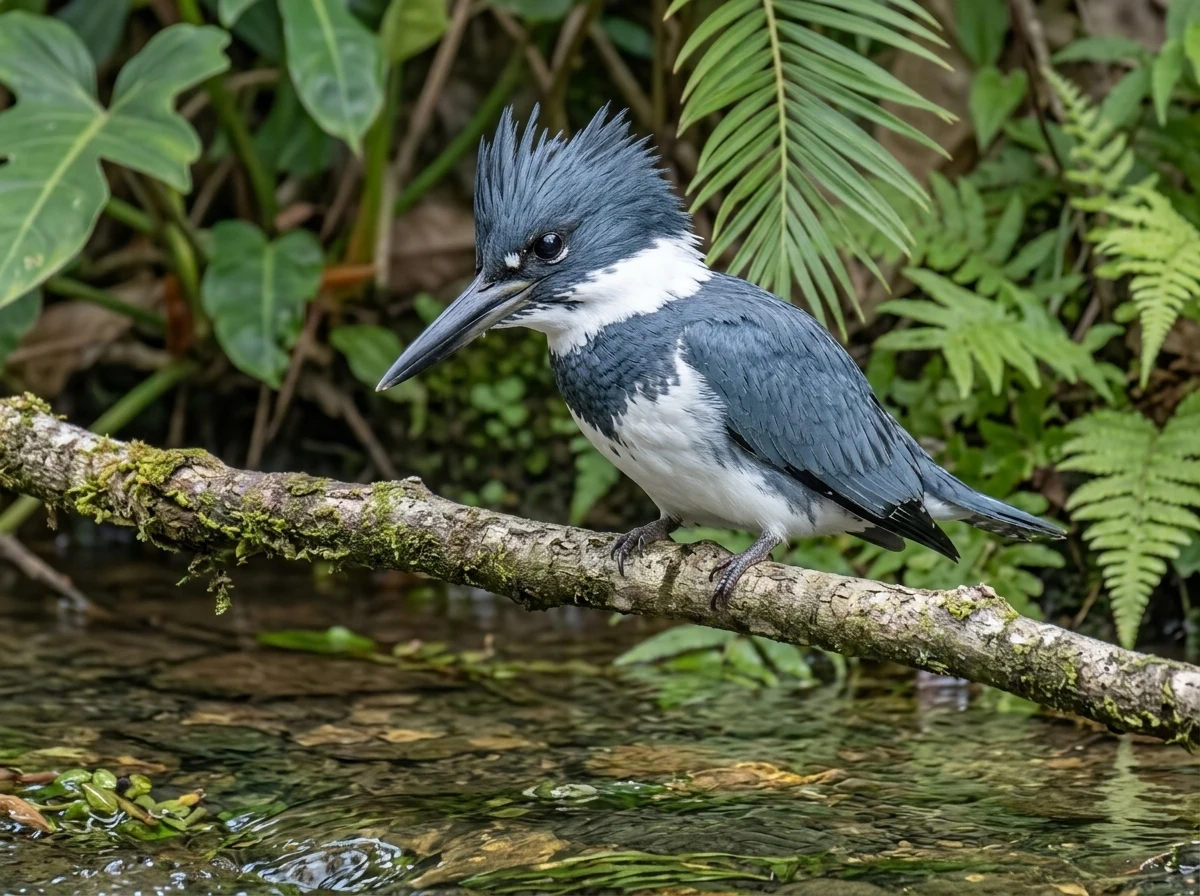
Belted Kingfisher is blue-gray above and white below with a blue-gray breast band; females add a second, rusty band. Listen for a loud rattle as it flies over rivers, lakes, and ponds, and watch it dive headfirst for fish. Some populations winter as far south as the West Indies.
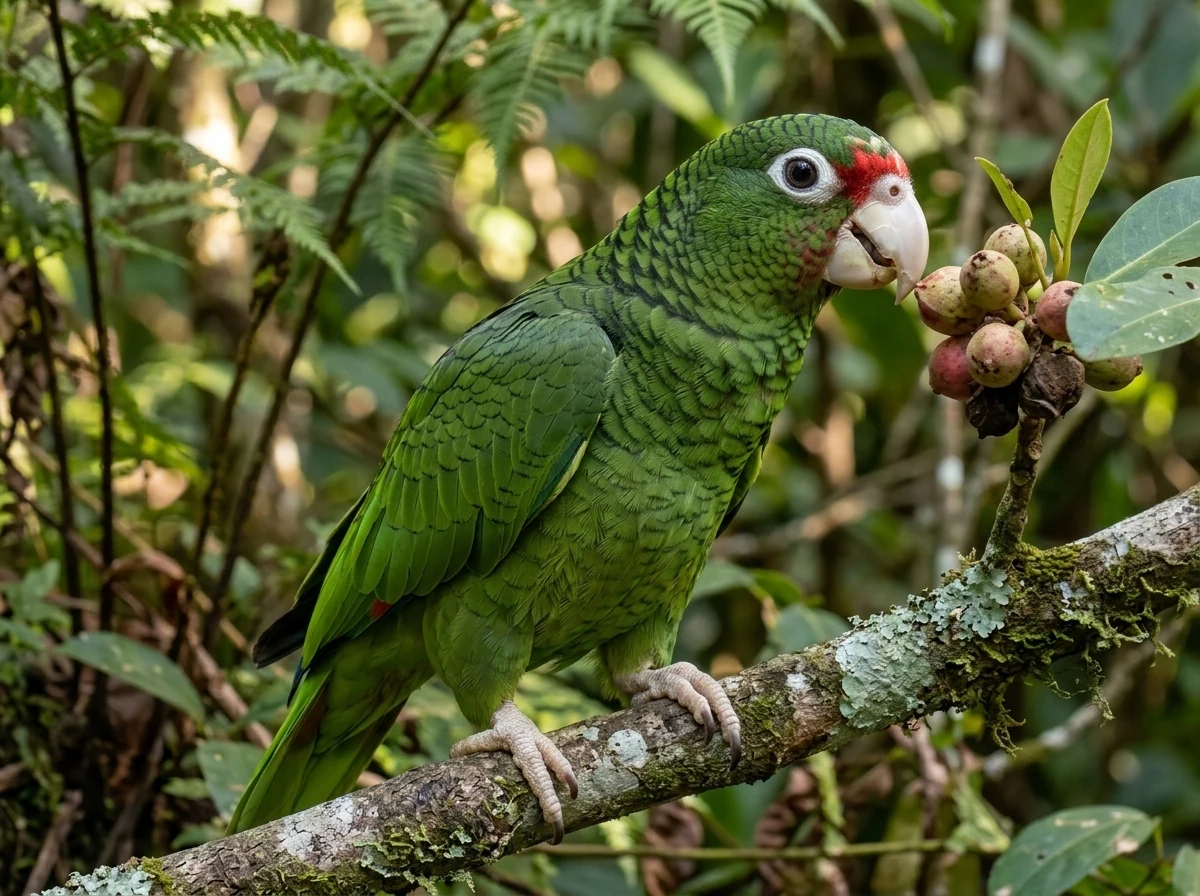
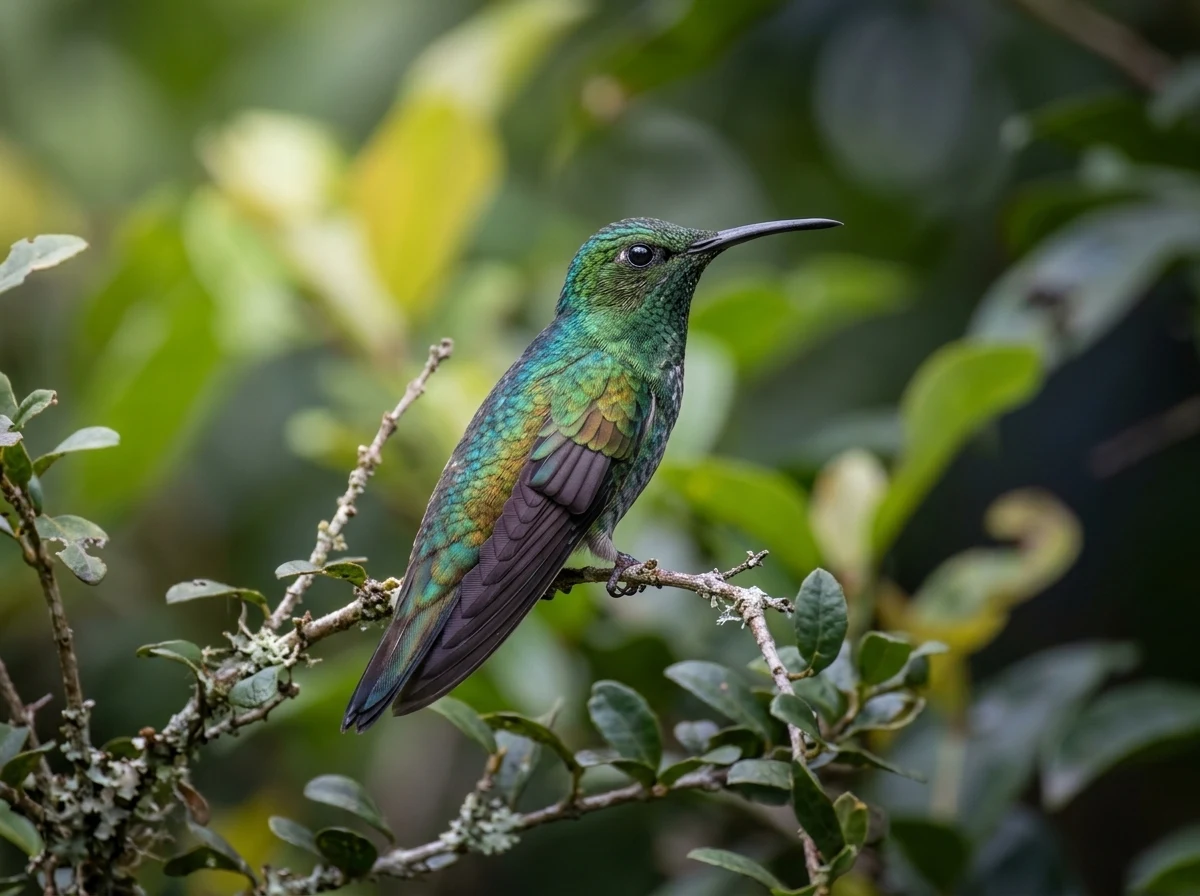
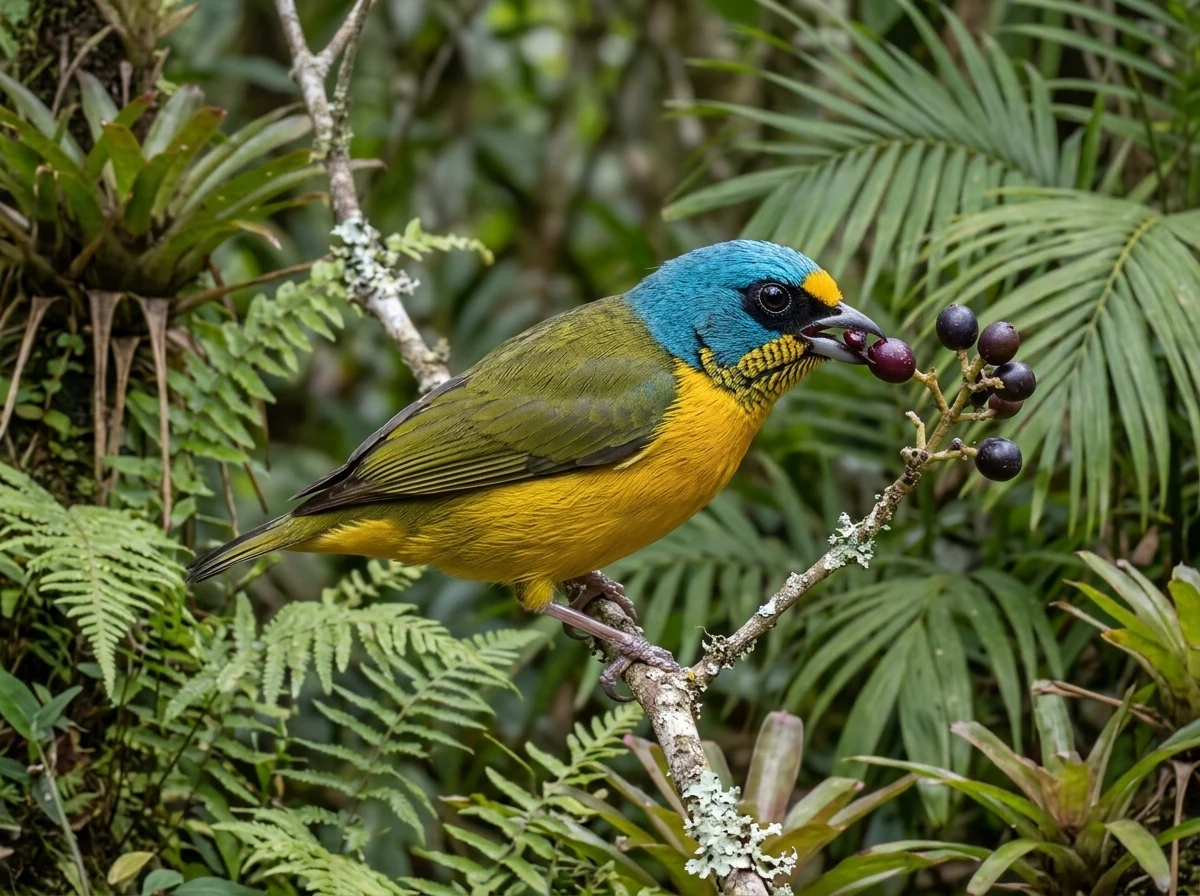
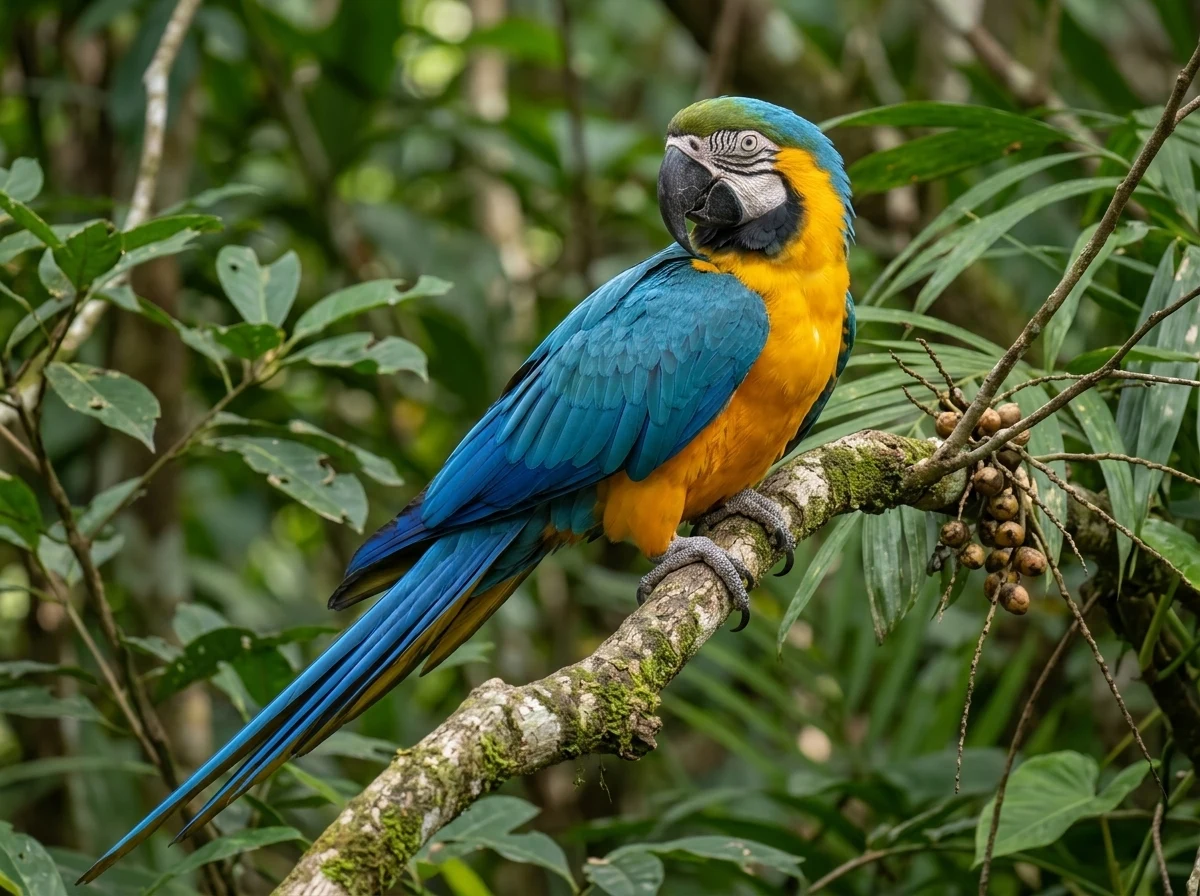
Other birds carry blue as an accent. Puerto Rican Parrot is green with blue primary feathers; Green-throated Carib has an iridescent blue band on its green chest; and the Puerto Rican Euphonia has a turquoise crown and nape. Blue-and-yellow Macaw is on the list as an introduced species.
Linked profiles
Blue birds and blue accents
Compare photos, status, local names, and recordings before confirming a record.
Sound archive
Hear its voice
Explore real songs and calls. The spectrogram turns each sound into a visual trace of time and frequency.
XC1002806Recording 1 of 3song

Play: song by Sue Riffe
Choose another recording
Sound recorded by Sue Riffe · XC1002806 · CC BY-NC-SA 4.0. Visualization by Stichting Xeno-canto voor Natuurgeluiden.
Every recording retains the creator, catalogue number, and license published by Xeno-canto. Metadata via GBIF ↗
01
What is the “gorrión azul”?
The gorrión azul is the Indigo Bunting (Passerina cyanea), a small cardinal-family bird that breeds in North America and winters in Mexico, Central America, and the Caribbean. Breeding males are deep blue and females brown. It does not nest in Puerto Rico and is recorded as an accidental visitor.
02
Are Indigo Buntings in Puerto Rico year-round?
No. Indigo Bunting is migratory, does not nest in Puerto Rico, and is listed as accidental, so expect it between fall and spring. At that season many males are in brown plumage, so a winter bird may look brown with only hints of blue.
03
What does an Indigo Bunting sound like?
Its profile on this atlas gathers credited recordings with spectrograms for comparison. Because it is an accidental visitor, do not rely on sound alone—confirm with a photo of the bill, wings, and plumage. A thick bill with cinnamon wing bars points to Blue Grosbeak instead.
04
How do you tell an Indigo Bunting from a Blue Grosbeak?
Blue Grosbeak is larger, with a very thick bill and two wide cinnamon wing bars. Indigo Bunting is smaller and slimmer, with a smaller bill and no obvious wing bars. Female Indigo Buntings show fine chest streaks that female grosbeaks lack.
05
Why are some Little Blue Herons white?
Little Blue Heron juveniles are entirely white, then pass through a patchy white-and-blue calico phase before adult blue-gray plumage. They differ from young Snowy Egrets by gray rather than yellow skin near the eye.
06
What large blue bird lives in Puerto Rico?
The largest are herons: the common Little Blue Heron of wetlands and coasts, and the much bigger Great Blue Heron at about 2.5 kilograms. By water, a medium blue-gray bird that rattles in flight and dives headfirst is a Belted Kingfisher.
Keep exploring
Connected routes
Sources and review
The evidence is one link away.
These sources support the editorial scope of this guide. Bird profiles also retain their own taxonomy, occurrence, and conservation references.
Reviewed:
01↗02↗03↗04↗05↗06↗07↗08↗09↗10↗11↗
Birds of the World / Cornell Lab of Ornithology
Indigo Bunting: introduction
Male and female plumage, shrubby habitat, and wintering in the Caribbean.National Audubon Society
Field guide: Indigo Bunting
Blue male plumage, brown females and nonbreeding males, and winter habitat along brushy farm edges.National Audubon Society
Field guide: Little Blue Heron
Blue-gray adults, white juveniles, the calico phase, and differences from young Snowy Egret.Sociedad Ornitológica Puertorriqueña
Official bird list
Local names, occurrence categories, and the public summary of 17 endemics.National Audubon Society
Field guide: Blue Grosbeak
Very thick bill and cinnamon wing bars that separate it from Indigo Bunting.National Audubon Society
Field guide: Black-throated Blue Warbler
Male and female differences, the white wing spot, and its Caribbean wintering range.National Audubon Society
Field guide: Purple Gallinule
Adult colors, frontal shield, yellow legs, and brownish juveniles.National Audubon Society
Field guide: Belted Kingfisher
Blue-gray back, breast bands by sex, fishing behavior, and wintering south to the West Indies.U.S. Fish and Wildlife Service
Species profile: Puerto Rican Amazon
Physical description of the parrot and its diet.Biodiversidad de Puerto Rico
The hummingbirds of Puerto Rico
Field clues using size, bill, color, and local distribution for the five resident hummingbirds.BirdsCaribbean
Five new bird species for the Caribbean (2023)
Split of the Puerto Rican Euphonia and male and female descriptions.The atlas continues