 AI
AIPointed wings
Falcons of Puerto Rico
Four Falco species, four sizes, and four different stories: one resident, two migrants, and a rarity that made history at Laguna Cartagena.
Reviewed:One resident falcon and three visitors.
Puerto Rico has only one resident falcon, the American Kestrel (Falco sparverius), locally called falcón común. The Merlin (F. columbarius) and the Peregrine Falcon (F. peregrinus) arrive as visitors from the north, and the Aplomado Falcon (F. femoralis) was documented for the first time in Puerto Rico and the West Indies in January 2008.
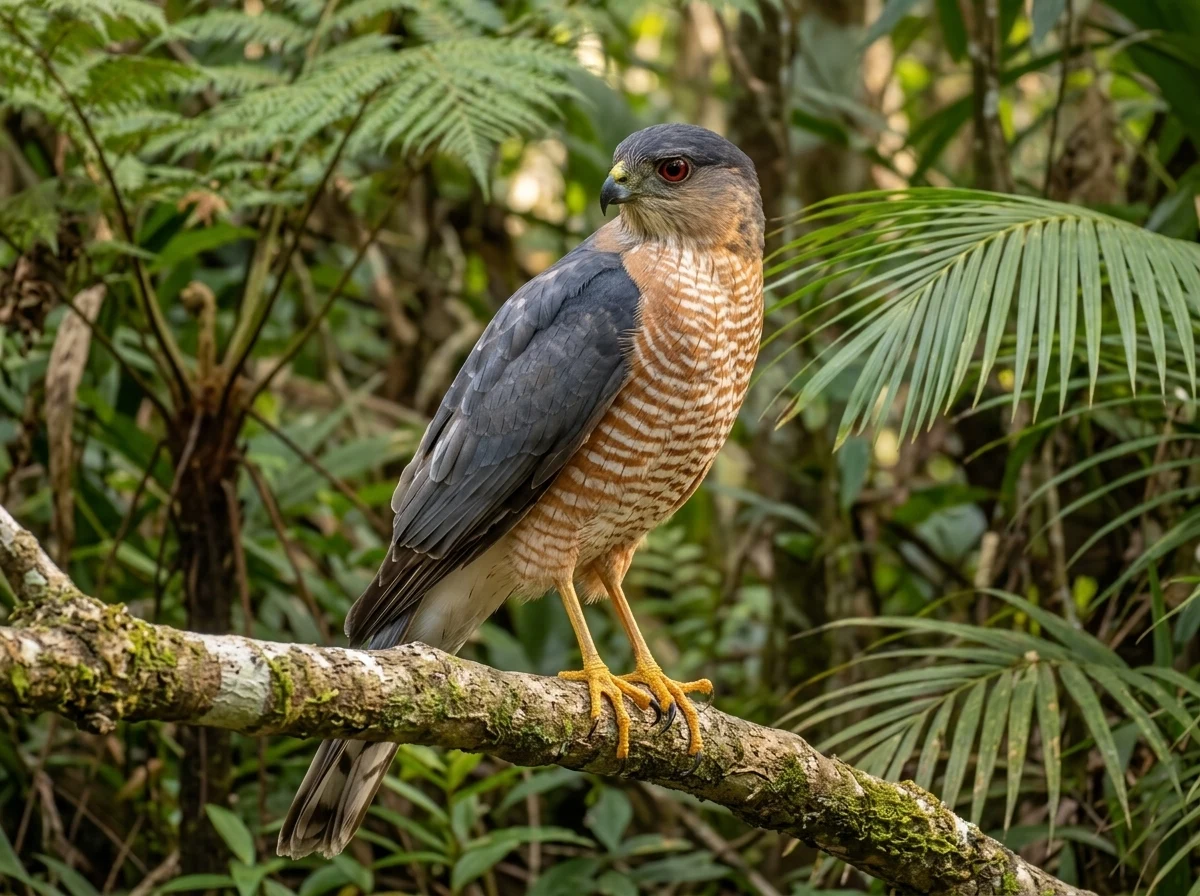
Local names add confusion: the “falcón de sierra” is not a falcon but a Sharp-shinned Hawk in the genus Accipiter, and in conversation “halcón” can mean any fast raptor. This guide separates the four Falco species by size, marks, behavior, and season, and explains when a record needs extra evidence.
Pointed wings
Four falcons, four weights
~119 gAmerican KestrelReference average mass in the catalog; the only resident.
~193 gMerlinNorthern visitor; present October to April in an Aguadilla study.
~328 gAplomado FalconFirst West Indies record: Laguna Cartagena, January 2008.
~916 gPeregrine FalconThe largest; migratory, with no documented nesting on the island.
01
American Kestrel: the falcon that lives here
The American Kestrel is a common resident across the West Indies and a common breeder in Puerto Rico, including Vieques, Mona, and Culebra. It is seen most in the dry south, but it uses farms, pastures, open country, forest edges, and even towns and cities. In the atlas it appeared in 327 of 479 hexagons (68%), with 537 records.
It nests in cavities it does not excavate: woodpecker holes in trees or crevices in cliffs, so a shortage of cavities can limit it. The atlas found breeding year-round, most active from March to June and peaking in June. It is in no local or federal threat category.
02
How to recognize the American Kestrel
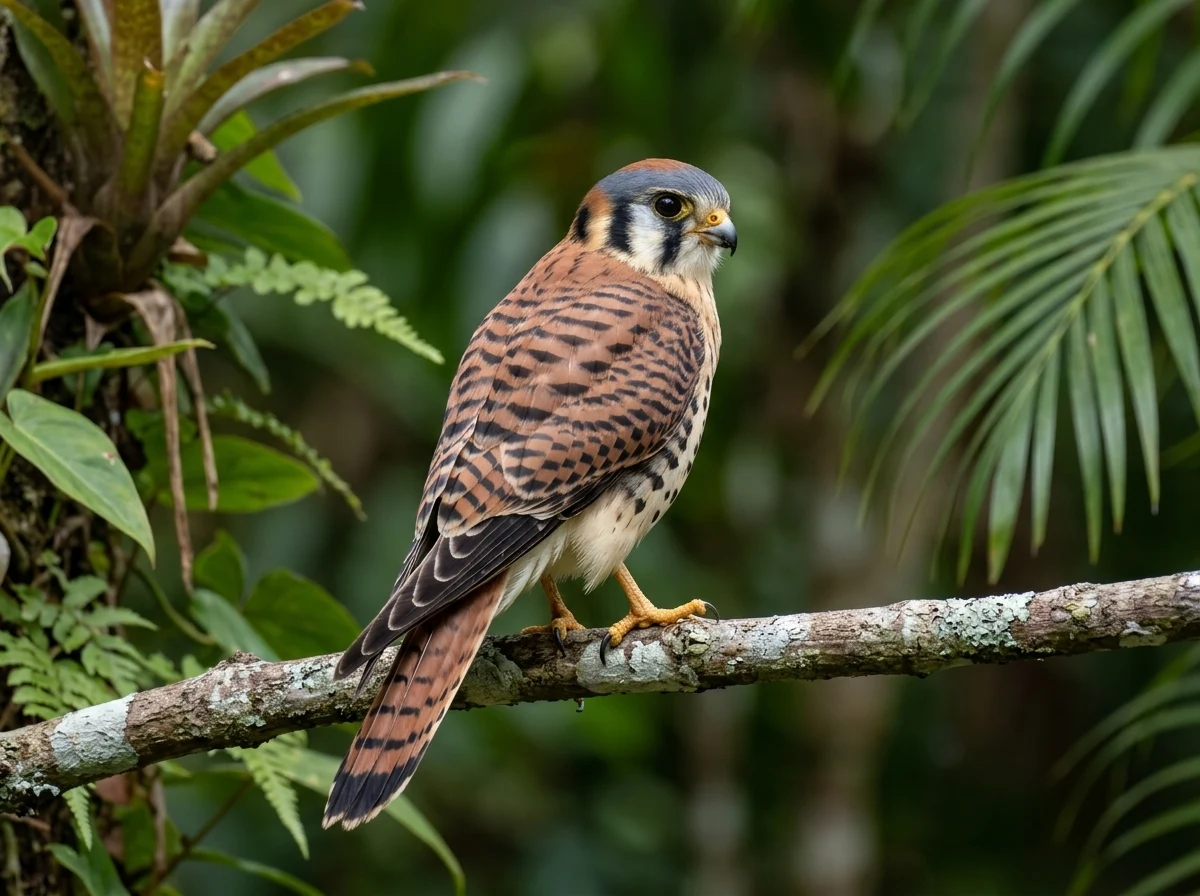
It is North America's smallest falcon, with two sharp black vertical stripes on the face. Males have blue-gray wings; females are reddish-brown above. It hunts from a post or wire, or hovering over grassland, and drops onto grasshoppers and other large insects, as well as small mammals and birds.
Its call is a shrill, repeated “killy-killy-killy,” easy to recognize once heard, which is why it is this guide's featured sound. If you see a small falcon perched on a wire in Guánica, Cabo Rojo, or a city lot, start with this species before thinking Merlin.
03
Merlin: the winter hunter
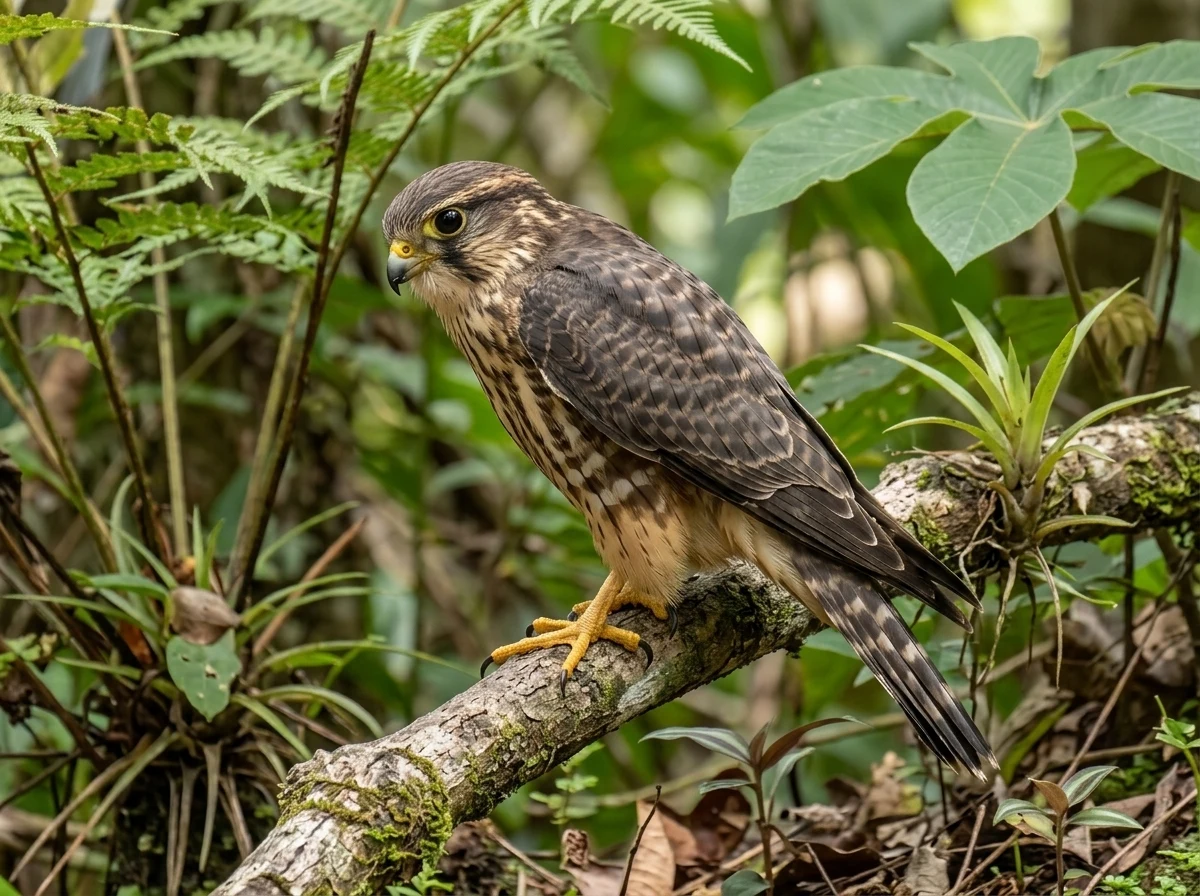
The Merlin is 25 to 36 centimeters long, compact, with a relatively short dark tail crossed by narrow pale bands, a streaked chest, and no strong Peregrine-style mustache. It hunts mainly small birds with fast, direct flight, and also takes dragonflies, rodents, and bats. Its official local name is Falcón Migratorio.
A classic study at a cave in Aguadilla, published in 1985, documented Merlins present from October to April over two winters, peaking in January and February. The falcon at the most visible perch took about 5.1 bats per day, and in the first season Merlins took about 1,800 bats from the more exposed flyway. Lists disagree on how frequent it is, so document every record with a photo.
04
Peregrine Falcon: the large seasonal visitor
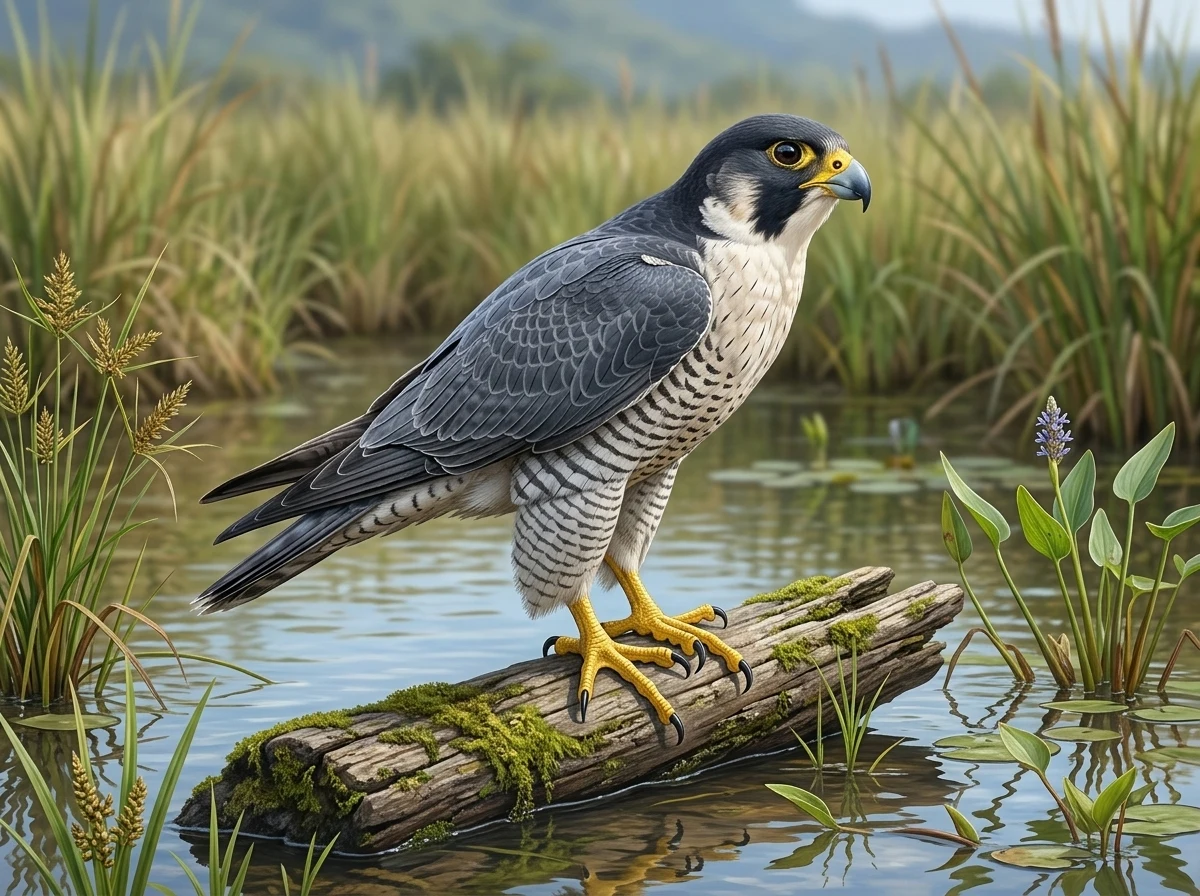
The Peregrine is the largest of the four, 36 to 48 centimeters long, with long pointed wings, a blue-gray back in adults, and a thick black mustache. It hunts almost only birds, often from great height, along coasts, salt flats, wetlands, and cities with pigeons.
It comes from populations that breed in the north and is not documented nesting on the island, so its season runs roughly from autumn to spring. We have a full guide to the Peregrine Falcon in Puerto Rico covering where to look, how it hunts, and its conservation story.
05
Aplomado Falcon: a record that made history
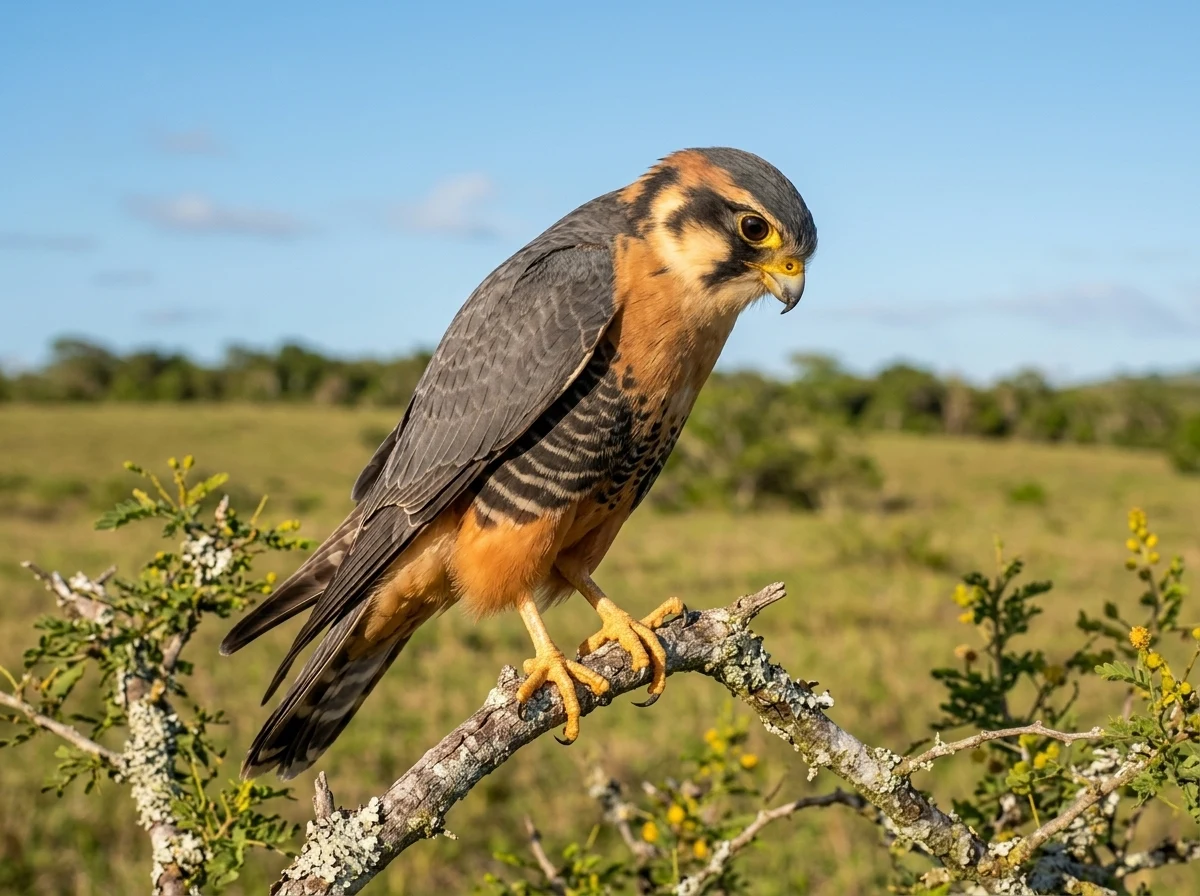
The first Aplomado Falcon for Puerto Rico and the entire West Indies appeared at Laguna Cartagena National Wildlife Refuge in the southwest on January 15, 2008, and stayed until January 25. Several observers photographed it during long viewing periods, and the record was published in 2011 in The Wilson Journal of Ornithology.
It is an elegant falcon, 36 to 41 centimeters long, with black flank patches that nearly meet on the lower breast, a rufous belly and thighs, and a long tail with narrow white bars. It lives in grasslands and open country on the American mainland; in Puerto Rico it remains accidental, and any new report needs photos.
06
How to separate them, and why the Sharp-shinned Hawk is not a falcon
Start with size and behavior: if it hovers over grass, it is almost certainly a kestrel; if it is compact and passes low and very fast after small birds in winter, think Merlin; if it is large, heavily mustached, and hunts over coastal flocks, think Peregrine. A long-tailed falcon with a rufous belly and black flanks deserves immediate photos.
Falcons have long, pointed wings. The Sharp-shinned Hawk (falcón or gavilán de sierra) has short, rounded wings, a long square-tipped tail, and a flap-and-glide flight among montane forest trees. It is another family, another hunting style, and a critically endangered subspecies.
Linked profiles
The falcons on Puerto Rico's list
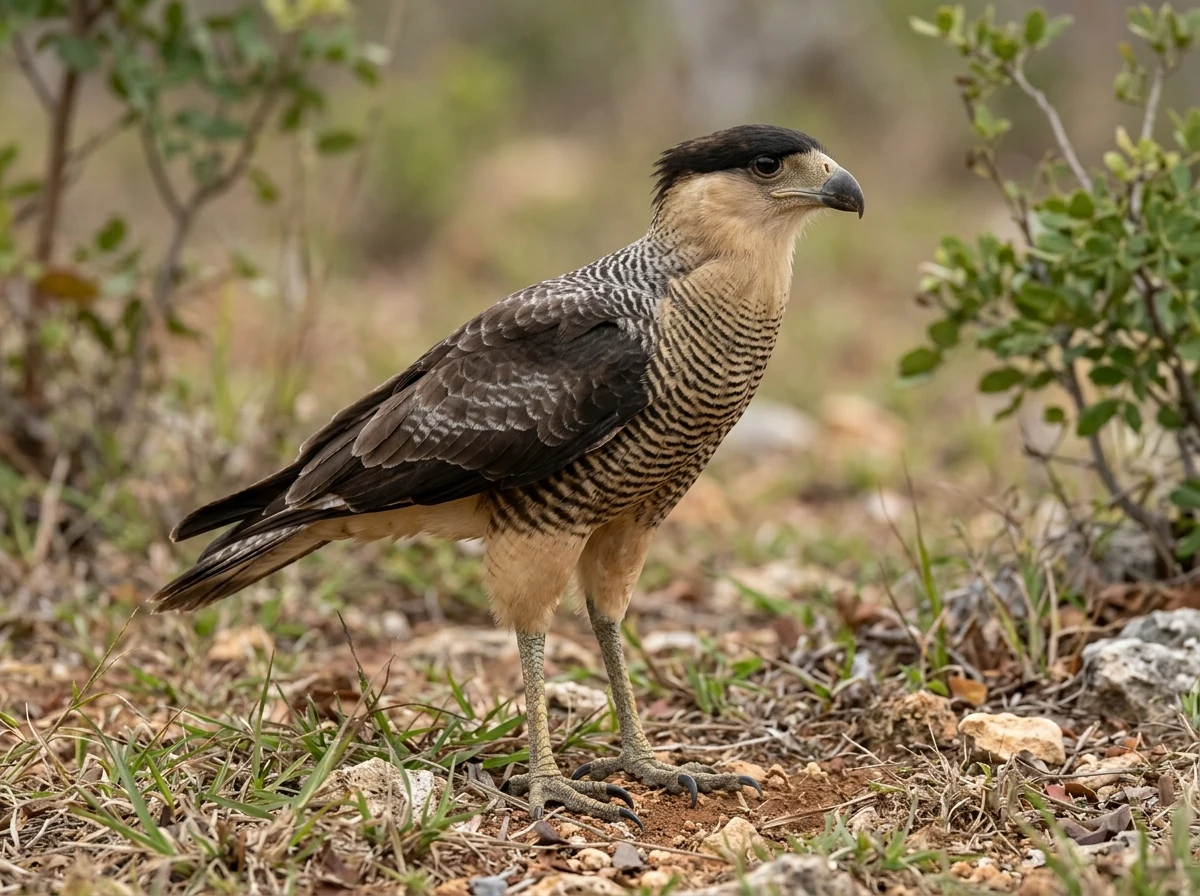
The four Falco species, the Sharp-shinned Hawk confused by name, and the extinct caracara known from ancient remains.
Sound archive
Hear its voice
Explore real songs and calls. The spectrogram turns each sound into a visual trace of time and frequency.
XC1101990Recording 1 of 3song

Play: song by JAYRSON ARAUJO DE OLIVEIRA
Choose another recording
Sound recorded by JAYRSON ARAUJO DE OLIVEIRA · XC1101990 · CC BY-NC-SA 4.0. Visualization by Stichting Xeno-canto voor Natuurgeluiden.
Every recording retains the creator, catalogue number, and license published by Xeno-canto. Metadata via GBIF ↗
01
How many falcons are there in Puerto Rico?
Four Falco species are recorded: the American Kestrel (resident), the Merlin and the Peregrine Falcon (northern visitors), and the Aplomado Falcon (one accidental record in 2008). The list also includes an extinct endemic caracara known only from subfossil remains.
02
What is the falcón común?
It is the local name for the American Kestrel (Falco sparverius), Puerto Rico's only resident falcon. It is small, with two black face stripes, hunts large insects from posts or while hovering, and nests in cavities.
03
Is the falcón de sierra a falcon?
No. The falcón de sierra is the Sharp-shinned Hawk (Accipiter striatus venator), an accipiter hawk. It has short rounded wings and a long tail, lives in montane forest, and is endangered.
04
Is there an Aplomado Falcon in Puerto Rico?
Only as a rarity. The first Aplomado Falcon for Puerto Rico and the West Indies stayed at Laguna Cartagena from January 15 to 25, 2008, and was photographed by several observers. It is neither resident nor regular on the island.
05
What is a Merlin?
The Merlin (Falco columbarius) is a small, compact falcon that breeds in the north and visits Puerto Rico in winter. A study in Aguadilla documented Merlins from October to April hunting bats at a cave exit.
06
What does the American Kestrel sound like?
Its best-known call is a shrill, repeated “killy-killy-killy,” easy to recognize once heard. It also makes whines and chitters in other contexts.
Keep exploring
Connected routes
Sources and review
The evidence is one link away.
These sources support the editorial scope of this guide. Bird profiles also retain their own taxonomy, occurrence, and conservation references.
Reviewed:
01↗02↗03↗04↗05↗06↗07↗08↗09↗10↗11↗
U.S. Forest Service Research and Development
Puerto Rico Breeding Bird Atlas
Distribution and breeding timing for 130 species breeding in Puerto Rico and its satellite islands.Sociedad Ornitológica Puertorriqueña
Catalog of the Birds of Puerto Rico
Official Spanish names (Halcón Peregrino, Falcón Común, Falcón Migratorio, Águila Pescadora, Gavilán de Sierra, Guaraguao de Bosque, Guaraguao Colirrojo) and occurrence codes such as “Accidental.”Biotropica 17:71–74 (Rodríguez-Durán & Lewis, 1985)
Seasonal predation by Merlins on Sooty Mustached Bats in western Puerto Rico
Merlins present October to April at an Aguadilla cave, peaking in January and February, taking 5.1 bats per day.The Wilson Journal of Ornithology 123(1) (Mathys, 2011)
First record of Aplomado Falcon for the West Indies
Aplomado Falcon photographed at Laguna Cartagena refuge from January 15 to 25, 2008.National Audubon Society
American Kestrel field guide
Face marks, male and female differences, hovering, insect diet, and the “killy-killy” call.National Audubon Society
Merlin field guide
Size, dark tail with narrow pale bands, lack of a strong mustache, and prey.National Audubon Society
Aplomado Falcon field guide
Size, black flank patches, rufous belly, long barred tail, and grassland habitat.National Audubon Society
Peregrine Falcon field guide
Size, adult and juvenile plumage, stoop speed, prey, and recovery after DDT.U.S. Fish and Wildlife Service / Federal Register 64 FR 46542
Final rule removing the American Peregrine Falcon from the federal list (1999)
North American subspecies, Arctic Peregrine migration to South America, diet of birds and bats, and the 1994 and 1999 delisting dates.U.S. Fish and Wildlife Service
Laguna Cartagena National Wildlife Refuge
Importance of the freshwater wetland for resident and migratory waterbirds.National Audubon Society
Sharp-shinned Hawk field guide
Size, square-tipped tail, small head, flap-and-glide flight, small-bird diet, and size difference between sexes.The atlas continues