 AI
AIIdentify by color
Green birds
A tiny green dot, a screeching parrot, or a glittering hummingbird: size and place tell you which.
Reviewed:In Puerto Rico, green is above all an endemic color.
Puerto Rico's most characteristic green birds are endemic: the Puerto Rican Tody, Puerto Rican Parrot, Green Mango, Puerto Rican Emerald, and Puerto Rican Spindalis, whose back is yellow-green. But if you saw a green parrot in a city, it was almost certainly an introduced parakeet: the native parrot lives in the wild only at El Yunque, Río Abajo, and Maricao.
To separate so many greens, start with size and shape. A six-gram bird with a flat bill will not be confused with a foot-long parrot, and a hummingbird hovering at a flower looks nothing like a warbler. Then check the secondary color: red on the throat, blue on the wing, orange on the neck, or gray on the face.
Identify by color
Greens by the numbers
3wild parrot populationsEl Yunque, Río Abajo, and Maricao, per USFWS.
4 gPuerto Rican EmeraldThe smallest green bird; the tody weighs about 6 g.
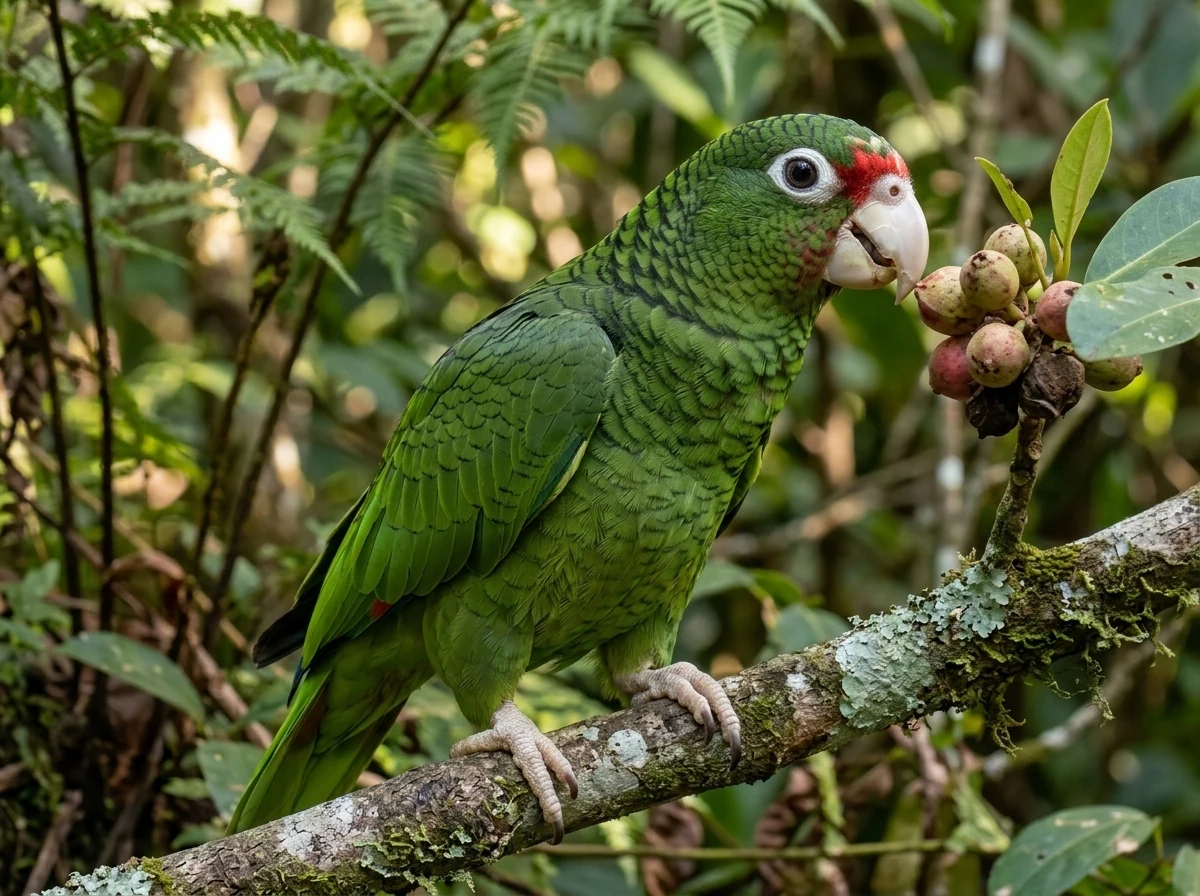
~30 cmPuerto Rican ParrotBright green with a red forehead and blue primaries.
01
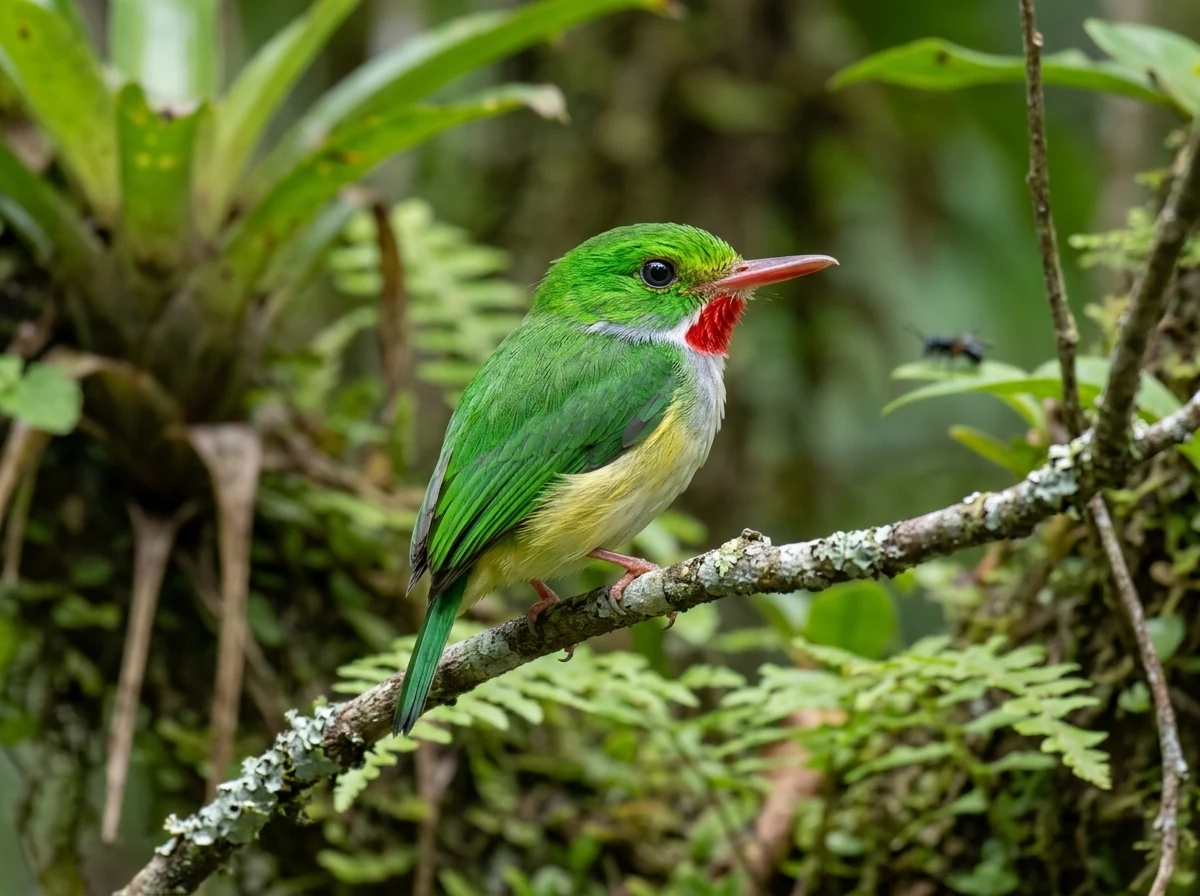
Puerto Rican Tody: the most recognizable green
The Puerto Rican Tody is almost entirely bright green above, with a red throat, white malar stripes, a white breast, and yellow flanks. It is endemic and occupies forest of every kind, from the coast into the mountains, holding small territories year-round. Its long, flattened bill is an unmistakable mark.
Look for a motionless bird on a low branch that suddenly sallies out and returns with an insect snatched from under a leaf. It also takes small lizards, tiny frogs, and the occasional berry. It nests in tunnels dug into earthen banks, so a rooty bank along a forest trail is a good place to wait—without approaching the nest.
02
Puerto Rican Parrot or introduced parakeet
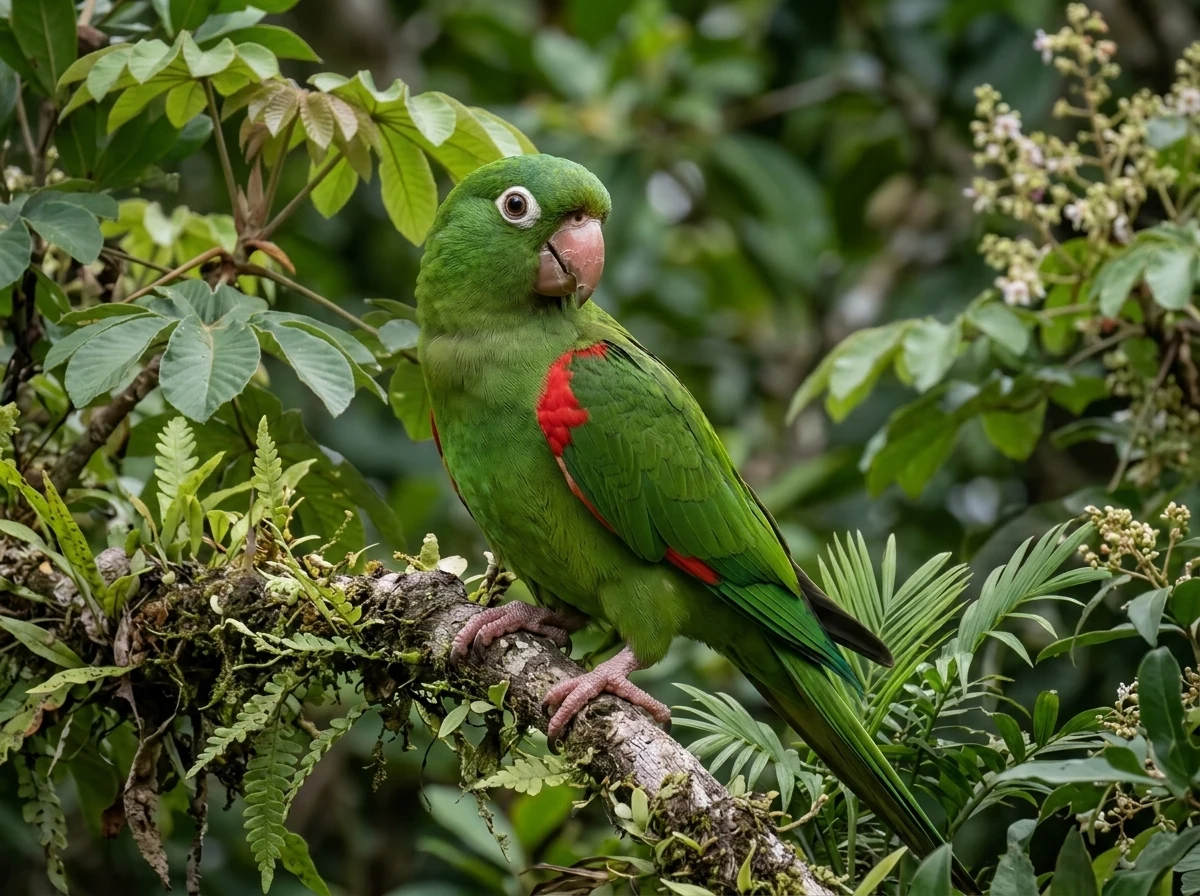
The Puerto Rican Parrot, or Iguaca, is bright green and about a foot long, with a red forehead, blue primary feathers, white eye-rings, and flesh-colored bill and feet. It is critically endangered. Hurricane Maria in 2017 wiped out the wild El Yunque population; releases resumed in 2020, and managed populations now exist at El Yunque, Río Abajo, and Maricao.
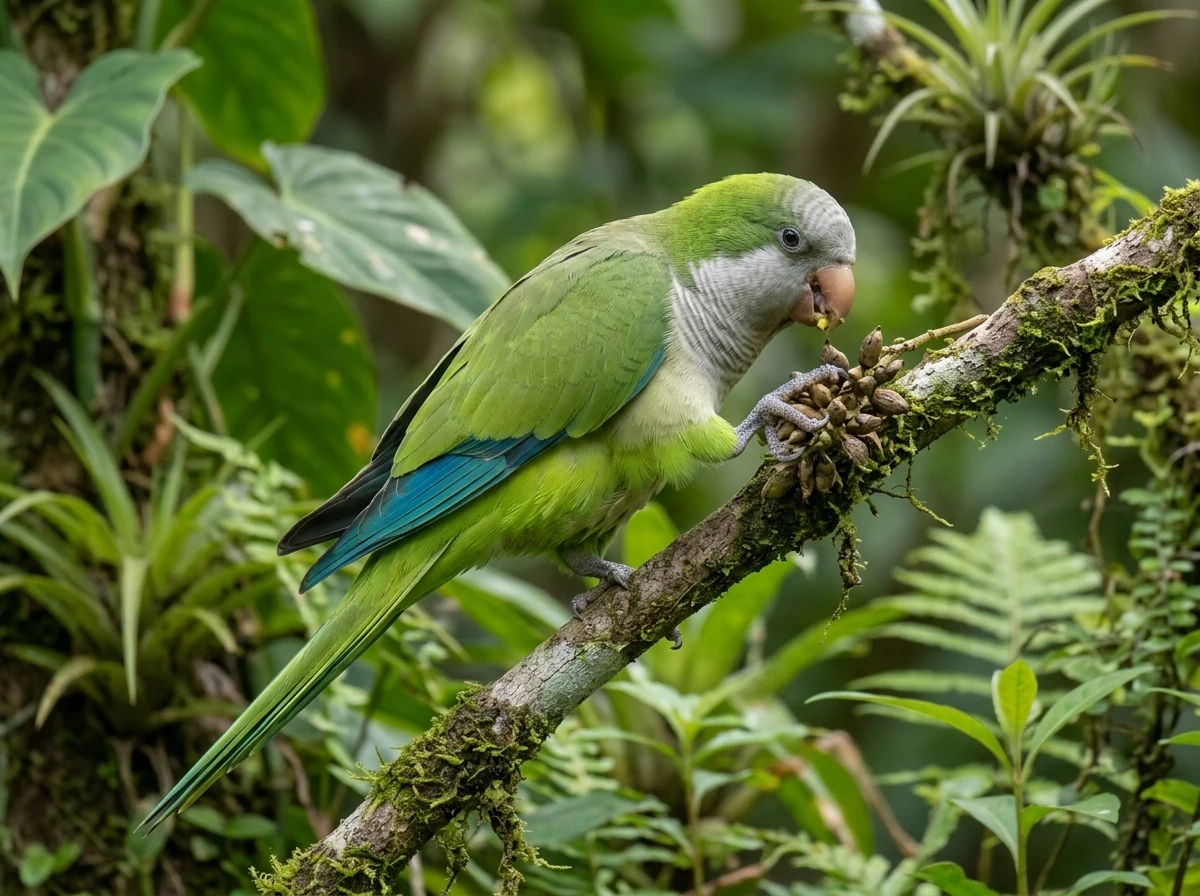
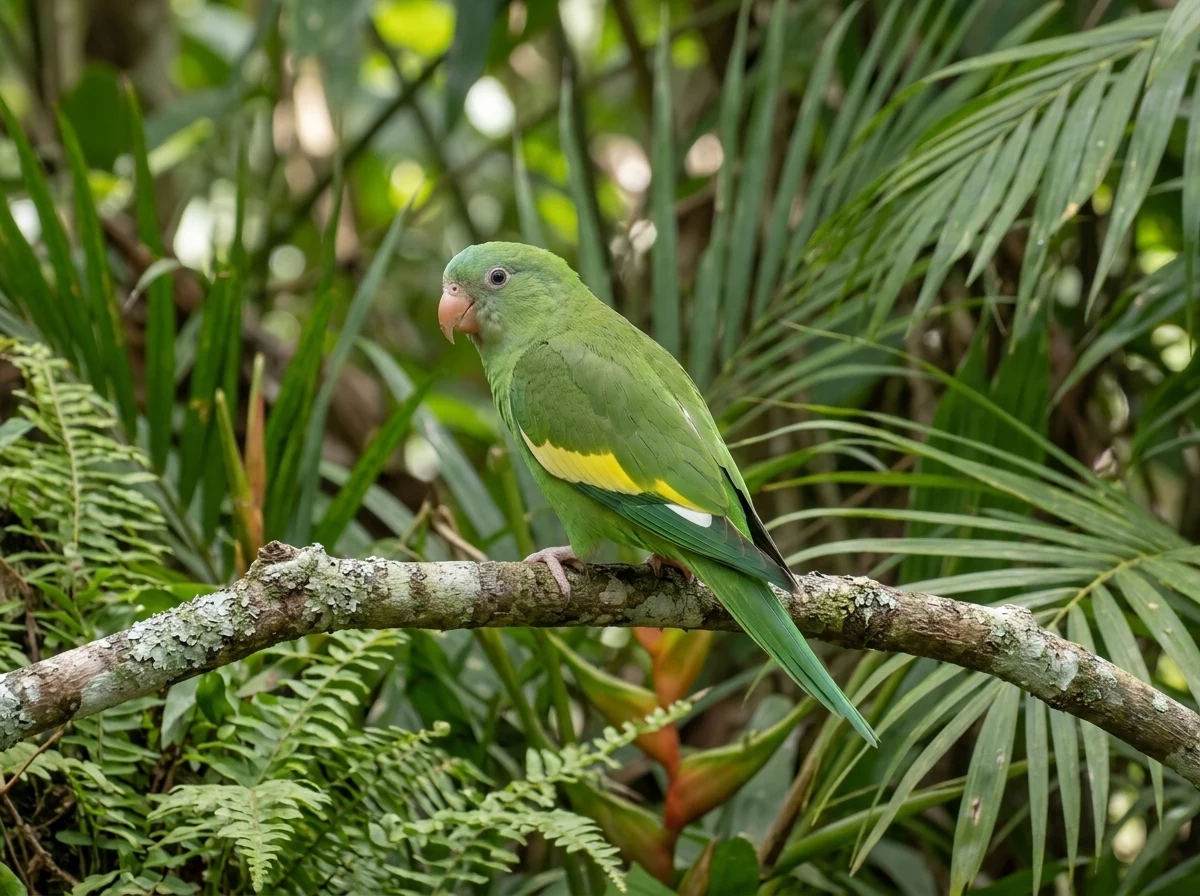
Outside those forests, a green parrot is almost always introduced. Monk Parakeet is green with gray on the forehead, throat, and chest, and builds bulky stick nests in trees and structures. White-winged Parakeet, from the Amazon basin, has established populations in Puerto Rico. Hispaniolan Parakeet and Orange-fronted Parakeet, with an orange forehead and yellow eye-ring, are also on the list.
03
Green hummingbirds: size, bill, and breast
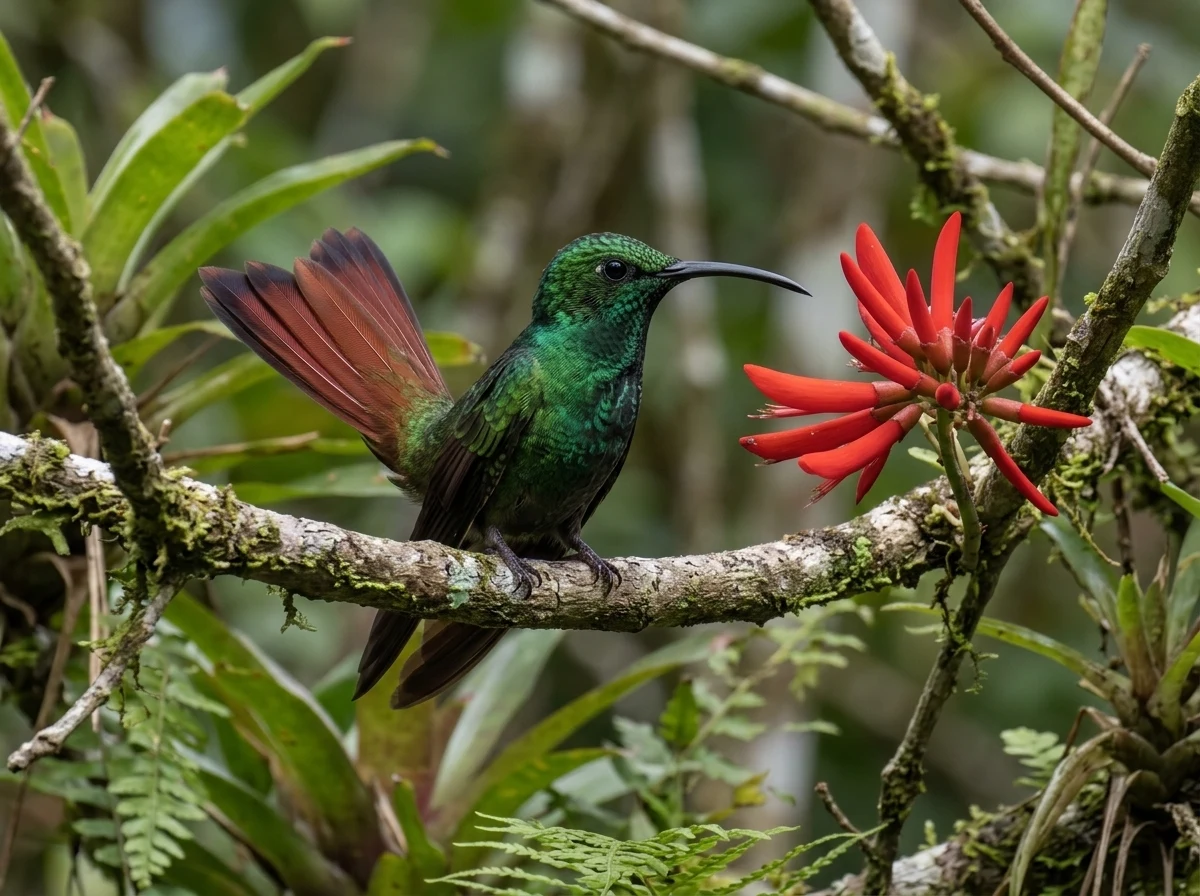
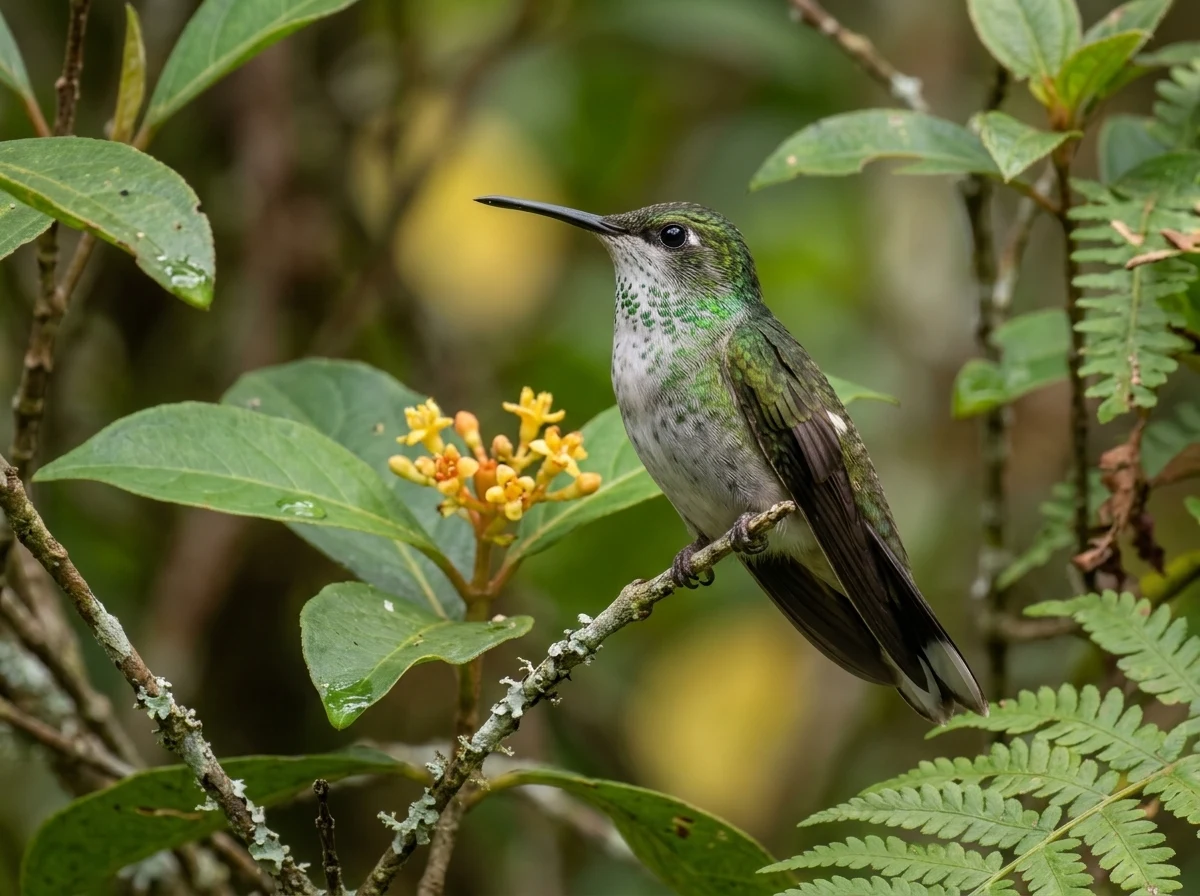
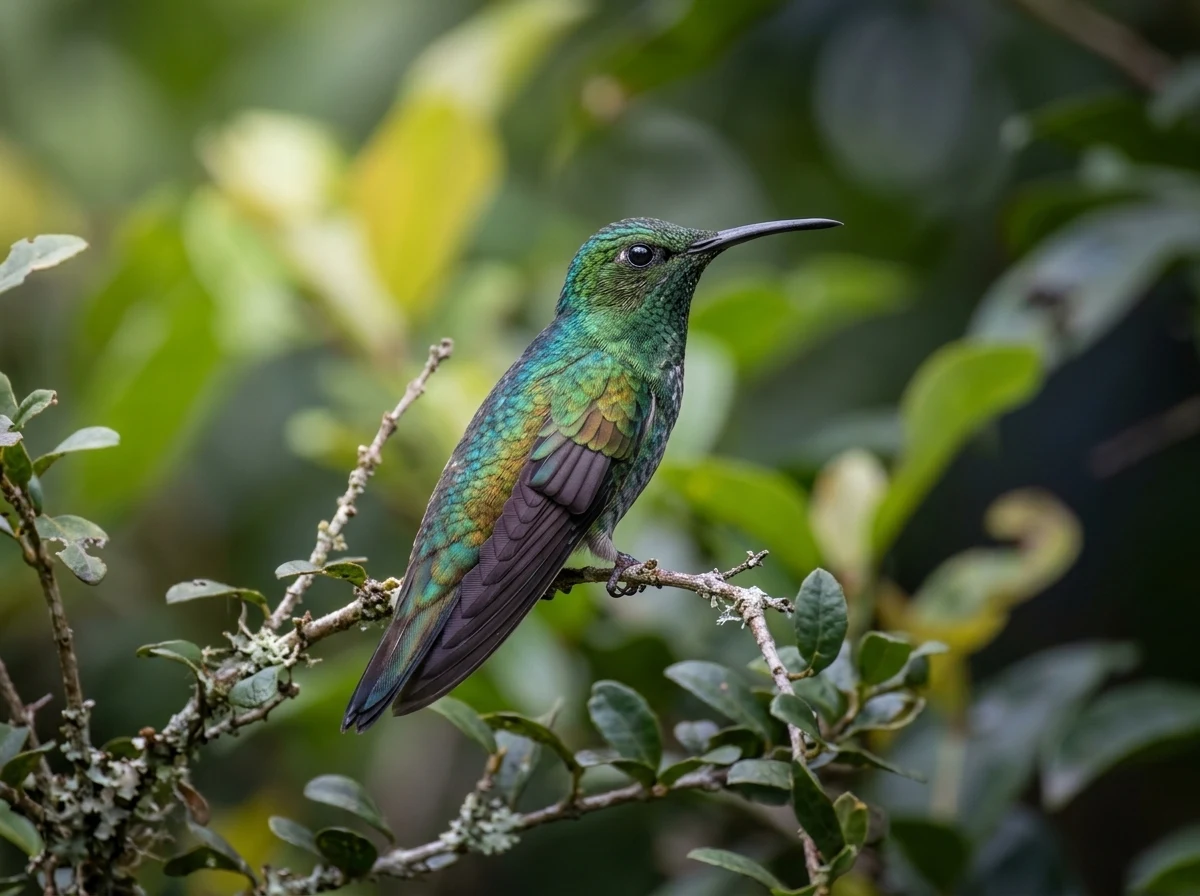
Green Mango is entirely iridescent green with a long, curved bill and is associated mainly with mountainous regions. Puerto Rican Emerald, at only four grams, is iridescent green with a short, straight bill and forked tail, and occupies most of the island except the northeast. Both are endemic.
Green-throated Carib has a green throat and chest with an iridescent blue band and a black belly, and is seen mainly in coastal lowlands east of Bayamón. It is not endemic; it also lives in the Lesser Antilles. In all three, the bill decides before the sparkle: long and curved, short and straight, or long with a dark belly.
04
Spindalis and euphonia: greens of fruiting trees
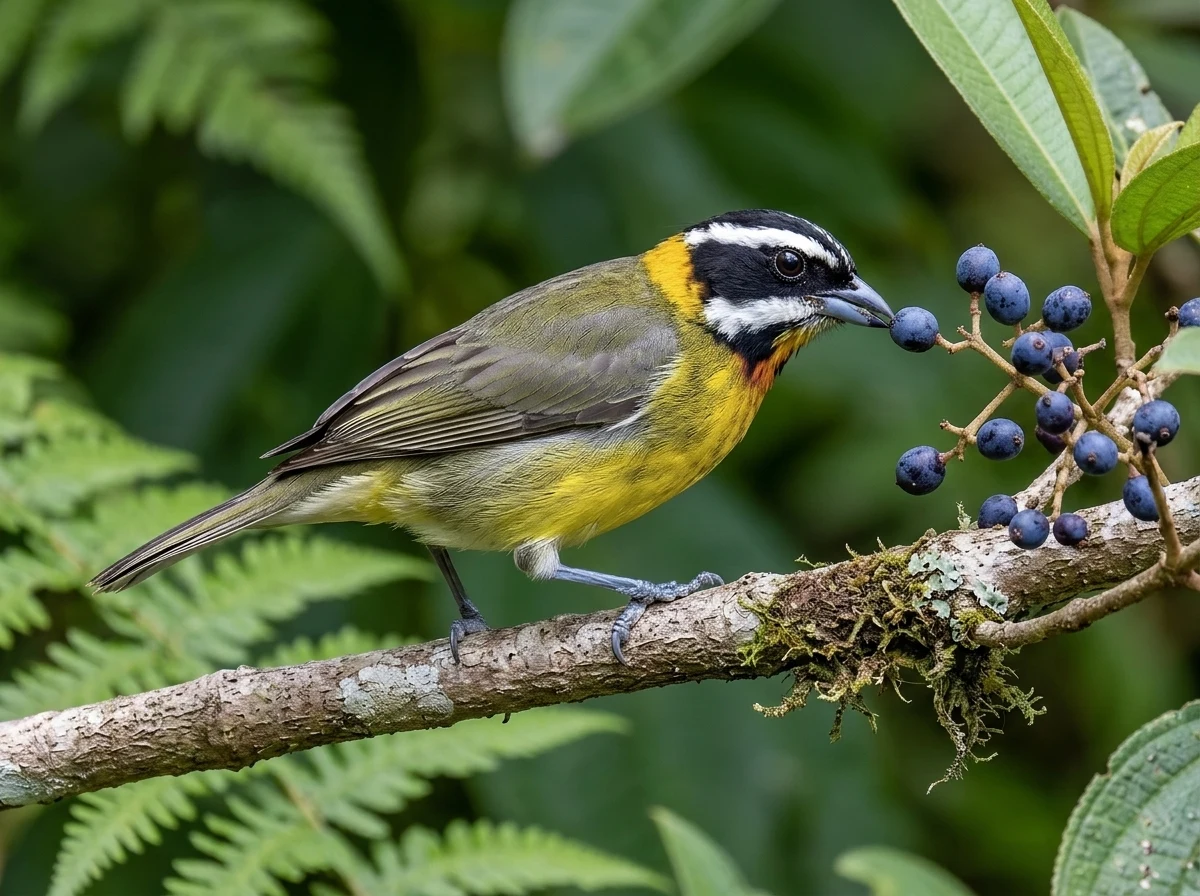
Female Puerto Rican Spindalis is mostly dull olive-green with faint chest streaking; it is the “plain green bird” that most often puzzles people in fruiting trees. The male's back is yellow-green, but the black head with two white stripes, orange collar, and yellow breast give it away. Anyone searching for a “green and orange bird” is usually describing a male.
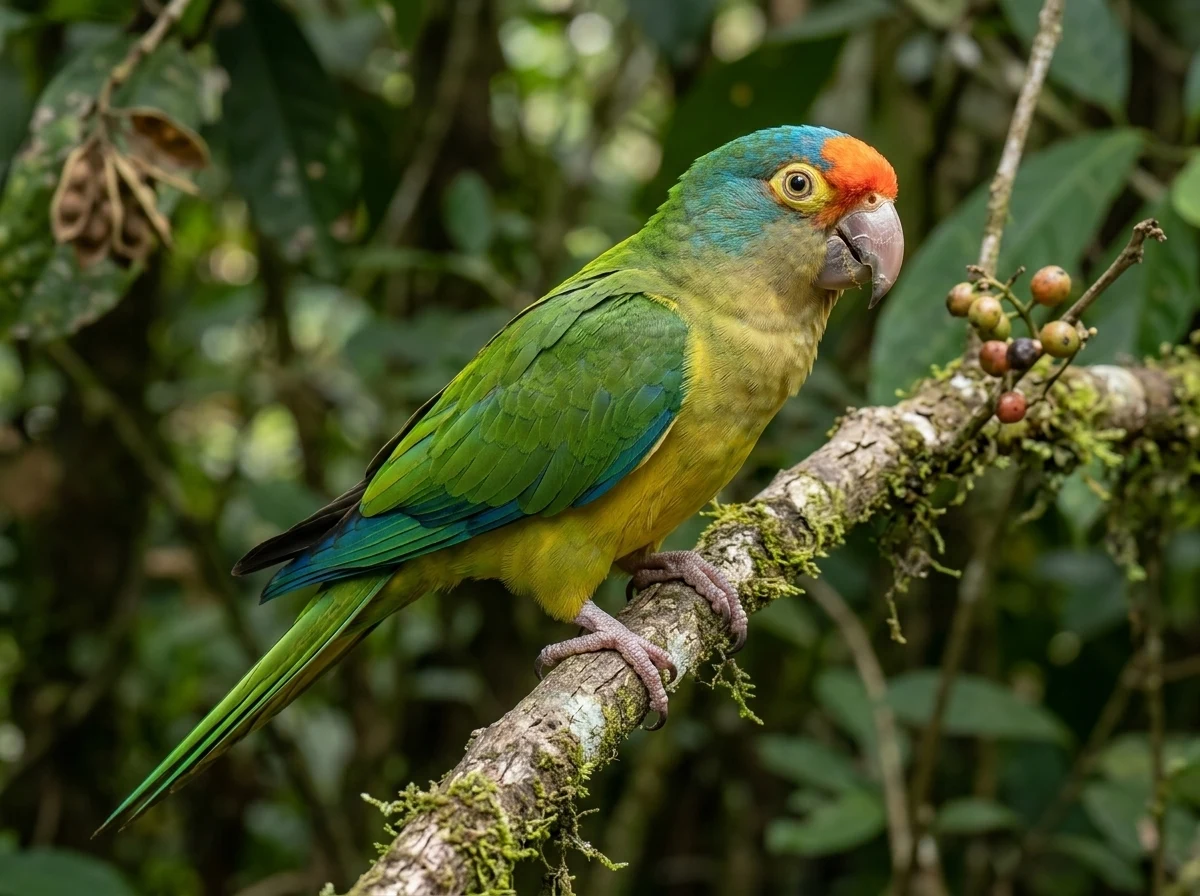
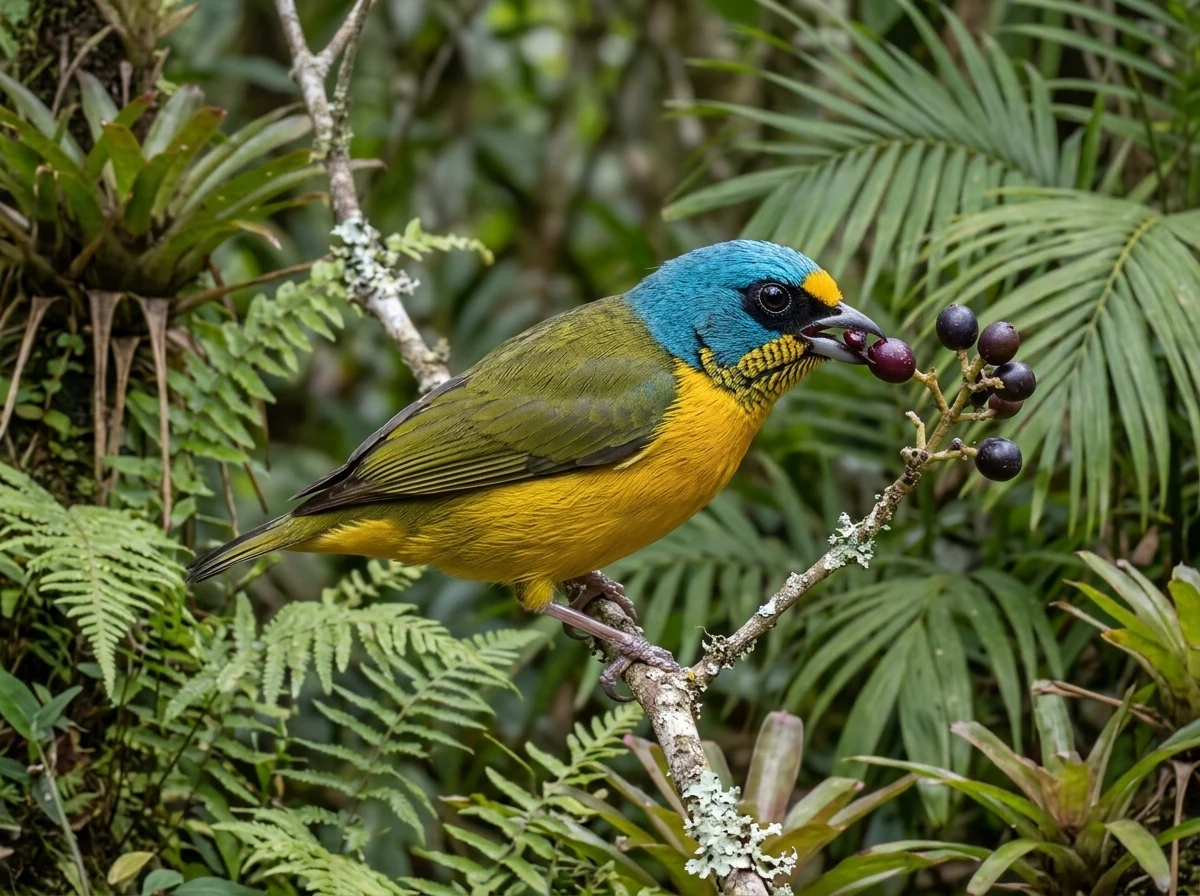
The Puerto Rican Euphonia was recognized as an endemic species in 2023. Females have a yellow-green body and wings, a turquoise crown and nape, and a gold forehead spot; males are darker above with a yellow throat and belly. Both are small and move through mid-level forest foliage.
05
Green at wetlands and on migrants
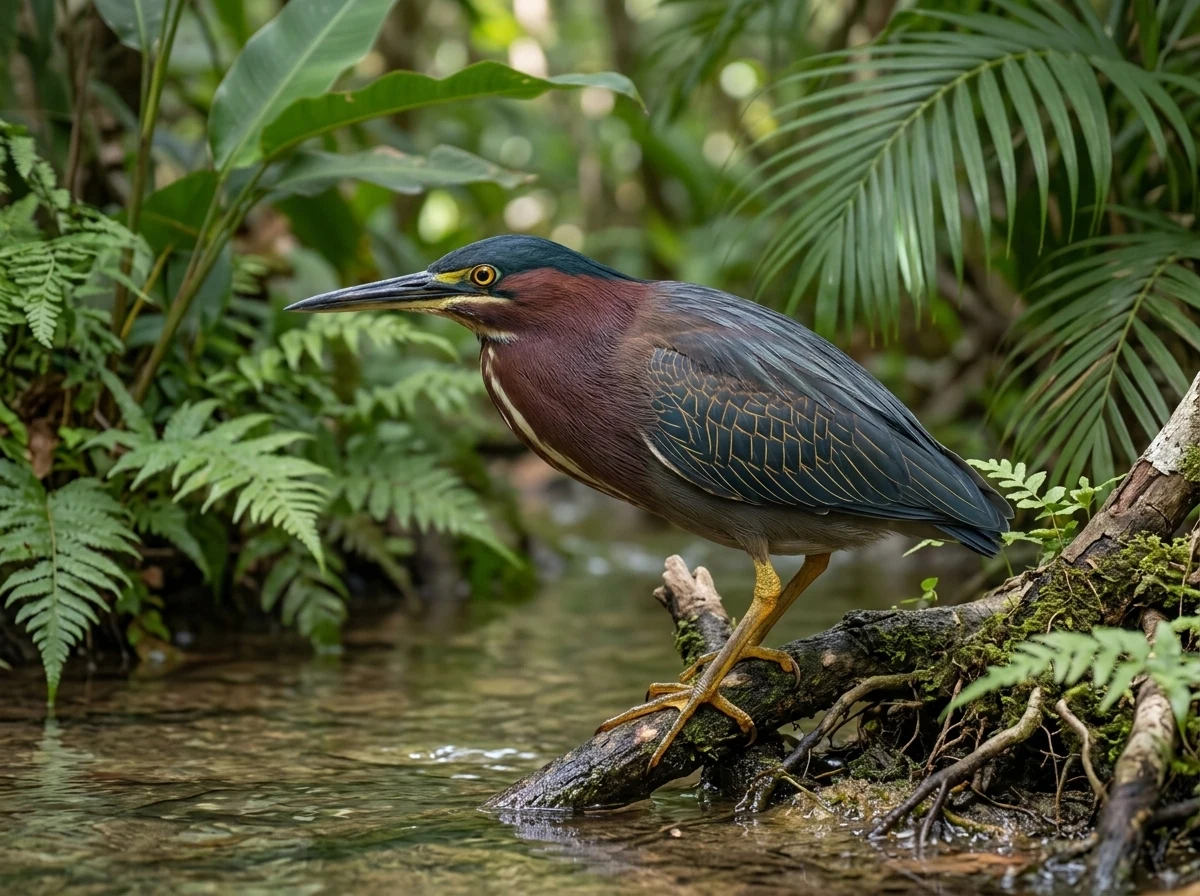
In mangroves and ponds, the Green Heron is a small, crow-sized heron with a dark back glossed green or blue, a chestnut neck, and orange-yellow legs. It hunts motionless at the edge and sometimes drops a feather or twig on the water as bait. From a distance it looks more dark than green.
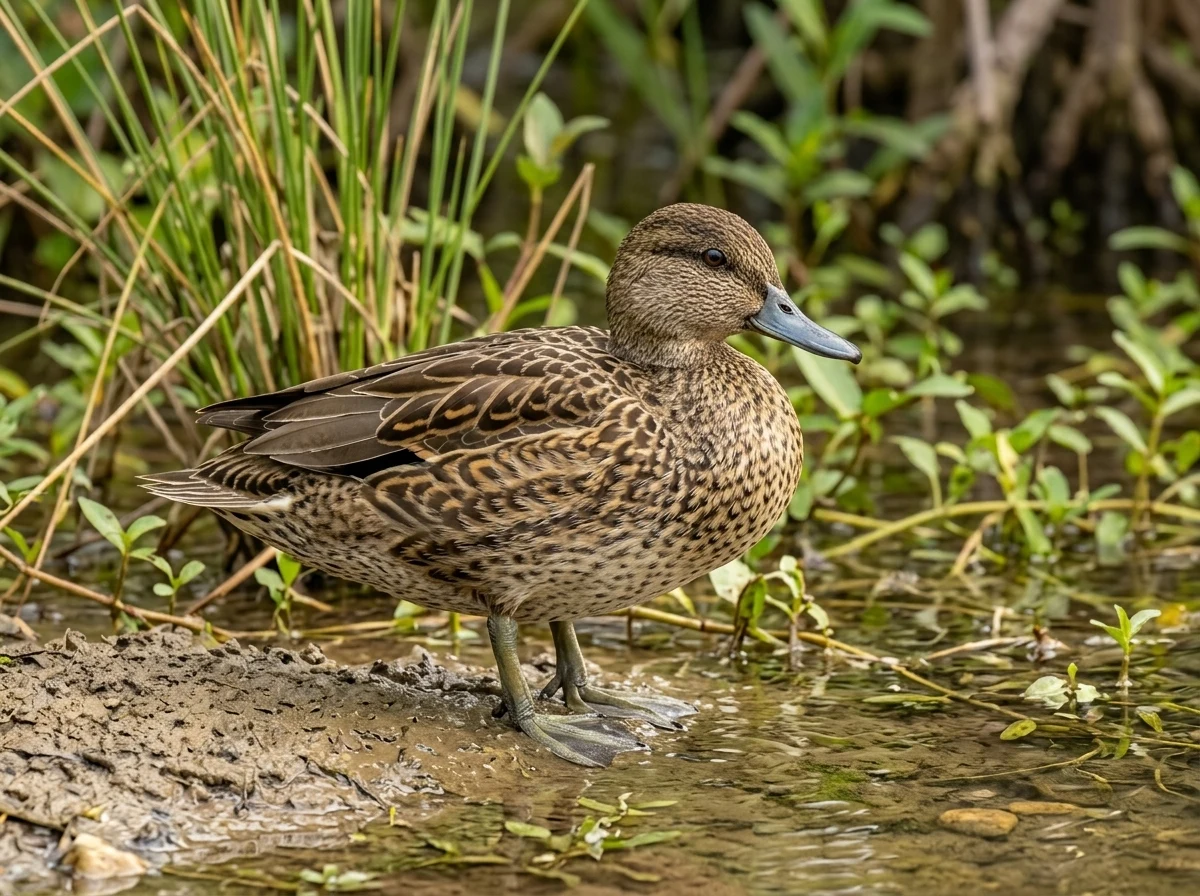
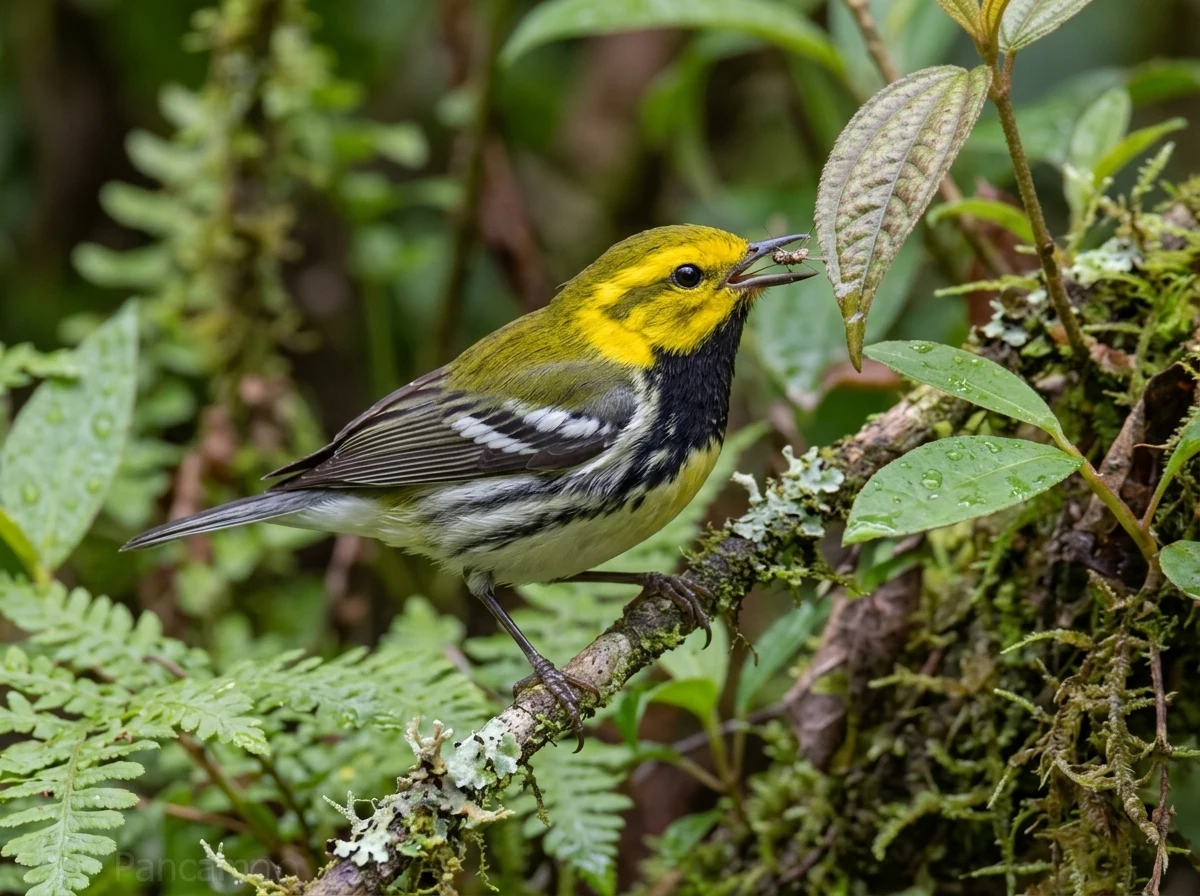
Among migrants, green shows up as details: Green-winged Teal, an accidental, is named for the green on its wing, and Black-throated Green Warbler is an accidental. Watch for one trap: in winter, the male Scarlet Tanager turns greenish with black wings, and the female is dull yellow-green.
Linked profiles
Green birds of Puerto Rico
Endemics, residents, and introduced birds: each profile shows occurrence status.
Sound archive
Hear its voice
Explore real songs and calls. The spectrogram turns each sound into a visual trace of time and frequency.
XC796586Recording 1 of 3call

Play: call by Bobby Wilcox
Choose another recording
Sound recorded by Bobby Wilcox · XC796586 · CC BY-NC-SA 4.0. Visualization by Stichting Xeno-canto voor Natuurgeluiden.
Every recording retains the creator, catalogue number, and license published by Xeno-canto. Metadata via GBIF ↗
01
What is the small green bird of Puerto Rico?
It is usually the endemic Puerto Rican Tody, bright green with a red throat and flat bill, perching still on low branches. If it hovered at flowers, it was a hummingbird: the four-gram Puerto Rican Emerald is the island's smallest green bird.
02
Are the green parrots in cities Puerto Rican Parrots?
Almost never. The Puerto Rican Parrot lives in the wild only in managed populations at El Yunque, Río Abajo, and Maricao. Urban green parrots are usually introduced species such as Monk or White-winged Parakeet. The native parrot has a red forehead, blue primaries, and a white eye-ring.
03
What is the Red-and-green Macaw?
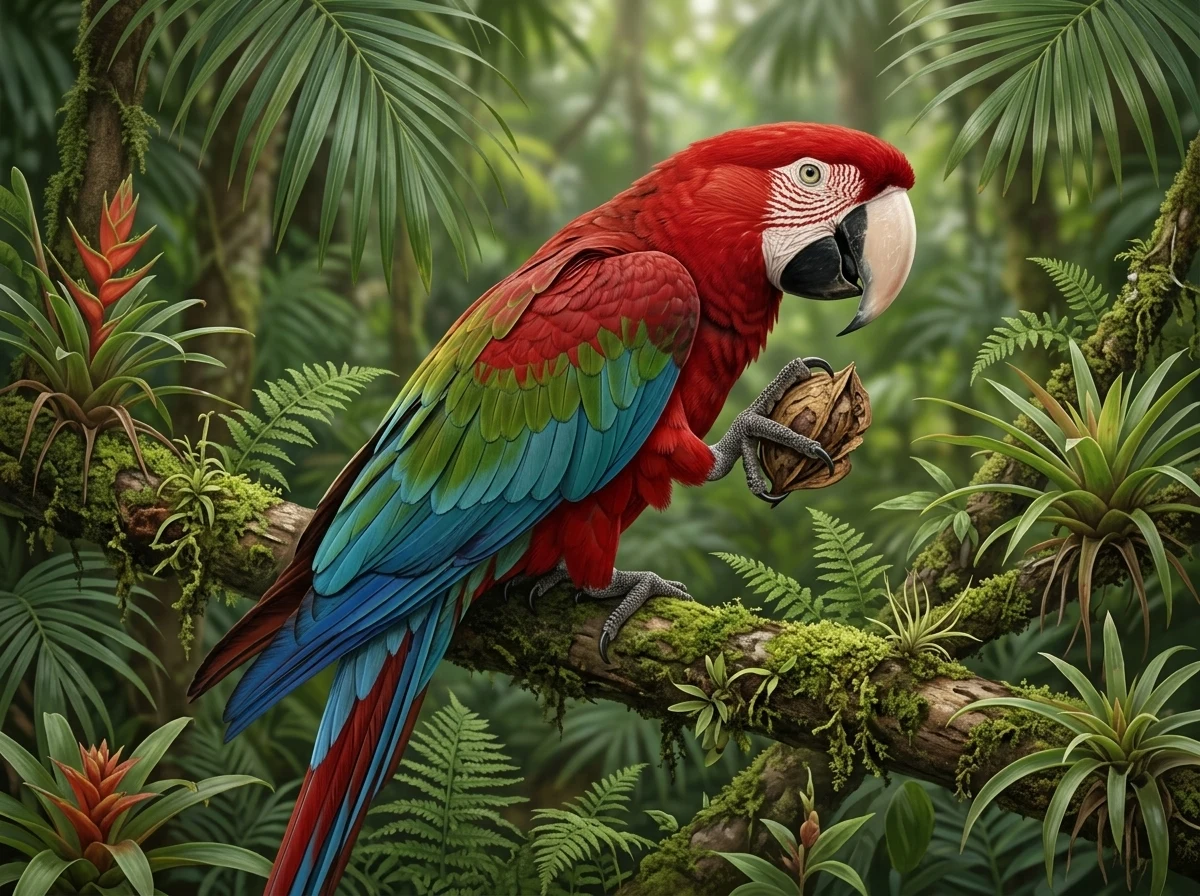
The Red-and-green Macaw (Ara chloropterus) is a large, mostly red macaw with green on the wings, native to South America. In Puerto Rico it is listed with uncertain origin, meaning birds seen may be escapes from captivity. It is not native to the island.
04
What green and orange bird lives in Puerto Rico?
It is the male Puerto Rican Spindalis, an endemic: yellow-green back, black head with two white stripes, orange collar, and yellow breast. The female is olive-green and far plainer. Both visit fruiting trees in forests, edges, and gardens.
05
Which Puerto Rico hummingbirds are green?
Green Mango, all iridescent green with a long curved bill; Puerto Rican Emerald, small with a short straight bill; and Green-throated Carib, with a green throat, a blue chest band, and black belly. The first two are endemic.
06
Is there a green heron in Puerto Rico?
Yes, the Green Heron, or Martinete: a small heron with a dark back glossed green or blue, a chestnut neck, and orange-yellow legs. It hunts motionless at the edges of mangroves, ponds, and rivers, sometimes using bait to lure fish.
Keep exploring
Connected routes
Sources and review
The evidence is one link away.
These sources support the editorial scope of this guide. Bird profiles also retain their own taxonomy, occurrence, and conservation references.
Reviewed:
01↗02↗03↗04↗05↗06↗07↗08↗09↗10↗11↗12↗13↗
Birds of the World / Cornell Lab of Ornithology
Puerto Rican Tody: introduction
Tody colors and its range from coastal lowlands into the mountains.U.S. Fish and Wildlife Service
Species profile: Puerto Rican Amazon
Physical description of the parrot and its diet.U.S. Fish and Wildlife Service
Puerto Rican Parrot recovery information
Current recovery context and the populations at Río Abajo and El Yunque.Biodiversidad de Puerto Rico
The hummingbirds of Puerto Rico
Field clues using size, bill, color, and local distribution for the five resident hummingbirds.BirdsCaribbean
From the Nest, day 54: Puerto Rican Tody
Description, foraging, nest tunnel, and iris difference between sexes.National Audubon Society
Field guide: Monk Parakeet
Green plumage with gray forehead, throat, and chest, and bulky stick nests.BirdsCaribbean
Coloring page: Puerto Rican Emerald
Sparkling green plumage and males brighter than females.Celebrate Urban Birds / Cornell Lab of Ornithology
Focal species: Puerto Rican Spindalis
Male and female Puerto Rican Spindalis description.BirdsCaribbean
From the Nest, day 91: Puerto Rican Spindalis
Orange collar, yellow breast of the male, and olive-green female.BirdsCaribbean
Five new bird species for the Caribbean (2023)
Split of the Puerto Rican Euphonia and male and female descriptions.National Audubon Society
Field guide: Green Heron
Green- or blue-glossed back, chestnut neck, orange-yellow legs, and bait fishing.National Audubon Society
Field guide: Scarlet Tanager
Red male with black wings and tail, greenish winter plumage, and South American wintering range.Sociedad Ornitológica Puertorriqueña
Official bird list
Local names, occurrence categories, and the public summary of 17 endemics.The atlas continues