 AI
AIIntroduced estrildids
Munias, Mannikins, and Waxbills of Puerto Rico
Small, social, and devoted to seeding grass: estrildids are the introduced birds you will see most in pastures, lawns, and wetland edges.
Reviewed:Nine finches from Africa and Asia, all introduced.
Puerto Rico's estrildids are nine species of small finches — munias, a mannikin, waxbills, Indian Silverbill, Java Sparrow, and Red Avadavat — and all were introduced from Africa or Asia, almost always through the cage-bird trade. The easiest to find are Scaly-breasted Munia, Orange-cheeked Waxbill, and Bronze Mannikin, each present across nearly half the island according to the Breeding Bird Atlas.
Although people call them sparrows, they are not related to House Sparrow or to native seedeaters such as Black-faced Grassquit. They weigh roughly 7 to 25 grams, eat grass seeds, move in flocks, and build round or domed nests. This guide helps you separate the species by size, bill, habitat, and region.
Introduced estrildids
Estrildids in the atlas
9introduced speciesEvery Estrildidae species in the catalog is introduced.
52 %of the island with Scaly-breasted Munia247 of 479 atlas hexagons; the most widespread estrildid.
1874waxbill already presentOrange-cheeked Waxbill arrived before 1874; several munias in 1971.
01
Scaly-breasted Munia: the most widespread estrildid
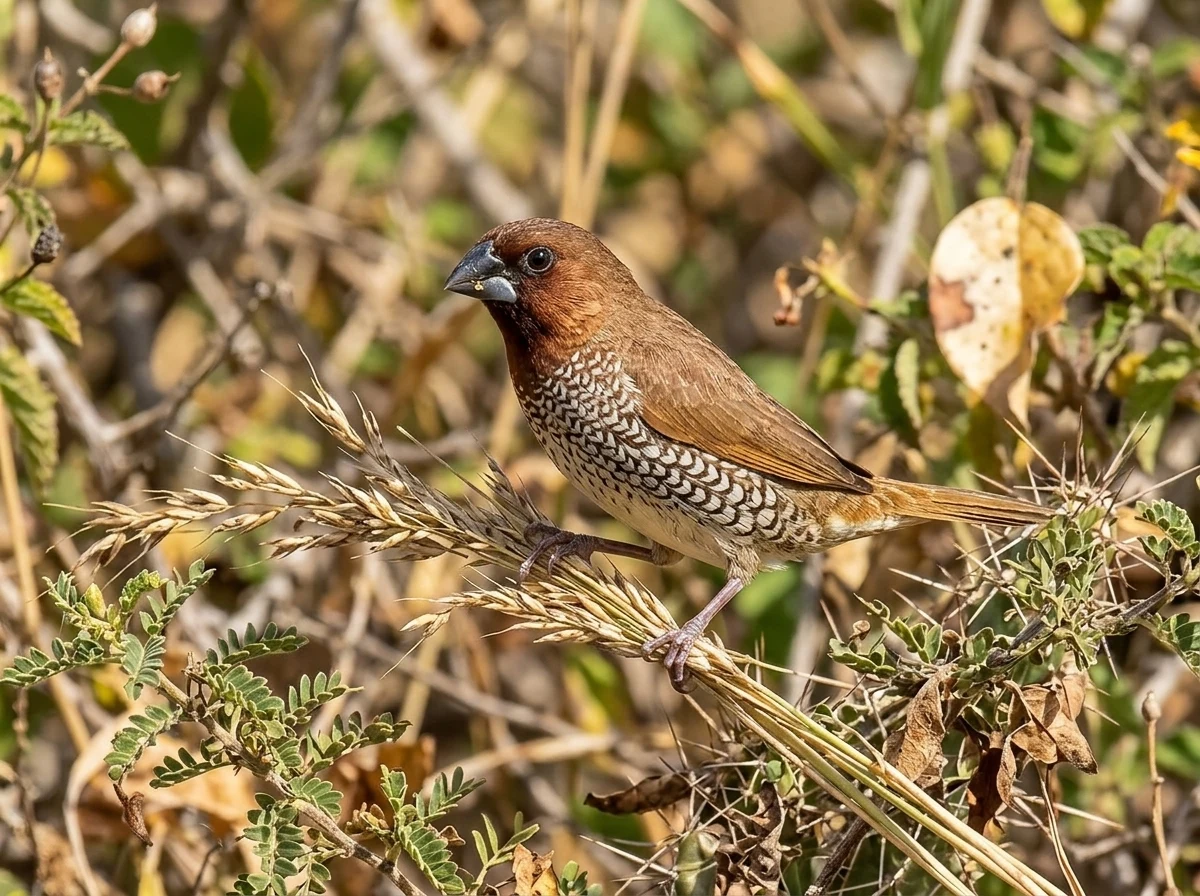
Scaly-breasted Munia (Lonchura punctulata), known in the pet trade as nutmeg mannikin or spice finch, is brown above, with a dark conical bill and a scale-like pattern on breast and belly that gives it its name. It weighs about 14 grams. Immatures are plain brown without scaling and are easily confused with immatures of other munias.
It was recorded in Puerto Rico in 1971 and is now common from Ceiba to Vega Baja and less frequent in other lowlands; there are also records from Culebra and Vieques. In the atlas it appeared in 247 hexagons (52%), and breeding concentrates from March to July. It builds bulky domed nests at moderate height in trees, along cane edges, farmland, roadsides, and urban parks.
02
Bronze Mannikin and Orange-cheeked Waxbill: the oldest introductions
Bronze Mannikin (Spermestes cucullata) is African, weighs about 10 grams, and probably reached Puerto Rico in the early colonial era. It is common in lowland gardens, weedy lots, fields, and lawns, usually below 300 meters elevation, and has also been reported from Culebra and Vieques. The atlas found it in 213 hexagons (44%), with breeding peaking in June.
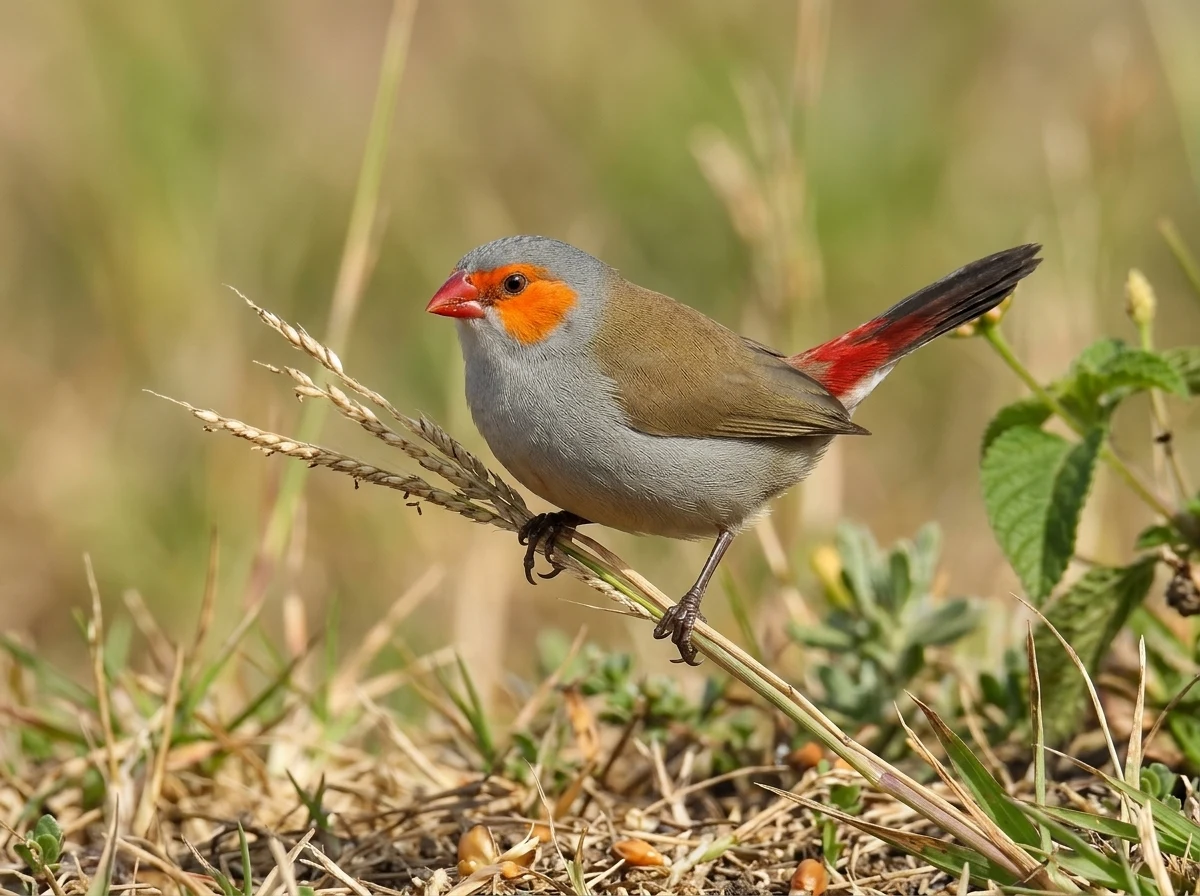
Orange-cheeked Waxbill (Estrilda melpoda), from West Africa, is even smaller — about 8 grams — and has the orange cheek that gives it its name. It was on the island before 1874 and is common in the coastal plains; it is seen regularly in tall grass at Laguna Cartagena and in the Humacao Natural Reserve. Unlike munias, it usually builds its nest at ground level at the base of grass clumps.
03
Indian Silverbill and Java Sparrow: specialists of the south and the city
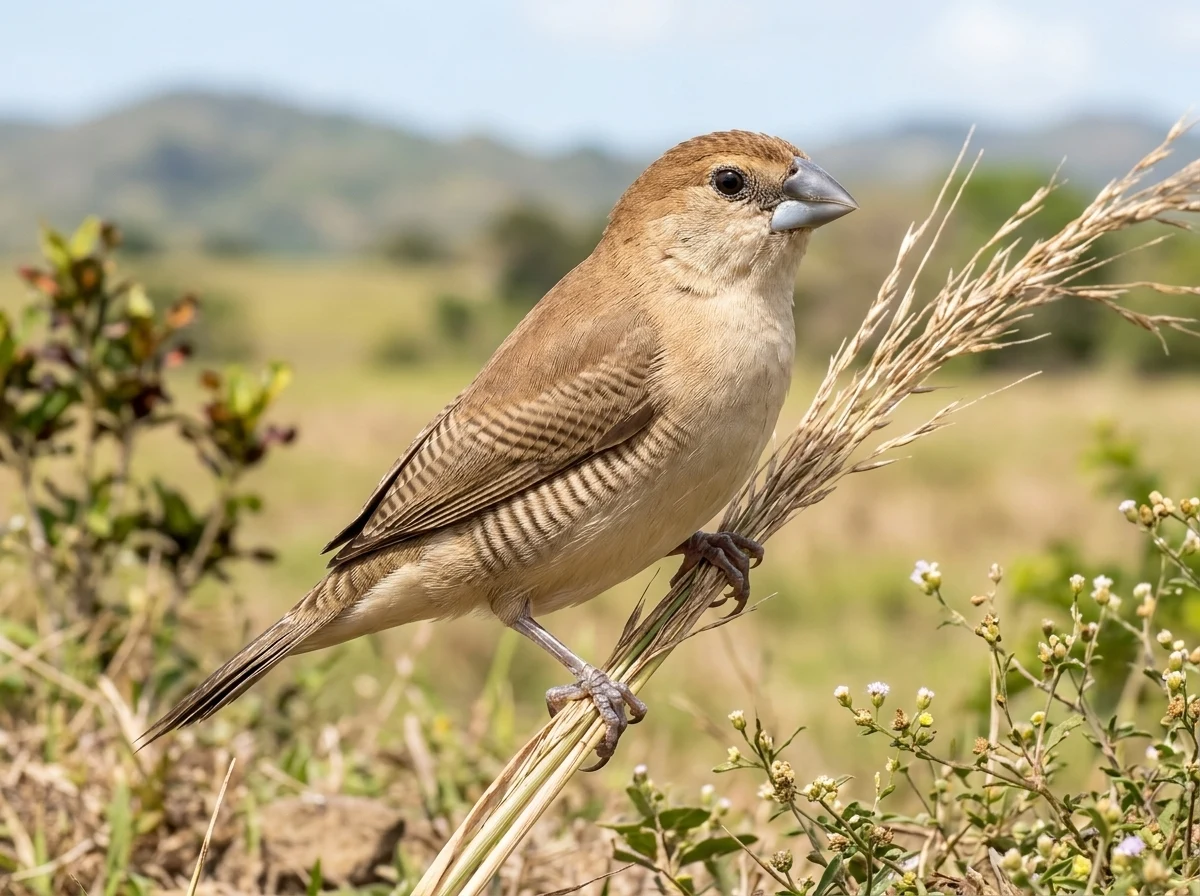
Indian Silverbill (Euodice malabarica) was recorded in 1971 and is locally common on the coasts, especially in the southwest, and in metropolitan San Juan west to Dorado. In the atlas, 81% of the hexagons where it bred were in the southern subtropical dry forest life zone. It uses scrub, arid pastures, and gardens with seeding grass, and builds a domed nest with a side entrance in trees or even on window ledges.
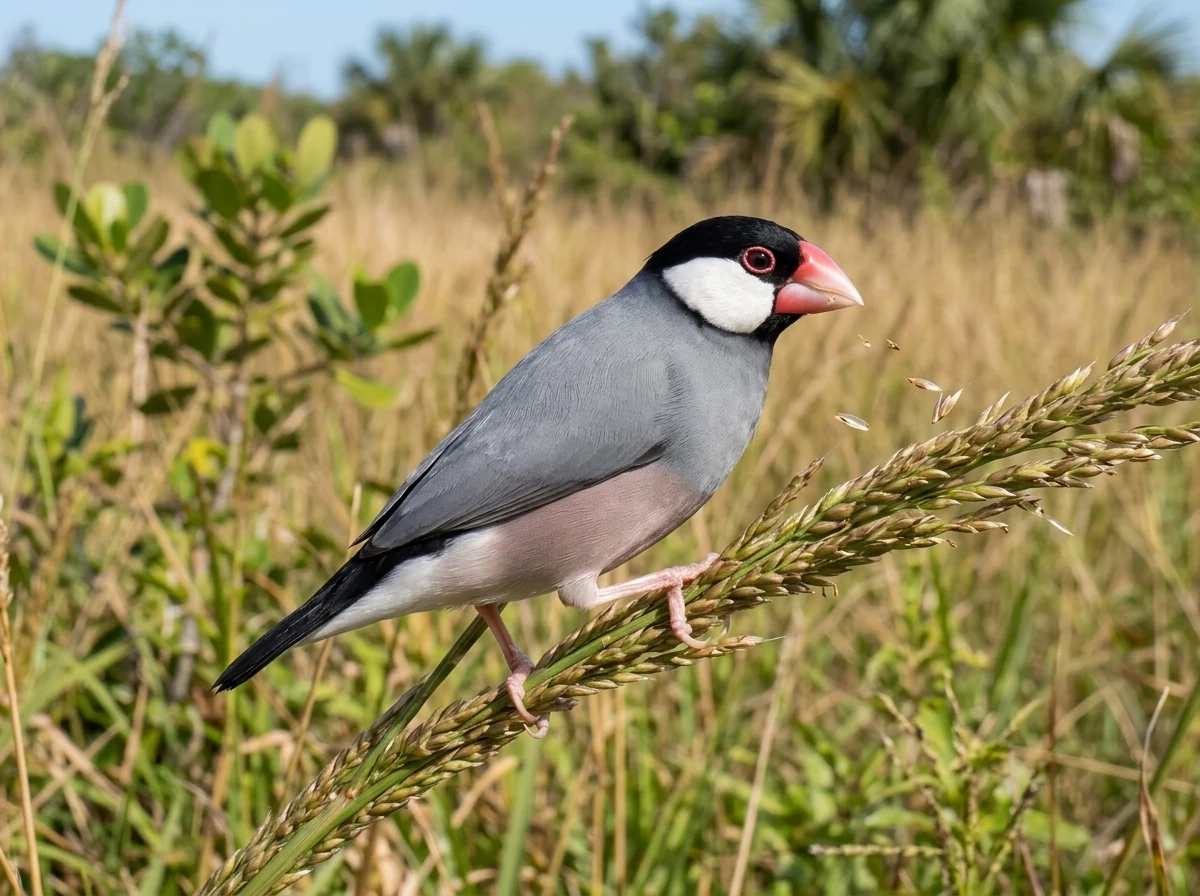
Java Sparrow (Padda oryzivora) is the largest estrildid of the group at about 25 grams: gray above, black head with white cheeks, pink belly, red eye-ring, and a thick red bill. It is fairly common in metropolitan San Juan and one of the most frequent birds of Old San Juan, where it nests in crevices, ledges, and eaves. In its native Indonesia it is Endangered on the IUCN Red List.
04
Tricolored Munia, Chestnut Munia, and Red Avadavat: wetlands and cane fields
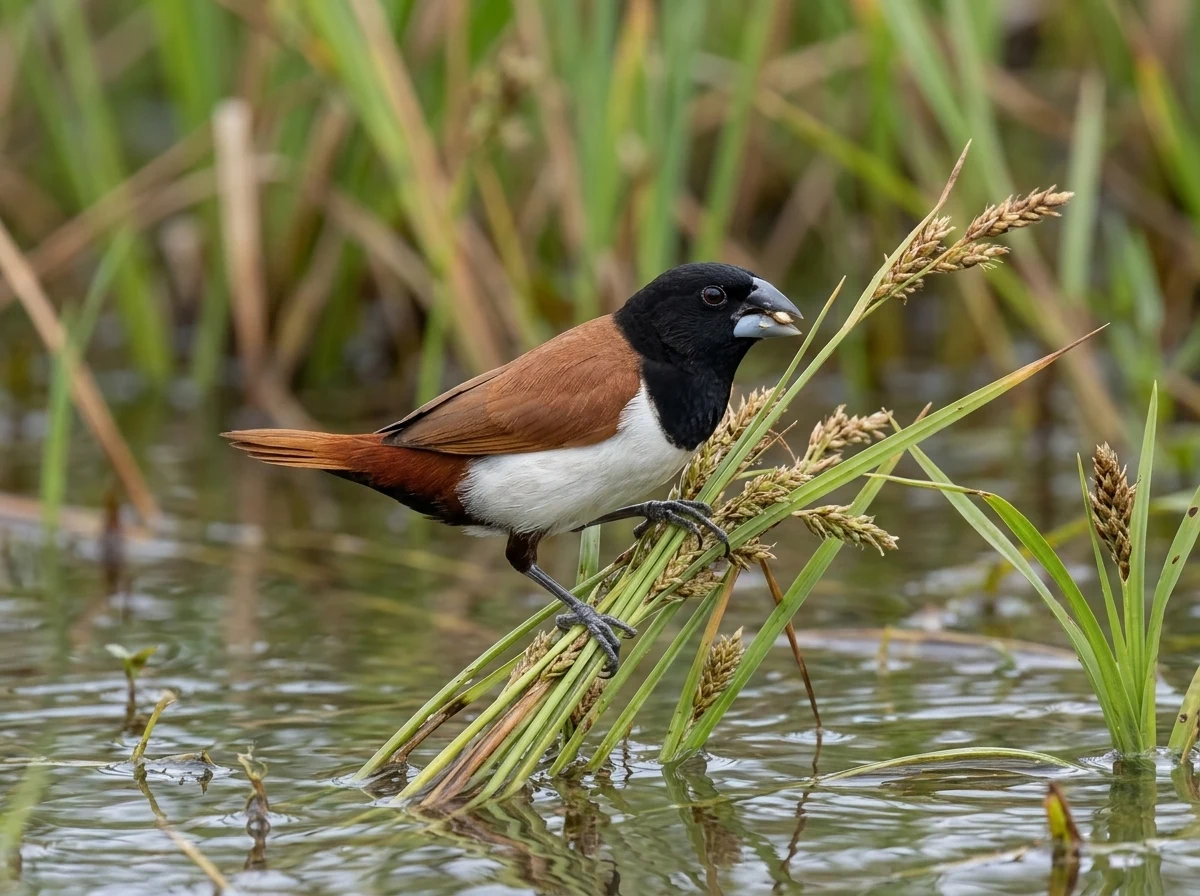
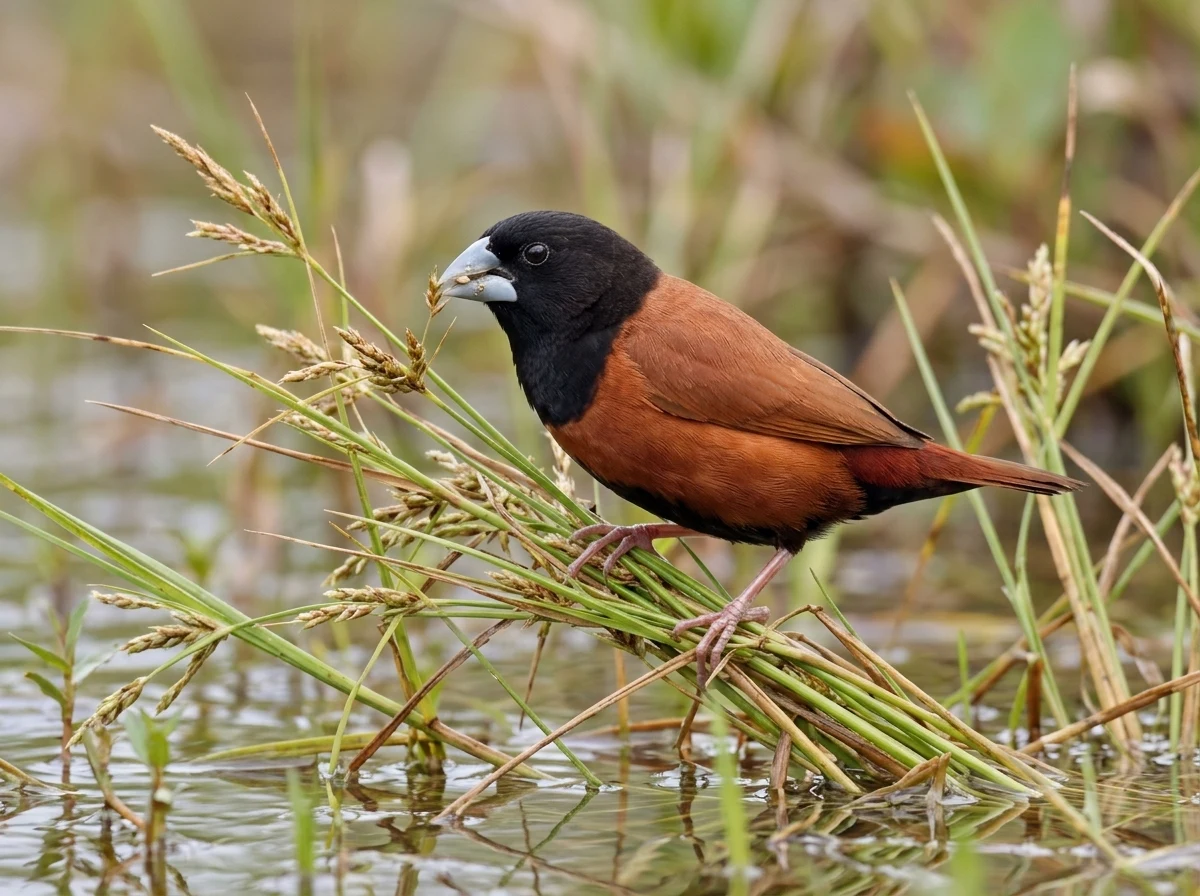
Tricolored Munia (Lonchura malacca) arrived as a cage bird in 1971 and naturalized around the coast, in tall grass beside cane fields, swamps, canals, and croplands with seeding grass. The atlas found it in 13 hexagons; in Humacao it was documented nesting in sedge clumps growing on coconut palm stumps. Chestnut Munia (Lonchura atricapilla), formerly considered the same species, is in the catalog but has no separate atlas account: compare underpart color carefully and photograph the belly.
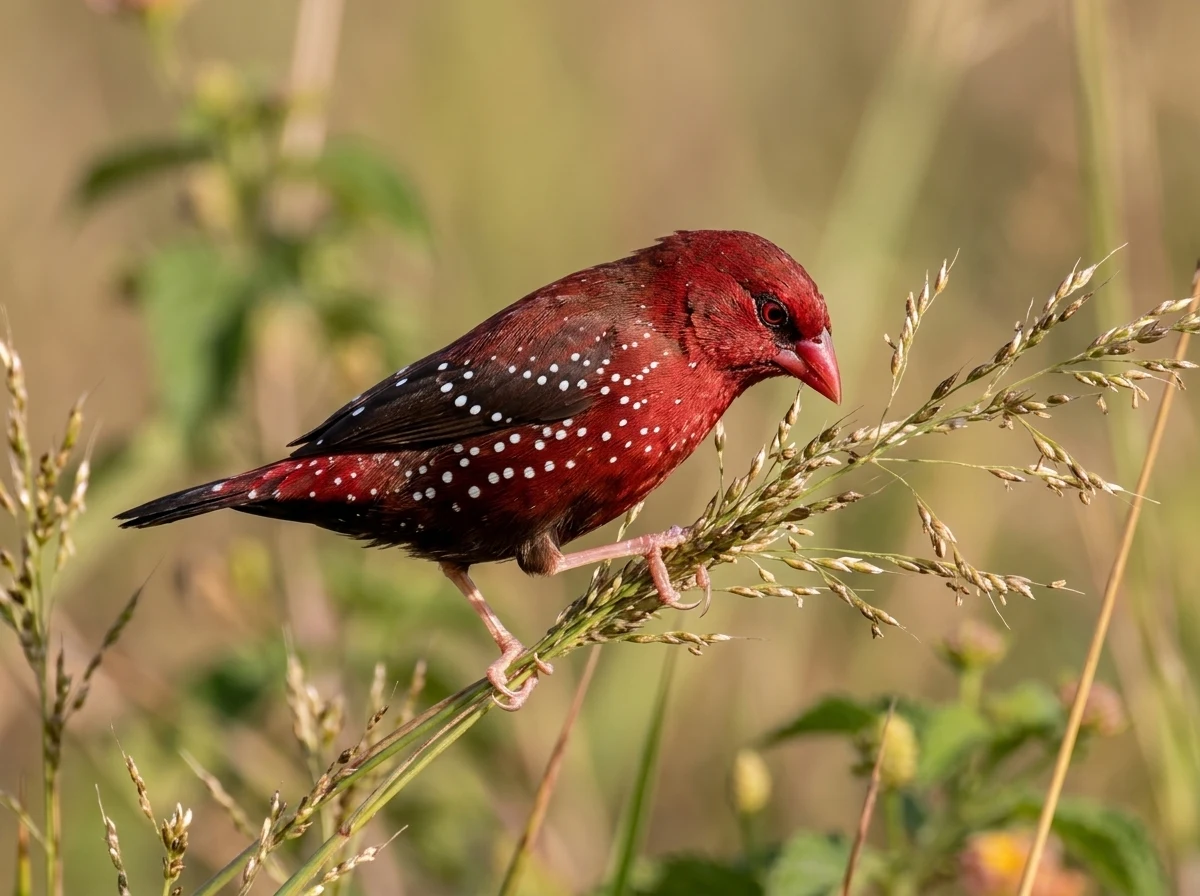
Red Avadavat (Amandava amandava), about 8.5 grams, was first recorded wild in 1971 and uses grassy wetland edges, freshwater swamps, and cane fields. It is the most localized established estrildid: the atlas found it in only three hexagons near Salinas, breeding in February and May. A red male in a southern grassland deserves a photo and a report.
05
How to separate them in the field
Start with size and place. On an Old San Juan lawn, a gray finch with a thick red bill is almost certainly Java Sparrow; in tall grass at a southern or western wetland, tiny active flocks point to waxbills; on northern cane edges and pastures, Scaly-breasted Munia is the most likely choice. Then check the bill: dark and conical in Scaly-breasted Munia, thick and red in Java Sparrow; Indian Silverbill is named for its pale bill.
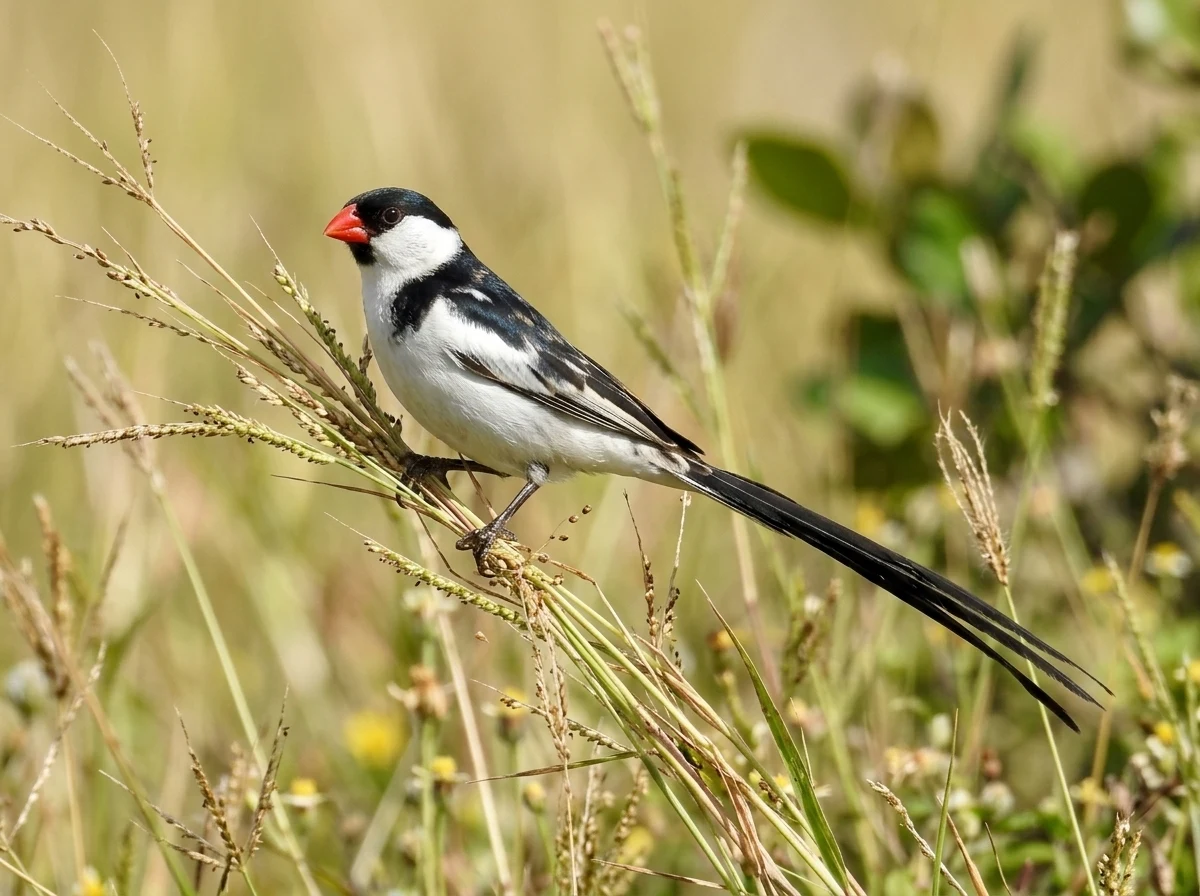
Juveniles are the trap. Immature munias of different species are plain brown and resemble each other and female bishops. Look for adults in the same flock, photograph several individuals, and record the species only when you see clear marks. If a flock includes a male with an extremely long tail, it is Pin-tailed Whydah, a parasite of waxbills and other nonnative finches.
Linked profiles
The nine estrildids and their parasite
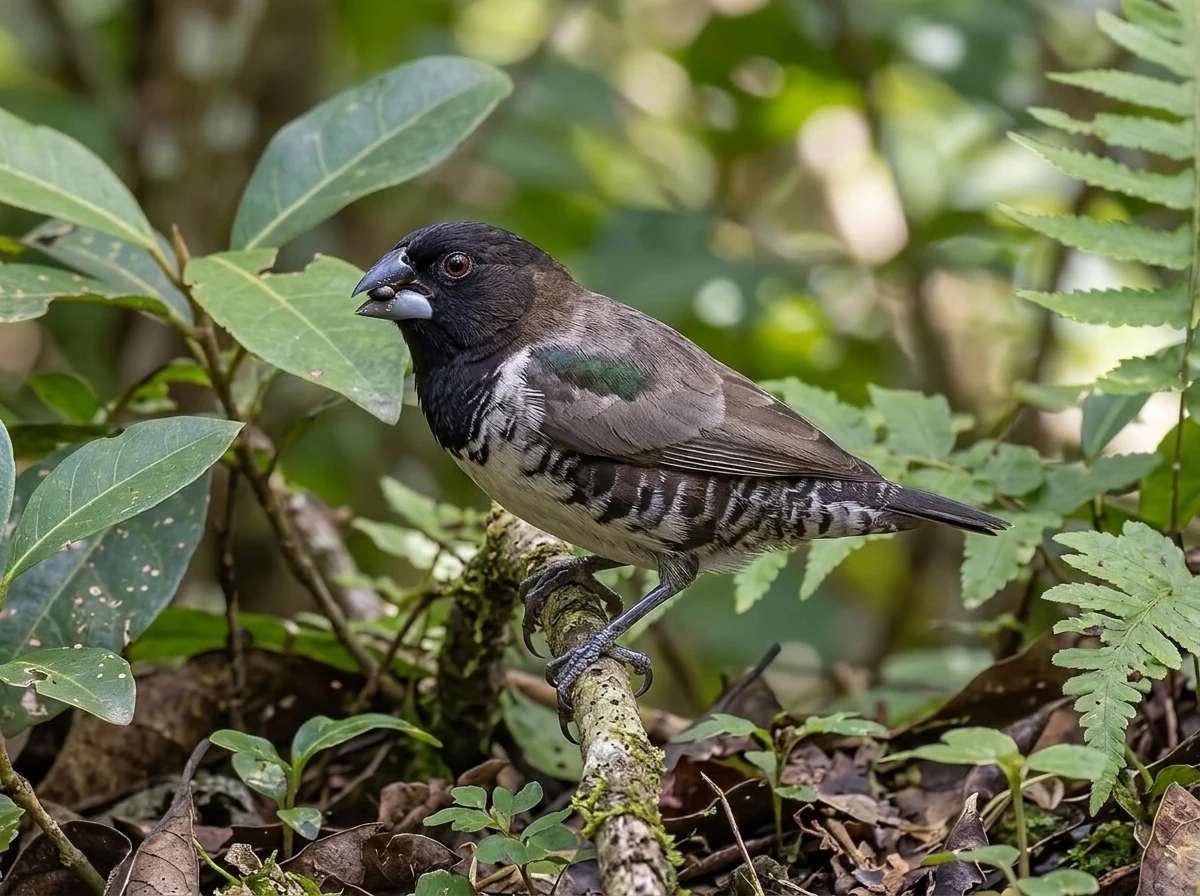
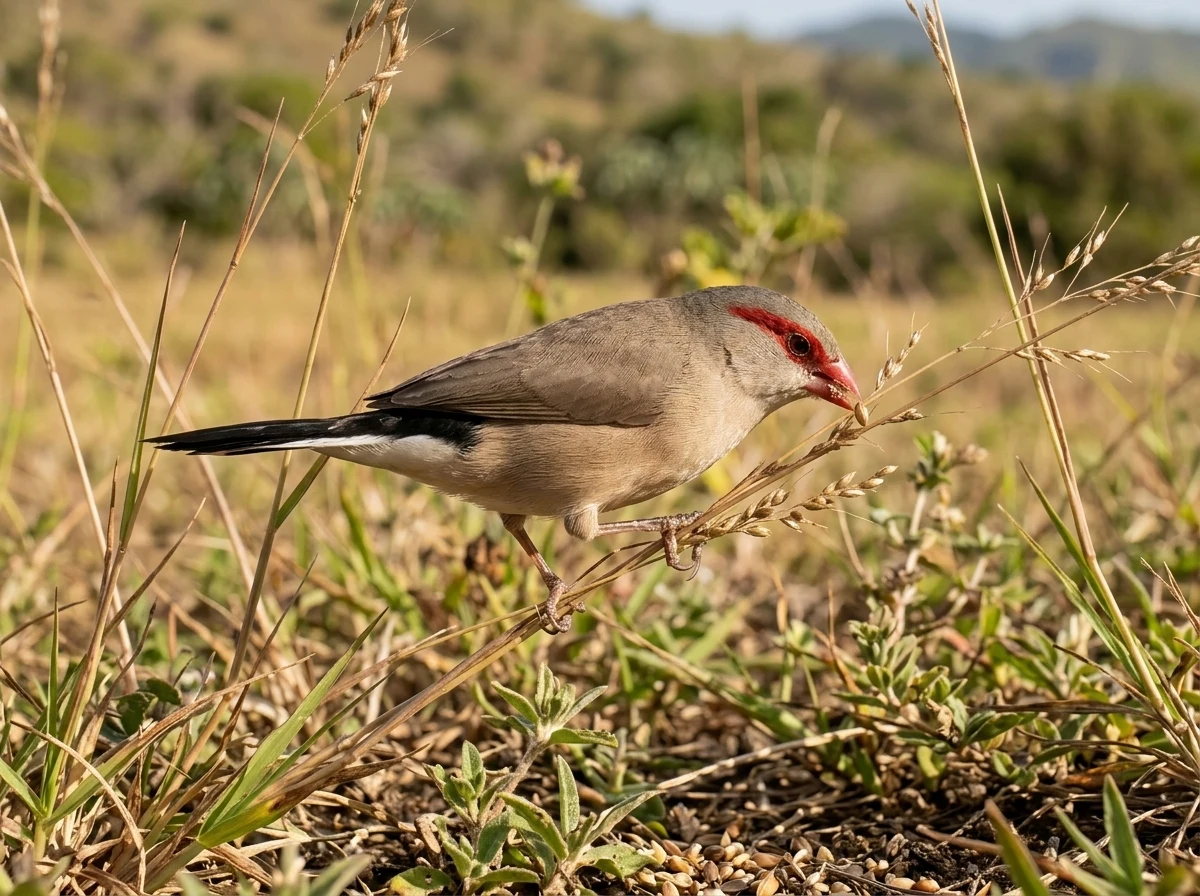
Compare size, bill, and habitat in each profile; Pin-tailed Whydah is included because it lays its eggs in these finches' nests.
Sound archive
Hear its voice
Explore real songs and calls. The spectrogram turns each sound into a visual trace of time and frequency.
XC46663Recording 1 of 3call

Play: call by Daniel Lane
Choose another recording
Sound recorded by Daniel Lane · XC46663 · CC BY-NC-SA 3.0. Visualization by Stichting Xeno-canto voor Natuurgeluiden.
Every recording retains the creator, catalogue number, and license published by Xeno-canto. Metadata via GBIF ↗
01
What is the Scaly-breasted Munia?
It is an Asian finch of the family Estrildidae (Lonchura punctulata), brown with scaling on breast and belly and a dark conical bill. It was recorded in Puerto Rico in 1971 and is now the island's most widespread estrildid, present in 52% of atlas hexagons.
02
What bird is the diablito?
In Puerto Rico, Diablito is the name for Bronze Mannikin (Spermestes cucullata), an African finch of about 10 grams probably introduced in colonial times. It lives in lowland gardens, lawns, and weedy lots and is among the most common estrildids.
03
Where can I see the Java Sparrow in Puerto Rico?
Java Sparrow is fairly common in metropolitan San Juan and is one of the most frequent birds in Old San Juan. Look on lawns with seeding grass and around buildings with crevices and eaves, where it nests.
04
Are waxbills native to Puerto Rico?
No. Orange-cheeked Waxbill (Estrilda melpoda) is West African and was on the island before 1874; Black-rumped Waxbill is also introduced. Today Orange-cheeked Waxbill is common in the coastal plains, including Laguna Cartagena and Humacao.
05
Where is the Red Avadavat found in Puerto Rico?
It is the most localized established estrildid: the Breeding Bird Atlas found it in only three hexagons near Salinas. It prefers grassy wetland edges, freshwater swamps, and cane fields.
06
Are they true sparrows?
No. Estrildids are a separate family of Old World finches. House Sparrow belongs to Passeridae, and Puerto Rico's native seedeaters, such as Black-faced Grassquit, belong to Thraupidae.
Keep exploring
Connected routes
Sources and review
The evidence is one link away.
These sources support the editorial scope of this guide. Bird profiles also retain their own taxonomy, occurrence, and conservation references.
Reviewed:
01↗02↗03↗04↗
U.S. Forest Service Research and Development
Puerto Rico Breeding Bird Atlas
Distribution and breeding timing for 130 species breeding in Puerto Rico and its satellite islands.Sociedad Ornitológica Puertorriqueña
Official bird list
Local names, occurrence categories, and the public summary of 17 endemics.U.S. Fish and Wildlife Service
Laguna Cartagena National Wildlife Refuge
Importance of the freshwater wetland for resident and migratory waterbirds.Departamento de Recursos Naturales y Ambientales
Humacao reserve designation document
Historical bird inventory and ecological description of lagoons, channels, and Pterocarpus forest.The atlas continues