 AI
AIBishops and weavers
Northern Red Bishop and Yellow-crowned Bishop
A red-and-black male over cane and a yellow-and-black one in the reeds: two African bishops that change clothes with the season.
Reviewed:Two African weavers, neither native.
Northern Red Bishop (Euplectes franciscanus) and Yellow-crowned Bishop (Euplectes afer) are the two weavers of the family Ploceidae recorded in Puerto Rico; both are African, arrived through the cage-bird trade, and were first recorded on the island in 1971. Northern Red Bishop is the more widespread and is seen in cane fields and tall grass; Yellow-crowned Bishop is uncommon and local in reedbeds and wetlands.
Their identification depends on the season. Males in breeding plumage are unmistakable — red-orange and black in one, yellow and black in the other — but outside breeding the males turn brown and streaked like the females. This guide explains how to recognize them in every phase, when they breed according to the atlas, and where to look.
Bishops and weavers
Bishops in the atlas
86hexagons with Northern Red Bishop18% of the 479 atlas hexagons; 150 records.
6hexagons with Yellow-crowned Bishop21 records; breeding confirmed in one and probable in five.
Junbreeding peakBoth breed mainly in summer: May–August and June–August.
01
Northern Red Bishop: recognizing male and female
The breeding male Northern Red Bishop is about 11 centimeters long and has bright red-orange plumage on the back that wraps around nape, throat, and breast, set against a black crown, forehead, flanks, and belly. Wings and tail are brown, legs pale, and the bill black.
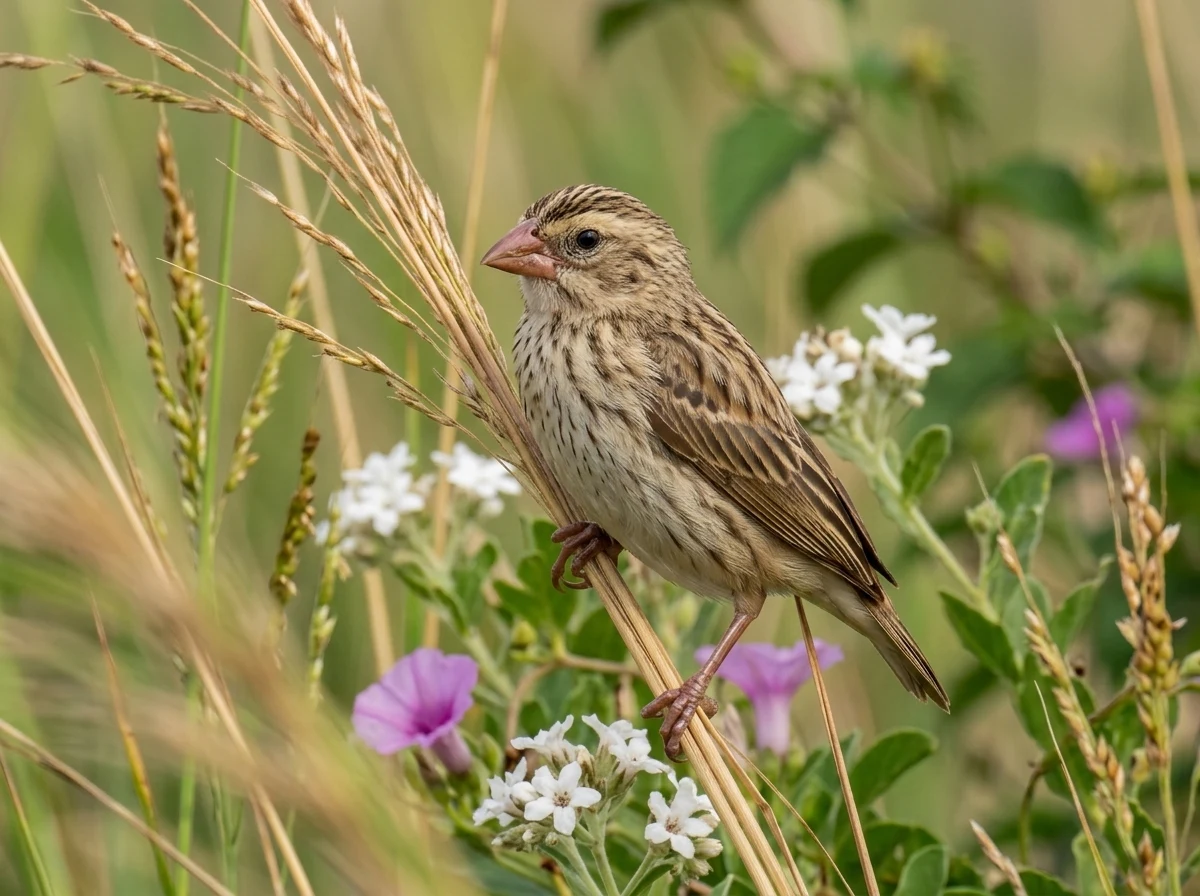
Its color depends on dietary carotenoids, which is why cage birds can look duller than wild ones. Outside breeding, male and female are brown with dark streaks and look sparrow-like. In that phase, confirm the species by the group it moves with, the cane or tall-grass habitat, and, if possible, a breeding male in the same flock.
02
Where Northern Red Bishop lives and when it breeds
First observed in Puerto Rico in 1971, Northern Red Bishop was described as uncommon on the north coast from San Juan to Arecibo, mostly in cane fields with grassy edges and in wet tall-grass fields of the lowlands. On Vieques it is considered a rare visitor from the main island. The atlas broadened the picture: 150 records in 86 hexagons, with probable breeding in 52 and confirmed breeding in 4.
It builds a bulky spherical nest, usually in dense cane or reeds and often near water. Although the literature gave breeding from March to November, the atlas found activity year-round, with most records from May to August and a peak in June. Of the hexagons with breeding, 69% were in the subtropical moist forest life zone and 30% in the dry forest zone.
03
Yellow-crowned Bishop: yellow and black in the reeds
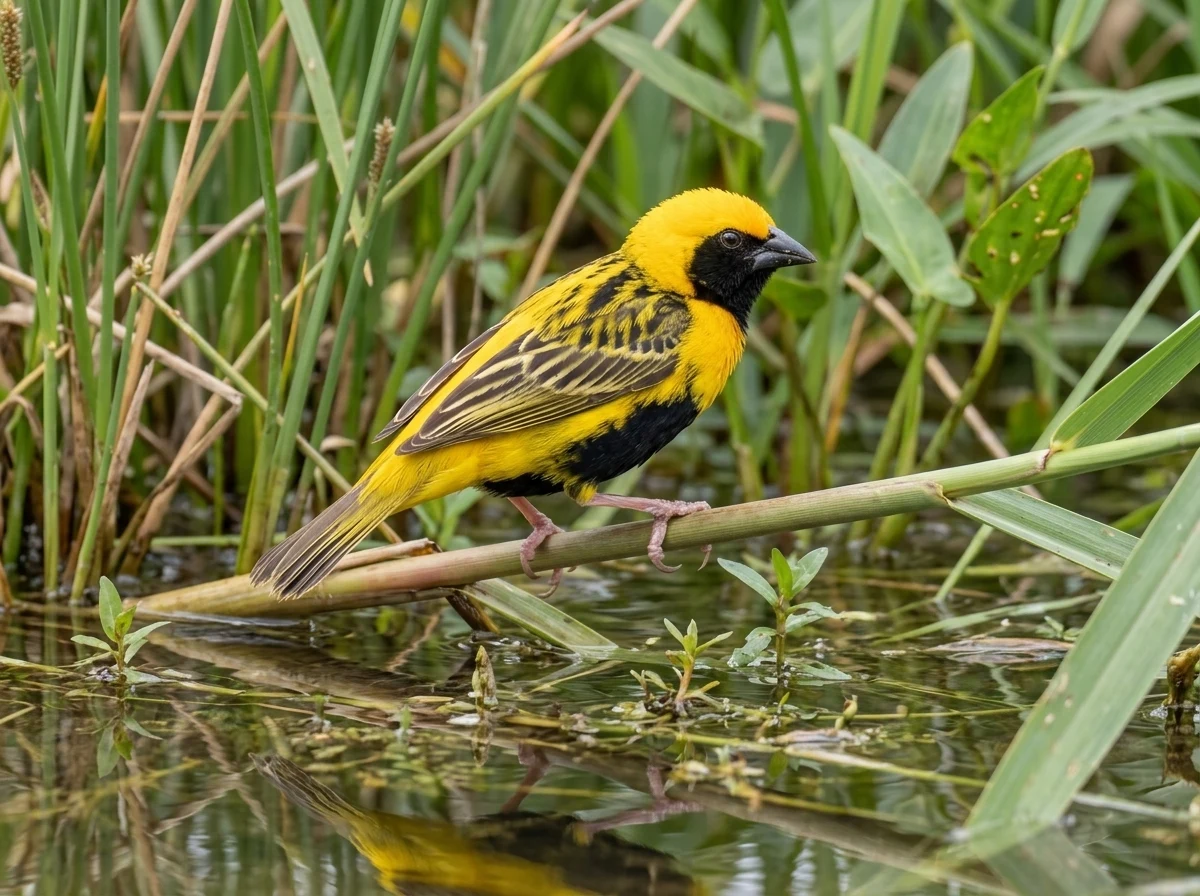
The breeding male Yellow-crowned Bishop is about 10 centimeters long and weighs about 15 grams. It has a golden-yellow crown, forehead, rump, back, and shoulder patch; face, throat, breast, belly, and a wide collar on the nape are black; wings and tail are brown. Outside breeding the male resembles the female, which is brown and streaked above, with a paler eyebrow and whitish underparts with fine streaks.
First recorded in 1971, it is uncommon and local in tall grass and reeds beside fresh water. It has been observed in marshes around San Juan, the Río Piedras Botanical Garden, Torrecillas, Laguna Cartagena and the Lajas Agricultural Experiment Station, fields near the Ponce airport, and the Humacao Natural Reserve, as well as Canóvanas, Río Grande, and the southwest. The atlas found it in six hexagons, with breeding concentrated from June to August.
04
Confusion species: red birds, yellow birds, and brown females
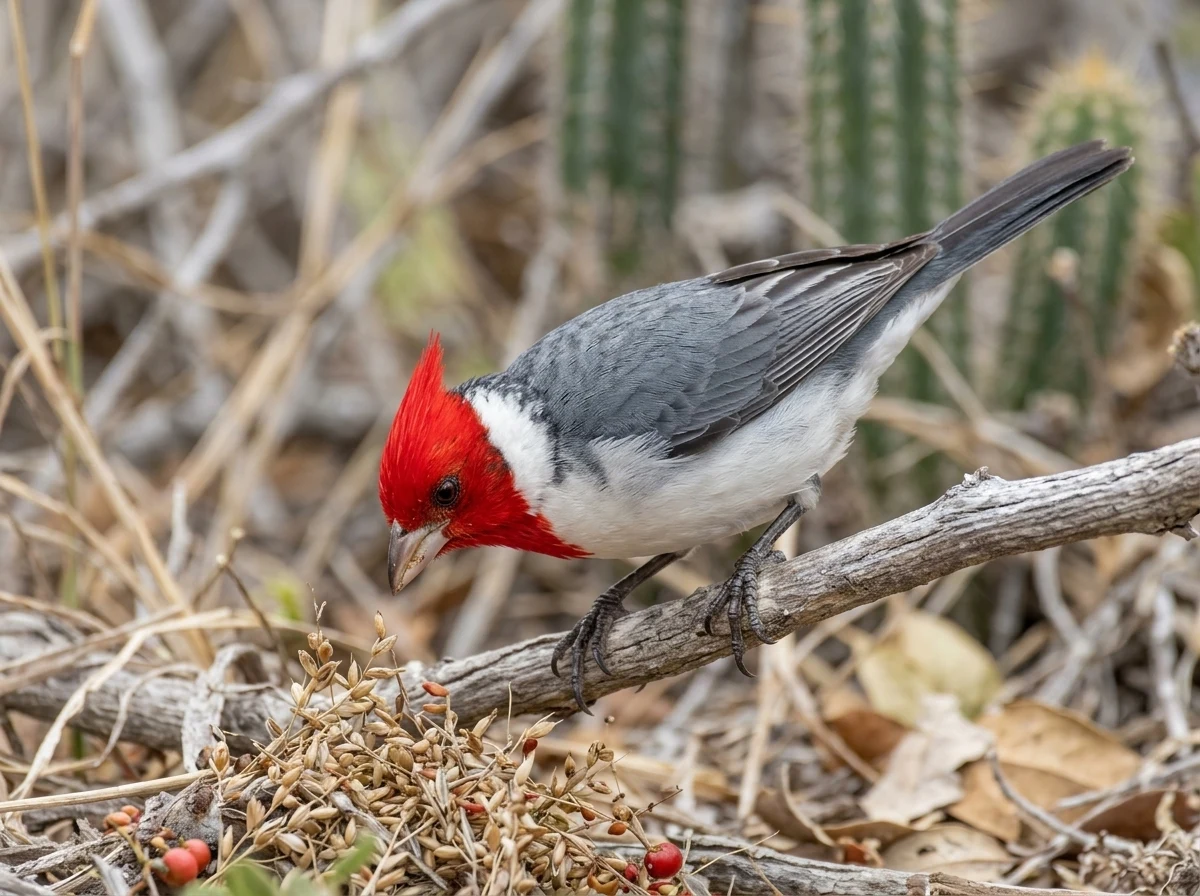
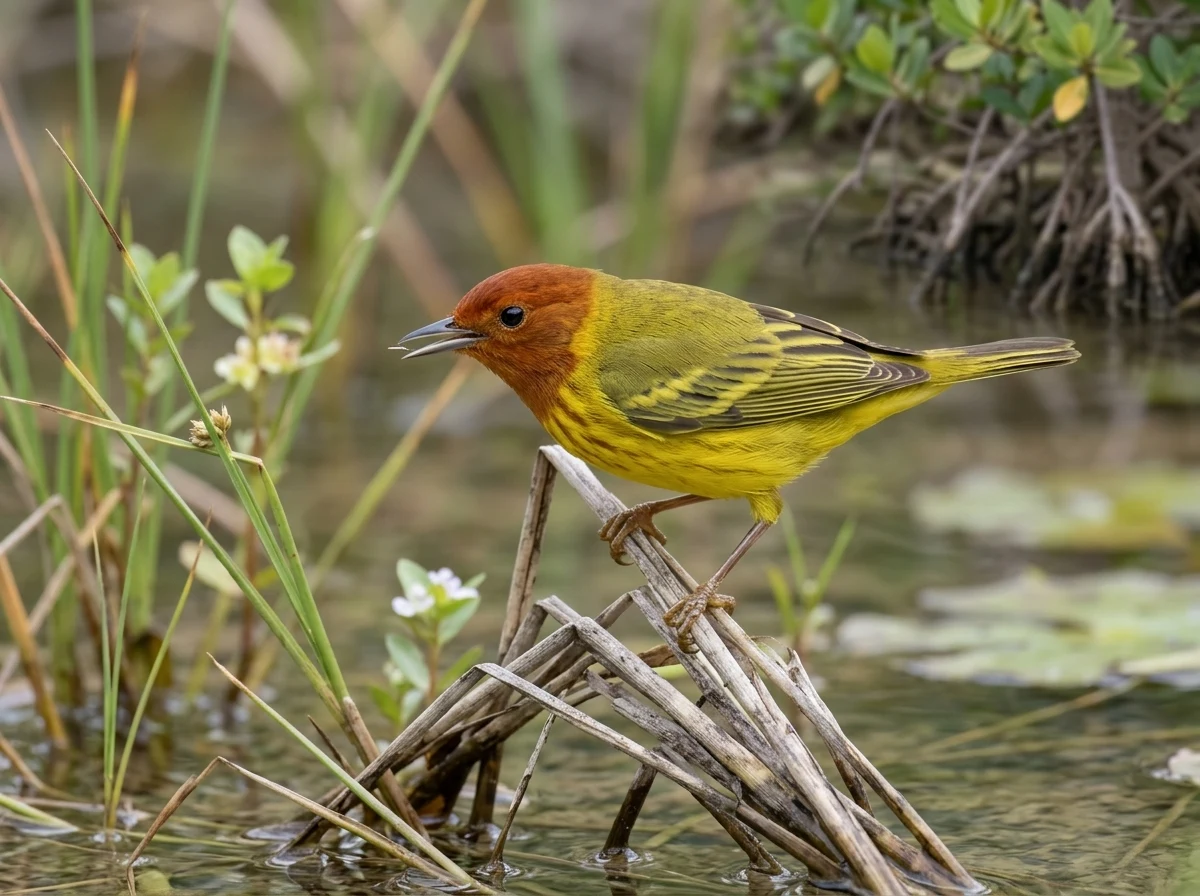
A male Northern Red Bishop may be reported as a cardinal or just a red bird. Puerto Rico has no native resident cardinals; the introduced Red-crested Cardinal, not even a true cardinal but a tanager, has a red crested head, not an orange back with a black crown. Yellow-crowned Bishop can be confused with yellow birds such as Mangrove Yellow Warbler, but its bill is a thick seedeater's bill and its face and belly are black.
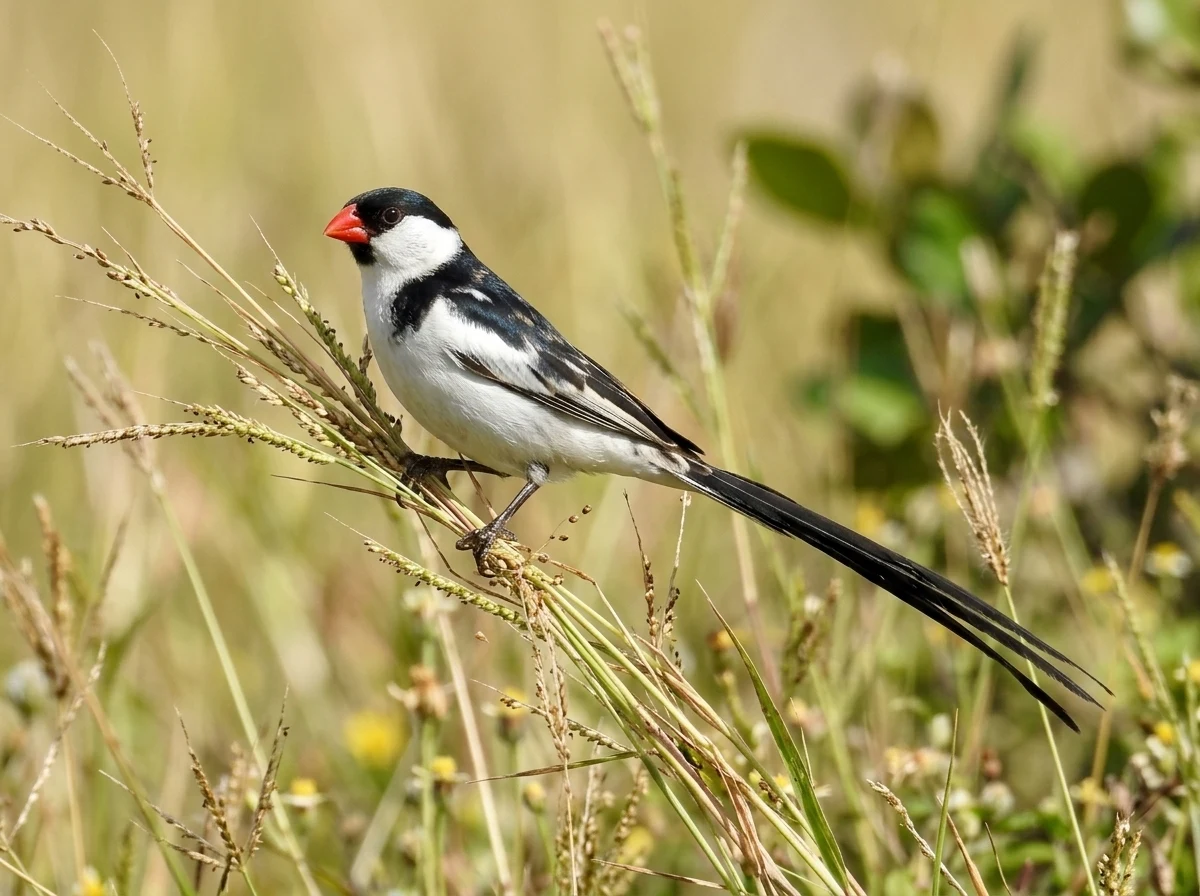
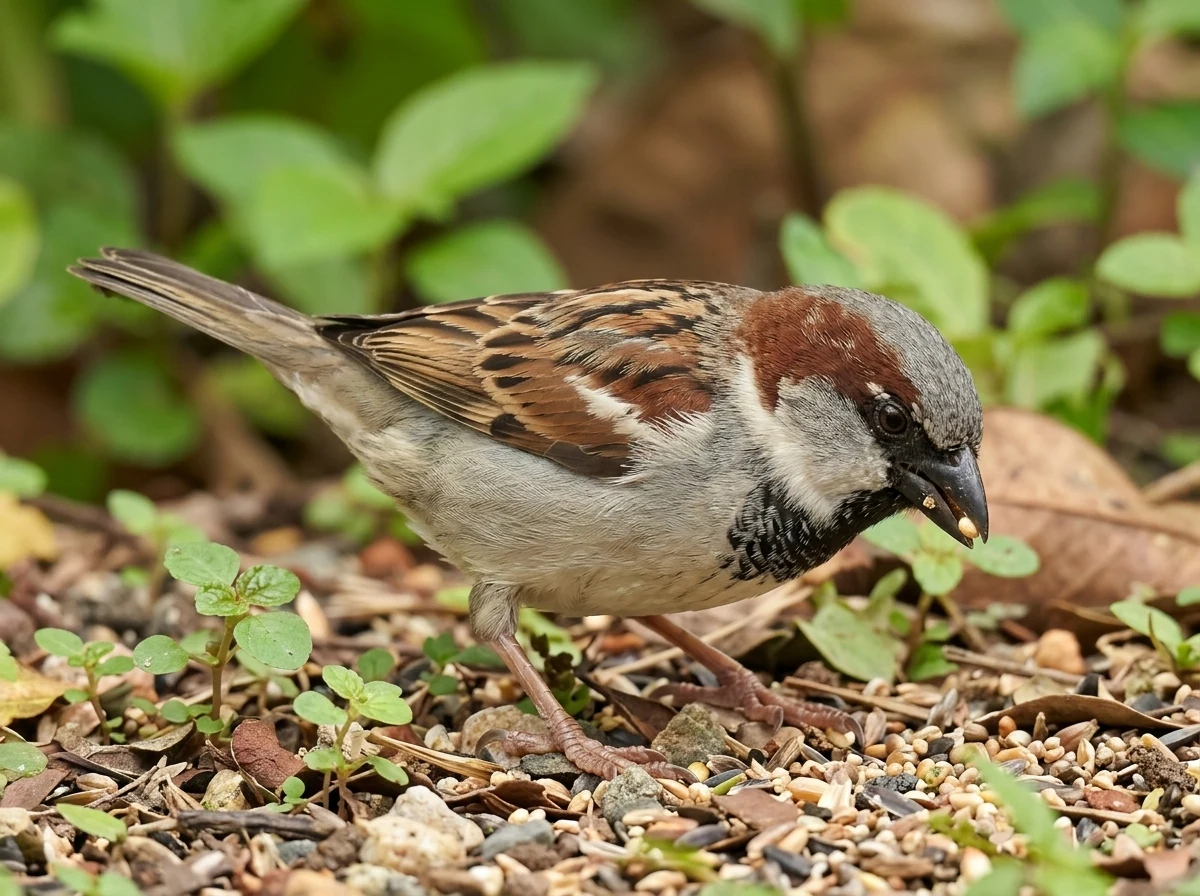
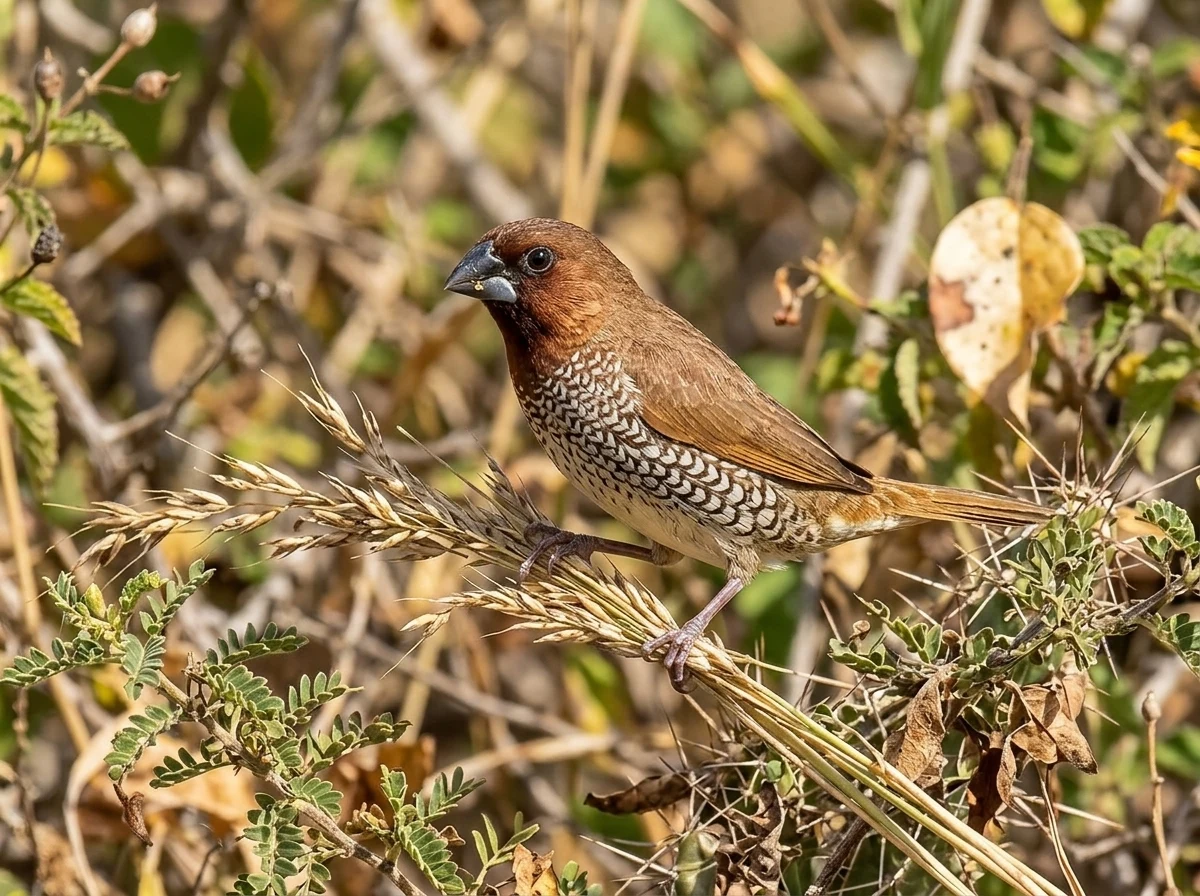
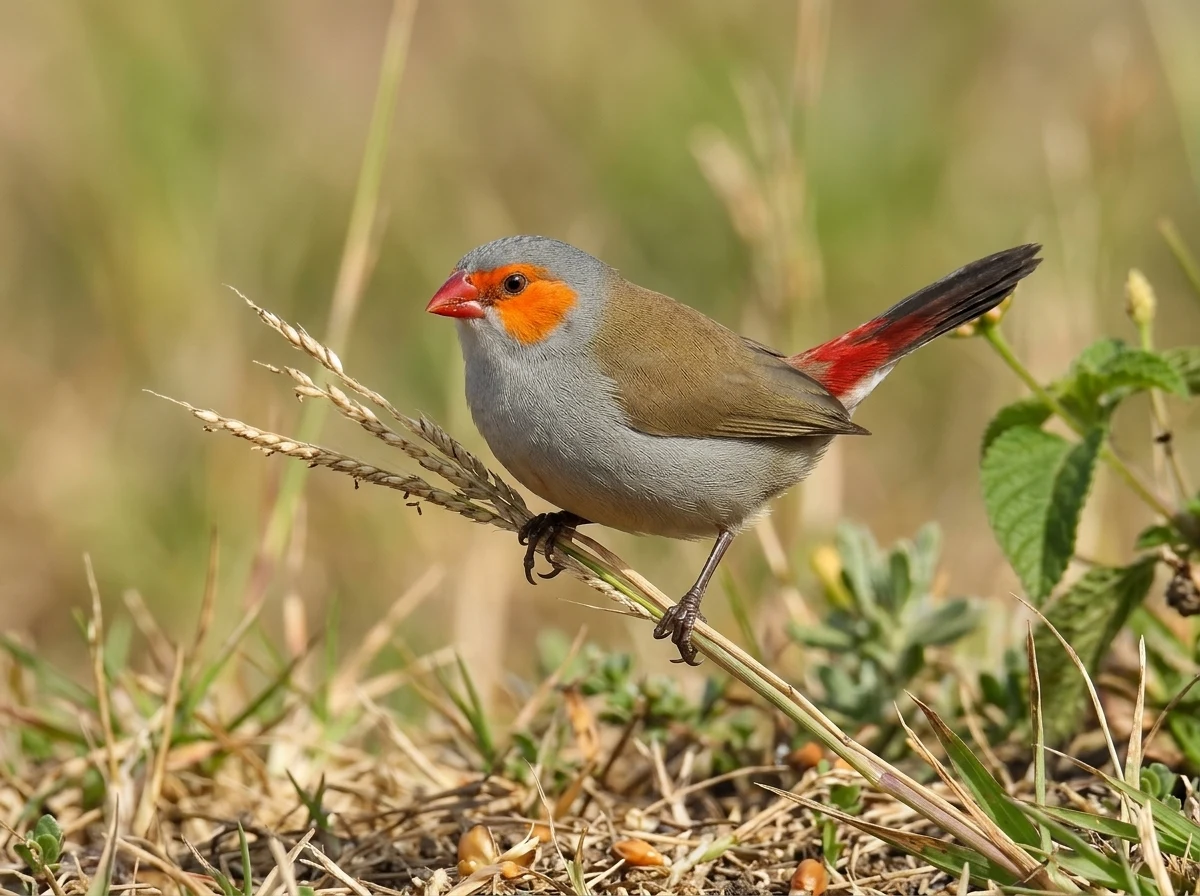
The real challenge is females and nonbreeding males. Brown and streaked, they resemble female House Sparrow, female Pin-tailed Whydah, and immature munias. Check for the short conical bill, pale eyebrow, cane or reed habitat, and the company of colorful males. If you see none of that, log the bird as Euplectes sp. rather than forcing the species.
05
Weavers that don't weave: what the name leaves out
The family Ploceidae is known as weavers because many African and Asian species weave elaborate hanging nests. Bishops belong to the genus Euplectes and in Puerto Rico build spherical nests among cane or reeds instead of the classic hanging purses. The avespuertorico.com catalog includes only these two ploceids.
Neither is listed in any threatened category by the DNER or the U.S. Fish and Wildlife Service, and both are Least Concern on the IUCN Red List. Their local importance is different: they are visible indicators of how the cage-bird trade has reshaped the grassland seedeater community, and their records help track whether they are expanding or retreating.
Linked profiles
The bishops and the birds they are confused with
Open both bishop profiles and compare them with the red, yellow, and brown species that share their grasslands.
Sound archive
Hear its voice
Explore real songs and calls. The spectrogram turns each sound into a visual trace of time and frequency.
XC1018146Recording 1 of 3song

Play: song by Aladdin
Choose another recording
Sound recorded by Aladdin · XC1018146 · CC BY-NC-SA 4.0. Visualization by Stichting Xeno-canto voor Natuurgeluiden.
Every recording retains the creator, catalogue number, and license published by Xeno-canto. Metadata via GBIF ↗
01
What is the Northern Red Bishop?
It is an African weaver (Euplectes franciscanus) introduced to Puerto Rico and first observed in 1971. The breeding male is red-orange with a black crown and belly; females and nonbreeding males are brown and streaked.
02
Where can I see the Northern Red Bishop in Puerto Rico?
Look in cane fields with grassy edges and wet tall-grass fields in the lowlands, especially on the north coast and in dry-forest areas. In the atlas it appeared in 86 hexagons, 18% of the island.
03
What is the napoleon weaver?
Napoleón Tejedor is the local name for Yellow-crowned Bishop (Euplectes afer), an African weaver introduced and recorded in Puerto Rico since 1971. The breeding male is golden yellow and black; it lives locally in reeds and tall grass beside fresh water.
04
When are the bishops colorful?
Males look colorful during breeding, which in Puerto Rico concentrates in summer: May to August for Northern Red Bishop and June to August for Yellow-crowned Bishop, peaking in June. Outside that period they look like brown females.
05
Is the Northern Red Bishop a cardinal?
No. It is a weaver in the family Ploceidae. Puerto Rico has no native resident cardinals; the introduced Red-crested Cardinal, a tanager, differs by its red, crested head.
Keep exploring
Connected routes
Sources and review
The evidence is one link away.
These sources support the editorial scope of this guide. Bird profiles also retain their own taxonomy, occurrence, and conservation references.
Reviewed:
01↗02↗03↗04↗
U.S. Forest Service Research and Development
Puerto Rico Breeding Bird Atlas
Distribution and breeding timing for 130 species breeding in Puerto Rico and its satellite islands.Sociedad Ornitológica Puertorriqueña
Official bird list
Local names, occurrence categories, and the public summary of 17 endemics.U.S. Fish and Wildlife Service
Laguna Cartagena National Wildlife Refuge
Importance of the freshwater wetland for resident and migratory waterbirds.Departamento de Recursos Naturales y Ambientales
Humacao reserve designation document
Historical bird inventory and ecological description of lagoons, channels, and Pterocarpus forest.The atlas continues