 AI
AIIdentify by color
Red birds
Ask where the red was—throat, breast, wing, bill, or feet—and the list shrinks to a handful of birds.
Reviewed:In Puerto Rico, red rarely covers the whole bird.
Puerto Rico has no all-red resident songbird: the Northern Cardinal is not on the archipelago's 402-species list. When someone sees “a red bird,” it is usually a patch—the red throat and breast of the Puerto Rican Woodpecker, the red throat spot of the Puerto Rican Tody, or a breeding male Northern Red Bishop, an introduced African grassland bird.
So this guide sorts birds by where the color sits, not by shade. First decide whether the red was on the head and breast, in wing and tail patches, or on bare parts such as the bill and feet. Then add size, habitat, and season. North American red tanagers are on the list, but only as accidental visitors that need documentation.
Identify by color
Red by the numbers
0Northern CardinalsThe species is not on the archipelago's 402-bird list.
2endemics with redPuerto Rican Woodpecker and Puerto Rican Tody.
3places red appearsHead and breast, wing and tail patches, or bill and feet.
01
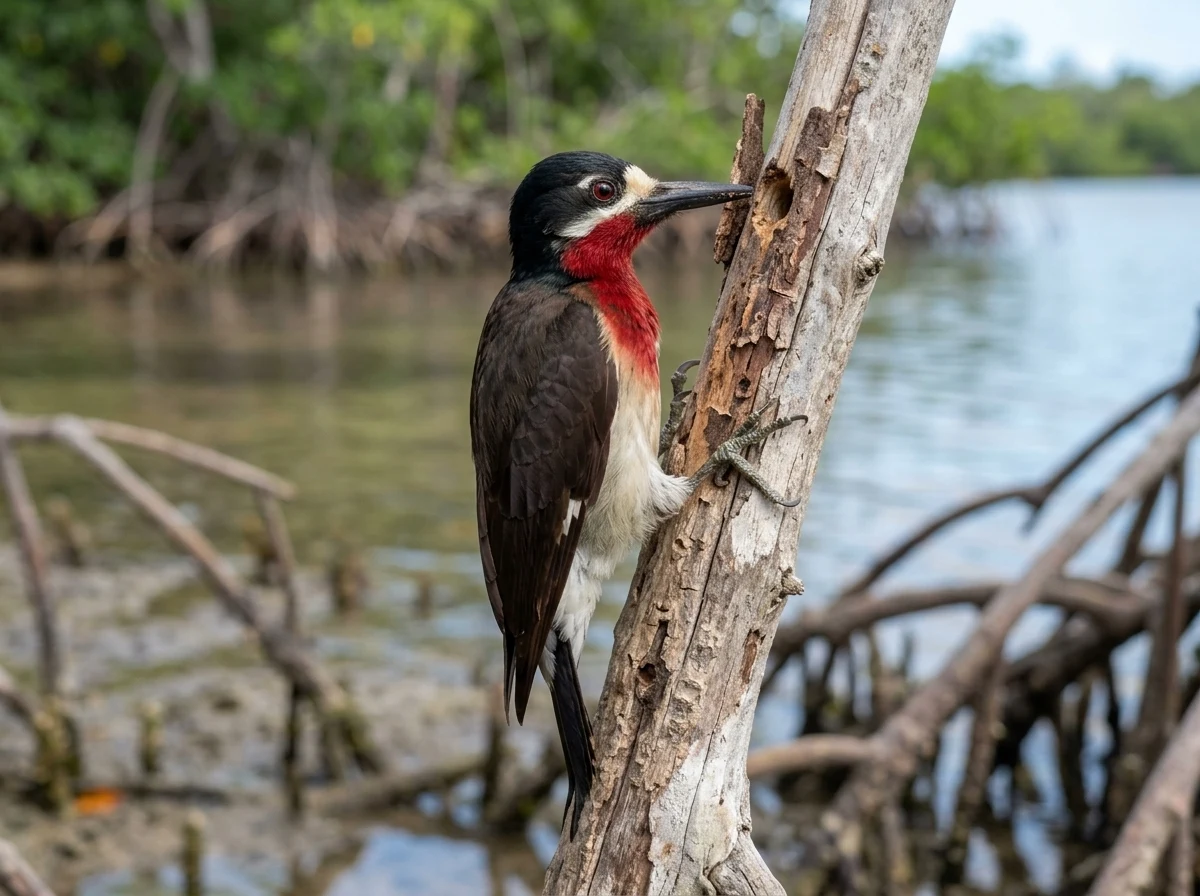
Puerto Rican Woodpecker: the red breast of yards and forests
If the red bird was climbing a trunk or utility pole, think Puerto Rican Woodpecker first. BirdsCaribbean describes it with a bright red throat and breast, black back, and white forehead. It is endemic and occurs almost anywhere with trees on Puerto Rico and Vieques, from dry and moist forest to mangroves, coffee farms, parks, and gardens.
Unlike many woodpeckers, it eats a wide variety of arthropods and also fruit, so it may show up in fruiting trees rather than only drumming on wood. It defends territories while breeding but often joins other individuals in groups outside the breeding season. At about 60 grams, it is far bulkier than any garden songbird with red on it.
02
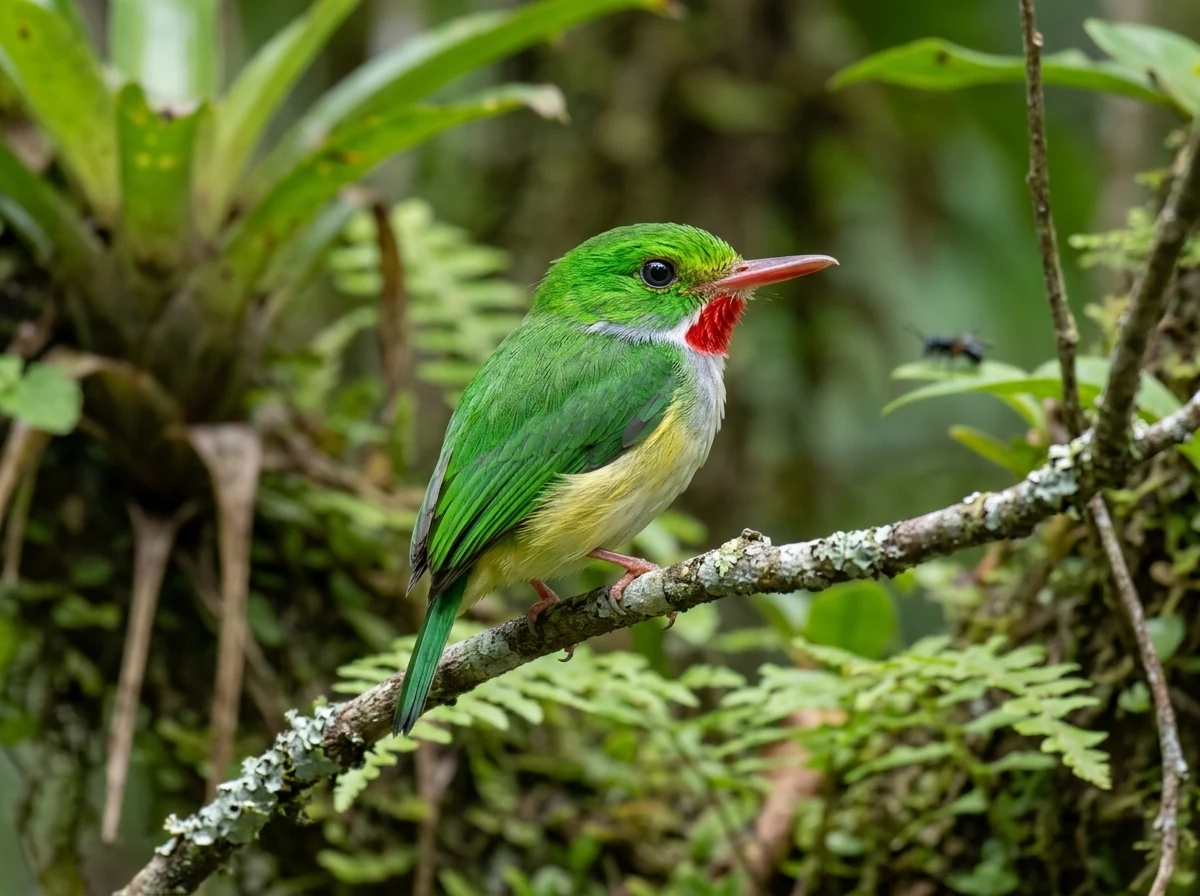
Puerto Rican Tody: a tiny green bird with a red throat
The Puerto Rican Tody is bright green above with a red chin and throat patch, white malar stripes, a white breast, and yellow flanks. The red shows well only from the front, which is why many people remember it as “the little green bird with a red chest.” It weighs about six grams and has a long, flattened bill.
It hunts from a still perch and sallies out in a short flight to snatch insects from under leaves. It lives in forests of every kind, from the coast into the mountains, and digs its nest in earthen banks: a curved tunnel about 30 centimeters long. One fine detail separates the sexes—females have a bluish-white iris, males a dark gray one.
03
Red in grasslands: Northern Red Bishop and Red Avadavat
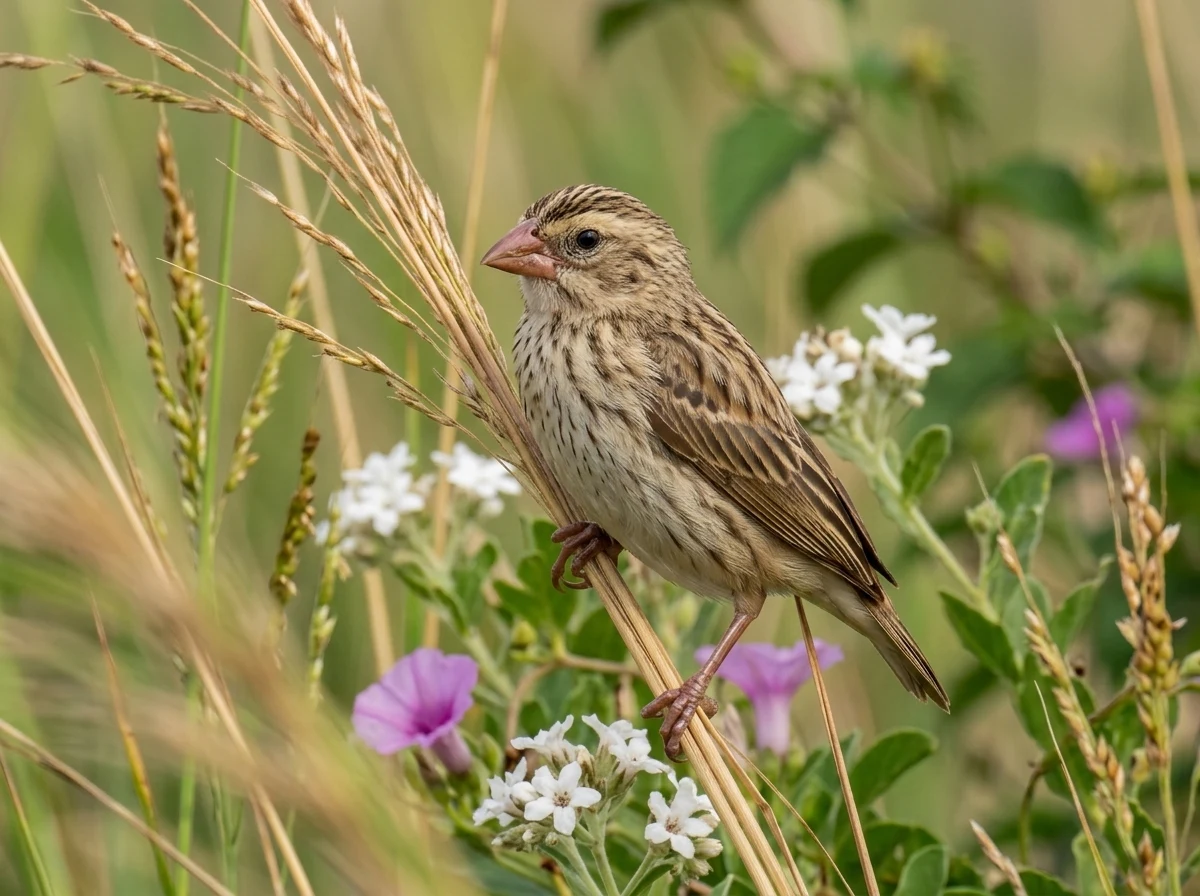
In grasslands and weedy fields, a small red-orange-and-black bird is usually a Northern Red Bishop, an introduced African weaver. The intense red-orange and black combination belongs to the breeding male; do not use it for females or birds in other seasons, which lack that contrast.
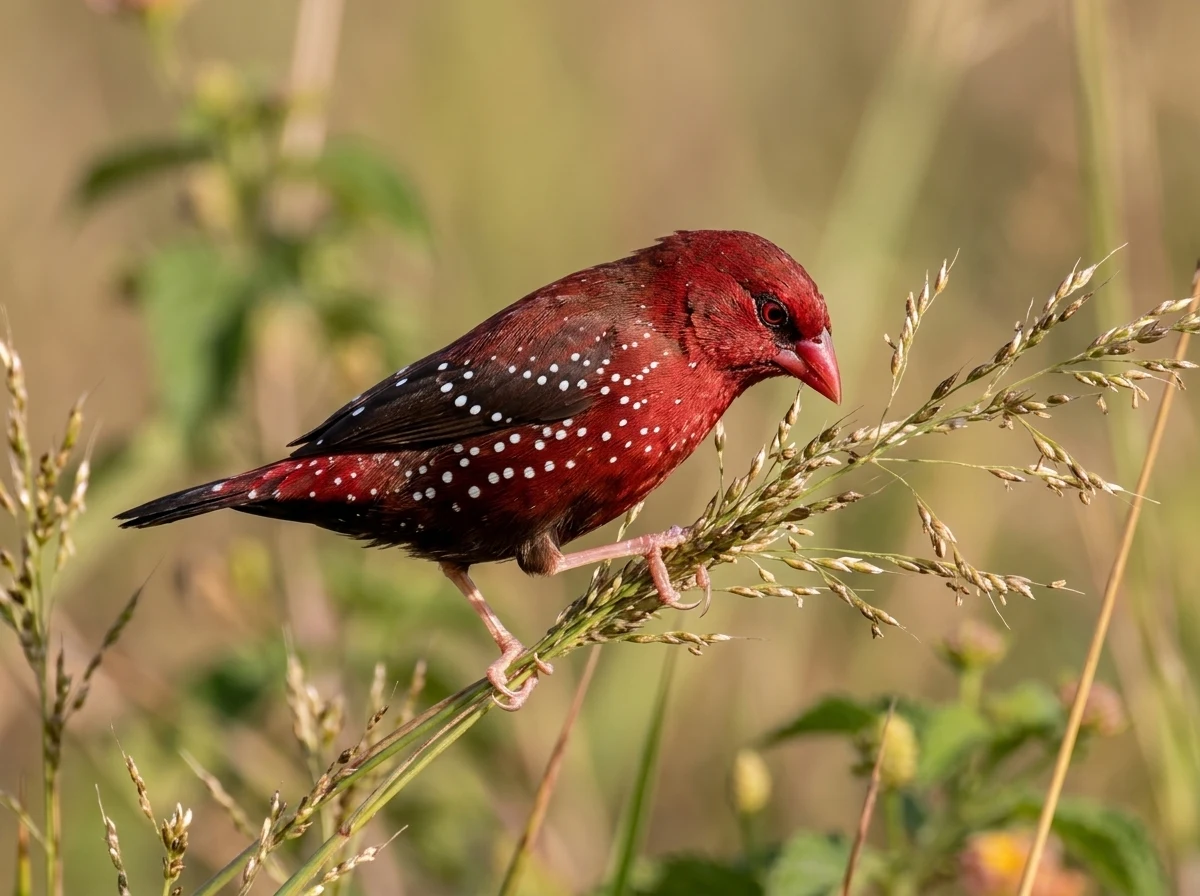
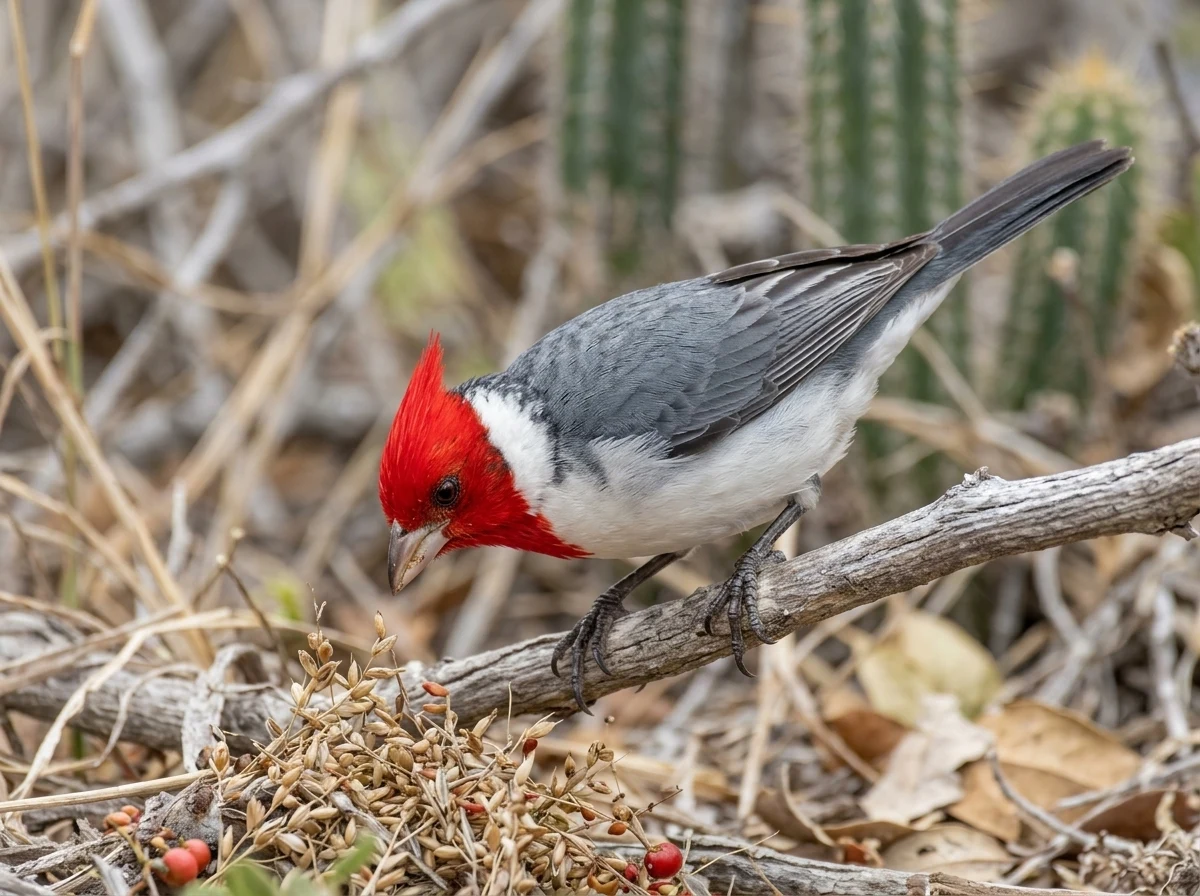
Red Avadavat is another introduced grassland bird: a sparrow-sized estrildid finch from tropical Asia, popular in the cage-bird trade for the colorful breeding plumage of males. Both are exotic species in Puerto Rico. Red-crested Cardinal is also listed as introduced, but it belongs to the tanager family and is not a true cardinal.
04
Migrants with red: American Redstart and the tanagers
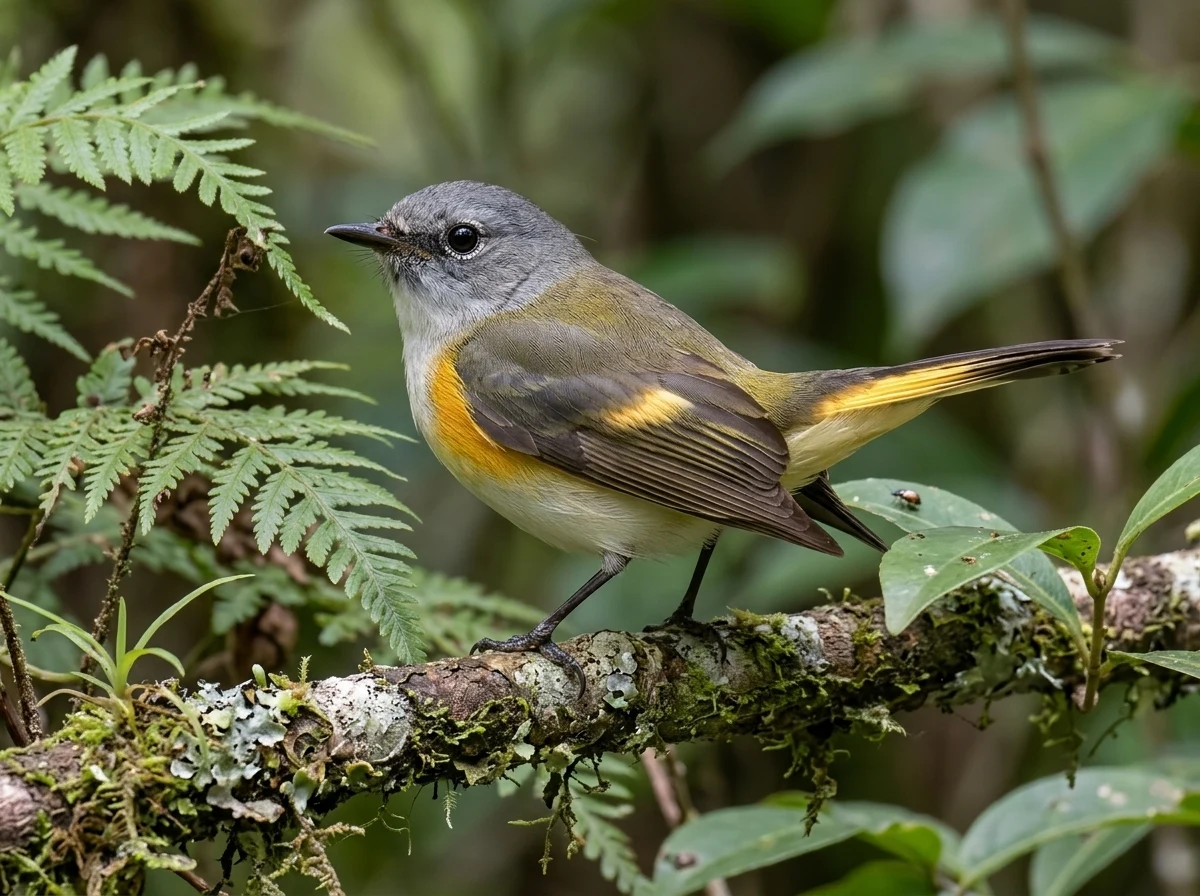
American Redstart is a migratory warbler. The male is mostly black with red-orange patches on the wings, tail, and sides; the female is gray and white with those patches in yellow. It constantly fans its tail and catches insects in flight like a small flycatcher. It is a regular winter visitor, not an accidental.
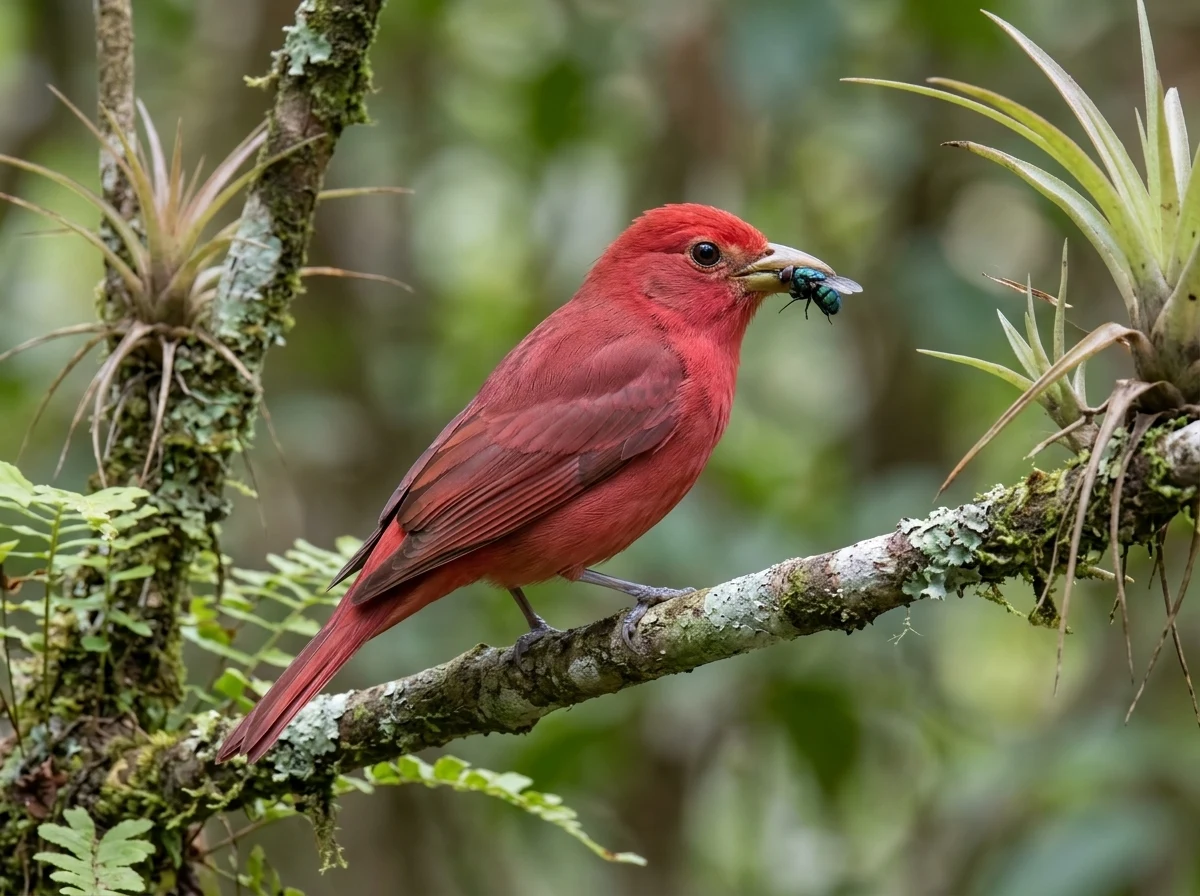
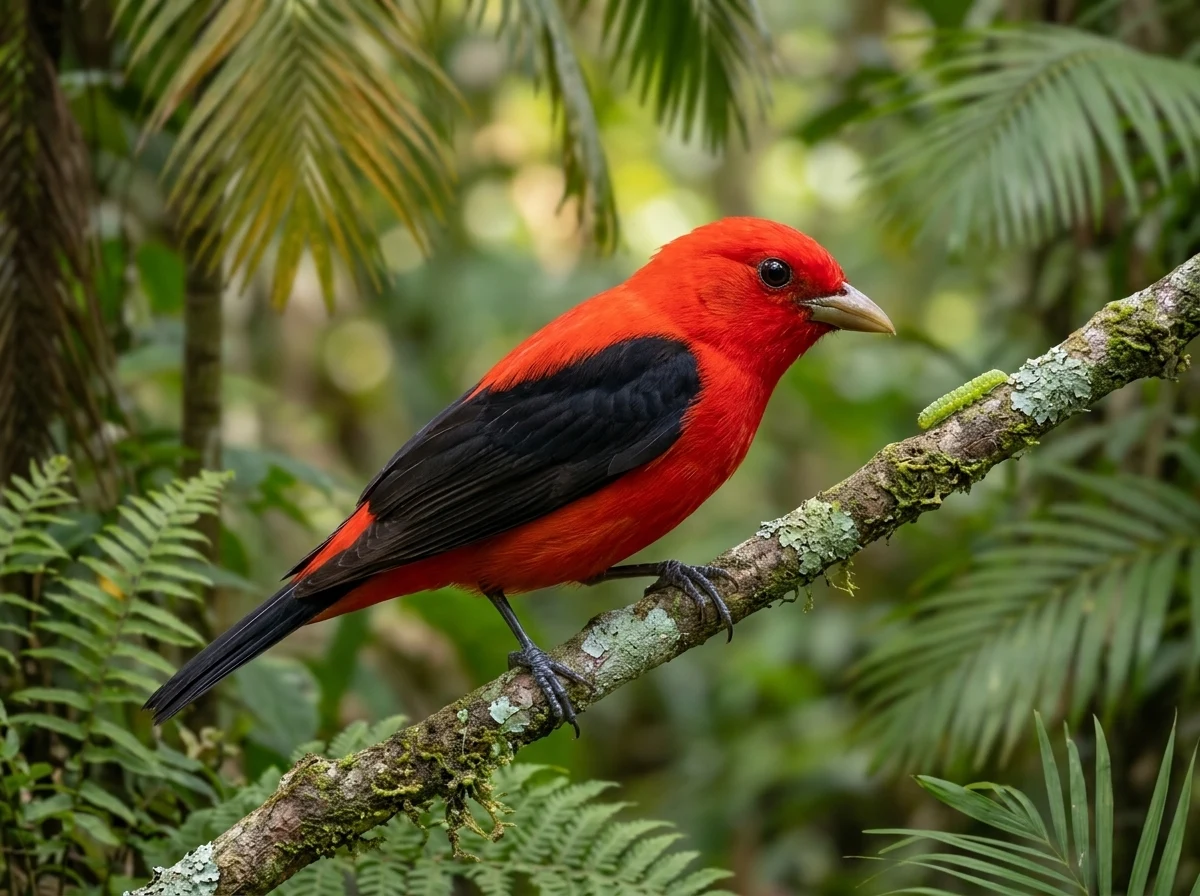
Red tanagers are a different story. Summer Tanager males are rosy red year-round and females yellow; Scarlet Tanager males are red with black wings and tail in spring but turn greenish with black wings in winter. Both winter mainly in Central and South America and are listed as accidental in Puerto Rico. Photograph any candidate.
05
Red on the bill, feet, or tail
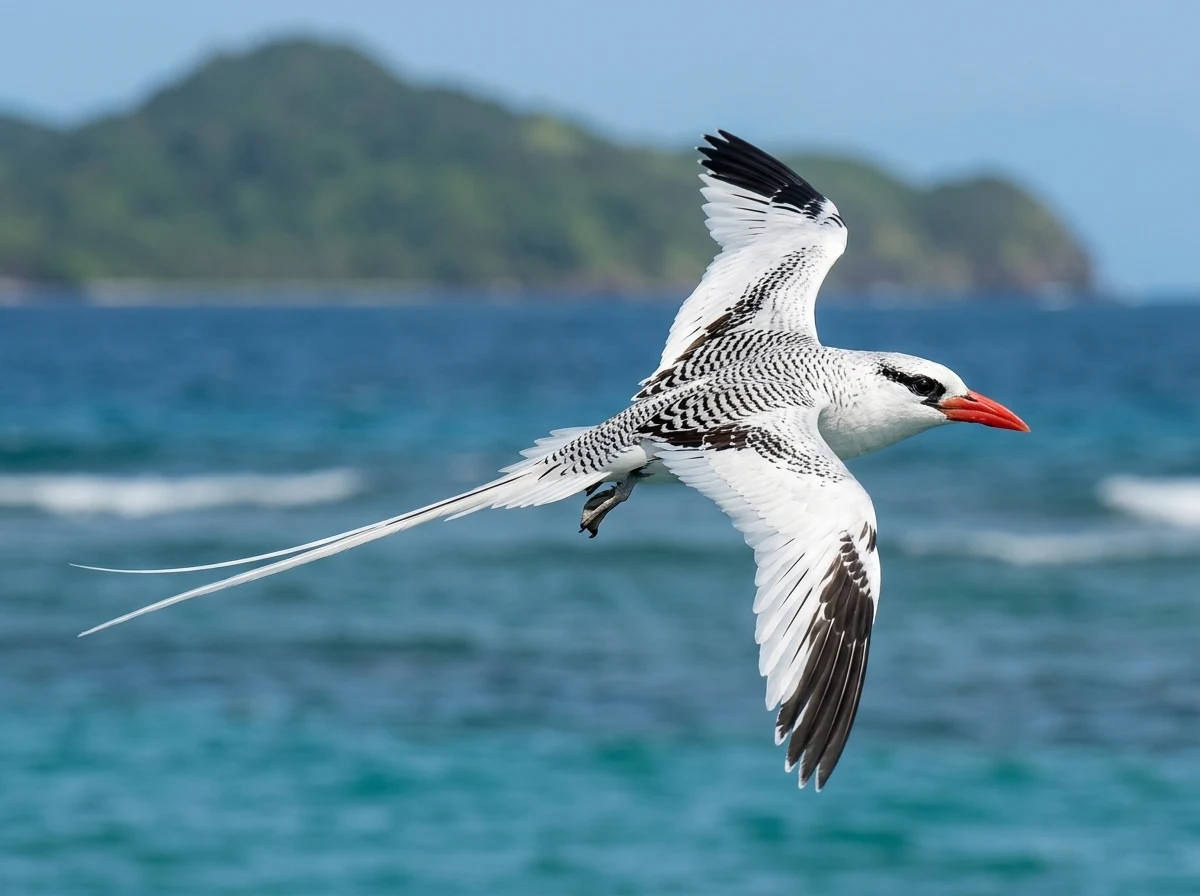
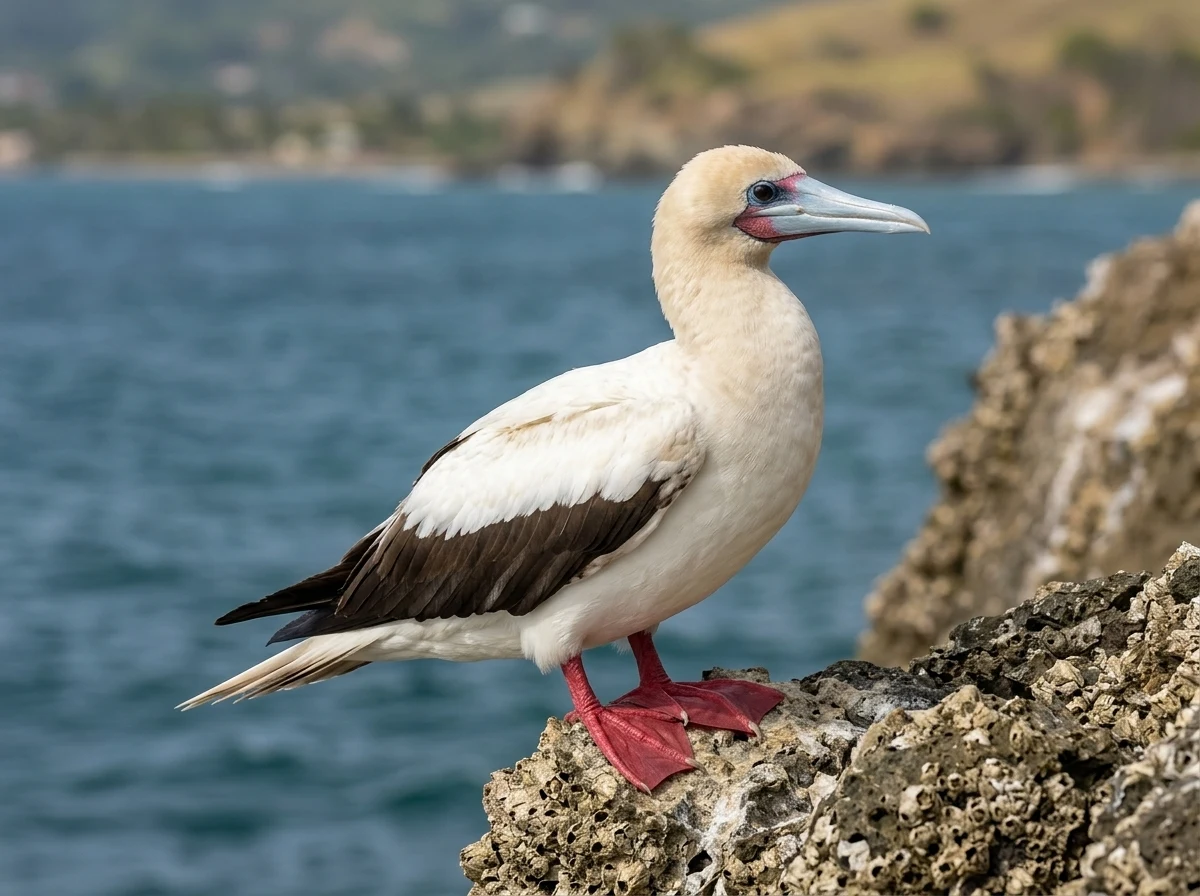
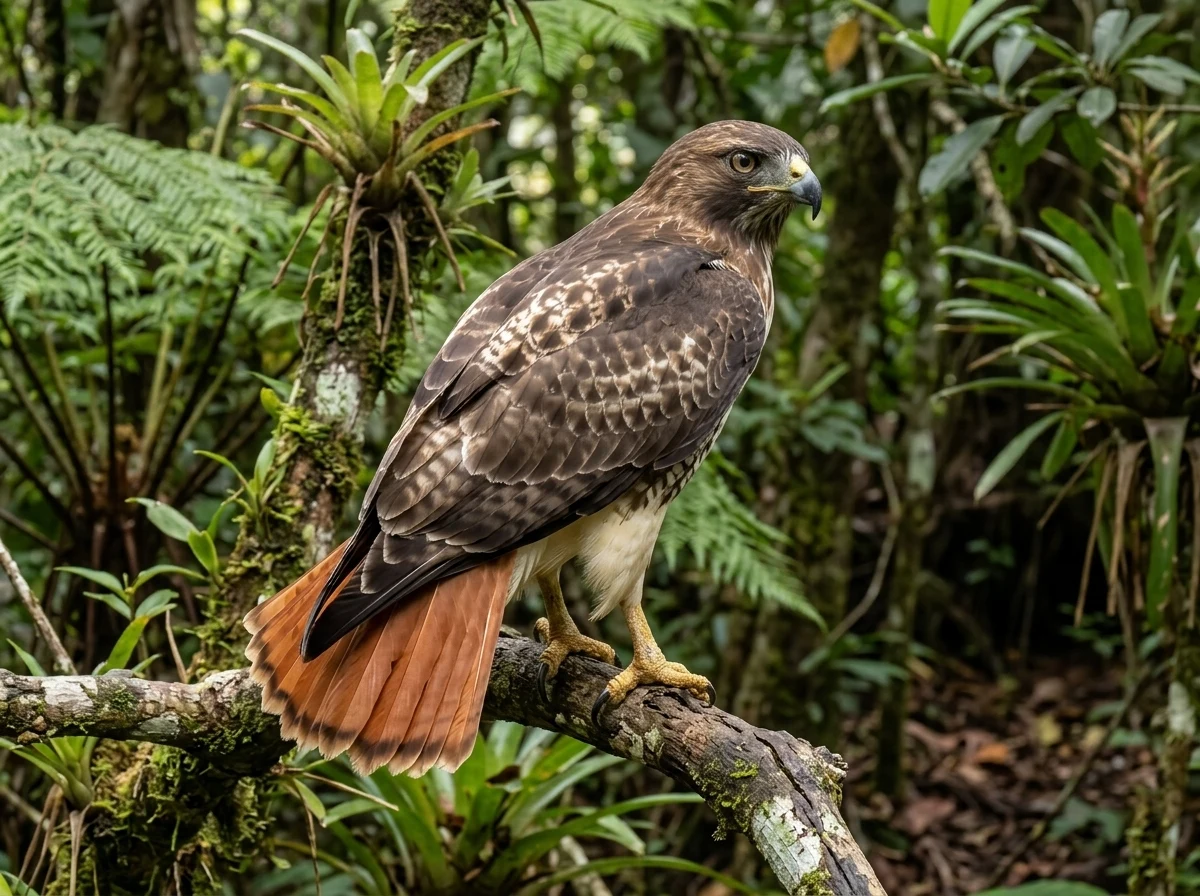
On the coast, red may sit on bare parts. Red-billed Tropicbird is a white seabird with a black-barred back, red bill, and long tail streamers. Red-footed Booby always has red feet, though its plumage varies. Both are native seabirds that Puerto Rico's DNER lists as vulnerable. Inland, Red-tailed Hawk carries its red on the tail.
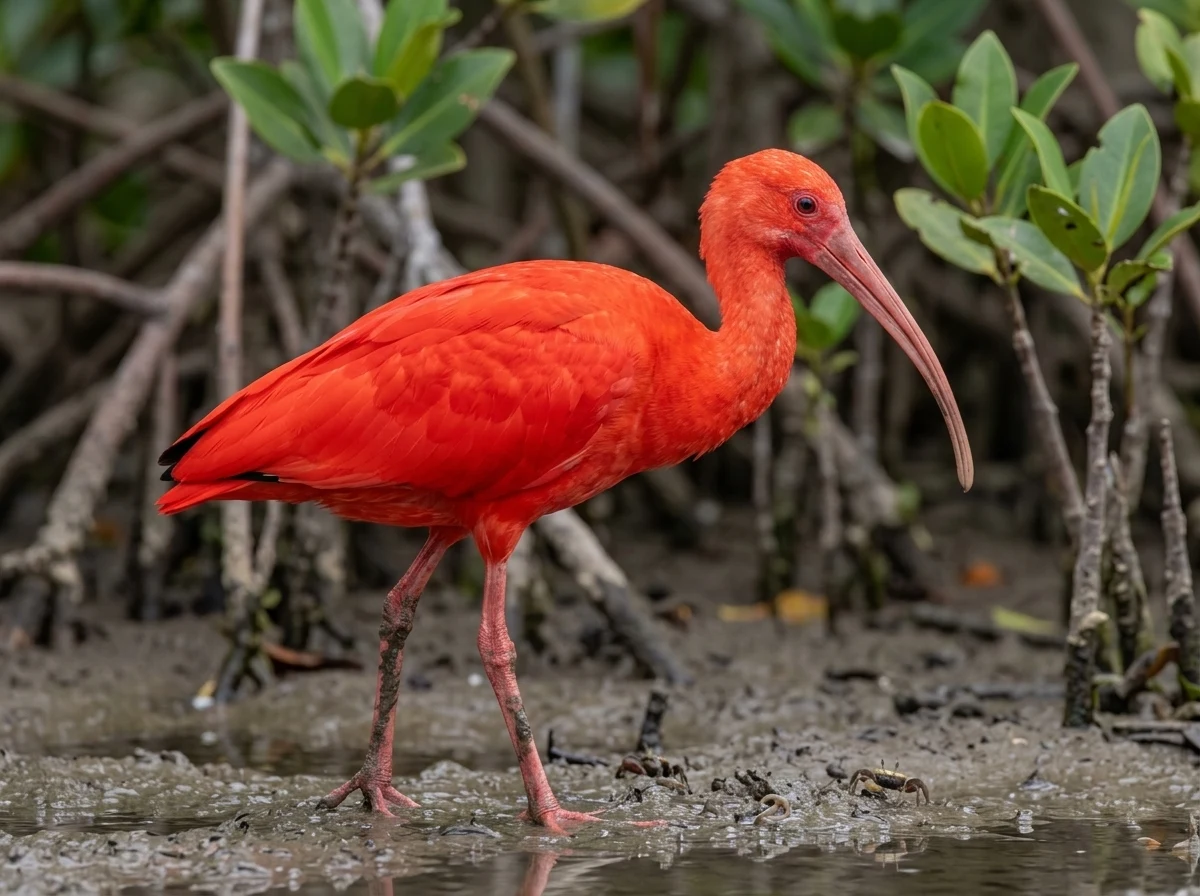
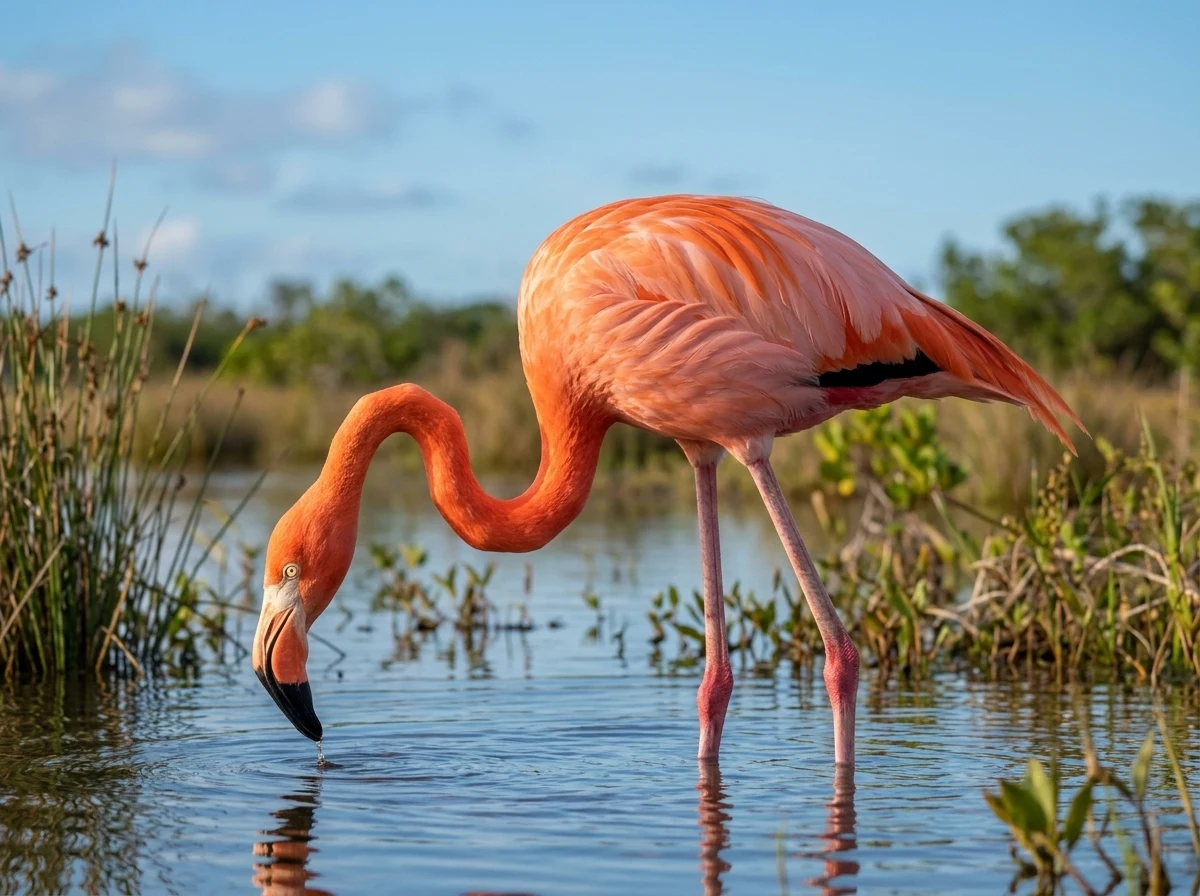
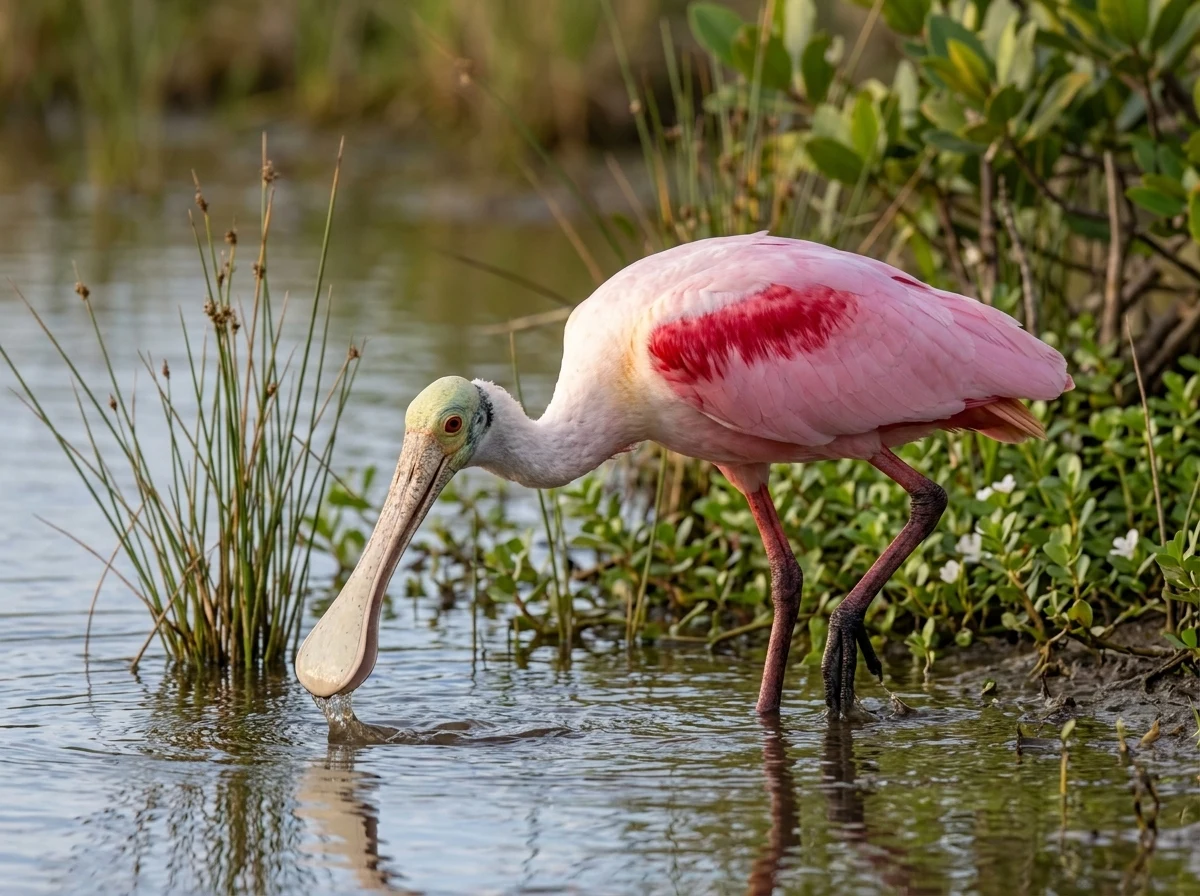
A large all-red or pink bird in a lagoon deserves documentation. Scarlet Ibis, American Flamingo, and Roseate Spoonbill are all listed as accidental. The pink of spoonbills and flamingos comes from carotenoid pigments in the diet, so color intensity varies between individuals. Note the bill shape: curved in the ibis, flat and spoon-shaped in the spoonbill.
Linked profiles
Birds with red in Puerto Rico
Open each profile for photos, occurrence status, local names, and recordings.
Sound archive
Hear its voice
Explore real songs and calls. The spectrogram turns each sound into a visual trace of time and frequency.
XC737109Recording 1 of 3call

Play: call by David Vander Pluym
Choose another recording
Sound recorded by David Vander Pluym · XC737109 · CC BY-NC-SA 4.0. Visualization by Stichting Xeno-canto voor Natuurgeluiden.
Every recording retains the creator, catalogue number, and license published by Xeno-canto. Metadata via GBIF ↗
01
Are there cardinals in Puerto Rico?
There is no Northern Cardinal in Puerto Rico; the species is not on the archipelago's bird list. Red-crested Cardinal is listed as introduced, but it is a South American tanager, not a true cardinal. A red bird in a Puerto Rico yard is more often a Puerto Rican Woodpecker or a Northern Red Bishop.
02
What bird has a red breast in Puerto Rico?
The endemic Puerto Rican Woodpecker has a bright red throat and breast with a black back and white forehead. It is common wherever there are trees, including parks and neighborhoods. If the bird was tiny and green with red only on the throat, it was a Puerto Rican Tody.
03
What is the little green bird with a red throat?
It is the Puerto Rican Tody, or San Pedrito, endemic to Puerto Rico. It is bright green above with a red throat, white breast, and yellow flanks, and weighs about six grams. It perches still and makes short flights to catch insects under leaves.
04
What is the small red-and-black bird in the grass?
It is usually a Northern Red Bishop, an African weaver introduced to Puerto Rico. The red-orange and black contrast belongs to the breeding male. Another introduced red finch of grassy places is the Red Avadavat.
05
Do red tanagers occur in Puerto Rico?
Yes, but only as accidentals. Summer Tanager and Scarlet Tanager winter mainly in Central and South America and turn up in Puerto Rico only rarely. If you see one, take photos and note the date, place, and behavior.
06
Which Puerto Rico seabird has a red bill?
The Red-billed Tropicbird: white with a black-barred back, a red bill, and long tail streamers. It nests on sea cliffs and cays, and Puerto Rico's DNER lists it as vulnerable. White-tailed Tropicbird, by contrast, has a yellow or orange bill.
Keep exploring
Connected routes
Sources and review
The evidence is one link away.
These sources support the editorial scope of this guide. Bird profiles also retain their own taxonomy, occurrence, and conservation references.
Reviewed:
01↗02↗03↗04↗05↗06↗07↗08↗09↗10↗
Sociedad Ornitológica Puertorriqueña
Official bird list
Local names, occurrence categories, and the public summary of 17 endemics.BirdsCaribbean
Coloring page: Puerto Rican Woodpecker
Red throat and breast, black back, white forehead, and fruit eating.Birds of the World / Cornell Lab of Ornithology
Puerto Rican Tody: introduction
Tody colors and its range from coastal lowlands into the mountains.National Audubon Society
Field guide: American Redstart
Male red-orange patches, female yellow patches, and tail-fanning behavior.Birds of the World / Cornell Lab of Ornithology
Puerto Rican Woodpecker: introduction
Range on Puerto Rico and Vieques, diet of arthropods and fruit, and nonbreeding groups.BirdsCaribbean
From the Nest, day 54: Puerto Rican Tody
Description, foraging, nest tunnel, and iris difference between sexes.National Audubon Society
Field guide: Summer Tanager
Rosy-red males year-round, yellow females, and wintering range.National Audubon Society
Field guide: Scarlet Tanager
Red male with black wings and tail, greenish winter plumage, and South American wintering range.National Audubon Society
Field guide: Red-billed Tropicbird
Black-barred back and red bill.Programa Sea Grant de Puerto Rico
Seabirds of Puerto Rico
Puerto Rico educational publication devoted to the archipelago's seabirds.The atlas continues