 AI
AIIdentify by color
Yellow birds
White eyebrow, yellow throat, curved bill, or conical bill: four details separate the common yellows.
Reviewed:Almost every small yellow bird starts with the Bananaquit.
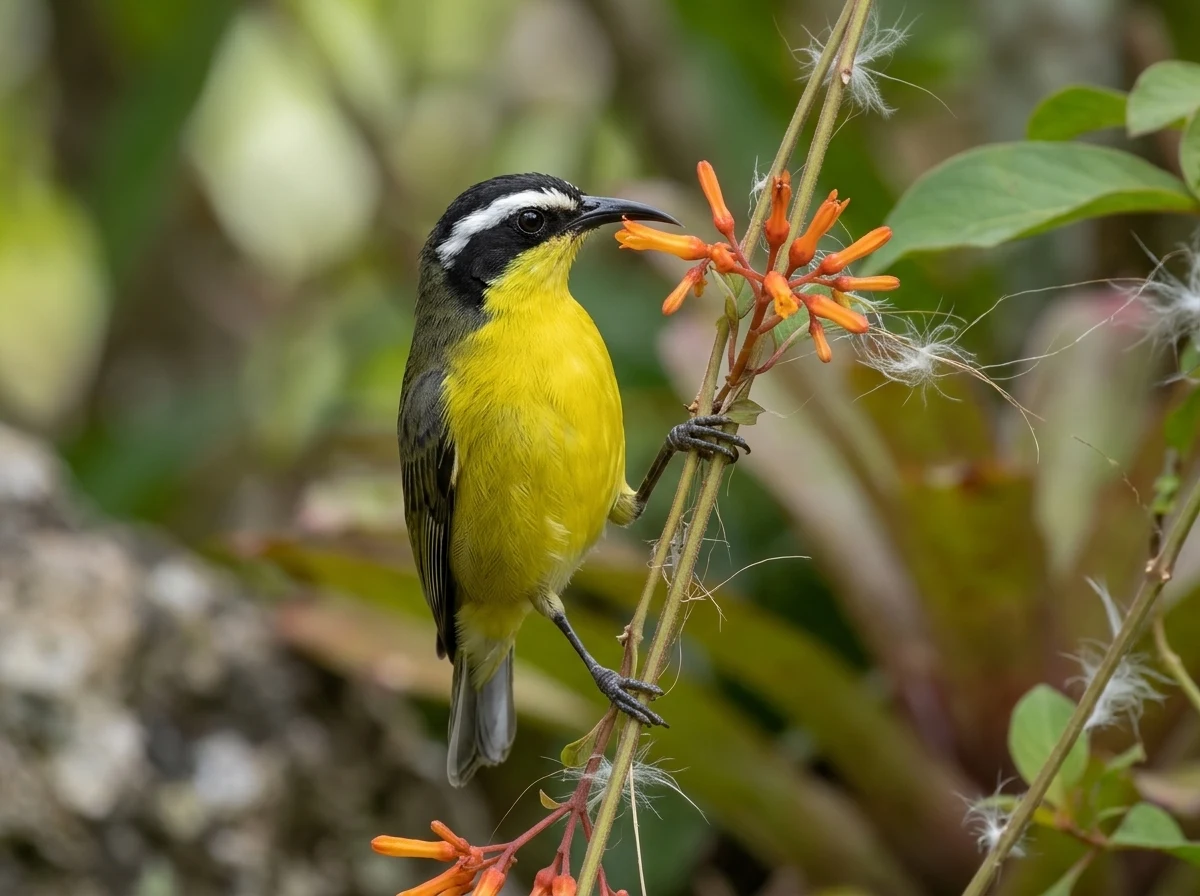
The yellow bird you are most likely to see in Puerto Rico is the Bananaquit: small, with a yellow breast, white eyebrow, dark gray back, and curved black bill, found in nearly every wooded habitat and in gardens. Other yellow birds include the endemic Adelaide's Warbler, the mangrove Yellow Warbler, the Yellow-faced Grassquit, and several wintering warblers.
This guide leaves out the black-and-yellow pattern of the Yellow-shouldered Blackbird and Puerto Rican Oriole, which have their own black-birds guide. Here yellow dominates the bird or its underparts. Check the bill first—curved for nectar, thin for insects, or conical for seeds—then the face: eyebrow, throat, and the spot below the eye.
Identify by color
Yellows by the numbers
9.5–10.5 cmBananaquitCurved bill, white eyebrow, and yellow breast.
2“Reinita Amarilla” taxaThe resident mangrove bird and the northern migrant.
1endemic yellow warblerAdelaide's Warbler, gray above and yellow below.
01
Bananaquit: the sugar bird
The Bananaquit measures 9.5 to 10.5 centimeters. It has a black crown and head sides, a white eyebrow, a pale gray to white throat, a dark gray back, a yellow chest, and yellowish belly and rump. The bill is black, pointed, and down-curved, and the wing shows a small white spot at the base of the flight feathers.
It loves nectar so much that many islands call it the sugar bird, and it will visit a bowl of sugar left outside. It lives in nearly all wooded and human-modified habitats. Each Caribbean island has its own variant, so photos from other islands may look somewhat different from Puerto Rico birds.
02
Adelaide's Warbler: the endemic yellow
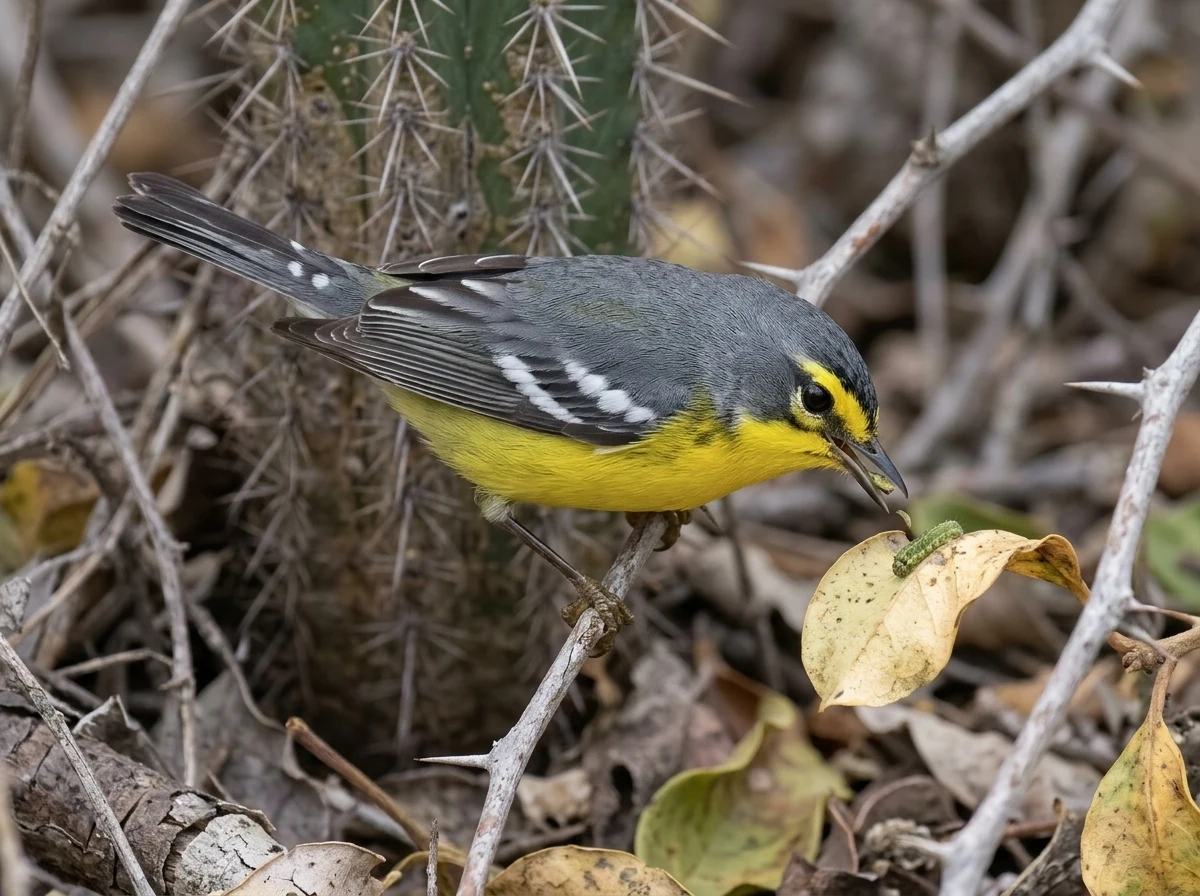
Adelaide's Warbler is gray above and yellow below, with two white wing bars, a yellow eyebrow that may be edged in black, a yellow or white spot under the eye, and a gray tail with white outer feathers. Unlike the Bananaquit, its bill is thin and straight and it lacks a full white eyebrow.
It is endemic and lives in the dry forests of southern Puerto Rico and Vieques, in wet limestone and secondary forest on the north coast, in scrub, and among karst hills; it is absent from high elevations and the eastern end. It moves constantly in search of arthropods, and its local name, reinita mariposera, reflects its taste for caterpillars. Its sweet, repeated song helps you find it.
03
Yellow Warbler and wintering warblers
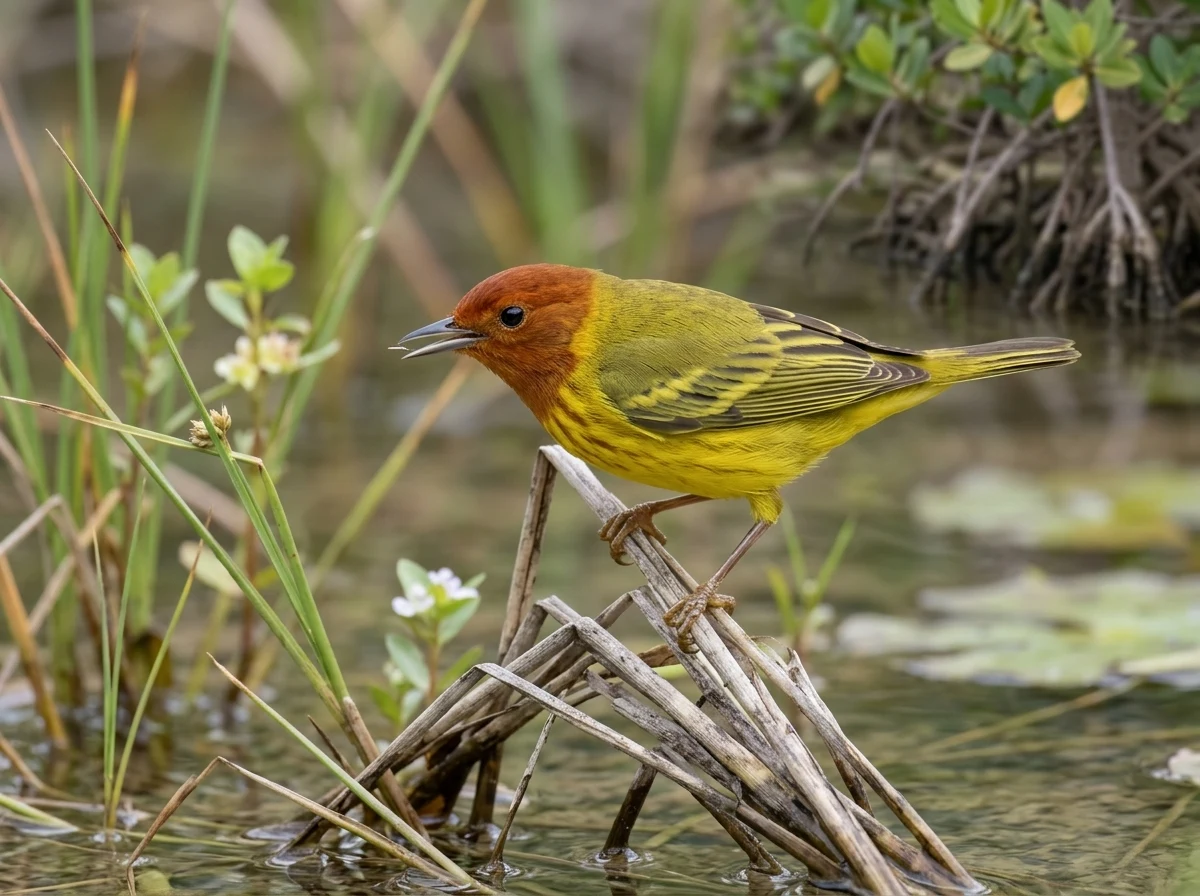
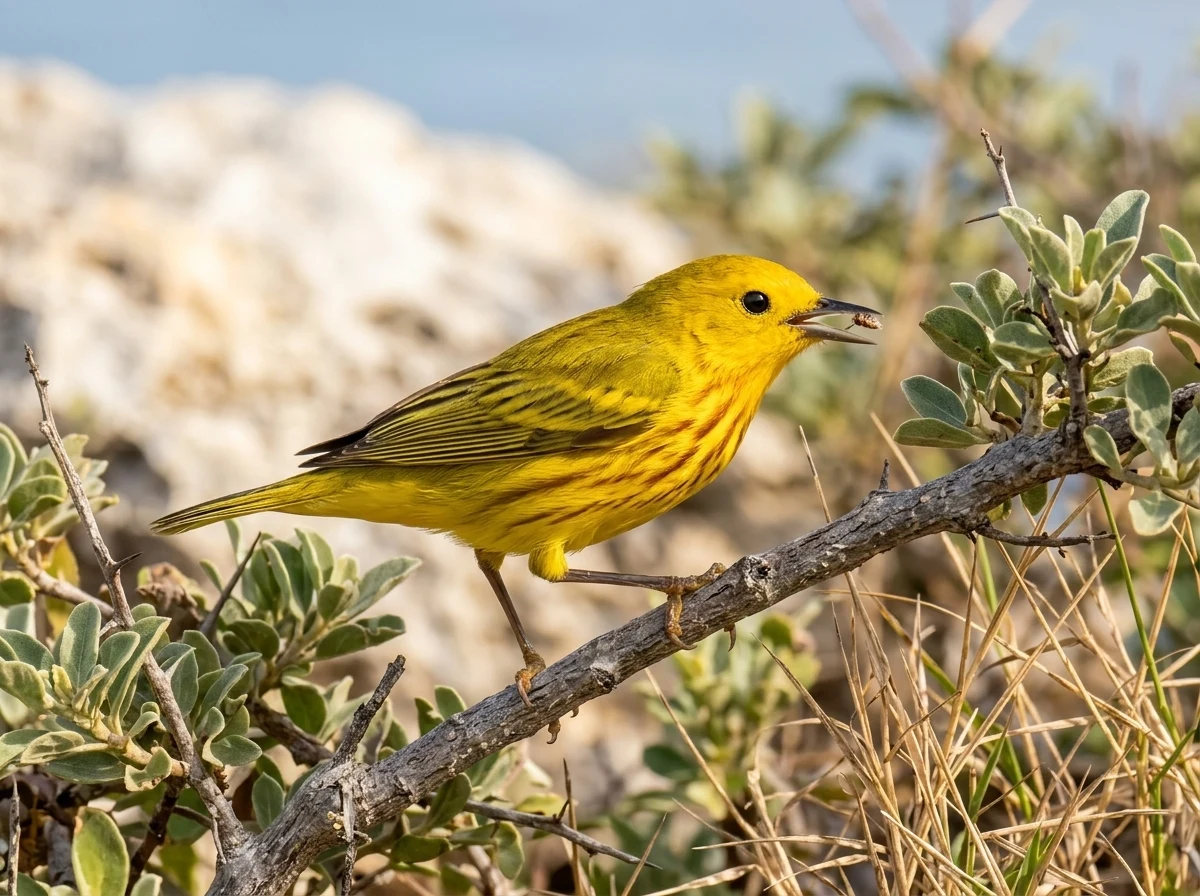
The name Reinita Amarilla covers two birds in the catalog. The resident mangrove form lives in mangroves, coastal scrub, and wetland edges, nests in Puerto Rico with a cup nest in trees, and is listed as vulnerable by Puerto Rico's DNER. The northern migratory form, whose male has reddish chest streaks, is listed as accidental and shows yellow tail spots, unusual among warblers.
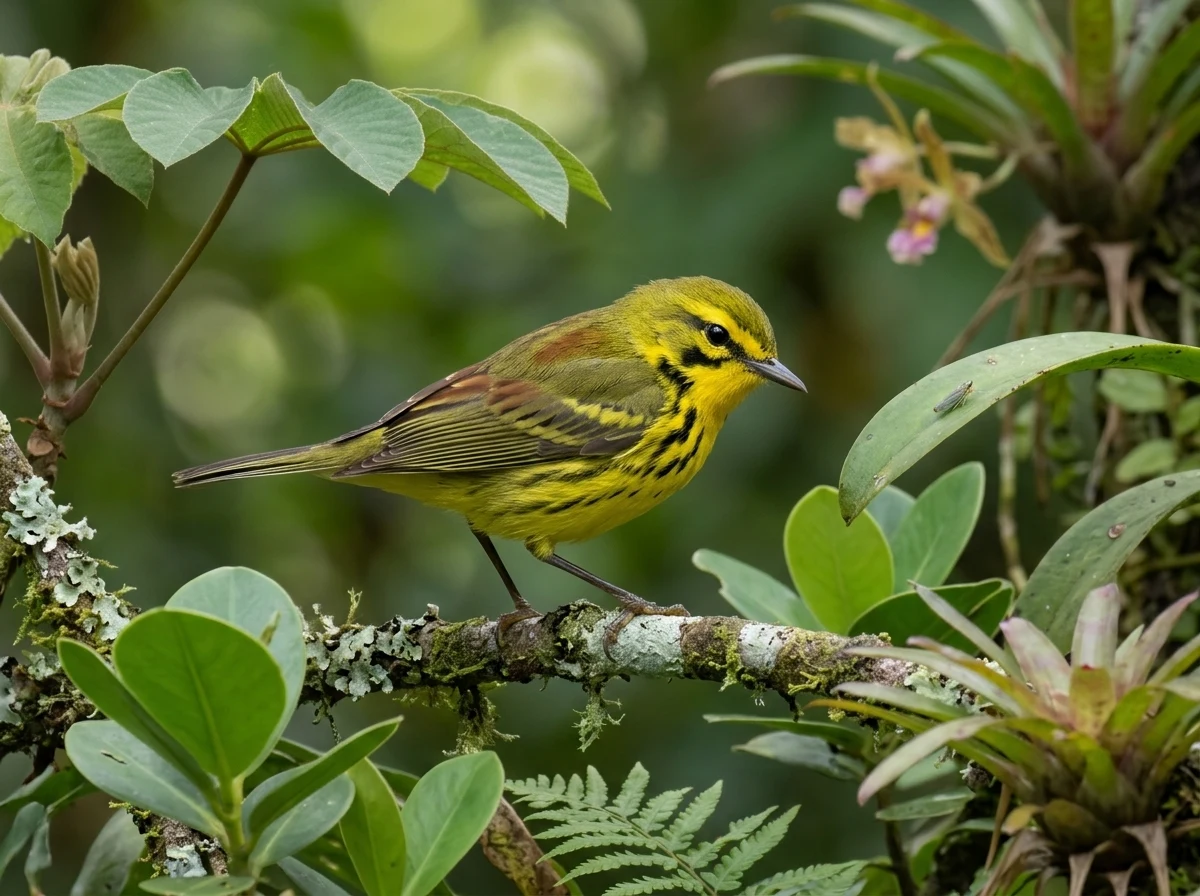
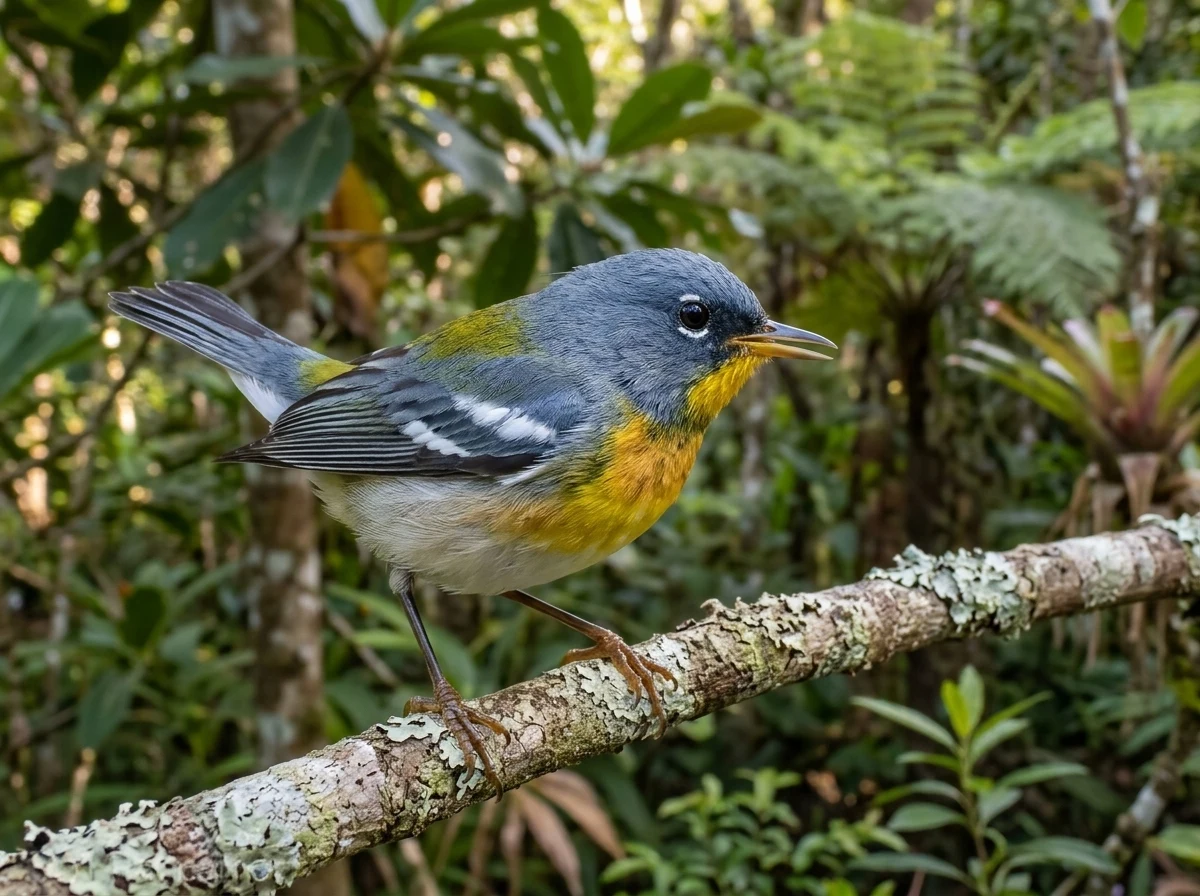
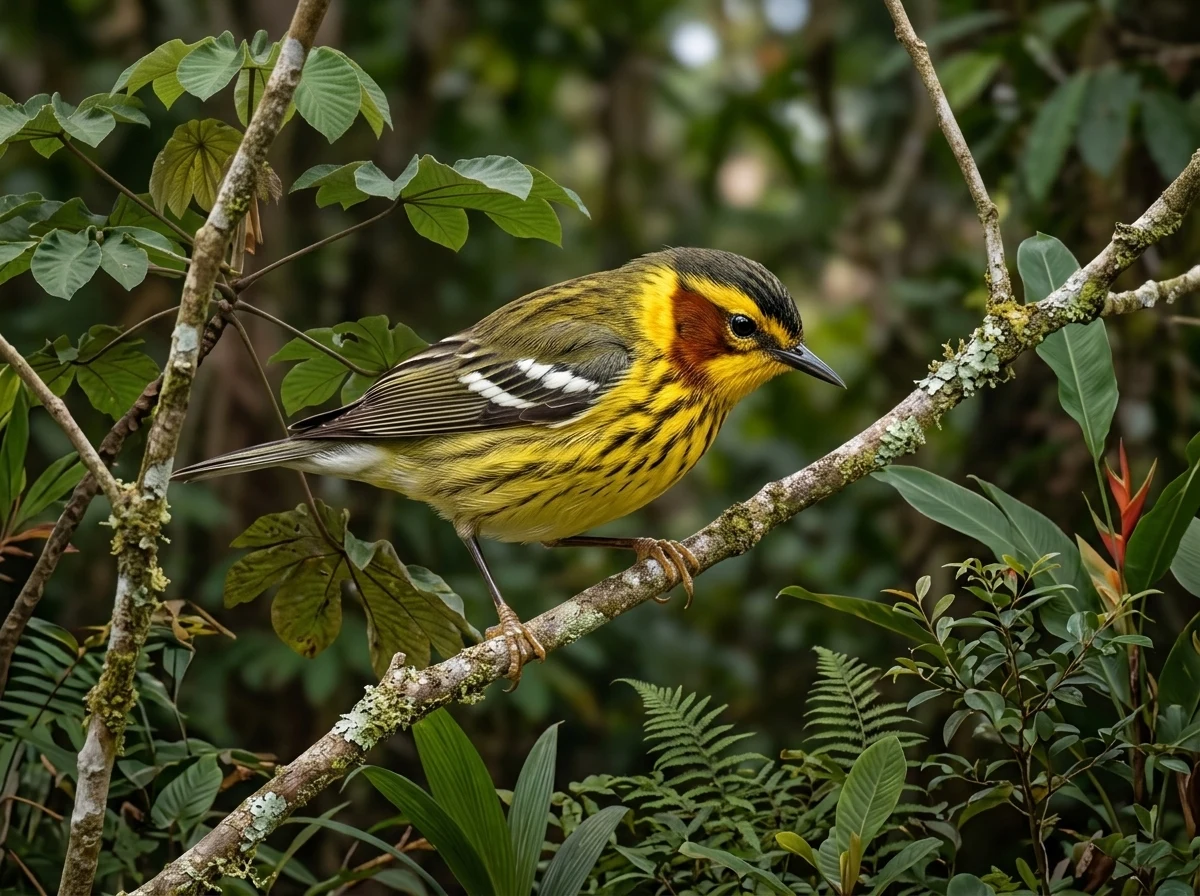
Other warblers with yellow arrive in winter. Prairie Warbler has yellow underparts with black side streaks and a bold face pattern and bobs its tail constantly; it winters in the West Indies. Northern Parula, the Reinita Pechidorada or “golden-breasted warbler,” and Cape May Warbler are other winter visitors worth comparing. The warblers guide compares the whole group.
04
Yellow seed-eaters: native and introduced
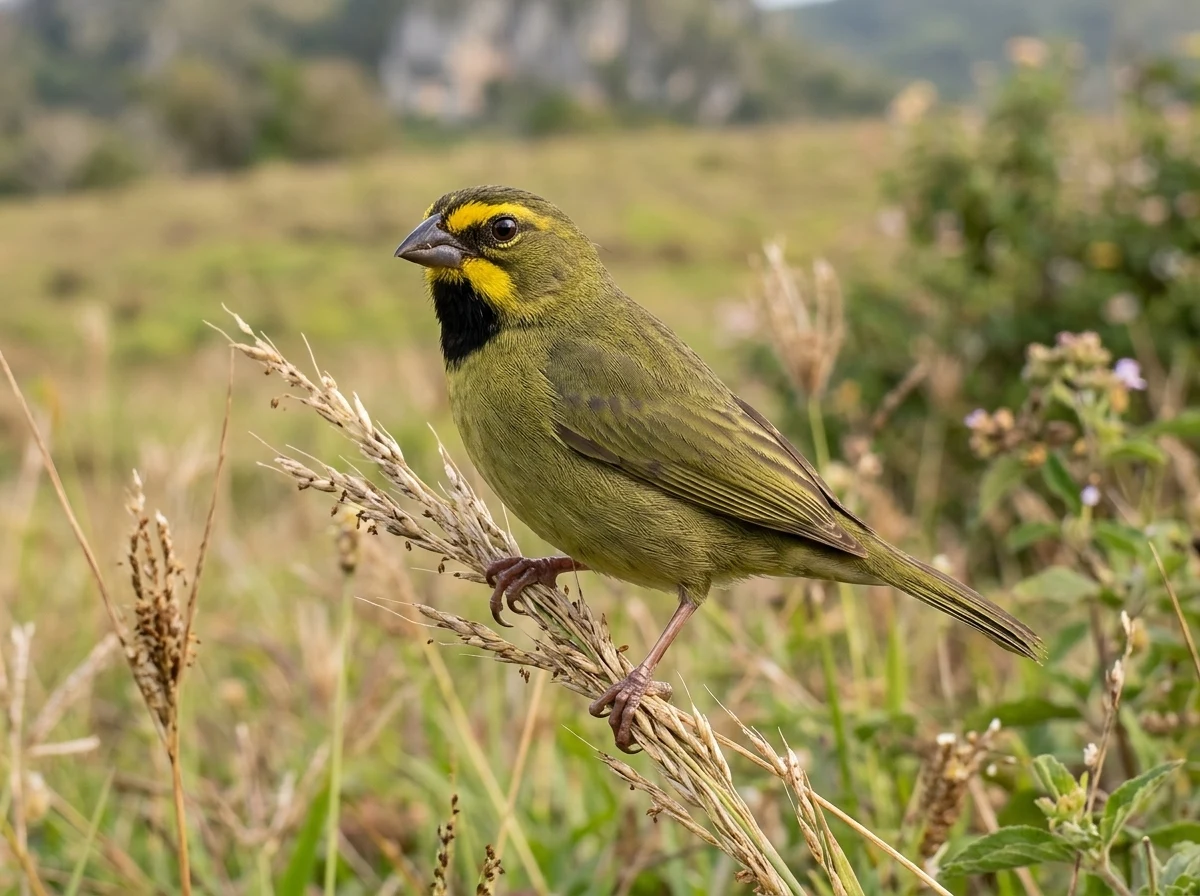
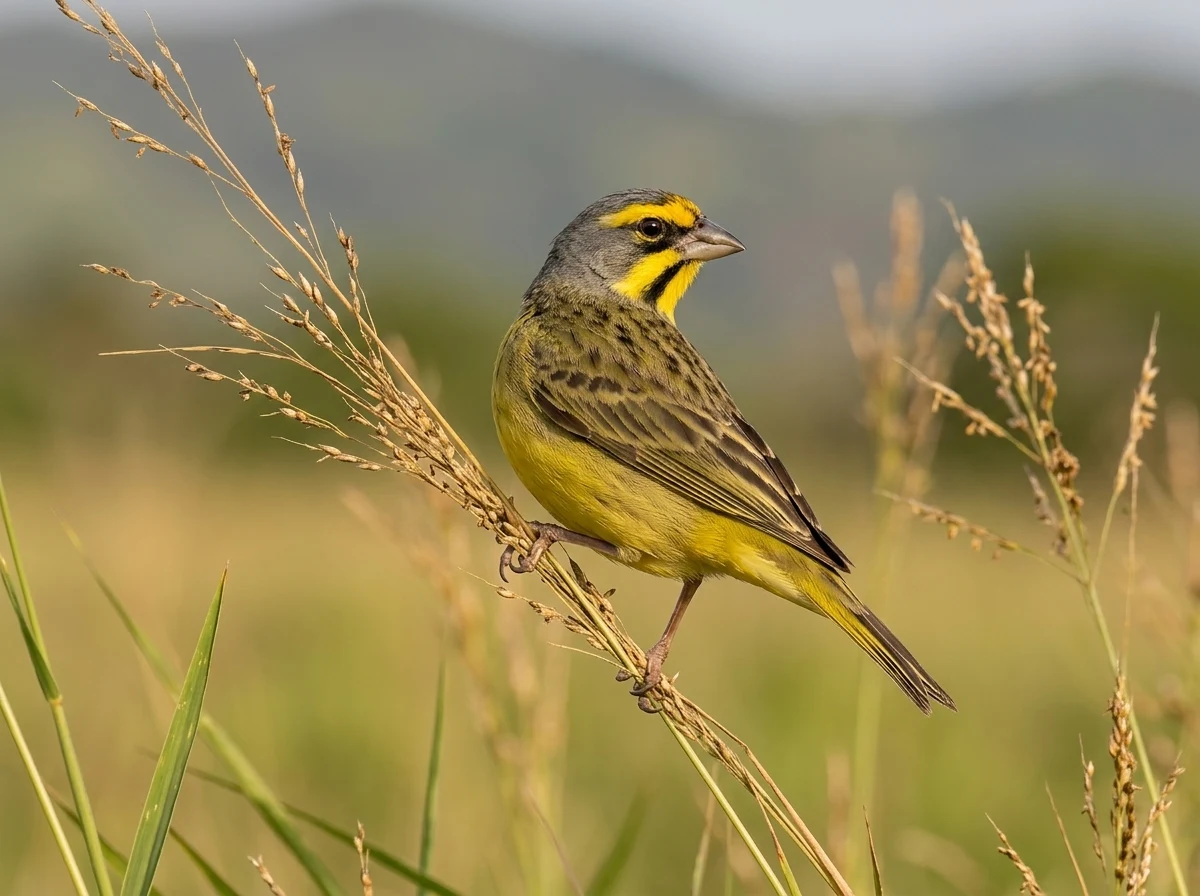
If the bill was short and conical, think seed-eaters. Yellow-faced Grassquit is a small grayish-green finch whose name refers to the male's yellow face. It lives in pastures, roadsides, and clearings, often in loose flocks feeding on grass seeds. It is native and ranges throughout the Greater Antilles.
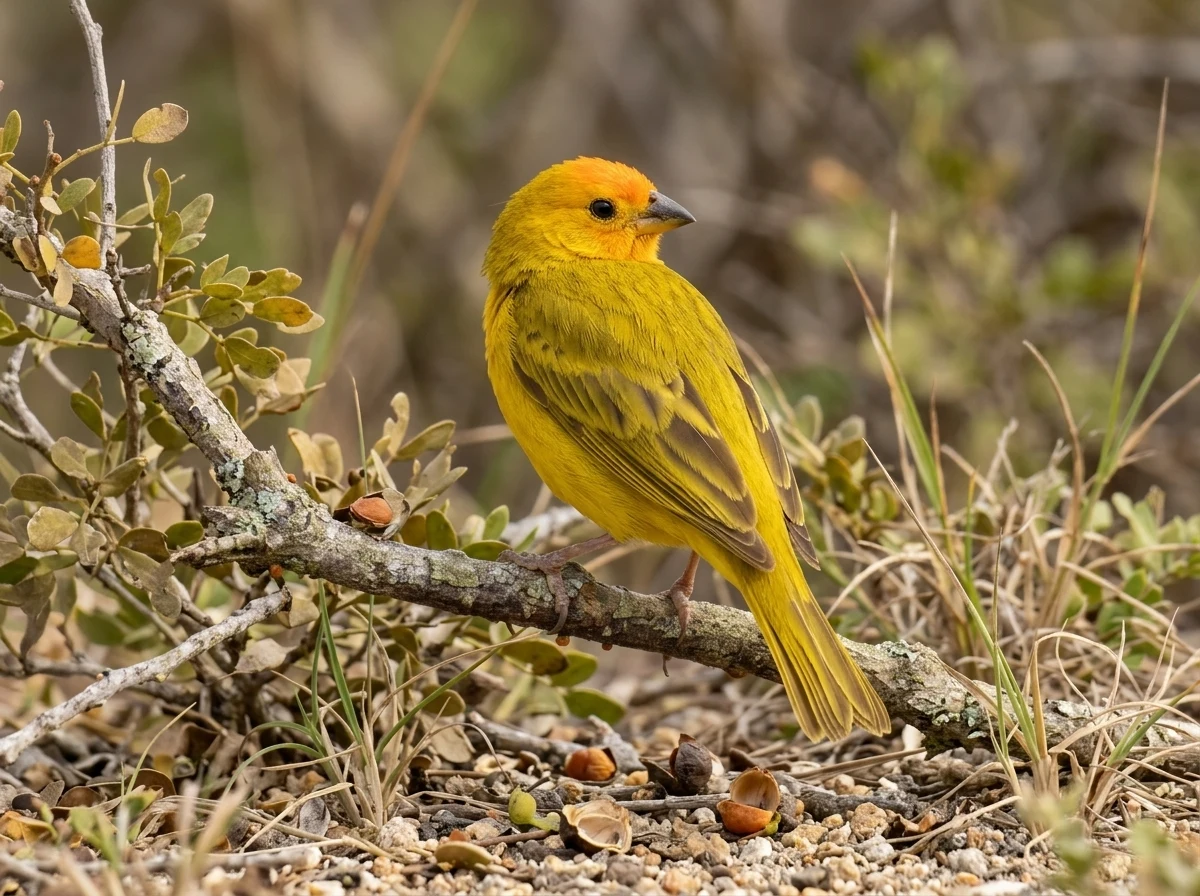
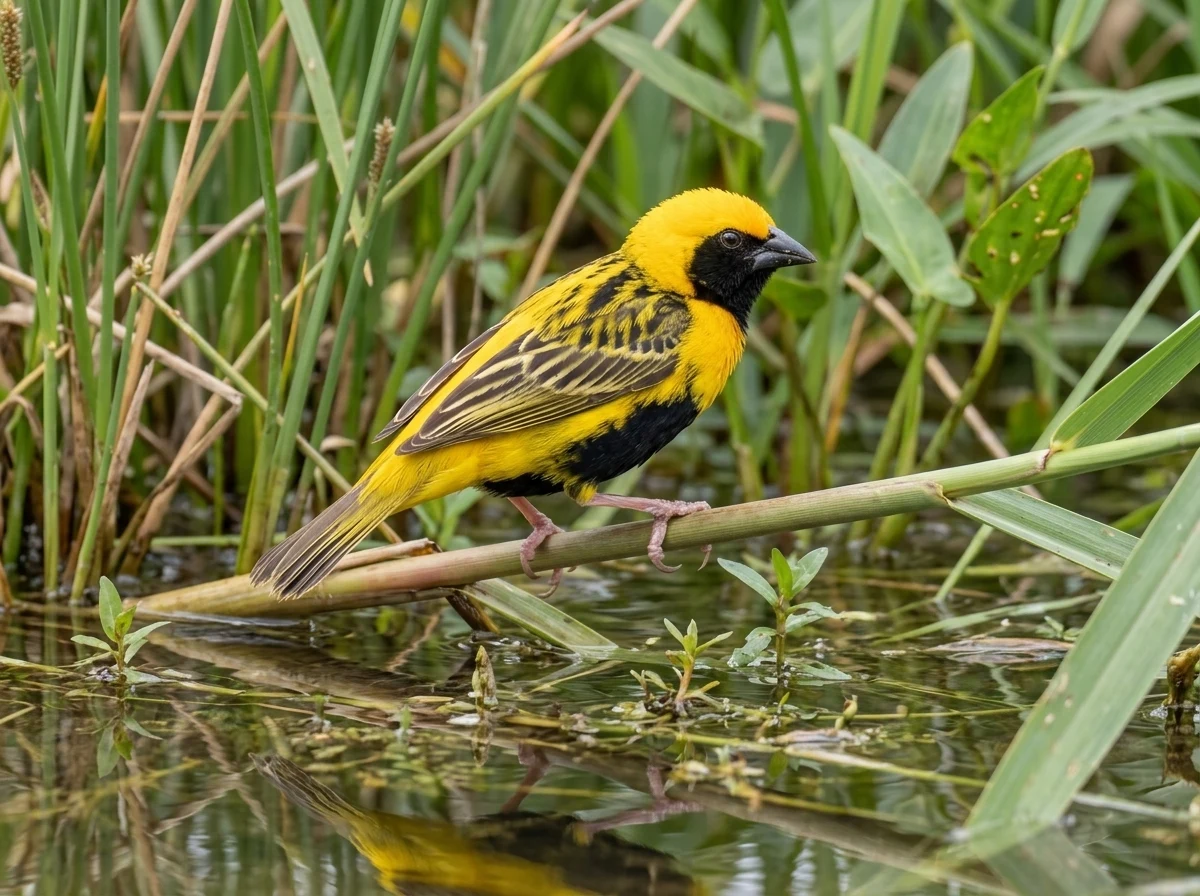
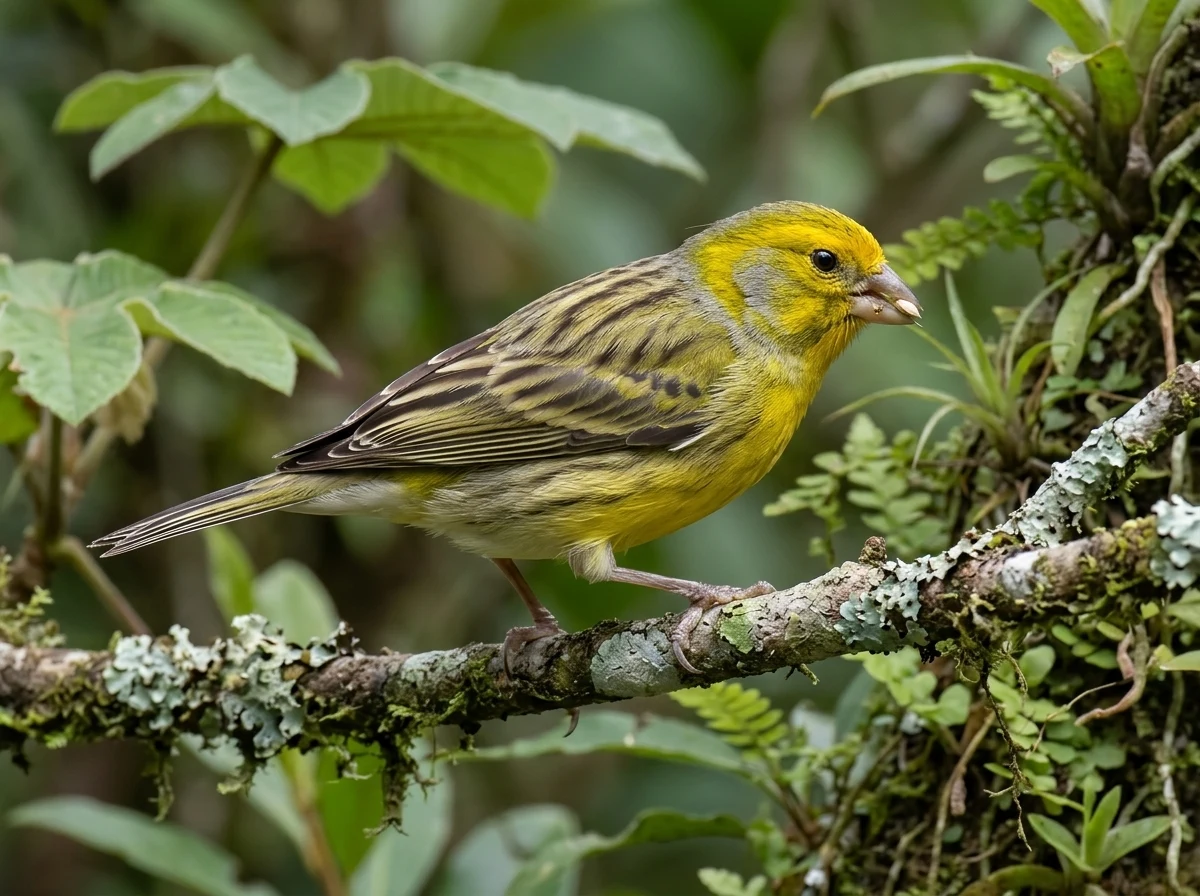
The most intense yellows among seed-eaters are usually introduced. Saffron Finch is South American and, despite being called a canary, is unrelated to the true canary. Yellow-crowned Bishop is an African weaver whose breeding male is yellow and black. Wild-type Island Canaries are mostly yellow-green with brown back streaks, and Yellow-fronted Canary is introduced as well.
05
Yellow on forest endemics: spindalis and euphonia
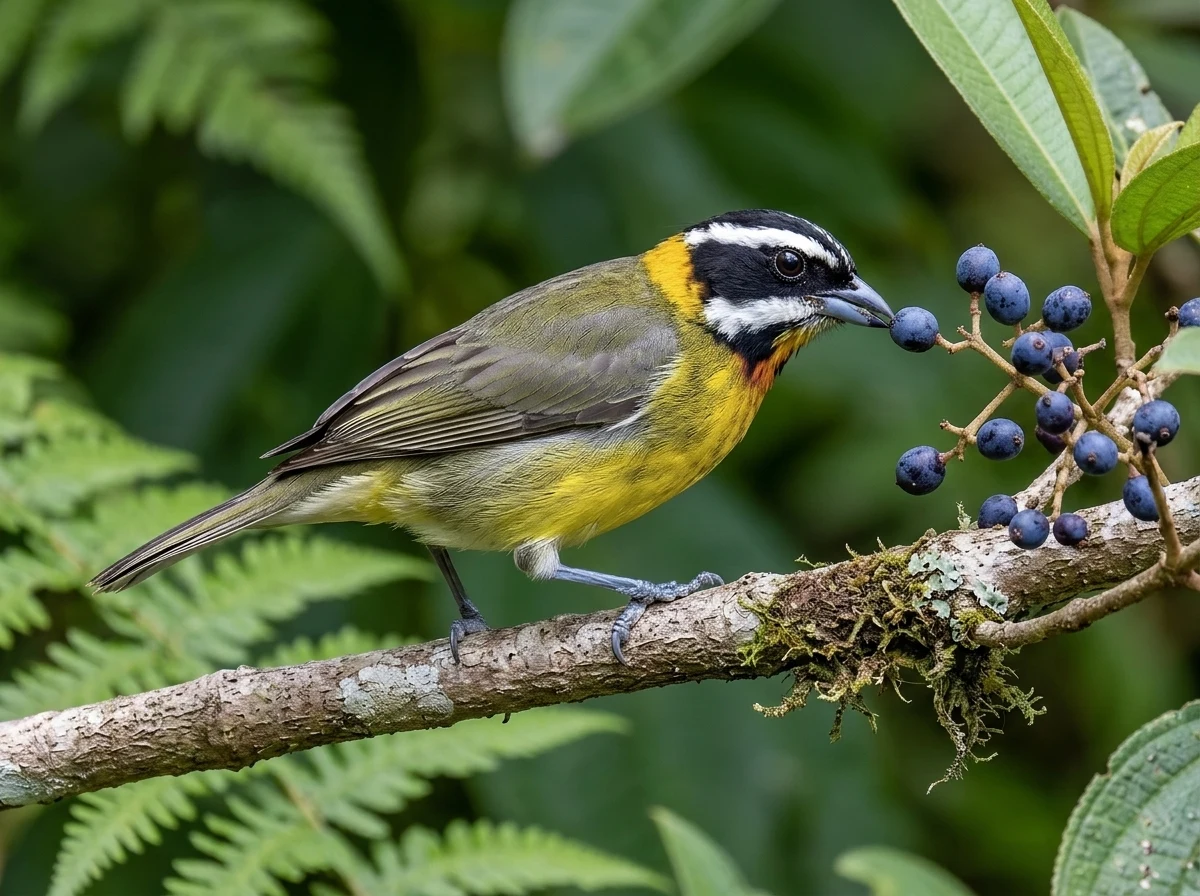
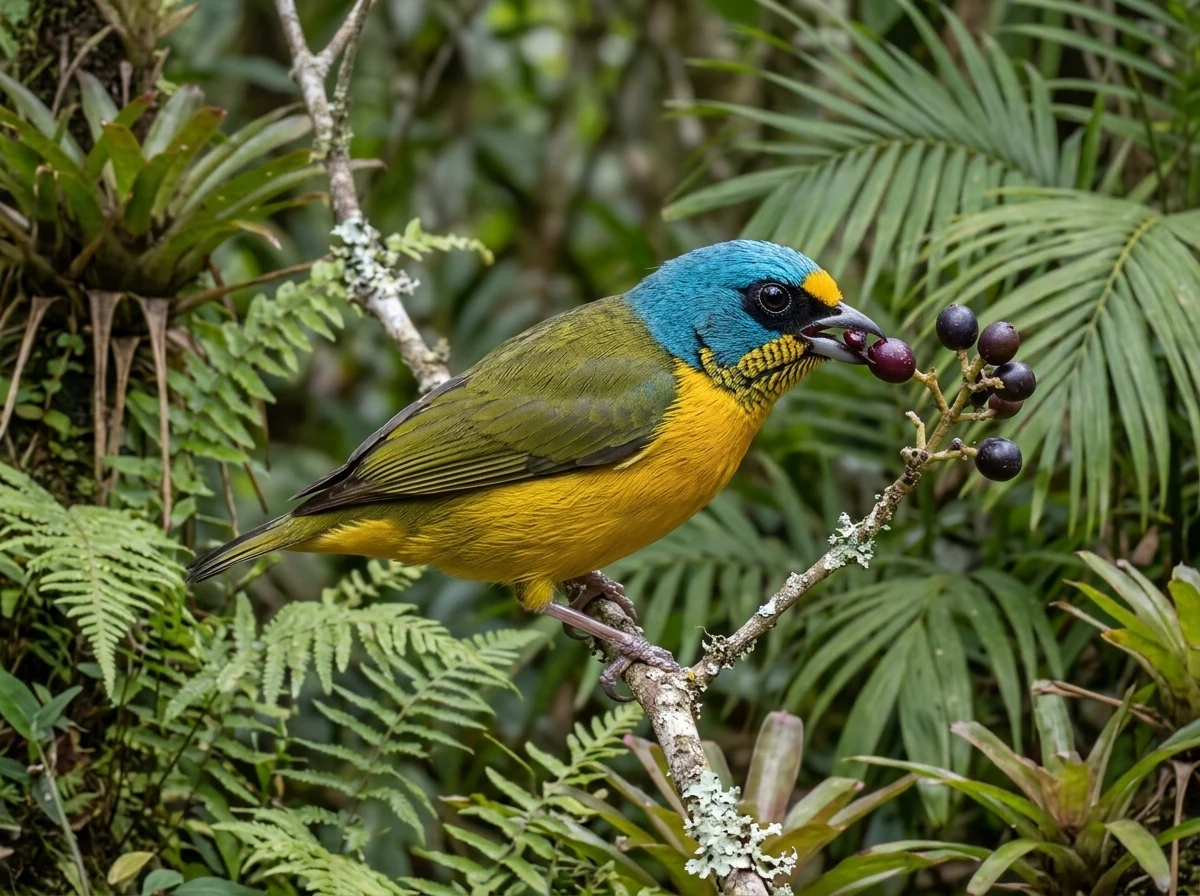
In fruiting trees, the male Puerto Rican Spindalis shows a yellow throat and breast below an orange collar, with a white-striped black head. Male Puerto Rican Euphonias have a sunny yellow throat, belly, and rump, a turquoise crown, a blackish-violet face and back, and a yellow-to-orange band on the forehead.
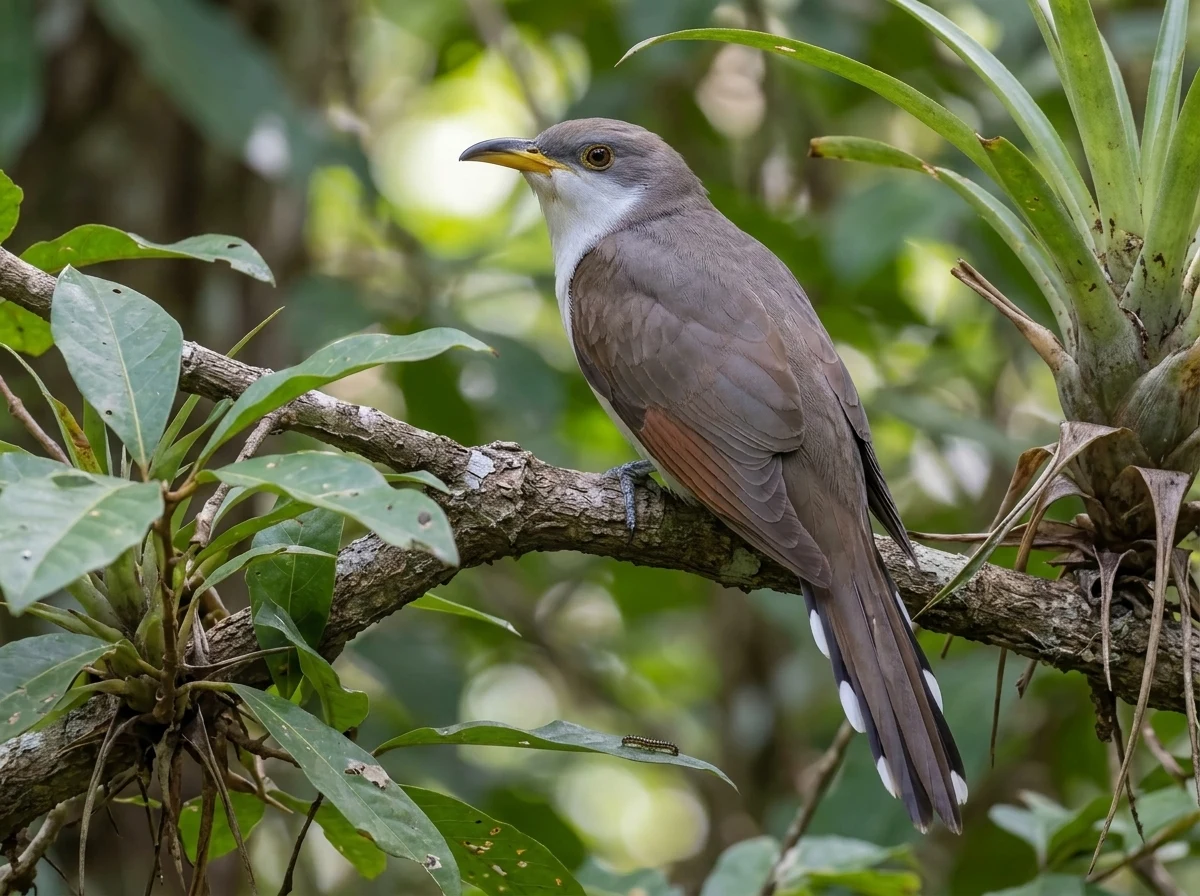
The word “canario” misleads: the Canario del País is not a canary but a euphonia, recognized as an endemic species in 2023. If the yellow bird also had lots of black on the wings and back and lived in mangroves or open southern areas, compare the Yellow-shouldered Blackbird and Puerto Rican Oriole in the black-birds guide. A Yellow-billed Cuckoo, meanwhile, is named for its yellow bill, not its plumage.
Linked profiles
Yellow birds of Puerto Rico
Compare residents, endemics, migrants, and introduced birds in their profiles.
Sound archive
Hear its voice
Explore real songs and calls. The spectrogram turns each sound into a visual trace of time and frequency.
XC1074428Recording 1 of 3call

Play: call by Paul Driver
Choose another recording
Sound recorded by Paul Driver · XC1074428 · CC BY-NC-SA 4.0. Visualization by Stichting Xeno-canto voor Natuurgeluiden.
Every recording retains the creator, catalogue number, and license published by Xeno-canto. Metadata via GBIF ↗
01
What is the little yellow bird that eats sugar?
It is the Bananaquit, called the sugar bird on many islands. It has a yellow breast, white eyebrow, dark gray back, and curved black bill. It feeds on nectar and visits sugar bowls, though a garden of native flowers is better food than sugar.
02
What is the Reinita Amarilla?
It is the Yellow Warbler. Puerto Rico has a resident mangrove form, which nests on the island and is listed as vulnerable by the DNER, and a northern migratory form recorded as accidental. Both are almost entirely yellow; the migrant shows yellow tail spots.
03
Where does the Yellow Warbler nest in Puerto Rico?
The resident Yellow Warbler nests in mangroves, coastal scrub, and wetland edges, building a cup nest in trees. Because the DNER lists it as vulnerable, watch from a distance and do not publish a nest's exact location.
04
Which yellow warbler is endemic to Puerto Rico?
Adelaide's Warbler, the Reinita Mariposera: gray above and yellow below, with two white wing bars and a yellow eyebrow. It lives in southern dry forest, Vieques, and northern limestone forest but is absent from the high mountains and the eastern end.
05
Are there wild canaries in Puerto Rico?
Introduced ones: Island Canary and Yellow-fronted Canary are listed as introduced species. Saffron Finch, also introduced, is not a true canary. Neither is the Canario del País, which is the endemic Puerto Rican Euphonia.
06
What is the yellow “pájaro bobo”?
Probably the Yellow-billed Cuckoo, a native cuckoo named for its yellow bill rather than its plumage. Do not confuse it with the endemic Puerto Rican Lizard-Cuckoo, the Pájaro Bobo Mayor.
Keep exploring
Connected routes
Sources and review
The evidence is one link away.
These sources support the editorial scope of this guide. Bird profiles also retain their own taxonomy, occurrence, and conservation references.
Reviewed:
01↗02↗03↗04↗05↗06↗07↗08↗09↗10↗11↗
Celebrate Urban Birds / Cornell Lab of Ornithology
Focal species: Bananaquit
Measurements and detailed Bananaquit description.BirdsCaribbean
From the Nest, day 43: Adelaide's Warbler
Gray-and-yellow plumage, wing bars, and Puerto Rico habitats.National Audubon Society
Field guide: Northern Yellow Warbler
Male reddish breast streaks and yellow tail spots.Sociedad Ornitológica Puertorriqueña
Official bird list
Local names, occurrence categories, and the public summary of 17 endemics.BirdsCaribbean
Coloring page: Bananaquit
Taste for nectar and sugar, and variation among islands.Birds of the World / Cornell Lab of Ornithology
Adelaide's Warbler: introduction
Adelaide's Warbler range and the origin of its local name.National Audubon Society
Field guide: Prairie Warbler
Yellow underparts with black side streaks, tail bobbing, and West Indies wintering.Birds of the World / Cornell Lab of Ornithology
Yellow-faced Grassquit: introduction
General appearance, grassy habitat, and flocking behavior.Celebrate Urban Birds / Cornell Lab of Ornithology
Focal species: Puerto Rican Spindalis
Male and female Puerto Rican Spindalis description.BirdsCaribbean
Five new bird species for the Caribbean (2023)
Split of the Puerto Rican Euphonia and male and female descriptions.U.S. Fish and Wildlife Service
Yellow-shouldered Blackbird: bird of the month
Visual comparison, current distribution, and threats affecting the endemic Yellow-shouldered Blackbird.The atlas continues