 AI
AIA name you can hear
What is the querequequé?
It arrives in spring, nests on bare ground or gravel roofs, and announces dusk with a “que-re-que-qué” from overhead.
Reviewed:It is a nighthawk, and its name copies its voice.
The querequequé is the Antillean Nighthawk (Chordeiles gundlachii), a long-, pointed-winged bird that hunts flying insects at dusk and dawn. Its name imitates the call it gives in flight, and in Puerto Rico it is present mainly from spring to late summer, when it breeds.
It is not an owl or a bat, although it flies in low light. It belongs to the nightjar family (Caprimulgidae), like the endemic Puerto Rican Nightjar. This guide covers its call, how to recognize it in flight, when and where to see it, how it breeds without building a nest, and how to separate it from its migratory relative.
A name you can hear
The nighthawk in numbers
Mayo–agobreeding in Puerto RicoA locally common breeder in those months.
1–2eggs, no nestLaid directly on ground, sand, gravel, or roofs.
~20 díasincubationMostly by the female; young fledge at about 20 days.
01
An onomatopoeic name
SOPI calls Chordeiles gundlachii Querequequé and its relative Chordeiles minor Querequequé Migratorio. The Spanish Ornithological Society uses Añapero Querequeté. In the Dominican Republic it is called querebebé. English Wikipedia describes both names as onomatopoeic and of Taíno origin.
The call sounds like repeated syllables, “que-re-que-té” or “que-re-be-bé,” stressed on the last one. English guides transcribe it as “pikadik” or “killy-ka-dick.” It is short and dry, usually heard from overhead, and often given at night or on cloudy days.
02
What it looks like in the air
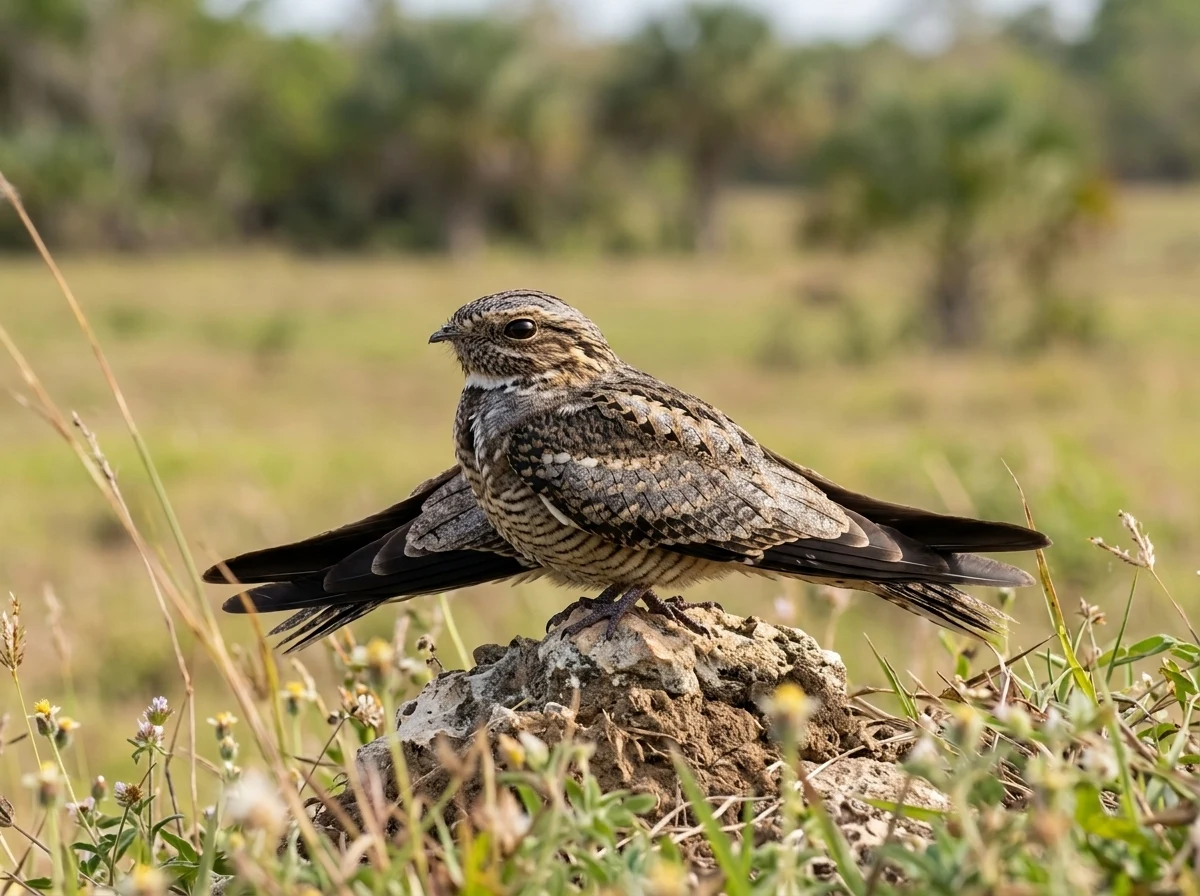
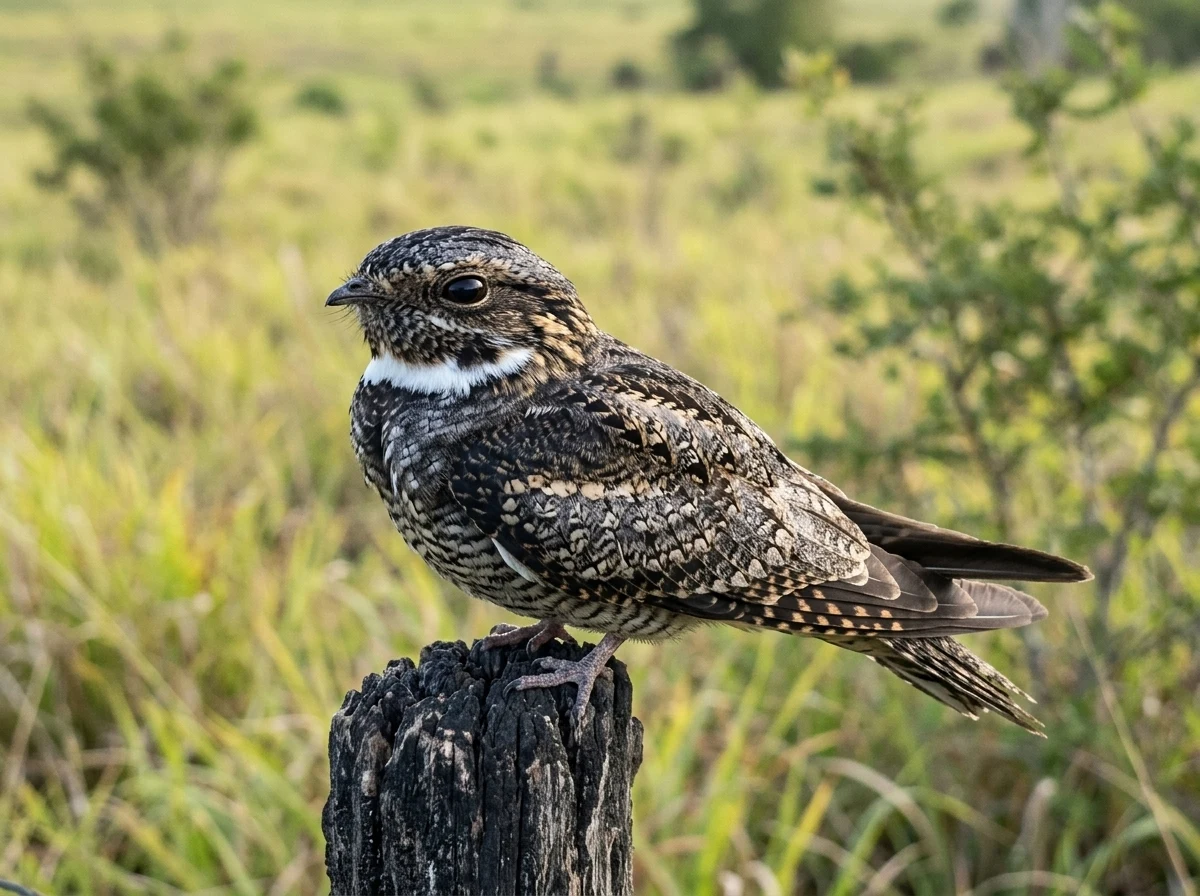
It is about 20–23 cm (8–9 in) long with a wingspan of roughly 53–58 cm (21–23 in). It is mottled gray-brown above and barred below, with long, pointed black wings crossed by a white bar in the primaries, smaller in females. Males have a white throat and a white tail band; females have a pale buff throat. There are gray and rufous morphs.
Its flight is erratic, with deep wingbeats and short glides. At dusk males climb and then dive, pulling out a few feet above the ground; air rushing through the feathers makes a distinctive booming buzz. That sound, together with the call, is often the first sign nighthawks are around.
03
When and where to hear it in Puerto Rico
It is a summer resident. In Puerto Rico it is a locally common breeder from May to August, and across its range it is present from late April to September. After breeding it leaves the region; its wintering range is poorly known, though its presence has been confirmed in Colombia.
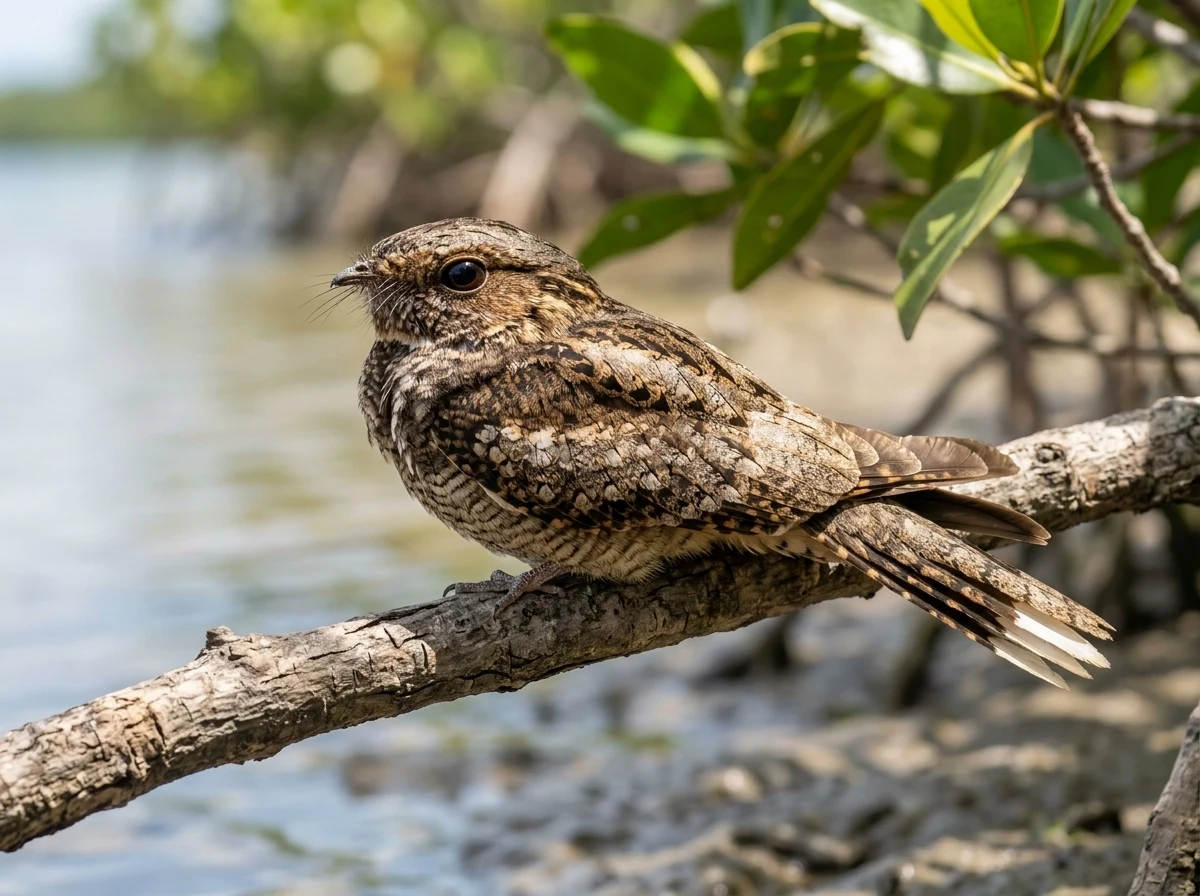
Look over flat, open ground: pastures, savannas, gravel beaches, rocky outcrops, and coastal fringes. Guides also mention recently cleared land, airport fields, and cane fields. The best time is the half hour before and after sunset, when it comes out to hunt insects.
04
A nest that is not a nest, sometimes on your roof
The Antillean Nighthawk builds no nest. It lays one or two eggs directly on bare ground, leaves, sand, or gravel, and sometimes on raised spots such as stumps or flat gravel roofs, a habit well known in cities. The female does most of the incubation, which lasts about 20 days, and the young fledge at roughly 20 days.
Because the eggs and the adult blend with the ground, a nest goes unnoticed until someone steps on it or mows over it. If a nighthawk flushes at your feet on a beach or rooftop between May and August, step away and leave the area quiet; the species is Least Concern globally, but every local clutch counts.
05
Antillean or Common Nighthawk
The Common Nighthawk (Chordeiles minor), called Querequequé Migratorio, is nearly identical and occurs in Puerto Rico as a migrant or accidental visitor. It measures 22–25 cm. Compared with the Antillean, it shows buffy marks on the underwing coverts and belly that the Antillean lacks, and the two also differ in voice and in the length of their glides.
On a perched bird, pale, contrasting tertials at the back of the wing point to Antillean Nighthawk. The Common Nighthawk sometimes gives a similar call, but not as consistently. So outside the breeding season, or with a silent bird, the honest entry is “nighthawk sp.” with the recording or photo saved.
06
Not to be confused with the Puerto Rican Nightjar
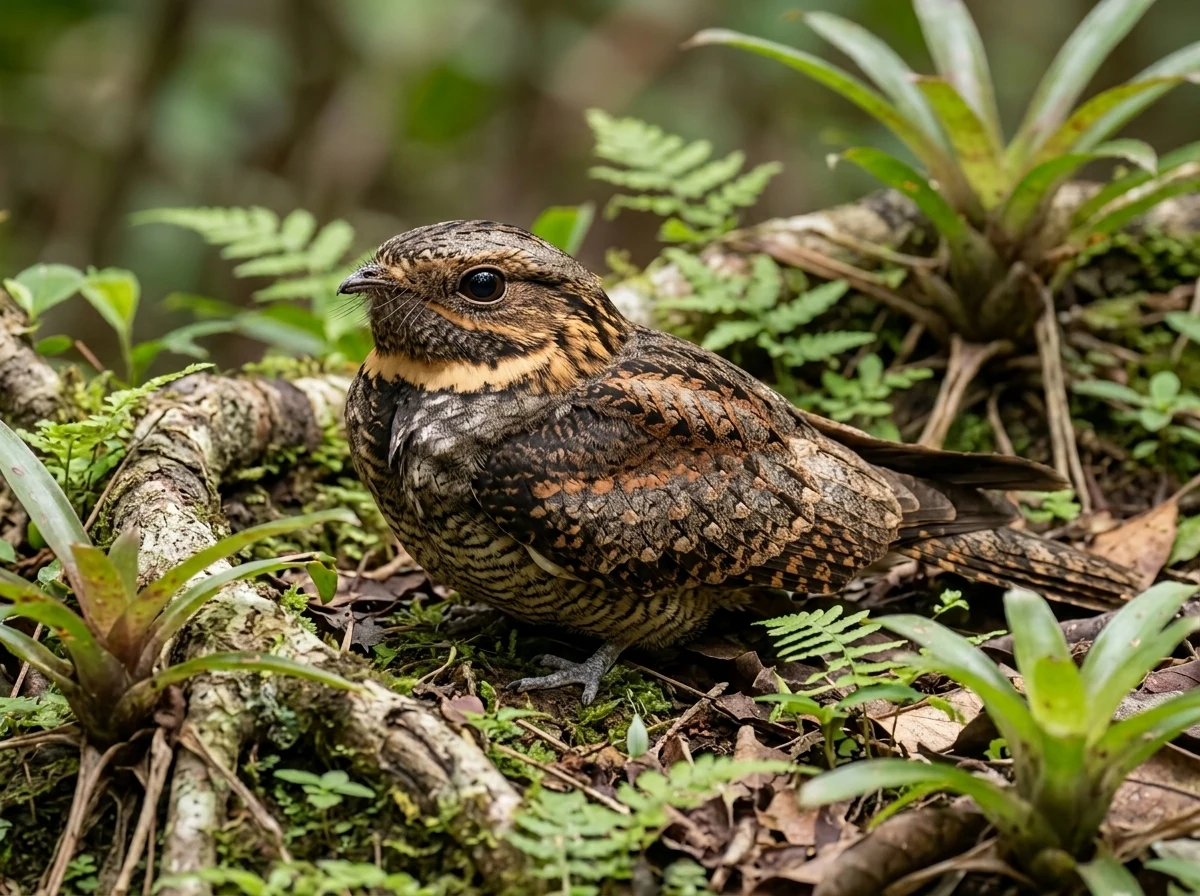
The Puerto Rican Nightjar (Guabairo) belongs to the same family, but it is endemic and tied to dry limestone forest, coastal dry forest, and scrub. The Antillean Nighthawk, by contrast, is seen flying high over open ground and calls on the wing. Silhouette, habitat, and behavior separate them before color does. Chuck-will's-widow, another relative, reaches the island only as an accidental visitor.
To record the call, a phone is enough if you are outdoors and quiet at dusk. Note the date, time, and place. Recordings on Xeno-canto and in the Macaulay Library's Puerto Rico collection are useful for comparing what you heard before you submit a record.
Linked profiles
Nighthawks and nightjars
Listen to and compare the voices of the nightjar family recorded in Puerto Rico.
Sound archive
Hear its voice
Explore real songs and calls. The spectrogram turns each sound into a visual trace of time and frequency.
XC998667Recording 1 of 3flight call

Play: flight call by GABRIEL LEITE
Choose another recording
Sound recorded by GABRIEL LEITE · XC998667 · CC BY-NC-SA 4.0. Visualization by Stichting Xeno-canto voor Natuurgeluiden.
Every recording retains the creator, catalogue number, and license published by Xeno-canto. Metadata via GBIF ↗
01
What is the querequequé?
It is the Antillean Nighthawk (Chordeiles gundlachii), a nightjar-family bird that hunts insects on the wing at dusk. Its name imitates the call it repeats from overhead, “que-re-que-qué.”
02
When can you hear the querequequé in Puerto Rico?
Mainly from May to August, when it breeds on the island; across its range it is present from late April to September. The call is heard at dusk, dawn, at night, or on cloudy days.
03
Is the querequequé an owl?
No. It is a nighthawk in the family Caprimulgidae, related to the Puerto Rican Nightjar, not to owls. It has a tiny bill, a large mouth, and long pointed wings for catching insects in the air.
04
Where does the querequequé nest?
It builds no nest. It lays one or two eggs directly on bare ground, sand, gravel, or flat gravel roofs. Incubation lasts about 20 days and is mostly done by the female.
05
Where does the name querequequé come from?
It is an onomatopoeia of the bird's call. English Wikipedia states that querequequé in Puerto Rico and querebebé in the Dominican Republic are onomatopoeic terms of Taíno origin.
06
Where does the querequequé go in winter?
It leaves the Antilles after breeding, but its wintering range is poorly known. There is evidence of migration toward South America and confirmed presence in Colombia.
Keep exploring
Connected routes
Sources and review
The evidence is one link away.
These sources support the editorial scope of this guide. Bird profiles also retain their own taxonomy, occurrence, and conservation references.
Reviewed:
01↗02↗03↗04↗05↗06↗07↗08↗
Sociedad Ornitológica Puertorriqueña
Catalog of the Birds of Puerto Rico (2007)
Official local names (Mozambique, Tordo Lustroso, Pizpitas, Querequequé, Clérigo, Aura Tiñosa), Spanish SEO names, and introduced status.Wikipedia
Antillean nighthawk
Pale tertials, gray and rufous morphs, nestless breeding, incubation, and the onomatopoeic name querequequé.Wikipedia en español
Chordeiles gundlachii, Spanish Wikipedia
Call syllables, dive displays, differences from Common Nighthawk, and wintering confirmed in Colombia.National Audubon Society
Field guide: Antillean Nighthawk
Measurements, killy-ka-dick call, one or two eggs without a nest, and a late-April-to-September season.Birds of Puerto Rico
Antillean Nighthawk in Puerto Rico
Local breeding from May to August, open habitats, and nesting on gravel roofs.Xeno-canto Foundation / GBIF
Xeno-canto recordings published through GBIF
Metadata, authorship, licenses, and catalogue records for field recordings used by the atlas.Sociedad Ornitológica Puertorriqueña
Official bird list
Local names, occurrence categories, and the public summary of 17 endemics.Macaulay Library / Cornell Lab of Ornithology
Puerto Rico sound archive
Complementary audio collection for comparing songs, calls, locations, and dates.The atlas continues