 AI
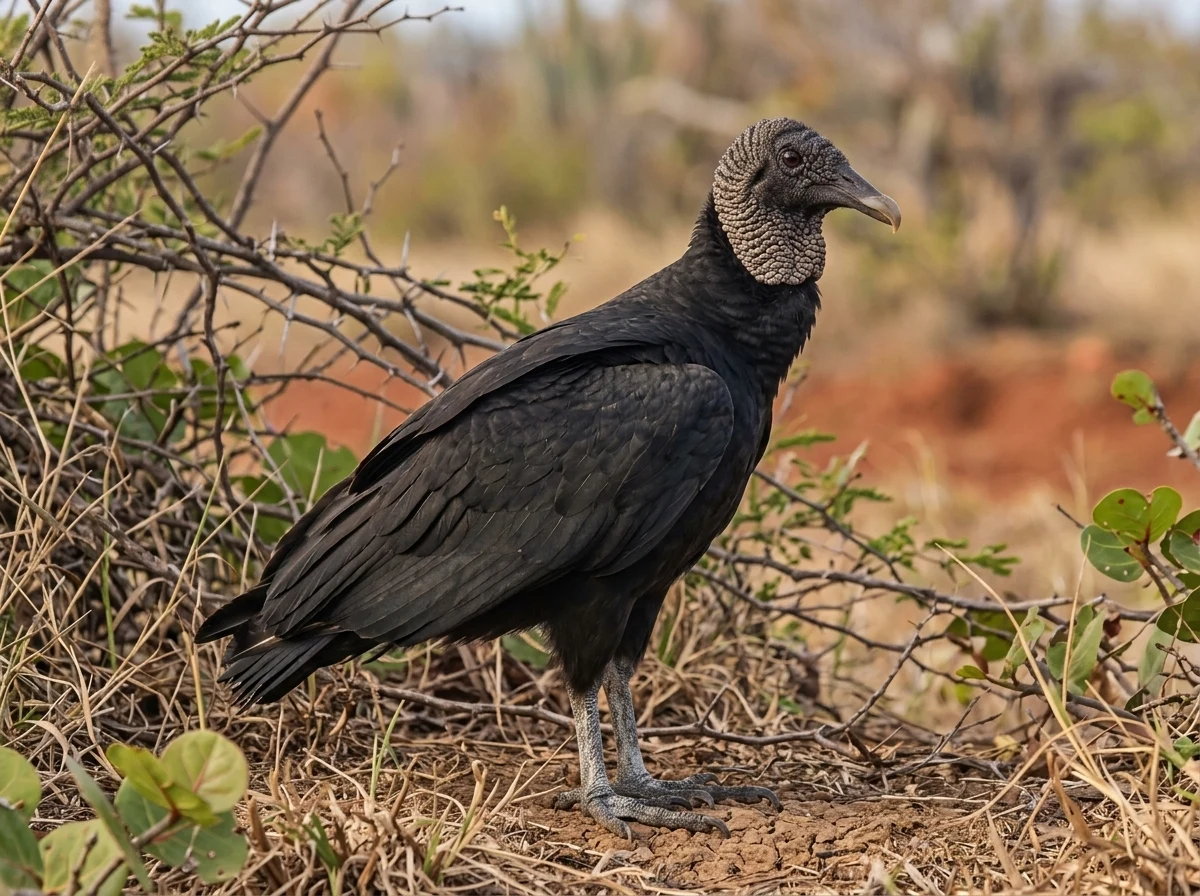
AIAI reconstruction created with Nano Banana 2 · 1K, grounded in the profile’s documented taxonomy, habitat, natural-history sources, and an open-license visual reference when available. It is an interpretive image, not documentary evidence. Image policy →
Black Vulture
Zopilote Común
Coragyps atratus
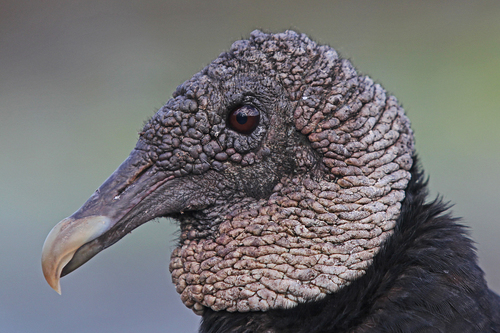
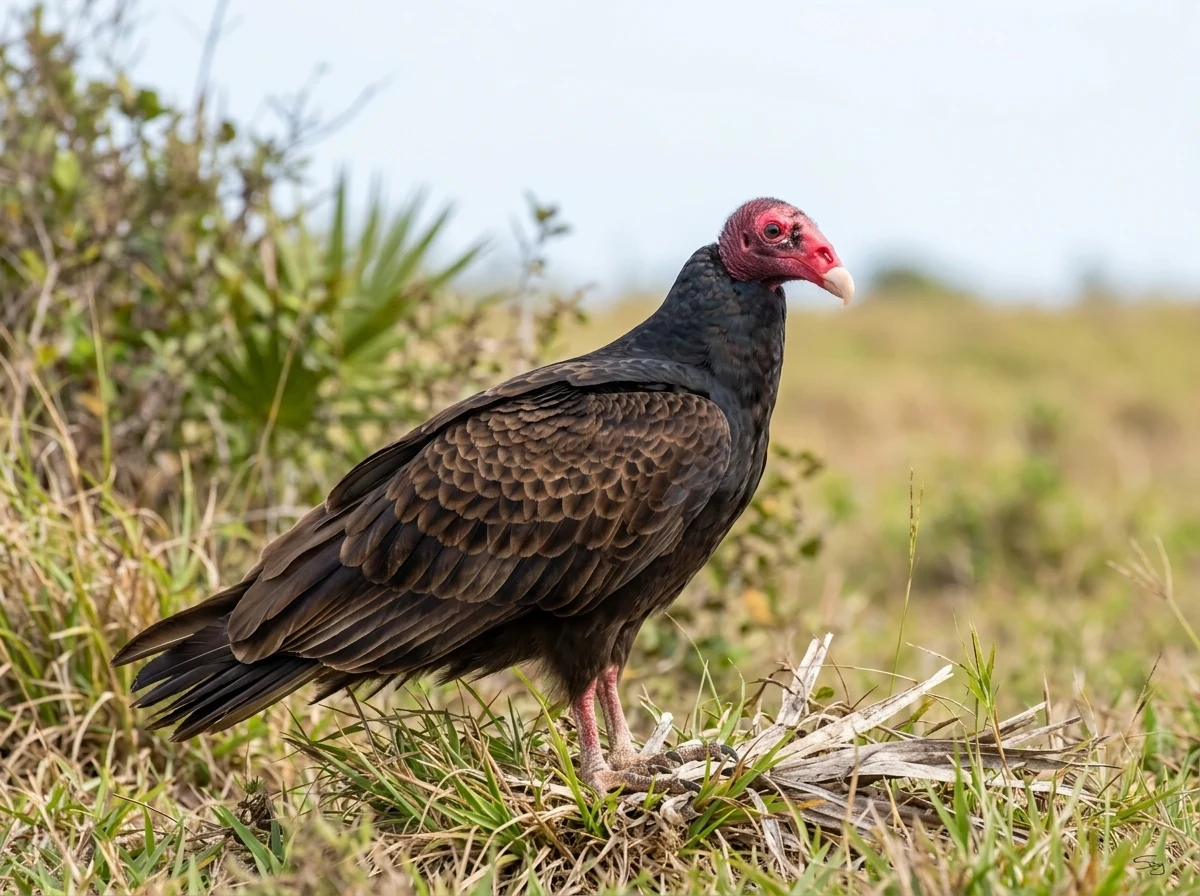
The black vulture (Coragyps atratus), also known as the American black vulture, Mexican vulture, zopilote, urubu, or gallinazo, is a bird in the New World vulture family whose range extends from the southeastern United States to Peru, Central Chile and Uruguay in South America, and common throughout Brazil where it can be seen in large scavenging groups. Although a common and widespread species, it has a somewhat more restricted distribution than its compatriot, the turkey vulture, which breeds well into Canada and all the way south to Tierra del Fuego. It is the only extant member of the genus Coragyps, which is in the family Cathartidae. Despite the similar name and appearance, this species is not closely related to the Eurasian black vulture, an Old World vulture, of the family Accipitridae (which includes raptors like the eagles, hawks, kites, and harriers). For ease of locating animal corpses (their primary source of sustenance), black vultures tend to inhabit relatively open areas with scattered trees, such as chaparral, in addition to subtropical forested areas and parts of the Brazilian pantanal. With a wingspan of 1.5 m (4.9 ft), the black vulture is an imposing bird, though relatively small for a vulture, let alone a raptor. It has black plumage, a featherless, grayish-black head and neck, and a short, hooked beak. These features are all evolutionary adaptations to life as a scavenger; their black plumage stays visibly cleaner than that of a lighter-colored bird, the bare head is adapted for easily digging inside animal carcasses, and the hooked beak is built for stripping the bodies clean of meat. The absence of head feathers helps the birds stay clean and remain (more or less) free of animal blood and bodily fluids, which could become problematic for the vultures and attract parasites; most vultures are known to bathe after eating, provided there is a water source. This water source can be natural or man-made, such as a stream or a livestock water tank. The black vulture is a scavenger and feeds on carrion, but will also eat eggs, small reptiles, or small newborn animals (livestock such as cattle, or deer, rodents, rabbits, etc.), albeit very rarely. They will also opportunistically prey on extremely weakened, sick, elderly, or otherwise vulnerable animals. In areas populated by humans, it also scavenges at waste disposal sites, such as garbage dumps. It finds its meals by using its keen eyesight or following other vultures, especially those of the Cathartes genus which possess a keen sense of smell. Lacking a syrinx—the vocal organ of birds—its only vocalizations are grunts or low hisses. It lays its eggs in caves, in cliffside rock crevasses, dead and hollow trees, or, in the absence of predators, on the bare ground, generally raising two chicks each year. The parents feed their young by regurgitation of crop milk. In the United States, the vulture receives legal protection under the Migratory Bird Treaty Act of 1918. This vulture also appeared in Mayan codices.
Sound archive
Hear its voice
Explore real songs and calls. The spectrogram turns each sound into a visual trace of time and frequency.

Play: call, bater de asas by JAYRSON ARAUJO DE OLIVEIRA
Choose another recording
Sound recorded by JAYRSON ARAUJO DE OLIVEIRA · XC917558 · CC BY-NC-SA 4.0. Visualization by Stichting Xeno-canto voor Natuurgeluiden.
Every recording retains the creator, catalogue number, and license published by Xeno-canto. Metadata via GBIF ↗
Island profile
About the Black Vulture
This atlas includes Black Vulture (Coragyps atratus) with atlas status “Accidental / vagrant” within scope “Avibase inferred core 380.” Global trait data associate it primarily with shrub; consult the linked records to resolve its Puerto Rico habitat use.
Conservation
Least Concern
IUCN LC
- Global IUCN
- LC
- Puerto Rico DNER
- No current listing in source crosswalk
- Federal ESA
- No current listing in source crosswalk
- Critical habitat
- Not identified in source crosswalk
Natural history
How it lives
- Habitat
- shrublands
- Elevation
- 0–2000 m
- Nest
- No nest · Stump; Ground; Rock
- Clutch
- 2–4 eggs
- Social behavior
- Pairs / family groups
Keep exploring
This bird belongs to 7 paths through the atlas.
Guides featuring this bird
Follow this record beyond the profile.
Identification, sound, place, and explanatory guides connecting this species to larger questions.
Related in the atlas
Where to fly next
Connected by taxonomy, habitat, occurrence, and conservation.
 AI
AI AI
AI AI
AI AI
AI AI
AI AI
AI
Evidence trail