 AI
AIIdentify by color
White birds
Three white egrets, one deceptive juvenile, and two long-tailed seabirds solve nearly every case.
Reviewed:Size first, then bill and legs.
The easiest white birds to see in Puerto Rico are egrets: Western Cattle-Egret in pastures beside livestock, Snowy Egret with black legs and yellow feet, the large yellow-billed Great Egret, and the white juvenile Little Blue Heron. Over the sea, a white bird with two very long tail streamers is a tropicbird.
Locals use “garza blanca” for any of them, but on the official list it names one species, the Snowy Egret. This guide sorts white birds by size and place and adds birds with only part of their plumage white, such as the White-crowned Pigeon. For the full heron family, including night-herons and dark herons, see the herons guide.
Identify by color
Measurements that separate
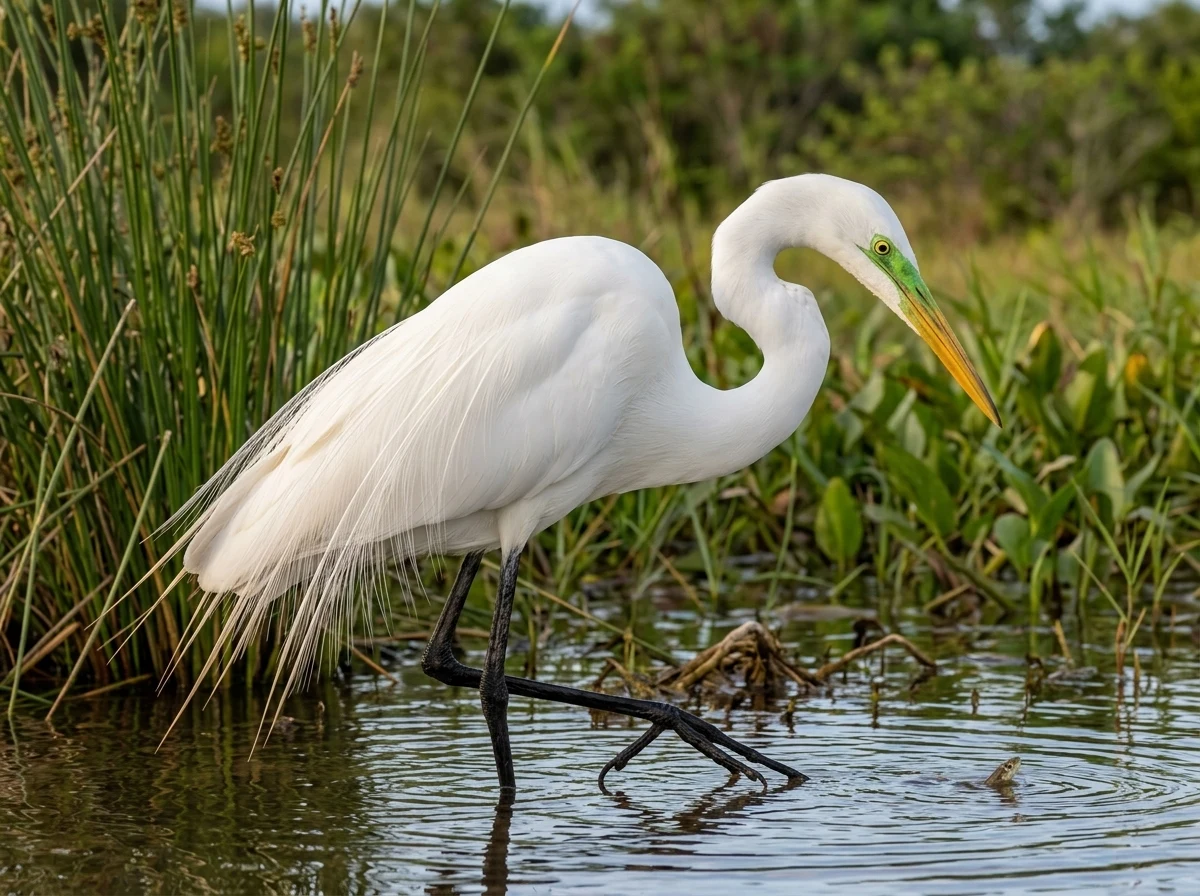
89–104 cmGreat EgretThe large white egret with a yellow bill and black legs.
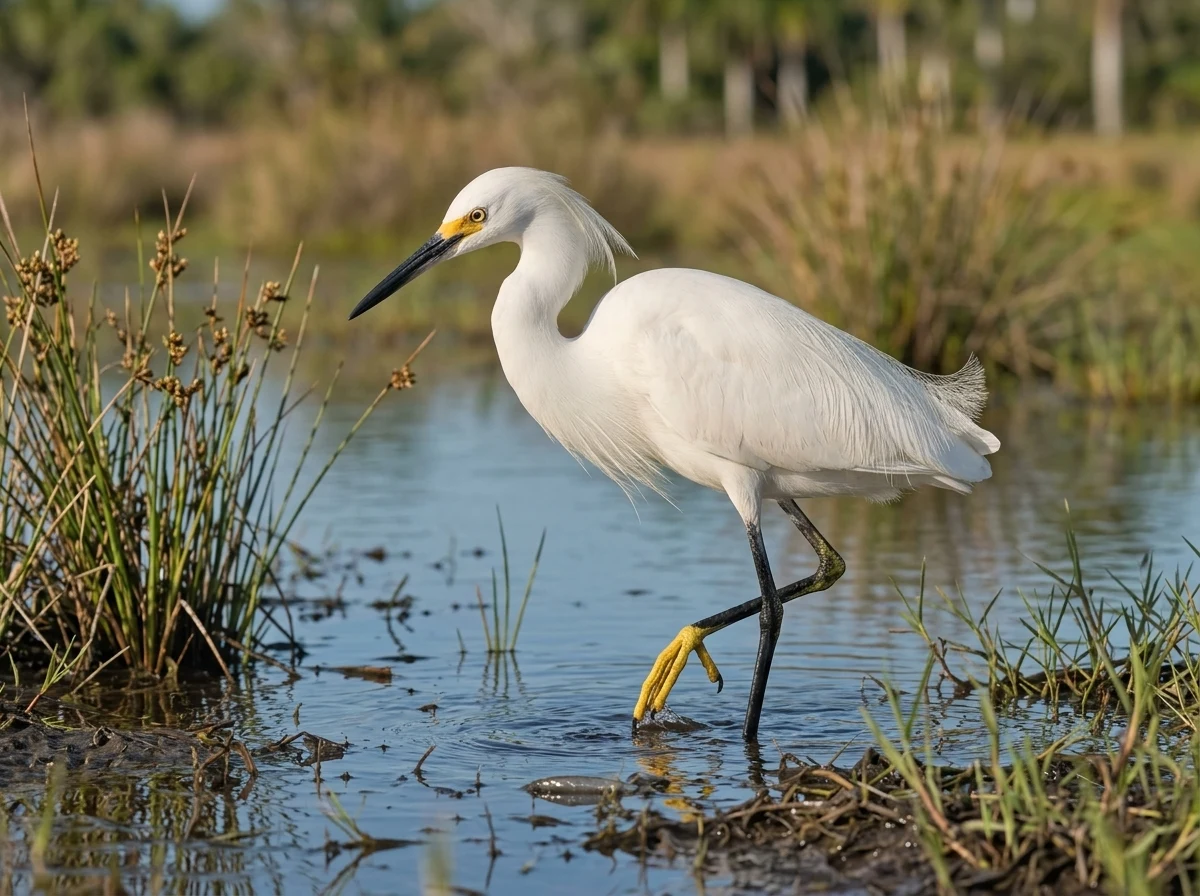
56–66 cmSnowy EgretBlack bill, black legs, and yellow feet.
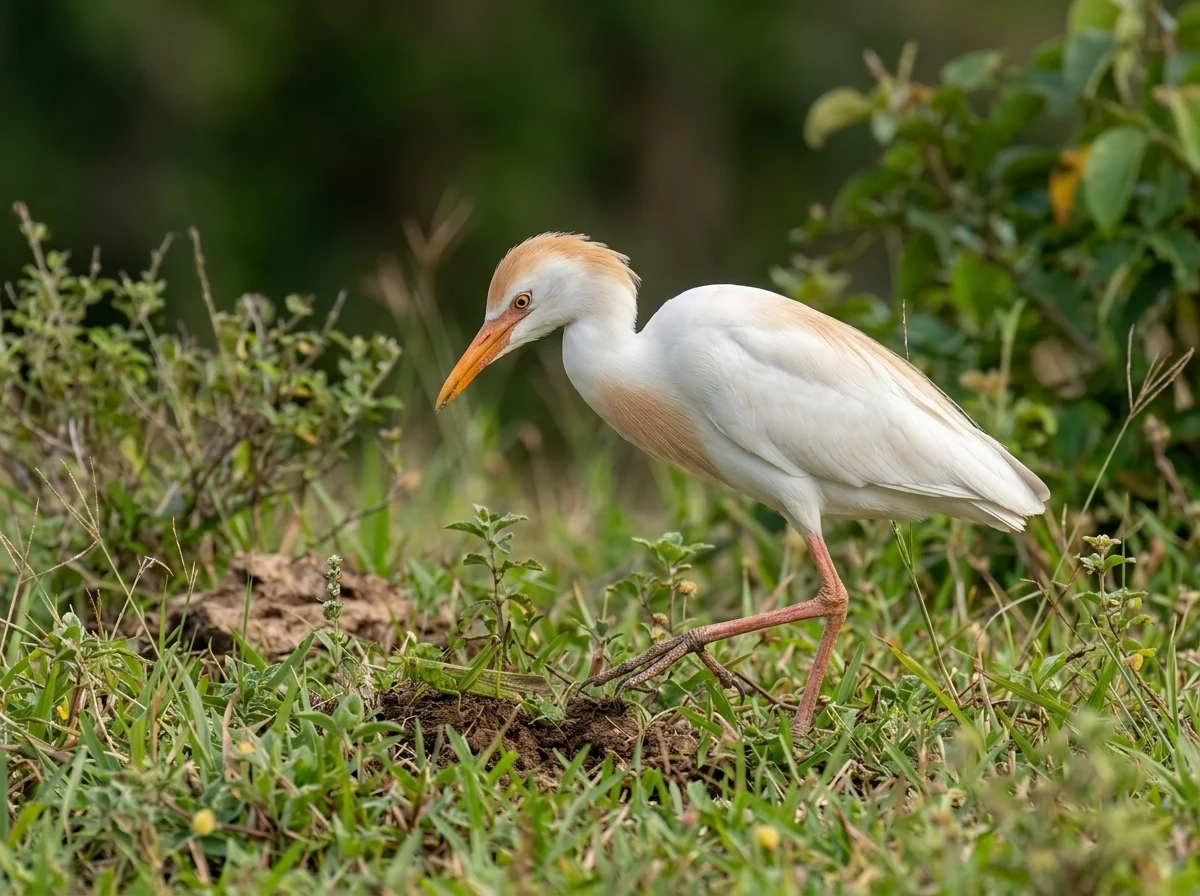
1952Cattle egretIt was unknown in North America before that year.
01
Three white egrets by size
Great Egret is the big one: 89 to 104 centimeters, with a yellow bill and black legs. Snowy Egret measures 56 to 66 centimeters, with a black bill and black legs ending in bright yellow feet—the famous golden slippers. It walks or runs in shallow water and sometimes stirs the bottom with its feet to flush prey.
Western Cattle-Egret is crow-sized and chunkier, with a short yellow bill and legs that shift from yellow or pink in breeding season to dusky in winter. Breeding birds show buff patches on the head, breast, and back. It feeds in dry fields alongside livestock and was unknown in North America before 1952.
02
Deceptive white: young Little Blue Heron and rare egrets
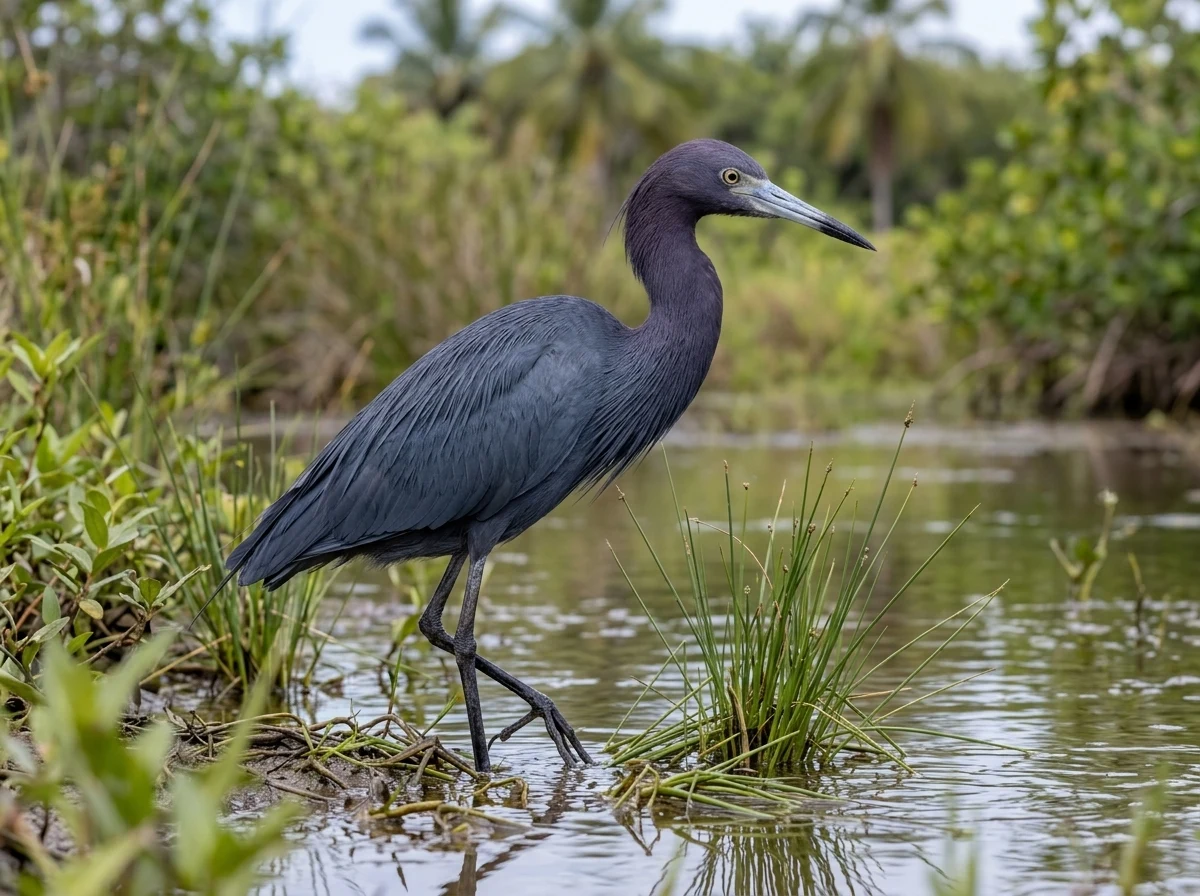
Little Blue Heron juveniles are entirely white and closely resemble young Snowy Egrets. The key clue is the bare skin near the eye: gray on Little Blue, yellow on Snowy. Young Little Blues have dull greenish legs, and during molt they pass through a patchy white-and-blue calico phase that settles the question.
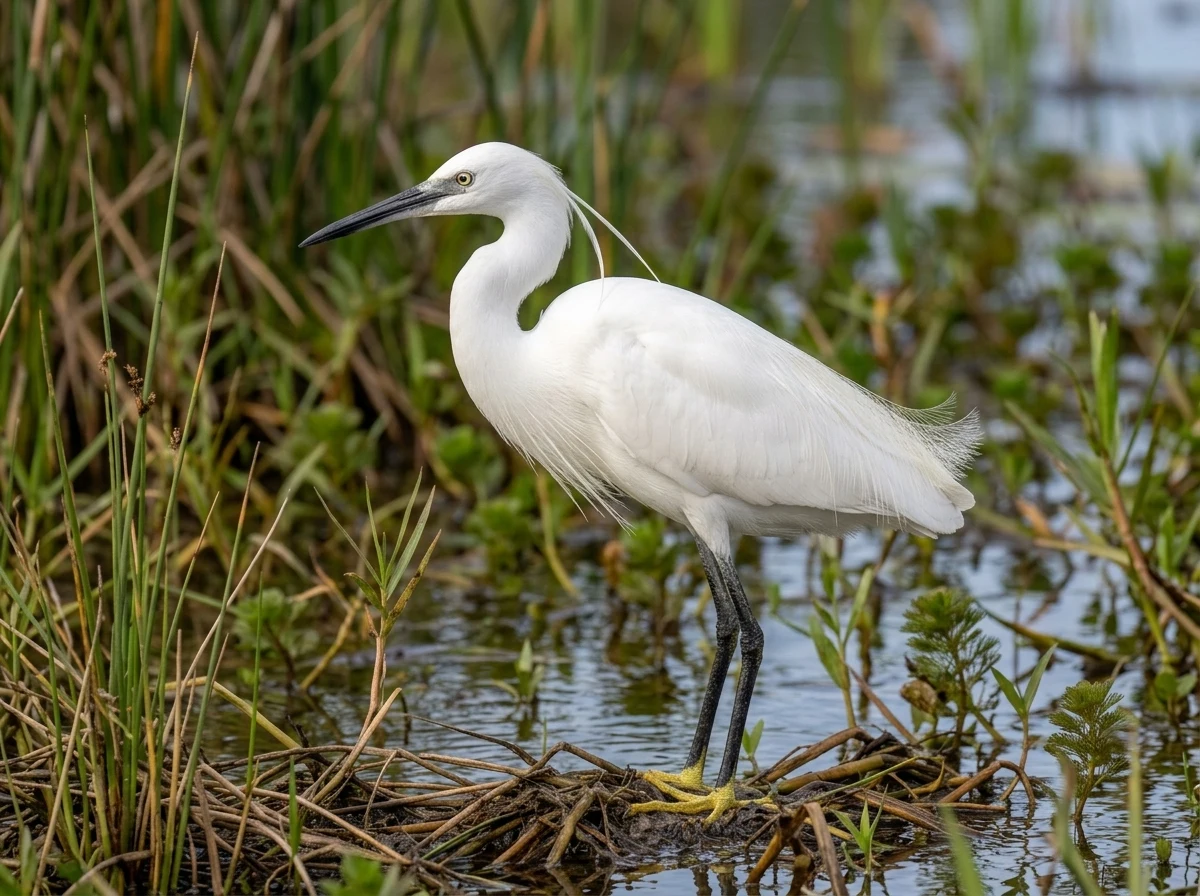
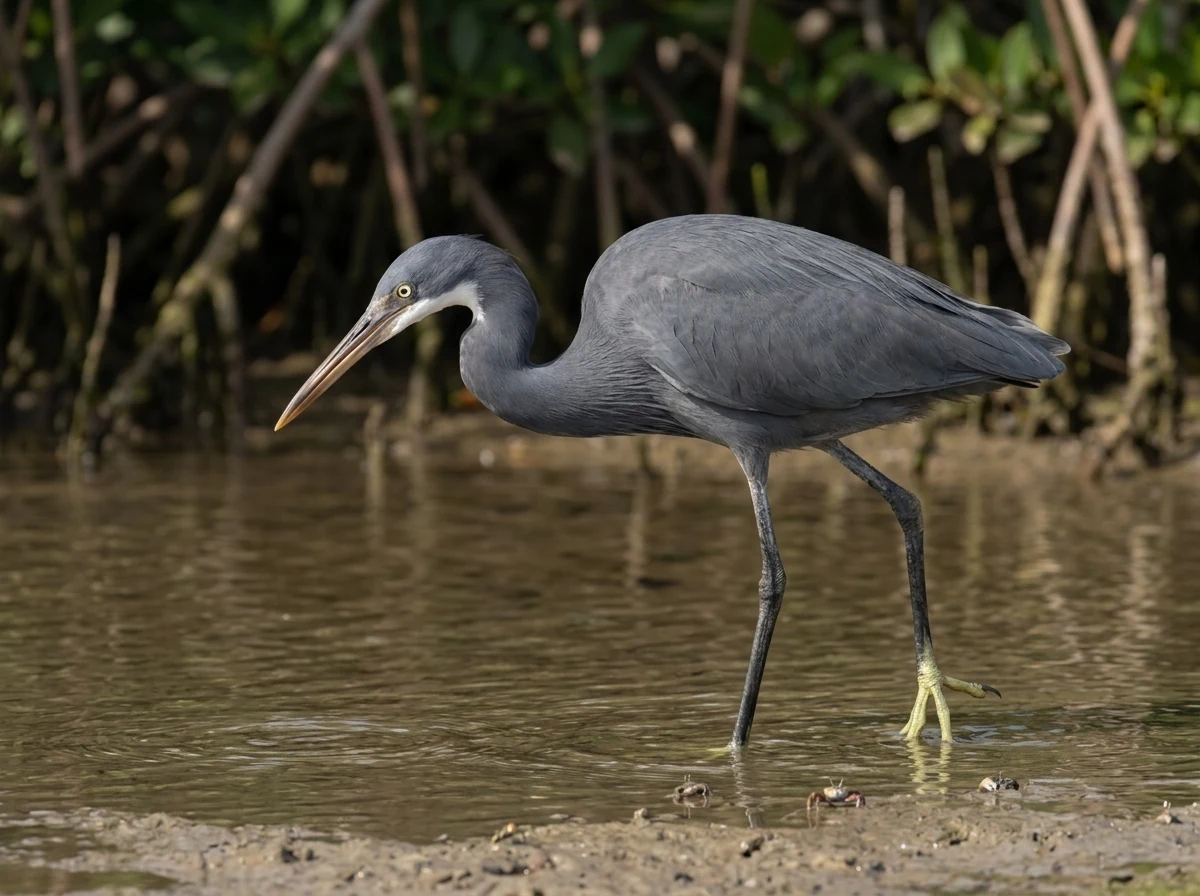
Little Egret and Western Reef-Heron are accidental visitors from the Old World. Little Egret is white with a slender black bill and black legs, and the western race has yellow feet like a Snowy Egret. Separating them requires good photos of the head and plumes, so any record should be documented carefully.
03
Tropicbirds and other white seabirds
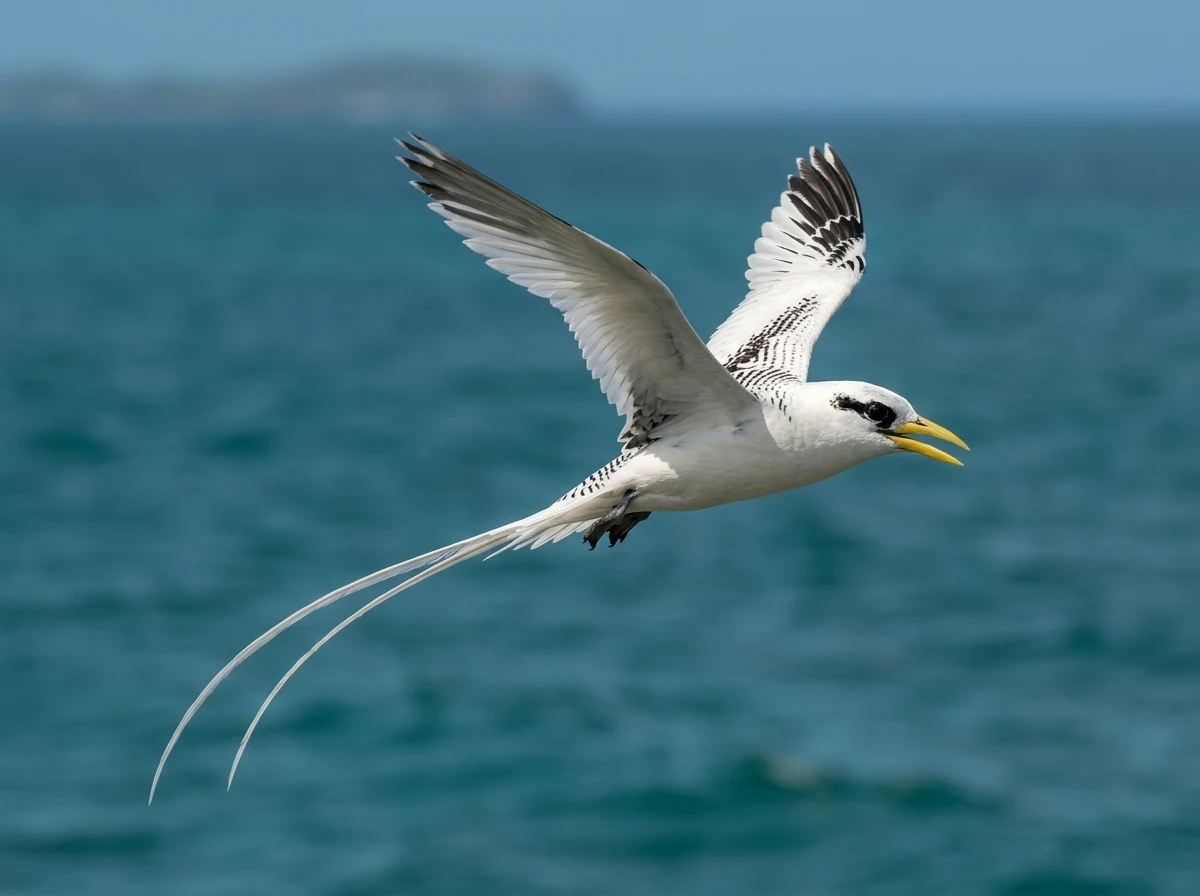
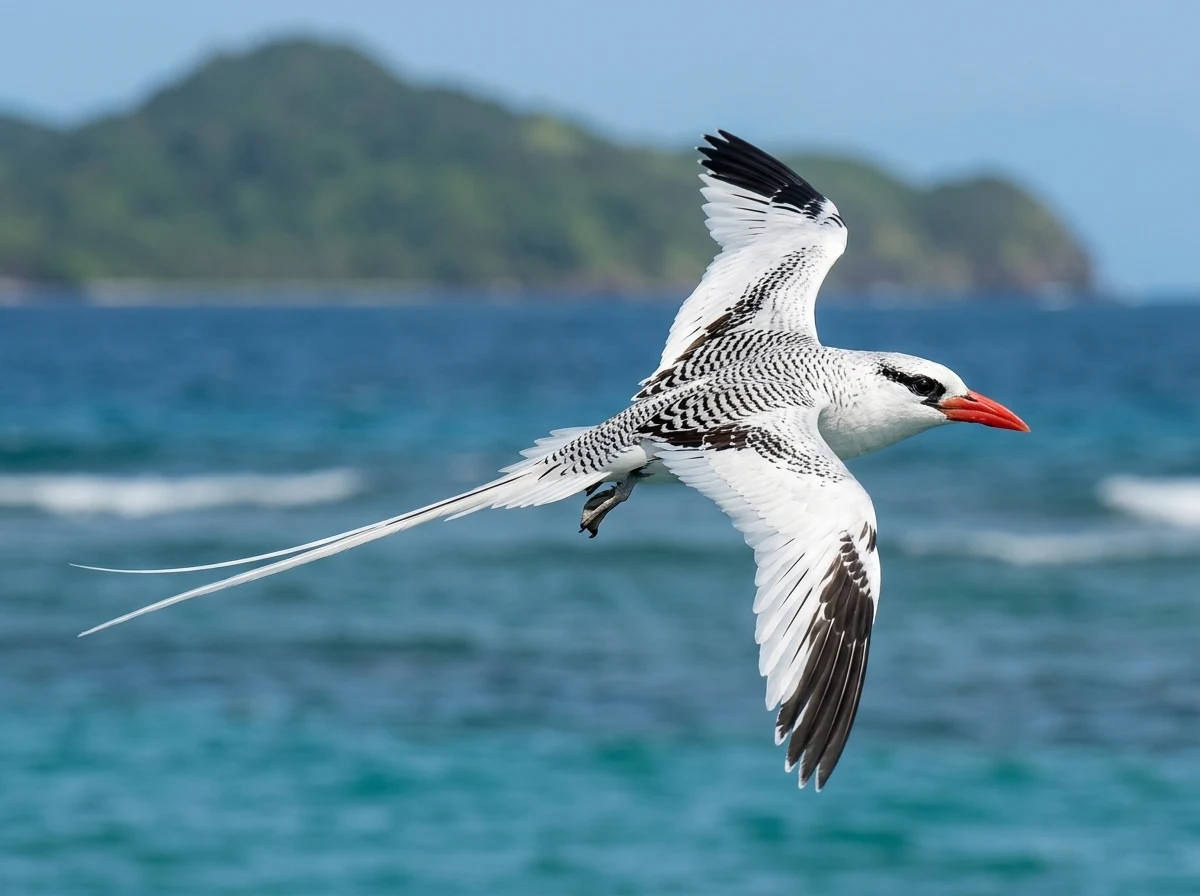
White-tailed Tropicbird is white with very long central tail streamers (sometimes missing), a black eye mark, black wingtips, a black stripe on the inner wing, and a yellow or orange bill. Red-billed Tropicbird has a finely black-barred back and a red bill. Both nest on sea cliffs and cays, and Puerto Rico's DNER lists both as vulnerable.
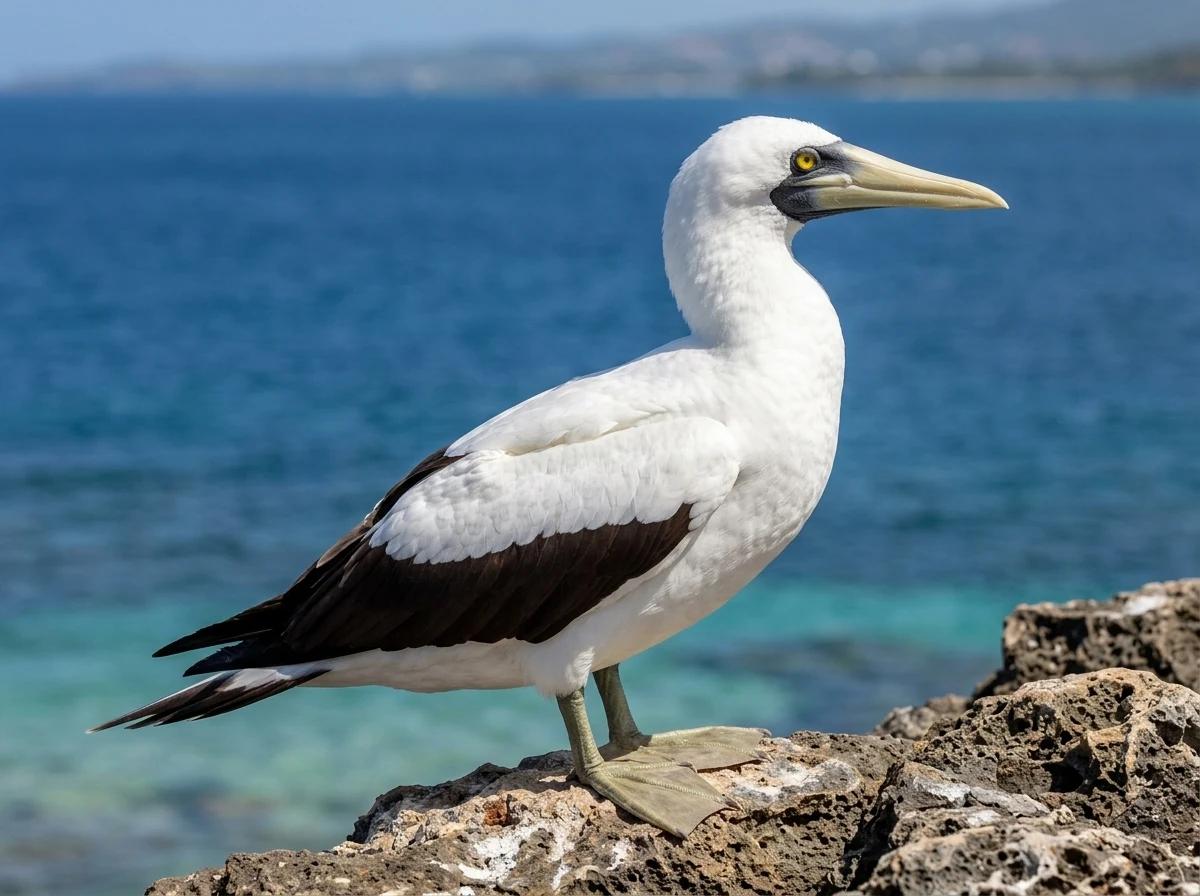
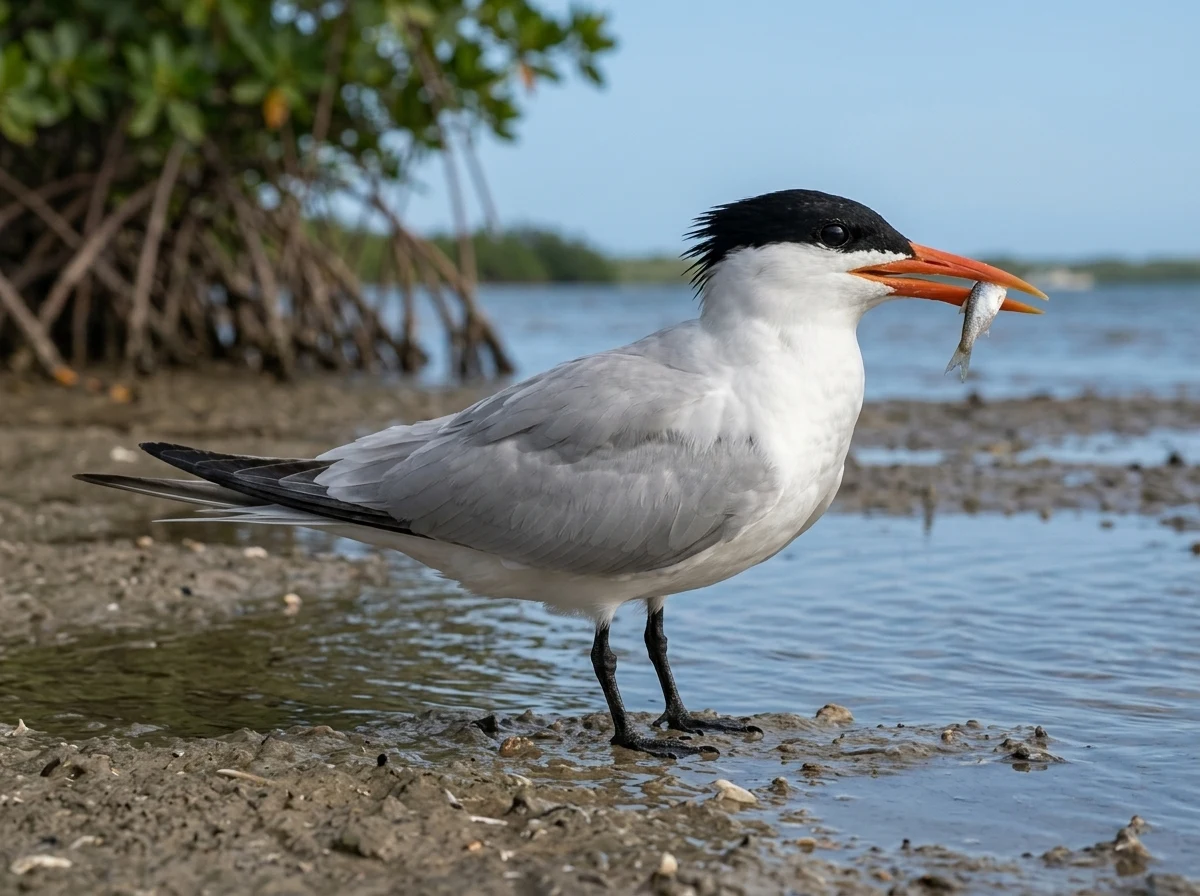
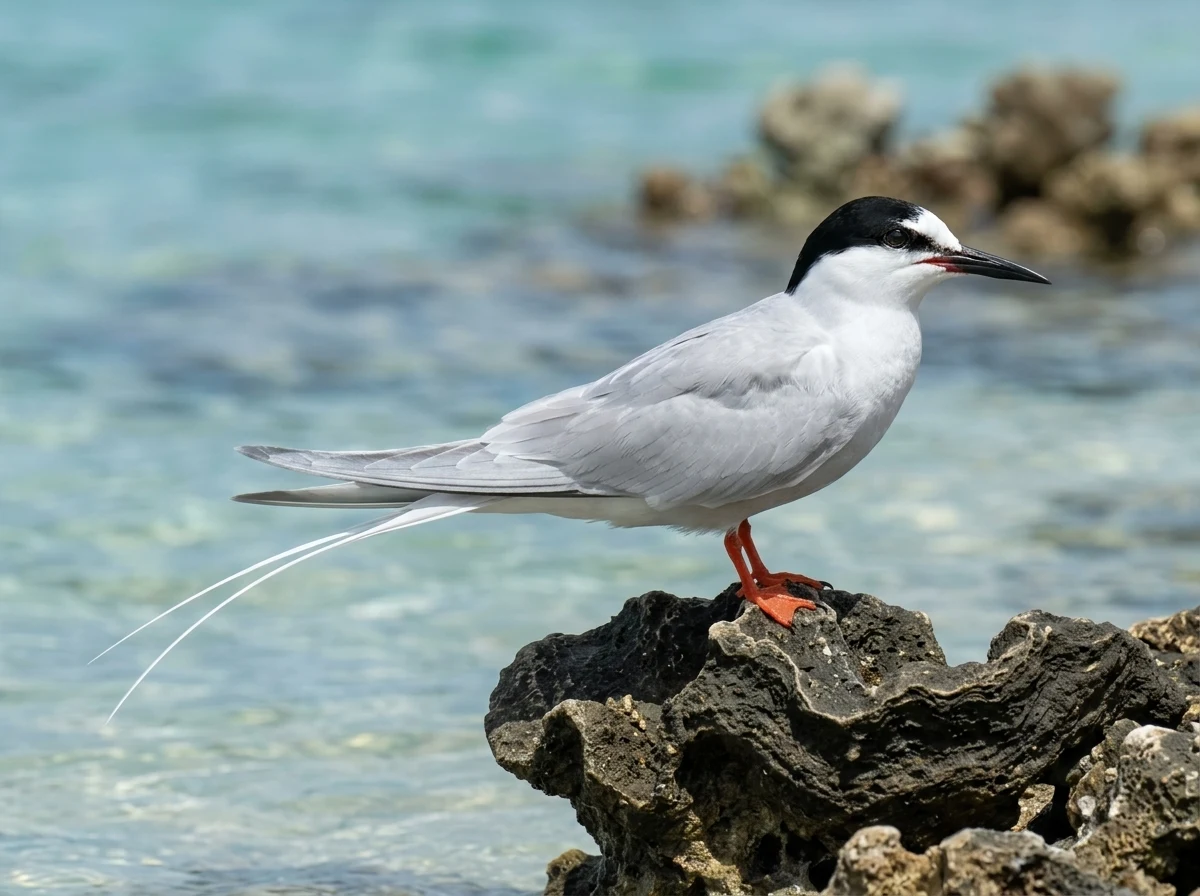
Masked Booby is bright white with black wings and tail, a dark face, and a yellowish bill; it is also listed as vulnerable by the DNER. Terns such as Royal Tern and Roseate Tern round out the group in the seabirds guide. Roseate Tern is federally threatened, and its name refers to the pink flush on the breast in breeding plumage.
04
Ibises, pelicans, and geese: rare wetland whites
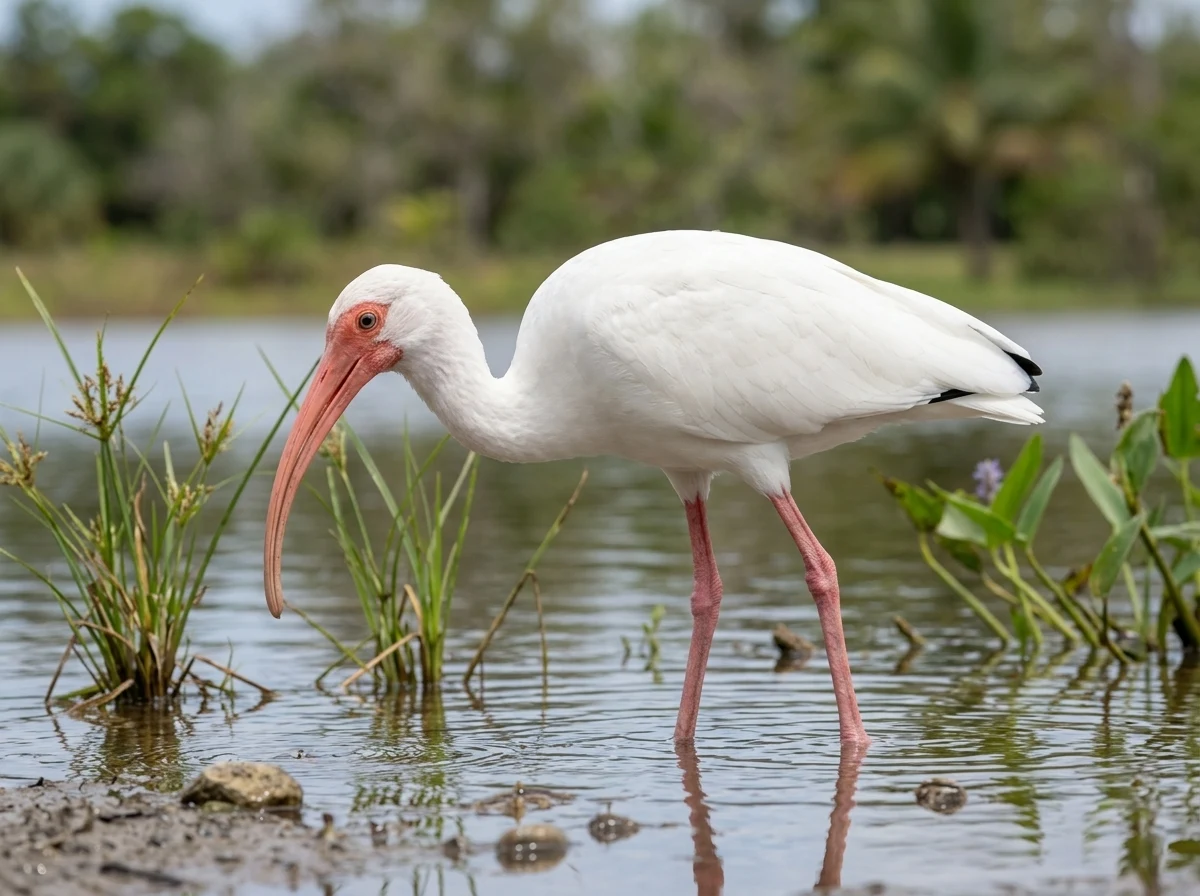
Adult White Ibis is white with a curved red bill, red face and legs, and black wingtips visible in flight. Juveniles are brown with a white belly and a pink bill. It sweeps its bill through the bottom and feeds by touch. It is listed as accidental in Puerto Rico, so a group of white birds with curved bills deserves photos.
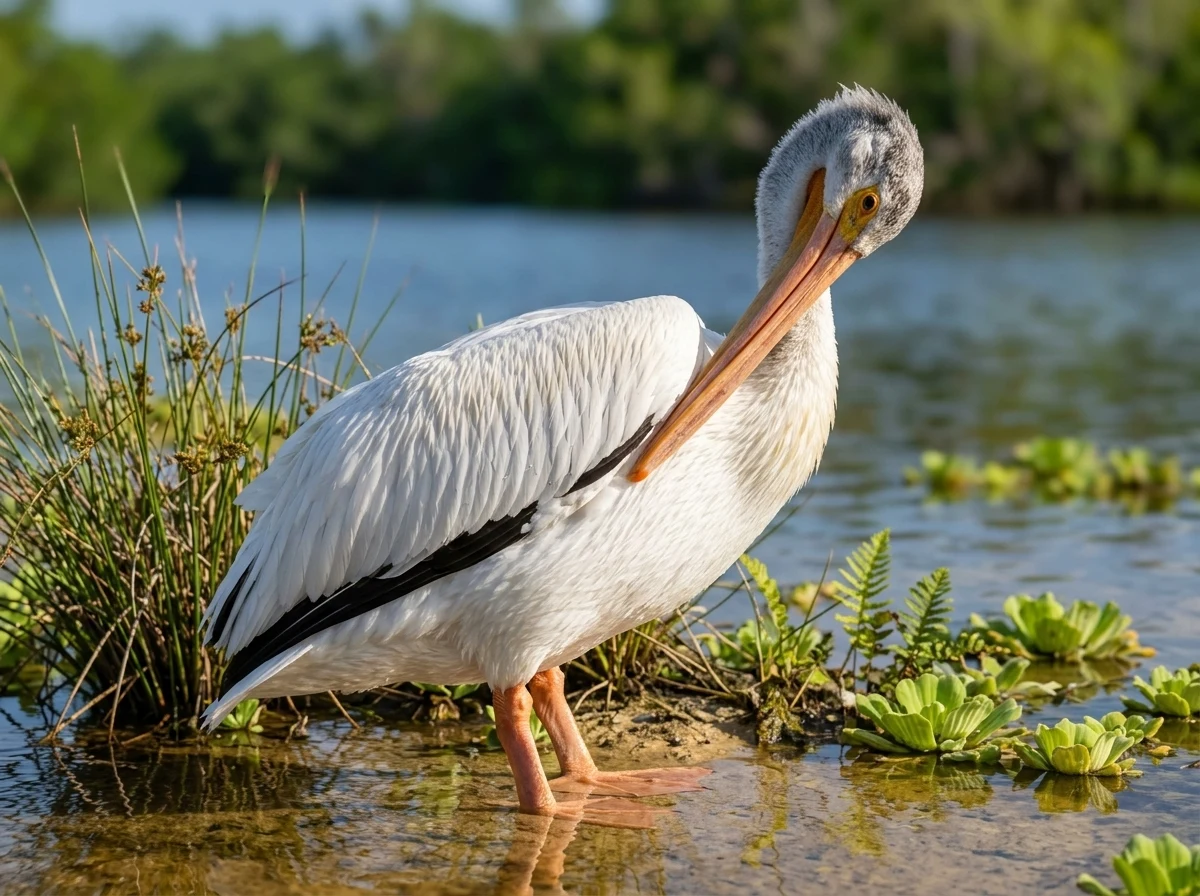
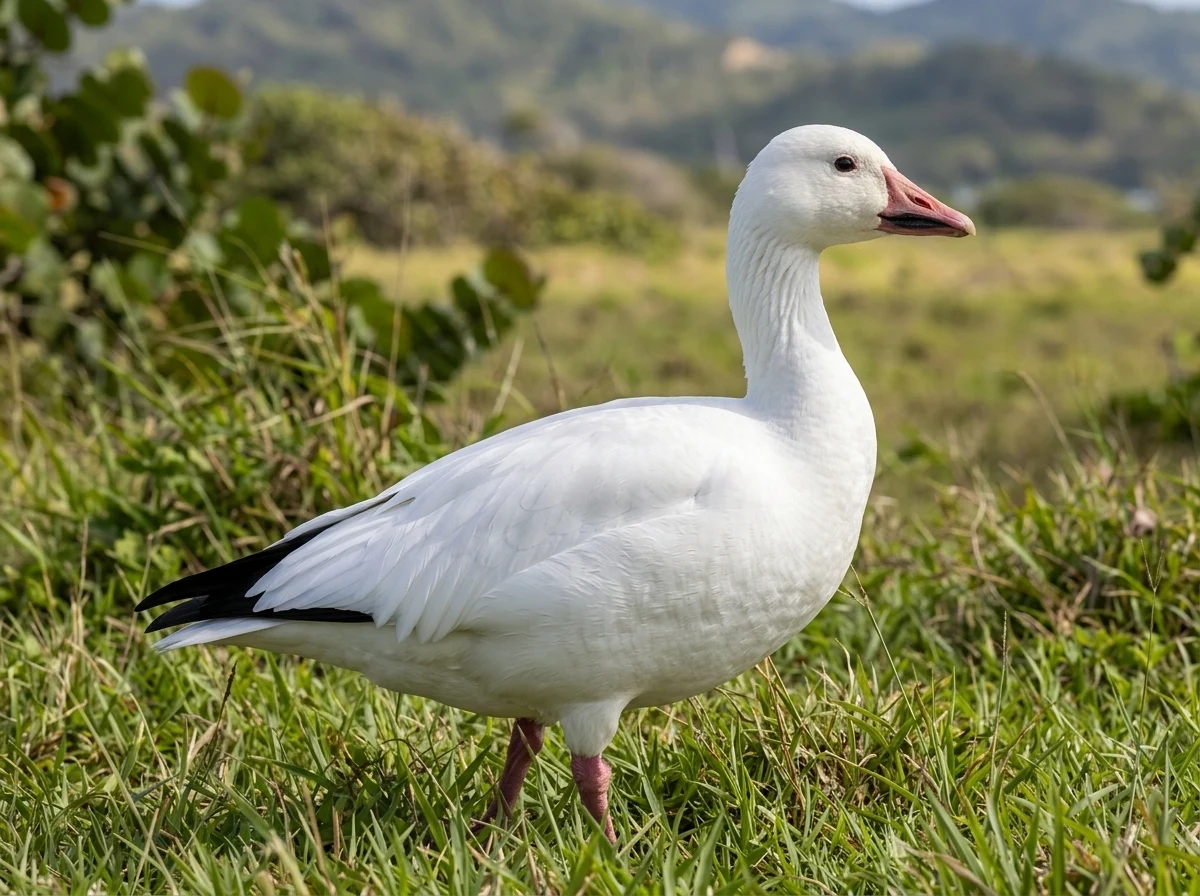
American White Pelican, at about 6.5 kilograms, and Snow Goose, which has white and dark forms, are also accidentals. With large, rare birds, note size relative to other species, bill shape, leg color, and wing pattern in flight; those four notes are worth more than a distant photo without context.
05
Birds with only part of the plumage white
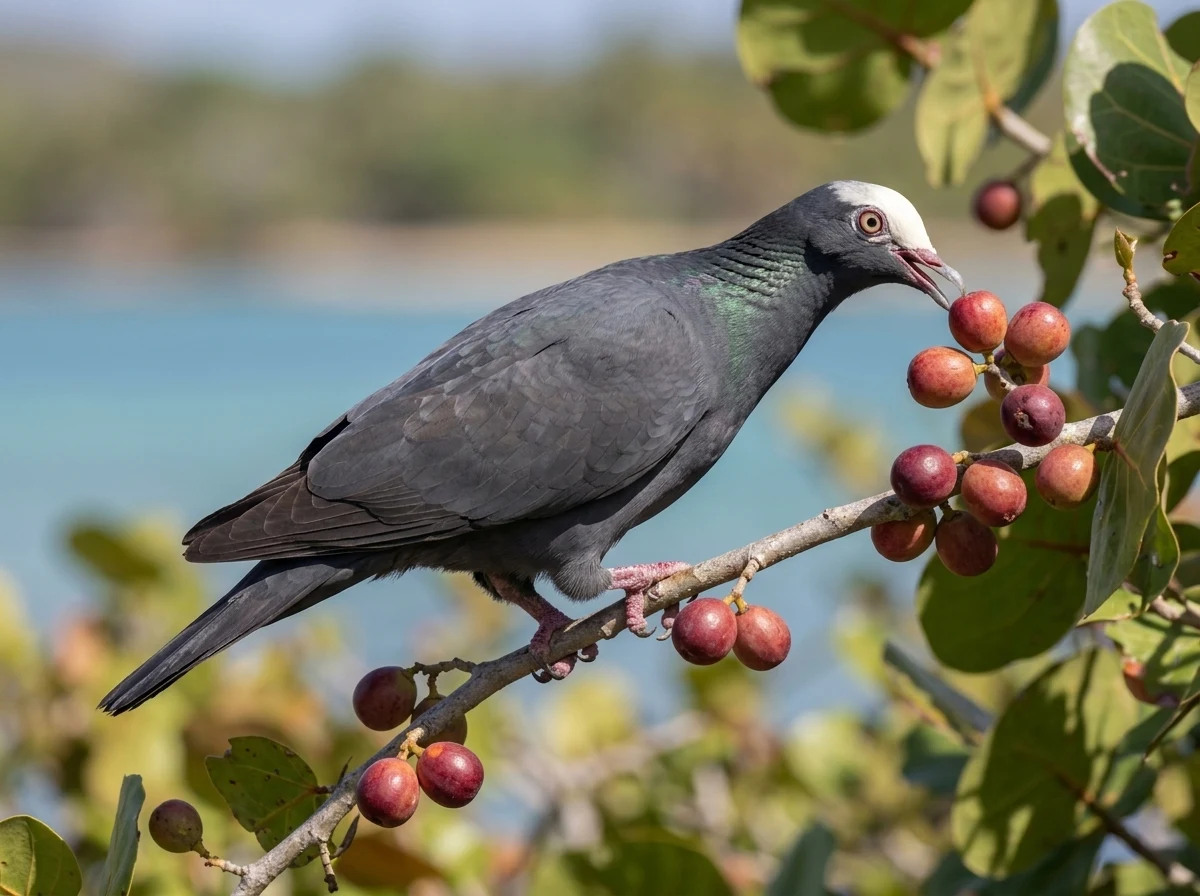
White-crowned Pigeon is dark slate, often looking black, with a striking white cap and green iridescence on the neck; juveniles have a grayish cap. It lives in mangroves, coastal and dry forest, and offshore cays, and eats fruit almost entirely in the trees. The IUCN lists it as Near Threatened.
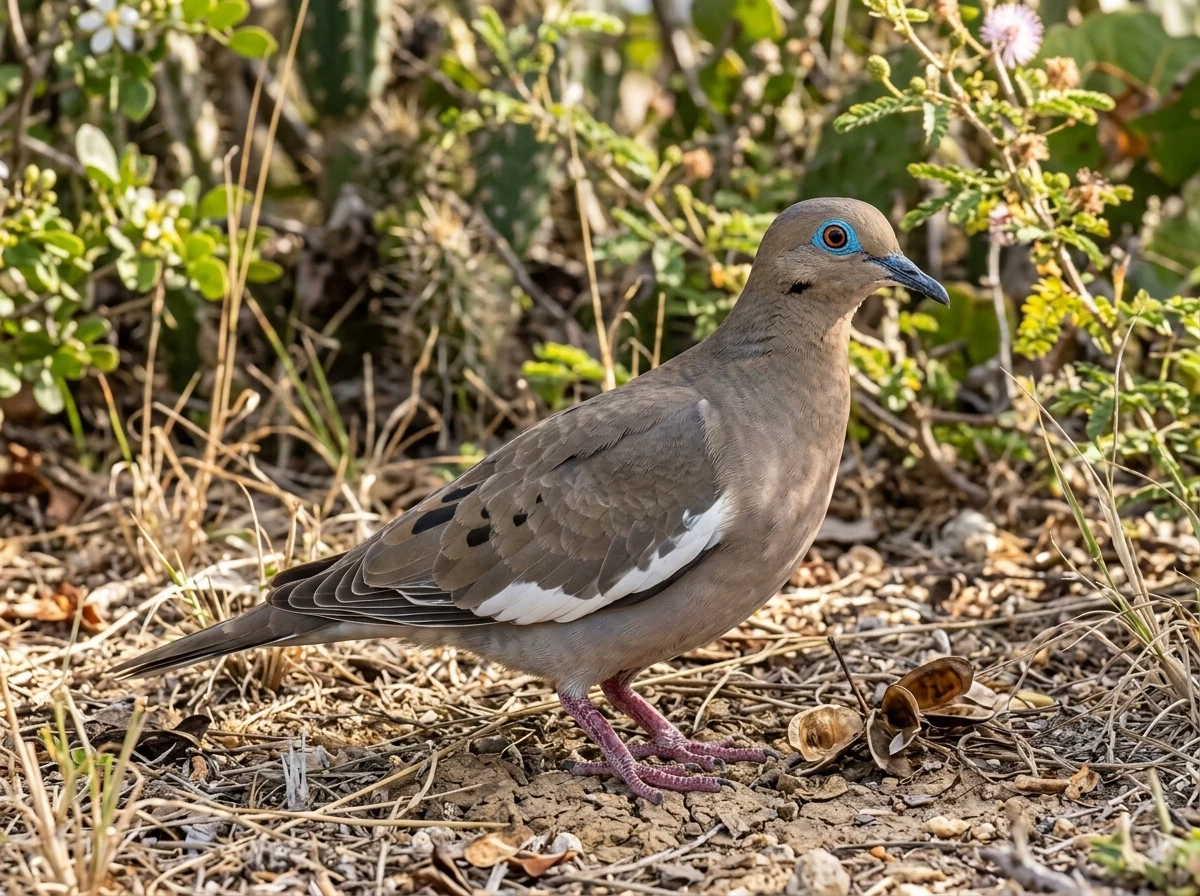
White-winged Dove shows a white edge on the wing, a blue eye-ring, and red eyes. Other local names with “blanco” or “aliblanco,” such as Perico Aliblanco or Playero Aliblanco, describe a detail rather than a white bird. When the name and the bird do not seem to match, trust silhouette, bill, and habitat over the word.
Linked profiles
White birds of Puerto Rico
Egrets, seabirds, rare visitors, and birds with white details.
Sound archive
Hear its voice
Explore real songs and calls. The spectrogram turns each sound into a visual trace of time and frequency.
XC1027118Recording 1 of 3call

Play: call by Paul Driver
Choose another recording
Sound recorded by Paul Driver · XC1027118 · CC BY-NC-SA 4.0. Visualization by Stichting Xeno-canto voor Natuurgeluiden.
Every recording retains the creator, catalogue number, and license published by Xeno-canto. Metadata via GBIF ↗
01
What is the white egret of Puerto Rico called?
On the official list, Garza Blanca is the Snowy Egret: medium-sized, with a black bill and black legs ending in yellow feet. Puerto Rico also has other common white egrets: the large yellow-billed Great Egret, the compact Western Cattle-Egret that follows livestock, and the juvenile Little Blue Heron.
02
Which white egret follows cows?
The Western Cattle-Egret. It is smaller and chunkier than the other white egrets, with a short yellow bill, and feeds in dry fields on insects flushed by livestock. In breeding season it shows buff patches on the head, breast, and back.
03
How do you tell a Snowy Egret from a Great Egret?
Check the bill and legs. Great Egret is much larger (89–104 cm) with a yellow bill and all-black legs and feet. Snowy Egret measures 56–66 cm, with a black bill and bright yellow feet that contrast with black legs.
04
What white seabird with a long tail flies off Puerto Rico?
It is a tropicbird. White-tailed Tropicbird has a yellow or orange bill and a black stripe on the wing; Red-billed Tropicbird has a red bill and a black-barred back. Both nest on sea cliffs and cays, and Puerto Rico's DNER lists both as vulnerable.
05
Why does a Little Blue Heron look white?
Because it is a juvenile. Little Blue Herons start out white and pass through a patchy white-and-blue phase before turning blue-gray. They differ from young Snowy Egrets by gray skin near the eye and dull greenish legs.
06
Which Puerto Rico pigeon has a white head?
The White-crowned Pigeon: dark, nearly black, with a white cap and green sheen on the neck. It lives in mangroves, coastal forest, and cays and eats fruit in the trees. Juveniles have a grayish cap.
Keep exploring
Connected routes
Sources and review
The evidence is one link away.
These sources support the editorial scope of this guide. Bird profiles also retain their own taxonomy, occurrence, and conservation references.
Reviewed:
01↗02↗03↗04↗05↗06↗07↗08↗09↗10↗
National Audubon Society
Field guide: Snowy Egret
Size, black bill, black legs with yellow feet, and active foraging.National Audubon Society
Field guide: Great Egret
Size, yellow bill, and black legs.National Audubon Society
Field guide: Western Cattle-Egret
Compact shape, short bill, buff breeding plumes, and association with livestock.Sociedad Ornitológica Puertorriqueña
Official bird list
Local names, occurrence categories, and the public summary of 17 endemics.National Audubon Society
Field guide: Little Blue Heron
Blue-gray adults, white juveniles, the calico phase, and differences from young Snowy Egret.National Audubon Society
Field guide: White-tailed Tropicbird
Black wing marks, yellow or orange bill, and long tail streamers.National Audubon Society
Field guide: Red-billed Tropicbird
Black-barred back and red bill.Programa Sea Grant de Puerto Rico
Seabirds of Puerto Rico
Puerto Rico educational publication devoted to the archipelago's seabirds.National Audubon Society
Field guide: White Ibis
Curved red bill, red face and legs, black wingtips, and brown juveniles.National Audubon Society
Field guide: White-crowned Pigeon
Dark body with a white cap, gray-capped juveniles, and mangrove habitat.The atlas continues