 AI
AIRails of marsh and mangrove
Gallinules, coots, and rails of Puerto Rico
They look like ducks, walk like chickens, and cackle from the cattails. Here is how to separate the rails of Puerto Rico's ponds and mangroves.
Reviewed:A gallinule is not a duck: it is a rail.
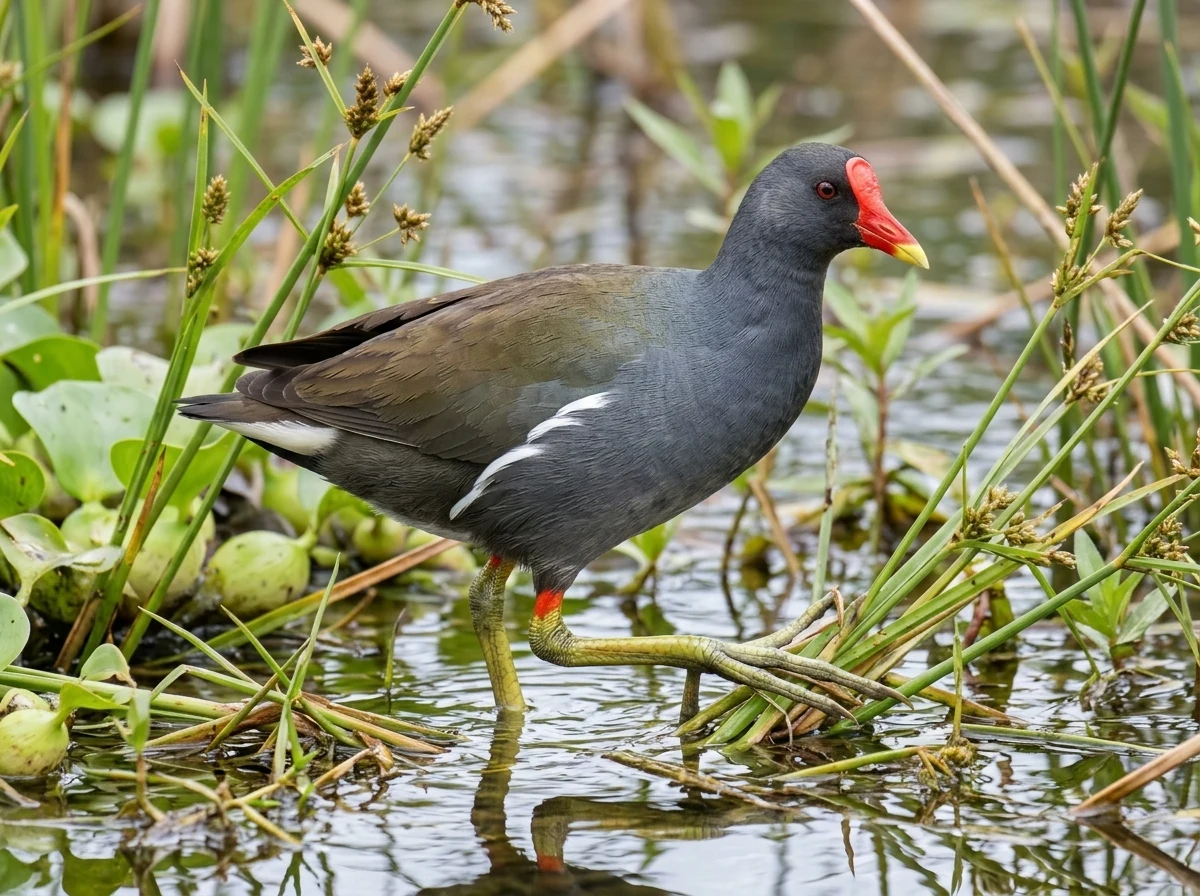
In Puerto Rico, "gallareta" almost always means the Common Gallinule (Gallinula galeata), a resident bird of ponds and canals, dark gray, with a red shield and bill tipped yellow and a white stripe along the flank. It is not a duck: it belongs to the rail family, along with the American Coot, Purple Gallinule, Clapper Rail, and the small crakes.
Common Gallinule is one of the island's most widespread waterbirds: the Breeding Bird Atlas found it in 222 of 479 hexagons, nearly half of the area surveyed. Its relatives are more local or harder to see, and several hide so well that they are known more by voice than by sight.
This guide compares bill, shield, legs, habitat, and sound for each rail and explains which name goes with which bird, because "gallareta," "gallinazo," and "gallito" mean different birds in different Spanish-speaking countries.
Rails of marsh and mangrove
Puerto Rico rails by the numbers
222hexagons with Common GallinuleOut of 479 in the Breeding Bird Atlas (2004–2009), from 449 records.
2016year the coots were mergedCaribbean Coot was merged into American Coot.
11Yellow-breasted Crake recordsIn the entire Atlas: a secretive crake that is rarely detected.
01
Common Gallinule: the easiest to find
Common Gallinule measures 12.6 to 14.2 inches, is slate gray, and has a thick bill with a red frontal shield and yellow tip, a white flank stripe, and greenish legs. In displays it shows white patches under the tail. Immatures are paler gray without the red bill.
It lives on rivers, canals, ditches, reservoirs, densely vegetated ponds, and even mangroves on the main island, Culebra, and Vieques. It breeds year-round on floating vegetation, in shrubs, or on the ground, with the most activity from March to June according to the Atlas. The Laguna Cartagena refuge checklist rates it abundant in every season.
02
American Coot: white bill and a name that changed
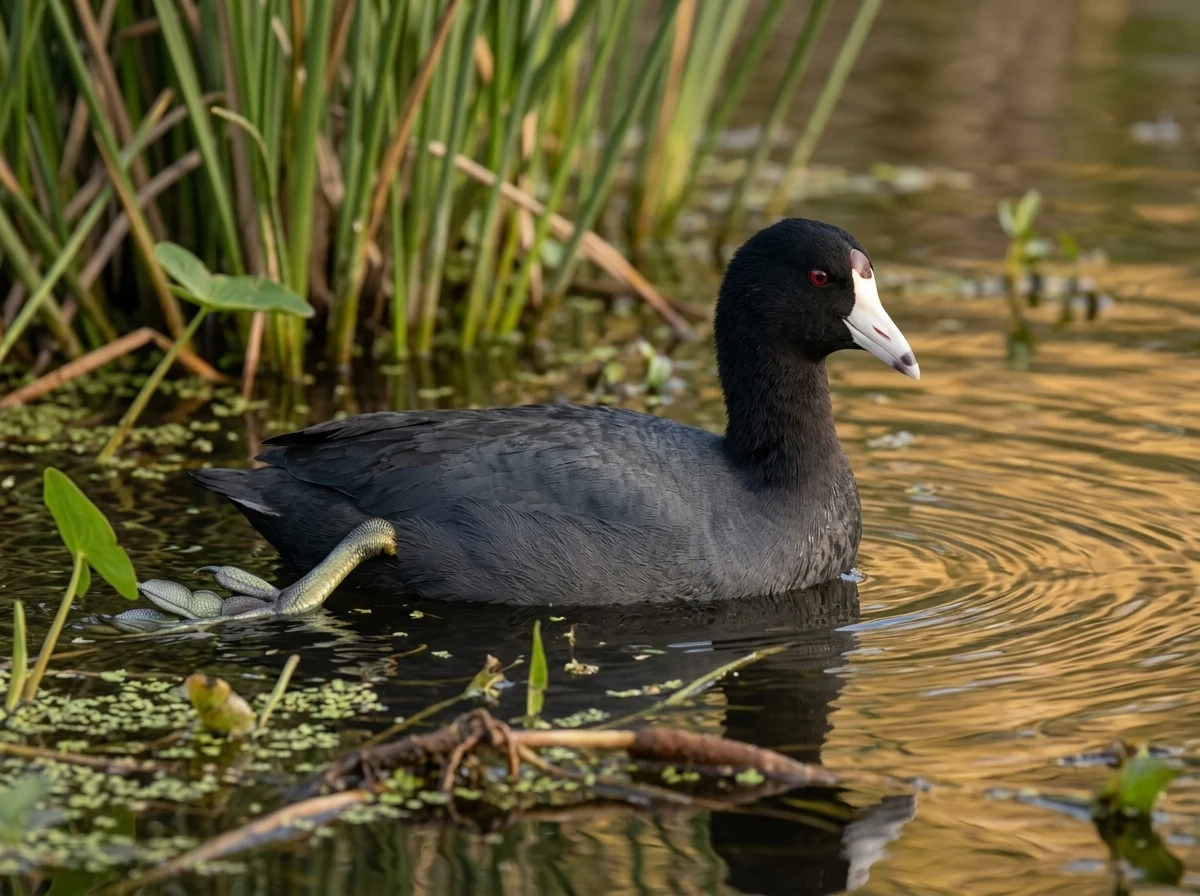
American Coot is charcoal gray, slightly larger than the gallinule, with a thick white bill and a frontal shield that may be all white or show dark red at the top. Its toes have lobes instead of webs, it dives more than the gallinule, and it patters across the water to take off. In Puerto Rico it is called gallinazo, a word that means vulture in some other countries.
Until 2016, white-shielded coots were treated as a separate species, Caribbean Coot. The 57th supplement to the North American check-list merged them into American Coot because the two mate at random regardless of shield color. In eBird you can still report White-shielded or Red-shielded birds. In Puerto Rico it is an uncommon breeder joined by winter visitors from North America, and the DNER keeps it as vulnerable.
03
Purple Gallinule: jewel colors in the cattails
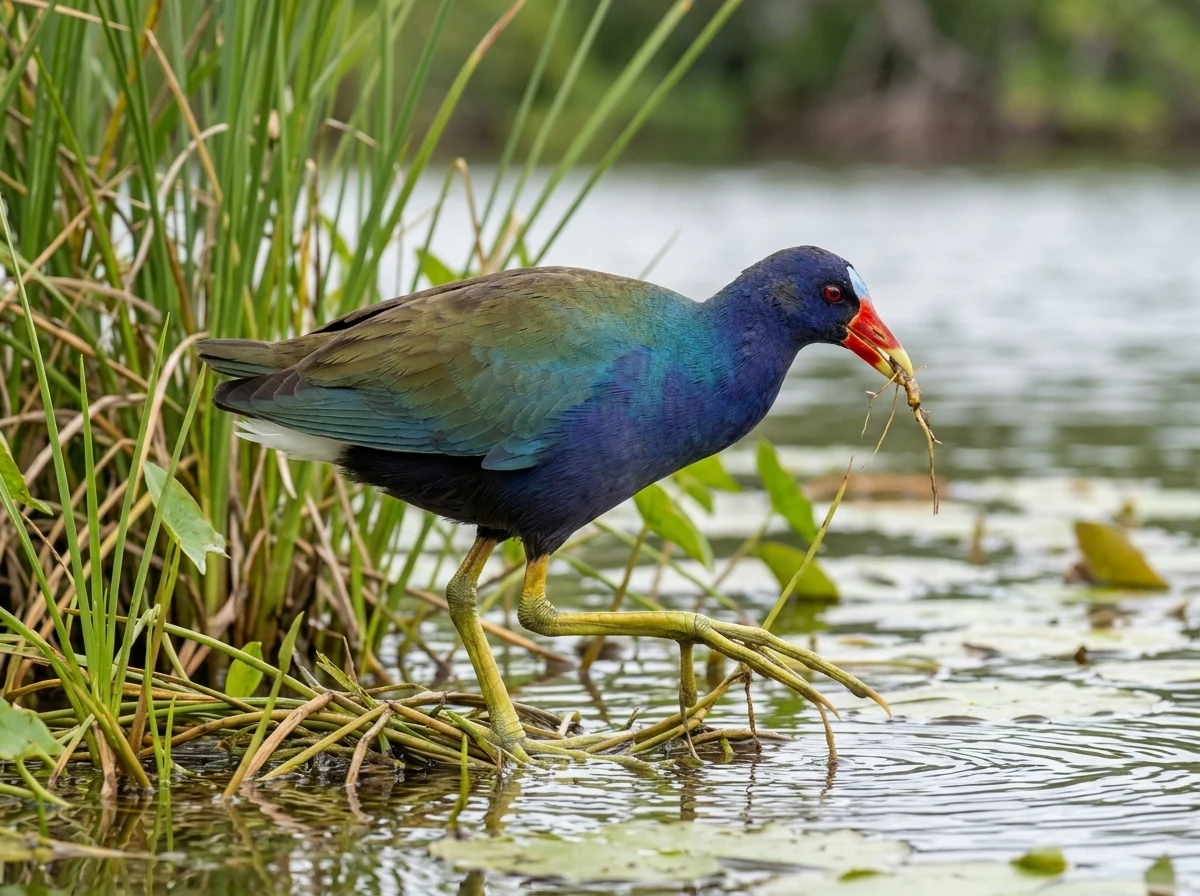
Purple Gallinule is purple and green, with a pale blue shield above a red, yellow-tipped bill, bright yellow legs, and white under the tail. Its long toes let it walk on floating plants, and it flies short distances with its legs dangling. Immatures are buff-brown and olive but already have the same bill shape.
In Puerto Rico it is an uncommon to rare resident of coastal wetlands. The Atlas recorded it in 19 hexagons and lists it as regular at Humacao Natural Reserve and Caño Tiburones, as well as the Las Cucharillas marsh in Cataño and Boquerón Wildlife Refuge. It nests among cattails or rice grass; the Atlas found the most breeding activity in March.
04
Clapper Rail and the secretive crakes
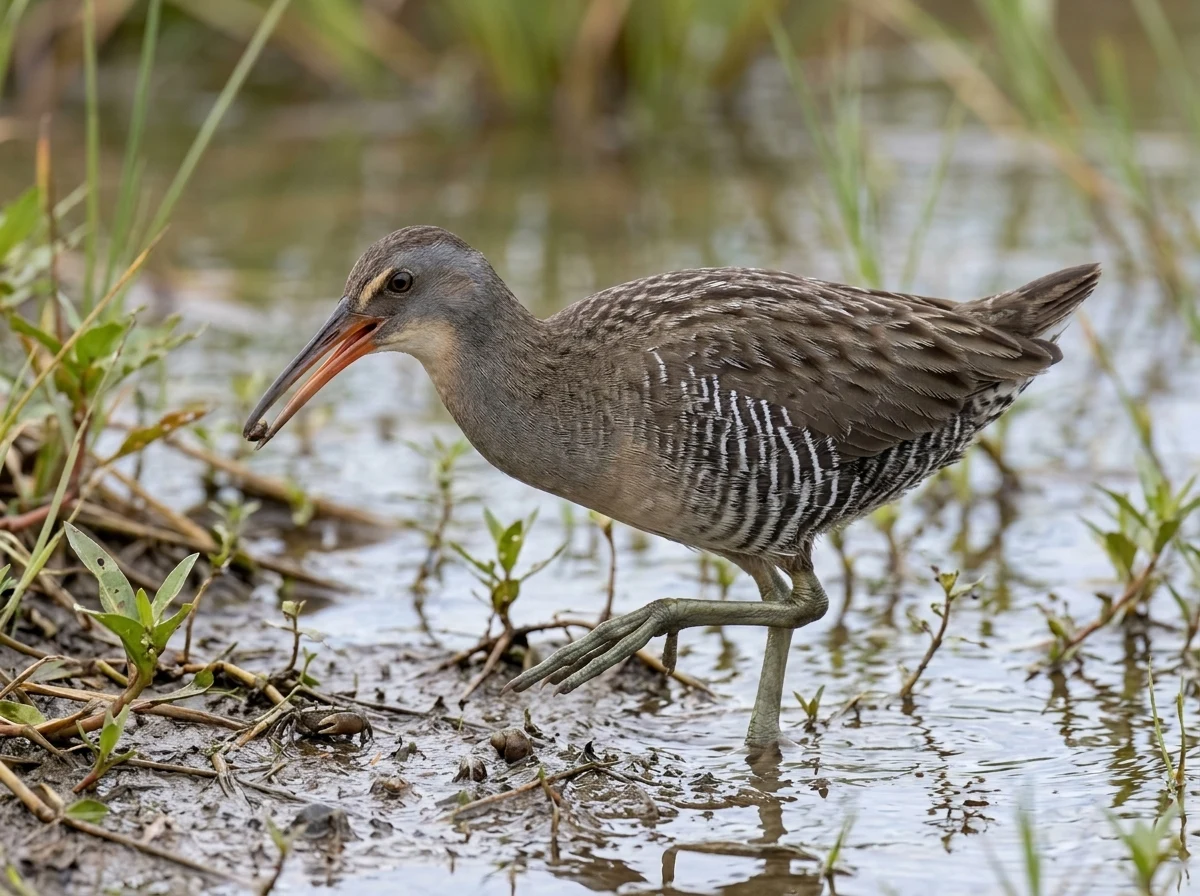
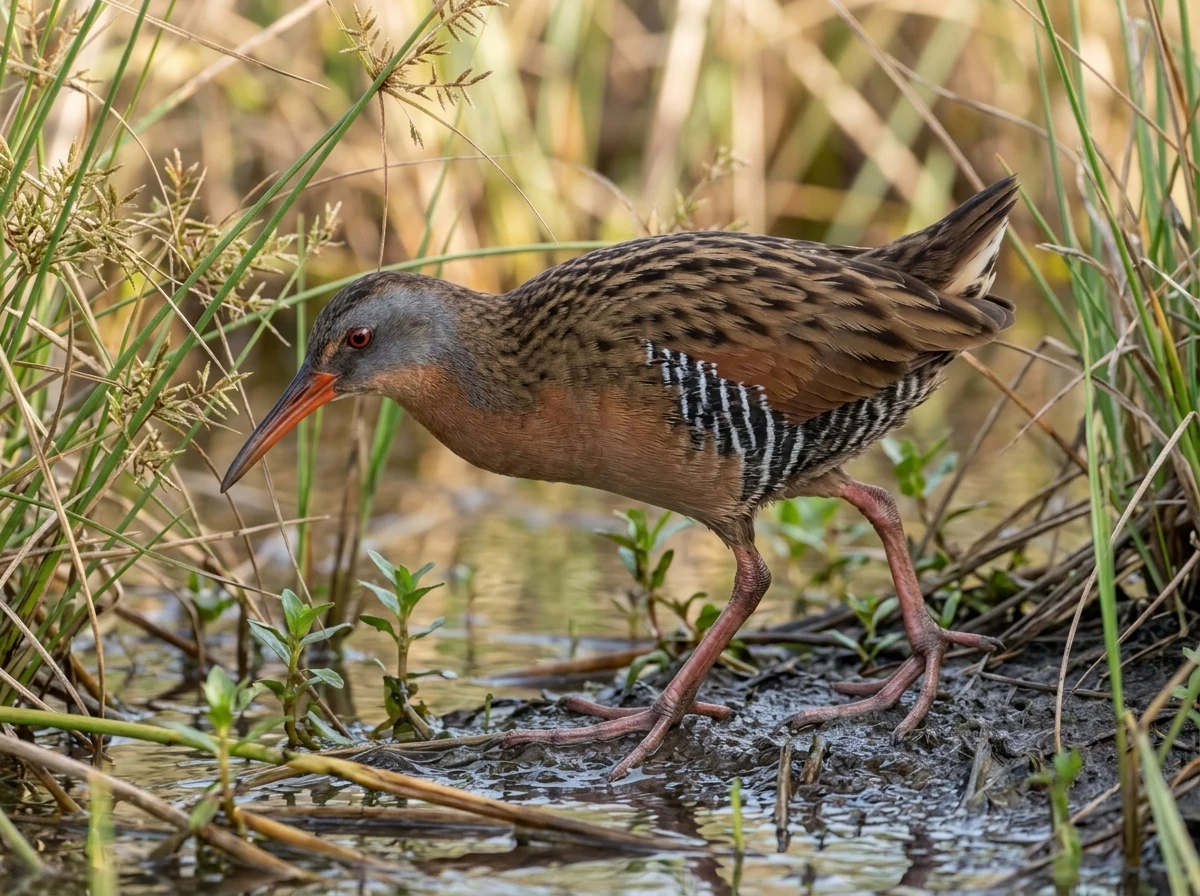
What many people search for as a "mangrove hen" is the Clapper Rail, called Pollo de Mangle in Puerto Rico: a brown, long-billed rail of mangroves, salt flats, and salt marshes. It is a locally common resident, especially on the south and southwest coasts where mangroves are extensive; on the north coast, Piñones stands out. It builds a stick nest among mangrove roots.
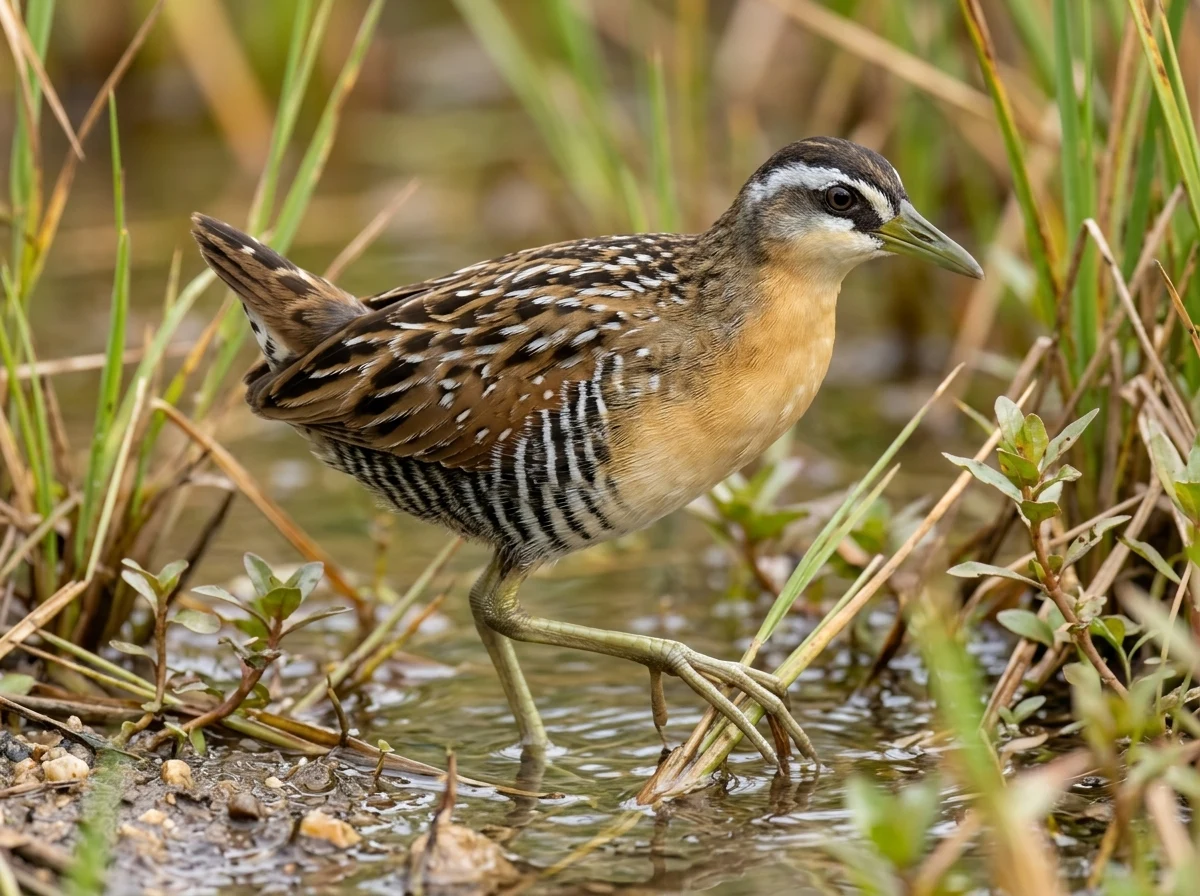
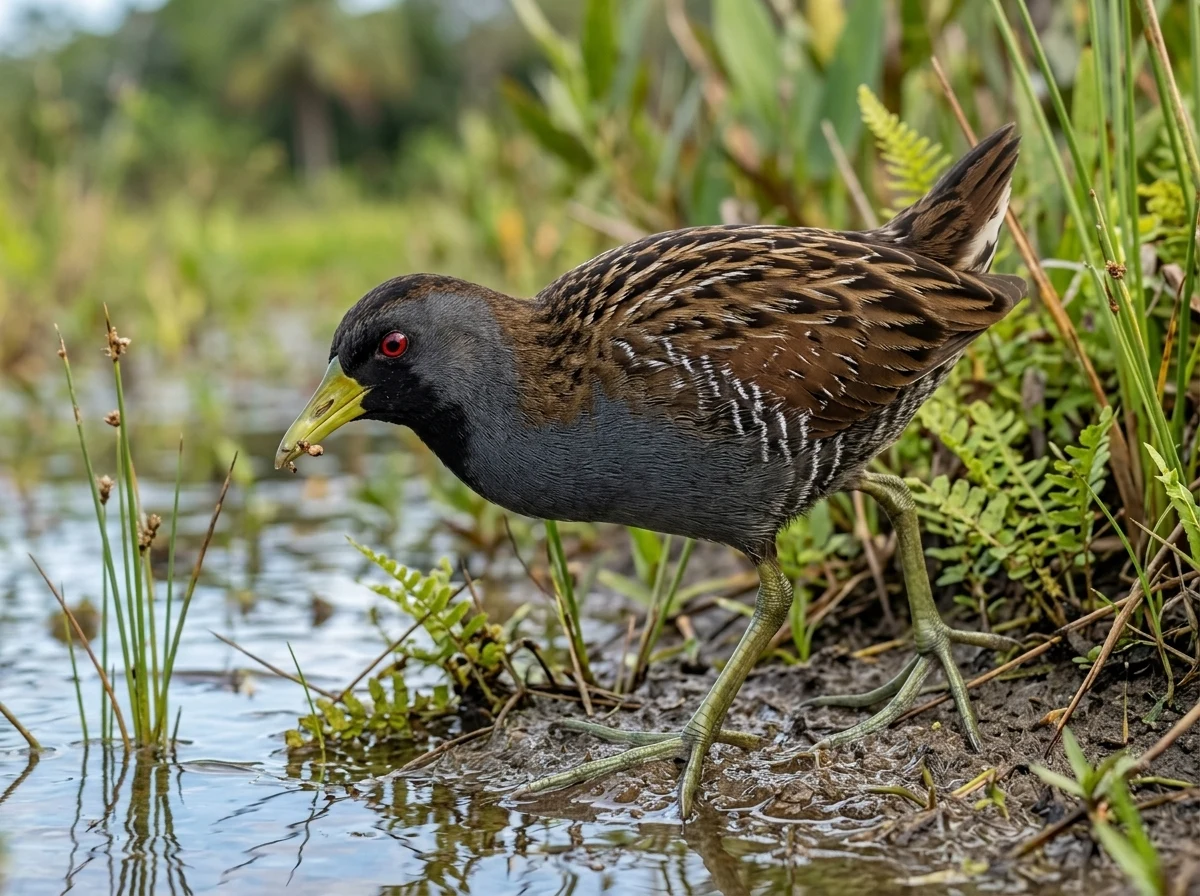
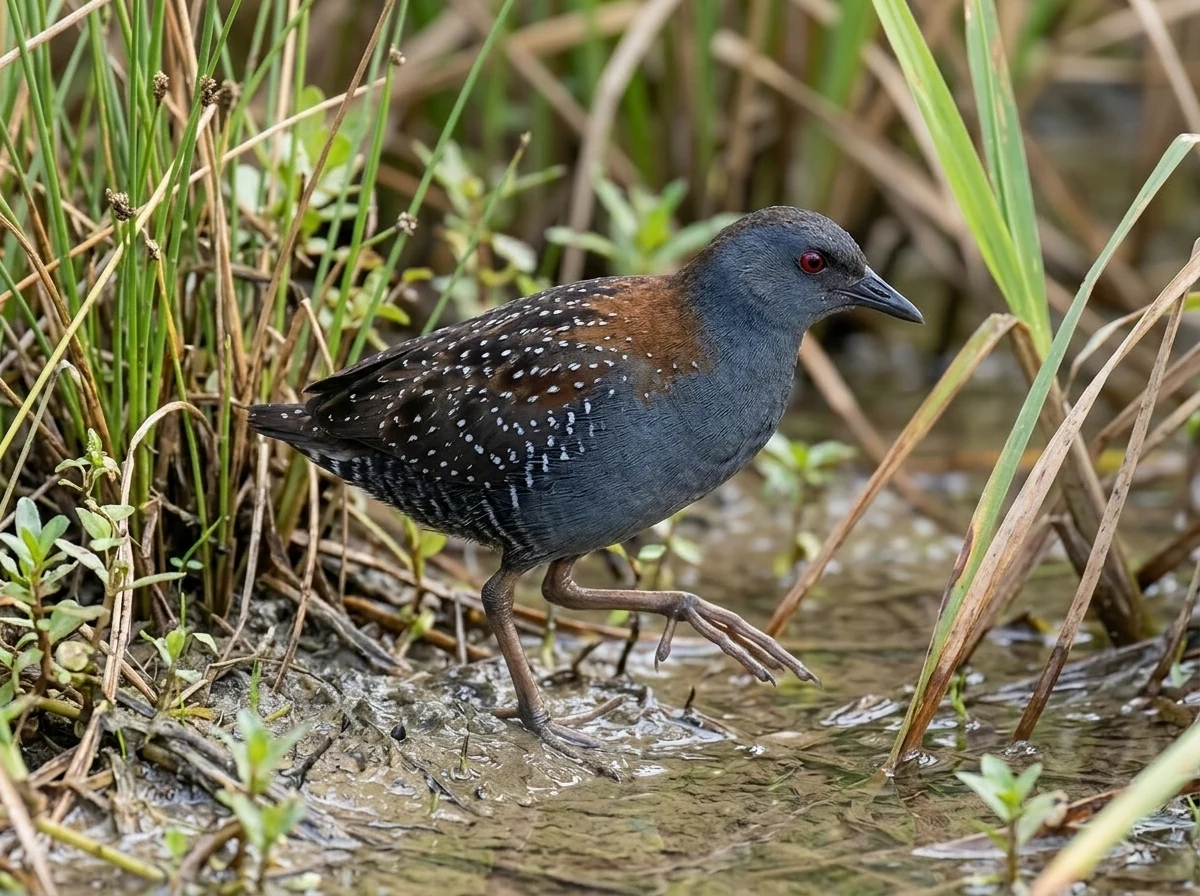
The crakes are harder. Yellow-breasted Crake, or Gallito Amarillo, is a tiny resident of freshwater marshes that produced only 11 Atlas records, at places such as Humacao, Boquerón, Caño Tiburones, and Laguna Cartagena. Sora arrives as a migrant, and Black Rail (Gallito Negro), rated Endangered by the IUCN, is listed as rare on the Laguna Cartagena checklist.
05
How to tell them apart in ten seconds
Look at the bill and shield first: red with a yellow tip plus a white flank stripe means Common Gallinule; thick and white means American Coot; a pale blue shield on a purple body means Purple Gallinule. Then check the legs: greenish on Common, yellow on Purple. If the bird is brown, long-billed, and walking on mangrove mud, think Clapper Rail.
Your ears help as much as your eyes. Common Gallinule gives squawks and croaks similar to the coot's, and the coot clucks, cackles, and grunts day and night. Many crakes are found almost only by voice at dawn or dusk. Record what you hear from the cattails on your phone and compare it with the audio on each profile.
06
Where to see them and how to protect their habitat
For Common Gallinule, almost any vegetated lowland pond will do. To see several species on one outing, the best choices are Laguna Cartagena, Humacao Natural Reserve, and Caño Tiburones; for Clapper Rail, try the southern mangroves and Piñones. At Laguna Cartagena, the refuge checklist also includes Purple Gallinule, American Coot, Sora, and Yellow-breasted Crake.
These rails nest on floating plants or in cattails, so do not walk vegetated shorelines or use song playback in breeding season. Stay on trails and watch families with chicks from a distance. Filling and pollution of small wetlands also affect them: logging a record with date and place helps document which ponds matter.
Linked profiles
Eight rails of pond and mangrove
Start with Common Gallinule and American Coot, then open the profiles of the rails you will mostly hear.
Sound archive
Hear its voice
Explore real songs and calls. The spectrogram turns each sound into a visual trace of time and frequency.
XC1136177Recording 1 of 3call

Play: call by Manuel Grosselet
Choose another recording
Sound recorded by Manuel Grosselet · XC1136177 · CC BY-NC-SA 4.0. Visualization by Stichting Xeno-canto voor Natuurgeluiden.
Every recording retains the creator, catalogue number, and license published by Xeno-canto. Metadata via GBIF ↗
01
What is a gallareta?
In Puerto Rico, the gallareta is the Common Gallinule (Gallinula galeata), a dark gray resident of ponds and canals with a red, yellow-tipped shield and bill and a white flank stripe. It is a rail, related to the Clapper Rail, not a duck.
02
Is a gallinule a duck?
No. Although it swims like a duck, the gallinule belongs to the rail family (Rallidae) in the crane order. It has no flat bill or webbed feet; its long toes let it walk across vegetation.
03
What is the difference between a gallinule and a coot?
Common Gallinule has a red, yellow-tipped bill and shield and a white flank stripe. American Coot has a white bill, no flank stripe, and lobed toes. The coot also dives more and tends to use more open water.
04
What is the mangrove hen?
People searching for a "mangrove hen" almost always mean the Clapper Rail (Rallus crepitans), called Pollo de Mangle in Puerto Rico: a brown, long-billed rail of mangroves and salt flats. It is a locally common resident, especially on the south and southwest coasts.
05
Are there Purple Gallinules in Puerto Rico?
Yes. Purple Gallinule is an uncommon to rare resident of coastal wetlands. It is most regular at Humacao Natural Reserve and Caño Tiburones and is identified by its purple-and-green body, pale blue shield, and yellow legs.
06
What does a gallinule sound like?
Common Gallinule gives squawks, clucks, and croaking notes that rise, fall, or stay flat, similar to the coot's. It is often heard from the cattails before it is seen; its profile has field recordings you can play.
Keep exploring
Connected routes
Sources and review
The evidence is one link away.
These sources support the editorial scope of this guide. Bird profiles also retain their own taxonomy, occurrence, and conservation references.
Reviewed:
01↗02↗03↗04↗05↗06↗07↗
U.S. Forest Service Research and Development
Puerto Rico Breeding Bird Atlas
Distribution and breeding timing for 130 species breeding in Puerto Rico and its satellite islands.BirdsCaribbean
Caribbean birders take note (2016)
Caribbean Coot merged into American Coot and how to report white- and red-shielded birds.U.S. Fish and Wildlife Service (archivo NPS History)
Cabo Rojo and Laguna Cartagena refuges bird list
Seasonal abundance of ducks, rails, grebes, and pelicans; Laguna Cartagena size and cattail cover.National Audubon Society
Common Gallinule field guide
Red shield, yellow tip, white flank stripe, habitat, and voice.National Audubon Society
American Coot field guide
White bill, lobed toes, pattering takeoff, and voice.National Audubon Society
Purple Gallinule field guide
Purple-and-green plumage, pale blue shield, and yellow legs.U.S. Fish and Wildlife Service
Laguna Cartagena National Wildlife Refuge
Importance of the freshwater wetland for resident and migratory waterbirds.The atlas continues