 AI
AIBirds that dive
Grebes and cormorants of Puerto Rico
They sink like submarines and pop up far away: here is how to recognize the resident grebes and the cormorants that occasionally reach the island.
Reviewed:Two resident grebes and two rare cormorants.
Puerto Rico has two resident grebes that nest on freshwater ponds, lagoons, and reservoirs: Pied-billed Grebe (Zaramago) and Least Grebe (Tigua or Zaramago Menor). Cormorants, on the other hand, do not live here: Double-crested and Neotropic Cormorants appear only as accidental visitors.
Grebes and cormorants share a habit, diving after prey underwater driven by their feet, but they are not close relatives. Grebes are small and chunky, fly little, and build floating nests; cormorants are large, dark, hook-billed, and dry themselves with wings spread.
This guide explains how to recognize each species, how to tell a grebe from a duck or a gallinule, which marks separate the two cormorants, and where to look for the residents.
Birds that dive
Grebes and cormorants by the numbers
2resident grebesPied-billed and Least Grebes; neither is in a DNER threat category.
89hexagons with Pied-billed Grebe157 Atlas records; Least Grebe had 72 records in 38 hexagons.
~20 %smallerNeotropic Cormorant compared with Double-crested Cormorant.
01
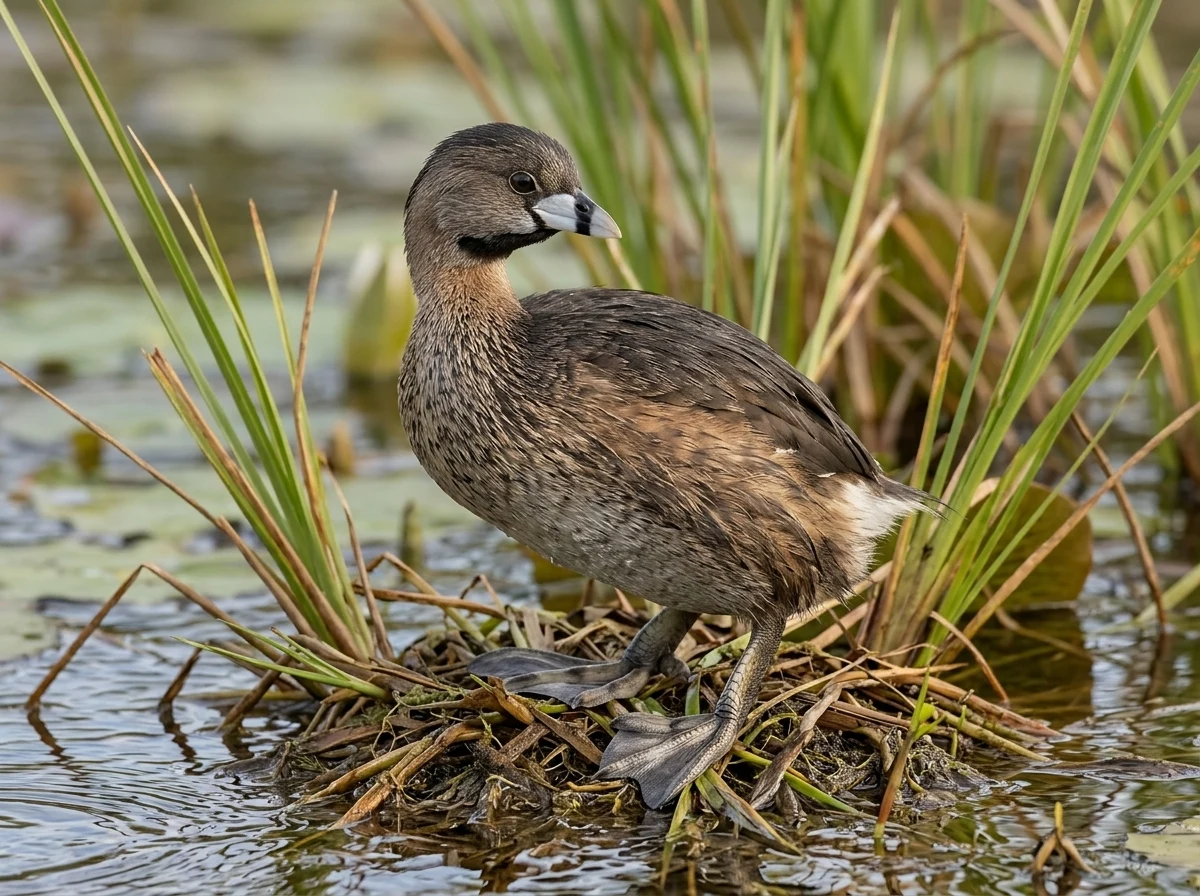
Pied-billed Grebe: the ringed bill
Pied-billed Grebe is compact and short-necked with a thick, chicken-like bill. In breeding season the bill is whitish with a black ring and the throat turns black; outside that season the bill is dull and pale and the plumage brown. When threatened it does not fly off: it sinks slowly until only its head shows above water.
In Puerto Rico it is a common resident of wetlands, ponds, and reservoirs on the coastal plain, and it also occurs on Culebra and Vieques. The Atlas found it in 89 hexagons and documented breeding year-round, with the most activity from March to June. It builds a floating nest of plants anchored to vegetation. In breeding season it gives hollow, cuckoo-like notes.
02
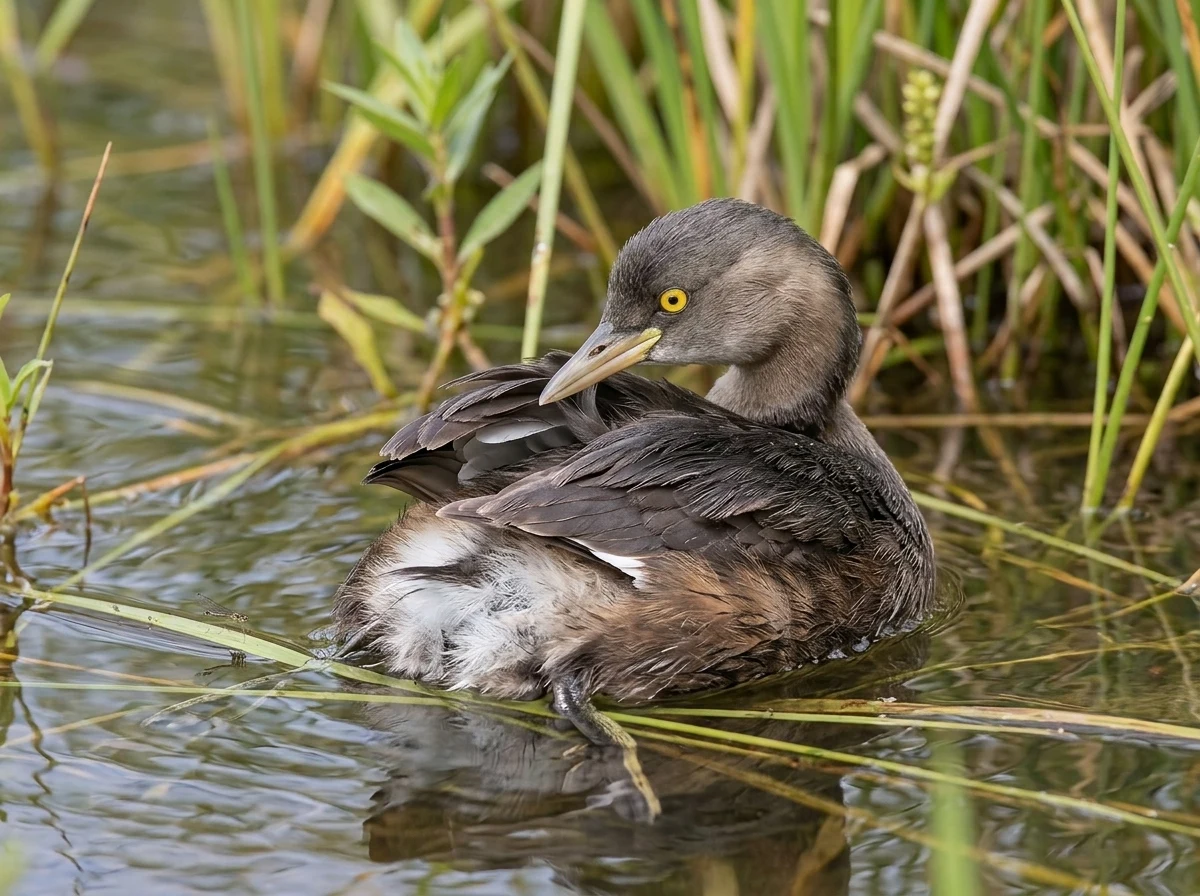
Least Grebe: the yellow-eyed grebe
Least Grebe is the smallest grebe in the Americas, 8 to 10 inches long, dark gray, with a thin bill and a bright yellow eye that shows even at a distance. In breeding season its throat darkens. It flies more readily than other grebes, and pairs give metallic trills as a duet.
In Puerto Rico it is uncommon and local in the lowlands, favoring freshwater ponds, canals, and temporary pools with thick floating vegetation, plus cattail marshes. It is usually seen at Caño Tiburones Natural Reserve, and the Cabo Rojo and Laguna Cartagena refuge checklist rates it common in all four seasons. It nests over water among emergent vegetation.
03
Grebe, duck, or gallinule?
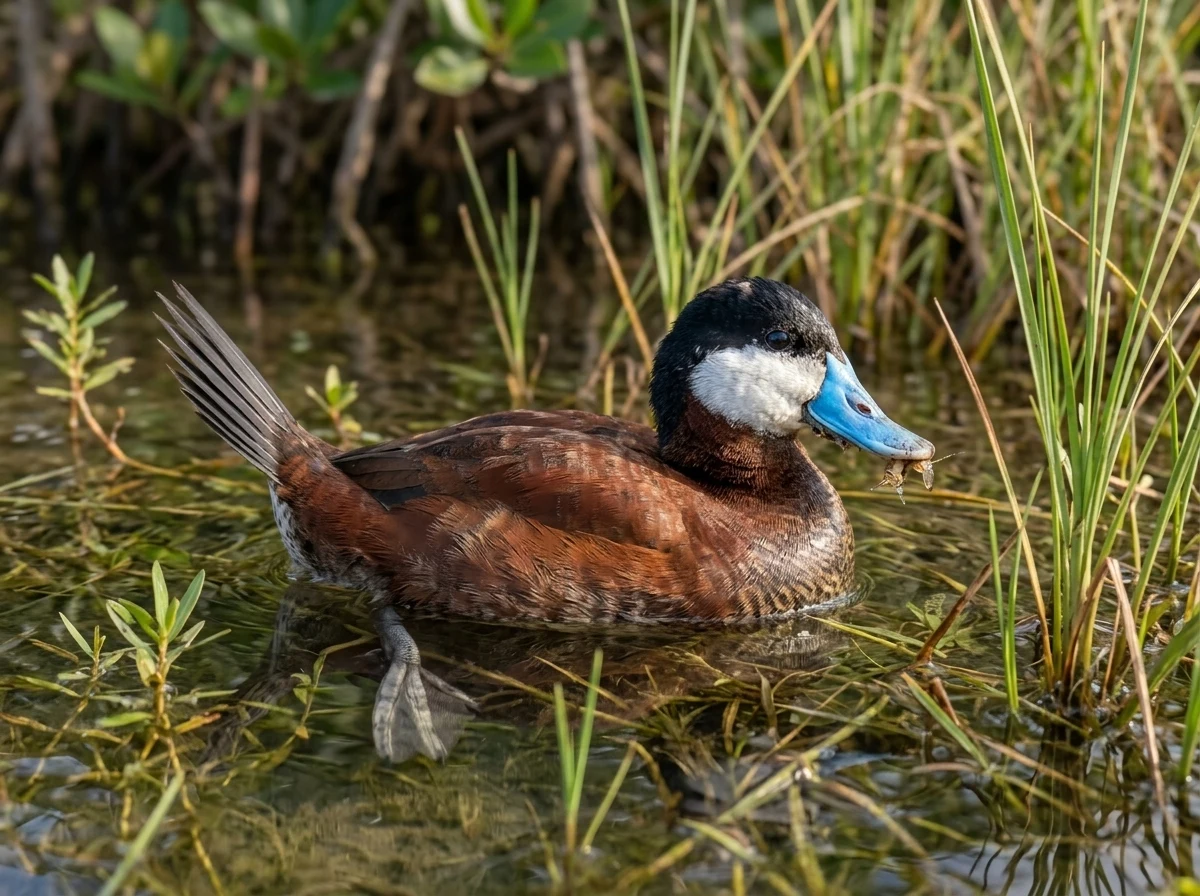
Many people call a grebe a "diving duck," but it is not a duck. Ducks have flat bills; grebes have short pointed or thick chicken-like bills and almost no visible tail. A grebe also vanishes underwater without warning and resurfaces far away, while dabbling ducks tip up with their tails in the air. Resident diving ducks such as Ruddy Duck have stiff tails and broad bills.
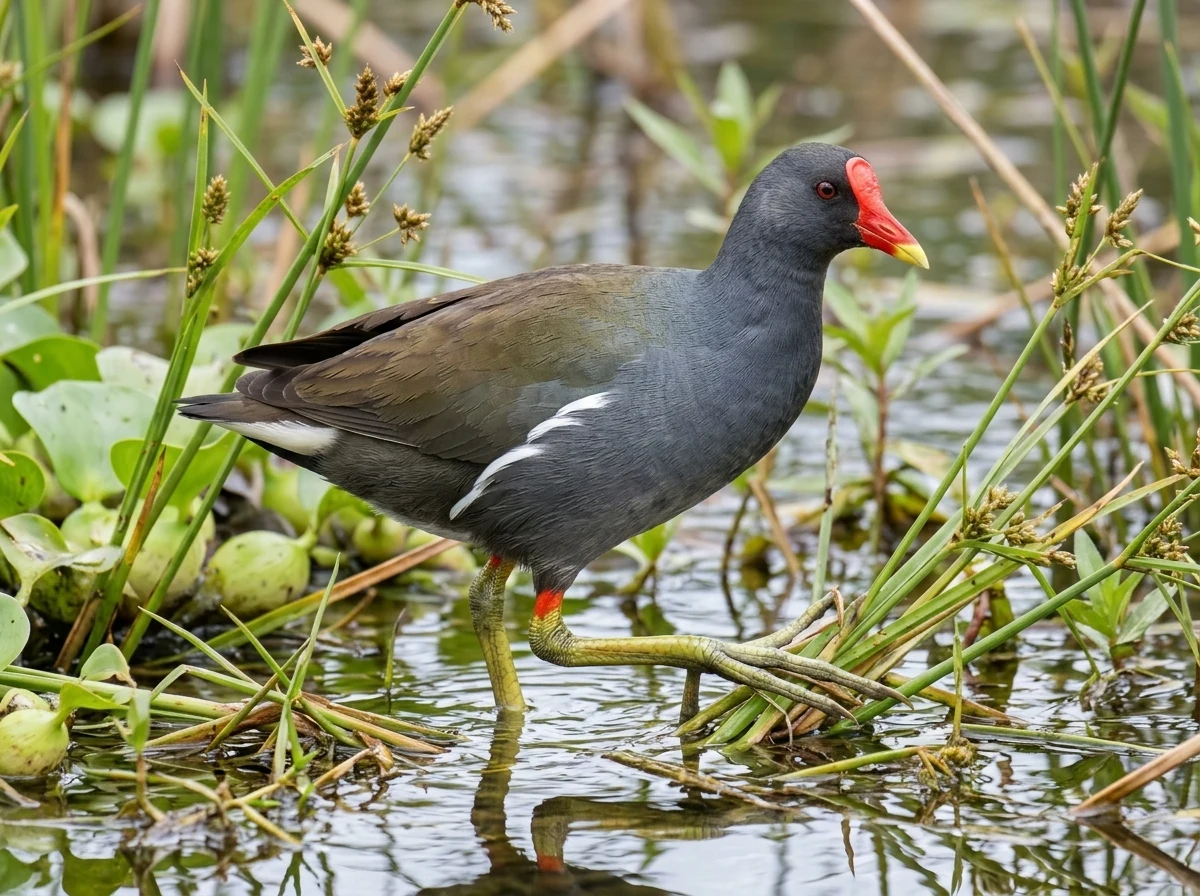
Common Gallinule swims on the same ponds but has a red shield and bill and a white flank stripe. If the bird is brown, round-profiled, shows no red on the face, and sinks instead of flying, it is almost certainly a grebe.
04
Cormorants: rare visitors
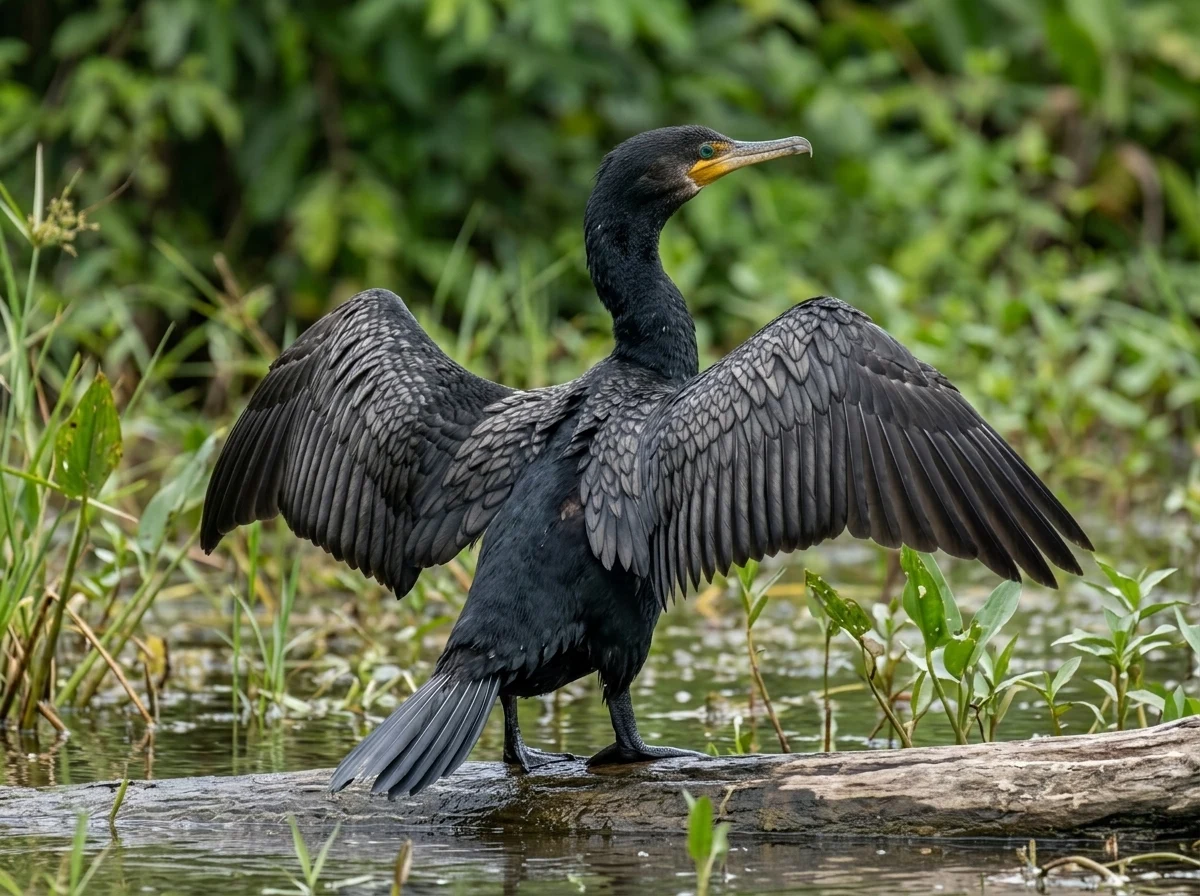
Cormorants are large, dark, hook-billed waterbirds that swim low in the water and perch upright with wings half-spread to dry. In our catalog, both Double-crested Cormorant (Nannopterum auritum) and Neotropic Cormorant (Nannopterum brasilianum) are listed as accidental in Puerto Rico: they do not breed here, and every record is news.
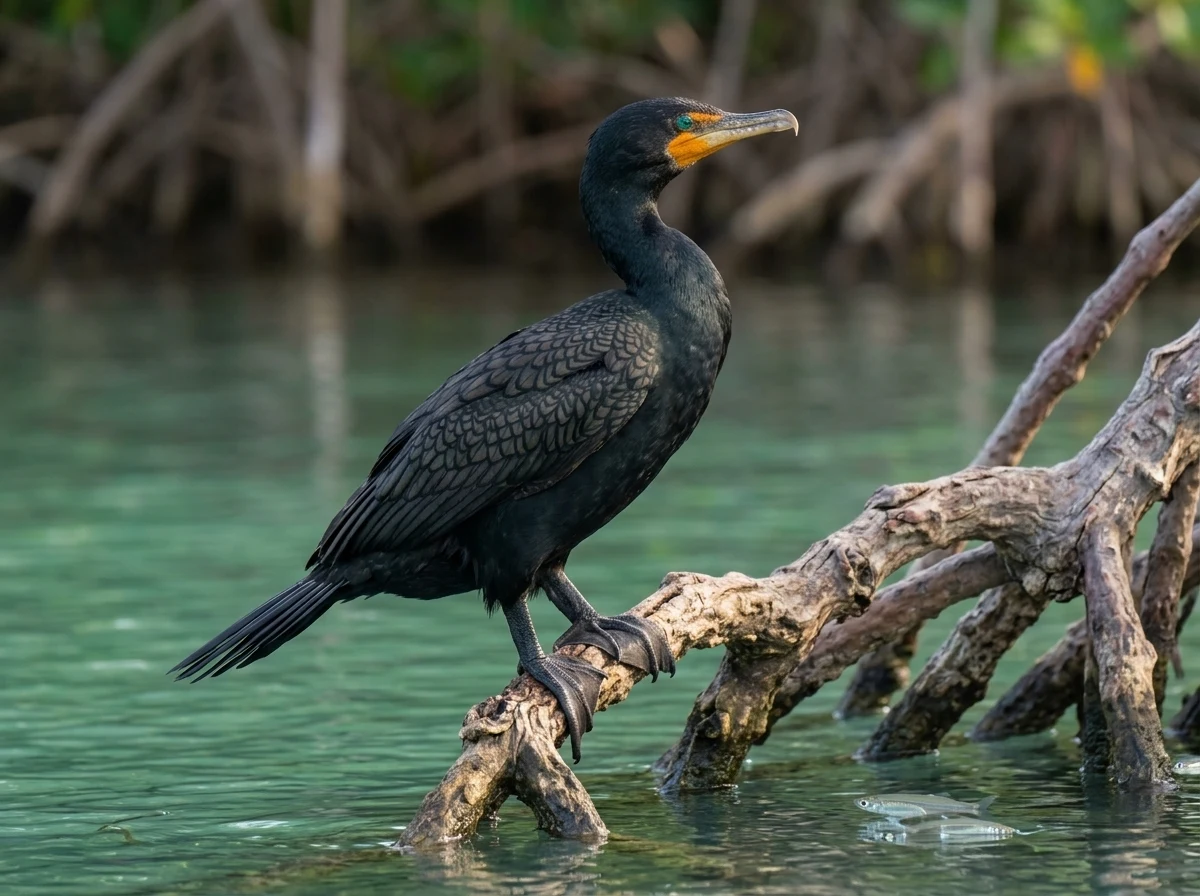
Double-crested Cormorant is North America's most widespread cormorant, blackish with orange skin on the face and throat, and it flies with a slight kink in the neck. Neotropic Cormorant lives in warm waters, mostly fresh or brackish, from the southern United States to South America and in Cuba and the Bahamas, and it sometimes fishes in groups driving fish into shallows.
05
Neotropic or Double-crested: the key marks
Neotropic Cormorant is about 20 percent smaller, with a slimmer head, shorter bill, and a noticeably longer tail: in flight the tail extends behind the wings almost as far as the neck and head extend in front. The most reliable mark is the lores, the skin between eye and bill: dull gray to blackish on Neotropic and almost always orange on Double-crested.
Check the throat skin too. On Neotropic it is duller yellow-orange and comes to a point behind the eye; on Double-crested it is bright orange with a rounded rear edge. In breeding plumage, Neotropic has a border of white feathers forming a "V" on the face. Photograph the head in profile and the bird in flight to document the record.
06
Where to find grebes and how to report a cormorant
For both grebes, the best bets are Laguna Cartagena, Caño Tiburones Natural Reserve, and vegetated lowland ponds; Pied-billed Grebe also uses reservoirs. Watch patiently from shore: after each dive, wait and scan, because they often resurface several yards from where they went down.
If you see a large, black, hook-billed bird drying its spread wings on a lagoon or pier, first rule out Magnificent Frigatebird and boobies. If it looks like a cormorant, photograph the head, throat, and tail, note the exact date, time, and place, and submit it to eBird: a well-documented record is the only way to confirm an accidental species.
Linked profiles
Grebes, cormorants, and their look-alikes
Compare the two resident grebes with the accidental cormorants and with the duck and gallinule that share their ponds.
Sound archive
Hear its voice
Explore real songs and calls. The spectrogram turns each sound into a visual trace of time and frequency.
XC1100692Recording 1 of 3song, Song and Hee

Play: song, Song and Hee by Valerie Heemstra
Choose another recording
Sound recorded by Valerie Heemstra · XC1100692 · CC BY-NC-SA 4.0. Visualization by Stichting Xeno-canto voor Natuurgeluiden.
Every recording retains the creator, catalogue number, and license published by Xeno-canto. Metadata via GBIF ↗
01
What is a zaramago?
Zaramago is the Puerto Rican name for grebes (family Podicipedidae). The Zaramago proper is the Pied-billed Grebe, a common resident of ponds and reservoirs that dives for food and sinks when threatened.
02
What is the tigua?
The Tigua is the Least Grebe (Tachybaptus dominicus), the smallest grebe in the Americas. It is dark gray with a yellow eye and thin bill, and in Puerto Rico it is uncommon and local on freshwater ponds with floating vegetation.
03
Are there cormorants in Puerto Rico?
Only as rare visitors. Double-crested and Neotropic Cormorants are recorded as accidental and do not breed in Puerto Rico. A large dark bird drying its spread wings deserves photos and an eBird report.
04
How do I tell a Neotropic Cormorant from a Double-crested?
Neotropic is about 20 percent smaller, with a longer tail, gray to blackish lores, and yellowish throat skin that ends in a point. Double-crested has orange lores and throat skin with a rounded rear edge.
05
Is a grebe a duck?
No. Grebes form their own family. Unlike ducks, they lack flat bills, show almost no tail, and build floating nests. That is why people sometimes call them diving ducks even though they are not.
06
Why does a grebe sink in the water?
It is how it escapes. Instead of flying, the Pied-billed Grebe sinks slowly until only its head shows, or dives and resurfaces far away. It also dives to catch fish, insects, and other prey, driven by its feet.
Keep exploring
Connected routes
Sources and review
The evidence is one link away.
These sources support the editorial scope of this guide. Bird profiles also retain their own taxonomy, occurrence, and conservation references.
Reviewed:
01↗02↗03↗04↗05↗06↗07↗08↗09↗10↗
U.S. Forest Service Research and Development
Puerto Rico Breeding Bird Atlas
Distribution and breeding timing for 130 species breeding in Puerto Rico and its satellite islands.National Audubon Society
Pied-billed Grebe field guide
Thick bill with black ring, sinking habit, floating nest, and voice.National Audubon Society
Least Grebe field guide
Small size, yellow eye, thin bill, and metallic duet trills.BirdWatching (Kenn Kaufman)
Identifying Neotropic and Double-crested Cormorants
Size, tail length, lores, and the shape and color of throat skin.U.S. Fish and Wildlife Service (archivo NPS History)
Cabo Rojo and Laguna Cartagena refuges bird list
Seasonal abundance of ducks, rails, grebes, and pelicans; Laguna Cartagena size and cattail cover.National Audubon Society
Ruddy Duck field guide
Male plumage, stiff tail, and diving behavior.National Audubon Society
Common Gallinule field guide
Red shield, yellow tip, white flank stripe, habitat, and voice.National Audubon Society
Double-crested Cormorant field guide
Orange facial skin, low swimming, and wings-spread drying posture.National Audubon Society
Neotropic Cormorant field guide
Yellowish pointed throat pouch and fresh or brackish habitat.Sociedad Ornitológica Puertorriqueña
Official bird list
Local names, occurrence categories, and the public summary of 17 endemics.The atlas continues