 AI
AIMynas and starlings
Mynas and Starlings in Puerto Rico
If a black bird with a yellow bill talks to you from a tree, you probably saw a myna. They are scarce, arrived with the pet trade, and are confused with native birds.
Reviewed:Three introduced starlings, none of them common.
Puerto Rico has no native mynas or starlings: the Common Myna, Common Hill Myna, and European Starling in the catalog are introduced species of the family Sturnidae, and all are scarce. The Breeding Bird Atlas found only three starling records, all at Fajardo, and two of a myna on the north and east coasts.
That is why most black birds you see on the island are not starlings. Greater Antillean Grackle and Shiny Cowbird are far more common and are confused with them. This guide summarizes how to recognize each starling-family bird, what is known of their presence on the island, and how to document a record that is actually useful.
Mynas and starlings
Starling and mynas in figures
3starling-family species in the catalogCommon Myna, Common Hill Myna, and European Starling; none native.
1hexagon with starlingsThree records at Fajardo, one with breeding confirmed in December.
195 gCommon Hill Myna weightVersus about 116 g for Common Myna and 81 g for the starling.
01
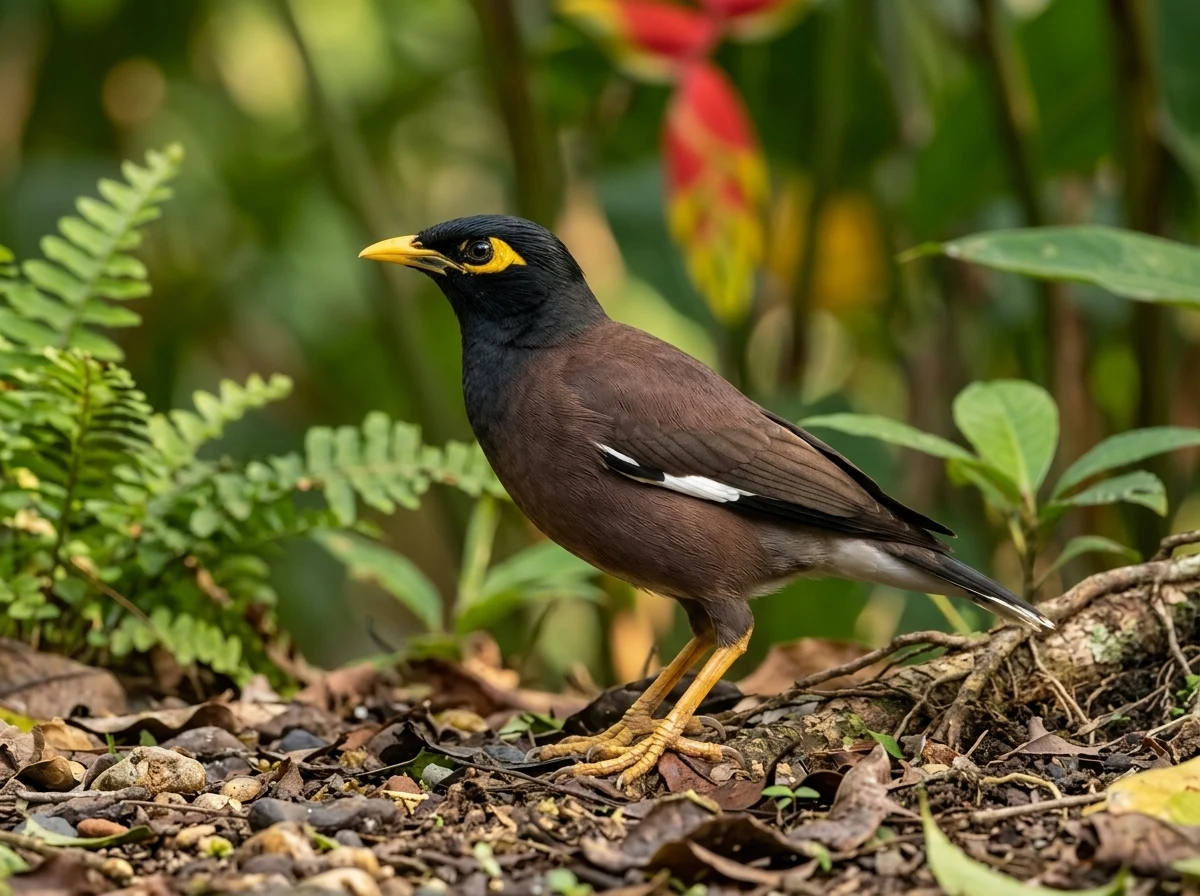
Common Myna: brown, black hood, and yellow skin
Common Myna (Acridotheres tristis) is a chunky, short-tailed bird, 23 to 25 centimeters long, with a dark brown body, black hood, bright yellow bill, and bare yellow skin around the eye. In flight it shows white wing patches and a white tail tip. It is native to southern Asia and has been traded as a cage bird worldwide.
Outside Asia it thrives in urban and suburban settings, as in southern Florida. Its reputation is serious: the IUCN Species Survival Commission placed it among the world's 100 worst invasive species, one of only three birds on that list. In Puerto Rico the catalog classifies it as introduced; treat any sighting as a valuable record that deserves a photo and details.
02
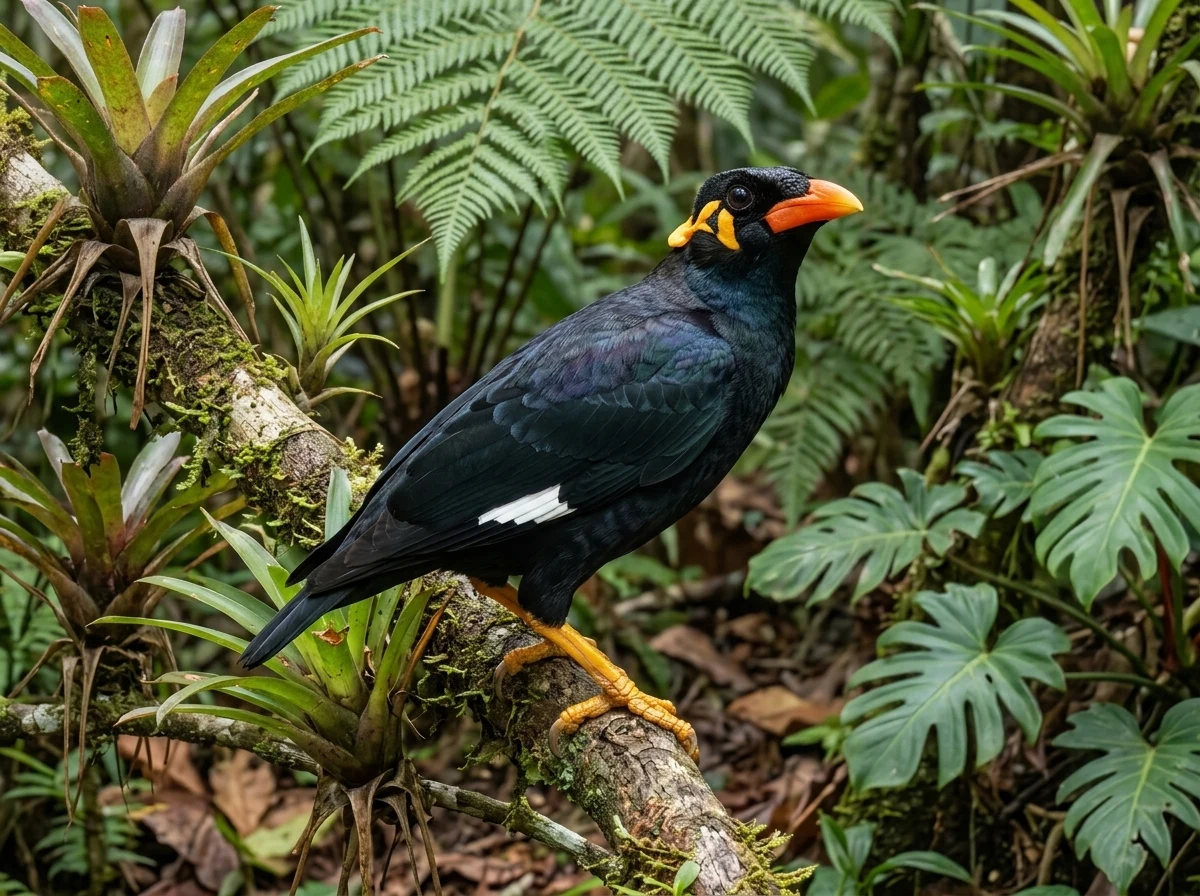
Common Hill Myna: the talking bird
Common Hill Myna (Gracula religiosa) is a large, thickset starling of about 195 grams, glossy black with white wing patches, a heavy orange bill, and head wattles unique among starlings. It lives in tall forest canopy in South and Southeast Asia and is famous in captivity for mimicking human speech.
That ability made it hugely popular in the cage-bird trade, with declines and local extinctions in parts of Indonesia from trapping. It nests in tree cavities. In Puerto Rico it is cataloged as introduced, but we have no recordings of the species on the island; if you hear a myna talking or whistling from a tree, record it and note whether it seems to be an escape.
03
The atlas myna and a caution about identities
The Breeding Bird Atlas identified the myna in its records as Great Myna (Acridotheres grandis), a black species with a frontal crest, yellow bill and feet, a white wing patch, and white from the vent to the tail tip. According to the atlas, it arrived through the pet trade and had been found breeding only on the north and east coasts; on Vieques there was only one escaped cage bird with no breeding evidence.
The atlas obtained just two records, one with probable breeding in February, and concluded the species had not shifted its range since Raffaele's description. Because Great Myna is not in our catalog, which lists Common Myna, treat mynas as a group whose identity must be documented: photograph the vent color, face, and crest. Those three marks separate the species.
04
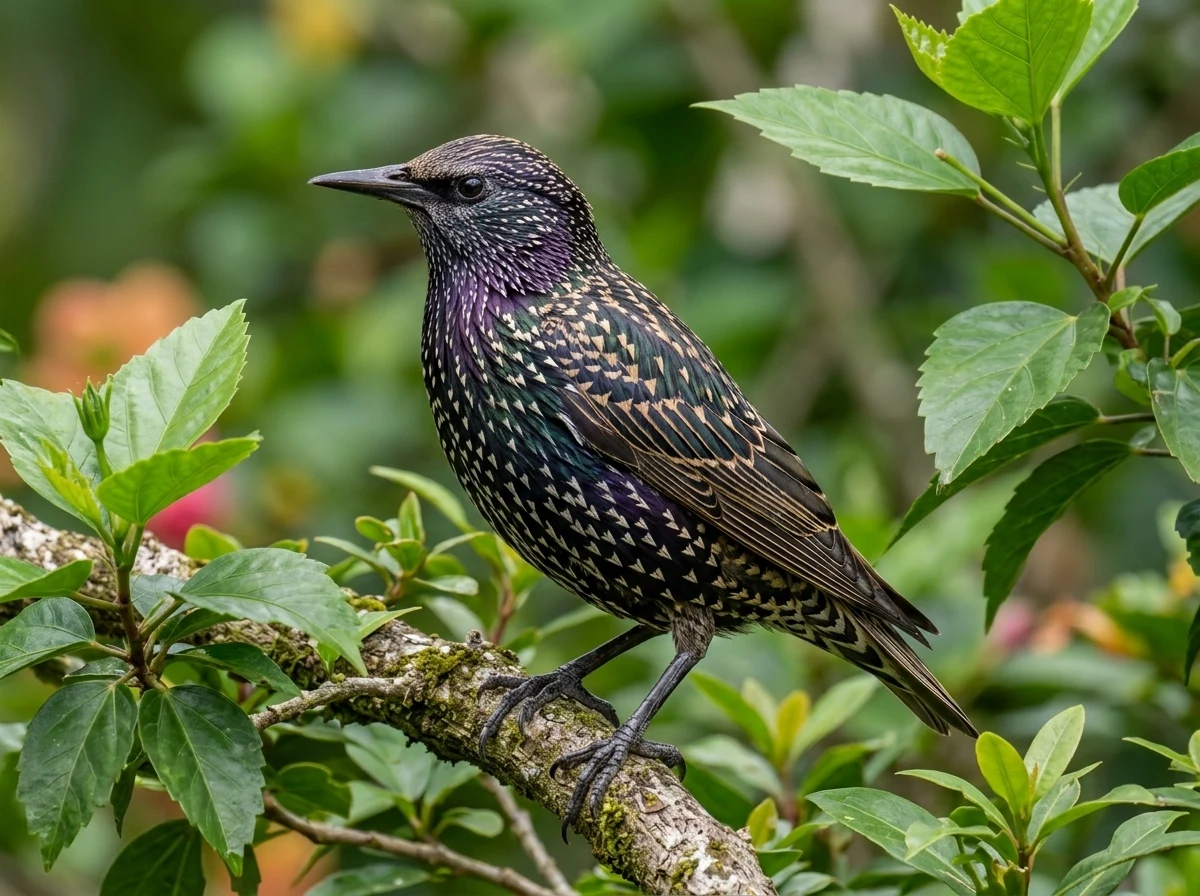
European Starling: an attempt that may have failed
European Starling (Sturnus vulgaris) is 21 to 23 centimeters long with a short tail and a thin, straight bill. In spring and summer it is black with purple and green gloss and a yellow bill; in fresh fall plumage it is covered with white spots that wear off during winter, and the bill darkens. Juveniles are dusty gray-brown. It is an excellent mimic of other birds.
It arrived in North America in 1890, but in Puerto Rico its story is short. The atlas confirmed breeding in one Fajardo hexagon; Fajardo Christmas Bird Counts found seven in 2007, one in 2009, and six in 2010, and none from then through 2019. The atlas suggests the species may have failed to establish, and the catalog also treats it as a vagrant.
05
Not a starling: grackle, cowbird, and Yellow-shouldered Blackbird
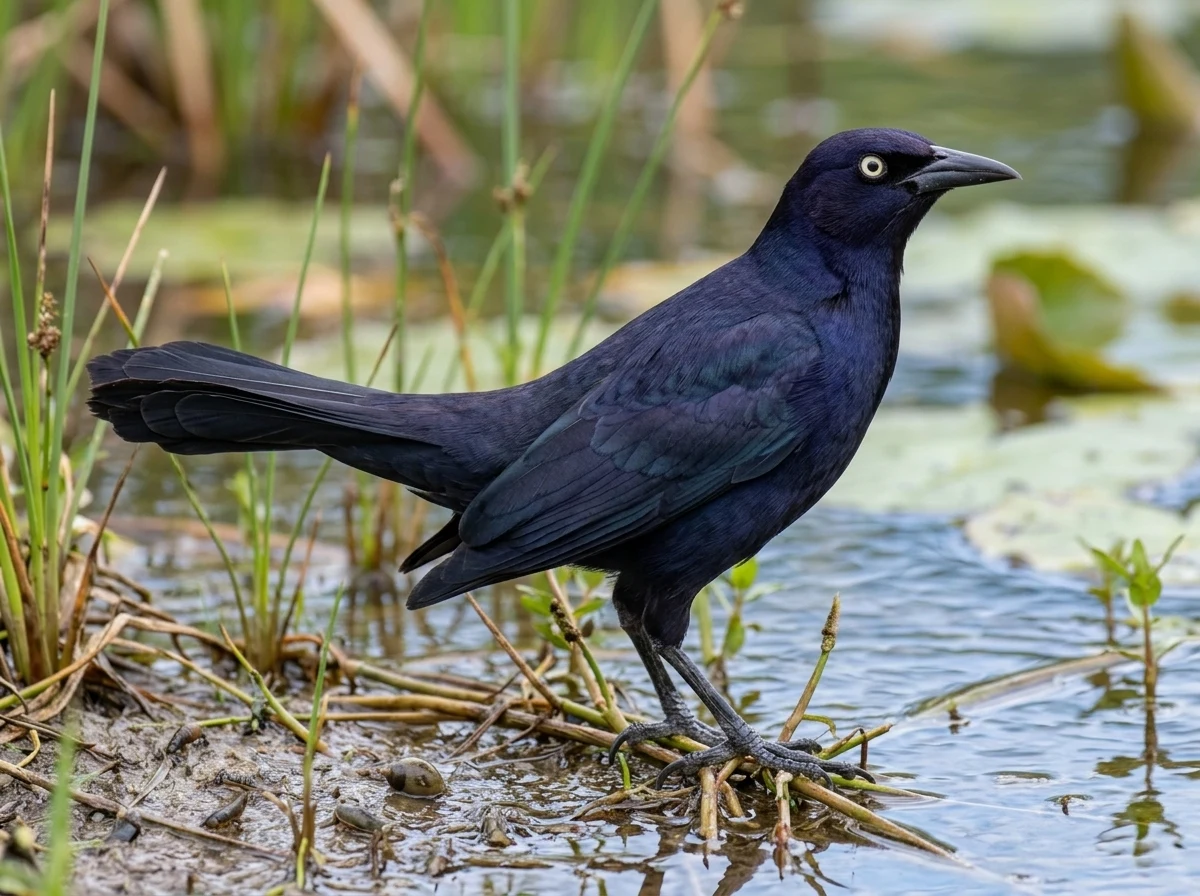
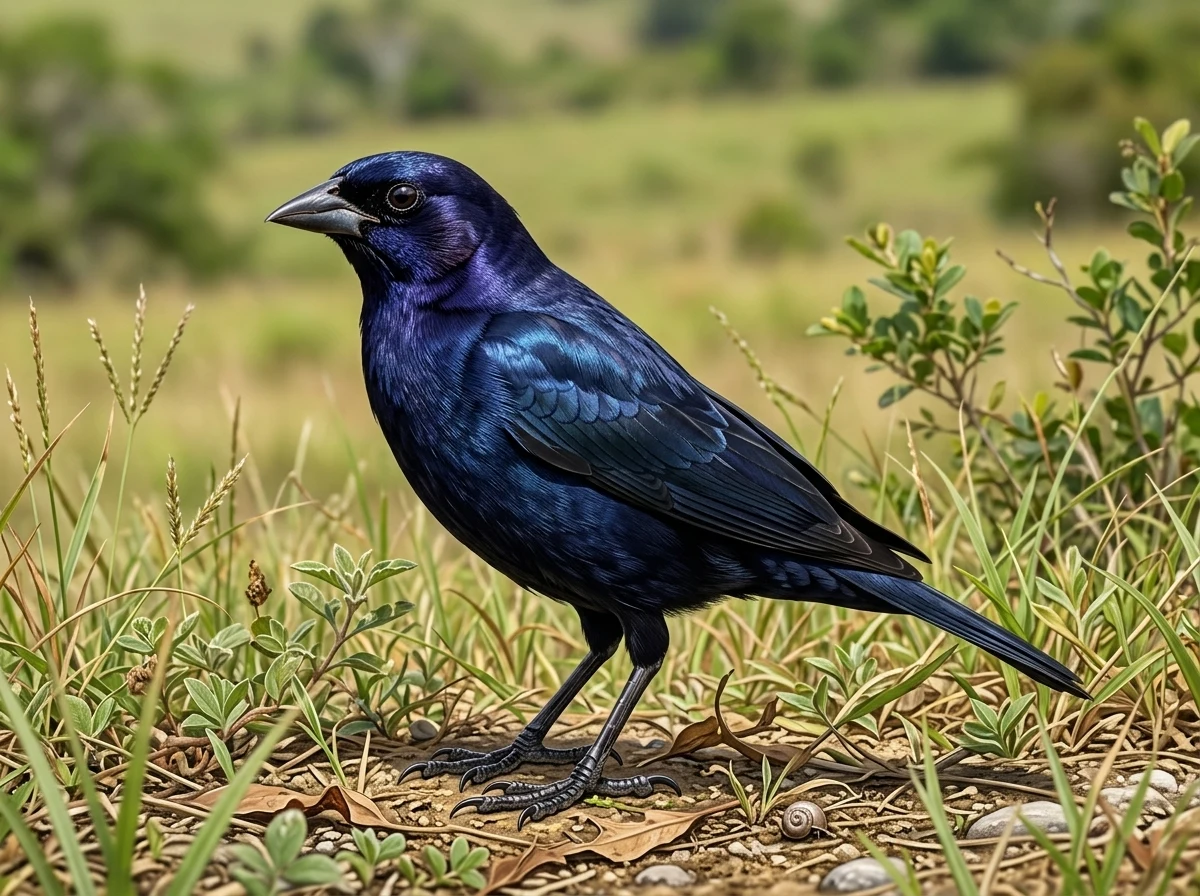
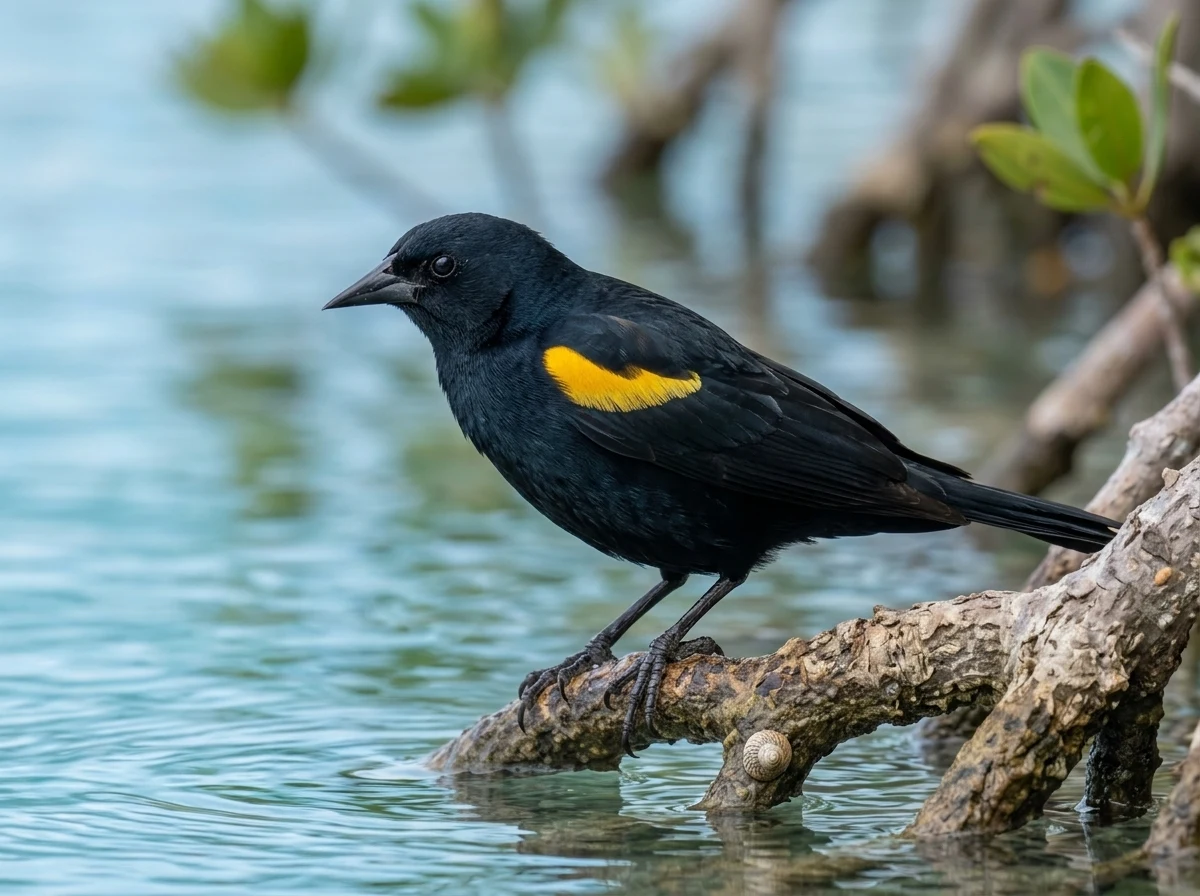
Searches for starlings in Puerto Rico usually point to other black birds. Greater Antillean Grackle, locally Mozambique or Chango, weighs about 80 grams, is about 25 centimeters long, and has yellow eyes and a V-shaped tail; the male Shiny Cowbird, about 43 grams, is black with purple-blue gloss and lacks the yellow eyes and V-shaped tail; the endemic Yellow-shouldered Blackbird is black with a yellow shoulder patch.
A starling stands out by its short tail and thin, straight bill, plus the white spots of fresh plumage. A myna stands out by its yellow or orange bill and white wing patches. If the bird has a V-shaped tail, yellow eyes, or a yellow shoulder patch, you are looking at a native species, not a starling-family bird.
Linked profiles
Three starlings and the natives that resemble them
Compare bill, tail, and eye color before reporting a myna or starling; the profiles include occurrence and conservation status.
Sound archive
Hear its voice
Explore real songs and calls. The spectrogram turns each sound into a visual trace of time and frequency.
XC1096511Recording 1 of 3call

Play: call by Uku Paal
Choose another recording
Sound recorded by Uku Paal · XC1096511 · CC BY-NC-SA 4.0. Visualization by Stichting Xeno-canto voor Natuurgeluiden.
Every recording retains the creator, catalogue number, and license published by Xeno-canto. Metadata via GBIF ↗
01
Are there mynas in Puerto Rico?
Yes, but they are scarce and introduced. The catalog includes Common Myna and Common Hill Myna, and the Breeding Bird Atlas obtained only two myna records on the north and east coasts, one with probable breeding.
02
Are there European Starlings in Puerto Rico?
There was a small group at Fajardo: the atlas confirmed breeding in one hexagon and Christmas Bird Counts recorded up to seven birds between 2007 and 2010. None were reported there from 2010 through 2019, and the atlas suggests it did not establish.
03
How do you identify a Common Myna?
It is a chunky, short-tailed bird with a dark brown body, black hood, yellow bill, and yellow skin around the eye. In flight it shows white wing patches and a white tail tip.
04
Where do mynah birds come from?
Common Myna is native to southern Asia and Common Hill Myna to the forests of South and Southeast Asia. Both reached other regions, including Puerto Rico, through the cage-bird trade.
05
What black bird with yellow eyes do I see in Puerto Rico?
It is almost always Greater Antillean Grackle, locally Mozambique or Chango, a native bird very common in towns and on the coast. It has yellow eyes and a V-shaped tail, unlike starlings and mynas.
Keep exploring
Connected routes
Sources and review
The evidence is one link away.
These sources support the editorial scope of this guide. Bird profiles also retain their own taxonomy, occurrence, and conservation references.
Reviewed:
01↗02↗03↗04↗05↗06↗
U.S. Forest Service Research and Development
Puerto Rico Breeding Bird Atlas
Distribution and breeding timing for 130 species breeding in Puerto Rico and its satellite islands.National Audubon Society
Field guide: Common Myna
Common Myna field marks, South Asian origin, and voice.National Audubon Society
Field guide: European Starling
Seasonal plumage, bill color, vocal mimicry, and the 1890 introduction to North America.Birds of the World / Cornell Lab of Ornithology
Common Hill Myna species introduction
Head wattles, plumage, bill, mimicry, and pressure from the cage-bird trade.Sociedad Ornitológica Puertorriqueña
Official bird list
Local names, occurrence categories, and the public summary of 17 endemics.National Audubon Society
Field guide: Shiny Cowbird
Male and female field marks, size, voice, and parasitic behavior.The atlas continues