 AI
AIFieldcraft guide
How to assign breeding codes in eBird for Puerto Rico
A practical guide to interpreting bird behaviors and recording the right evidence in eBird, with examples from the Puerto Rican Tody, Woodpecker, Adelaide's Warbler, Puerto Rican Vireo, and Bananaquit.
Reviewed: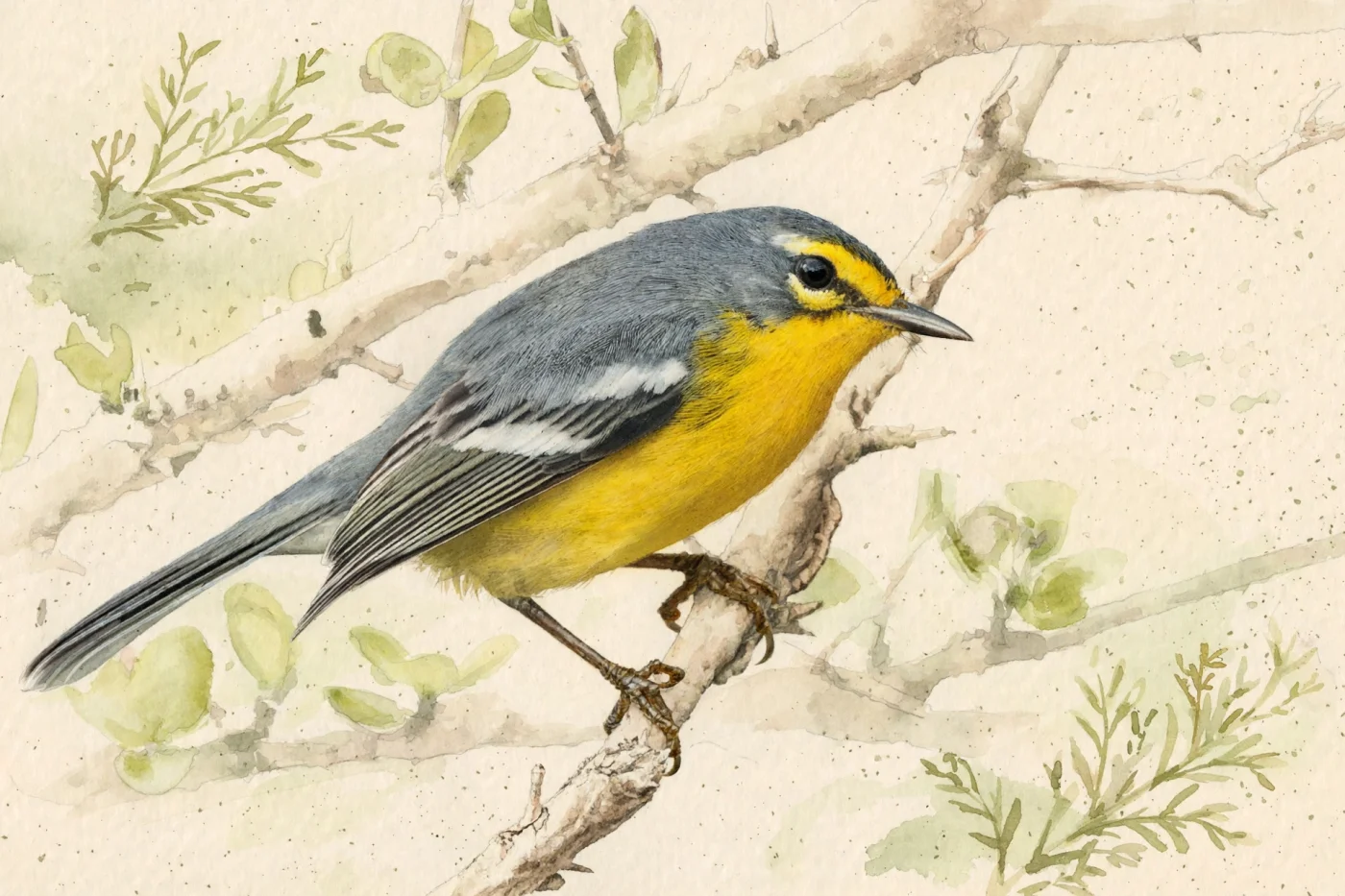
Prepared with AI assistance and linked sources. Illustrations are not field photographs.
Why the right code matters
When you observe a bird in Puerto Rico, eBird lets you add a breeding code that describes what you saw or heard. These codes are not a species label: they are behavioral evidence. They are grouped into four categories of increasing evidence: Observed, Possible, Probable, and Confirmed. Choosing the right code helps make data about breeding timing and locations useful for research and conservation.
In Puerto Rico, many resident and endemic birds can breed through much of the year, so the date alone is not enough to decide the code. What matters is the specific behavior you observed and whether that behavior demonstrates breeding in that species and at that place. This guide explains how to move from observation to code, with local examples and a clear procedure.
Fieldcraft guide
Three key ideas
Cuatro categoríasEvidence levelsObserved, Possible, Probable, and Confirmed; Confirmed is the highest level.
El comportamiento mandaNot just the dateIn the tropics, breeding can occur year-round; the code depends on what you observed.
Si dudas, no codifiquesUse commentseBird recommends not entering a code if unsure and putting details in the species comments.
01
What the codes mean and how they are ordered
eBird's breeding and behavior codes document breeding activities worldwide. They are organized into four categories: Observed, Possible, Probable, and Confirmed. Code F (Flyover) is the only Observed-category code and does not indicate breeding; it is used only when all birds are seen in direct flight over the site. Possible codes are S (singing bird) and H (in appropriate habitat). Probable codes include B, A, N, C, T, P, M, and S7. Confirmed codes include NY, NE, FS, FY, CF, FL, ON, UN, DD, NB, CN, and PE.
The logic is cumulative: the more direct the evidence of a nest or parental care, the higher the code. For example, seeing a nest with eggs (NE) or with young (NY) is Confirmed, while seeing a bird singing in suitable habitat (S) is only Possible. In eBird Mobile, tapping the species name and choosing "Add breeding code" shows higher-ranking codes lower down and in darker purple. The recommendation is to choose the highest-ranking code you observed for that species on that checklist.
02
Probable vs. Confirmed: the line you should not cross
The difference between Probable and Confirmed is not intensity but type of evidence. Probable codes describe behaviors that suggest breeding but do not by themselves confirm it. For example, C (courtship, display, or copulation) is Probable, not Confirmed. T (territorial defense) is Probable. N (visiting a probable nest site) is Probable and is especially useful for cavity nesters or dense-shrub nesters. A (agitated behavior) is Probable and excludes agitation from pishing or playback, as well as year-round mobbing behavior such as mobbing an owl.
Some codes appear as Confirmed/Probable depending on the project. NB (nest building) is treated as Confirmed when you observe building at the actual nest site, except for wrens and woodpeckers, which use code B because they may build dummy nests or roosting cavities. CN (carrying nesting material) is listed as Confirmed/Probable: in project frameworks such as the New York atlas it is listed as Confirmed, while in other contexts it is treated as Probable because the nest site is not seen. CF (carrying food) is Confirmed, but should not be used for species that regularly carry food for courtship or other purposes, such as corvids, raptors, and terns. If unsure, do not enter a code and note what you saw in the comments.
03
Local examples: from behavior to code
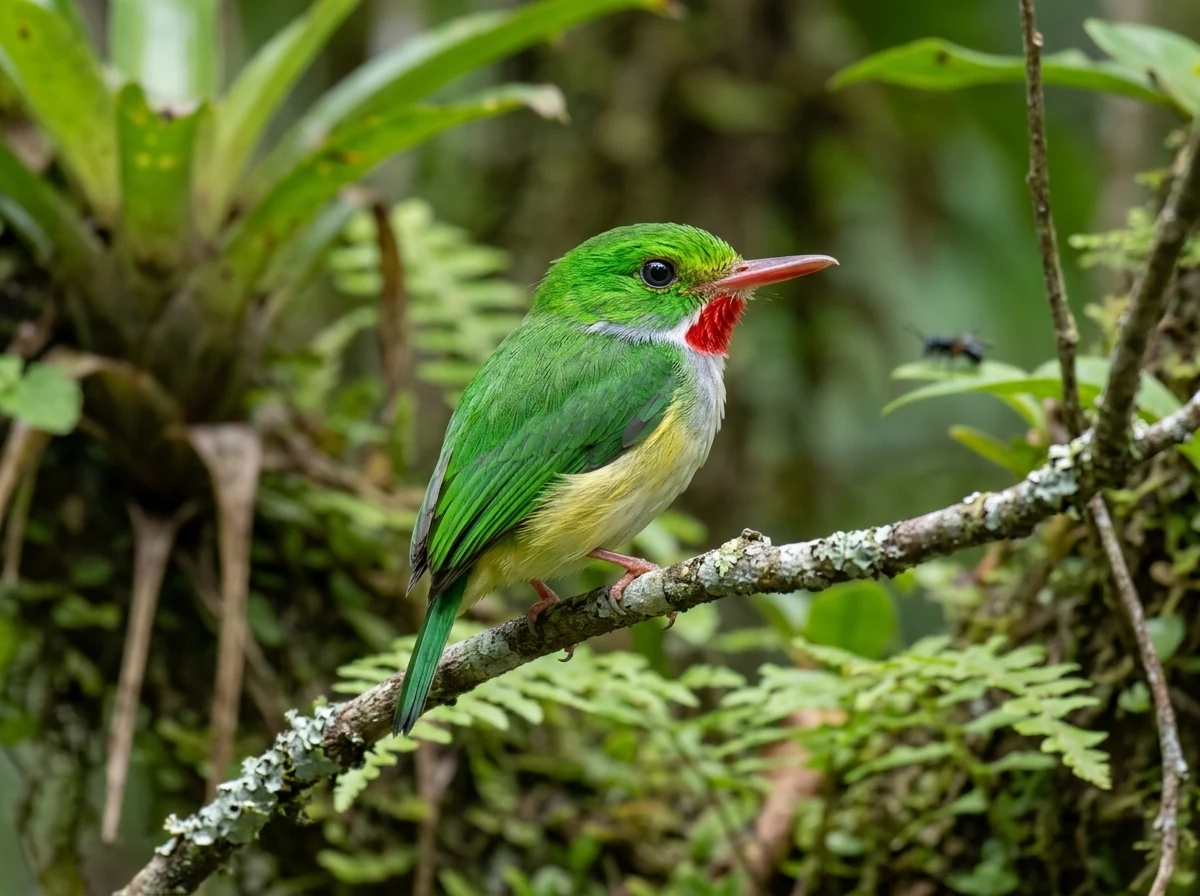
The Puerto Rican Tody (Todus mexicanus) is endemic to Puerto Rico, non-migratory, and occupies small year-round territories in a wide range of forested habitats. It typically breeds from February to July and excavates its own nest burrow in dirt banks. If you see a tody entering and leaving a burrow in an earthen bank repeatedly, that may qualify as N (visiting a probable nest site), which is Probable. If you see the nest with young or hear young inside, the code would be NY (nest with young), which is Confirmed. The February-to-July timing is a published life-history reference, not a rule for deciding the code on a specific day.
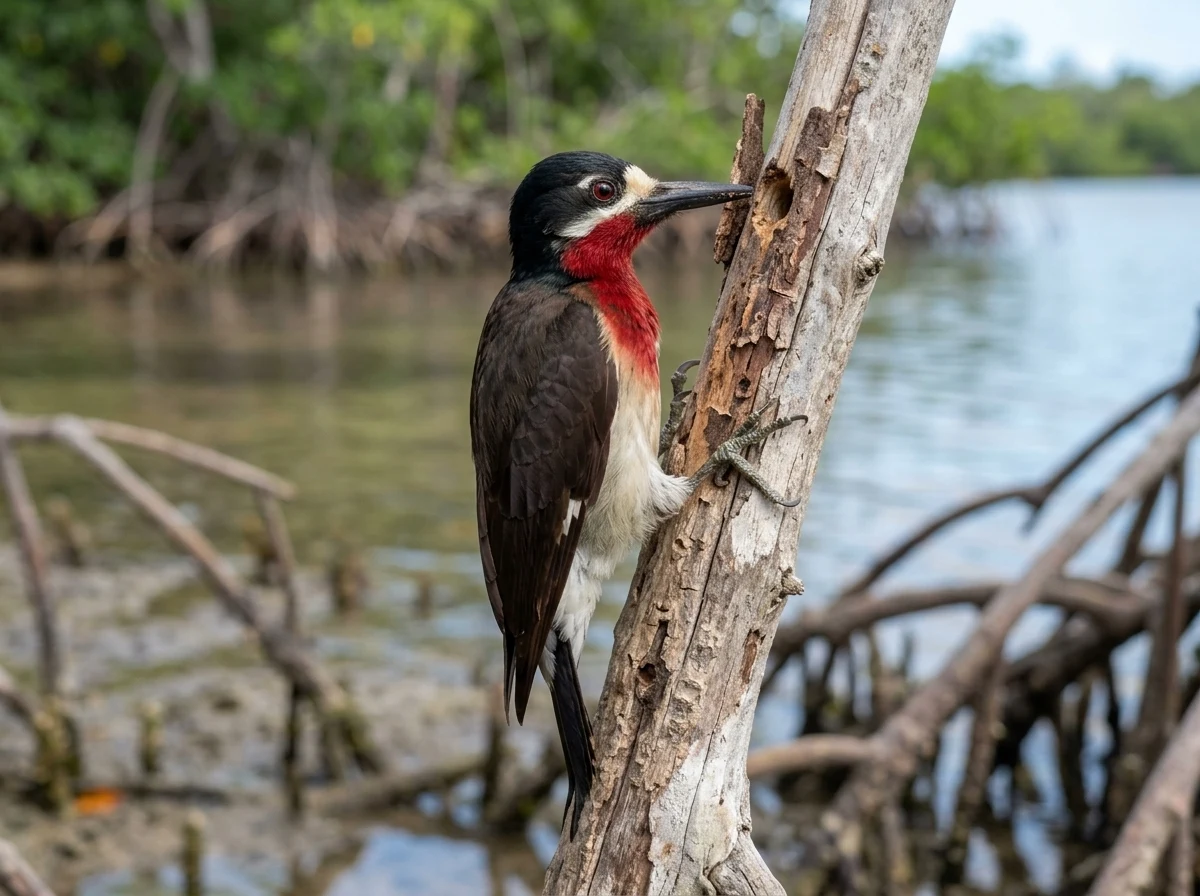
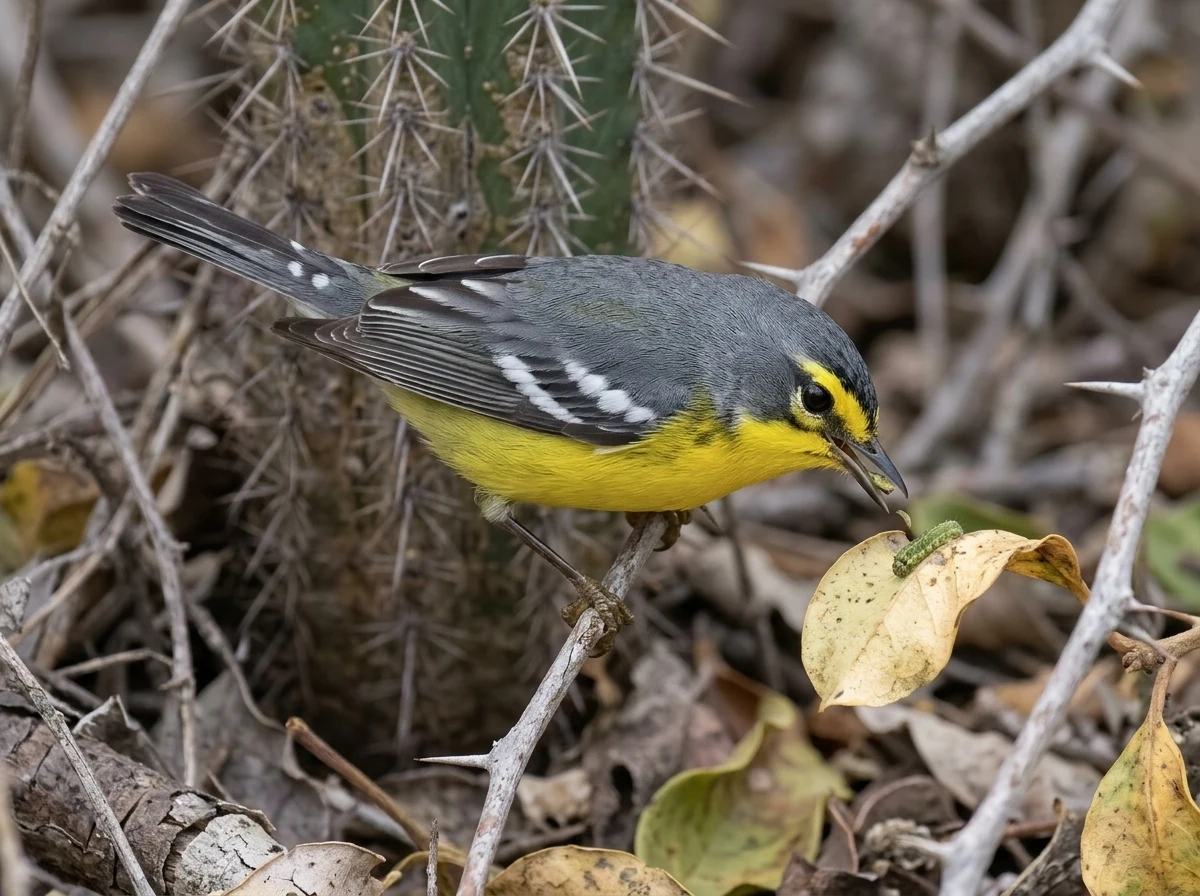
The Puerto Rican Woodpecker (Melanerpes portoricensis) is endemic and nests in tree cavities. Seeing a woodpecker excavating a cavity does not confirm breeding: it corresponds to code B (woodpecker nest building), which is Probable, because woodpeckers may make roosting cavities or dummy nests. If instead you see an adult entering a cavity and remaining inside, or exchanging incubation duties, that would be ON (occupied nest), which is Confirmed. Adelaide's Warbler (Setophaga adelaidae) is endemic and its nest is cup- or bowl-shaped; a bird singing in suitable habitat would be S (Possible), while two observations of singing at the same spot seven or more days apart within the same breeding season could qualify as S7 (Probable).
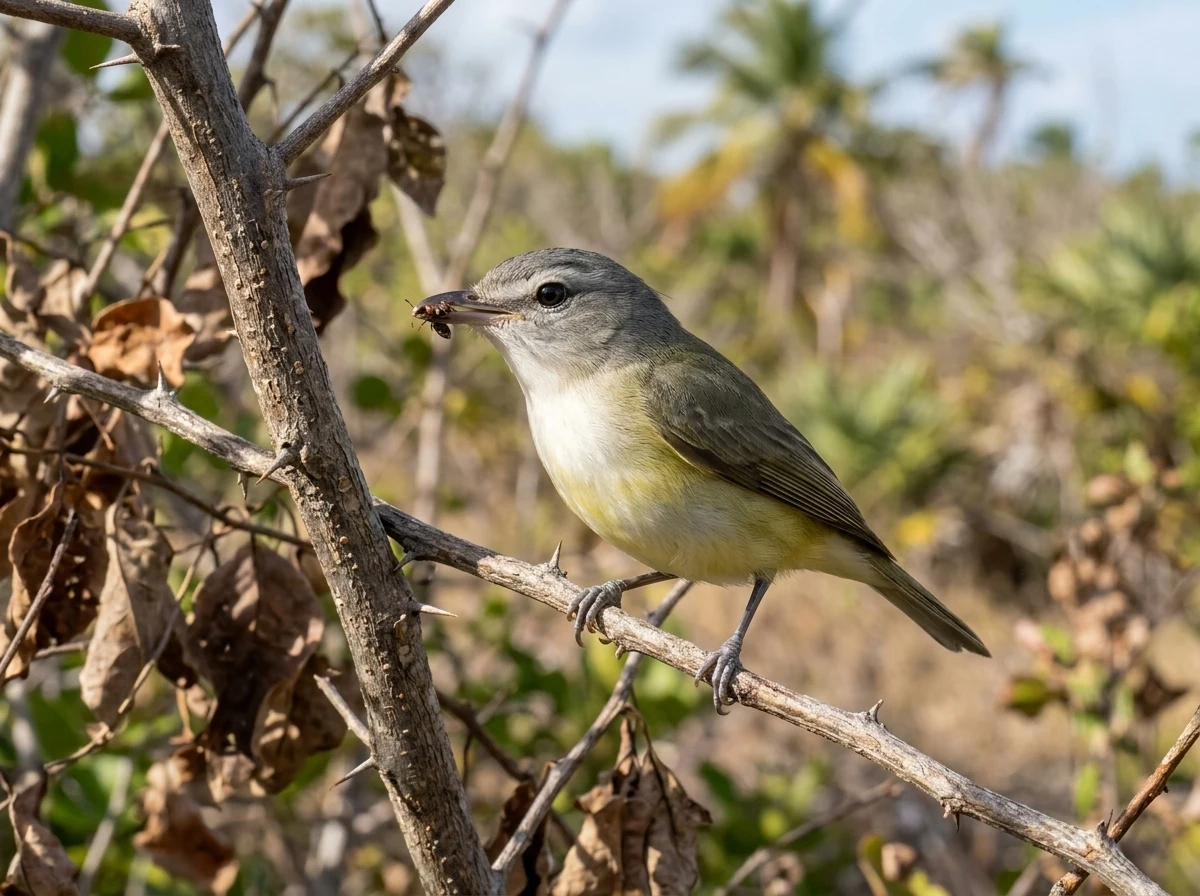
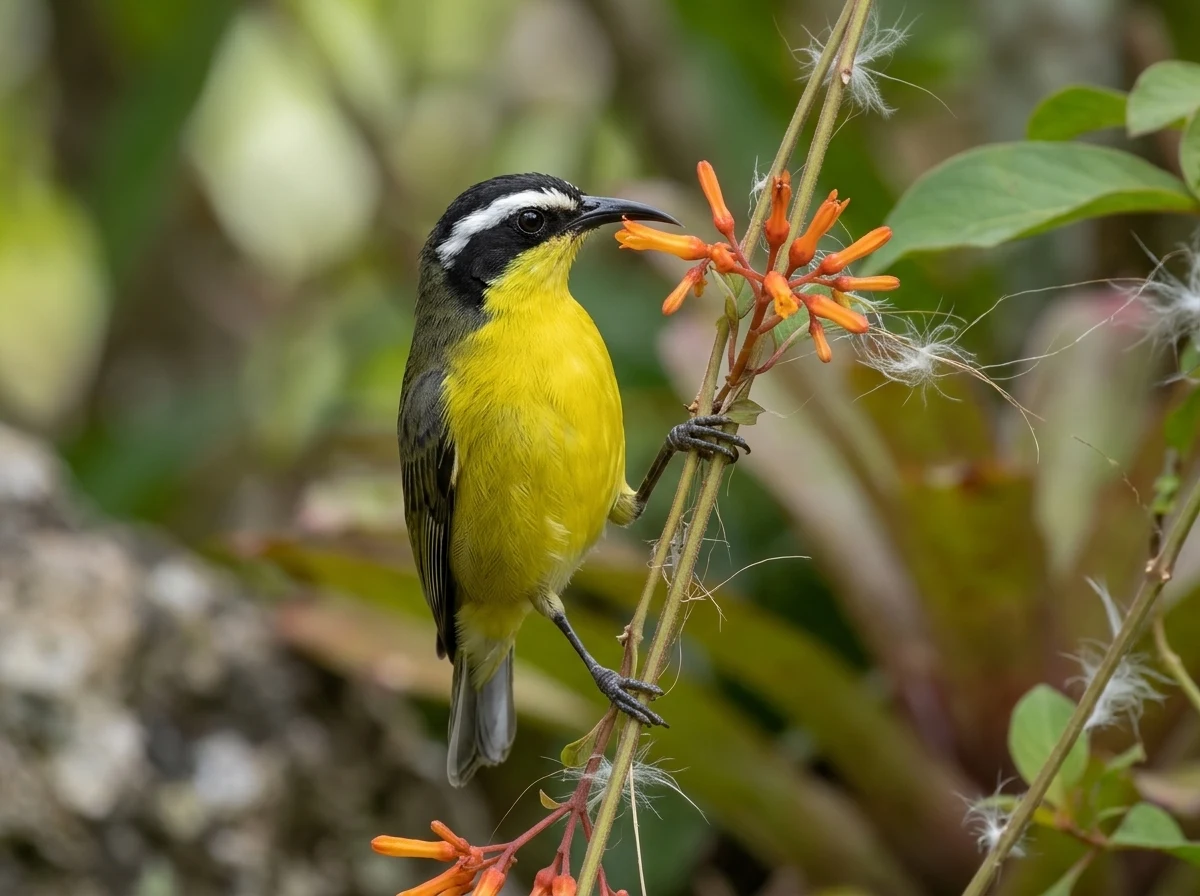
The Puerto Rican Vireo (Vireo latimeri) is endemic and builds a cup- or bowl-shaped nest. If you see an adult carrying nesting material to an unseen site, the code would be CN (carrying nesting material), which is listed as Confirmed/Probable depending on the project. If you see the nest being built at the actual site, it would be NB (nest building), which is also listed as Confirmed/Probable. The Bananaquit (Coereba flaveola) is native and not endemic, and its nest is spherical or globular. For this species, seeing an adult building at the actual nest site would be NB, while seeing an adult carrying material to a visible nest would be CN (carrying nesting material). Seeing an adult feeding a fledgling would be FY (feeding young), Confirmed.
04
Field procedure and checklist
Before heading out, review the code list in the app or on eBird's help page. During observation, follow this procedure: first, identify the species with certainty; second, observe the behavior for at least a few minutes without approaching the nest too closely; third, note what you saw in clear words (for example, "adult entered cavity and did not come out"); fourth, decide whether the behavior is Observed, Possible, Probable, or Confirmed; fifth, choose the highest-ranking code that matches that behavior; sixth, if unsure between two codes, choose the more conservative one or do not enter a code and write the details in the comments.
Quick checklist: Did I see a nest with eggs or young? Use NE or NY. Did I see an adult feeding a young that has left the nest? Use FY. Did I see an adult carrying food repeatedly in the same direction? Consider CF, but with caution for species that carry food for other reasons. Did I see a bird singing in suitable habitat? Use S. Did I see a bird in suitable habitat during its breeding season but not singing? Use H. Did I see a woodpecker excavating? Use B, not NB. Did I see a bird repeatedly entering a cavity or thicket? Use N. Did I see courtship or copulation? Use C. Did I see territorial defense? Use T. Did I see a bird carrying nesting material to an unseen site? Use CN, which is listed as Confirmed/Probable depending on the project. If the bird was only flying over the site, use F only if all were flyovers. Remember: eggs are not counted in the species total, but young are. If you find a used nest with no birds, use UN only if you are certain of the species that built it, and enter 0 in the count if you saw no individuals.
Linked profiles
Species mentioned in this guide
These resident and endemic birds offer clear examples of how to apply breeding codes in Puerto Rico.
01
What do I do if I see a nest with eggs?
Use code NE (nest with eggs), which is Confirmed. Do not count the eggs in the species total, because they are not yet birds. You can add a comment and a photo of the nest if possible, but without getting too close and disturbing the nest.
02
How do I know if a singing bird counts as breeding?
Singing in suitable habitat is Possible evidence (code S). If the same individual sings at the same spot seven or more days apart within the same breeding season, it may be S7, which is Probable. If the bird sings but is outside its breeding habitat or season, the song may have no breeding meaning; in that case, do not enter a code and note the details.
03
Why is a woodpecker excavating not Confirmed?
Because woodpeckers and other cavity nesters may make roosting cavities or dummy nests. That is why code B (woodpecker nest building) exists, and it is Probable. To confirm, you need to see an occupied nest (ON), eggs (NE), or young (NY).
04
What code do I use if I see a bird carrying food?
It may be CF (carrying food), which is Confirmed, but with caution: do not use it for species that carry food for courtship or other reasons, such as corvids, raptors, and terns. If you see it carrying food repeatedly in the same direction toward a probable nest, CF is a good choice. If unsure, do not enter a code and describe the behavior.
05
Do codes change with the time of year in Puerto Rico?
Codes describe behaviors, not dates. However, some atlas projects may restrict the use of certain codes to certain times of year. In Puerto Rico, many resident birds can breed through much of the year, so the date alone does not decide the code. What matters is the observed behavior and whether it matches the species and place.
06
What do I do if I am not sure about the code?
eBird's guidance recommends not recording a code if you are unsure and instead putting notes in the species comments. It is better not to code than to assign an incorrect code. Your comments help reviewers and maintain data quality.
Keep exploring
Connected routes
Sources and review
The evidence is one link away.
These sources support the editorial scope of this guide. Bird profiles also retain their own taxonomy, occurrence, and conservation references.
Reviewed:
01↗02↗03↗04↗05↗06↗
Cornell Lab of Ornithology (eBird Help Center)
eBird Breeding and Behavior Codes
Evidence for cited sections; consult the original document.Cornell Lab of Ornithology (eBird)
Breeding Code Definitions — New York Breeding Bird Atlas
Evidence for cited sections; consult the original document.Cornell Lab of Ornithology (Birds of the World)
Puerto Rican Tody (Todus mexicanus) — Birds of the World
Evidence for cited sections; consult the original document.Cornell Lab of Ornithology (Birds of the World)
Breeding — Puerto Rican Vireo (Vireo latimeri) — Birds of the World
Evidence for cited sections; consult the original document.Cornell Lab of Ornithology (Birds of the World)
Breeding — Adelaide's Warbler (Setophaga adelaidae) — Birds of the World
Evidence for cited sections; consult the original document.Cornell Lab of Ornithology (Birds of the World)
Breeding — Puerto Rican Woodpecker (Melanerpes portoricensis) — Birds of the World
Evidence for cited sections; consult the original document.The atlas continues