 AI
AIThe smallest dove
Common Ground Dove and Puerto Rico's small doves
It walks with quick steps along paths, yards, and farms, nodding its head, and flashes rufous when it flies. It is the dove almost everyone has seen without knowing its name.
Reviewed:Short answer: the rolita is a tiny native dove.
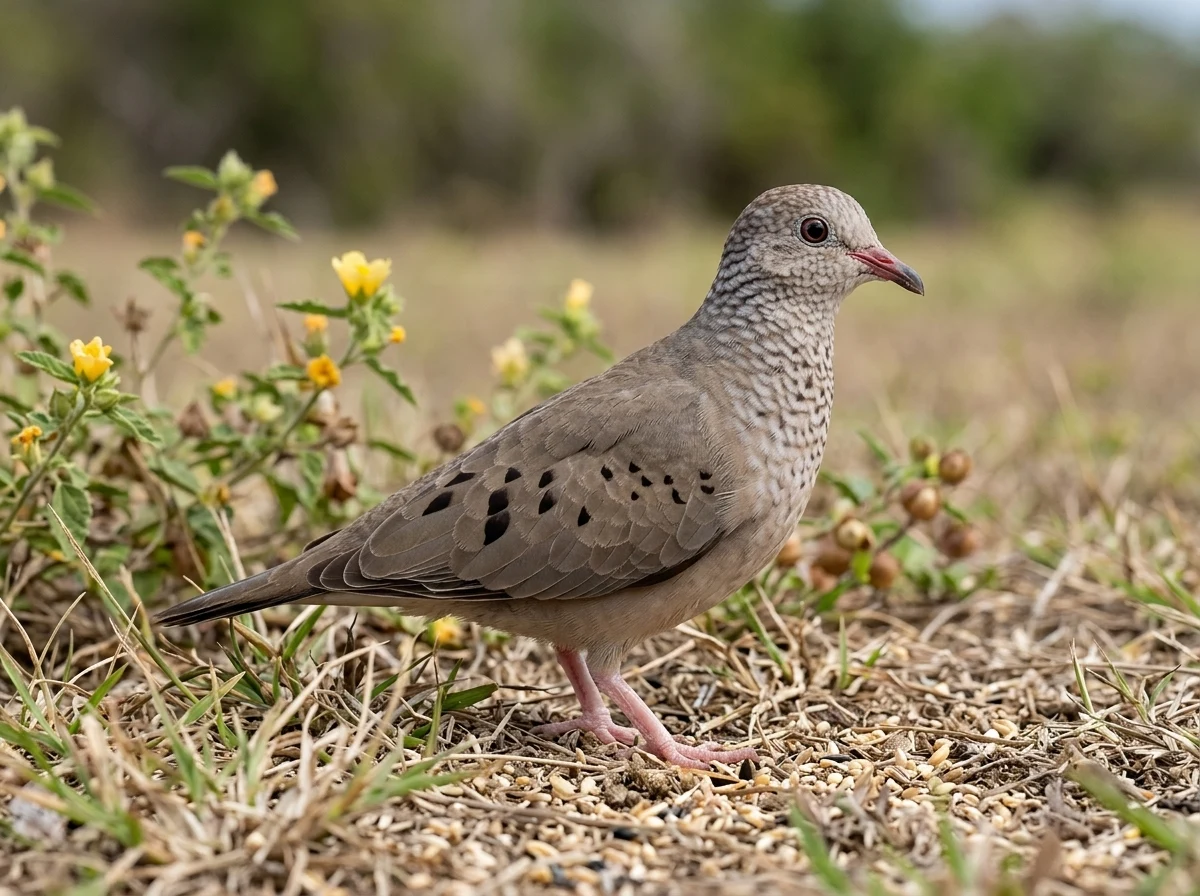
The rolita (Columbina passerina, Common Ground Dove), also called tortolita, is Puerto Rico's smallest native dove: 15–18 cm long and 30–40 grams. It is known by the scaly look of its breast and head, the pink base of the bill, and the rufous wings it shows in flight.
It is one of the most widespread birds on the island. The Puerto Rico Breeding Bird Atlas found it in 378 of 479 hexagons (80 %), breeding in every life zone and in every month. This guide explains how to identify it, its subspecies, what it eats, how it nests, and which other small doves can be confused with it.
The smallest dove
The Common Ground Dove by the numbers
80 %of atlas hexagons861 records in 378 of 479 hexagons (2004–2009).
15–18 cmlong30–40 grams according to Audubon: the lightest native dove on the island.
99.75 %seeds in its dietWetmore's analysis of 72 stomachs in Puerto Rico.
2local subspeciesOne on Puerto Rico and its islands, another on Mona, per the atlas.
01
What the rolita is and what it is called
The rolita is a dove of the genus Columbina found from the southern United States, Mexico, and Central America to northern South America, including the West Indies. In Puerto Rico it is a very common permanent resident, and it also lives on Culebra, Mona, and Vieques. It is native, not introduced.
Its official name in SOPI's catalog is Rolita, and the Spanish Ornithological Society calls it Columbina Común. Wetmore recorded the names rola, rolita, and tortolita in 1916, and rolita and rola on Mona. When someone in Puerto Rico mentions a tortolita walking around the yard, they almost always mean this species.
02
How to identify it: scales, pink bill, and rufous wings
It is small and compact, with a short tail. Up close, the breast and head show a scaly pattern, and the base of the bill is pink. In flight, the rufous wings stand out, along with a short black tail with pale corners. Males and females look similar overall.
Behavior is just as useful. Wetmore described how it walks quickly, with long steps and a nodding head, picking up seeds and grit; before an intruder it walks away raising its tail nervously, or crouches and bursts up with a flutter, showing the red undersides of its flight feathers. After a short flight it drops back to the ground or perches in open trees, often in pairs.
Its voice is a series of soft coos. Audubon describes a rising inflection; Wetmore wrote it as coo-coo-coo-coo, answered from every side in summer. Males also make short circling flights on stiff wings, which Wetmore likened to a kite.
03
The Puerto Rico and Mona ground doves
According to the atlas, Puerto Rico and its satellite islands hold an endemic subspecies, Columbina passerina portoricensis, except Mona, which has another, C. p. exigua. Wetmore already described the Mona bird as smaller and paler than the main-island form. That is why our catalog also lists the name Rolita de Mona.
The species itself is not endemic: the subspecies is. Subspecies treatments vary among authorities, and our Common Ground Dove profile notes that this assignment should be checked against current taxonomy. In the field there is no need to separate them: knowing which island you are on is enough.
04
Where it lives and how it nests
It uses a wide range of lowland habitats: forest edges, farms, open country, gardens, and towns. Wetmore found it on stony hillsides, plowed fields, and brushy pastures, and noted that it rarely went above 500 feet, though it followed rivers up to about 1,200 feet at Cayey and Lares. Today the atlas records it in every life zone on the island.
It builds a nest of rootlets, grasses, or twigs in a shrub, a tree, or on the ground. It lays two white eggs, which Audubon says are incubated for 12 to 14 days, and it can raise two or three broods a year, sometimes four. In Puerto Rico it breeds in any month, with a reported peak in May and June.
Wetmore noted he was told it once nested on the ground but that by 1912 it built almost entirely in trees to escape the mongoose. He also watched breeding females fill their crops with seeds early, fly in to drink around nine in the morning, and about half an hour later form the crop milk they feed to their young.
05
What it eats: a weed-seed specialist
Wetmore examined 72 ground-dove stomachs and found that 99.75 % of the contents were seeds; the few ant fragments appeared accidental. About a quarter were weed seeds such as purslane, pigweed, and caltrop, and roughly a third were grass and sedge seeds. He found no cultivated grain.
Some numbers are astonishing: one bird had eaten 9,600 purslane seeds and another more than 5,000. Wetmore concluded that it did no harm to agriculture, helped control weeds, and, given its size and usefulness, should be protected year-round. Today Common Ground Dove is not among the game species in DRNA's 2022 hunting notice.
That diet explains why you see it on paths, roadsides, grassy yards, and farms. Wetmore also noted that it is very timid around the sparrow hawk, today's American Kestrel, sometimes refusing to fly when one was nearby.
06
Other small doves that can be confused with it
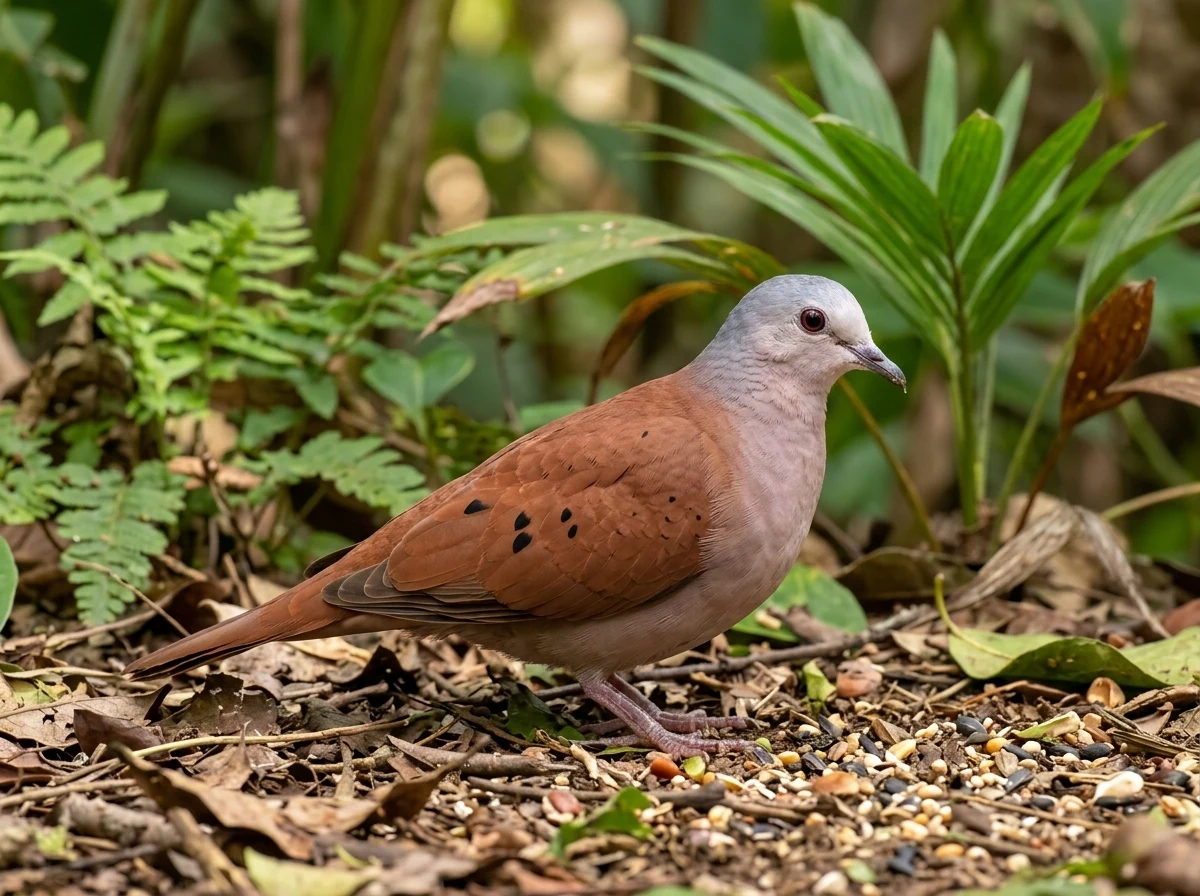
Ruddy Ground Dove (Columbina talpacoti) is a close relative of similar size, about 17 cm. Our catalog treats it as an accidental record with moderate confidence. The male is rich rufous above with a pale gray head and black spots on the wing; the female is browner. A reddish ground dove in Puerto Rico should be documented with photos before being reported as this species.
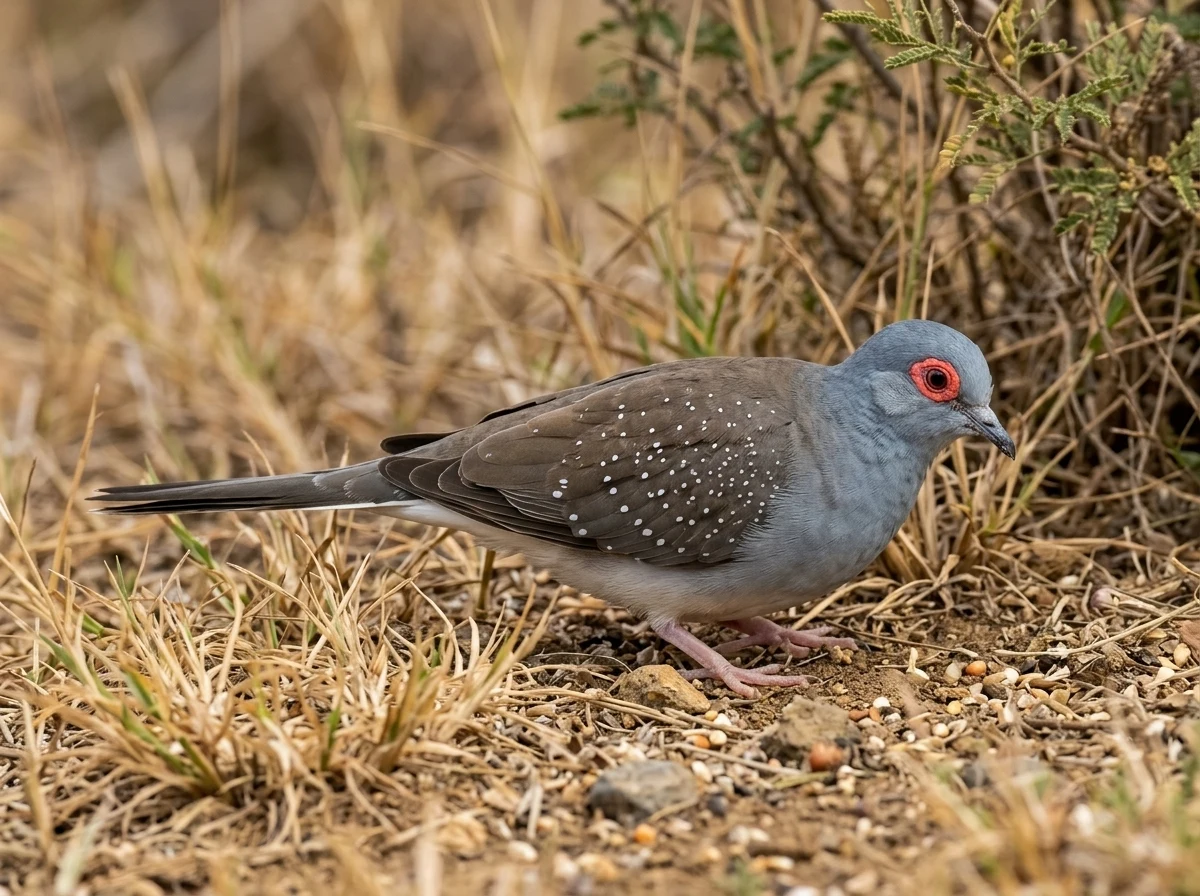
Diamond Dove (Geopelia cuneata) is a tiny Australian dove with a long, white-edged tail that our catalog classifies as introduced. Its long tail separates it immediately from the short-tailed Common Ground Dove.
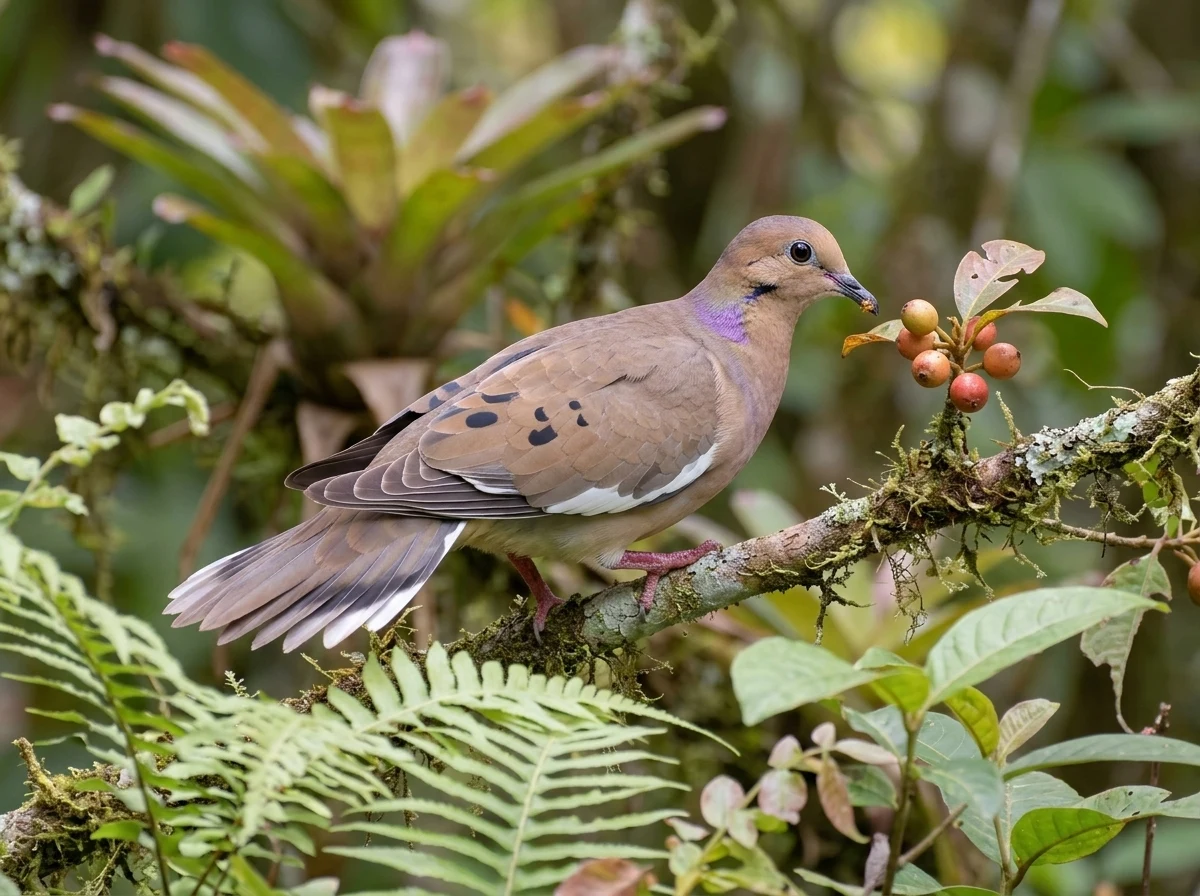
Confusion with the native doves is smaller than it seems: Zenaida Dove is 23–28 cm, much larger than a ground dove, and lacks the scaly breast and rufous wings. If the dove would fit in the palm of your hand and flashes red when it flies, it is a Common Ground Dove.
Linked profiles
Common Ground Dove and small doves
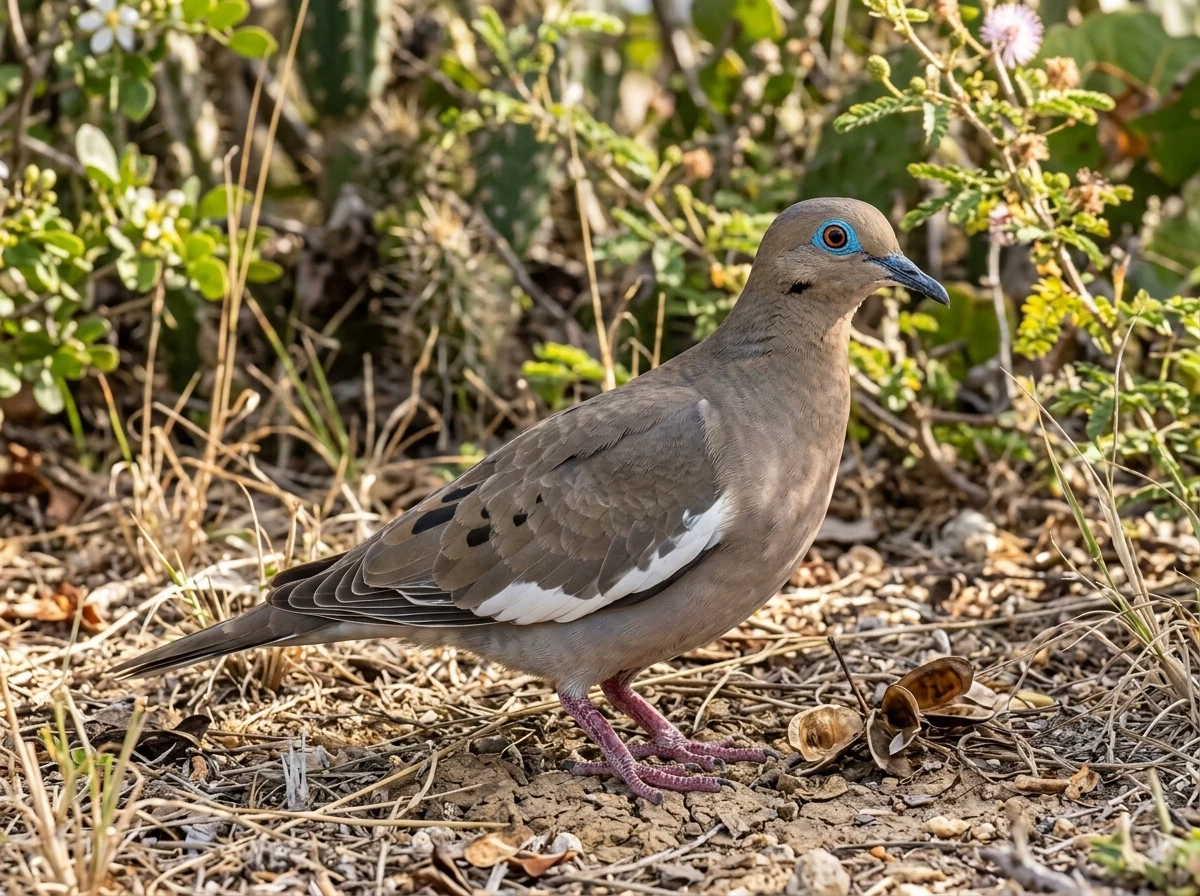
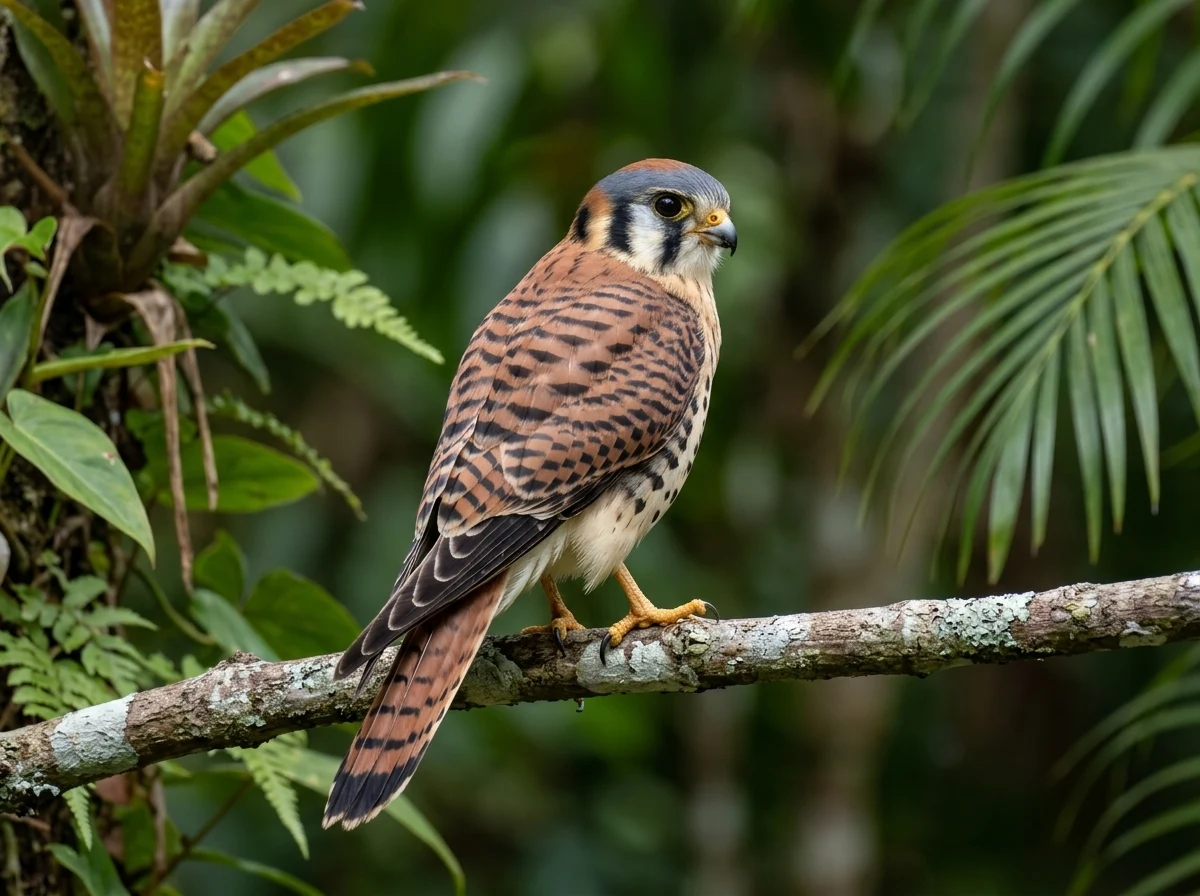
Compare size, tail, and status of the ground dove with its lookalikes and the falcon that watches it.
Sound archive
Hear its voice
Explore real songs and calls. The spectrogram turns each sound into a visual trace of time and frequency.
XC998932Recording 1 of 3song

Play: song by GABRIEL LEITE
Choose another recording
Sound recorded by GABRIEL LEITE · XC998932 · CC BY-NC-SA 4.0. Visualization by Stichting Xeno-canto voor Natuurgeluiden.
Every recording retains the creator, catalogue number, and license published by Xeno-canto. Metadata via GBIF ↗
01
What is a rolita?
It is the Puerto Rican name for Columbina passerina, the Common Ground Dove, the island's smallest native dove. It is 15–18 cm long, with a scaly breast, a pink bill base, and rufous wings visible in flight.
02
Is the rolita a pigeon or a dove?
It is a member of the pigeon and dove family, Columbidae, and there is no scientific difference between the two words. Because it is so small, it is also called tortolita.
03
Is the Common Ground Dove endemic to Puerto Rico?
The species is not endemic: it ranges from the southern United States to northern South America. According to the atlas, Puerto Rico has an endemic subspecies (portoricensis) and Mona another (exigua).
04
What does the Common Ground Dove eat?
Almost entirely seeds picked up from the ground. In Wetmore's analysis of 72 stomachs, 99.75 % of the contents were seeds, mostly weeds and grasses such as purslane, with no cultivated grain.
05
How many eggs does the Common Ground Dove lay?
Usually two white eggs, sometimes three, incubated for 12 to 14 days. It can raise two or three broods a year, and in Puerto Rico it has been found breeding in every month.
06
What is the smallest dove in Puerto Rico?
Common Ground Dove is the smallest native dove, at 30–40 grams. The introduced Diamond Dove, from Australia, is similar in weight but stands out by its long tail.
Keep exploring
Connected routes
Sources and review
The evidence is one link away.
These sources support the editorial scope of this guide. Bird profiles also retain their own taxonomy, occurrence, and conservation references.
Reviewed:
01↗02↗03↗04↗05↗06↗07↗
U.S. Forest Service Research and Development
Puerto Rico Breeding Bird Atlas
Distribution and breeding timing for 130 species breeding in Puerto Rico and its satellite islands.National Audubon Society
Common Ground Dove field guide
Measurements, scaly breast, pink bill base, rufous wings in flight, voice, and breeding of Common Ground Dove.U.S. Department of Agriculture / Internet Archive (Alexander Wetmore, 1916)
Birds of Porto Rico (USDA Bulletin 326)
Historical local names, voices, nests, and stomach contents of pigeons, doves, ground doves, and quail-doves in the early 20th century.Sociedad Ornitológica Puertorriqueña (SOPI)
Catalog of the Birds of Puerto Rico
Official Spanish names, SEO/CPO Spanish names, and English names for the 13 pigeons and doves in the catalog (list completed February 2007).Departamento de Recursos Naturales y Ambientales de Puerto Rico
Public notice: 2022 pigeon and dove hunting season
Game species, daily and possession limits, treatment of Rock Pigeon and collared-doves, and closed areas that protect Plain Pigeon.National Audubon Society
Zenaida Dove field guide
Length, white trailing edge on the inner wing, and short tail of Zenaida Dove compared with Mourning Dove.Sociedad Ornitológica Puertorriqueña
Official bird list
Local names, occurrence categories, and the public summary of 17 endemics.The atlas continues