 AI
AIPlazas, bridges, and ledges
City pigeons in Puerto Rico: the Rock Pigeon
It is the easiest bird to see in any town plaza and one of the least explained. Here are its origin, color variation, nesting, and how not to confuse it with native pigeons.
Reviewed:Short answer: an introduced pigeon that lives off buildings.
The pigeons of Puerto Rico's plazas, bridges, and buildings are Rock Pigeons (Columba livia), also called Rock Doves and, in local Spanish, paloma común or paloma doméstica. They are not native: the species comes from Europe, North Africa, and Asia, and urban populations descend from domestic pigeons that went feral.
The Puerto Rico Breeding Bird Atlas recorded it in 347 of 479 hexagons (72 %), from town plazas to populated rural areas, and found it breeding in every month. This guide explains how to recognize it even though its plumage varies enormously, how it differs from native pigeons, where it nests, and what its legal status is.
Plazas, bridges, and ledges
The city pigeon by the numbers
72 %of atlas hexagons603 records in 347 of 479 hexagons (2004–2009).
34 cmlongAudubon's measurement; about 350 grams in our catalog profiles.
16–19days of incubationTwo eggs incubated by both parents.
5+possible broods per yearPer Audubon; in Puerto Rico the atlas found breeding in every month.
01
What the Rock Pigeon is and where it came from
Columba livia is the wild cliff pigeon of Europe, North Africa, and western Asia, domesticated long ago and carried by people to cities across most of the planet. Domestic pigeons, with around a thousand breeds, descend from it, and escaped birds from those breeds founded the feral populations of cities.
That history gives it several names. SOPI's Catalog of the Birds of Puerto Rico calls it Paloma Doméstica (Asilvestrada); the Spanish Ornithological Society, Paloma Bravía; and this site, Paloma Común. In English, Rock Pigeon and Rock Dove are synonyms. Our catalog classifies it as introduced.
In the Caribbean, the atlas describes it as a common resident in the northern Bahamas, the Greater Antilles, the Virgin and Cayman Islands, and in large towns of the Lesser Antilles. In Puerto Rico it lives in many town plazas and is also common in the urban areas of Vieques.
02
How to recognize it despite its colors
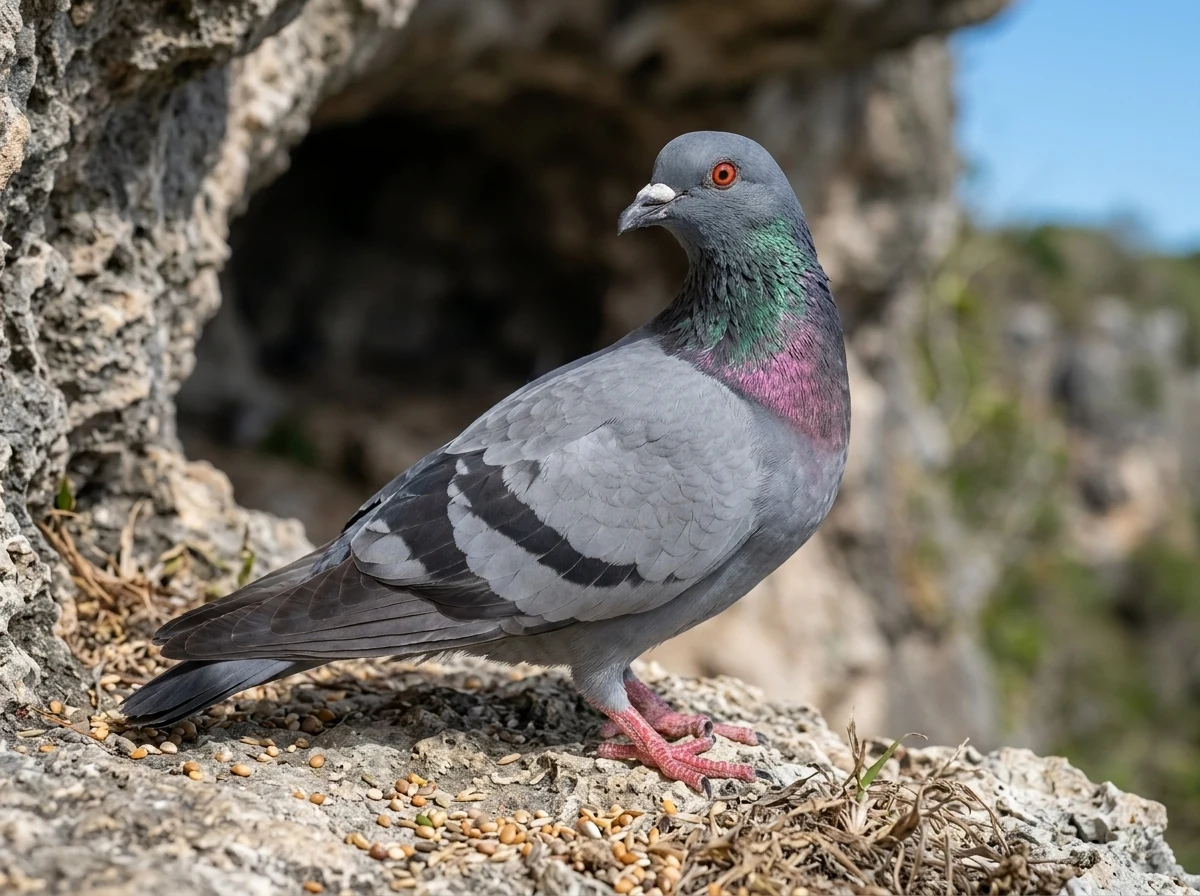
The wild type is unmistakable: pale gray body, darker head, a neck glossed green and purple, white rump, and two black bars on each wing. In flight it shows strongly contrasting white underwings. It is about 34 centimeters long.
The catch is that city pigeons vary enormously: black, reddish or brown, white, checkered, and pied birds are all common. When color does not help, use structure (stout body, small head, pointed wings), behavior (walking in flocks on the ground among people and buildings), and place. A white pigeon in a plaza is almost always a domestic variant of this species, not a different species.
Males and females look very similar. The easiest way to pick out a male is the courtship Audubon describes: he puffs up his chest, spreads his tail, and struts around the female.
03
How not to confuse it with native pigeons
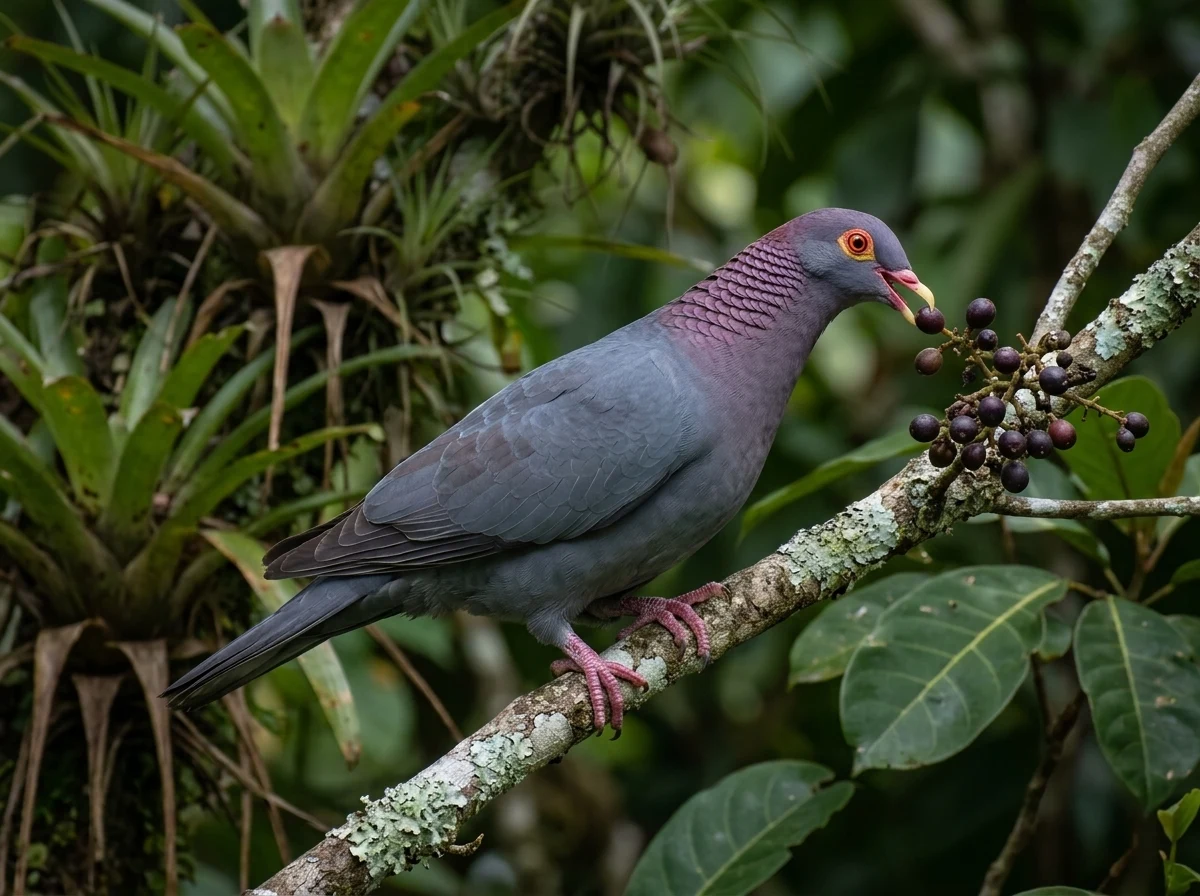
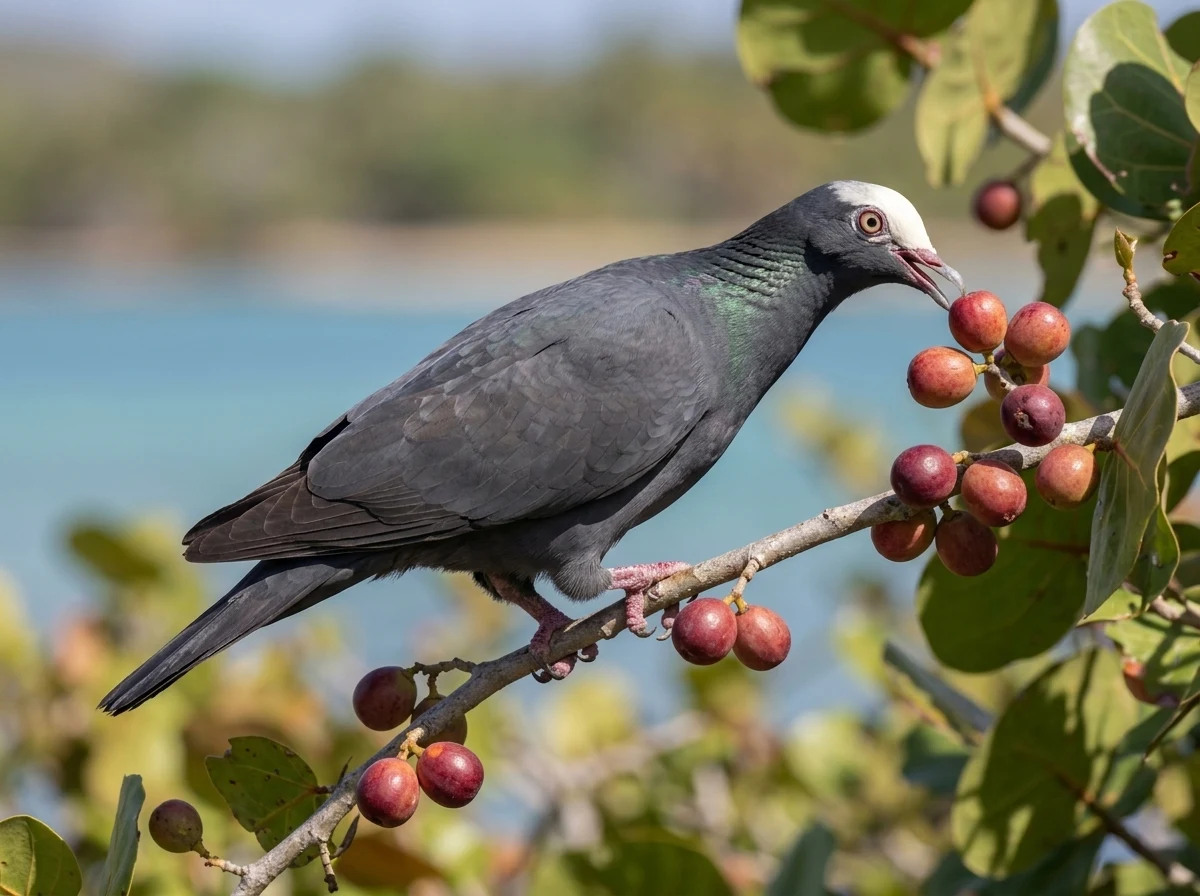
Scaly-naped Pigeon, the most common native pigeon, is similar in size but dark slate gray with a wine-red neck and scaly nape, lacks the white rump and black wing bars, and lives in forests and coffee farms. White-crowned Pigeon is dark with a white crown and prefers mangroves and coast. Neither forms tame flocks around people in a plaza.
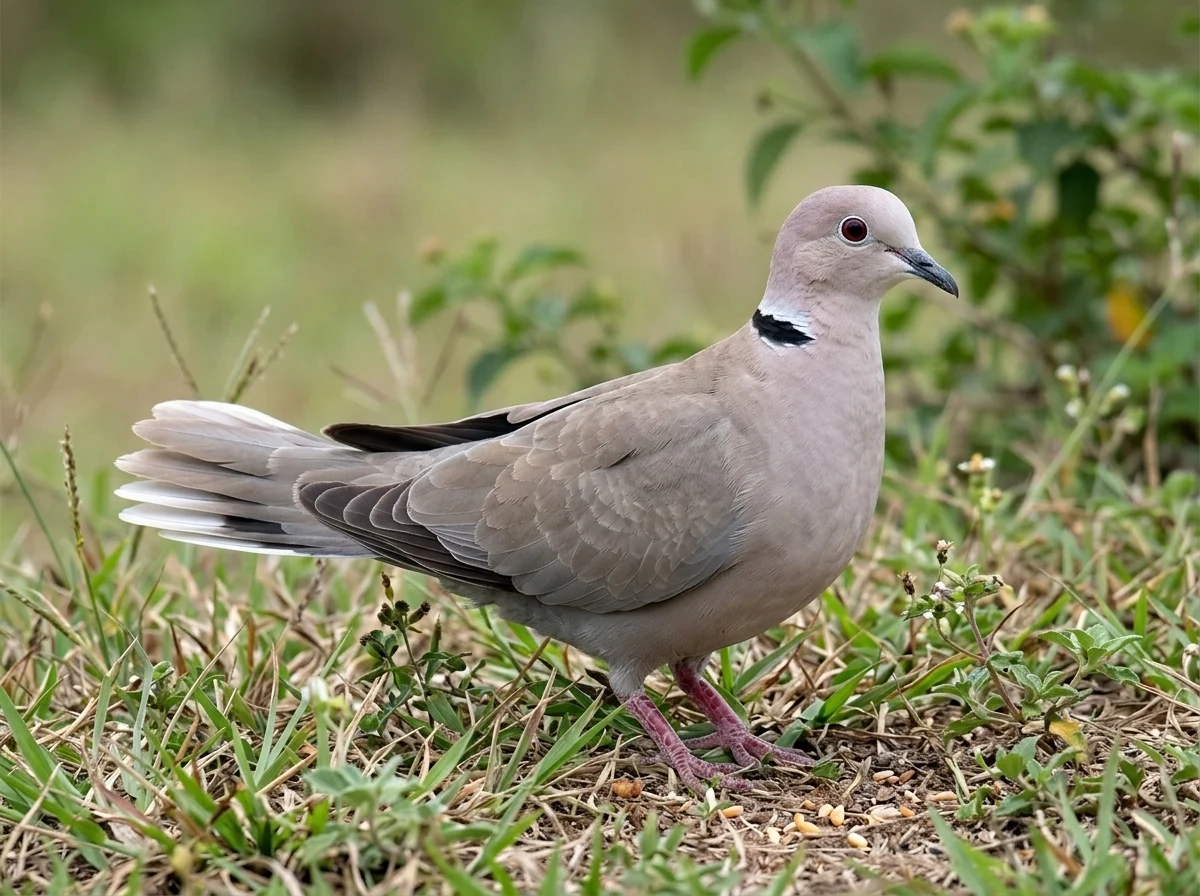
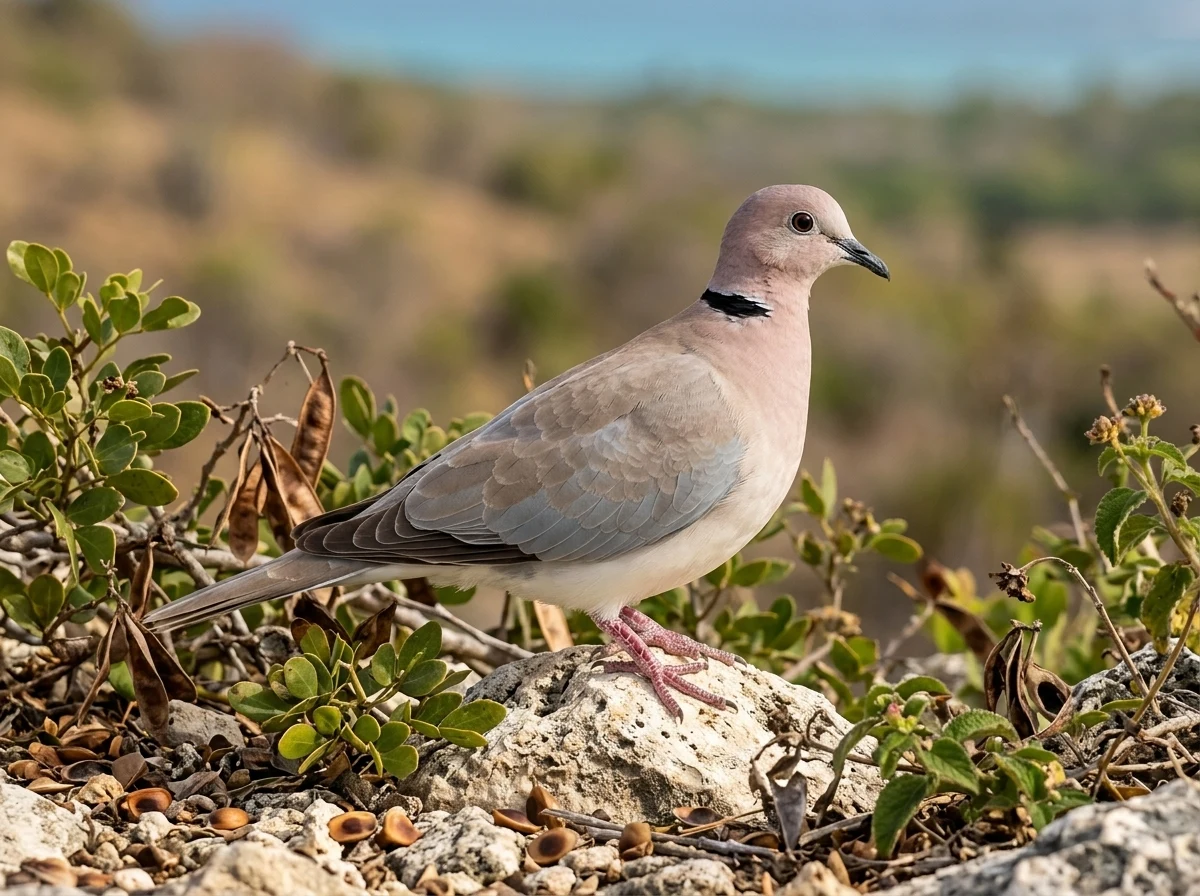
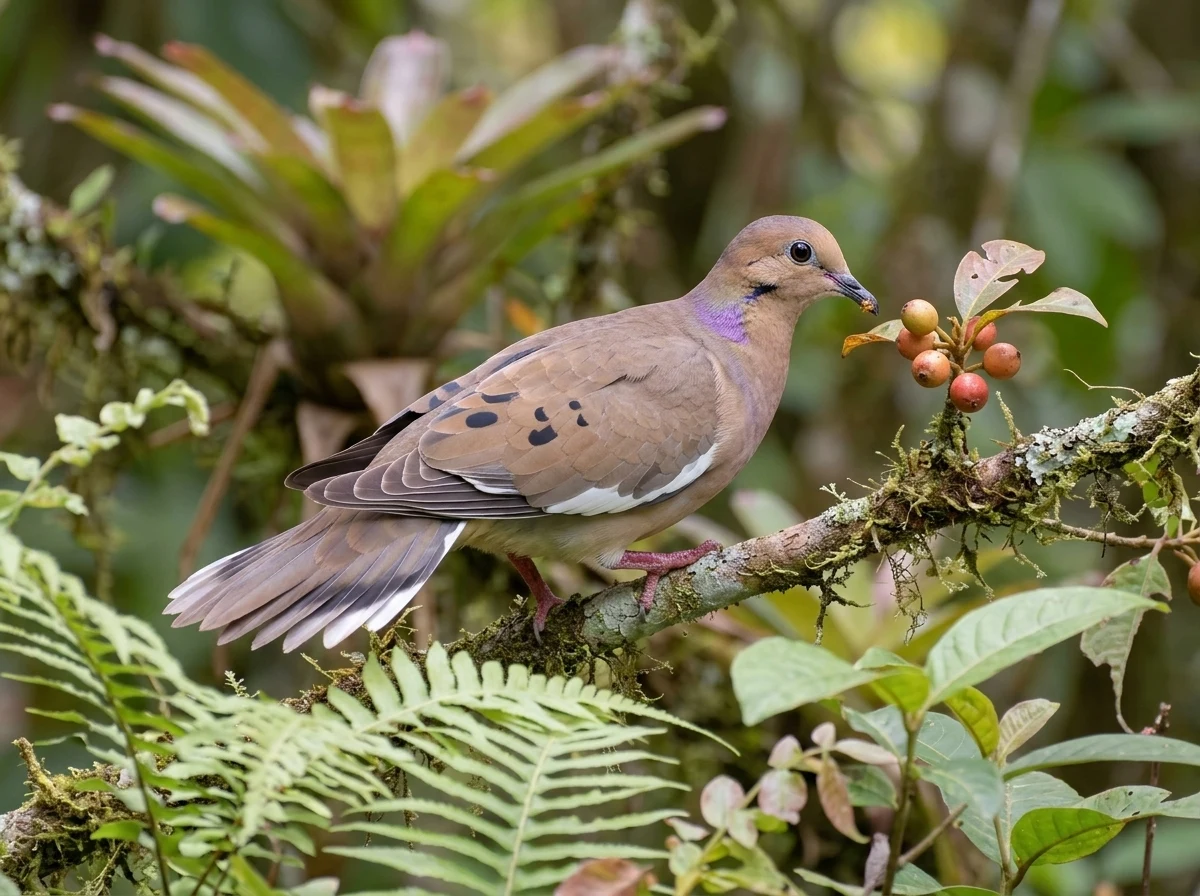
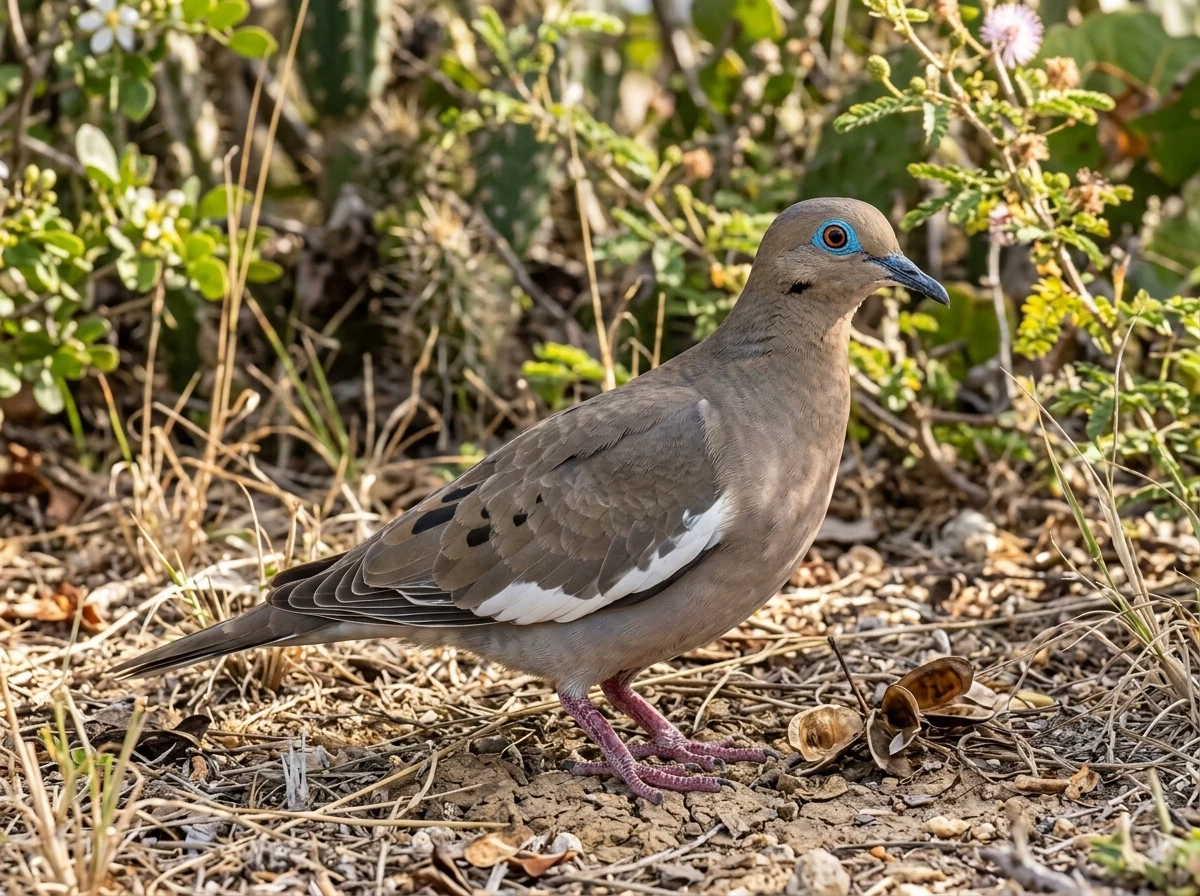
The introduced collared-doves, which also visit suburbs, are smaller, pale, and sandy, with a black half-collar on the nape. The native doves—Zenaida and White-winged—are brown, smaller, and differently tailed. If the pigeon has black wing bars and a white rump, or fancy plumage, you are looking at a Rock Pigeon.
04
Where it lives: plazas, streets, and the Parque de las Palomas
The atlas sums up its habitat as city streets and parks, buildings, and populated rural areas. It breeds mainly in the subtropical moist forest life zone (63 % of breeding hexagons), which is where most towns are, but also in the dry zone (17 %) and in wetter, higher zones (20 %). Where there are buildings and food, there are pigeons.
The best-known place to see them is the Parque de las Palomas in Old San Juan, beside the Capilla del Cristo at the end of Calle del Cristo. The pigeons live in openings in the park's back wall, which work like an apartment building for birds, and visitors can buy feed to give them.
05
Nests, eggs, and young
Rock Pigeons build a nest of sticks and plant material on human structures: buildings, bridges, storefronts, or any available ledge, much as their ancestors did on cliff ledges. According to Audubon, the female builds the nest with material the male brings.
They lay two eggs (sometimes one) that both parents incubate for 16 to 19 days. Both feed the young crop milk, and the young leave the nest at 25–32 days. A pair may raise five or more broods a year and may mate for life.
In Puerto Rico the atlas confirmed breeding in every month, with the most activity from March to June and a peak in June. So it is normal to see squabs or courting pairs well outside spring.
06
What it eats, what eats it, and what the law says
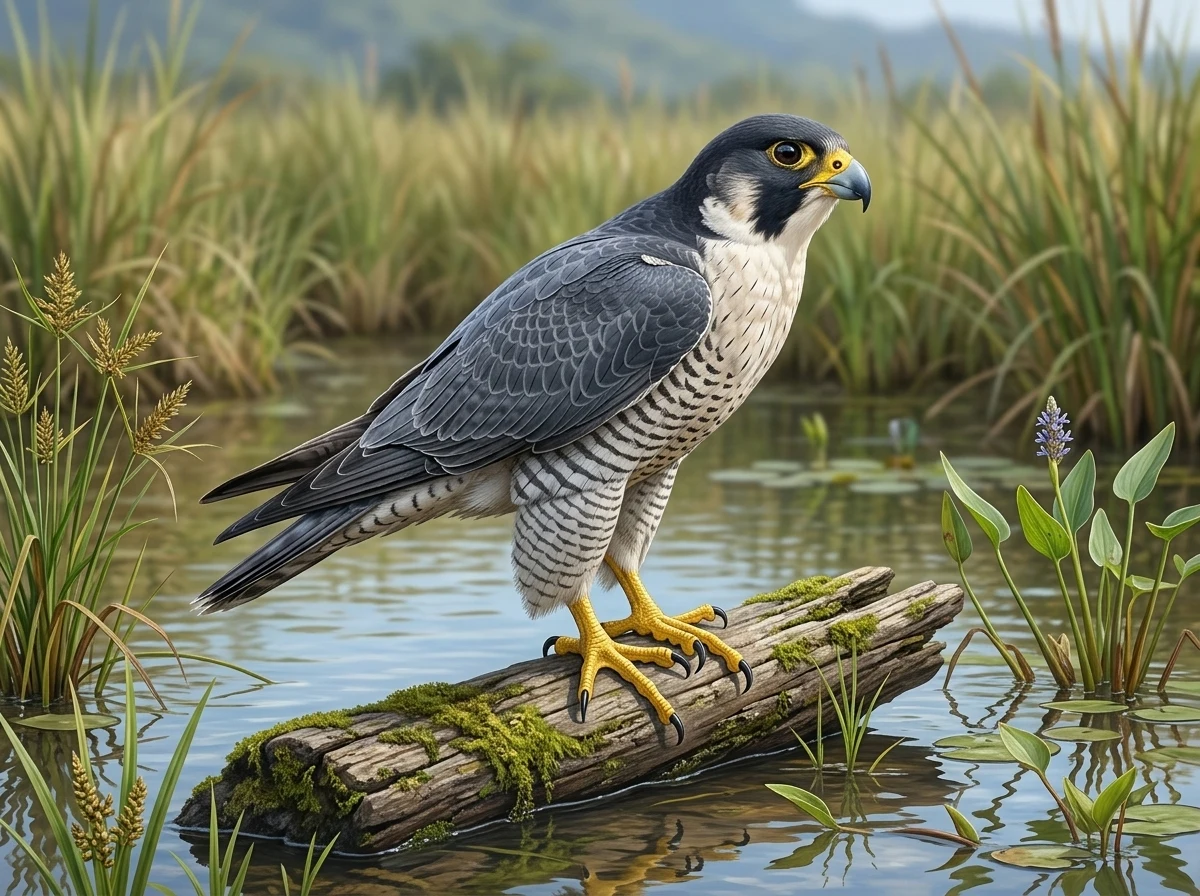
It eats mostly seeds picked up while walking on the ground, and in cities many flocks depend on bread, popcorn, and other scraps people provide. Audubon notes that although they are sometimes considered urban pests, they have not been shown to have much negative impact on native birds, and that they are a favorite prey of Peregrine Falcons.
Legally it is an exotic species. It is not in any threatened category of DRNA or the U.S. Fish and Wildlife Service, and the 2022 pigeon and dove hunting notice allowed taking it without a bag limit during the season, with a license and stamp. That is not permission to hunt anywhere or without a license: confirm with DRNA where, when, and how hunting is allowed.
Linked profiles
Rock Pigeon and its neighbors
Compare the plaza pigeon with native pigeons, collared-doves, and the falcon that hunts it.
Sound archive
Hear its voice
Explore real songs and calls. The spectrogram turns each sound into a visual trace of time and frequency.
XC1136258Recording 1 of 3song

Play: song by Sonothèque ADVL
Choose another recording
Sound recorded by Sonothèque ADVL · XC1136258 · CC0 1.0. Visualization by Stichting Xeno-canto voor Natuurgeluiden.
Every recording retains the creator, catalogue number, and license published by Xeno-canto. Metadata via GBIF ↗
01
Are Rock Pigeons native to Puerto Rico?
No. The Rock Pigeon is native to Europe, North Africa, and Asia and was introduced to Puerto Rico, as it was to most of the world. Plaza pigeons descend from feral domestic pigeons.
02
What is the scientific name of the Rock Pigeon?
Columba livia. Rock Pigeon and Rock Dove are two English names for the same species; SOPI's catalog calls it Paloma Doméstica (Asilvestrada).
03
Is a rock dove the same as a rock pigeon?
Yes. They are two English names for Columba livia. In Puerto Rico it is called paloma común, paloma doméstica, or simply paloma.
04
How can you tell a male Rock Pigeon from a female?
Plumage barely helps: males and females look very similar. The most useful clue is behavior, since the male puffs his chest, spreads his tail, and struts while courting.
05
How much does a pigeon weigh?
A Rock Pigeon weighs about 350 grams according to our catalog profiles and is about 34 centimeters long. The Common Ground Dove, Puerto Rico's smallest dove, weighs only about 33 grams.
06
Where is the Parque de las Palomas?
In Old San Juan, beside the Capilla del Cristo at the end of Calle del Cristo. The pigeons live in openings in the park's back wall.
Keep exploring
Connected routes
Sources and review
The evidence is one link away.
These sources support the editorial scope of this guide. Bird profiles also retain their own taxonomy, occurrence, and conservation references.
Reviewed:
01↗02↗03↗04↗05↗06↗07↗
U.S. Forest Service Research and Development
Puerto Rico Breeding Bird Atlas
Distribution and breeding timing for 130 species breeding in Puerto Rico and its satellite islands.National Audubon Society
Rock Pigeon field guide
Size, wild-type field marks, color variation, nests, incubation, crop milk, and origin of Rock Pigeon.Sociedad Ornitológica Puertorriqueña (SOPI)
Catalog of the Birds of Puerto Rico
Official Spanish names, SEO/CPO Spanish names, and English names for the 13 pigeons and doves in the catalog (list completed February 2007).Departamento de Recursos Naturales y Ambientales de Puerto Rico
Public notice: 2022 pigeon and dove hunting season
Game species, daily and possession limits, treatment of Rock Pigeon and collared-doves, and closed areas that protect Plain Pigeon.Discovering Puerto Rico
Parque de las Palomas, Old San Juan
Location of the park beside the Capilla del Cristo and the wall openings where the pigeons live.Birds of the World / Cornell Lab of Ornithology
Scaly-naped Pigeon: introduction
Caribbean range, plumage with pale-edged nape feathers, forest habitats, and conservation status.National Audubon Society
Eurasian Collared-Dove field guide
Black collar, white in the tail, voice, and Caribbean spread of Eurasian Collared-Dove.The atlas continues