 AI
AIMarsh voices
Gallinule and Rail Sounds in Puerto Rico: Marsh Voices
In the reeds you rarely see the bird that is calling. Learn which cackle, whinny, or wail belongs to each Puerto Rico wetland species.
Reviewed:At the marsh, identify with your ears first.
The Common Gallinule's sound is a mix of squawks, cackles, and croaks, very similar to the American Coot's; the Clapper Rail, by contrast, gives a harsh, metallic kek-kek-kek from mangrove or salt marsh, almost always without showing itself. If you hear a long, loud wail at dawn or at night, it is probably the Limpkin (Carrao).
This guide focuses on sounds. To separate these birds by plumage, bill, and frontal shield, see their profiles. Here we organize the voices by what you will hear at Laguna Cartagena, Humacao, La Parguera, or Cabo Rojo, places where public recordings of these species were made on the island.
Marsh voices
The marsh by ear
8living rails in the catalogGallinules, coot, rails, crakes, and Sora, not counting the extinct Antillean Cave Rail; some only accidental.
6Clapper Rail recordingsMade at La Parguera and Cabo Rojo, including calls, duets, and wing clapping.
2016year the coots were mergedCaribbean Coot became part of American Coot.
01
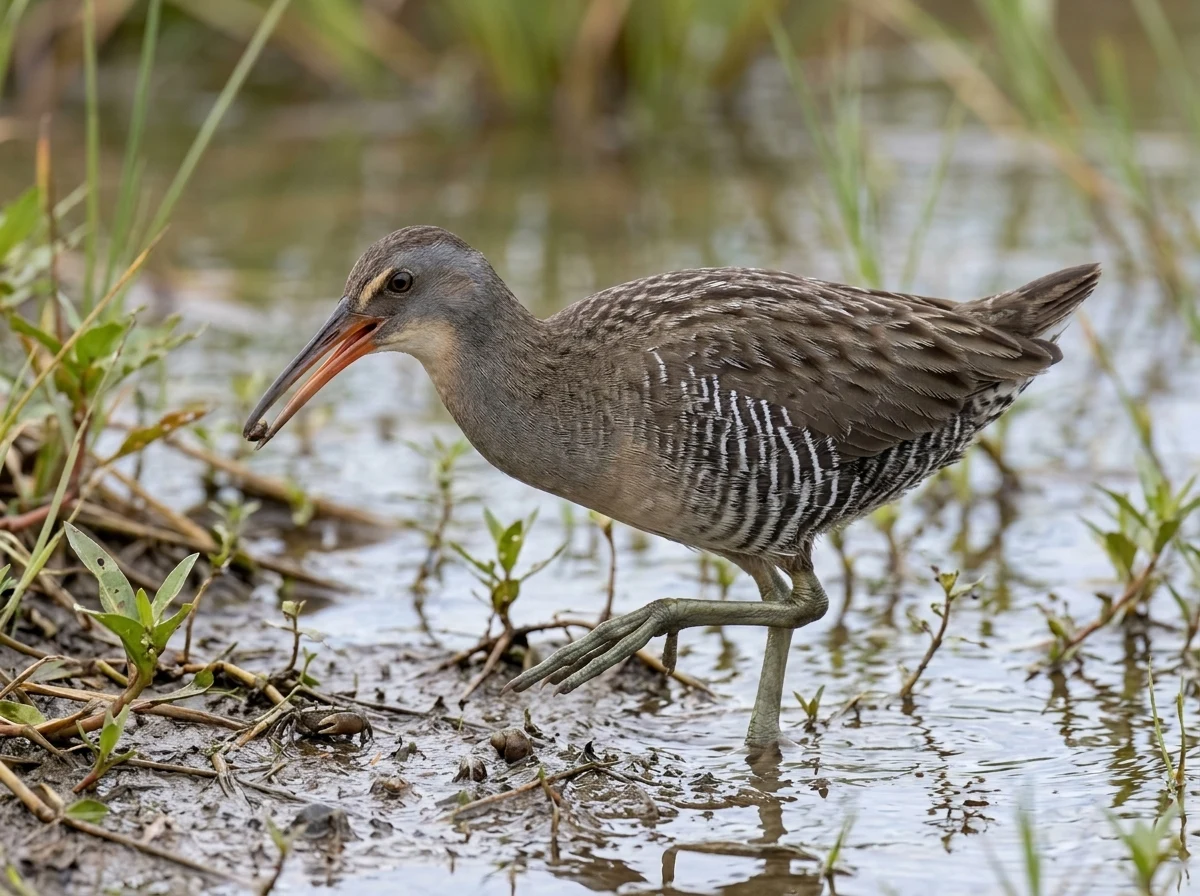
Clapper Rail: the mangrove's kek-kek-kek
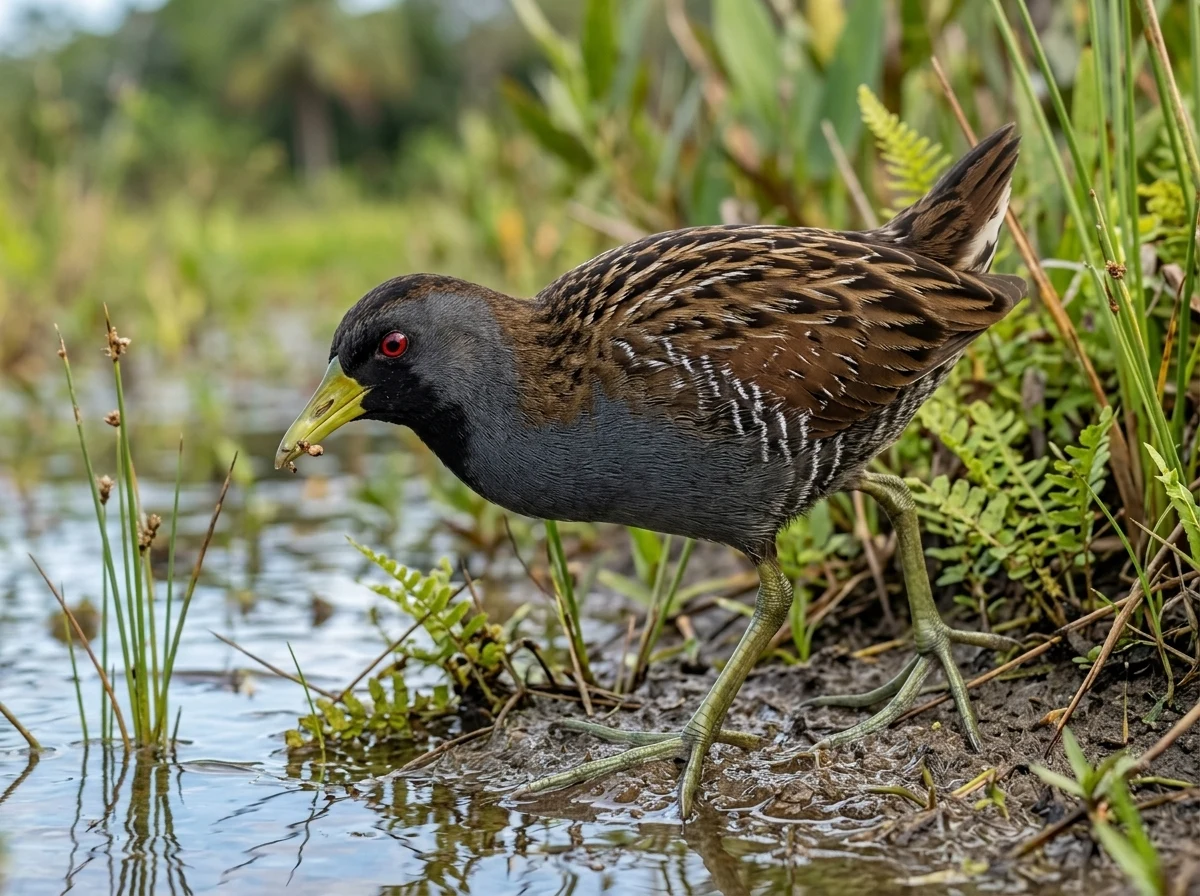
The Clapper Rail (Rallus crepitans) gives a harsh, clattering series, kek-kek-kek-kek, which Audubon describes as flat or falling. It lives hidden in dense cover and rarely strays from salt marsh, so in practice it is heard far more than seen; when it does come out, it walks the muddy edge twitching its short tail.
In Puerto Rico there are public recordings of the species made at La Parguera and Cabo Rojo, including calls, two duets, and even a file labeled as wing clapping. One was recorded at 6:00 a.m. in February 2023. If you walk beside a mangrove at dawn and hear a dry burst that another bird answers, it is very likely this rail.
02
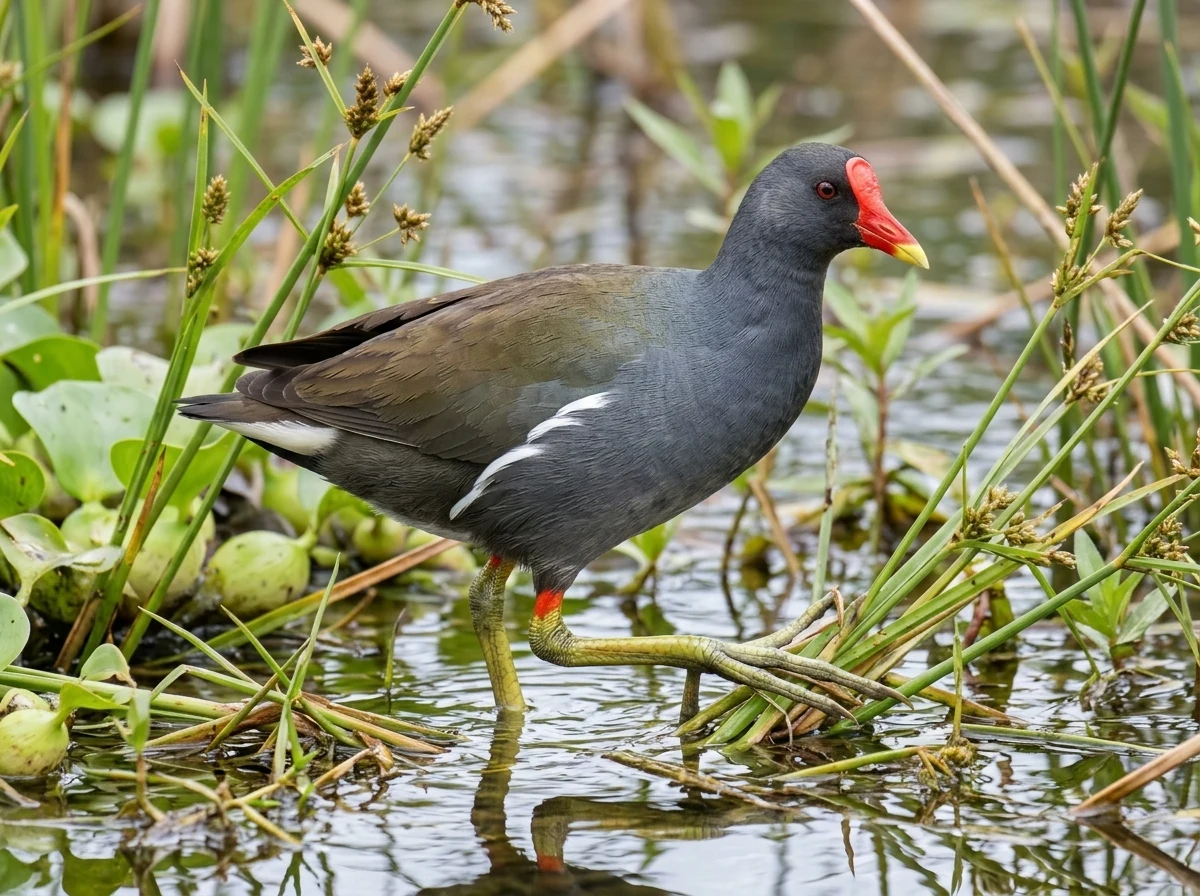
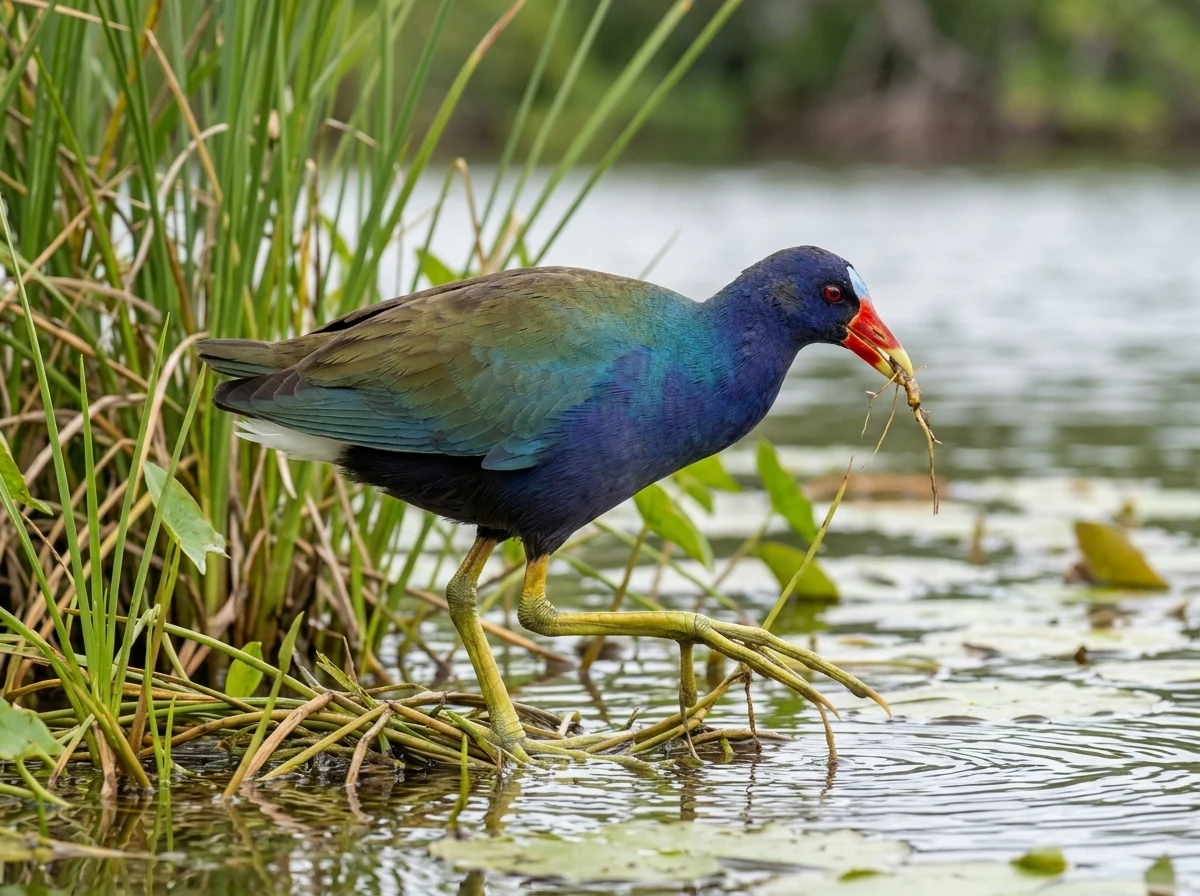
Common and Purple Gallinules: squawks in the vegetation
The Common Gallinule (Gallinula galeata), the bird most people simply call gallareta, gives squawks and croaks that Audubon compares to the American Coot's, with notes that rise, fall, or stay flat. You hear it at ponds, canals, and vegetated lagoons, where it swims bobbing its head and walks the edges. There are recordings from Laguna Cartagena and Humacao Nature Reserve, including chicks begging for food.
The Purple Gallinule (Porphyrio martinica) adds cackling and guttural grunts, and moves differently: it walks on floating plants and clambers through edge vegetation flicking its tail. There is a March 2014 recording of the species at Laguna Cartagena. By ear, the two gallinules are easy to confuse; if you can, wait to see the bird before logging the species.
03
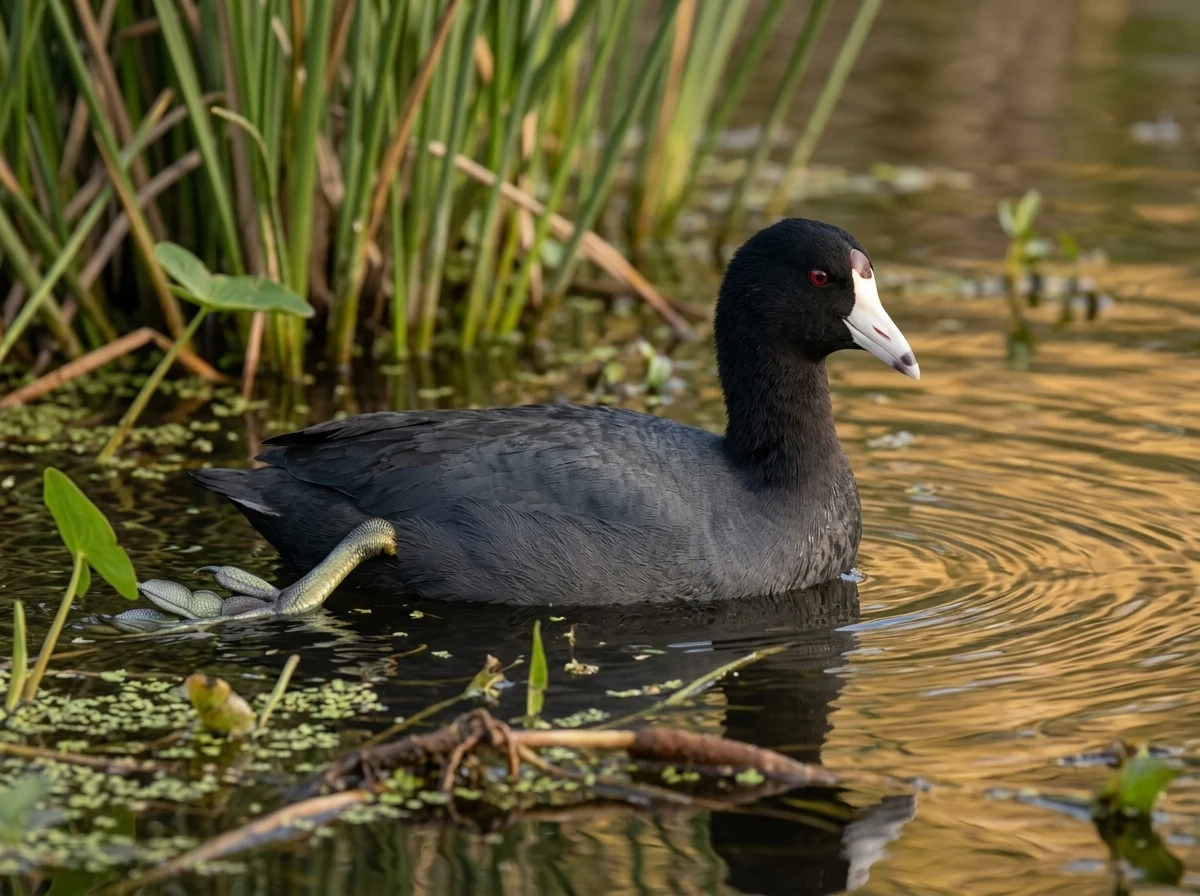
American Coot: clucks by day and night
The American Coot (Fulica americana), locally Gallinazo Caribeño or Gallareta Caribeña, gives a wide range of clucks, cackles, grunts, and harsh notes; Audubon describes it as aggressive and noisy, calling by day or night. It was recorded calling mid-morning at Humacao Nature Reserve in March 2014 and at Laguna Cartagena in April 2010.
Since 2016, the former white-shielded Caribbean Coot has been part of the same species as American Coot, after studies on St. Croix showed the two forms pair without regard to type. In eBird they are reported as 'American Coot (White-shielded)' or '(Red-shielded).' Our catalog lists the species as Vulnerable on the DNER list, so each record is worth documenting carefully.
04
Sora and other small rails: rare but recognizable
The Sora is an accidental visitor to Puerto Rico, but its voice is distinctive enough to learn: a musical series of notes rapidly descending the scale, like a whinny, plus a repeated ker-wee that rises at the end and an explosive keek. If you ever hear that whinny in a freshwater marsh, record it: it is a record worth documenting.
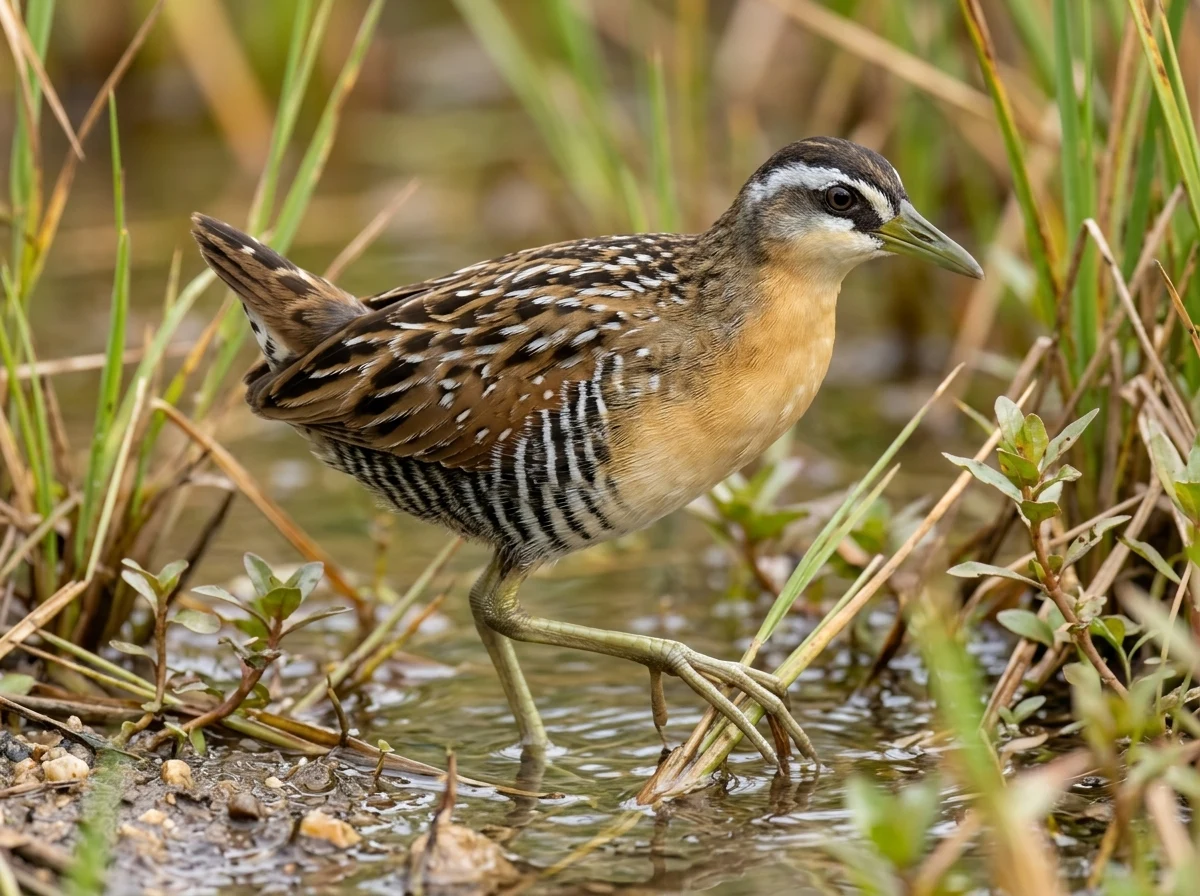
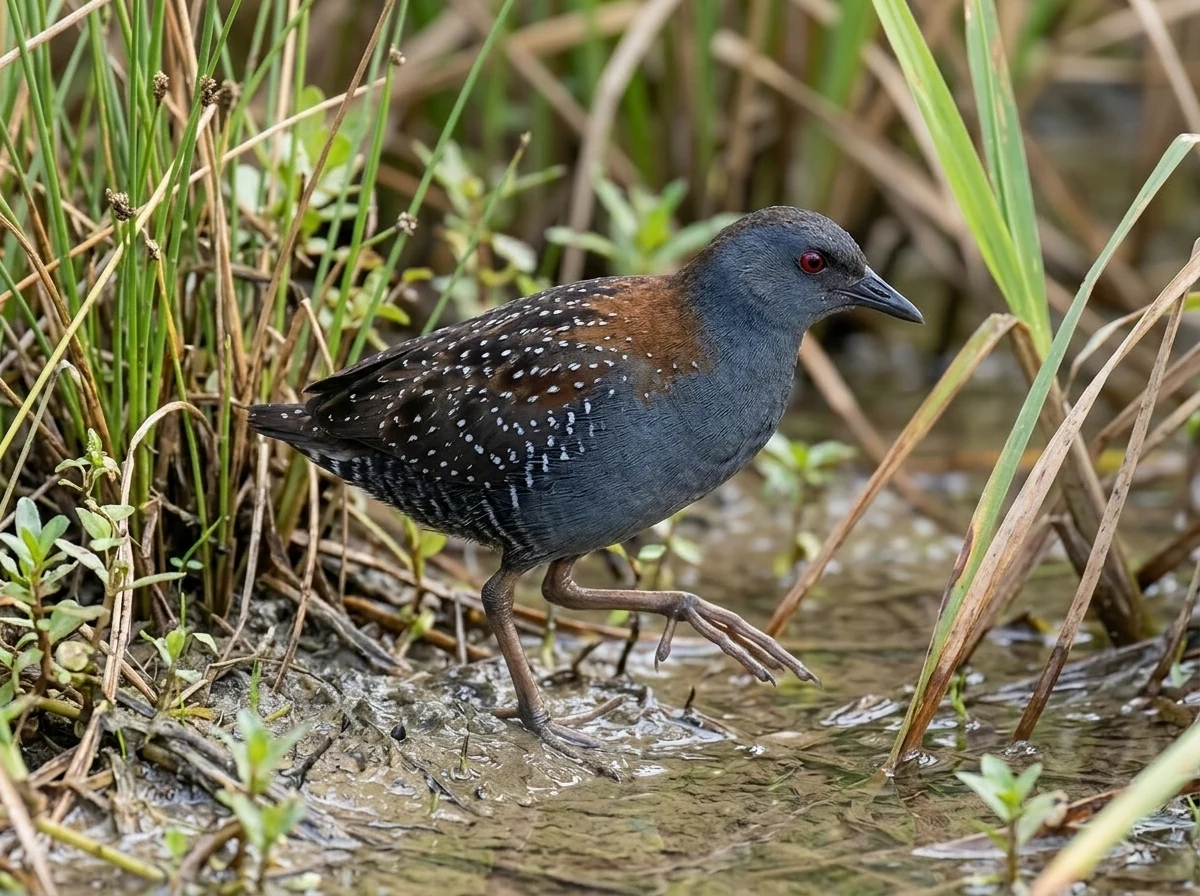
The Yellow-breasted Crake lives in dense freshwater marsh vegetation, and the Black Rail, Endangered on the IUCN Red List, is another accidental. In these cases a recording with date, time, and place is worth more than a description from memory, and playback to provoke a response is not appropriate with rare or threatened species.
05
Limpkin and grebes: the marsh's other noises
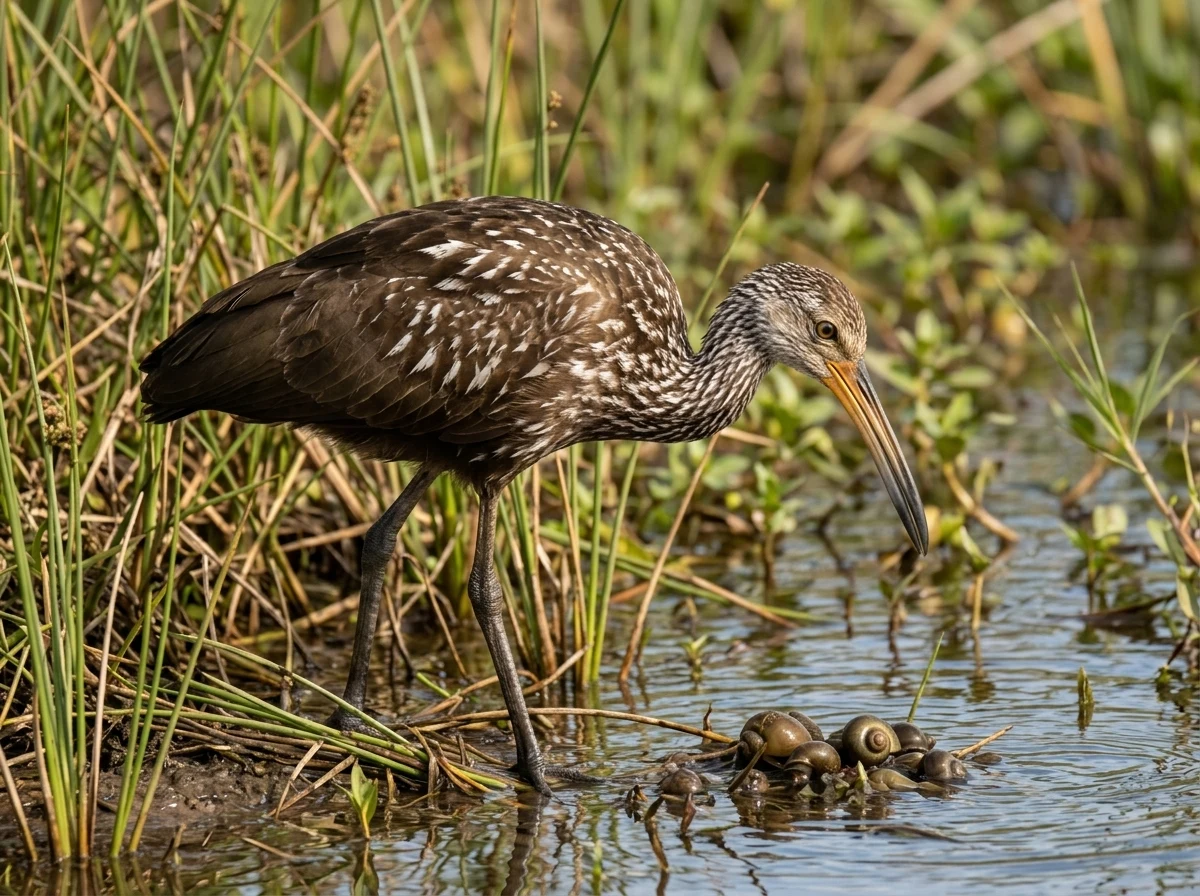
The Limpkin (Aramus guarauna) is not a rail, but it shares the marsh and fools many listeners. Its voice is a loud wail, krrr-eeeow, which Audubon calls an odd scream; it is often heard at dawn or at night, and the bird may feed at night, especially under a moon. It specializes in freshwater snails.
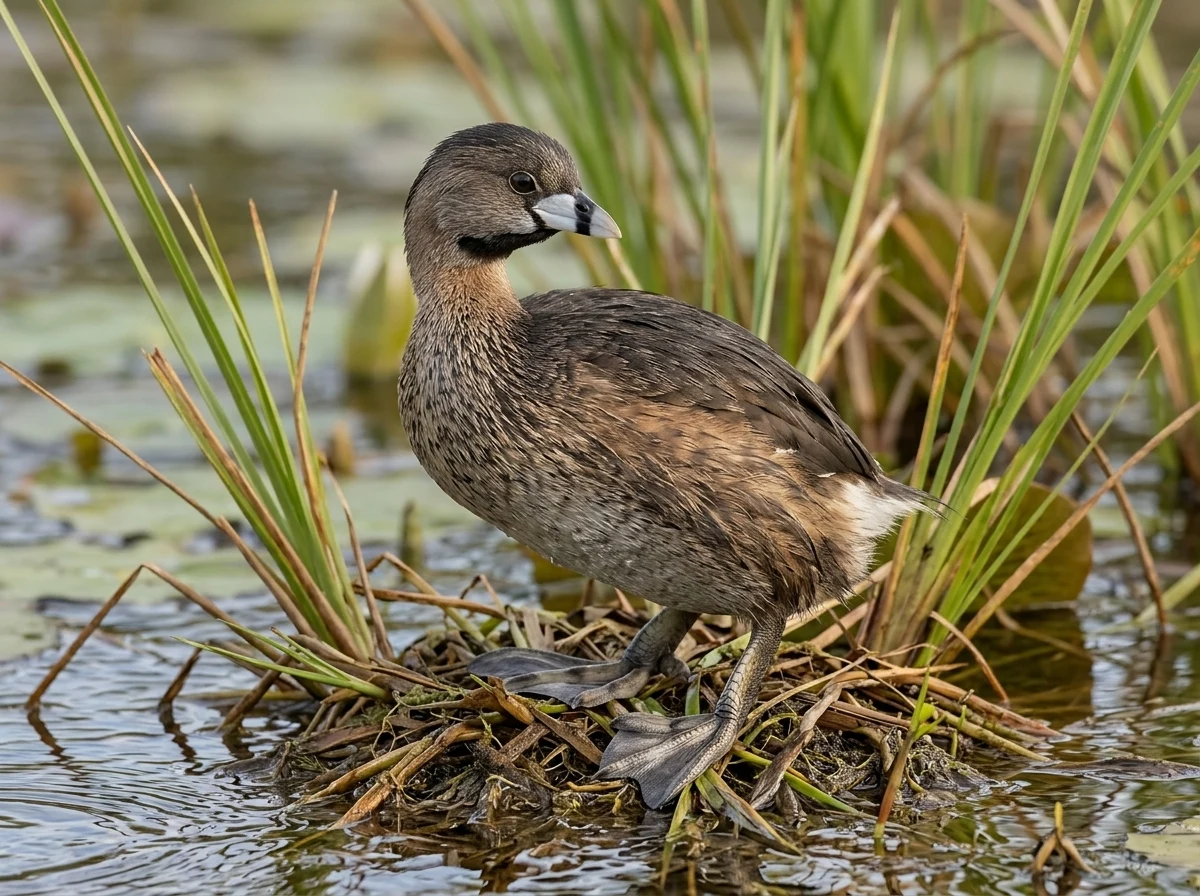
The Pied-billed Grebe (Podilymbus podiceps) gives a hollow cow-cow-cow series that slows at the end, plus whinnies, gobbling, and cooing by day or night in the breeding season, often hidden in vegetation. Its song was recorded at Laguna Cartagena in March 2014. Hearing that hollow series on the lagoon does not mean a gallinule is nearby.
06
How to listen to a marsh without flushing it
Arrive early, stand still at a spot overlooking the vegetation edge, and listen for 10 minutes before moving. Gallinules often answer each other; note which direction each voice comes from and whether it moves. In mangroves, tide and time of day change activity: a visit at dawn and another at dusk offer different soundscapes.
Laguna Cartagena is one of Puerto Rico's most important freshwater habitats for resident and migrating waterbirds, and Humacao Nature Reserve offers accessible lagoons. Check hours and rules before you go, stay out of closed areas, and record from public trails and overlooks.
Linked profiles
Voices of the reeds and mangroves
Open each profile to hear its recordings; several Clapper Rail files were made at Cabo Rojo and La Parguera.
Sound archive
Hear its voice
Explore real songs and calls. The spectrogram turns each sound into a visual trace of time and frequency.
XC962909Recording 1 of 3call

Play: call by Hans Matheve
Choose another recording
Sound recorded by Hans Matheve · XC962909 · CC BY-NC-ND 4.0. Visualization by Stichting Xeno-canto voor Natuurgeluiden.
Every recording retains the creator, catalogue number, and license published by Xeno-canto. Metadata via GBIF ↗
01
What does a gallinule sound like in Puerto Rico?
The Common Gallinule gives squawks, cackles, and croaks much like an American Coot's, from vegetated ponds and lagoons. The Purple Gallinule adds cackling and guttural grunts. By ear they are easy to confuse, so confirm the species by sight when you can.
02
What bird makes a kek-kek-kek sound in the mangroves?
Probably the Clapper Rail (Pollo de Mangle), which gives a harsh, clattering series from dense salt-marsh and mangrove cover. It is heard far more than seen, and Puerto Rico has recordings of it from La Parguera and Cabo Rojo.
03
What is the difference between a gallinule and a coot?
The Common Gallinule has a red shield and bill with a yellow tip, while the coot is dark gray with a pale bill and shield. Their voices are similar: varied squawks and cackles. Since 2016 the Caribbean Coot has been part of the American Coot species.
04
What bird makes a loud wail at night at the lagoon?
The Limpkin (Carrao) is the main candidate: its voice is a loud wail, krrr-eeeow, often heard at dawn or at night. It could also be a night-heron, but their calls are short squawks, not long wails.
05
Is there a Sora in Puerto Rico?
Yes, but as an accidental visitor, not a common bird. Its descending whinny is very distinctive; if you hear it in a freshwater marsh, record it with date, time, and place and share it on eBird so others can review it.
06
Where can I hear gallinules in Puerto Rico?
At vegetated freshwater wetlands such as Laguna Cartagena in Lajas and Humacao Nature Reserve, where public recordings of Common Gallinule, Purple Gallinule, and American Coot exist. Check hours and access rules before you go.
Keep exploring
Connected routes
Sources and review
The evidence is one link away.
These sources support the editorial scope of this guide. Bird profiles also retain their own taxonomy, occurrence, and conservation references.
Reviewed:
01↗02↗03↗04↗05↗06↗07↗08↗09↗10↗11↗12↗13↗14↗15↗
Global Biodiversity Information Facility / Xeno-canto
Xeno-canto recordings from Puerto Rico (GBIF)
Time, date, place, equipment, and vocalization type for the 554 Puerto Rico recordings shared with GBIF (queried September 2026).National Audubon Society
Clapper Rail field guide
Harsh kek-kek-kek voice and hidden behavior in dense cover.National Audubon Society
Common Gallinule field guide
Squawks and croaks similar to American Coot; swimming behavior.National Audubon Society
American Coot field guide
Clucks, cackles, grunts, and harsh notes, by day or night.BirdsCaribbean
Caribbean taxonomy changes (2016)
Merger of Caribbean Coot into American Coot and eBird reporting options.U.S. Fish and Wildlife Service
Laguna Cartagena National Wildlife Refuge
Importance of the freshwater wetland for resident and migratory waterbirds.U.S. Fish and Wildlife Service
Cabo Rojo National Wildlife Refuge
Habitats, focal birds, conservation, trails, and official refuge notices.National Audubon Society
Purple Gallinule field guide
Squawking, cackling, and guttural grunts; walking on floating plants.Departamento de Recursos Naturales y Ambientales
Humacao reserve designation document
Historical bird inventory and ecological description of lagoons, channels, and Pterocarpus forest.National Audubon Society
Sora field guide
Descending whinny, rising ker-wee, and explosive keek.American Birding Association
Code of Birding Ethics
Limit playback to attract birds, especially for rare or threatened species.Sociedad Ornitológica Puertorriqueña
Official bird list
Local names, occurrence categories, and the public summary of 17 endemics.National Audubon Society
Limpkin field guide
Wailing krrr-eeeow, often heard at dawn or at night.National Audubon Society
Pied-billed Grebe field guide
Hollow cow-cow-cow series that slows down, by day or night.eBird / Cornell Lab of Ornithology
Smartphone recording tips
WAV format, 48 kHz, automatic gain control and noise reduction off, 30 seconds or longer.The atlas continues