 AI
AISeeing the Iguaca
Where to see the Puerto Rican Parrot today
The Iguaca now lives in three forests: Río Abajo, El Yunque, and Maricao. Seeing it is possible, but it depends on timing, patience, and respect for restricted areas.
Reviewed:Short answer: go early to Río Abajo
The most reliable place to see Puerto Rican Parrots in the wild is Río Abajo State Forest, between Arecibo and Utuado, where the U.S. Fish and Wildlife Service estimated 320 to 340 wild parrots in February 2026. There are also wild populations in El Yunque (100–105) and Maricao State Forest (100–105), and El Portal in El Yunque has a permanent exhibit on the species.
Parrots are most active and vocal early in the morning, and the aviaries where they are bred are not open to the general public. This guide does not repeat the recovery story, which is covered in another guide on this site; it focuses on where to go, what to expect, and how to watch without adding risk to a species that is still endangered.
Seeing the Iguaca
The Iguaca today
320–340Wild parrots at Río AbajoThe largest wild population, per USFWS (February 2026).
100–105In El Yunque and in MaricaoEach forest, per the same estimate.
900+Parrots in totalWild and captive birds combined.
3Forests with wild populationsRío Abajo (since 2006), El Yunque, and Maricao (since 2022).
01
Río Abajo: your best chance
Río Abajo State Forest is a karst forest of limestone hills (mogotes), managed by the DNER. The parrot's second wild population was established there in 2006, and today it is the largest: 320 to 340 birds according to USFWS in February 2026. Pairs nesting in natural cavities have been documented there, a program milestone.
Birding groups usually arrive at dawn. In February 2024, a Field Guides tour scoped several parrots from the picnic area near the forest entrance. The DNER's José L. Vivaldi Aviary is inside the forest, but it runs as a closed aviary with tightly controlled access, so viewing happens from public areas.
02
El Yunque: the historic population
El Yunque is where the species survived after vanishing from the rest of the island: by 1968 only 24 parrots remained, all in the Luquillo forest. Hurricane María in September 2017 wiped out El Yunque's entire wild population, and the program restarted releases in 2020 from the Iguaca Aviary, which USFWS manages.
Recovery has been quick: in March 2025 a record count of 75 to 80 wild parrots was announced for the forest, after 32 birds were released in January, and the February 2026 estimate was 100 to 105. Even so, seeing them in El Yunque is less predictable than at Río Abajo. The surest way to learn about the species there is El Portal, the visitor center, which has had a permanent parrot exhibit since it reopened on January 20, 2022.
03
Maricao: the third population
Maricao State Forest, in the western mountains, holds the newest population. The first steps to establish it were taken in 2016, but Hurricane María damaged the release area and halted the project. In 2022, captive-reared parrots were released to form the third wild population, which USFWS manages and estimated at 100 to 105 birds in February 2026.
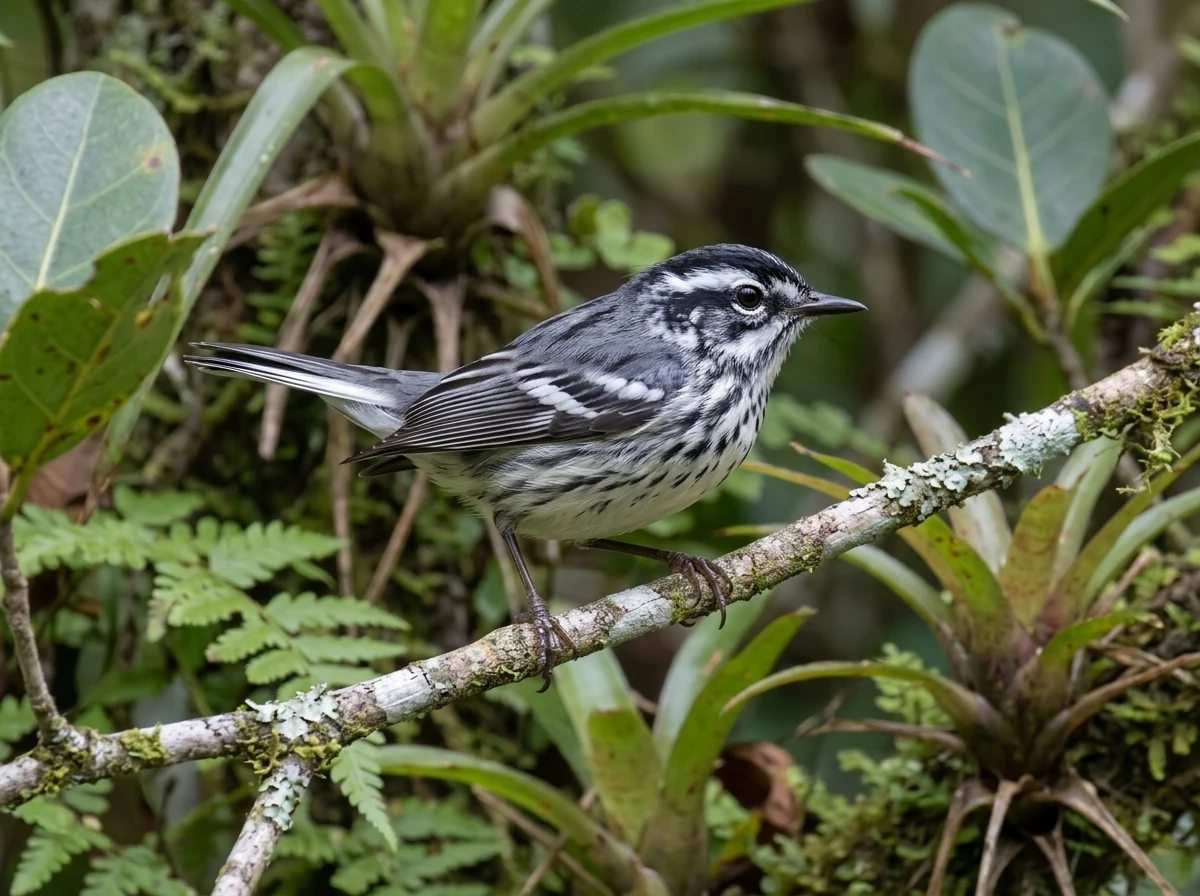
Maricao is a montane forest that also draws visitors looking for the Elfin-woods Warbler and other endemics. There is no published spot for seeing the parrots, so treat them as a possible encounter within a broader forest visit rather than a guarantee.
04
How to recognize it and avoid confusion
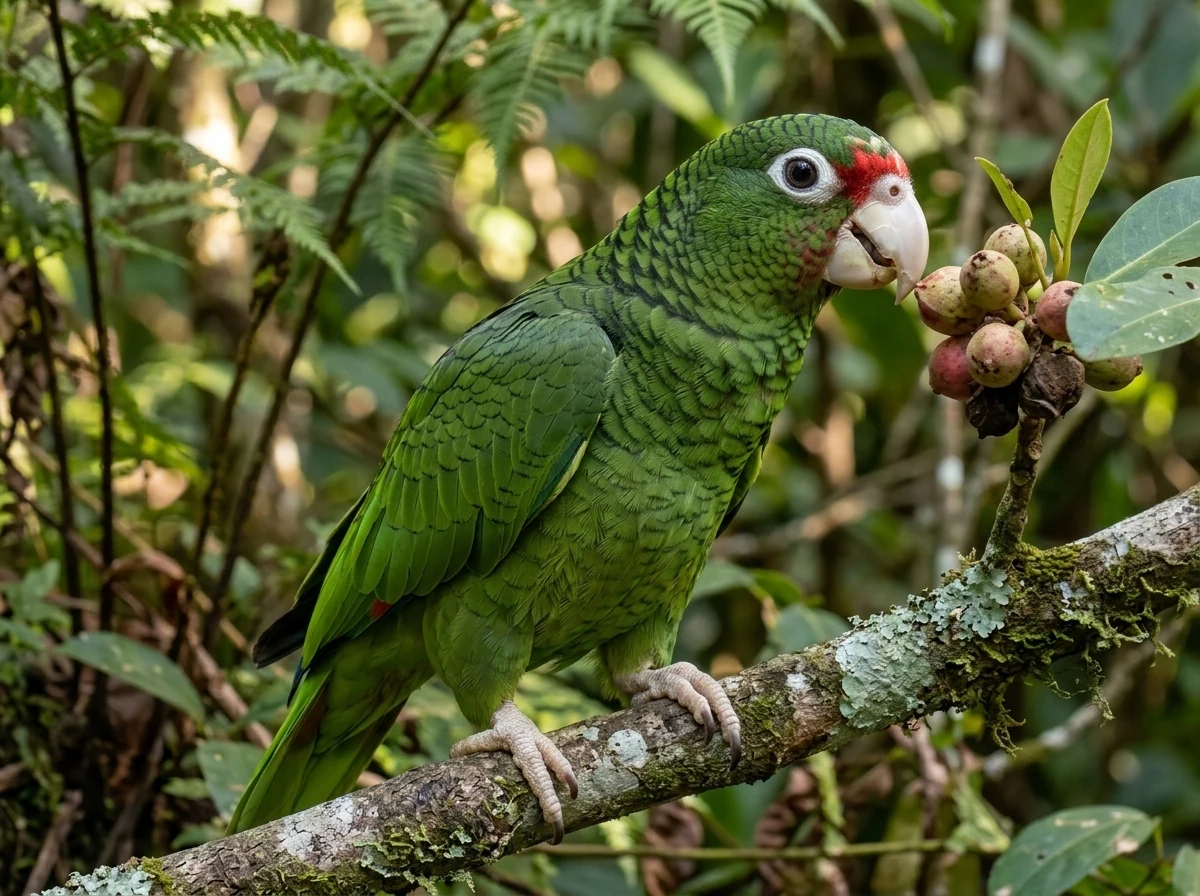
The Iguaca is 28 to 30 centimeters long, green, with a red forehead band, a white eye-ring, and deep blue flight feathers that stand out as it crosses over the forest. Its loud calls usually announce it before you see it. Some released birds wear radio collars or marks used for monitoring.
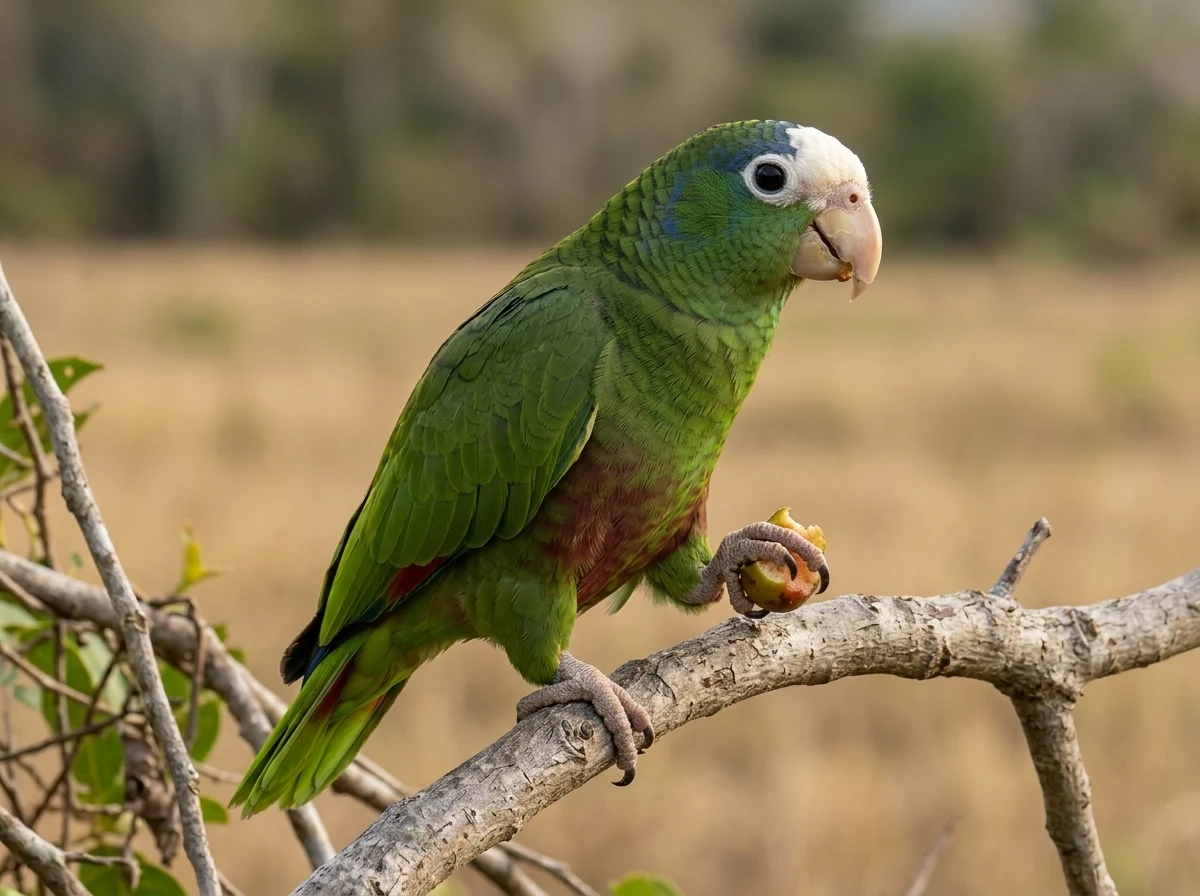
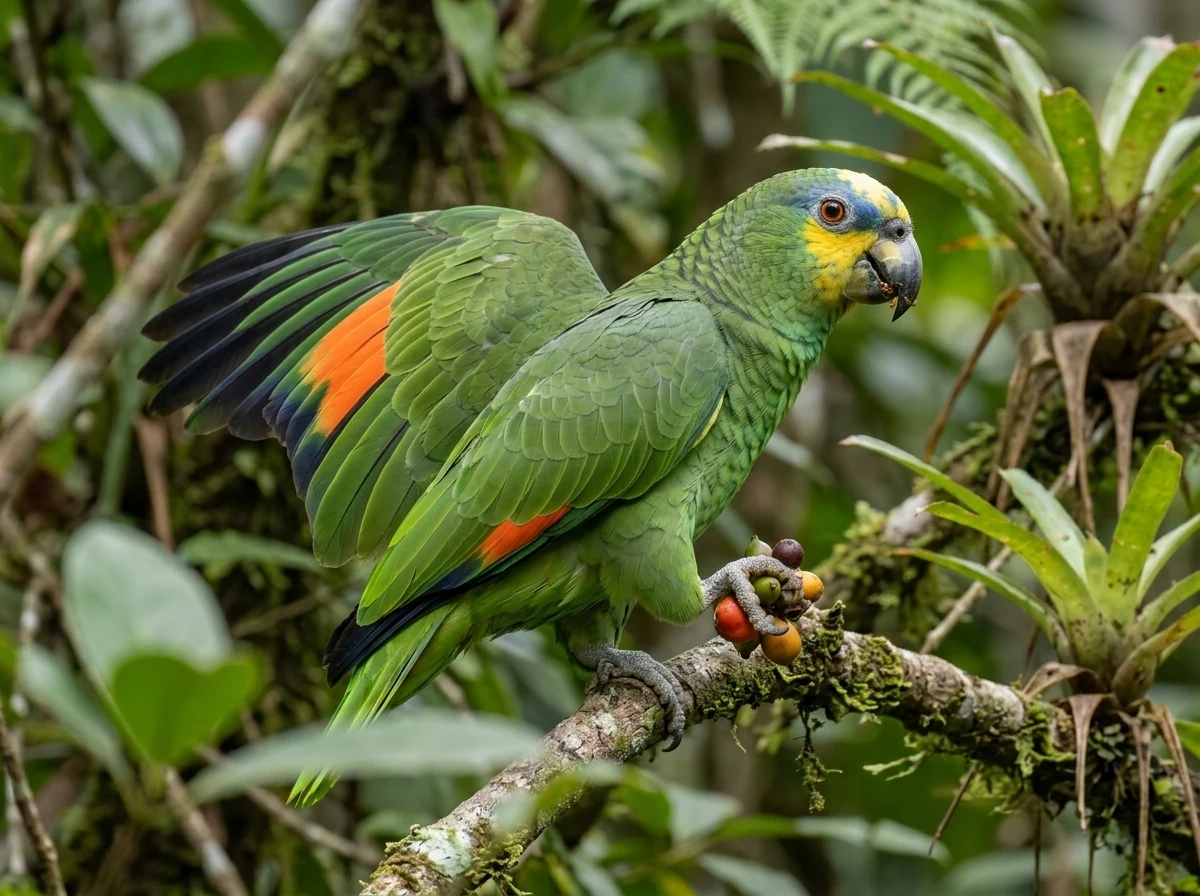
Outside these forests, a green parrot is almost always an introduced species, such as the Orange-winged Amazon, which has orange in the wing. The Hispaniolan Parrot has a white forehead and a maroon belly patch. If you see a supposed Iguaca far from Río Abajo, El Yunque, or Maricao, document the forehead and wing before reporting it.
05
Watching without causing harm
The Puerto Rican Parrot is protected under the Endangered Species Act, and USFWS considers it one of the most threatened birds in the world. Stay on trails and in public areas, respect gates and closures, and do not follow birds toward cavities or nests. Do not use recordings to attract them or offer them food.
If you photograph marked or collared birds, you can share the record without exact nest coordinates. Before you go, check with the forest office, because access to some areas can change due to management, weather, or hurricane damage. Seeing an Iguaca flying free is the result of more than fifty years of work; the best way to honor that is not to add risk.
Linked profiles
The Iguaca and its neighbors
The native parrot, two amazons confused with it, and endemics that share its forests.
01
Where can I see the Puerto Rican Parrot?
The most reliable place is Río Abajo State Forest, between Arecibo and Utuado, with about 320–340 wild parrots in 2026. There are also populations in El Yunque and Maricao of about 100–105 birds each. Go early in the morning and stay in public areas.
02
How many Puerto Rican Parrots are left?
According to USFWS (February 2026), there are more than 900 parrots counting wild and captive birds. Wild estimates are 320–340 at Río Abajo, 100–105 in El Yunque, and 100–105 in Maricao. The species remains endangered.
03
Can I visit the parrot aviary?
The Iguaca Aviary (El Yunque) and José L. Vivaldi Aviary (Río Abajo) do not operate as public attractions; Río Abajo was designed as a closed aviary to protect the birds from disease. To learn about the species, visit the permanent exhibit at El Portal in El Yunque.
04
Are there Puerto Rican Parrots in El Yunque?
Yes. Hurricane María wiped out El Yunque's wild population in 2017, but releases since 2020 have restored it: 75–80 birds were counted in March 2025 and 100–105 were estimated in February 2026. Sightings there are less predictable than at Río Abajo.
05
What is the best time to see the Iguaca?
Early morning, when parrots are most active and vocal and move between roosts and feeding areas. Birding groups usually reach Río Abajo at dawn. Listen for their loud calls before scanning with binoculars.
Keep exploring
Connected routes
Sources and review
The evidence is one link away.
These sources support the editorial scope of this guide. Bird profiles also retain their own taxonomy, occurrence, and conservation references.
Reviewed:
01↗02↗03↗04↗05↗06↗07↗08↗09↗
U.S. Fish and Wildlife Service
Puerto Rican Parrot recovery information
Current recovery context and the populations at Río Abajo and El Yunque.U.S. Fish and Wildlife Service
Puerto Rican Parrot recovery
Populations, management, and goals of the interagency program.PlateaPR
Record number of wild Puerto Rican Parrots in El Yunque
March 2025 count of 75 to 80 wild parrots in El Yunque and the release of 32 birds from the Iguaca Aviary.Field Guides Birding Tours
Puerto Rico birding tour report, February 2024
Recent experience seeing Puerto Rican Parrots from the picnic area near the Río Abajo forest entrance.Proceedings of the Southeastern Association of Fish and Wildlife Agencies (Kirkpatrick 1994)
The decline, recovery, and captive management potential of the Puerto Rican Parrot
Early program history, use of the Hispaniolan Parrot as a surrogate in the Luquillo and Río Abajo aviaries, and historical Iguaca counts.Departamento de Recursos Naturales y Ambientales
Río Abajo State Forest management plan
Official basis for the limestone forest, its resources, management zones, and conservation.U.S. Forest Service
El Portal de El Yunque
Official visitor information and context for the Puerto Rican Parrot recovery program.Departamento de Recursos Naturales y Ambientales
Maricao State Forest
Geology, climate, and endemic birds of the western mountain forest.PeerJ (Falcón & Tremblay 2018), via PubMed Central
From the cage to the wild: introductions of Psittaciformes to Puerto Rico
Inventory of 46 psittacines, invasion stage per species, eBird trends, history of White-winged and Monk Parakeets, macaws in San Juan and Orocovis, and Hurricane María effects.The atlas continues